
'%20id='ico-down'%20stroke='%23000000'%20stroke-width='1.5'%3e%3cg%20transform='translate(1092.250000,%20254.750000)'%3e%3cpolyline%20id='Path-2-Copy-4'%20transform='translate(5.500000,%202.750000)%20scale(1,%20-1)%20rotate(-180.000000)%20translate(-5.500000,%20-2.750000)%20'%20points='0%200%205.5%205.5%2011%200'%3e%3c/polyline%3e%3c/g%3e%3c/g%3e%3c/g%3e%3c/svg%3e)


Moving
Visas & Immigration
Family visas in Luxembourg
Ready to settle down with your loved ones in the only Grand Duchy in the world? Discover how to apply for family visas in Luxembourg.

Moving to a new country can be difficult, especially when it’s your first week and you have to explore the local culture and cuisine alone. Having your relatives there makes everything a lot more fun.
Luckily, getting a family visa in Luxembourg is generally straightforward. Navigate all options with the following:
lingoking
If you need family visas for Luxembourg, make sure your translations are top-notch with lingoking. Whatever documents you need translating, their network of professional translators can help, 24/7.

Family visas in Luxembourg
One of the main reasons why people immigrate to Luxembourg (Luxembourgish: Lëtzebuerg, French: Luxembourg, German: Luxemburg) is to reunite with their families. Family visas (Luxembourgish: famill visas, French: regroupement familial, German: antragen auf familienzusammenführung) accounted for more than a third of all residence permits during 2016–2019.
As with all visas in Luxembourg, family visas are the responsibility of the Immigration Directorate of the Ministry of Foreign and European Affairs (MFA, Luxembourgish: Aussen- an Europaministère, French: Ministère des Affaires étrangères et européennes – MAEE, German: Ministerium für auswärtige und europäische Angelegenheiten – MEAE).

Although getting a family visa in Luxembourg is relatively easy, not all family members can apply. It all depends on the following:
- The nature of your relationship
- The nationality of the applicant
- Your residency status in Luxembourg
- The duration of their intended stay
Who can benefit from a family visa?
EU/EFTA nationals
Luxembourg is a member state of the European Union (EU) and allows free movement between other EU countries. As such, EU citizens don’t need a visa to set up a home or find a job in the Grand Duchy.
Nationals from Iceland, Liechtenstein, Norway, and Switzerland are also exempt from needing a visa. These countries are part of the European Free Trade Association (EFTA) and are often treated as regular EU member states.
If your family member is an EU/EFTA national, they can join you without a visa. However, there are some other steps they’ll have to take (e.g., report to the local municipality (in French)).
Third-country nationals
Relatives from outside the EU/EFTA region (i.e., a third country) usually require a visa before relocating to Luxembourg. This includes citizens from the United Kingdom (UK), due to Brexit. Depending on the duration of their visit, they will need a short-stay (type C) visa (for up to 90 days) or a long-stay (type D) visa (for 90 days up to a year).

There are two procedures for third-country relatives of Luxembourgish residents. One is when the person in Luxembourg is an EU citizen, and their family member is a third-country national. The other is when both parties are third-country citizens.
You both must meet strict conditions before being eligible for a family visa.
Relatives of EU/EFTA nationals
EU/EFTA citizens living in Luxembourg – including Luxembourgish nationals – can invite third-country family members to come and live in the country. Both you and your relative need to meet the set requirements.
The entire process can take up to six months and costs €80.
If your family member is an EU/EFTA national, they don’t need a visa and can join you without any additional steps.
Requirements for you (the sponsor)
Conditions you have to meet include:
- Sufficient resources to ensure you and your relative do not become unreasonably dependent on the social welfare system
- You’re working as a salaried employee or self-employed person, or are registered with an approved educational institution
- You have healthcare insurance
Requirements for your relative
Luxembourg only permits the following third-country family members of EU/EFTA nationals to apply for a family visa:
- A spouse or registered partner
- Non-registered partners (common-law unions) with whom you can demonstrate a long-term relationship
- Your partner cannot be married to, entered into a registered partnership with, or be in a long-term relationship with someone else
- Dependent children under 21 (either yours or your partner’s)
- Dependent parents (either yours or your partner’s)
- Any dependent relatives belonging to your household
- Any dependent relatives who you are caring for due serious health issues
Your relative must also have a valid passport (i.e., longer than six months.)
Length and entitlements
Family visas for third-country relatives of EU/EFTA citizens are valid for five years. In some cases, they only last for the duration that you (the sponsor) are planning to be in Luxembourg (e.g., if you are a highly qualified worker).

Your relative can live, work, and study in Luxembourg without needing additional work visas or having to meet auxiliary conditions. After five years of residency, they can apply for a permanent residence card or become a citizen.
Family members of EU/EFTA citizens are not entitled to social security benefits during the first three months of their stay or while looking for a job. If they are already employed, they do have access to welfare benefits.
How to apply: before departure
Depending on their nationality, your family members might require an entry visa. Those who do need an entry visa can apply for a type D permit at the MFA or their local embassy or consulate in Luxembourg. This visa is free and will be affixed to their passport in the form of a stamp or a seal.
During the application process, they must prove the purpose of their stay. The documentation differs per case and is determined by your relationship. In general, they need to submit:
- Copies of both your’s and your family member’s entire passports
- Proof of your relationship (e.g., marriage certificate)
- A copy of your registration certificate
All documents must be originals or certified true copies and in German, French, or English. If the documents are in a different language, you can use a reputable service – like lingoking – to officially translate the documents.
After the immigration authority approved their the application, they can travel to Luxembourg.
How to apply: after their arrival
Your family member must register with their new municipality (in French) and apply for a family member residence permit within three months of arriving in Luxembourg.
If they have entered the country without a visa, they must prove their relationship to the sponsor on residence permit application (e.g., a birth or marriage certificate). All documents must be originals or certified true copies in German, French, or English. If the documents are in a different language, there must be an accompanying official translation.

The municipal office will send the application to the MFA, which can take up to six months to decide. Your relative will get a receipt of the application – valid for six months – which also functions as a residence permit.
When the visa is approved, they can make a biometric appointment to submit their fingerprints and have their photo taken. They can also bring a recent photograph, as long as it’s compliant with International Civil Aviation Organization (OACI/ICAO) standards, for example:
- 35 mm × 45 mm
- No more than 6 months old
- High quality
- In color,
- Front facing, with eyes open and mouth closed
- On a blue, grey, or lightly coloured background
The residence permit will incorporate their biometric data. They should be able to make an appointment with the MFA to pick up their residence permit after a few days.
Costs of family visas
A family visa – including a residence permit – for third-country nationals of EU/EFTA citizens costs €80. If the relative needs an entry visa, they can expect to pay an additional fee of up to €80.
Family visas for third-country families
Third-country nationals living in Luxembourg can invite certain family members as well. Both must meet certain requirements, however.
The entire process can take up to nine months and costs around €160. After that, you might incur additional costs for travel, medical examination and certificate, and a work permit.
Requirements for you (the sponsor)
You must have lived in Luxembourg for at least one year and demonstrate your intention to remain indefinitely before inviting relatives from non-EU countries.
The one-year-residence requirement does not apply if you:
- Want to bring your minor children, and you have sole custody
- Have an EU Blue Card
- Are a ‘transferred worker’ or ‘researcher’
- Are a long-term resident of another EU member state
Other requirements include:
- Proof of stable income to support yourself and your relative, independent of social welfare. Over the past year, your resources must be the same as or higher than the monthly minimum wage of an unskilled worker.
- Appropriate accommodation for you and your relatives with:
- a floor area of at least 12 square meters per inhabitant
- natural light through windows that can be opened and closed properly
- utilities (i.e., heating, running water, and electricity)
- Medical insurance (for you and your relative)
Requirements for your relative
Luxembourg only permits certain third-country family members to apply for a family visa.

These are:
- A spouse or registered partner, aged 18 or over at the time of the application
- Unmarried dependent children under the age of 18 (either yours or your partner’s)
- If you have shared custody, the other parent must have given their consent
- Parents of unaccompanied minors who are under international protection
In some cases, the government might make an exception for relatives who are:
- Dependent parents (either yours or your partner’s) who lack the necessary family support in their country of origin
- Unmarried dependent children (aged 18 or over) with a disability (either yours or your partner’s)
- Legal guardians or any other family member of unaccompanied minors have international protection
Your family member must also have a valid passport (i.e., longer than six months).
Length and entitlements
Third-country family visas are usually valid for one year or five years if you are a national of another EU member state.
When their visa is set to expire, your relative can renew it with the MFA.
Once they have arrived in Luxembourg, they’re allowed to pursue a higher education and professional (re)training. However, your relative needs to apply for an additional work visa if they want a job. They’re also not entitled to social benefits.
How to apply: before departure
First, your family member needs to apply for temporary authorization (i.e., a family visa) at the MFA or local embassy or consulate of Luxembourg. They must supply evidence that you (the sponsor) can meet the requirements. Additional documents differ per case but include:
- A copy of the entire passport
- Proof of your relationship (e.g., marriage certificate)
- If the family member is older than 18, a recent extract from their criminal record
All documents must be originals or certified true copies in German, French, or English. If the documents are in a different language, your relative must also provide an official translation. Alternatively, they can use a expert translation service such as lingoking.
The MFA can take up to nine months to process the application. If you or your family member does not hear back within this time, they have denied the the application.
If the application is approved, the MFA will mail your relative a temporary authorization (valid for 90 days) to stay. They can apply for an entry visa with their local embassy or consulate (if necessary), during that time.
How to apply: after their arrival
Once in Luxembourg, your family member must undergo a medical check and receive a health certificate. It is a prerequisite for their residence permit. They must also declare their entry – at their local municipality (in French) – within three days of their arrival.
In their first three months in Luxembourg, they must apply for a residence permit with the MFA. When this is approved, they can make an appointment to submit their fingerprints and passport photo, which will be included in their residence card. They can also bring a recent photograph, if it adheres to OACI/ICAO standards.
After a few days, they can make an appointment to pick up their residence card.
Visa costs
A family visa in Luxembourg costs around €160 (i.e., €80 for the temporary authorization and €80 for the residence permit). You’ll also have to pay for the medical examination and certificate.
If your family member needs other visas (e.g., to enter the country or work), you’ll likely face additional fees of up to €160.
Short-stay visits to relatives
Your family members don’t need a family visa if you only plan a short-term reunion (less than 90 days). Instead, they can either apply for a type C visa or travel to Luxembourg (visa-free), depending on their nationality.
EU/EFTA citizens and third-country nationals must all declare their arrival at the municipality (in French) of their new temporary residence. If they are staying in a hotel or other accommodation, they will need to fill out a form on arrival.

The fee for a short-stay visa C is usually €80 but can cost less for particular groups (e.g., minor children).
Joining relatives on a temporary visa
Some third-country nationals in Luxembourg qualify for temporary visas that only last for a certain period. For example, expats who work as academic researchers or seasonal workers.
In that case, your family members can apply for the family reunification visa outlined above. The only difference is that the validity of their visa depends on yours. For example, if your temporary permit is valid for two years, so is theirs.
Reuniting with refugees or asylum seekers
All refugees and asylum seekers with international protection receive five-year international protection residence permits.
You can apply for such status in person at:
- The MFA
- Customs (Luxembourgish: douane, French: douane, German: douane)
- The Grand Ducal Police (Luxembourgish: police, French: police, German: polizei)
- The detention center or state prison where you’ve been placed
During the application, you can include dependent family members such as minors or adults who have given their consent. They can apply for a family visa when you add their name to your file during the application.
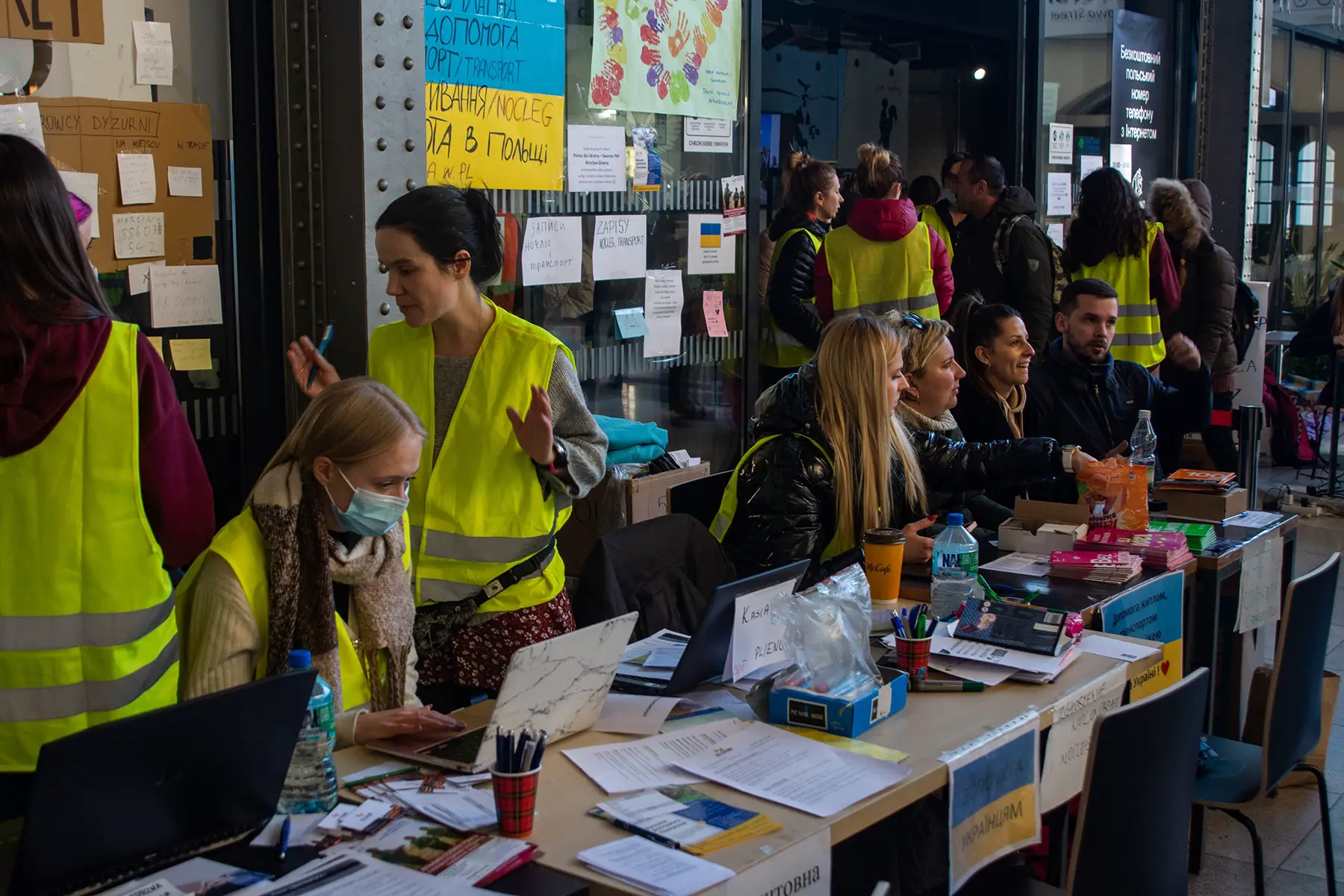
Next follows an extensive procedure, including registration, interviews, medical checks, and legal formalities. You’ll be assigned an interpreter and a lawyer if necessary. The entire process can take six to 21 months.
Special cases
Birth of a third-country baby
Children born in Luxembourg to third-country parents can get expedited family member residence permits.

The parents must fill out a membre de famille, nouveau-né (family member, newborn) form. During the application, they’ll have to submit evidentiary documents (e.g., birth certificate) and a photo complying with ICAO/OACI standards.
This visa is €80 and gives the baby the same rights as their parents.
Marriage
There is no special procedure for third-country nationals coming to Luxembourg to marry EU/EFTA nationals or third-country citizens. Instead, they must apply for a short-stay (type C) entry visa (if necessary).
EU/EFTA citizens can travel to Luxembourg without a visa.
Divorce or death
A change in your family setup does not necessarily mean that your family members will lose their residency. For example, in the event of divorce or your death, your spouse or partner can apply for a residence permit after three years.

When you are an EU/EFTA citizen, there are different rules than when you are a third-country national. Relatives of EU/EFTA nationals can apply for residency in their own right when:
- They have been living in Luxembourg for at least one year at the time of (your) death
- The marriage or partnership lasted at least three years, and at least one year was spent in Luxembourg
- They have custody of your children (e.g., an agreement between the parents or by court order)
- A judge ruled that the visitation with your children should take place in Luxembourg
Non-EU citizens can apply for residency if they can demonstrate that they’ve lawfully lived in Luxembourg for at least three years. This applies in the event of your death, a divorce, a breakup, or a marriage annulment.

In both cases, if domestic violence was the cause of the change in the family situation, your relative is not required to meet the three-year condition.
If you are the victim of abuse or sexual assault, you can contact Women in Distress (Femmes en Détresse) or Pro Familia Foundation for support, advice, and resources.
Family visa appeals and complaints
Appeals and complaints about family visas can be directed to the embassy where you originally submitted your application. You must do so within 15 days of receiving the rejection.
When your relatives are already in Luxembourg, you can file an informal appeal or complaint with the MFA. If that agency still denies you the visa or fails to respond within one month, you can take it to the Mediator of the Grand Duchy of Luxembourg (Luxembourgish: ombudsmann, French: ombudsman, German: ombudsman).
If all else fails, you can go to the Administrative Court (Luxembourgish: Verwaltungsgeriicht, French: Cour administrative, German: Verwaltungsgerichtshof).
Useful resources
- Guichet.lu – governmental website with useful information, including about immigration and visas
- MFA – website of the Ministry of Foreign and European Affairs that deals with immigration and visa applications
- Women in Distress (Femmes en Détresse) – for support, advice, and resources when coping with domestic abuse



Did you find this guide helpful?