'%20id='ico-down'%20stroke='%23000000'%20stroke-width='1.5'%3e%3cg%20transform='translate(1092.250000,%20254.750000)'%3e%3cpolyline%20id='Path-2-Copy-4'%20transform='translate(5.500000,%202.750000)%20scale(1,%20-1)%20rotate(-180.000000)%20translate(-5.500000,%20-2.750000)%20'%20points='0%200%205.5%205.5%2011%200'%3e%3c/polyline%3e%3c/g%3e%3c/g%3e%3c/g%3e%3c/svg%3e)



Luxembourg provides a high quality of life, free public transport, and excellent work-life balance, making it attractive for internationals. However, remote workers must prepare for significant paperwork to secure a long-term stay.
Since there is no official Digital Nomad Visa, non-EU remote workers and freelancers typically apply for the Self-Employed Residence Permit. This permit allows you to live and establish a business in the Grand Duchy for an initial three-year period, offering a legal alternative to short-term visits.
This 2026 guide details eligibility, financial requirements, and practical application steps to ensure a smooth transition.
The digital nomad landscape in Luxembourg
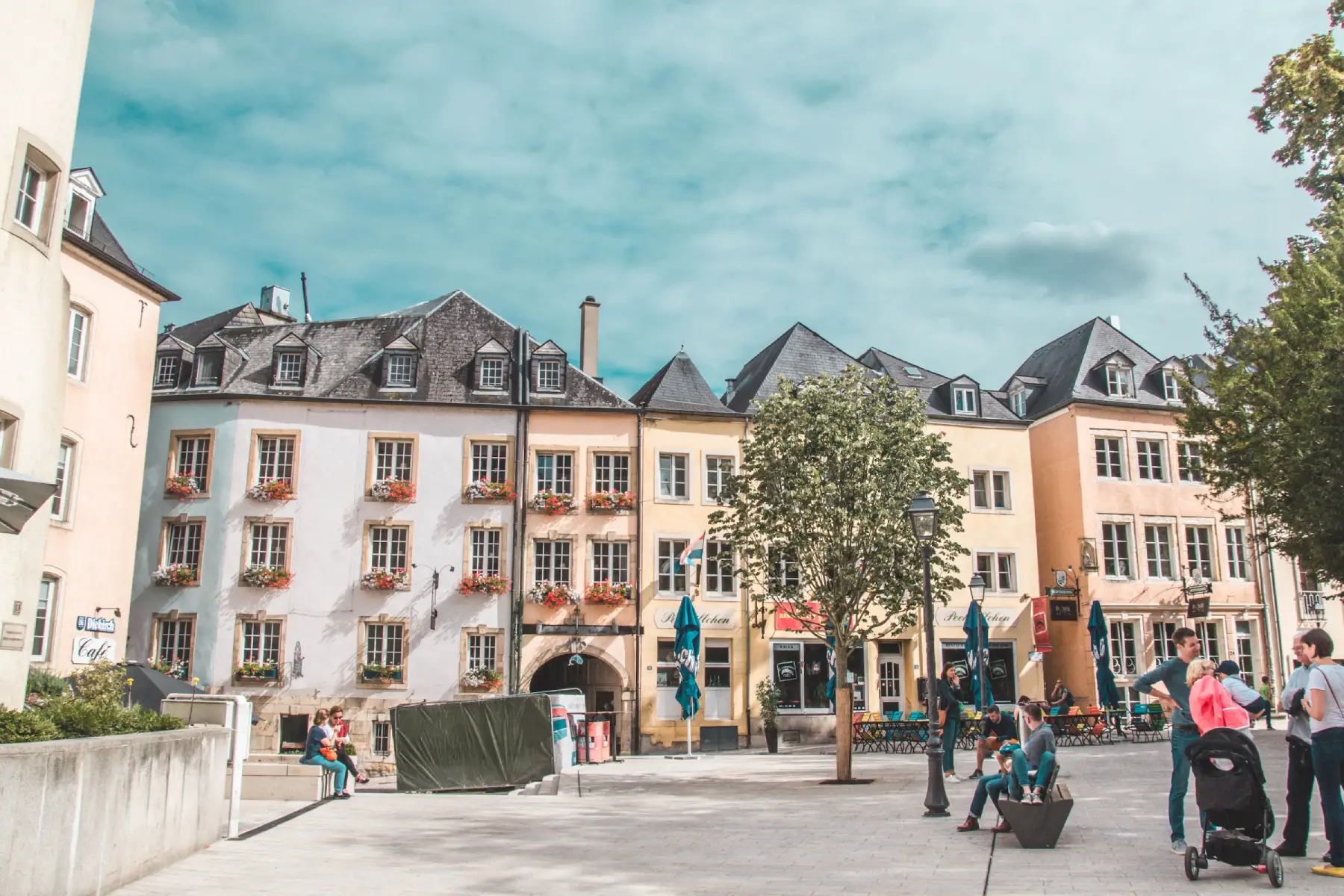
Luxembourg is a major hub for independent professional work, and you will find a different vibe depending on where you choose to set up your desk. Luxembourg City remains the go-to spot, with neighbourhoods like Bonnevoie offering a creative, multicultural atmosphere for freelancers, while the sleek Kirchberg district serves as a powerhouse corporate and fintech hub. If you are looking for a unique, post-industrial setting focused heavily on digital innovation and academic collaboration, the southern town of Esch-sur-Alzette (specifically the Belval district) provides an exceptional environment for tech-driven nomads.

The shift toward the Self-Employed Residence Permit is a big step up from a standard 90-day Schengen tourist stay. Relying on a tourist visa means you are limited to three months and have no legal right to work or establish a business while in the country. By obtaining the Self-Employed Permit, you gain the security of living in Luxembourg for up to three years initially, allowing you to actually build a life and a business rather than just passing through.
This legal security makes a huge difference if you are planning to stay long-term. Having an approved residence permit means you can sign rental contracts, set up utility accounts, and potentially work toward permanent residency or long-term resident status after five years of continuous living. It is a reliable way to enjoy everything the Grand Duchy has to offer without the stress of a ticking clock on your passport.
Who is eligible for the digital nomad visa in Luxembourg?
Before you start gathering your documents, you’ll need to check if you fall into the right category for this permit. Unlike some other countries with flexible freelance visas, the Grand Duchy requires independent workers to link their applications to an officially recognised business framework.
Understanding the types of self-employment
To get your application approved, your business needs to show that it brings real economic value or fills a genuine need in the local market. For remote workers, this generally breaks down into two paths:
- Liberal professions: Covers highly qualified, independent intellectual work like architecture or accounting services.
- Commercial trades: Applies if you are launching an e-commerce platform, a digital marketing agency, or a specialised tech service.
If your freelance setup falls under a commercial trade, a craft, or specific liberal professions, you will need to secure a Business Permit from the Ministry of the Economy before you can even apply for your immigration visa.
Financial thresholds
Proving you can fully support yourself and your business venture is a major part of your application. Because Luxembourg has a strong economy and a higher cost of living, immigration officers will closely evaluate your financial stability. Instead of checking for a fixed monthly salary, the state looks at two main factors:
- Your business savings: Your business and financing plan needs to show you have upfront start-up capital ready to go. For most digital nomads and online consultants, immigration experts recommend showing available business equity or savings between 25,000 EUR and 50,000 EUR to prove your venture is viable.
- Social security expectations: Keep in mind that once your permit is approved, the Joint Social Security Office (CCSS) will register you. For a full-time freelance activity, they automatically calculate your mandatory monthly insurance contributions based on a minimum income baseline of 2,703.74 EUR per month. This means you should budget for social security payments of around 25% to 28% of this minimum baseline right from the start.
To prove this, you can hand over official bank statements, signed multi-month client contracts, or clear evidence of your company’s funding.
Health and character
Luxembourg is very strict about healthcare coverage, and a standard, cheap holiday travel insurance policy won’t cut it for a long-term stay.
Once you arrive, register directly with the Joint Social Security Office (Centre commun de la sécurité sociale – CCSS). Unlike an employee, you will be responsible for paying both the employer and employee shares of your insurance.
In your first year, because the CCSS doesn’t have a tax record for your business yet, they will base your monthly bills on the standard minimum social wage. You should budget for a monthly invoice of roughly 680 EUR to 750 EUR, which bundles together your healthcare, accident coverage, and pension.
Finally, to pass the standard character check, you will simply need to provide an official, clean criminal record check from your home country and a simple sworn statement about your professional background.
Applying for your visa: A step-by-step guide
Moving your remote workspace to Luxembourg essentially comes down to two big milestones: getting your business and immigration approvals sorted from home, and then finalising your paperwork once you land. The Grand Duchy loves its paperwork, but checking things off one step at a time makes the process more manageable.
Step 1: Prepare your documents
Gathering your documents is the most important part of your application. You will need to include:
- Your professional track record: An updated CV alongside any relevant university degrees or professional certifications.
- A business plan: A clear business proposal detailing your planned remote services, a multi-year budget forecast, and evidence that you have the required start-up capital.
- Official records: A full copy of your valid passport, your birth certificate, and a clean criminal record check from your home country issued.
- Certified translations: Depending on where you’re coming from, documents may need to be translated by an officially sworn translator and apostilled or legalised.
Step 2: Request your business permit
Your business project needs a green light before you can approach the immigration office. You will send your business plan to the General Directorate for Small and Medium-Sized Enterprises to obtain a Business Permit. If you are doing purely independent intellectual work, such as freelance translation or coaching, you might be able to skip this part. However, setting up an online shop or a digital agency makes this milestone mandatory.
Step 3: Secure your authorisation to stay
You can apply for your Temporary Authorisation to Stay from your home country once your business concept is approved. You submit this file directly to the Directorate of Immigration.
Step 4: Pick up your Visa D
You have 90 days to enter Luxembourg once the Directorate of Immigration approves your stay. If your nationality requires a visa to enter the Schengen Area, you must take your approval letter to your local embassy or consulate to get a Long-Stay Visa (Type D) stamped into your passport. The standard administrative fee for this entry visa is 50 EUR.
Step 5: Touchdown and Commune registration
Filing your official declaration of arrival requires visiting the local town hall (commune) of your chosen municipality within your first three days on the ground. Remember to bring along your passport, your approval letter, and a copy of your new local lease or proof of accommodation.
Step 6: Pay for your residence card
Finishing the process requires booking a physical appointment at the Directorate of Immigration in Luxembourg City to submit your biometric data, including your photo and fingerprints. You will receive an invoice via mail or during your appointment to pay the 80 EUR card fee. The final card grants you a secure, renewable legal status to live and operate your business for up to three years.
Financial planning for your move
Moving to a new country is an exciting milestone, but it also requires some strategic financial planning to avoid any surprises. One of the most important things to account for is the settling-in cost, which can be higher than many expect when you factor in rental deposits and the initial lack of a local bank account.
Initial costs
When you look for a place to live in Luxembourg, you will need to account for a rental deposit. Local housing laws strictly cap this security deposit at a maximum of two months of your base rent. Because Luxembourg’s housing market is highly sought after, paying this guarantee alongside your first month’s rent upfront for a nice one-bedroom apartment near the capital can easily add up to several thousand euros.
On the bright side, the vast majority of rental properties in Luxembourg come standard with a fully fitted kitchen, cabinetry, and proper lighting fixtures already installed, meaning you can focus your initial budget on basic furniture and your first couple of grocery runs without feeling an immediate financial pinch.
Understanding the cost of international transfers
Transferring large sums of money for a rental deposit or to prove your financial stability can be expensive if you rely on traditional methods. Many people assume their local bank is the easiest option, but it often comes with a hidden price tag, especially compared to international money transfers.

Editor
Tarah Ren
Insider Tip
Moving large sums for a rental deposit via banks can often result in 3–5% losses due to hidden exchange rate markups. Many providers claim to have low fees but use a less favourable exchange rate to make up the difference.
Manage your Euros with Wise

Using a specialist provider like Wise can simplify the way you handle your finances as you settle in.
You can use a Wise account to hold and convert Euros (EUR) at the mid-market rate, which is the same rate you would usually see on Google. This allows you to pay your landlord or cover government fees without the immediate bureaucracy of a traditional bank account in your first few weeks.

A Wise multi-currency card also helps you avoid foreign transaction fees from your home bank while you are buying essentials. Choosing this route provides a practical way to bypass the wait for local paperwork and start living like a local from day one.
Putting it into practice: A common freelancer hurdle
Many internationals moving to Luxembourg face a chicken-and-egg situation: you often need a long-term lease to finalise your residence permit, but landlords are hesitant to sign a lease with someone who doesn’t have their final permit card yet.
An excellent way to beat this cycle is to book a short-term serviced apartment or temporary housing for your first week or month. Just make sure the provider explicitly allows you to use the address for your local town hall arrival declaration. Getting that initial registration document within your first three days gives you the official paperwork you need to smoothly cross the finish line with the immigration office.
Taxes and social security in Luxembourg
Understanding the local tax and social security setup is a vital part of keeping your business running smoothly. While managing the paperwork might feel a bit daunting at first, the Luxembourgish system is highly efficient and provides excellent social coverage once you’re fully set up.

Navigating tax residency and the 183-day rule
In Luxembourg, your tax obligations are mainly determined by where you live and how long you stay. Generally, if you spend more than 183 days in the country during a calendar year, or if your main base of operations is located here, you are considered a tax resident. This means you will report your worldwide income on your annual Luxembourg tax return.
The Grand Duchy uses a progressive income tax system. For 2026, your first 13,230 EUR of earnings is completely tax-free. Any income you earn above this amount is taxed in gradual steps, starting at a modest 8% and rising up to 42% for very high earners.
Mandatory social security for all freelancers
Luxembourg doesn’t have a separate or subsidised fund for creative or specific freelance professions. Instead, every single self-employed person, whether you are a digital marketer or a software consultant, registers under the exact same system with the Joint Social Security Office (CCSS).
Because you are working for yourself, you are responsible for paying the full social security contribution, which totals roughly 25% to 28% of your professional income.
Your monthly CCSS invoice is a convenient, all-in-one package that covers:
- Health & healthcare: Complete access to Luxembourg’s world-class medical system.
- Pension insurance: Contributing directly to your retirement future.
- Accident & dependency insurance: Providing a secure safety net for peace of mind.
Editor
Tarah Ren
Insider Tip
Because your actual income for a given year is only finalised after you file your tax return, the CCSS will eventually recalculate your social security payments retroactively. This catch-up bill can sometimes arrive a year or two later, so it is a good idea to tuck away a little extra savings early on to avoid any surprise invoices down the road!
Setting up your life: Housing & healthcare
Landing in the Grand Duchy means stepping into one of the most organised and secure societies in Europe, but getting settled still requires understanding a few local systems. Setting up your new home and integrating into the national health framework are your first real orders of business, and knowing how the local property market and universal coverage interact will give you a massive head start.
Strategies for the competitive housing market
Finding a long-term apartment in Luxembourg, especially in the vibrant districts of the capital or the booming tech hub of Esch-Belval, is famously competitive. Because of this, almost all remote professionals start by booking a short-term serviced apartment or a furnished temporary rental for their first month.
A great way to bypass this hurdle is booking temporary accommodation for your first month. The trick is to ensure your short-term provider explicitly allows you to use their address for your local arrival declaration at the town hall. Once you have the initial paperwork sorted within your first three days, you can take your time exploring the local market.
Understanding your healthcare options
Healthcare in Luxembourg is organised around a single state fund called the CNS. As a self-employed worker, your monthly social security payments automatically enroll you in this public system.
The framework is highly straightforward and works on a direct reimbursement model:
- Adult coverage: You can book appointments directly with any general practitioner or specialist. For adults, the CNS covers 88% of the official statutory fee for a standard consultation.
- Payment methods: Traditionally, you pay the doctor upfront and mail the receipt to the CNS for a refund. However, Luxembourg is rolling out a digital system called Immediate Direct Payment (PID). If your clinic uses this, you only pay your 12% out-of-pocket share at the desk.
Editor
Tarah Ren
Insider Tip
Because the public system leaves you with that 12% personal co-payment on consultations and doesn’t cover alternative medicine, most expats choose to purchase a basic supplementary private health insurance policy (mutuelle). These plans are generally inexpensive and cover the remaining out-of-pocket gaps.
While public healthcare in Luxembourg is excellent, it operates on a reimbursement model and usually only covers 88% of standard consultation fees. Investing in an inexpensive supplementary private mutual insurance plan right when you arrive is the smartest way to ensure those remaining out-of-pocket gaps and any alternative treatments are completely covered.

Banking and managing money as a nomad
You can establish your financial setup in Luxembourg easily by picking the right tools to handle Euros without getting caught up in traditional paperwork to open a bank account. While you will occasionally want a few coins for parking meters or local markets, Luxembourg relies mostly on digital, card-friendly systems where tap-to-pay and electronic bank transfers form the core of daily life.

Secure your local IBAN for the essentials
You will eventually want a European IBAN to handle your recurring bills. Most local utility providers, mobile phone companies, and co-working spaces rely on SEPA direct debits to automatically pull your monthly payments. Having a straightforward way to send and receive transfers also makes you much more client-friendly, as local businesses tend to prefer standard SEPA bank transfers over international wires.
Master the daily grind without the fees
Avoid the sting of foreign transaction fees from your home bank by using a Wise debit card for your daily Euro spending. Whether you are grabbing a quick coffee or hopping across the border, spending directly in EUR saves you from the hidden markups banks often sneak into the exchange rate.
Editor
Tarah Ren
Insider Tip
Banks can often result in 3–5% losses due to intransparent exchange rate markups on international transfers. Look for providers that offer the mid-market rate to ensure your money goes further when paying your high initial costs like rental deposits.
You can open a Wise account before you even pack your bags to get instant access to EUR account details to pay your landlord or receive your first freelance invoice at the mid-market rate. It’s the fastest way to start living like a local from the moment you step off the plane.
Useful resources
- Guichet.lu: The official administrative portal of the Luxembourg government. It is your primary hub for downloading authorisation forms, checking long-term permit rules, and uploading documents.
- Expatica’s Guide to Healthcare: Navigate the complexities of the Luxembourg health system with this comprehensive breakdown of insurance options.
- Wise EUR Account: Open an account to receive and manage Euro expenses at the mid-market rate without the usual bank bureaucracy.
Checklist: Before you go
- Passport validity: Make sure your passport has at least 15 months of validity remaining from the date you submit your paperwork.
- Business plan & savings: Draft a clear outline of your remote services and pull your bank records to show you have the recommended 25,000 EUR to 50,000 EUR in upfront business capital.
- Clean records: Grab an official criminal record background check from your home country. It needs to be less than six months old when you hand in your file.
- Currency setup: Open a Wise account ahead of time so you can instantly send your housing security deposit or accept local client invoices in Euros at the fair mid-market rate.