
'%20id='ico-down'%20stroke='%23000000'%20stroke-width='1.5'%3e%3cg%20transform='translate(1092.250000,%20254.750000)'%3e%3cpolyline%20id='Path-2-Copy-4'%20transform='translate(5.500000,%202.750000)%20scale(1,%20-1)%20rotate(-180.000000)%20translate(-5.500000,%20-2.750000)%20'%20points='0%200%205.5%205.5%2011%200'%3e%3c/polyline%3e%3c/g%3e%3c/g%3e%3c/g%3e%3c/svg%3e)


Education
Language Learning
Language schools in Belgium: Dutch, French, German
From language schools in Belgium to online classes, apps, and government courses, discover where to learn Dutch, French, or German in your new country.

Belgium has three official languages: Dutch, French, and German. Of course, if you can only speak English when you arrive, you will still be able to communicate easily, as many Belgians speak it fluently.
However, if you try to learn at least one of the official languages, daily activities like banking, working, and using public transport will be easier. Even knowing just a few words may help you explain your symptoms to your doctor or discuss your child with their school.
Whether you want to learn Dutch, French, or German, this article explains everything you need to know about language schools in Belgium by exploring these topics:
Preply
Immerse yourself in the language of your new country with Preply. This app and website matches learners with online tutors so you can follow live, personalized language classes. With 50 languages to choose from, and tutors all over the world, there’s a course for everyone. Check out Preply to start your language-learning journey today.

Why learn Dutch, French, or German?
Learning another language has many benefits, such as boosting your memory and brain function while supporting social integration into your new country. Belgium (Dutch: België, French: Belgique, German: Belgien) has three official languages: Dutch, French, and German. As a result, many residents in the country are multilingual.
In addition, within the Brussels-Capital region, where many internationals live, the 19 communes or municipalities operate in both Dutch and French.
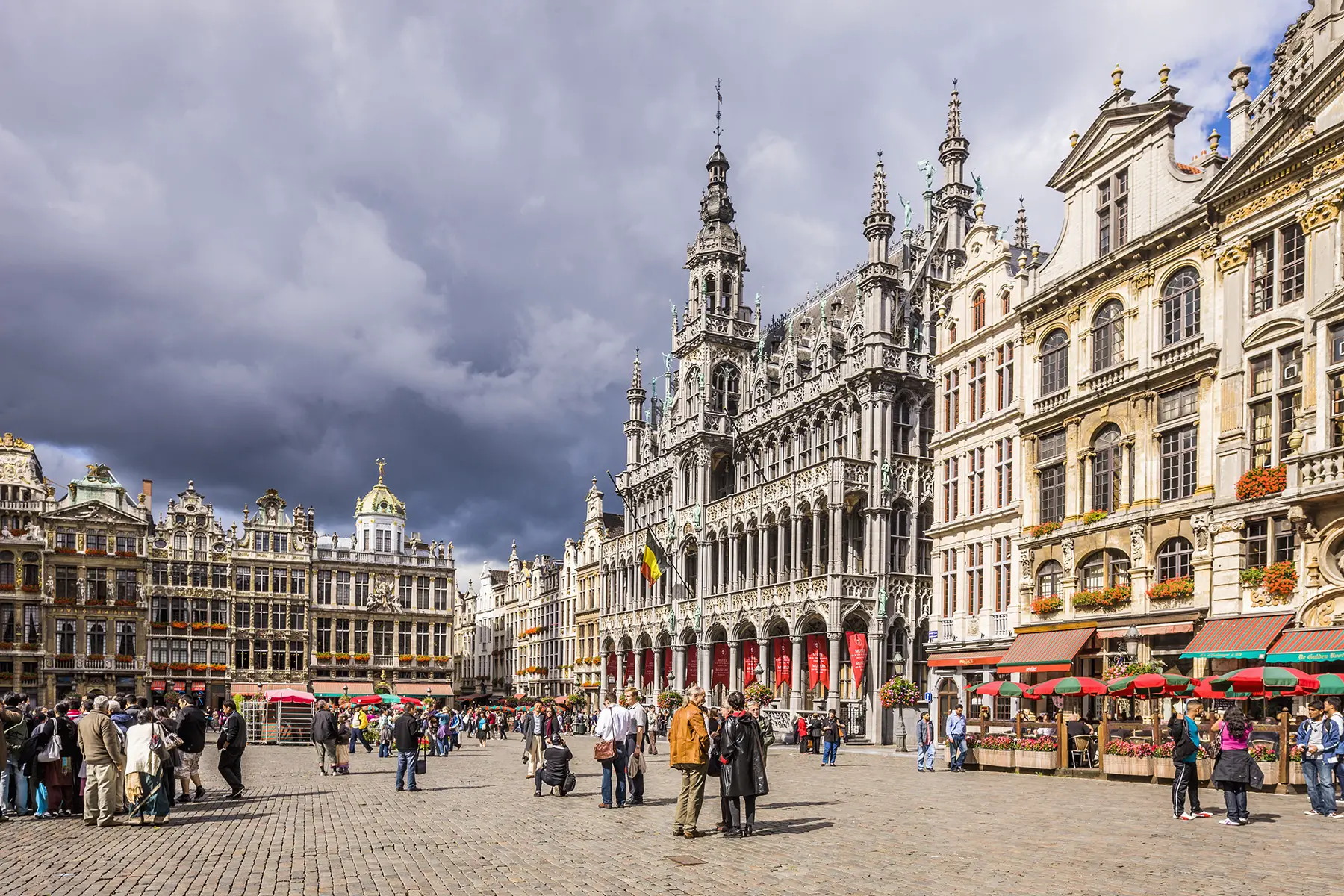
English is not an official language in Belgium. However, many residents can speak it, especially in the capital, Brussels (Dutch: Brussel, French: Bruxelles, German: Brüssel), home to the European Union (EU) and North Atlantic Treaty Organization (NATO) headquarters. Still, many locals may prefer to address you in French, Dutch, or German instead of English. Therefore, it is helpful for newcomers to learn at least one of Belgium’s official languages to ease social interactions and gain insight into the Belgian etiquette and culture.
Learning a local language in Belgium will also improve your job prospects or make school and university courses more accessible.
How do you choose which language to learn?
Deciding which language to learn will depend on where you live.
Belgium divides into Dutch-speaking Flanders (Dutch: Vlaanderen, French: Flandre, German: Flandern) in the north near the Netherlands and French-speaking Wallonia (Dutch: Wallonië, French: Wallonie, German: Wallonien) in the south near France. The much smaller German-speaking community (Ostbelgien) is primarily located in the east of the country, bordering Germany.
Whether you learn Dutch, French, or German, you’ll have no trouble finding a language school – online or in-person – suitable for your skill level and budget.
Why learn Dutch?
About 6.5 million of Belgium’s 11 million residents (just over 60%) speak Dutch as their first language, making it the predominant language in the country. Globally, there are more than 23 million native Dutch speakers. Notably, Belgium’s Dutch dialect (i.e., accent, idioms, and vernacular) differs slightly from Dutch spoken in the Netherlands.
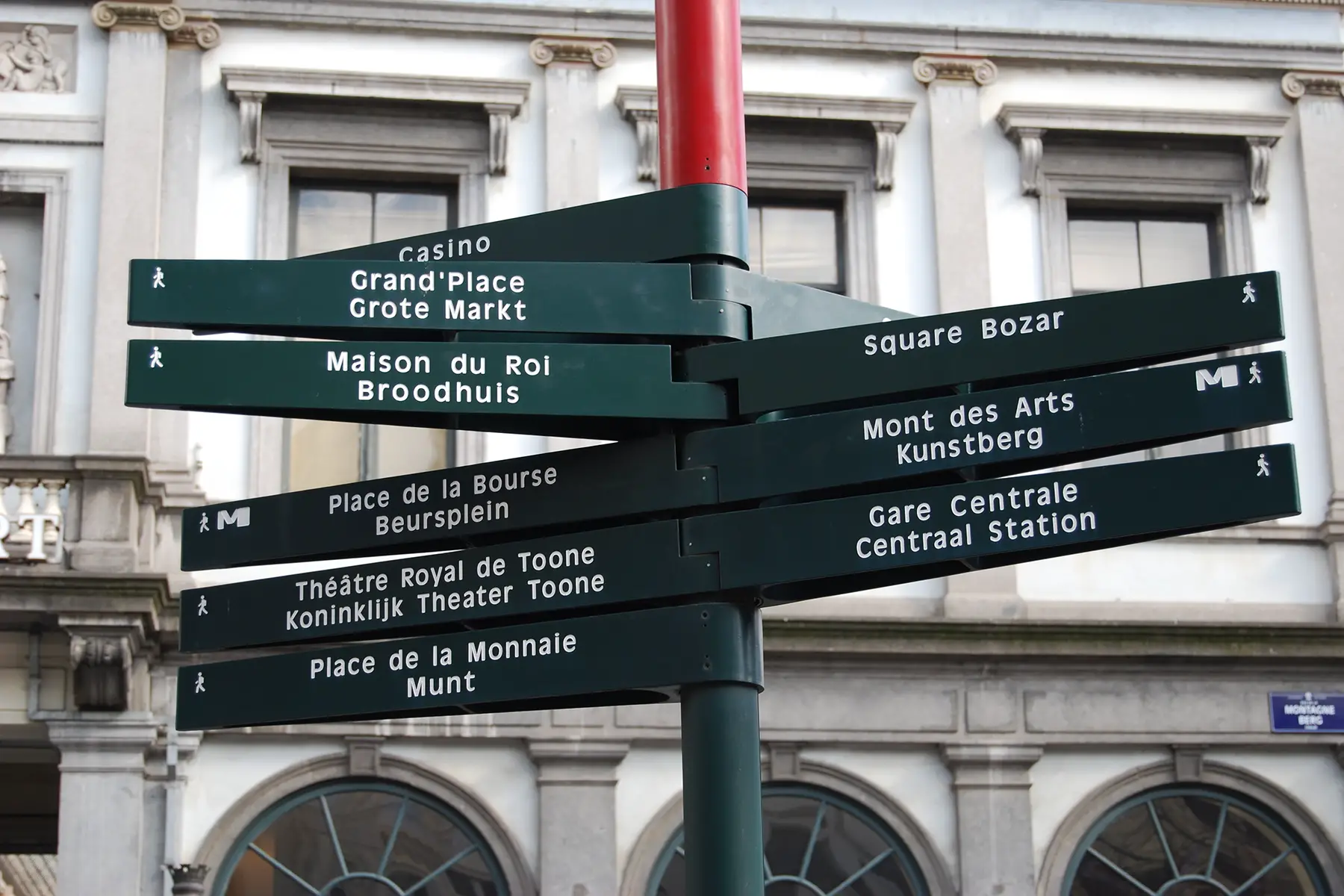
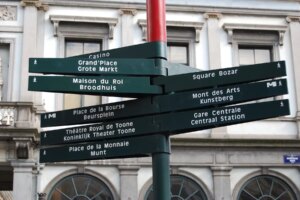
Flanders, which borders the Netherlands, is Belgium’s Dutch-speaking area. It includes the Brussels-Capital Region, which is officially bilingual. Even road signs are in Dutch and French.
If you are living in the city of Antwerp (Dutch: Antwerpen, French: Anvers), Bruges (Dutch: Brugge, French: Bruges, German: Brügge), Ghent (Dutch: Gent, French: Gand) or elsewhere in Flanders, learning Dutch is an obvious choice.
Reasons to learn French
Just over 4.5 million Belgians speak French as their mother tongue, making it the second most common language in the country. People speak it primarily in Wallonia in the south where Belgium borders France. More than 321 million people worldwide speak French, making it the fifth most spoken language in the world.

It would make the most sense to learn French if you move to the region’s capital city of Namur (Dutch: Namen) or other Wallonian cities like Liège (Dutch: Luik), Mons (Dutch: Bergen), or Dinant.
Why learn German?
While nearly 130 million people globally speak German as their first or second language, less than one percent of Belgians are German speakers. Still, it is an official language. Learning German may be a good call if you move to the eastern provinces sharing a border with Germany.
Learning Dutch, French, or German before moving
You can get a head start on your language learning journey even before your arrival in Belgium. Indeed, having a basic understanding of the local language will help you get started in your new life. For example, finding a place to live, opening a bank account, and registering for healthcare become easier when you can communicate your needs clearly.
International language schools in Belgium
Some language schools have an international presence, meaning you can start learning before you move to Belgium. In other words, look for a school with language classes in both countries.
These schools may also offer online language classes, for example:
- Alliance Française – an institution promoting French culture with many international locations offering a wide variety of French classes
- Berlitz – a reputable, global language school with several courses, including Dutch, French, German
- Goethe-Institut – study the German culture and language at many locations throughout the world with this program
Learning Dutch, French, and German in Belgium
Once you are in Belgium, it is even easier to learn Dutch, French, or German as you will be immersed in the culture and the languages.
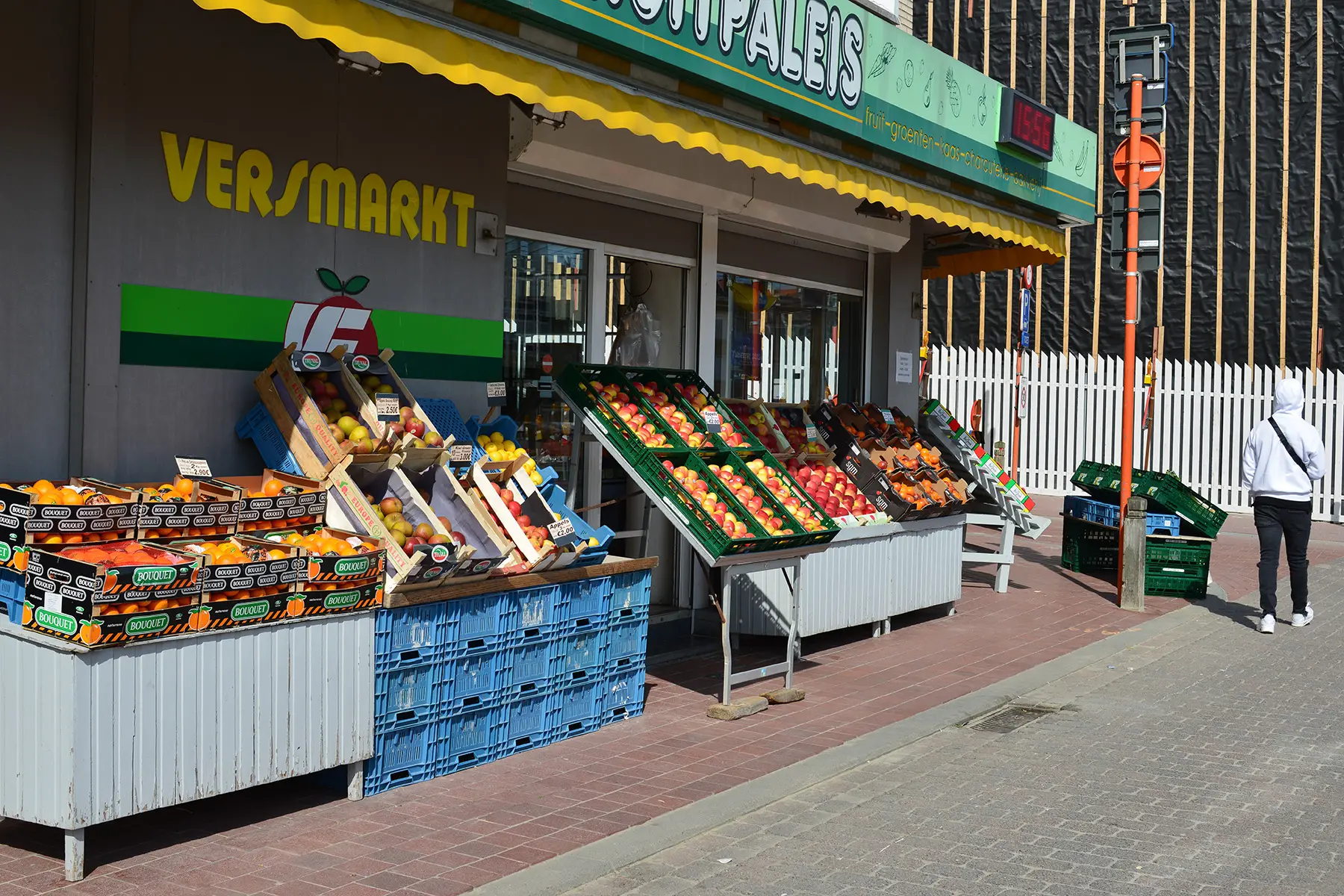
You will also have a wide choice of local language schools. Of course, you can continue your learning outside the classroom by going about your daily life using what you’ve learn, while buying groceries, using apps, watching television, or going to the dentist.
Belgian language schools
Although most language schools are in Brussels, there are also many options around Belgium and online.
Contact one of these centers below to start your language learning journey.
Only in Brussels
- Amira Language School: Brussels – offers small in-person courses in Dutch, French, and German. It is a government partner school with Actiris, providing free language lessons to job-seekers registered with the city.
- Alliance Française: Brussels – offers individual and group in-person courses (day and evening) and online courses. You can also access intensive programs, preparation classes, and formal language exams.
- Centre de Perfectionnement Academique de Bruxelles (CPAB): Brussels – the nonprofit offers French and Dutch courses and conversational classes during the daytime and evening
- Europa Language School: Brussels – offers classes in Dutch and French for individuals and through employer programs with businesses
- F9 Languages: Brussels – offers Dutch, French, and German lessons to individuals and companies
Other nationwide locations
- Berlitz: Antwerp, Bastogne, Brussels, and Liège – classes designed for children, adults, and companies, with in-person and online options
- Call International: Brussels, Liège, and Waterloo – offers workshops in specific skills like telephone calls, job interviews, and CV writing. Several courses for youth and adults, daytime and evening, in-person and online, with options for private, semi-private, and groups.
- CLL Language Centres: Brussels, Louvain-la-Neuve – offers courses accredited by the European association, EAQUALS (Excellence in Language Education). They have courses for children, youth, and adults, in person and online. You can also access test preparation programs.
- CVO Encora (in Dutch): Antwerp – adult education language classes offered in Dutch (NT2), French, and German
- Eurospeak: Antwerp, Brussels, and Ghent – offers classes in several languages, and an intensive three-week Dutch program (Ghent)
- Forma Lingua (in French): Liège – businesses and individual courses in Dutch, French, and German
- Hello Languages: Antwerp – provides language training in Dutch and French
- Language Center ISLV: Liège – the Liège University’s language learning center offers courses and testing
- Lerian: Brussels, Ghent, Antwerp, Liek, and Tervuren – individualized language courses for businesses and individuals, plus immersion courses. Some classes may be discounted or free for some employees.
- Linguapolis: Antwerp – language courses through the University of Antwerp
- Wiams: Bree – one-week French immersion courses for children as young as six during spring and summer holidays
Government language lessons in Belgium
Many cities and communes within the Brussels-Capital Region offer government-subsidized classes through established learning institutions, for example:
- Etablissement d’enseignement pour adulte et de formation continue – Uccle
- Institut Auderghemois de Promotion sociale
These courses – and many others – follow the Belgian school calendar and require a placement test before enrolment.
Registration opens in January for the semester running from February to June and again in August, with classes from September through January. Costs vary based on the frequency of classes but expect to pay €80–200 for a three-hour class offered 2–4 times weekly.

Some applicants may qualify for an additional discount on the rates, including:
- Immigrants
- Students
- People with a disability
- Unemployed people
Information for government courses is specific to each commune or municipality. Class availability changes based on the number of applicants; there is a minimum requirement for classes to run. Anyone with a Belgian ID card can enroll in these courses. So, check with your commune for more information.
Other government courses include the Vrije Universiteit Brussel (VUB), which offers English, Academic Dutch, and German programs through the Academic Center for Language Education. Another option is CVO Semper, the educational arm of the Brussels Chamber of Commerce (Dutch: Kamer van Koophandel, French: Les Chambres de Commerce) that offers adult continuing education classes in many languages, including conversational courses for traveling and Flemish Sign Language (Vlaamse Gebarentaal – VGT).
Learning Dutch, French, and German for free
Children arriving in Belgium may be eligible for their local public school’s language program prior to beginning regular instruction. Programs vary by age and institution.
For adults, many community centers and some local religious organizations offer free language classes, often centered on increasing conversation skills and vocabulary necessary for everyday tasks. Registered job-seekers in the Brussels-Capital Region may also qualify for free or reduced-cost language courses, private lessons, or group classes. Therefore, contact your regional employment office for more information.
Online language courses: Dutch, French, and German
Fortunately, there’s never been a better time to take language lessons online, with so many on offer. Indeed, you will be able to find a course that meets your needs, schedule, and budget.

For instance, you can sign up for a weekly group lesson, meet with a private instructor for one-on-one practice, or work at your rate.
List of online language courses
- Berlitz: offers Dutch, French, and German courses online or as a combination of self-study with individual instruction. You’ll attend a live two-hour class weekly for 20 weeks, costing around €560. Private packages include 40 units in 30 sessions and cost around €2075, and the self-paced study consists of a placement test and 20 personalized sessions.
- italki: gets you talking with individual sessions with a native speaker. Trial lessons start from around €5. You can also book an hour long conversational class, based on your interest and schedule (about €7–15).
- LanguaTalk: offers online tutoring in many languages. First, you’ll have a 30-minute trial lesson with a tutor and if it is a good fit, set a schedule according to your goals. Prices start at around €9 per hour.
- Lingoda: offers French and German courses online, individually and in small groups. Classes are live, but you can switch instructors and times to suit your schedule.
- LSI Education: offers French and German in an intensive online course with 10-25 hours of instruction per week, and preparation courses for language certification tests
- Preply: matches online tutors with learners so you can follow live, personalized lessons
- Skype Language School: offers packages of 10 or 20 sessions (45 minutes each) for about €425–850. The courses are for beginners to progress from A0 to A2.
- University of Groningen: offers a free Dutch introduction course (three weeks). Apparently, it enables you to introduce yourself and talk about family, work, and study. Best of all, it costs nothing and is offered several times a year.
Other handy online language-learning resources
At some point, you’ll probably need a little extra help. As such, you’ll find quality dictionaries and translators available free online to help expand your vocabulary, including:
- Cambridge Dictionary: Dutch and German to English dictionary
- Collins Dictionary: French and German to English dictionary
- DeepL Translator: detects language and translates to selected language
- Google Translate: detects language and translates to selected language
Learn Dutch, French, and German with a computer or smartphone app
If you want to work at your own pace from home, you can also access reputable and established language programs. All you need is the time, a computer, and an internet connection.
Well-known language courses
- Brainscape: practice phrases and vocabulary with flashcards in French or German
- Fluenz: a computer program and app combination for all levels of French and German. The program tests pronunciation and comprehension.
- Instant Immersion: a 2.5-hour audio crash course in Dutch, French, or German, but also offers complete language courses
- News in Slow: listen and read current events at adjustable levels in French or German and click on words for the translation
- Pimsleur: study Dutch, French, and German (51 languages available) with 30-minute lessons, flashcards, and voice coaching
- RocketLanguages: available in French and German, with over 350 hours of lessons
- Rosetta Stone: learn Dutch, French, or German with bite-sized lessons available on- and offline
- Transparent Language: customized learning plans based on your skill level and interests
If you want to learn on the go – for example, during your morning commute – download one of these fun language apps onto your mobile phone.
Popular language apps
- Babbel: app-based lessons and practice conversations. Babbel Live (available in French and German) offers live classes with certified instructors and small groups, organized by topic, and available at all levels.
- Duolingo: fun and popular free app offers Dutch, French, and German courses (among others)
- Mondly: this app aims to make learning languages fun. Available in Dutch, French, and German and also has a version for children
Learning Dutch, French, and German outside of the classroom
Reinforce what you learn in the classroom or online by meeting and chatting with locals. In Belgium, you only need to step outside your door to practice your newly acquired French or Dutch skills. Of course, you can practice your German too, but this may be easier in the country’s east.

Here are a few tips to get real-life practice:
- Patati Patata is a free language exchange program in Brussels for those who want to meet new people while practicing speaking Dutch and other languages
- Meet a group of strangers for a drink each month in Antwerp with the Polyglot Club, or check the calendar for events in Brussels
- Various Facebook and Meetup groups often meet weekly for conversation practice
- Many shopkeepers in Belgium are bilingual. As long as it is not too busy, try ordering your vegetables in French or talk to the cheese monger in Dutch.
- Ask your neighbors for help. You can practice the local language while finding out about the best local childcare or how to recycle your trash.
- If your children are young, expand your vocabulary by hosting a playdate. They will have fun while you organically pick up some words.
- Exercise your body and mind by joining a sports club or local society
- Make an effort to stick with Dutch and French in conversation with new friends. Persevere even when they take pity on you and offer to switch to English
- Watching films and television in Dutch or French – or with subtitles – is a great way to tune your ears to the language
- Read local newspapers, listen to the radio, and get books from the library
Official language examinations and qualifications in Belgium
Studying at language schools in Belgium will certainly make your day-to-day life simpler. And, don’t underestimate the self-confidence and pride that come from mastering a new language.
Additionally, passing an officially-recognized language examination will offer even more benefits. For example, employers or university programs may request proof of your language proficiency during the application process.

Official language exams include three parts:
- Reading and writing
- Listening and comprehension
- Speaking
Expect the examination to last several hours. Typically, online courses can offer certification as well. Some organizations offer online exam registration. Some schools and organizations offer discounts on exams or include the cost of testing in language courses. If you are currently enrolled or plan to enroll in any type of language course, ask your instructor about certification.
List of exams
- Berlitz: offers listening and reading skills tests for Dutch, French, and German according to The Common European Framework of Reference for Languages (CEFR)
- Certificaat Nederlands als Vreemde Taal (CNaVT): you can obtain this internationally-recognized certificate for Dutch with a placement test through the Catholic University of Leuven
- DELF/DALF: Diplôme d’Etude ou Approfondi en Langue Française (DELF/DALF) and Test de Connaissance en Français (TFC) are internationally-recognized French language certificates with indefinite validity. In Brussels, the Alliance Française offers testing at all levels, while you can sit intermediate and advanced level exams at the University of Liège.
- Dutch as a Second Language (NT2): standard exams (i.e., reading, writing, speaking) for Dutch language learners in Belgium from September 2023
- Goethe-Institut: offers German exams for children and adults, beginners to advanced. Exams take place in February, June, and October.
- The European Language Certificates (TELC): is a non-profit internationally-recognized language proficiency certificate. They schedule tests twice a year in French and German (A1 to B2 levels)
Useful resources
- Open Culture – lists free online language lessons in 48 languages
- Brussels Smart City – helpful information on learning languages in Brussels
- Be Brussels – lists many free activities and classes in Brussels
- Huis van het Nederlands – organization that encourages learning Dutch and lists all the language schools in Brussels
- La Maison de la Francité – a list of municipalities and French courses in Brussels
- Prosocbru – a network of community-based language courses

Did you find this guide helpful?