
'%20id='ico-down'%20stroke='%23000000'%20stroke-width='1.5'%3e%3cg%20transform='translate(1092.250000,%20254.750000)'%3e%3cpolyline%20id='Path-2-Copy-4'%20transform='translate(5.500000,%202.750000)%20scale(1,%20-1)%20rotate(-180.000000)%20translate(-5.500000,%20-2.750000)%20'%20points='0%200%205.5%205.5%2011%200'%3e%3c/polyline%3e%3c/g%3e%3c/g%3e%3c/g%3e%3c/svg%3e)


Living
House & Home
Household waste and recycling in Belgium
Find out everything you need to know about recycling in Belgium to contribute to a circular economy and avoid any fines for improper waste disposal.
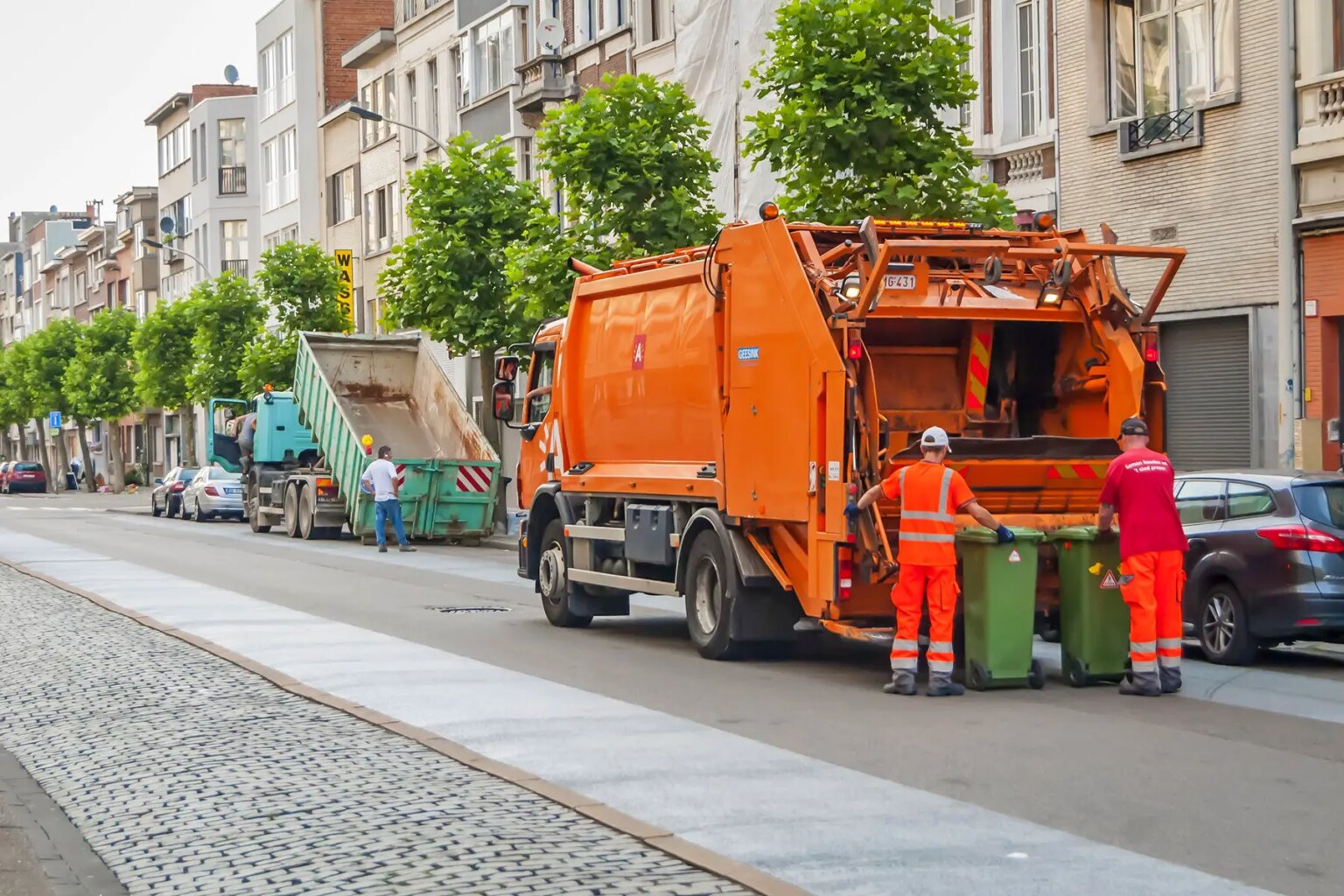
The Belgian government is very proud of its reputation as a trailblazer in sustainability and aims to transition into a circular economy by 2025. Because part of this goal involves recycling materials and decreasing the use of resources, it is continuously improving its waste management system.
However, similar to some other European nations, where you live determines how you recycle your household waste in Belgium. So, to help you understand the ins and outs of recycling in the country, this article includes the following information:
The system of recycling in Belgium
According to Eurostat, Belgium boasts one of the highest recovery and recycling rates amongst all European Union countries. In fact, it recycled 79.2% of all waste in 2020, which is well above the EU average of 53%.
The numbers are even more impressive when it comes to the recycling of household packaging waste. According to Fost Plus, the organization responsible for household waste management in the country, Belgium showed a recycling rate of 94.9% in 2020. This marks an improvement for the fifth year in a row, making Belgium the European leader in the recycling of household packaging.
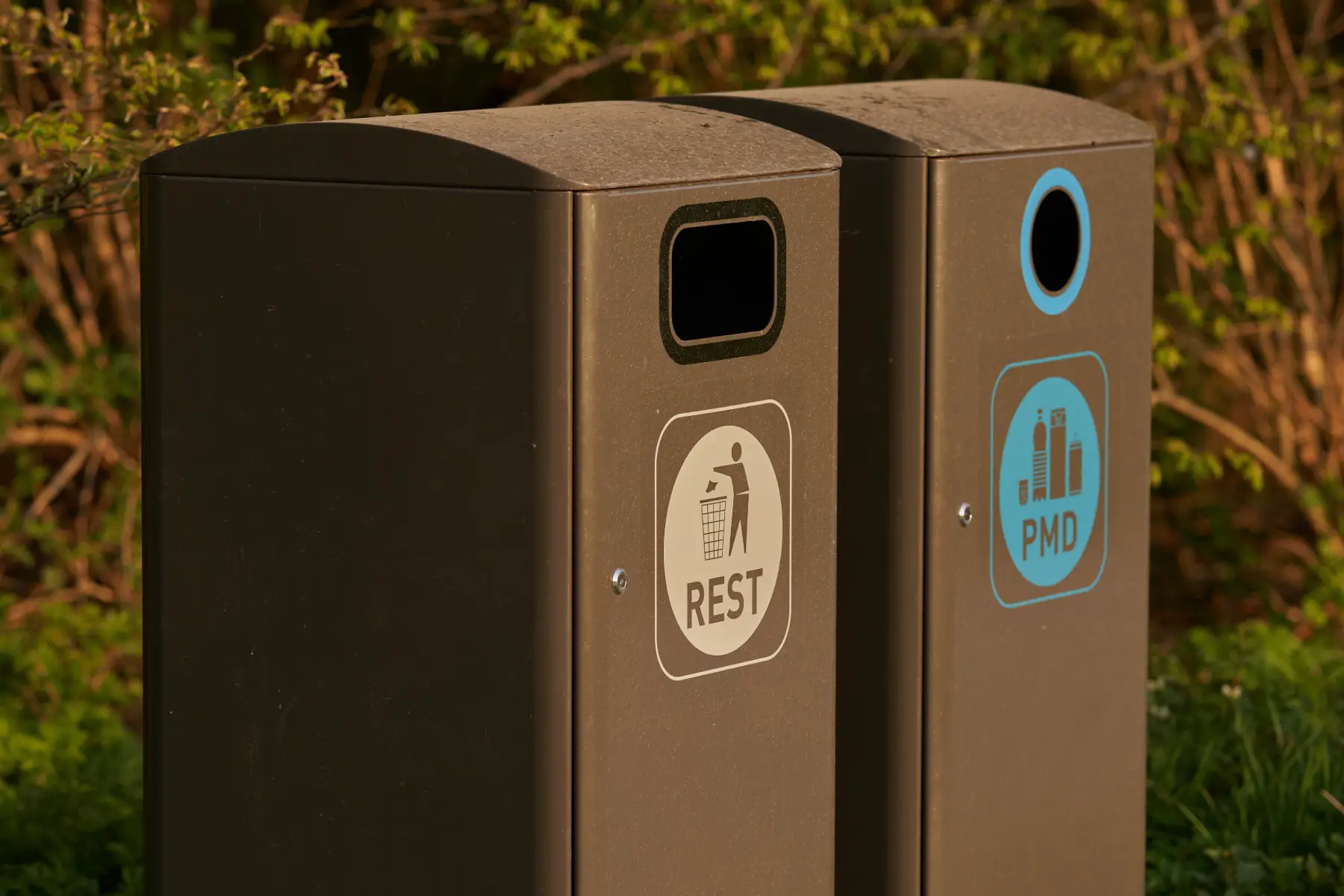
All in all, recycling in Belgium is a two-pronged system. In addition to having waste collected from your home, you can also dispose of it at collection points and recycling container parks. Municipalities are responsible for collecting and managing household waste. They often cooperate with each other through public associations to ensure effectiveness.
Notably, Belgium’s Central Government, along with its three autonomous regions – Brussels-Capital, Flanders, and Wallonia – have set formal targets to transition into a circular economy by 2025. To help achieve this, private, public, and federal partners have signed many green deals to encourage sustainable development projects.
In December 2022, the Flemish government also offered EUR 30 million to 14 cutting-edge recycling programs in Flanders. Meanwhile, companies in the Brussels-Capital region are participating in the ‘Be Circular, Be Brussels’ scheme. This lays out plans to transition from a linear to a circular economy by 2025.
In addition to this, the City of Brussels offers ‘green bonuses’ to private individuals and companies to encourage their waste management efforts.
What happens to recycled materials in Belgium?
To begin with, plastic waste is collected from homes in blue PMD bags (Plastic, Metals, Drinks) and transported to five newly built sorting centers. These are located in Indaver in Willebroek, Prezero in Evergem, Valtris in Couillet, Val’Up in Mons, and Sitel in Liège.
A combination of drum sieves, infrared machines, and AI then separates the different types of plastic and presses it into large bales which then travel to recycling plants. These are washed and cured into pellet or granular form and then melted and reshaped into new products.
Paper and cardboard, on the other hand, are collected directly from homes, then carefully sorted, and turned into pulp. Following a process of de-inking and drying, the pulp is recycled for use as newspapers, magazines, and kitchen rolls, among other items.
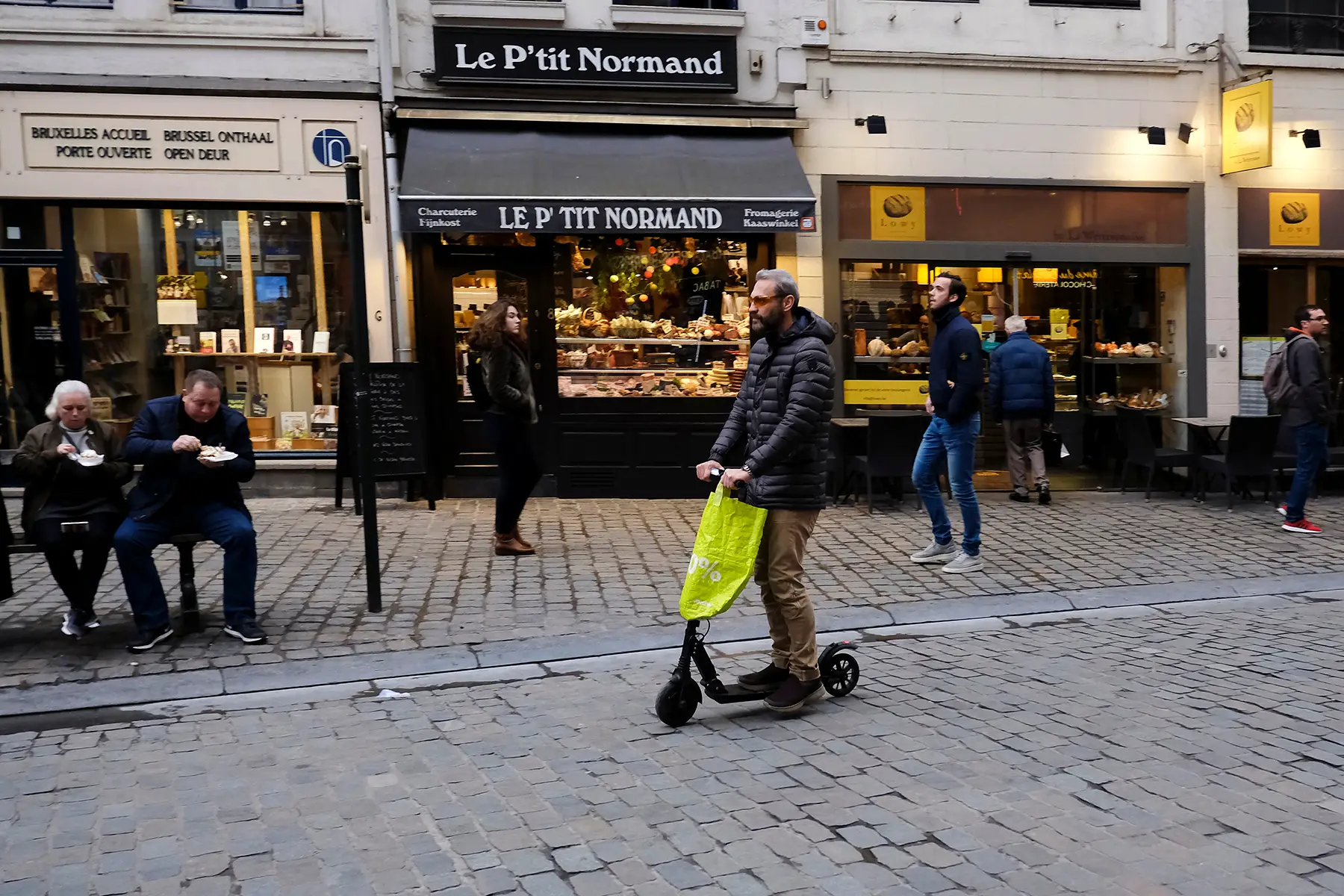
You will find garbage bins in many public spaces throughout Belgium. Many places such as railway stations and offices have designated bins for plastic waste. After it is collected, it is brought to sorting centers where advanced technology, including robots using AI, separates it according to the plastic type. Following a process of washing and squashing, the waste is then transformed into new products and packages.
Depending on the region of Belgium you live in, you can either dispose of glass in bottle banks and sorting streets, or have it picked up directly from your home. Once the impurities have been removed from it, it is then melted and repurposed into newer glass products using modern technologies such as optical systems.
How to recycle in Belgium
Recycling in Belgium might seem like a daunting process, but in reality, the country has a highly efficient system. Depending on the municipality you live in, some types of waste are collected from your home. Others, meanwhile, need to be taken to recycling container parks and collection points.
Below is the color-coding system to help you correctly sort your garbage:
| Color | Types of garbage |
| Blue | PMD (Plastic, Metals, Drinks) Plastics: Bottles, vials, dishes, trays, pots, tubes, foils, bags, and beverage capsules Metals: Beverage and food cans, spray cans, bottle caps, and aluminum trays, dishes, and lids Drinks: Beverage cartons |
| Green | Glass |
| Yellow | Paper, cardboard |
| Brown | Others |
| Orange (Brussels-Capital Region) | Organic kitchen waste |
You can also download the Recycle! App for free or refer to Fost Plus website for all essential information about recycling in Belgium.
It is also important to be aware that Belgium imposes different taxes for different types of waste. Generally speaking, the harder it is to process the waste, the bigger the tax. As a result, people are more judicious about what they throw away. Organic waste has some of the highest taxes while plastic bottles and beverage cartons have a lower tax. Untaxed items include cardboard, paper, and glass bottles.
Recycling paper
According to Fost Plus, Belgium recycled an average of 16.6kg of paper and cardboard per resident in 2021. Generally speaking, the council collects this type of waste from households in most regions across the country. This is not only convenient for residents but also maximizes the amount the council can gather. That said, you can also dispose of paper and cardboard at recycling parks in Belgium.
You can recycle the following paper and cardboard products:
- Magazines, newspapers, and printing papers
- Packaging made of paper and cardboard such as boxes, rolls, and bags
- Folders (minus the plastic packaging)
Here are some tips to keep in mind:
- Do not try to recycle greasy materials such as pizza/takeaway boxes, wallpaper, cellophane, and aluminum foil
- Avoid sealing cardboard boxes with sticky tape
- Remove the plastic packaging from magazines, newspapers, and folders
- Do not include extremely heavy cardboard packages
Recycling plastic
When it comes to recycling plastic in Belgium, the country is doing particularly well. In fact, it has already surpassed the EU’s target for member countries to recycle at least 50% of their plastic waste by 2025. Indeed, 51% of plastic household packaging was recycled in 2020. The introduction of the new blue PMD bags in 2021 has also been a game-changer. This now allows authorities to collect 8kgs of extra waste per person.
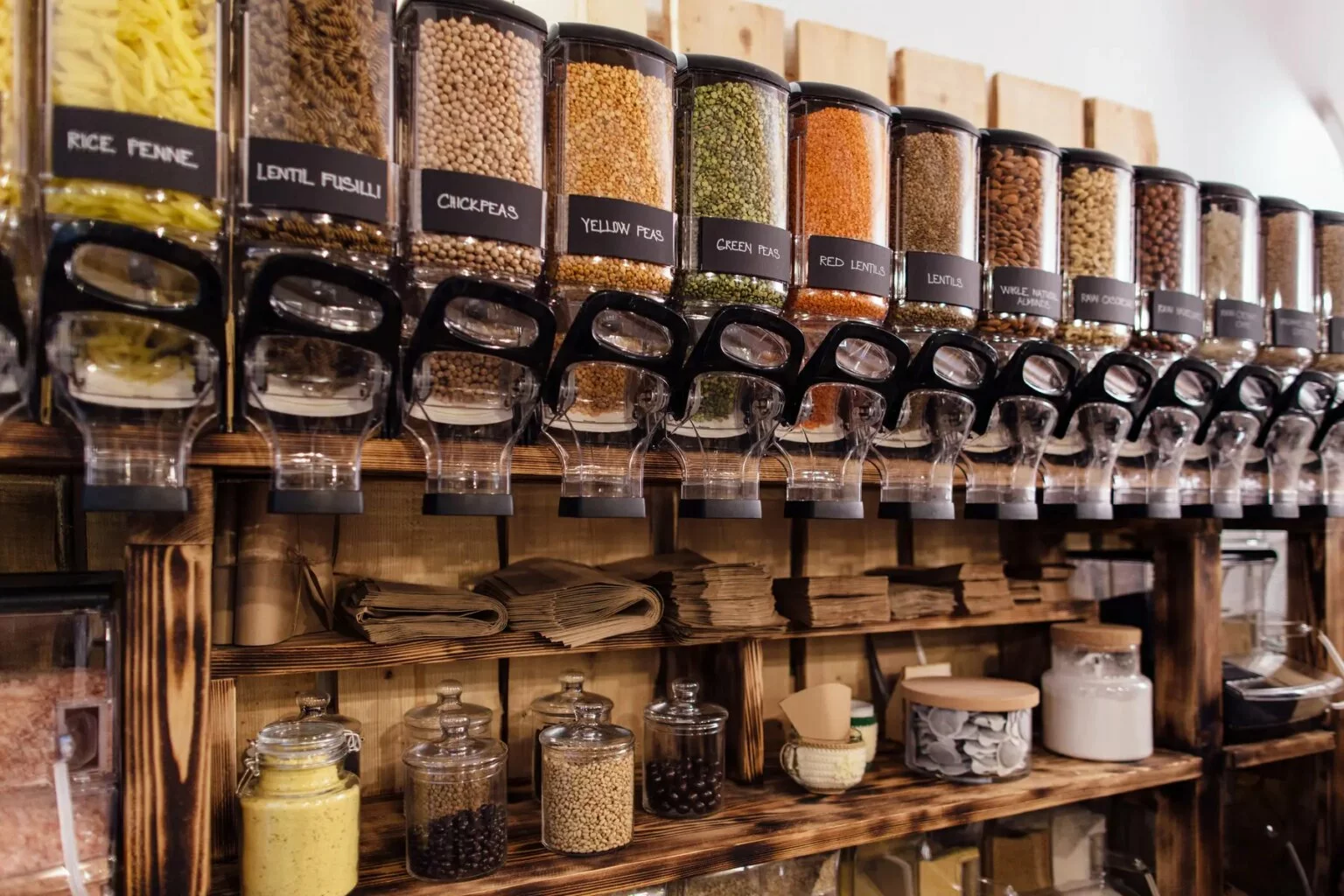
You can dispose of the following items in the new bags:
- Plastic items such as bottles, containers, tubes, dishes, trays, films, bags, and pots
- Metal objects such as food, beverage and aerosol spray cans, aluminum products, lids, and crown caps and tops
- Drink cartons such as milk, juice, soup, and cream packaging
On average, the PMD bags are collected from your house once every fortnight. To make recycling as efficient as possible, Fost Plus provides the following sorting guidelines:
- Fully empty all the containers
- In order to maximize space, crush the plastic bottles to make them flat and put the cap on
- Remove the plastic film from utensils and discard it separately in the bag
- Remove full-body sleeves from bottles and discard them separately in the bag
Recycling glass
You can deposit glass bottles and jars at bottle banks, sorting streets, or underground containers in your region. These are clearly marked to ensure that colored and uncolored glass is properly separated. That said, in a few limited areas of Belgium, glass is collected directly from households. Therefore, no such distinction is made.
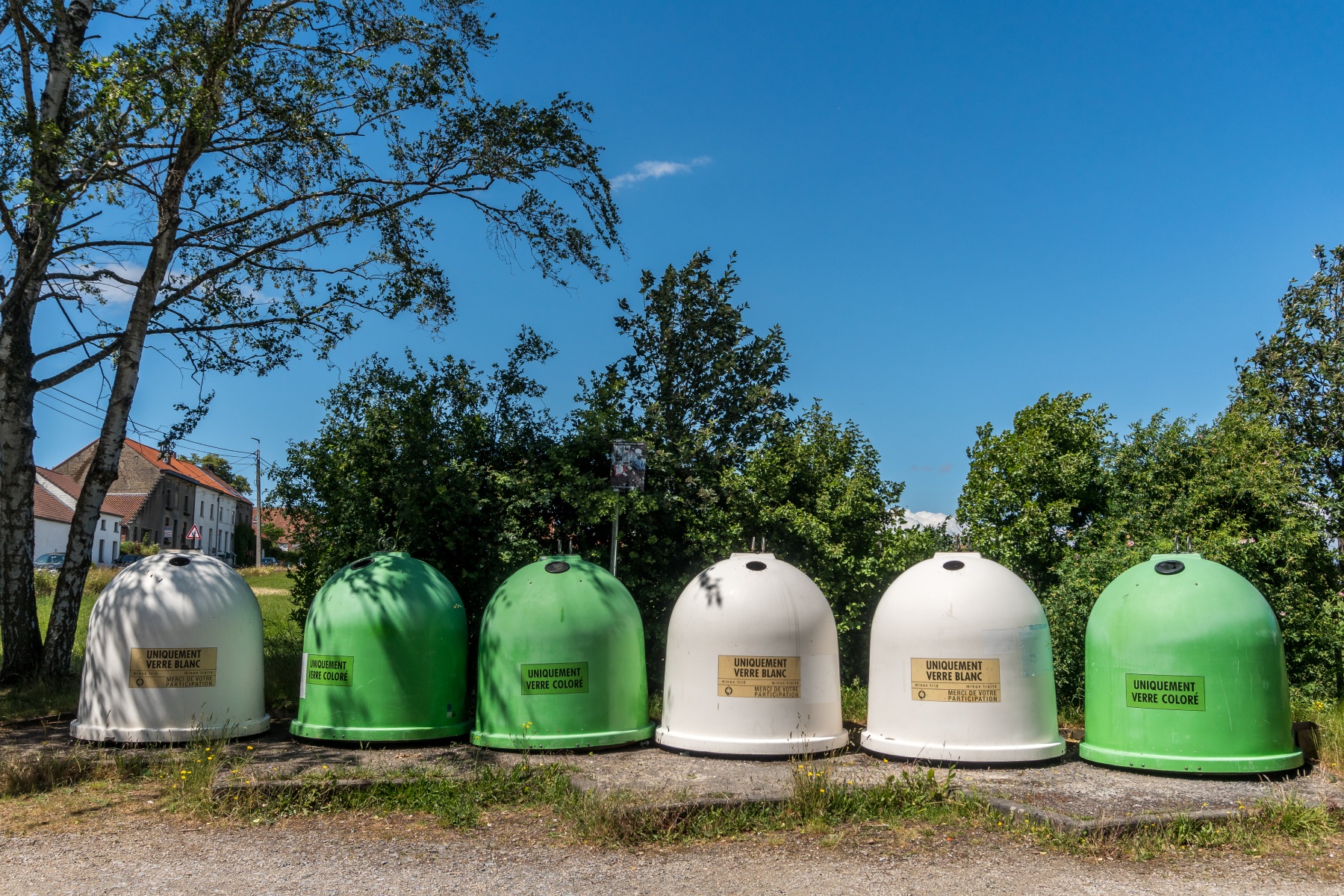
According to the Fost Plus 2021 Activity Report, Belgium recycled an average of 29.7kg of glass per citizen that year. However, to encourage even more growth, the organization has issued the following guidelines:
- Only throw away white and colored bottles, jars, and containers for recycling
- Refrain from including opal glass and crystal, bulbs, heat-resistant glass, windows, mirrors, porcelain, ceramics, and terracotta
- You do not need to wash the glass containers and can simply empty them
- Dispose of metal lids and tops in the PMD bag
- Do not litter in the bottle banks (this is actually a criminal offense)
Recycling metal
Belgium is making significant progress when it comes to recycling metal. In fact, it has already exceeded the EU target for recycling 80% of ferrous metals (including aluminum) by 2030 with a record of 105% in 2021.
You can dispose of metal packaging such as food cans, drink cans, aluminum trays, aerosols, lids, and caps by placing them in the designated blue PMD bag which is then collected from your home.
Notably, recycling metal saves a lot of energy. For instance, it takes up to 85% less energy to recycle steel than to manufacture it, and as much as 95% for aluminum.
You can keep up the good progress by following these tips:
- You can dispose of food cans, beverage cans, aerosol sprays, lids, tops, crown caps, and aluminum trays and dishes in PMD bags
- Don’t include any items with ‘health hazard’ or ‘toxic’ signs with the other waste
- Fully empty the containers before discarding them
- Remove all plastic packaging from the containers and throw them into the PMD bag separately
Recycling other household items
Recupel is an ‘executive body’ that handles Waste Electrical and Electronic Equipment (WEEE) in Belgium. It collected 41 million devices in 2021, of which 93.7% were reused or recycled.
You can dispose of any used electrical appliances or light bulbs at one of its collection points in Belgium. This includes 564 container parks. Alternatively, you can discard your small electronics and broken LEDs, neon tubes, and energy-saving bulbs in the blue Recupel boxes, which are available in local supermarkets and electronic stores across the country.
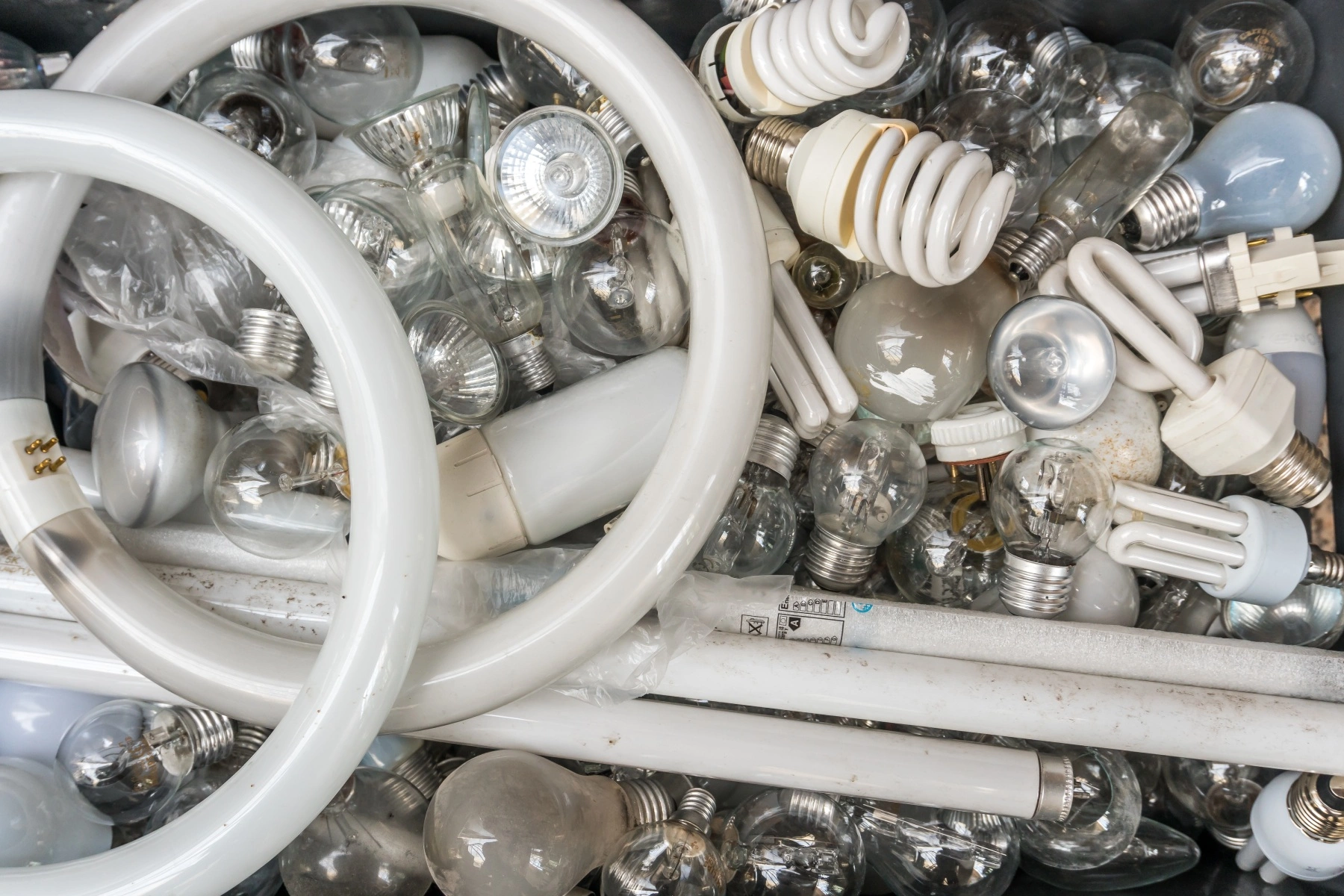
Notably, if you are looking to live more sustainably, you could always rent your appliances whenever possible. You could also replace your old machines with energy-saving ones.
Tips for recycling in Belgium
Here are some simple tips for recycling household waste in Belgium:
- Learn about your local recycling system: Check the Fost Plus website and Recupel website to familiarize yourself with all the recycling ‘dos and don’ts’ in your neighborhood. You can also ask your municipality for more information.
- Learn about green energy providers: More and more of Belgium’s energy providers are supplying green electricity. These include Bolt, Engie, and Luminus!. You can refer to platforms such as Aanbieders to compare the benefits of each company.
- Ditch the car: Private vehicles are some of the worst contributors towards carbon emissions in Europe. But thanks to its small size and efficient public transport system, Belgium offers many alternatives such as buses, trams, metros, and trains. For shorter journeys, you can also walk or ride e-scooters.
- Switch to paperless banking: Not only does this make your everyday life more convenient, but you can also save a lot of paper by avoiding physical copies of bank statements, bills, and correspondence. If you’re an expat managing finances between Belgium and your home country, digital banking solutions like Wise offer a paperless multi-currency account where you can hold euros alongside other currencies. This means you can manage your Belgian and international finances in one place while reducing paper waste – a practical choice that aligns with Belgium’s sustainability goals.
Composting in Belgium
According to a 2020 Report by Zero Waste Europe, Belgium is one of the countries with the highest bio-waste collection rates. This is partly due to the use of wheeled bins for food and garden waste and the provision of household kitchen caddies for the temporary collection of organic waste.
Flanders, in particular, stands out as a leader in recycling bio-waste. According to the ECN Data Report 2022, it composts an impressive 151kg of bio-waste per capita/ per annum from municipal and industrial sources. Moreover, in the last 25 years, it has trained more than 5,000 volunteers to help residents in practicing home composting and closed-loop gardening. As a result, 41% of households in the region compost at home.
Composting food waste
Recycling food waste in Belgium involves composting at home or at collective sites. If you live in Brussels, you can also have your organic waste collected from your home and transferred to a designated composting installation.
Notably, leftover food, vegetables, fruit peels, tea bags, coffee grounds, expired food (without packaging), and paper towels must be discarded into orange bags or containers. These are available for free from your municipality or Recyparks across the city.
Here are some guidelines for disposing of food waste:
- Do not throw away bones, shells of any kind (egg, walnut, mussels, oysters), garden waste, wood ash, nappies, liquid food waste, and biodegradable packaging in the orange containers
- Use the containers for storing food waste as the bags can be damaged by animals
- As soon as the waste has been collected, take the container back inside your home
Flanders has been monitoring its food wastage since 2015 and launched a Food Supply Chain Roadmap on Food Loss that same year. This aims to encourage home composting by laying out some valuable guidelines.
In February 2018, Walloon authorities devised a REGAL Plan 2015–2025, which includes 17 actions designed to reduce food waste by 30%. One of these involves participating in collective composting whereby neighbors gather bio-waste from several households and share a common bin. You can find your nearest collective site here.
Composting garden waste
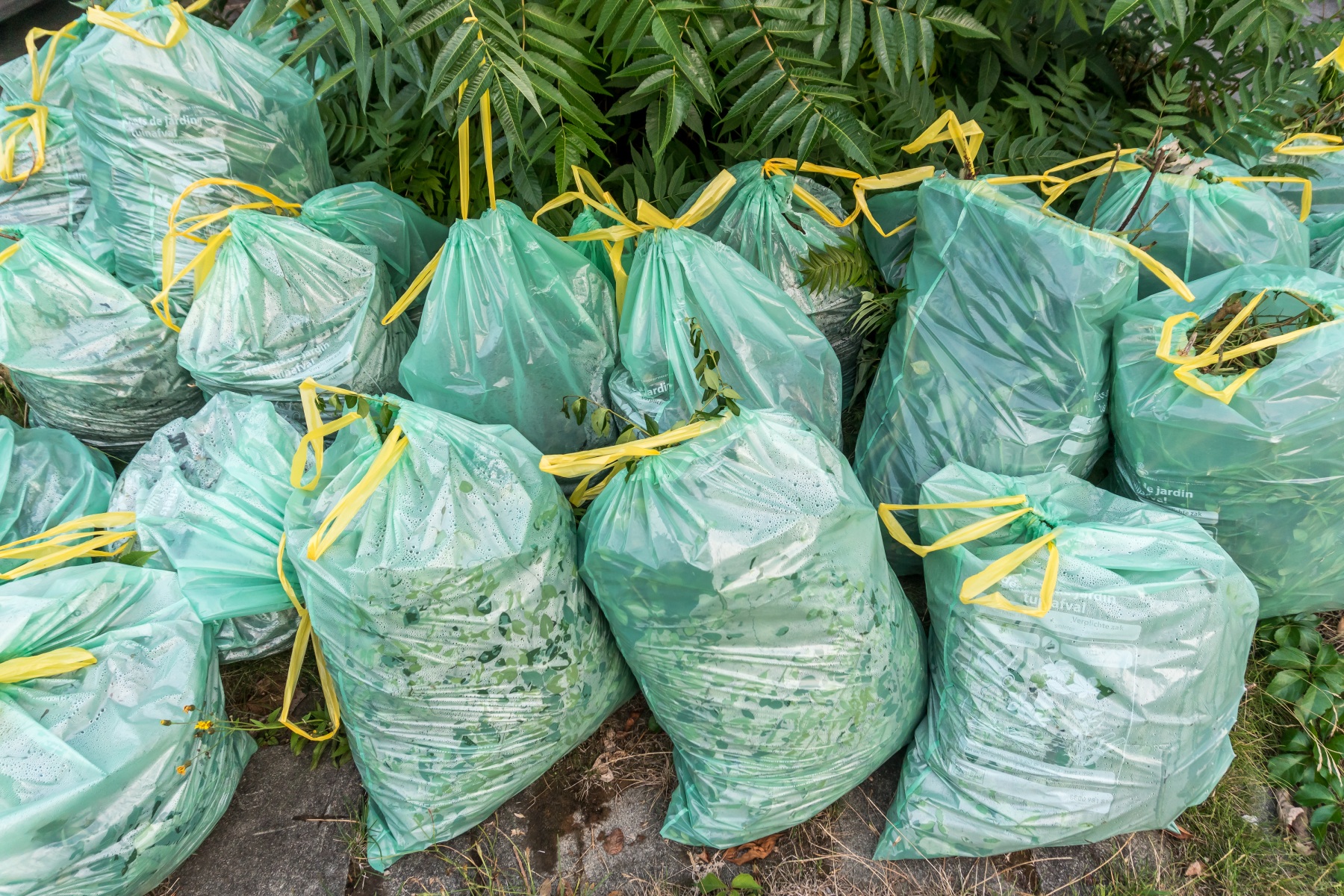
You can put the following items into your white garbage bags or take them to Recyparks:
- Dead leaves, weeds, plants, shriveled flowers, grass cutting, and shrub trimmings
- Branches must be tied in bundles and kept next to the bag
However, it is important to make sure that you do not place any animal waste, sand, soil, tree stumps, gravel, canvas, cement, or plastic materials in the bag.
Garbage collection in Belgium
As mentioned, the garbage collection system varies by region in Belgium. You can have it collected from your doorstep or take it to the container park in your commune. You can familiarize yourself with the exact location, opening timings, and rules of disposal on the Fost Plus website.
When is garbage collected in Belgium?
If you are a resident of the Brussels-Capital Region, you can visit the Bruxelles-Propreté website to find out when garbage bags will be collected from your home. They are responsible for waste collection and management in the region. For other areas, however, you can refer to your municipality website or download the Recycle! App for free.
Penalties for illegally dumping waste or recycling in Belgium
It is important to be aware that municipalities can levy hefty fines if you do not comply with public cleanliness laws. According to Bruxelles-Propreté, some of these offenses include:
- Littering
- Non-sorted or non-compliant rubbish bags
- Illegal waste collection
- Illegal waste transportation to a different country
- Taking garbage bags outside of designated collection times and dates
Notably, officers of Bruxelles-Propreté are on the move 24/7 to ensure that cleanliness standards are maintained across the country.
Although fines can vary on a case-by-case basis, you may have to pay €75 if you fail to observe the mandatory sorting. Moreover, if officers discover glass containers in your bag, your fine may be increased to €100 or €125. Meanwhile, discarding bags outside of collection times may cost you around €50 to €75, while throwing cigarette butts will set you back €50.
Useful resources
- Fost Plus – provides comprehensive information about every aspect of recycling in Belgium
- Bettersorting – offers advice on sorting and separating every kind of packaging
- Bruxelles-Propreté – provides information on sorting, collection, and Recyparks in the Brussels-Capital Region


Did you find this guide helpful?