
'%20id='ico-down'%20stroke='%23000000'%20stroke-width='1.5'%3e%3cg%20transform='translate(1092.250000,%20254.750000)'%3e%3cpolyline%20id='Path-2-Copy-4'%20transform='translate(5.500000,%202.750000)%20scale(1,%20-1)%20rotate(-180.000000)%20translate(-5.500000,%20-2.750000)%20'%20points='0%200%205.5%205.5%2011%200'%3e%3c/polyline%3e%3c/g%3e%3c/g%3e%3c/g%3e%3c/svg%3e)


Healthcare
Healthcare Services
Guide to doctors and GPs in Belgium
Quality care is never far away in Belgium, and finding a doctor is as simple as making an appointment. Here’s what you need to know.


Belgium’s healthcare system makes accessing doctors easy and efficient, whether you need a quick consultation or a specialist’s expertise. From choosing the right doctor to navigating referrals, this article outlines what you need to know to feel confident and cared for in a medical situation.
Continue reading for the following information:
Partenamut Business & Expats
Expats in Belgium? We’ve got you covered. Backed by 20+ years of international expertise, Partenamut Business & Expats offers multilingual support, simplified procedures, and reliable health insurance tailored to your needs.

Overview of doctors in Belgium
Belgium has one of the best healthcare systems in the world, covering nearly 99% of its residents, including expats. The system is funded through a combination of public and private health insurance, which ensures that all residents can access a broad range of medical services, including doctor visits (Dutch: dokter, French: médecin) and emergency care.
According to the EC 2023 country health profile, Belgium has the third-lowest density of doctors in the EU after Luxembourg and France. In 2021, there were 3.3 physicians per 1,000 residents, compared to the EU average of 4.1. That said, the number of doctors can vary a lot depending on the location. For example, Soignies and La Louvière had less than 1 per 1,000 inhabitants, while Tournai-Mouscron had over 4 (Belgian Health Care Knowledge Centre, 2021).
Around one-third of these (36.1%) are family doctors, which translates to 1.1 GPs per 1,000 people.

Doctors in Belgium must be registered with the Order of Physicians (Dutch: Orde der Artsen, French: Ordre des médecins).
Family doctors or GPs in Belgium
Family doctors or general practitioners (GPs – Dutch: huisarts, French: médecin généraliste) are usually the first point of contact for medical issues. They work either alone or in group practices (Dutch: huisartsenpraktijk, French: cabinet médical), and you are free to choose whichever doctor you prefer. Standard opening hours are from 08:00 to 17:30, Monday to Friday, with an hour in between for lunch. Most health clinics in Belgium are closed on weekends and public holidays.
GPs deal with routine medical issues, conduct “light” tests, and coordinate follow-up treatments. They also hold and maintain your medical records (GMD – Dutch: Globaal Medisch Dossier, French: Dossier Médical Global) and can refer you to other specialists and treatment centers.
Medical specialists in Belgium
If you need more specific care, the next step is usually a medical specialist. From dermatologists to neurologists, Belgium’s network of specialized doctors is wide-ranging and easy to access, even for newcomers.
Medical specialists usually work in hospitals or private practices. While opening hours can vary significantly depending on the doctor, they typically fall between 08:00 and 18:00, Monday to Friday, with one or two hours in between for lunch.
You typically don’t need a GP referral to see a specialist, though it could help you and them identify your medical situation more easily. You can also get up to 25% more reimbursements from public health insurance if you do.
Who can see a doctor in Belgium?
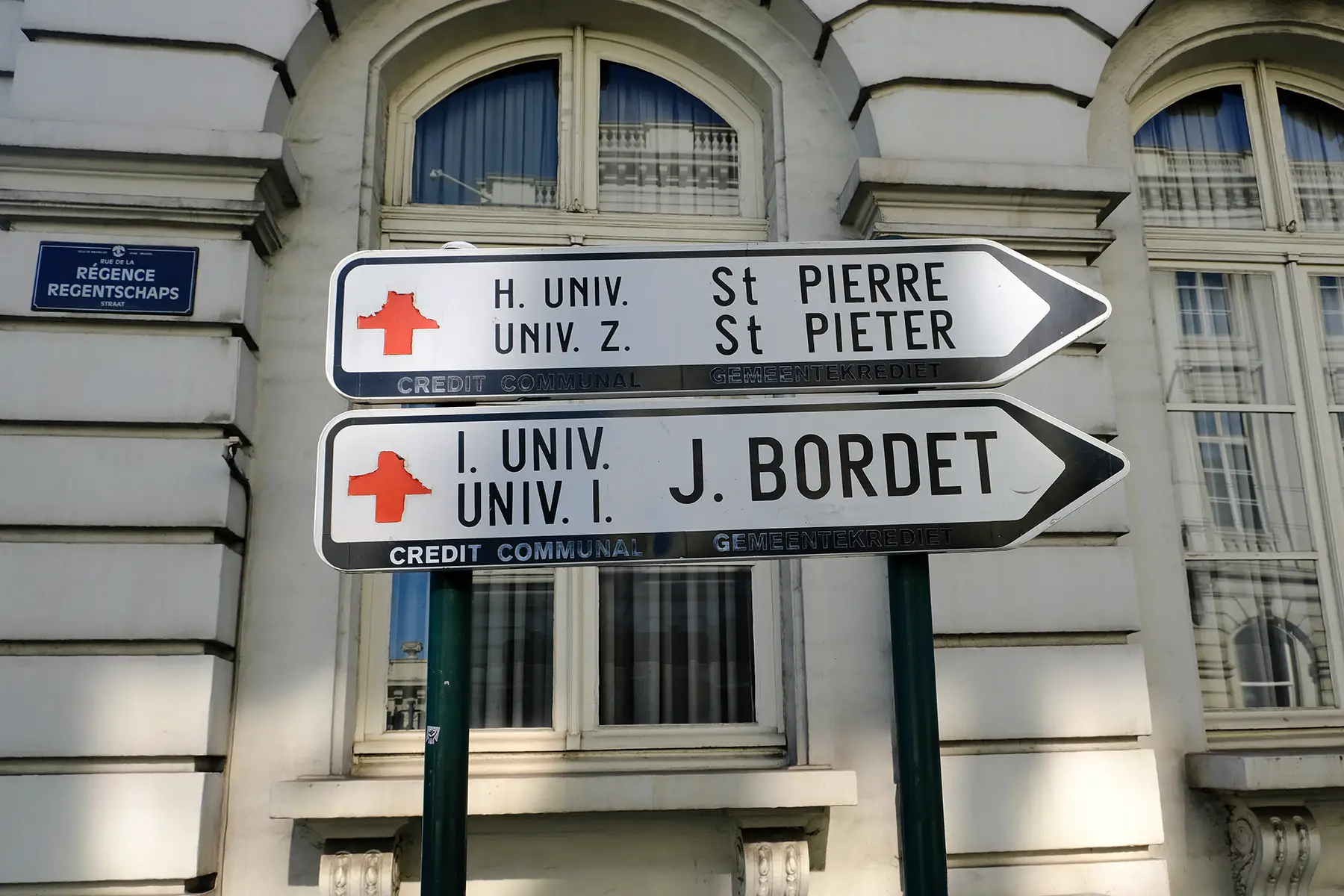
Everyone can access medical care to some degree or another, including asylum seekers, refugees, and tourists. However, for non-urgent medical help, you have to pay large out-of-pocket costs or have health insurance coverage – either public, private, or both.

Our article on health insurance covers the topic (and costs!) in more detail, but basically, there are conventioned and non-conventioned doctors in Belgium. While both offer the same levels of quality care, the difference is in the insurance coverage and availability.
In 2021, roughly 87.1% of GPs and 56.4% of active specialists were conventioned (Dutch: geconventioneerd, French: conventionné). And while conventioned doctors only require small copayments, they often have longer waiting times and more rushed consultations. Non-conventioned physicians, on the other hand, cost more but have more flexible appointment scheduling and longer, personalized exams.
How to find a doctor near me in Belgium?
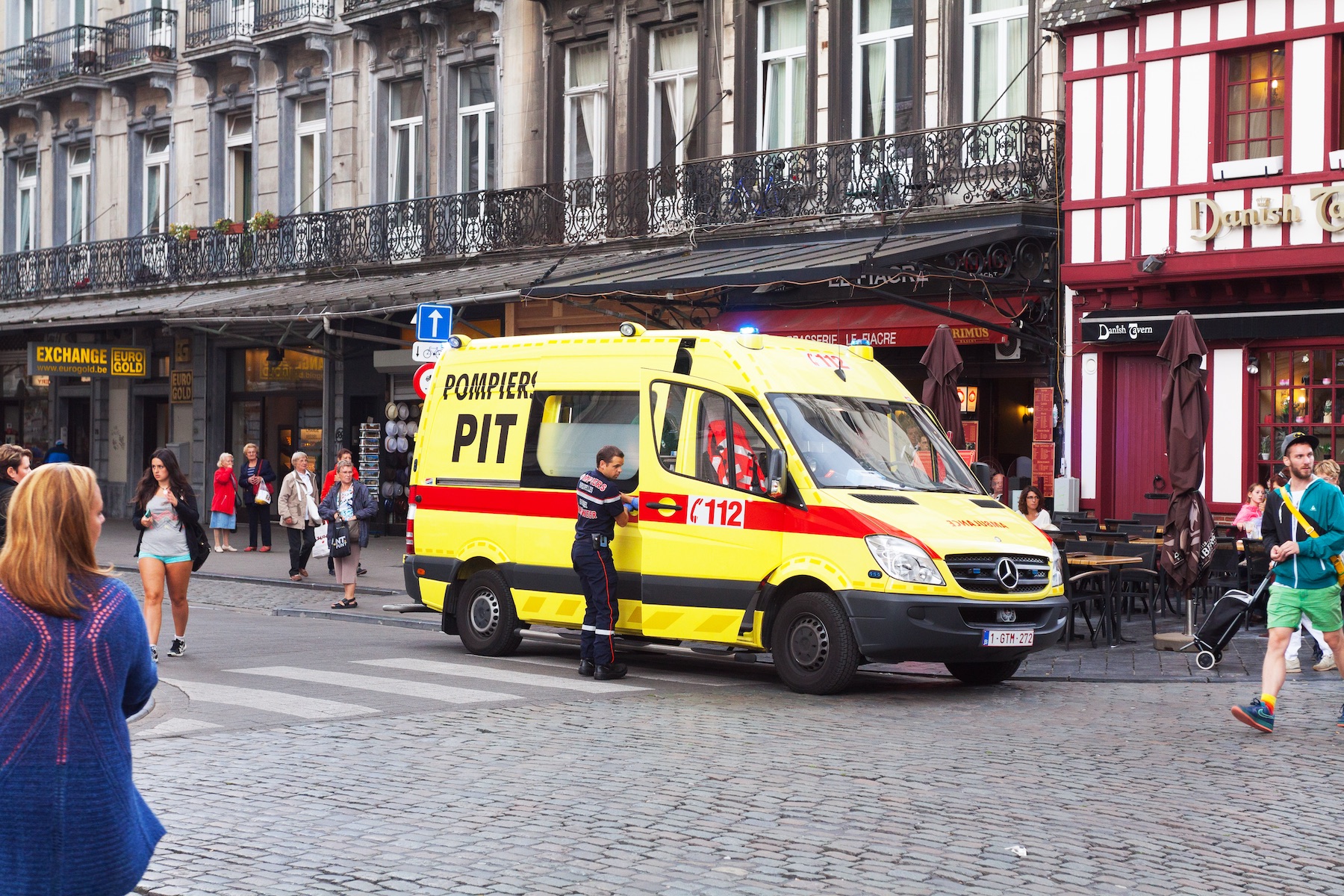
If you are in a life-threatening situation, go to the nearest hospital emergency room (Dutch: spoedeisende hulp, French: urgences). You can also call 112, which is the free pan-European number for any type of emergency. But if your situation is less immediate (and more you looking for information), you can find doctors and GPs listed on Ordomedic, the website of the Order of Physicians.
If you’re uncomfortable speaking Dutch or French, you can also find English-speaking doctors on websites like Mobi Doctor and Doctoranytime. These list GPs and other professionals by the languages they speak, making it easier for expats to find a doctor who speaks their native language.
For medical issues outside regular opening hours, you can also contact the out-of-hours medical service (Dutch: wachtdienst, French: garde médicale) on 1773. These will connect you with an on-call GP in your area.

How to see a doctor in Belgium: step-by-step
Step 1: Register with your preferred doctor
Belgian residents are free to choose any doctor they want. You can switch physicians freely, and it’s not necessary to register beforehand. However, most people choose to stick with one GP for practicality and familiarity.
Step 2: Book a doctor’s appointment
Although some GPs accept walk-in patients, most require you to schedule an appointment in advance. You can do so with a quick phone call to the individual medical center or using an online service like Doctena. Specialists don’t do walk-ins.
Wait times for conventioned doctors can be long compared to those of non-conventioned doctors. You can generally expect to wait a few days to see a GP and several weeks or months to see a specialist.
Step 3: Visit the health center
When you go to the scheduled appointment, make sure to bring your social security card (ISI+ card) and ID. This card proves that you’re insured and contains your health records. It also allows your doctor to upload any prescriptions for medications, should you need them.
If you don’t have health insurance, bring your wallet.
Belgian doctors often work alone without secretarial staff, so they may answer the phone to arrange appointments during your consultation. This can be frustrating, but you’ll get used to it.
How much do doctor visits cost in Belgium?
Without proper insurance, a consultation with a public doctor or GP in Belgium costs around €25–40, depending on the location and services provided. Visits to specialists typically cost €50–120, especially when certain diagnostics or procedures are involved. You may also face additional charges for lab work, imaging, and prescriptions.
When you’re registered with a public health fund, all essential treatments are covered up to a certain point. Most services, like doctor visits and prescription medications, require a copayment. For example, you can expect to pay 10–20% of the costs for consultations and hospitals, and 15–50% of most medicines.

That said, coverage also depends on your insurance fund and the health service provider. Basically, the Belgian government regulates healthcare fees, and most providers will charge just that. However, if they are non-conventioned, they can and will charge more (up to 200%).
Unfortunately for patients, public insurance funds only cover the standard rate set by the government and not the full amount billed by the health service. So, if a doctor charges €150 and the regulated price is €40, you will have to pay the remaining €110.
Do I need health insurance in Belgium?
Yes. Our article on health insurance in Belgium explains everything in full detail, but as a quick summary:
- Public insurance is mandatory for residents who pay social security (including working residents and pensioners).
- Most insurance funds will delay coverage until six months after you sign up. This means that, although you do pay insurance fees, you’re responsible for any treatment costs you incur in Belgium. You can either pay these out of pocket or take out private insurance to pay them for you.
- Most essential treatments require copayments, something that private health insurance can cover as well.
There are many private health insurers in Belgium, and it’s worth shopping around to find the best deals. Aside from the home-grown health insurance funds, there are also international insurers who cater specifically to expats. For example, Partenamut Business & Expats is ideal for new residents who want to avoid a coverage gap.
And, for those who travel outside the country a lot and anyone who prefers expat-focused care, these companies can offer great solutions:
Cigna Global
Enjoy peace of mind while living in Belgium with Cigna Global’s long-term international health insurance plans (12+ months). Get tailored coverage, direct billing with many providers, complex case management, and global care on demand, with access to a global network of 2.4 million hospitals and healthcare professionals.

Overview of Belgian doctors’ services
Prescription medications
If necessary, the doctor may prescribe you medication, which you can pick up from any pharmacy (Dutch: apotheek, French: pharmacie) in Belgium.

You’ll typically need to pay a standard fee, depending on the medication’s category:
- Category A: Vital medicines (e.g., for cancer, diabetes) are 100% covered – you pay nothing
- Category B: Therapeutically essential medicines are 75–85% covered – you pay 15–25%
- Category C: Symptomatic treatments are 50% covered – you pay the other half
- Category Cx: Contraceptives are 20% covered – you pay 80%
- Category D: Non-reimbursable medications (e.g., certain sleeping pills) are 0% covered – you pay everything
To find your nearest pharmacy, you can use any search engine or the “find a pharmacy” feature on apotheek in Flanders and pharmacie in Wallonia.
How to complain about a doctor in Belgium
Belgium has several ways to file an official complaint about healthcare malfeasance. For example, if you feel your patient rights are not being respected, you can contact the Federal Ombudsman. They will try to mediate between you and the health provider and inform you of any possible next steps.
If you believe that you have been prejudiced by a doctor, you can also lodge a complaint with your local Provincial Council. And if you want to complain about a hospital, you can contact the ombudsman of the hospital itself.
All investigative proceedings are conducted in Dutch and French.
Practical medical words in Dutch and French
Most doctors in Belgium can communicate in English. However, it is a good idea to have a phrasebook or a translator app on your phone in case you need to explain more complicated health issues.
You’ll also want to remember some of these medical words in Dutch and French:
| English | Dutch | French |
| General practitioner | huisarts | médecin généraliste |
| doctor’s office | dokterskamer | cabinet médical |
| appointment | afspraak | rendez-vous |
| pain | pijn | douleur |
| headache | hoofdpijn | mal à la tête |
| stomach ache | maagpijn | mal au ventre |
| back pain | rugpijn | mal de dos |
| fever | koorts | fièvre |
| cough | hoest | toux |
| prescription | voorschrift | ordonnance |
| painkiller | pijnstiller | analgésique |
Useful resources
- Health, Food Chain Safety, and Environment – official government website for the ministry responsible for Belgian healthcare
- Ordomedic – official website of the disciplinary body of doctors in Belgium
- MyHealth – government e-portal with healthcare information and your medical records


Did you find this guide helpful?