
'%20id='ico-down'%20stroke='%23000000'%20stroke-width='1.5'%3e%3cg%20transform='translate(1092.250000,%20254.750000)'%3e%3cpolyline%20id='Path-2-Copy-4'%20transform='translate(5.500000,%202.750000)%20scale(1,%20-1)%20rotate(-180.000000)%20translate(-5.500000,%20-2.750000)%20'%20points='0%200%205.5%205.5%2011%200'%3e%3c/polyline%3e%3c/g%3e%3c/g%3e%3c/g%3e%3c/svg%3e)


Education
Higher Education
Studying in Spain
Want to study in Spain? Learn all about how the Spanish university system works, what the requirements are, and how to apply.


Spain has a long and distinguished history of quality higher education and boasts some of the world’s most esteemed universities. As a result, the country attracts many international students who are also drawn to its appealing climate, vibrant culture, and laid-back lifestyle.
However, if you want to study in Spain, you will need to start your research early to discover what opportunities there are and what you need in order to make a successful application. To help you get started, this article outlines everything you need to know, including the following:
Spotahome
Looking for somewhere to rent in Spain? Spotahome takes the hassle out of househunting by doing the hard work for you. Their online platform lets you find, view, and book rental properties all from the comfort of your own home. Take the stress out of househunting in Spain with Spotahome.

Higher education in Spain
Spain’s tradition of university education dates all the way back to medieval times. The University of Salamanca, which was founded by King Alfonso IX of Leon in 1218, is one of the oldest in the world.
Today, there are 89 universities in Spain. This includes six that fall within the top 500 in the 2023 Times Higher Education (THE) World University Rankings and 14 that rank among the top 500 in the 2024 QS World University Rankings.
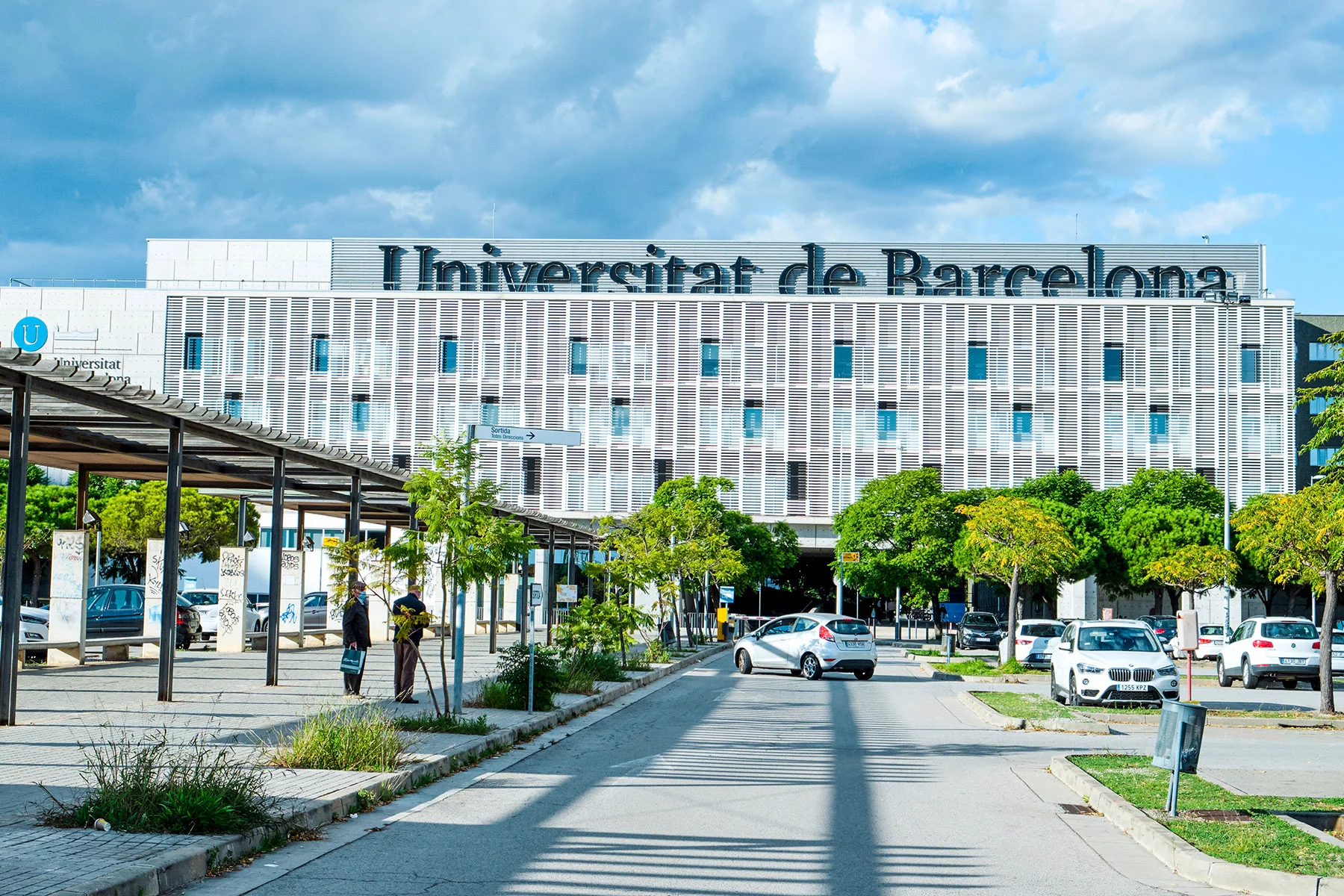
Barcelona and Madrid are home to the highest-ranking universities in Spain, with the Universitat Autònoma de Barcelona (149th in the QS rankings) and the Universitat de Barcelona (182nd in the THE rankings) taking the top spots. Other notable universities include Universitat Pompeu Fabra, Universidad Autónoma de Madrid, and the Universidad de Navarra.
Higher education in Spain starts at the age of 18. In the 2021/22 academic year, there were 170,222 international students in the country, making up around 12.5% of the total.
Term time runs from around October to May, and is generally divided into two semesters. Most universities teach programs in Spanish, however, many courses are also available in regional languages such as Catalan. Some universities also offer English-language degrees.

Around two-thirds of Spanish universities are publicly run by the autonomous communities. The remainder are private institutions. In addition to universities, you can also find many Higher Centers for Artistic Education and Business Schools across the country.
For those who prefer remote studying, however, the National University of Distance Education (Universidad Nacional de Educación a Distancia – UNED) combines online and distance learning with traditional onsite seminars.
What degree programs are available?
Undergraduate or Bachelor’s degree programs (Grado) generally last for four years in Spain.
There are two main types of Spanish undergraduate degrees: official and non-official. Official degrees are transferable across many countries worldwide and are worth 240 credits overall on the European Credit Transfer and Accumulation System (ECTS).
Non-official degrees, on the other hand, are available in individual universities and are usually non-transferable for academic purposes. These usually relate more to practical study and specific vocational learning. They include creative arts subjects such as music, dance, and theater.
Popular degree subject areas in Spain include:
- Arts and humanities
- Hospitality management
- Law
- Marketing and finance
- Science, technology, engineering, and mathematics (STEM)
- Social sciences
- Spanish language
These Spanish degrees are equivalent to Level 6 on the European Qualifications Framework (EQF).
Postgraduate programs in Spain
Master’s degrees
Master’s degrees (Máster) in Spain last for one to two years and are worth 60 to 120 credits on the ECTS. They are equivalent to a Level 7 qualification on the EQF.
Many Spanish universities now offer Master’s courses in English. As with undergraduate degrees in Spain, you can find both official and unofficial Master’s programs.

To study at Master’s level in Spain, you will usually need to have completed an undergraduate degree or have the equivalent number of credits.
Doctoral degrees
Similar to many countries, the highest level of educational attainment in Spain is the Doctorate of Philosophy (Ph.D.) or Doctorado. This is a Level 8 qualification. You can complete this in three to five years in Spain, depending on whether you study full-time or part-time.
To enroll for a Spanish Ph.D., you will need the equivalent of a Level 7 qualification and a minimum of 300 ECTS credits. Courses consist of a period of advanced research training followed by the writing of an original thesis. Students are supervised by an assigned academic expert in their field.
Other study programs in Spain
In addition to undergraduate and postgraduate degrees, some Spanish universities and higher education institutions offer other learning and qualification opportunities. These include:
- Diploma courses: These can be at undergraduate (Level 5–6) or postgraduate (Level 7) level. Courses will typically last for one to two years and usually come with the opportunity to continue onto a full Bachelor’s or Master’s qualification.
- Short courses: These are offered by many institutions, either as vocational training or to improve skills and experience; for example, Spanish language courses. These programs typically last anywhere from between three months and one year.
What are the general requirements to study in Spain?
Visa requirements
You will need a student visa to study in Spain if you are from outside the European Union (EU) or the European Free Trade Association (EFTA).
In order to obtain this, you will need to have a study placement offer from a recognized Spanish higher educational institution. You will also need to meet all of the standard visa requirements, which include having minimum health insurance coverage.

Depending on the length of your studies in Spain, you will have to apply for either a short-term or long-term Spanish visa. Notably, EU/EFTA nationals don’t need to apply for anything in advance of their travels but do need to register with municipal authorities and get a national identity number (NIE) if they plan to stay in the country for longer than three months.
Language requirements
The language requirements to study in Spain will largely depend on the language your program or course is taught in. This will typically be Spanish, English, or a regional Spanish dialect such as Catalan.
Requirements for individual universities may vary, however, in general, you will need to demonstrate around B2 level on the Common European Framework of Reference (CEFR) scale.
If you feel like you need to brush up on your Spanish language skills upon arriving in the country, you can always enroll on a short course at one of the many language schools in Spain.
Qualifications needed
You will usually need to meet minimum qualification levels in order to enroll in higher education in Spain. This is fairly straightforward if you have studied in Spanish schools or in another EU/EFTA country.
However, if you have gained qualifications in a non-EU/EFTA nation that doesn’t have a reciprocity agreement with Spain, you will probably have to apply to get your overseas certificates recognized.

As a general rule of thumb, you will need to have the following in order to gain admission:
- Undergraduate degree: A certificate to show that you have completed secondary school education. In addition, you usually need to sit an entrance exam at the university you apply to.
- Master’s degree: An undergraduate degree or the equivalent of 240 credits on the ECTS system
- Doctoral degree: A Master’s degree or a minimum of 300 credits on the ECTS system
Of course, some universities may be flexible if you can’t meet the exact requirements but can demonstrate the necessary competence and/or enthusiasm to complete the course. If this is the case, you should contact the admissions department well in advance of the enrolment deadline.
Getting overseas qualifications recognized
Spain belongs to the Bologna Process which seeks to standardize educational qualifications across European countries. This means that it is fairly straightforward to transfer your qualifications to a Spanish equivalent if you come from a European member state.
Those from countries outside Europe, on the other hand, may need to apply for a certificate of recognition. This is usually via homologacion (the granting of approval by an official authority) if you need a degree qualification recognized, or partial recognition (reconocimiento parcial) to get school qualifications acknowledged.

You can find more information about the recognition and translation of foreign academic qualifications in Spain on the country’s ENIC-NARIC page.
How much does it cost to study in Spain?
Tuition fees (tasas) in Spain are quite complicated as they vary depending on the region, the type of university, the study level, and the student’s nationality.
Costs for official degrees at public universities are set by the autonomous communities and are based on guidelines established by the General Assembly for University Policy. Private universities, on the other hand, can set their own fees.
Students from within the EU/EFTA who are studying at public institutions usually pay the same fees as Spanish students whereas third-country nationals pay higher amounts. Fees are calculated per credit, with different regions applying different tariffs.
You can generally expect to pay the following per year at public universities in Spain:
- €150–3,500 per year for an undergraduate course
- €300–4,500 per year for a Master’s course
- €2,200–3,600 for the first year of a Ph.D., with costs of between €200 and €600 per year thereafter
Private university tuition fees are usually less than €20,000 per year but can be as high as €30,000 for some programs. You can contact the individual universities to find up-to-date information on fees.
Can you get funding to study in Spain?
Although international students have to pay tuition fees to study in Spain, there is funding available to cover the costs. This includes grants, scholarships, and other types of financial support such as discounts and fee waivers.
Funding is usually limited and subject to certain conditions or eligibility requirements. Therefore, you should start looking at the various avenues as soon as possible.
Types of funding
Sources of funding for studying in Spain can include:
- Government funding: Programs run through central or regional Spanish governments, some of which may be restricted to Spanish residents or citizens
- University funding: Most individual universities and higher education institutions in Spain have their own scholarship programs, so it’s a good idea to check the university websites for more details
- Private scholarships: These are typically limited to specific groups of students or those who have demonstrated very high academic standards
- International scholarships: Educational institutions or departments overseas may have cooperative agreements with Spain that include funding opportunities, so you can check with the Spanish embassy or consulate in your home country to see what might be available
- Erasmus+ scheme: Funding for EU students
Funding resources
Here are a few useful websites to search for scholarships, grants, and financial aid to support your studies in Spain:
- Ministry of Education and Vocational Training (Ministerio de Educación y Formación Profesional): Provides information about public grants, aids, subsidies, and awards
- Ministry of Culture and Sport (Ministerio de Cultura y Deporte): Offers its own program of scholarships, subsidies, and awards, although these are mostly reserved for those already residing in Spain
- MAEC-AECID: Grants and scholarships for international students offered by the Spanish Agency for International Cooperation and Development
- Cervantes Institute: Offers scholarships to those who have graduated from Spanish universities and want to further their learning and professional development (link in Spanish)
- Study Portals: A website that allows you to search for scholarships to study in Spain
Study exchange programs in Spain
Many Spanish universities have partnered with institutions worldwide to offer student exchanges. These can be for a semester or sometimes a full year, giving students an exciting opportunity to spend time learning in another environment.

The EU provides funding for overseas study opportunities through its Erasmus+ program. These are mostly for students in EU countries, however, those from European Economic Area (EEA) nations and some other European countries can participate in most schemes. There are also some opportunities for other third-country nationals.
Additional initiatives include partnership schemes that promote cooperation between specific nations, such as the Fulbright Program for US students. The UK also has its own Turing Scheme in place that offers exchanges with several Spanish universities.
What qualifications are awarded?
Spanish universities offer official and non-official degrees. Official degrees follow the European Credit Transfer and Accumulation System (ECTS) and are recognized within all the countries that make up the European Higher Education Area (EHEA). These degrees include:
- Grado: Bachelor’s, four years, 240 ECTS (Level 6 qualification)
- Posgrado: Master’s, one to two years, 60–120 ECTS (Level 7 qualification)
- Doctorado: Ph.D., three to five years, 60 ECTS per year (Level 8 qualification)
Under the ECTS, one credit corresponds to the student workload required to successfully complete the course modules. These credits can be accumulated as well as transferred.
Spanish universities also award non-official masters (Magister) and graduate (maestrias) degrees that are specific to each university. However, it is important to note that these are awarded by individual institutions, do not give access to Ph.D. courses, and are usually not recognized outside of Spain.
That said, they are often linked to specialized sectors and can therefore be useful when it comes to gaining employment in Spain.
How do you apply to study in Spain?
Each individual university in Spain sets its own entry requirements and application deadlines, so the first thing you should do before applying is visit the university website and check that you meet the requirements.
You can find general application guidelines on the Study in Spain website:
- EU/EFTA/Chinese citizens studying Bachelor’s degrees: Apply initially through UNED and then proceed to the application procedures through the individual Spanish universities once you get clearance
- Non-EU/EFTA/Chinese nationals studying Bachelor’s degrees: You can apply through the individual universities after getting your overseas qualifications recognized. Just bear in mind that you will usually need to sit a university entrance exam.
- All students of postgraduate programs: Apply directly through the university of your choice, which will inform you of the exact application procedure
Notably, deadlines vary but are usually around the end of June if you want to start the winter semester of that year. You will usually need to submit the following documents along with your application:
- Copy of your passport or valid photo ID
- Two passport-size photos
- Statement of purpose (usually around 500 words)
- Verified and translated educational qualifications
- Proof that you meet any language requirements for the course, for example, a language certificate
- Academic references
Once you have been accepted into a program, you can proceed with your student visa application if you need one.
You can search for suitable courses to apply to on the Study in Spain website.
Student accommodation
Your main options for accommodation while studying in Spain are:
- University halls of residence (colegios mayores): These are affordable but places are in high demand so you will need to sort it out as soon as you can.
- Rent private accommodation: You can either rent an apartment on your own or share a place with other students. Some websites specialize in student-specific rentals so this can be a good place to start.
- Lodge with a family: Many Spanish families take in students during the academic year. This can be a good way of saving money as well as learning Spanish.

It is best to ask your university for information about halls of residence accommodation. You can also search on the Study in Spain website. Aside from this, there are various sites that allow you to look for private rentals, including:
You can expect to pay anywhere between €300 and €950 a month for a room and between €750 and €2,000 a month for a whole apartment.
Naturally, costs depend on the size of the accommodation as well as the location, with areas such as Madrid being more expensive. You will also need to budget for general living costs in Spain. Again, this will depend on where you live as well as your lifestyle.
Can you work while studying in Spain?
You can work while studying in Spain as long as you are not studying in the country for less than three months on a Schengen visa.

It is important to keep in mind that your employment contract while studying should not exceed 30 hours a week (which was recently increased from 20 hours) and your job should not interfere with your studies.
Notably, you don’t need to apply for any additional work permit in Spain as long as the work falls within the above conditions. However, if you want to continue working after you finish studying, you will need to switch to a work visa if you are from outside the EU/EFTA.
Volunteering while studying
Volunteering can be a great way of supplementing your learning and experience when studying abroad. Many Spanish universities advertise these kinds of opportunities or have volunteer societies. This should be your first port of call if you are interested in doing this while studying in Spain.
You can also look for external volunteering opportunities on websites such as VolunteerMatch, which provides information about vacancies with non-profit organizations in Spain.
If you are a student aged 18 to 30 and are interested in a voluntary placement in Spain that lasts between two and 12 months, you might also want to consider finding a placement with the European Voluntary Service (EVS).
Can students access Spanish healthcare?
Spain has a national healthcare system that is funded by taxation and insurance contributions. International students can access public healthcare facilities if they have the necessary coverage. For EU/EFTA students, this just means registering for the European Health Insurance Card (EHIC) which covers most treatments.
Non-EU/EFTA students, however, will need to take out private health insurance for the duration of their studies unless their home country has a reciprocal healthcare agreement with Spain. This can be with a Spanish or international health insurance provider.
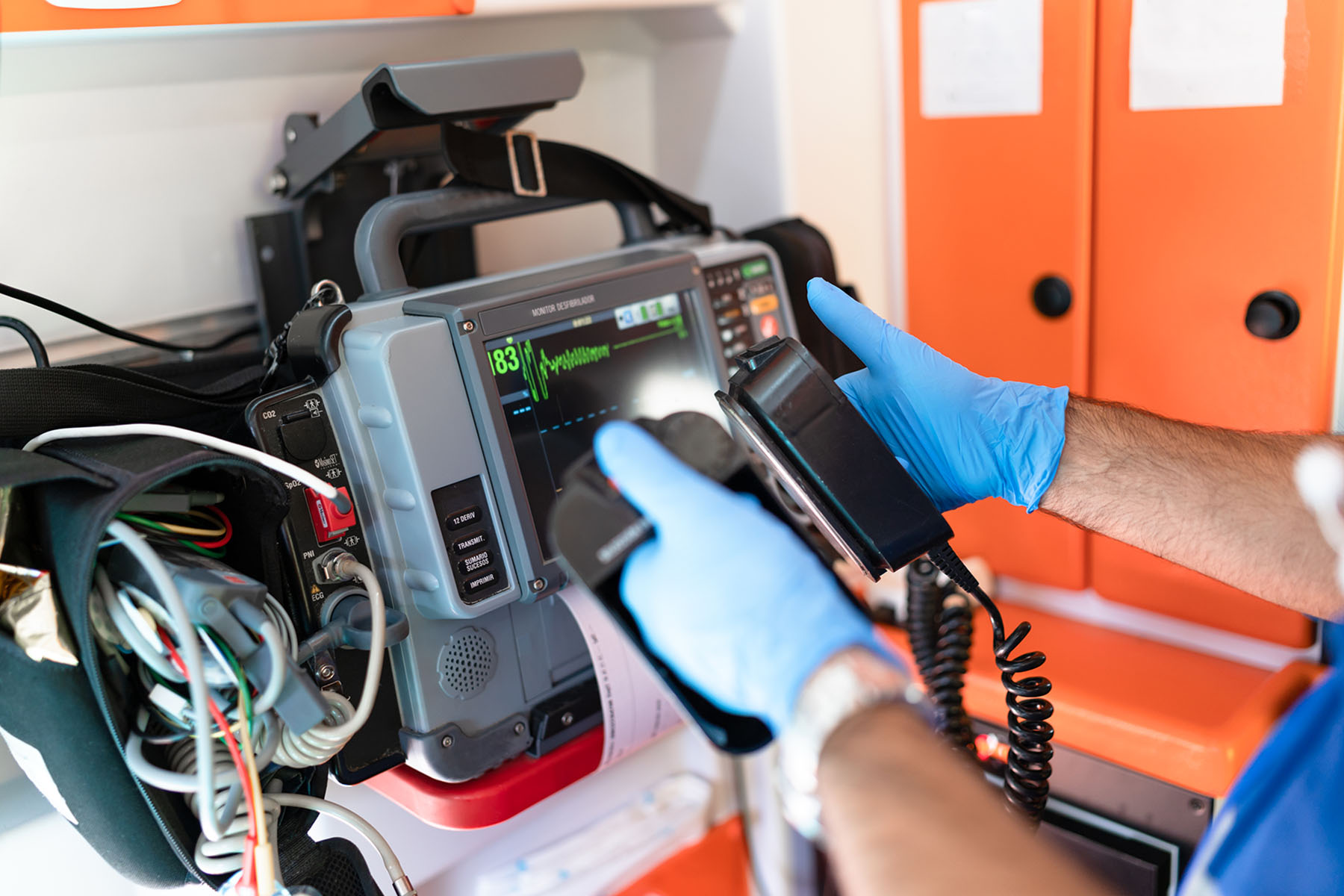
Notably, some insurers offer tailored student medical insurance so it is worth shopping around. It is also good to be aware that certain healthcare services, such as some dental and eye care treatments, are not available through public provision. Therefore, you will need an extended insurance policy that includes private treatments if you want to cover this.
Student life in Spain
Most students in Spain will have a study week that consists of around 20 to 30 hours. This includes lectures (which typically last around an hour), seminars, practical work, and home study.
In addition to offering academic courses, most universities have various clubs, societies, and networks that are open to international students. You can also join student unions and associations, as well as the Erasmus Student Network (ESN) and the non-profit organization for students, AEGEE.
Similar to elsewhere, universities in Spain tend to have very student-friendly environments with plenty to do and see outside of study hours. However, while it is important to enjoy yourself and make the most of your time in Spain, it is also vital that you sort out the necessary admin such as registering for a foreigner’s ID number and enrolling in El Padrón.
What happens after you finish your studies?
If you graduate in Spain and want to stay in the country and look for a job, you can apply for a work search visa, which is valid for one year. If you successfully find one, you will then need to switch to a relevant work visa.

There are many job search resources to help you find suitable employment in Spain, including websites such as Acre and Impactpool where you can look for ethical or sustainable careers.
Useful resources
- Ministry of Education and Vocational Training (Ministerio de Educación y Formación Profesional) – the Spanish government department that is responsible for state education in the country
- National University of Distance Education (Universidad Nacional de Educación a Distancia (UNED) – a Spanish public university that provides distance education at national and international levels
- Study in Spain – the Spanish government study portal which provides information for students
Related Articles


Editor's picks
 International schools in SpainWant to send your child(ren) to an international school in Spain? Find out everything you need to know about fees, exams, and more.
 Dating in Spain: finding love as an expatSingle and ready to mingle? Learn how to find love on Spain's dating scene, where casual meet-ups can spark genuine romantic connections.
 Top 10 Spanish foods – with recipesWhat better way to explore Spain than with your tastebuds? From tasty tapas to delicious dishes, here are the best Spanish foods.
Did you find this guide helpful?