
'%20id='ico-down'%20stroke='%23000000'%20stroke-width='1.5'%3e%3cg%20transform='translate(1092.250000,%20254.750000)'%3e%3cpolyline%20id='Path-2-Copy-4'%20transform='translate(5.500000,%202.750000)%20scale(1,%20-1)%20rotate(-180.000000)%20translate(-5.500000,%20-2.750000)%20'%20points='0%200%205.5%205.5%2011%200'%3e%3c/polyline%3e%3c/g%3e%3c/g%3e%3c/g%3e%3c/svg%3e)


Living
Transportation
Driving in Italy
From traffic rules and road signs to buying a car and reserving parking spots, here’s everything you need to know about driving in Italy.

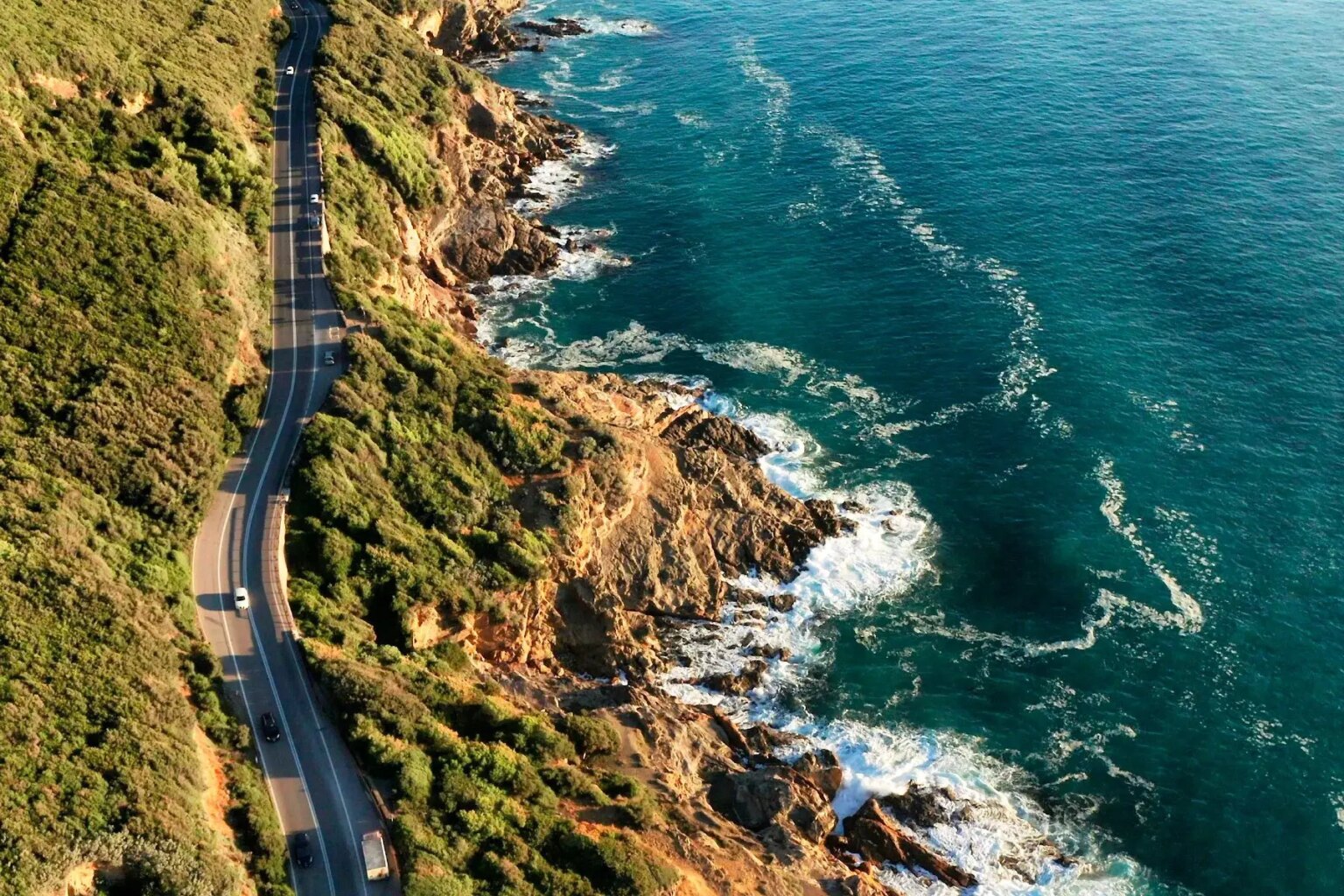
Although the country has excellent public transport, having your own vehicle is a great way to explore Italy. After all, all roads lead to Rome (Roma) eventually. But before you hit the road, it’s good to learn about the quirks and features of Italian traffic, including speed limits and driving costs.
This article covers the following:
Driving in Italy
Like most European countries, Italian traffic drives on the right side of the road and passes on the left.
That said, some expats – including those from the EU – will find driving in Italy an adjustment given the somewhat laissez-faire approach to driving that many road users take. Despite traffic fines, the use of indicators isn’t always consistent, double parking is quite common, and drivers tend to get very vocal when they are kept waiting after the light has turned green.
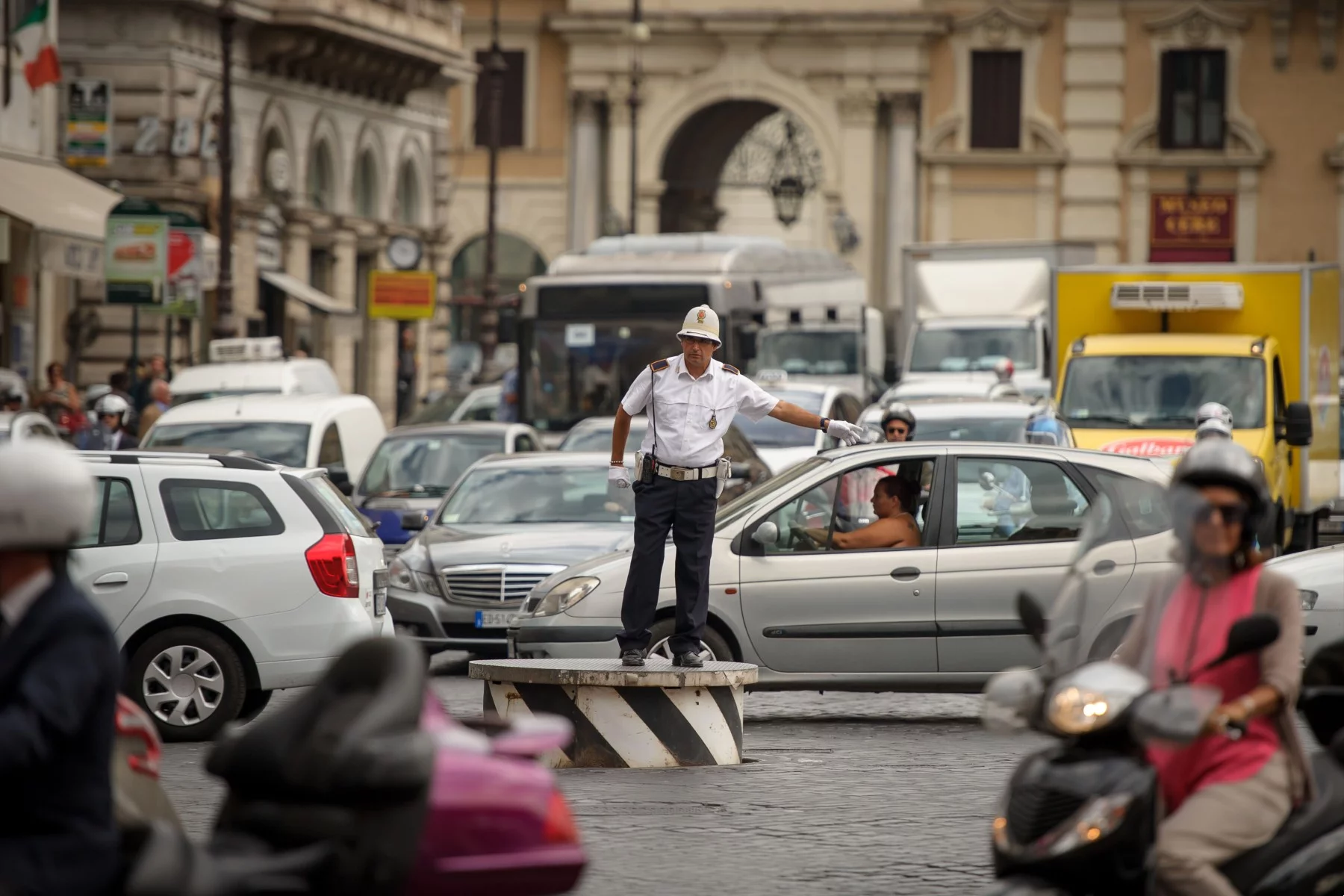
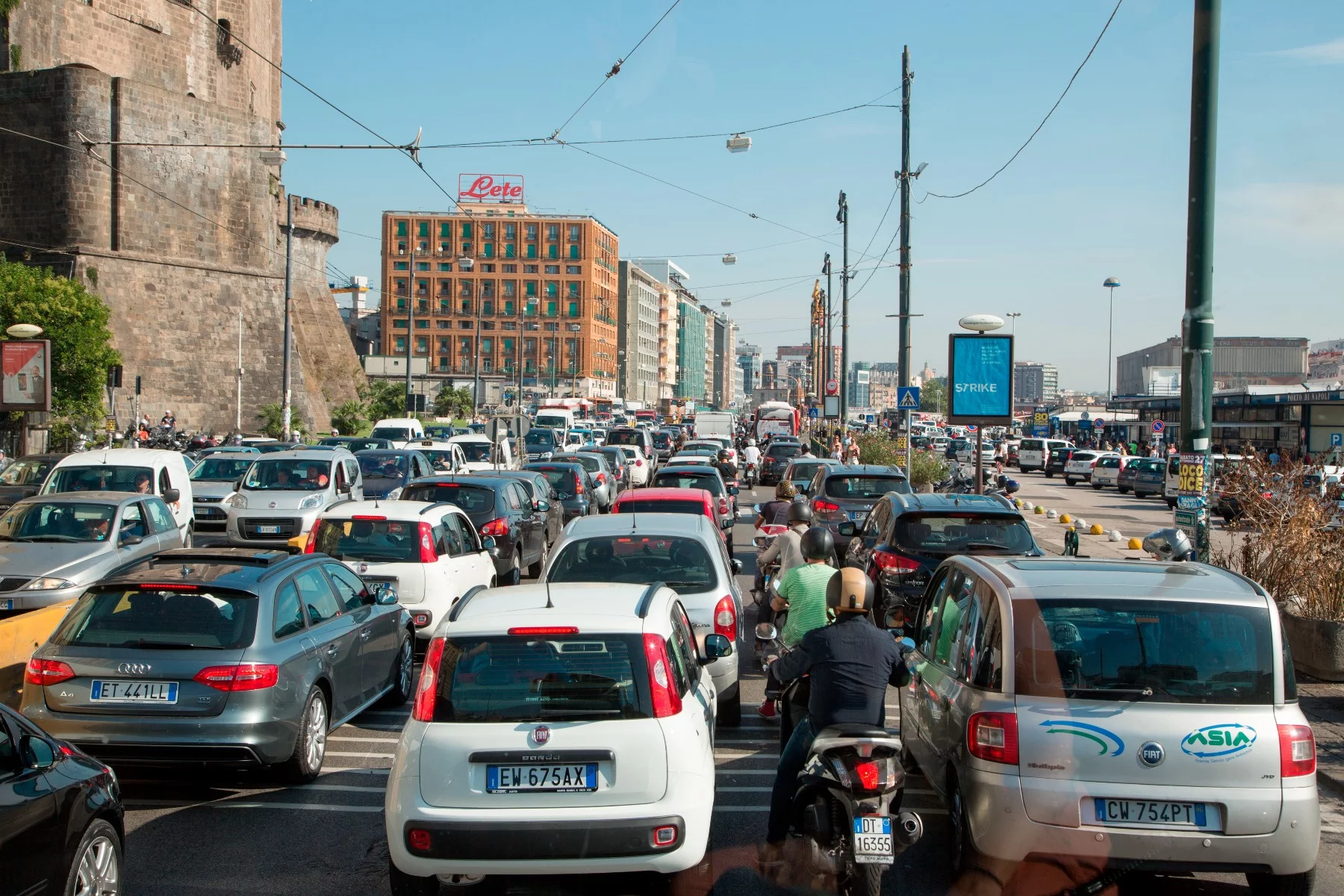
Additionally, traffic tends to be very busy. This is perhaps unsurprisingly for a country where almost 80% of the population has some sort of driver’s license.
In 2021, the Italian National Institute of Statistics (Istituto nazionale di statistica – Istat) counted approximately 53.1 million motorized vehicles, including 39.8 million passenger cars. This roughly translates to 67% of the population having a personal automobile.

Although the country lags behind Europe in using electric cars (EV), Italy offers various incentives to push traffic in a more sustainable direction. In addition to nationwide ecological Sundays (domeniche ecologiche) and low-emission zones (LEZ), the government plans to phase out new cars with combustion engines by 2035 in favor of greener fuels.
The Civil Motorization office (motorizzazione civile) is Italy’s official regulatory body for driving. It manages vehicle registration, driving licenses, and general road safety.
Who can drive in Italy?
The legal age limit for driving a motorized vehicle (i.e., a moped) is 14. You can practice driving a car – accompanied (guida accompagnata) – at the age of 17, and you can obtain your driver’s license when you are 18 years old.
Foreign nationals from the European Economic Area (EEA) can use their own original permits to drive in Italy. The EEA is made up of the European Union (EU), Lichtenstein, Norway, and Iceland.
Non-EEA residents, including people from the United Kingdom (UK), will have to exchange theirs for an Italian license after living in the country for a year. While some drivers can exchange theirs without fuss, others are expected to retake the driving exam, earning them a brand-new driver’s permit.
How to get an Italian driving license
The Italian driver’s permit (patente di guida) is nearly identical to all other EU licenses, except with the Italian flag on the front. It is similar to a credit card in its appearance. It includes your personal details and the type of vehicle you are allowed to drive.
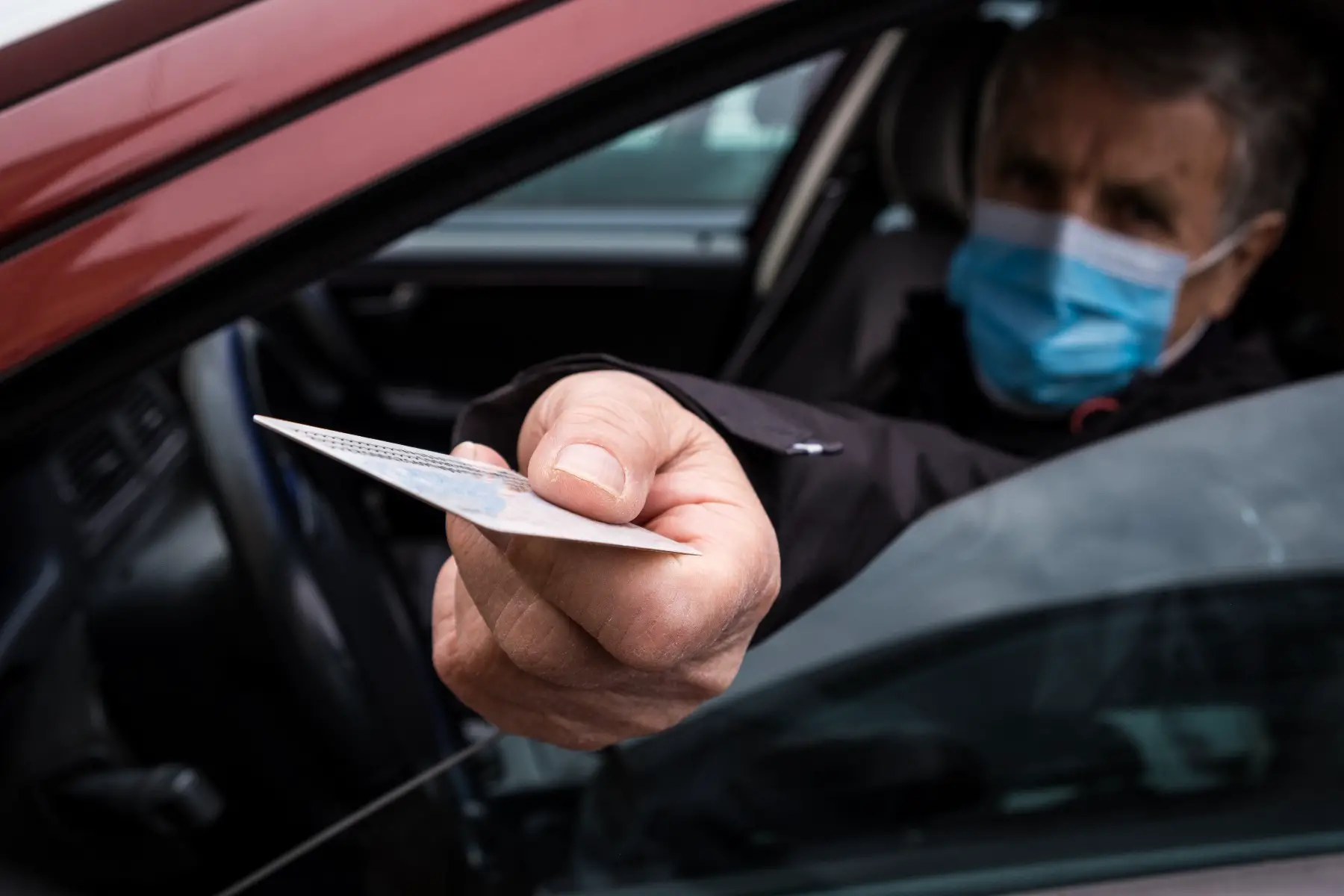
The country’s main categories of personal driving licenses include:
| Category | Vehicle |
| AM | mopeds three-wheeled vehicles light quadricycles |
| A | tricycles motorcycles |
| B | cars transport vehicles (goods/people up to nine seats including driver) agricultural machinery operating machines emergency vehicles (total mass with load up to 3.5 tons) |
| C | small goods transporting trucks (total mass up to 7.5 tons) exceptional operating vehicles |
| D | motor vehicles transporting people (up to 9 seats) – personal use minibusses (8 – 16 seats) |
You can also apply for a professional license if you want to drive a taxi, truck, large bus, or transport dangerous goods.
The local civil motorization offices (uffici di motorizzazione civile – UMC) issue driver’s permits, which are valid for 10 years.
Getting a driving license in Italy
To get your first driver’s permit, you must be 18 years old and a resident with an Italian tax code (codice fiscale). Requirements include six hours of driving lessons, a medical exam, and a theoretical and practical driving test.
You will be considered a novice driver (neopatentati) for the first three years after obtaining your license. This title comes with specific rules, including:
- You cannot drive faster than 90 km/h on highways and 100 km/h on motorways
- Your car cannot have an engine with more than 55 kW/t (kilowatt per tonne) unless you have an experienced driver accompanying you
- New drivers and people under 21 are limited to a zero blood alcohol content (BAC)
Exchanging a foreign driving license
If you are originally from outside the EU/EEA, you can use your foreign driving license for up to one year. After that, you must exchange it for an Italian one at a local UMC. Depending on your nationality, you might also need to retake the driving exams.
To exchange your foreign driver’s license in Italy, you’ll need to submit the following:
- Completed form TT2112
- Proof of payment
- Original foreign driving license plus a full copy of the front and back
- Copy of medical certificate from a qualified doctor
- no more than three months old if provided by a doctor
- no more than six months old if provided by a medical center (commissione medica locale – CML)
- Proof of residence by either:
- Original residence card plus a copy
- Original residence permit plus a copy
If you don’t have a residence permit because you just applied for one or are waiting for it to be renewed, you can also bring:
- Copies of your ID and receipt that prove you applied for the residence permit
- Copies of your ID, the expired residence permit, and the receipt that proves you applied for renewal
Drivers with disabilities
When living with a disability, you could join the National Association of Disabled Driving Legislation and Transportation (Associazione Nazionale Guida Legislazioni Andicappati Trasporti – ANGLAT). Although there is an annual membership fee of €36, this organization can provide valuable information, resources, and discounts.
Drivers with disabilities can also get tax breaks (e.g., no vehicle or registration tax).
Getting your driving license
When you are a driver with a disability, you can apply for a special category license (A, B, C, or D) at the local UMC. Getting your permit follows the same procedure as that of the non-disabled licenses. The only difference being you must also have a medical certificate proving your eligibility from a Local Health Authority (Azienda Usl).
If you already had a driver’s license before you had your disability, you’re not required to retake the theory or practical tests.
Reserved parking
Drivers with disabilities can apply for EU disabled parking disks (contrassegno di parcheggio dell’UE per disabili) at their municipality. This allows you to park in free reserved parking spots (parcheggio per disabili) in Italy and other EU member states. Some municipalities also offer personalized parking spaces (parcheggio disabili ad personam), reserved for a specific driver.
A blue sign with a wheelchair and yellow markings on the road indicate disability parking spots.
The EU parking permit is typically valid for five years but can be renewed when your disability is permanent. The card itself is free; however, you might incur costs when obtaining a medical certificate that proves your eligibility.
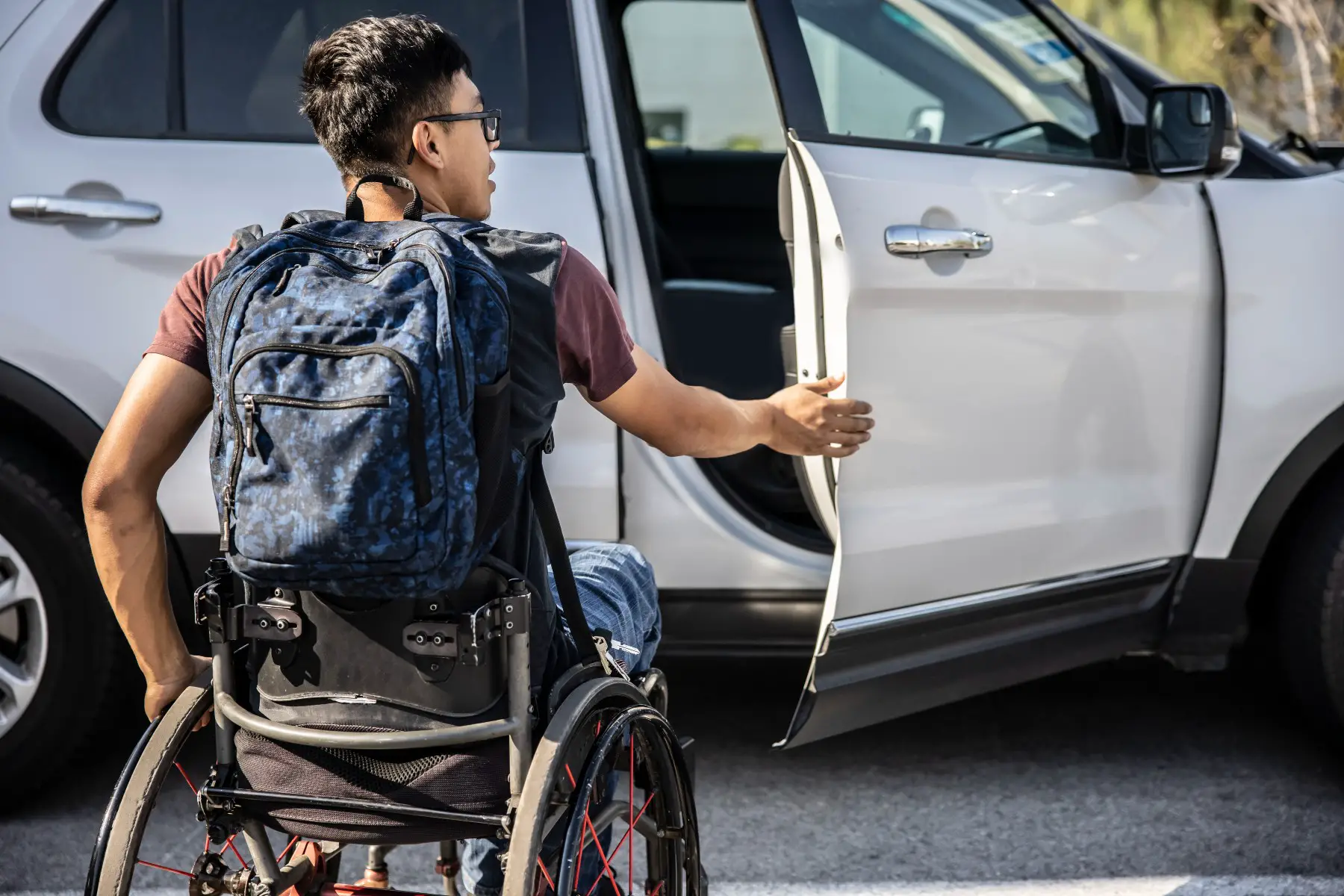
Other benefits include:
- Driving in limited traffic zones (zone a traffico limitato – ZTL), controlled traffic zones (zone a traffico controllato – ZTC), and urban pedestrian areas (aree pedonali urbane – APU)
- Driving on lanes reserved for public transport and taxis
- Driving and parking when others are not permitted due to public safety or interest, military actions, or anti-pollution incentives (e.g., ecological Sundays)
- Parking without time restrictions in:
- Public car parks
- Fixed-term parking areas
- Limited parking zones (zone a sosta limitata – ZSL)
- Parking in restricted or prohibited areas provided that it is an emergency and you don’t obstruct traffic
With the disability parking permit, you can sign up for the national CUDE database (Registro Pubblico del Contrassegno Unificato Disabili Europeo). This public registry contains non-sensitive data that allows authorities to combat disability parking fraud and lets you easily manage your parking.
Disability-accessible vehicles
Adaptation specialists can convert your car into a more disability-friendly vehicle. Options include swiveling seats, wheelchair ramps, steering devices, and hand controls for gas and brakes.
You can check the Superabile platform of the National Institute for Insurance against Accidents at Work (Istituto Nazionale Assicurazione contro gli Infortuni sul Lavoro – INAIL) for a conversion workshop in your region. They can also help you find funding if necessary.
Car registration and maintenance
All new and used cars and motorcycles must be registered with the Vehicle Registration Office (Pubblico Registro Automobilistico – PRA). You can do so in person at a UMC, Telematic Driver’s Desk (Sportello Telematico dell’Automobilista – STA), or online at the Automobile Club of Italy (Automobile Club d’Italia – ACI).
Internationals driving their vehicle need to deregister it in their own country and (re)register it in Italy within three months of arrival. This also applies to nationals from the EEA. If you are using a company car or someone else owns your vehicle, it needs to be registered on the Register of Foreign Vehicles (Registro dei veicoli esteri – REVE).
Keep in mind that when you move between residences, you are required to update your registration certificate. You won’t get a new license plate or certification, but failure to do so can result in a fine.
You will receive your Italian license plate after registration. These feature seven characters with the Italian national emblem after the first two. It also has a blue band on either side. On the left are the EU stars and Italy’s country code (I), and on the right is a yellow circle with an optional registration date and provincial code.
By law, you are required to get a vehicle inspection (revisione periodica veicoli) every two years. This starts after you’ve had it for four years. You can get cars checked at a UMC or a government-authorized workshop (officina autorizzata dal Dipartimento Trasporti Terrestri – DTT). Motorcycles can only be inspected at a DDT. If your vehicle fails the inspection, you must repair the defects within one month and have it re-evaluated.
Price may differ per region, but generally cost €45 at UMCs and around €80 at workshops.
Driving costs in Italy
As with so much in life, having your vehicle can be expensive and should be included in your cost of living budget. Costs include:
- Maintenance – vehicle inspection every two years cost between €45 and €80
- Registration – registering a car costs around €100, and a license plate around €40. When you buy a new car, these costs are often included in the selling price.
- Tax – the annual road tax (bollo) depends on the region, as well as the power of the vehicle (kW/t) and the environmental class
- Insurance – the cost of Italian car insurance is determined by your vehicle, policy, and provider, and can range from €380 to €650 a year
- Toll roads – these are common throughout Italy and charge based on the size of your vehicle, the number of kilometers you travel, and VAT
- Fuel costs – you can check the current fuel prices in this overview. The cost of charging your electric vehicle (auto elettrica) differs per make and model, but you can expect to spend between €16 and €32 for a full battery.
Driving rules and penalties in Italy
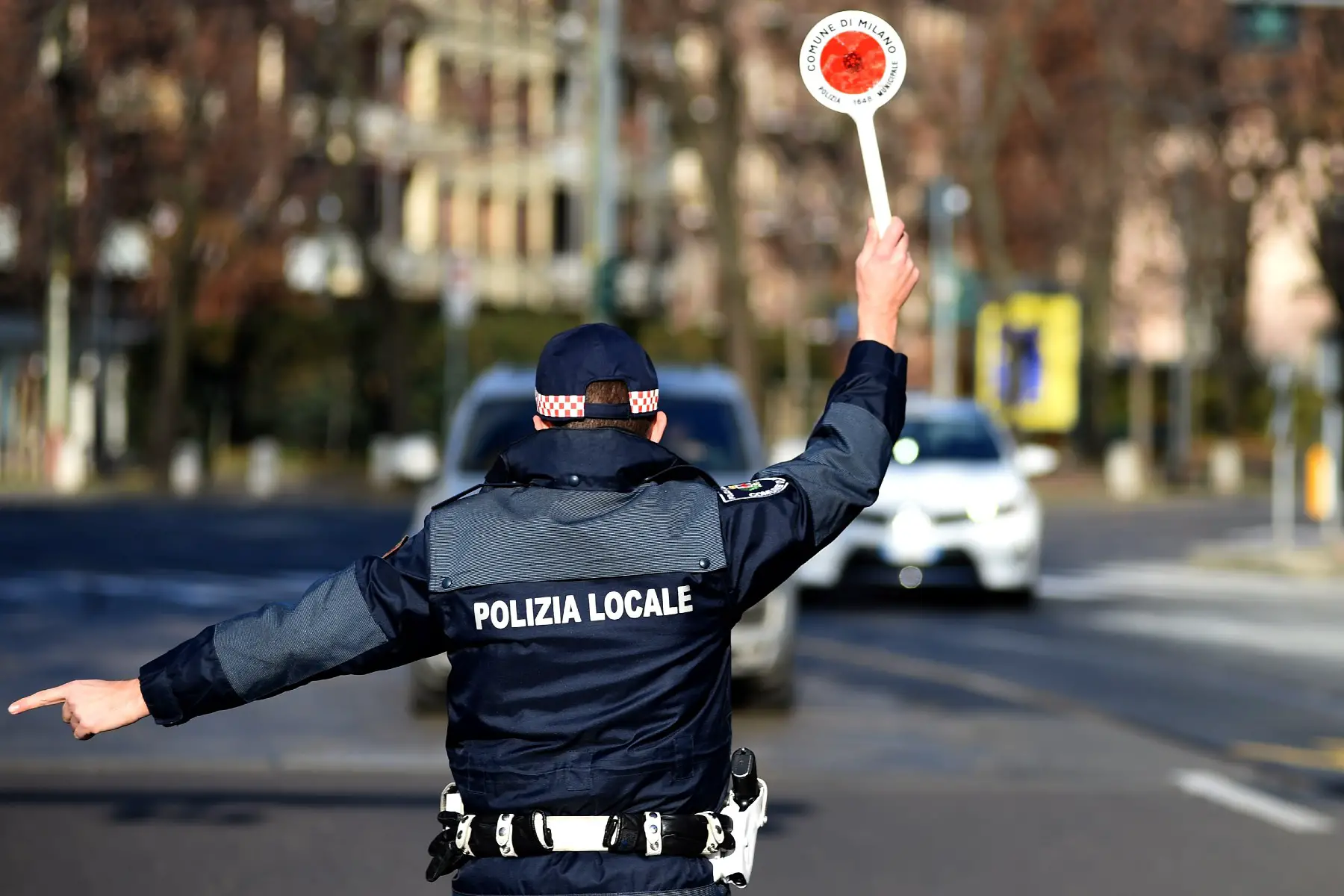
Despite what the common stereotype might suggest, road safety and traffic rules are important in Italy. The government continuously updates the New Highway Code (Nuovo Codice della Strada – CdS) to improve road safety and protect the environment. For example, they recently added a fine of €42–173 for failure to use indicators or turn signals.
By law, you are required to have third-party liability car insurance. Moreover, you must always keep a reflective triangle and safety vest in your car, and it’s also recommended to carry a fire extinguisher.
Other safety rules include:
- Drivers and passengers must wear seatbelts at all times
- Children shorter than 150 cm must be seated in an approved child seat on the back seat
- You must also have a car seat alarm for children under four to prevent leaving them accidentally behind in the car.
- Helmets are obligatory for all mopeds, motorcyclists, and pillions
- Outside of urban areas, you must always keep your vehicle lights on
- Non-slip (i.e., mud and winter) tires are compulsory, and the use of snow tires is advised
- Smoking is prohibited when you are in the presence of children or pregnant women
- Drivers must wear their prescribed glasses or contact lenses
License points system
Italy uses fines and a demerit point system to curb traffic violations. Minor infractions will likely result in a fine (e.g., driving without a seatbelt will cost you €85 or more). Serious offenses culminate in a fine plus losing one or more points.
Each driver starts with 20 merits on their license. You can lose between one and 10 points for one violation, depending on the severity. When you have zero points left, your license will be suspended.
Drivers who voluntarily attend a merits recovery course can earn some of their points back. Better still, when you stick to the rules, you can get bonus points every two years:
- Drivers with 20 merits get an extra two points and can have a maximum of 30 points in total
- Drivers with less than 20 points will have their initial 20 merits restored
General road rules
Traffic in Italy drives on the right and overtakes on the left. Drivers coming from the right have priority unless stated otherwise by traffic signs. Trams and city buses always take precedence.
Other general traffic rules include:
- Noise and loud music are prohibited
- You must keep to the speed limit that is indicated on signs and in the CdS
- Overtaking cannot be done under poor conditions or where forbidden
- Drivers must keep a safe distance of at least 100 meters to avoid accidents
- Two-vehicle collisions must be reported to your insurance providers within three days
- Severe accidents or accidents with injuries must be reported to the police
Speed limit in Italy
You must always keep to the speed limit indicated on signs and adjust it to weather conditions.

Urban and residential areas have a limit of 50 kilometers per hour (km/h) unless otherwise indicated (e.g., 30 zones – cannot exceed 30 km/h). Outside urban areas, the speed limit is 90 km/h on secondary roads and 110 km/h on main roads. Freeways (autostrada) have a limit of 130 km/h or 150 km/h if it has more than four lanes in each direction.
Italy’s traffic system includes speed cameras (autovelox) and average speed cameras (sistema tutor) to monitor speed. The latter takes the average speed your car is traveling between two places. That means that even if you were not speeding when the camera took your photo, it can determine whether you traveled faster than you should have.
Driving under the influence
Drinking and driving are irresponsible, dangerous, and strictly prohibited. Italy has a zero-tolerance policy for novice drivers and those under 21. Experienced drivers can have up to 0.5 BAC. This translates to around one beverage per hour, depending on your stature, metabolism, and drink of choice.
People who are caught driving under the influence face hefty punishments:
| BAC level | Fine | Points | Suspension | Additional notes |
| 0.0 – 0.5 | €168–672 | 0 | None | Novice drivers and under-21s only |
| 0.5 – 0.8 | €543–2,170 | 10 | Three to six months | None |
| 0.8 – 1.5 | €800–3,000 | 10 | Six months to a year | Plus, a prison sentence of at least six months. Your vehicle can also be seized. |
| 1.5 or higher | €1,500–6,000 | 10 | One to two years | Plus, a prison sentence of six to 12 months. Your vehicle can also be seized. |
Authorities will double your license suspension if you are driving someone else’s vehicle when offending.
Drunk drivers who were in an accident with a 0.5 to 0.8 BAC will receive double the penalties and have their vehicle seized for 180 days. Their license will be revoked if they had a BAC level above 1.5.
Drugs are illegal in Italy, so driving under the influence of narcotic or psychotropic substances will result in even harsher punishments. These include:
- Fine of €1,500–6,000
- Ten demerits
- License suspension for one to two years
- A prison sentence of six to 12 months
Your license will be revoked, If you are inebriated or on drugs when you cause an accident.
Distracted driving laws in Italy
Unless you are part of the Italian military or police force, you cannot use an electronic device while driving. However, you can use hands-free systems.
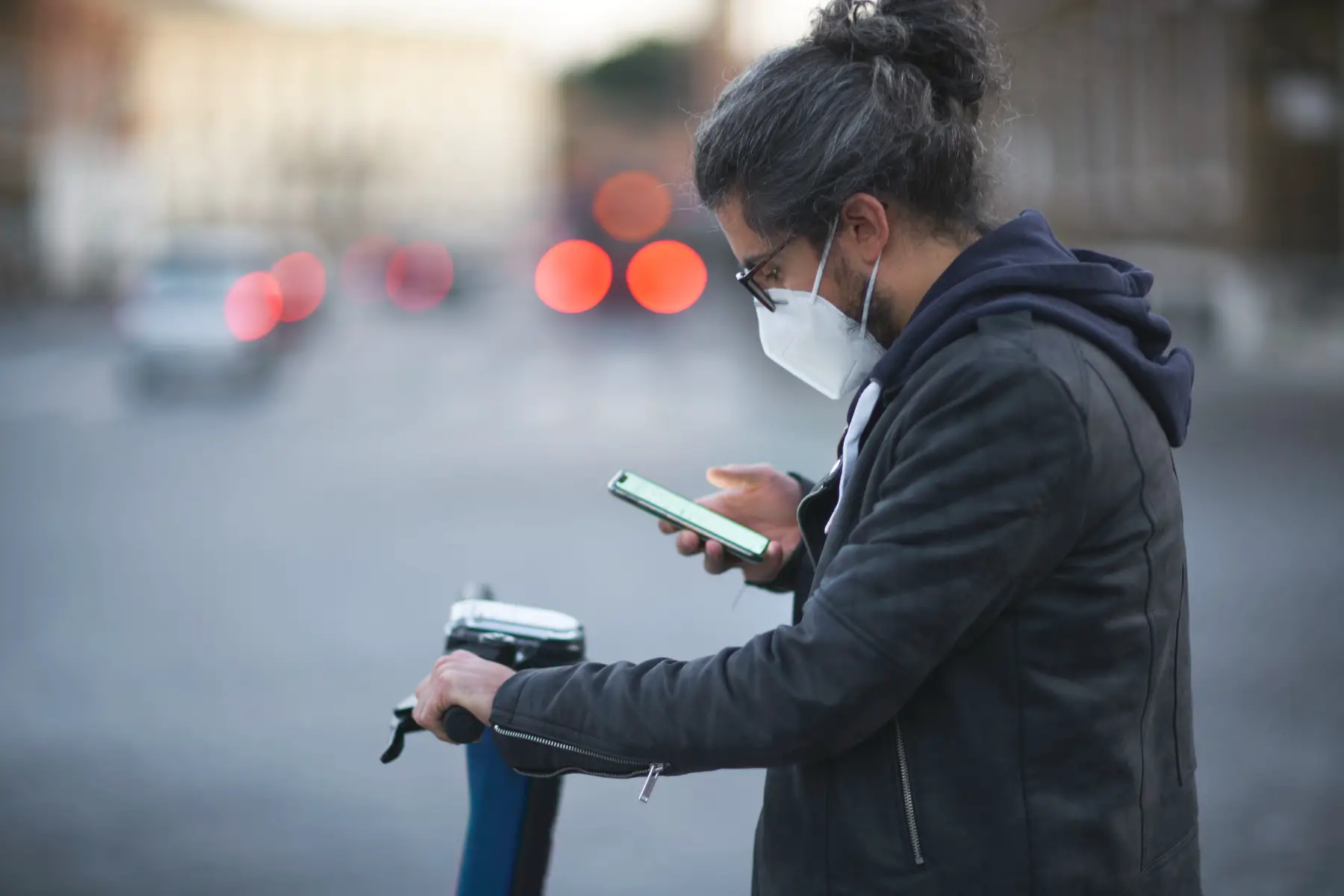
Getting caught using your phone will result in a fine of €165–660. In the case of a repeat offense, you’re looking at five points off your license plus a one to three-month suspension.
Driving without a license
Driving without a license or using an expired one will result in a hefty fine of €2,257–9,032. If you were using someone else’s vehicle, the owner also gets a fine of €397–1,592. In short, pass your test before taking to the road.
Road signs in Italy
Italy’s traffic signs follow a similar pattern to other European nations. They feature standardized shapes, colors, icons, and symbols that are easy to understand.
Signs divide into six categories:
| Type of sign | Physical features | Description/Examples |
| Warning signs | Triangular with a red outer rim | Warning against potential dangers ahead (e.g., steep hill downwards) |
| Informative signs | Rectangular or square, and either white on blue background or black on white background | Indicating parking and pedestrian information |
| Priority signs | Triangular or square (also octagon), with a red or white outer rim, filled in red, yellow, white, or blue | Giving you information about which road user has priority (e.g., stop or priority road) |
| Prohibition signs | Circular with a red outer rim | Letting you know what is prohibited (e.g., no entry) |
| Mandatory signs | Blue circle with white text | Conveying instructions that drivers must follow (e.g., turn left) |
| Direction signs | Arrow-shape in green, yellow, or blue | Guiding you in a specific direction (e.g., Rome is 10 km ahead) |
Traffic information in Italy
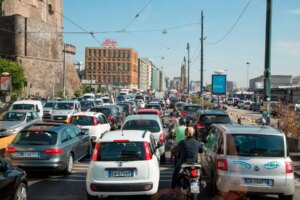
Traffic jams, accidents, roadworks, and slow-moving vehicles are all common in Italy. This can be due to scheduled construction, weather conditions, the time of day, or indifferent road users.
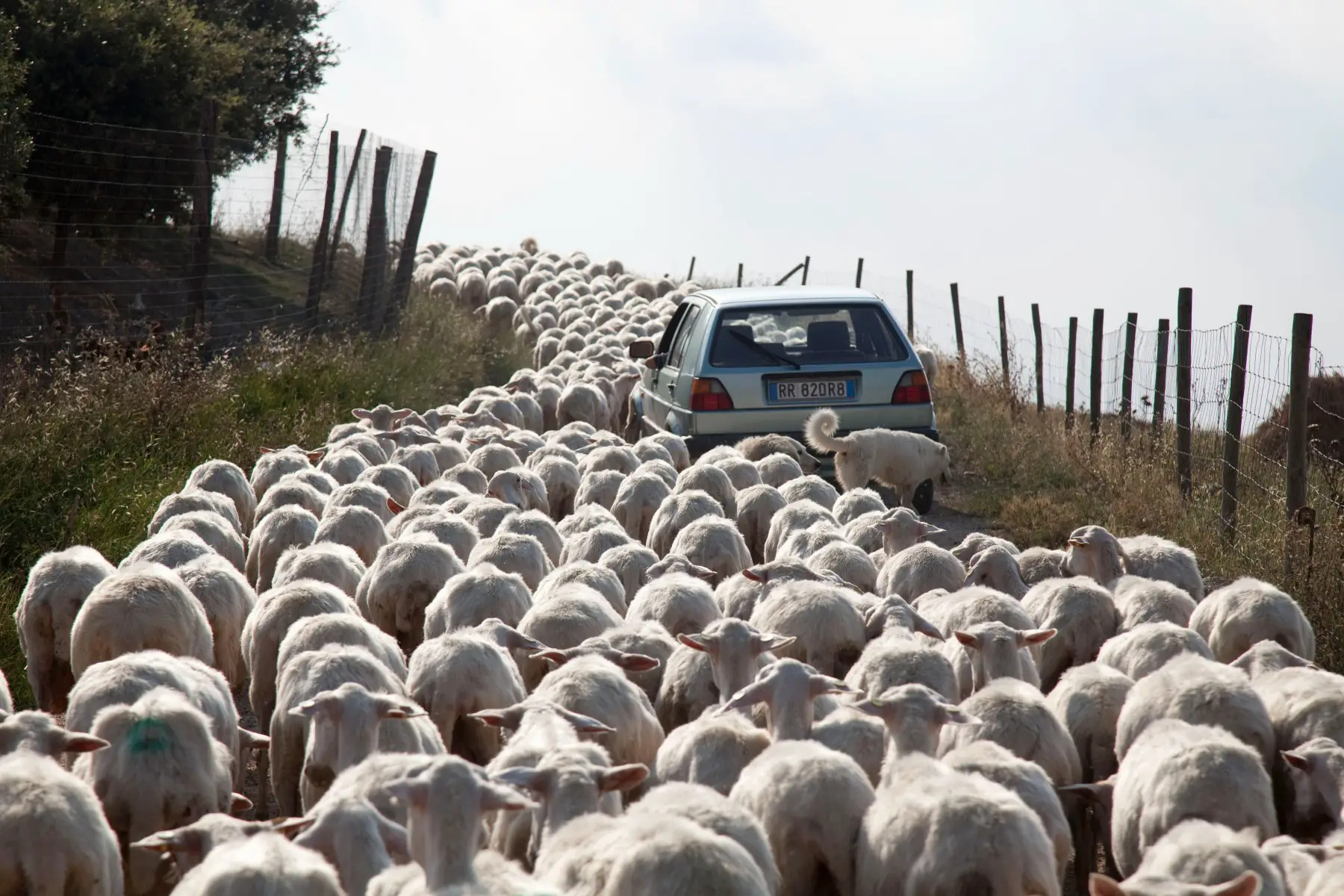
Rush hours are usually between 07:00–09:00 and 17:00–20:00 on weekdays. In cities like Rome (Roma), Milan (Milano), and Florence (Firenze), traffic may increase on the weekends and parking will be challenging.
In 2021, the cities with the largest impact of traffic jams were:
- Palermo (109 hours)
- Rome (107 hours)
- Torino (93 hours)
- Lecco (82 hours)
This completely overshadows other big European metropolises like:
Still, it is less than some capitals, including:
You can find up-to-date traffic information on Austrade Italia, which includes webcam feeds and weather forecasts.
Parking in Italy
Besides no-parking zones, many streets have space to park on the side. Official parking spots (parcheggio) are typically color-coded on the road:
- Blue – usually paid parking
- White – free parking, but may also indicate resident parking. You won’t know until you check the signs near the space.
- Green – electric vehicles
- Yellow – drivers with disabilities
- Pink (stalli rosa) – pregnant women or those traveling with infants under the age of 2
Parking tickets generally cost between €1–3 per hour, depending on the location. Although there typically will be a payment machine, many Italians use convenient parking apps.
Parking fines can range from €42–173, depending on where, how, and how long you have parked there. If you park while leaving your vehicle running to keep the air condition going, you can face a fine of €223 to 444. Also, if your car obstructs traffic or causes a hazard, it can be towed (which involves additional costs).
Road accidents and breakdowns
Road accidents in Italy
For a country known for its fast and flashy cars, you might expect Italy to have many road fatalities. However, it is only slightly above the EU average. In 2021, there were 151,875 road accidents with 2,875 deaths, a decrease of 11.8% and 9.4%, respectively, compared to 2019.
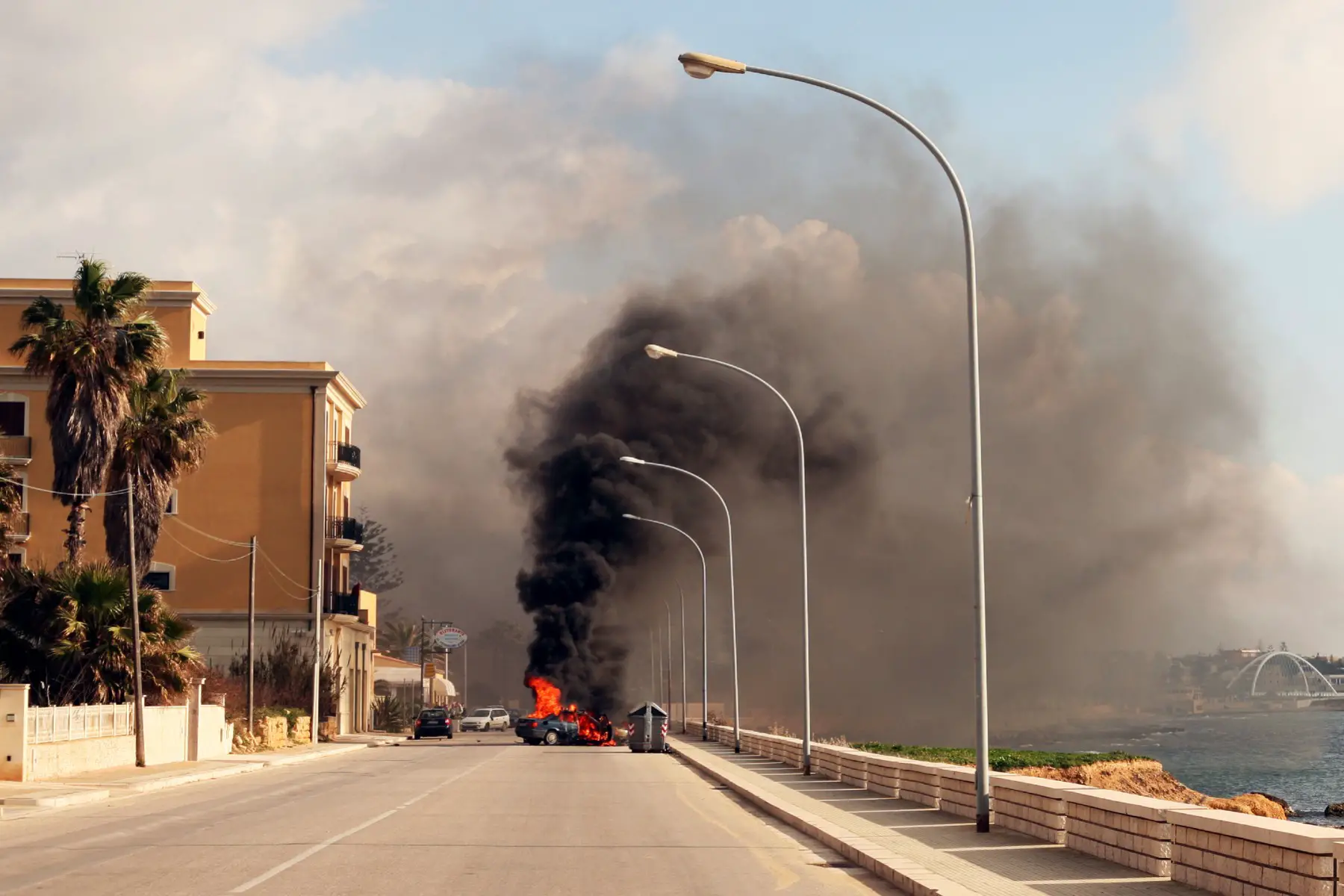
One of the leading causes of crashes in Italy is speeding and drunk driving. Distraction (e.g., using a phone while driving) is another factor in many accidents.
If you are in a minor road accident (no injuries), you are required to stop but do not have to call the police. Instead, the involved parties should exchange insurance details. If you agree on how the accident happened, you can each complete an amicable accident report (constatazione amichevole di incidente – CAI) or direct compensation agreement (convenzione indennizzo diretto – CID). You send these to your insurers. It will speed up the claiming procedure significantly.
You must report more serious incidents and accidents with injuries to the police, by calling the European emergency number, 112. This is a toll-free number without an area code. The operator will connect you to the correct first responders. If you urgently need medical assistance, you can also call 118.
When you cause the accident, you have a duty to compensate the injured party. In Italy, you can get a prison sentence of between three months to five years if this traffic accident results in serious injury.
Vehicle breakdowns
If your vehicle breaks down, turn on your hazard lights and pull over to the side of the road. By law, you are required to place a reflective triangle behind the car and wear a reflective vest.
You can arrange onsite repair or a tow truck by calling the ACI (803116 or 116). There are call boxes every 2km along the highway that you can use to ring for help if you don’t have your phone or its battery is flat.
Roadside assistance is an added extra when it comes to car insurance. You’ll have to foot the bill if your policy does not include this coverage.
Italy’s green mobility initiatives
The Italian government has implemented several green initiatives to reduce its environmental impact and curb carbon dioxide emissions.
For instance, the country offers various monetary incentives to encourage the population to live more sustainably, such as:
- Nationwide ecological Sundays
- Low-traffic and low-emission zones (LEZ)
- Up to €866 in fines for littering

Italy’s other green incentives involving electrical vehicles (EVs) include:
- Up to €5,000 subsidy for the purchase of an EV
- Covering 40% of the costs of charging stations and infrastructure
- In most regions, EVs are tax exempt for the first five years (only 75% tax after that). In Lombardy and Piedmont, EV taxes are waived indefinitely.
- Cheap options for renting an e-scooter in Rome (although some sanctions are being imposed)
The country also has plenty of regional and citywide incentives, such as:
- The Emilia-Romagna Region offers a Bike to Work incentive, up to €50 per month
- Rome’s public transport will be more sustainable by 2025. The capital is looking to increase the number of electric buses, trams, trolleybuses, and cycling paths.
- Both Rome and Florence are testing innovative charging solutions for electric cars, bikes, and e-kick scooters
- The cities of Torino, Milan, Padua, and Bologna have increased their number of bicycle lanes by more than 50%
- Venice (Venezia) will replace its fleet of waterbuses and ferries with hybrid models by 2030. The city is also giving subsidies to private boat owners to install hybrid engines.
How to get a car in Italy
Buying or selling a car
Purchasing and selling your car is fairly simple in Italy. When you purchase a new car from a dealership, they’ll typically take care of all the paperwork. The Auto Practice Agency portal (Agenzie di Pratiche Auto) can assist you with finding a car dealership in your region.
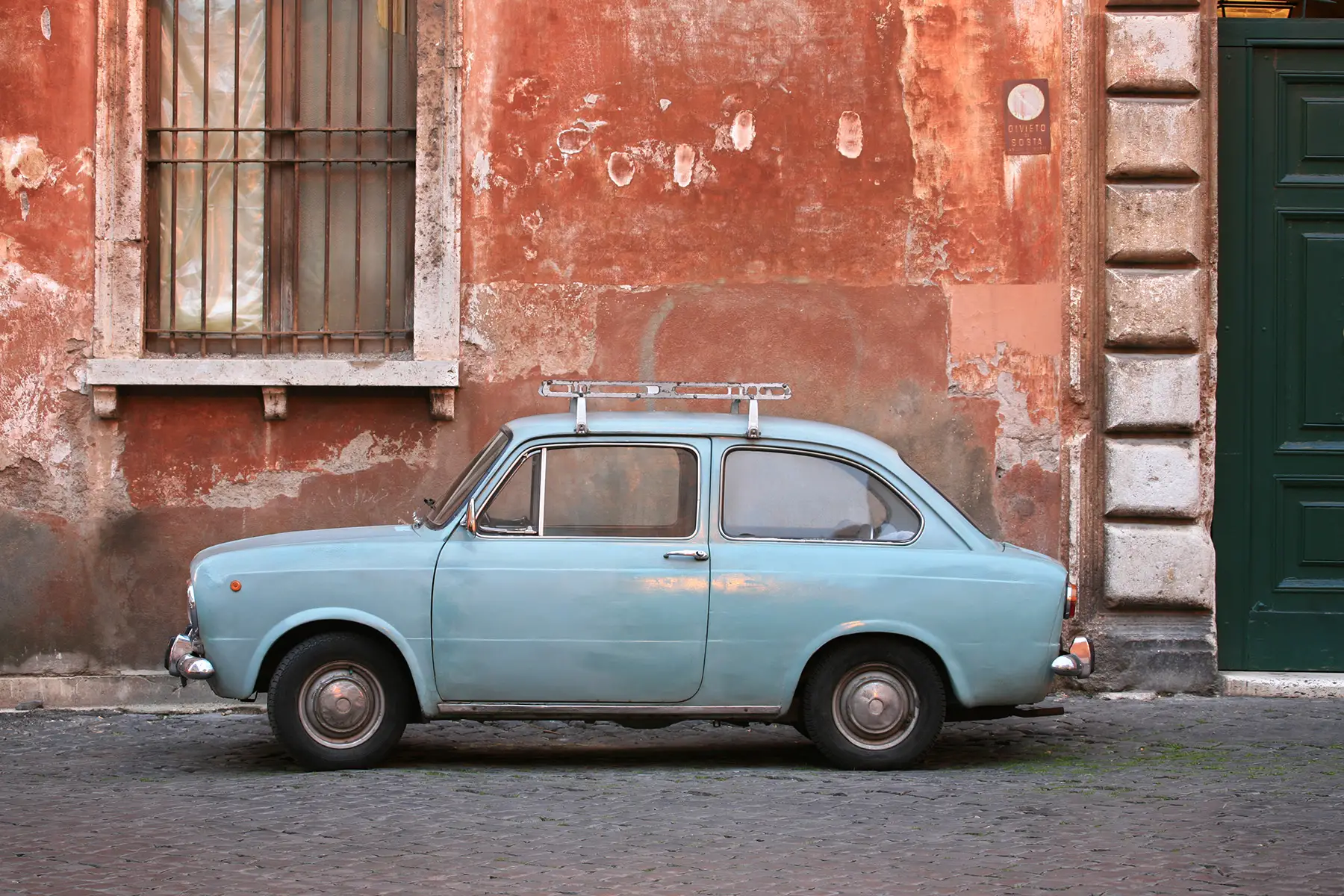
If you decide to buy a used car or sell your car, you’ll have to arrange the documentation yourself. First, you will need an official act of sale (atto di vendita). You can get this authenticated at the STA, municipality (comune), or a notary (notaia/notaio).
Within 60 days of the sale, you’ll need to request a Unique Vehicle Circulation and Ownership Document (Documento Unico di Circolazione e di Proprietà del veicolo – DU) from the STA. This document confirms the change of ownership and legal status of the vehicle. It also ensures that the PRA and the Civil Motorization Office archives will be updated.
Importing a car to Italy
You can also import your vehicle, which may be less hassle. To do so, you will first need a safety certificate from the provincial department of motor vehicles (Ufficio Provinciale della Motorizzazione Civile – PMC).
Cars from the EU can be registered with the PMC and PRA in one unified application at the STA. You’ll receive a DU and your new license plates. The STA cannot process applications for vehicles from outside the EU. You will need to file these separately. You’ll need a registration certificate from the PMC, and then you can register it with the PRA.
Documents differ on the application. However, you will need to provide at least:
- Copy of your ID
- Tax code of the holder
- Declaration of Conformity
All documents need to be translated into Italian.
Renting a car in Italy
You can rent a car when you are over 18 years old and have a valid driver’s license. International and Italian car rental (autonoleggio) companies include:
With some rental operators, you need to be over 21 and have had a valid driver’s license for at least two years. Others will rent a car to anyone over 18 who has held a license for more than one year. Some also require a young driver surcharge if you are under 25.
Typically, renting a car can cost around €20 per day.
Carpooling/car sharing in Italy
Ridesharing has become increasingly popular in Italy. Many see it as an inexpensive, convenient, and more sustainable way to travel along regular routes. Options for carpooling in Italy include:
These sites allow you to search your departure city and destination to find others who are going that way.
Car repair in Italy
When you rely on your vehicle to get from A to B every day, you need a reliable mechanic or car repair service to keep it in check.

You can use the Italian Yellow Pages to find an accredited car repair shop in your region. Alternatively, you can search for a certified mechanic online. Options include:
- Cerca Officina – request a quote from workshops and body shops in your direct area
- Mechanicar – enter the service you need to get an estimate of the repair cost
- Revisione Auto – a directory of mechanics and car repair shops
Tips on driving in Italy
Here are a few quick tips for a smooth transition to the Italian way of driving:
- Stick to the right, as the left lane is only used for overtaking
- Italian drivers tend to drive fast, especially on motorways. If you don’t go as soon as the light is green, the drivers behind you will use their horns.
- By law, pedestrians always have the right of way. However, many local drivers speed through crosswalks regardless.
- Never drink or do drugs and drive
Useful resources
- Ministry of Infrastructure and Transport (MIT) – official government website with all information regarding infrastructure and transportation
- Il portale dell’automobilista – official portal of the civil departments overseeing motor vehicle administration
- Automobil Club d’Italia – website with useful information and where you pay your car tax

Did you find this guide helpful?