
'%20id='ico-down'%20stroke='%23000000'%20stroke-width='1.5'%3e%3cg%20transform='translate(1092.250000,%20254.750000)'%3e%3cpolyline%20id='Path-2-Copy-4'%20transform='translate(5.500000,%202.750000)%20scale(1,%20-1)%20rotate(-180.000000)%20translate(-5.500000,%20-2.750000)%20'%20points='0%200%205.5%205.5%2011%200'%3e%3c/polyline%3e%3c/g%3e%3c/g%3e%3c/g%3e%3c/svg%3e)


Living
Love, Marriage & Partnership
How to get married: weddings in Luxembourg
Are you planning a Luxembourg wedding or civil ceremony? Start by learning more about the types of partnerships, legal requirements, costs, and traditions.


If you had a successful dating life and found the one, you may be ready to get hitched. Luxembourg has plenty to offer, whether you dream of an elaborate, fairytale wedding in a castle or a small, cozy affair to make your commitment official. However, this tiny country is not free of bureaucracy and paperwork if you want to legalize your marriage.
Not sure where to start? Here is an explanation of all the things you need to do before your nuptials in Luxembourg:
Cigna Global
Enjoy peace of mind while living in Luxembourg with Cigna Global’s long-term international health insurance plans (12+ months). Get tailored coverage, direct billing with many providers, complex case management, and global care on demand, with access to a network of 1.5+ million doctors, specialists, and therapists.

An overview of marriage and weddings in Luxembourg
In 2020, Luxembourg reported fewer marriages – around 2.9 per 1,000 people – than the European Union (EU) average of 3.2 per 1,000 people. There is also an increase in the age when people get married for the first time, with more couples tying the knot in their early thirties instead of their twenties.

In 1994, the government legalized a Civil Solidarity Pact (PACS) or domestic partnership. It is an alternative to marriage, which has become more popular, according to the data from the 2011 census. The numbers may have changed, but the results of the latest census (2021) still need to be processed.
Since 2015, same-sex couples can legally marry and adopt children in Luxembourg, and in 2021 the country recorded 36 gay marriages.
Marriage and PACS laws apply equally to citizens and internationals who want to make their relationship official in Luxembourg.
Attitudes toward marriage and weddings
Despite the declining marriage rates, many people in Luxembourg still have weddings – or some commitment ceremony – to officiate and celebrate their union. People who view traditional marriage as too restricted or outdated can now have their domestic partnership (i.e., PACS) legally recognized.
Despite the Christian Social People’s Party (CSV) turning down the original proposal to legalize same-sex marriage in 2007, the government – led by openly gay Prime Minister Xavier Bettel – passed the bill on 18 June 2014. Grand Duke Henri enacted it into law in July of that same year, and it officially took effect six months later, in January 2015.
The law reflects the view of most residents, as 87% of Luxembourgers support marriage equality according to the results from the 2019 Eurobarometer on Discrimination.
Gay marriage and same-sex partnerships in Luxembourg
Luxembourg was the 11th member state of the EU to allow same-sex marriages. Civil partnerships (PACS) have been accessible to same-sex couples since 2004, while gay marriage became legal in 2015, affording them the same rights as different-sex couples. For example, same-sex couples can adopt children and have the same tax benefits and legal security.
The state also passed a bill in 2016 recognizing same-sex marriages conducted abroad before 1 January 2015.

It’s no surprise that when it comes to respecting LGBTQIA+ rights, Luxembourg ranked fourth in the EU, behind Malta (1st), Denmark (2nd), and Belgium (3rd).
Some churches (e.g., the Protestant Reformed Church of Luxembourg) allow same-sex religious weddings. However, not all churches or religious institutions support this view.
All legal marriages follow the same stipulations and require specific documentation.

What types of weddings are possible in Luxembourg?
You must first have a civil ceremony to legalize your union in Luxembourg. This is to officially register your marriage or domestic partnership in your local commune (French: communes, German: gemeinden, Luxembourgish: Gemeng).
Civil Ceremonies
First, a couple must set a date for the ceremony at their local town hall or community center. Then follows a 10-day waiting period where the wedding is publicly announced (i.e., the banns) in the communes of each partner. This announcement lets people in the community know about the intention to marry in case of an objection, such as if one of the partners is still married.
A registrar (French: officier de l’état civil, German: Standesbeamten, Luxembourgish: Registrateur civil) performs the civil ceremony (French: mariage civil, German: standesamtlich heiraten, Luxembourgish: zivil Bestietnes) in the commune where the couple is registered. The mayor (in their capacity as the civil registrar) can delegate their responsibilities to another qualified person to conduct the ceremony. Usually, only family and close friends attend.
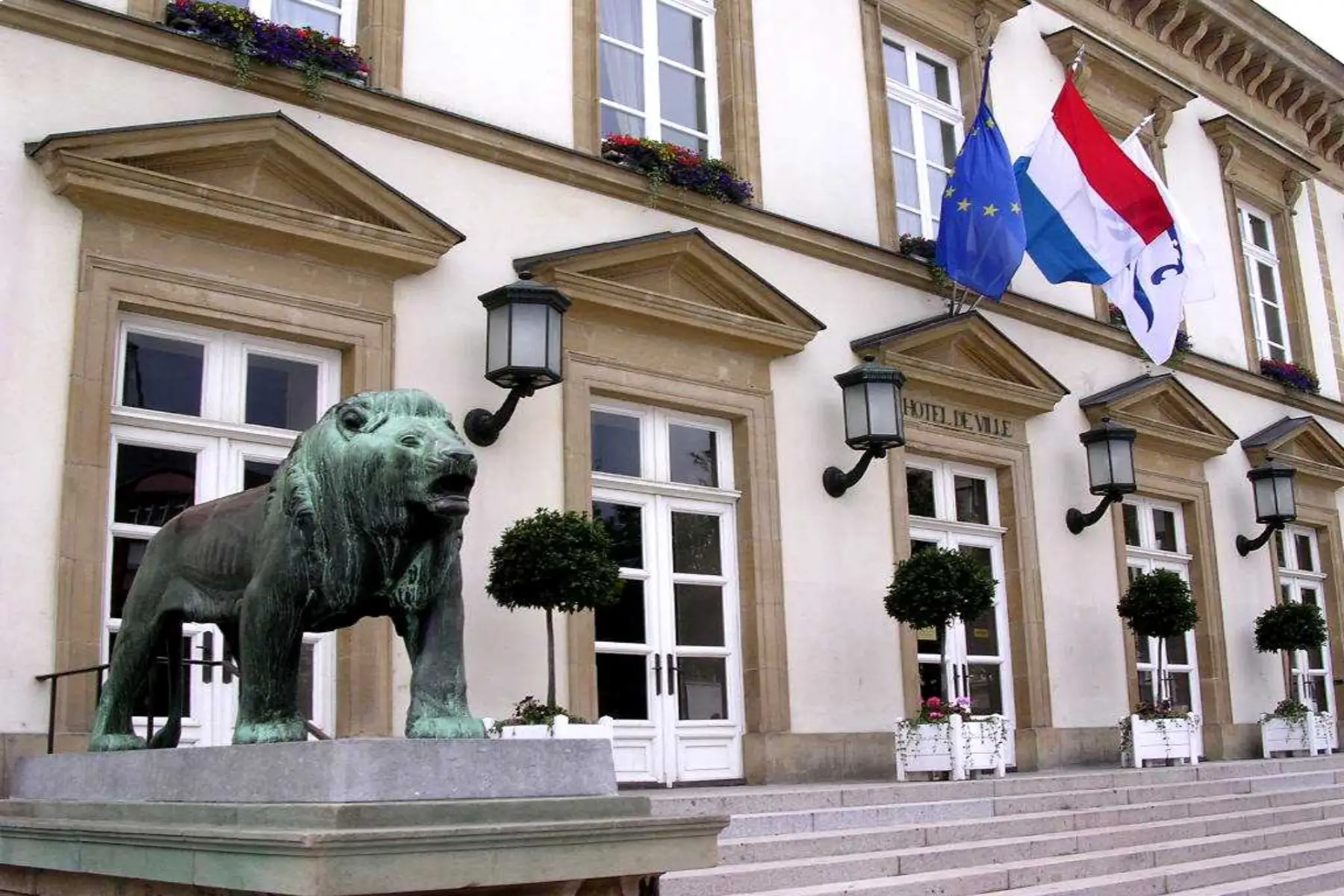
Primarily, the civil ceremony takes place at the city hall, but since May 2022, a law change allows couples to wed at other locations, as long as it adheres to the following conditions:
- A public property allocated for public service
- Located in the registered commune
- Must be solemn and neutral
- Allows the registrar to perform their duties without hindrance
Religious weddings
After the civil ceremony, the couple can have a religious wedding, but this is not mandatory, as Luxembourg is a secular state allowing religious freedom. The most prominent faith groups include Christianity (Catholic, Protestant, Anglican, and Orthodox), Islam, and Judaism.
Couples can set their wedding date shortly after the civil ceremony. Due to Luxembourg’s international demographics, there are several English-speaking places of worship to choose from, including:
- Ahmadiyya Muslim Association Luxembourg
- All Nations Church
- Anglican Church of Luxembourg
- Bahá’í of Luxembourg
- Christian Community Church
- Church of God Luxembourg
- Church of Jesus Christ of Latter Day Saints (Mormons)
- Islamic Cultural Center Luxembourg (CCIL)
- Liberal Jewish Community of Luxembourg
- Orthodox Jewish Synagogue
- Parish of Luxembourg Notre Dame
- Society of Friends (Quakers)
After the ceremony, couples typically have a reception to celebrate with family and friends.
Humanist (non-religious) weddings
In Luxembourg, many people opt for non-traditional and non-religious weddings, including themed and destination celebrations. Some have elaborate, expensive affairs, while others prefer something small, causal, and intimate. Quite a few couples even elope. However, the state will not legally recognize any of these Luxembourg weddings without a civil ceremony.
Civil/domestic partnerships in Luxembourg
Partners who live together but do not wish to be married can opt for a domestic partnership or PACS (French: Pacte civil de solidarité, German: Eine Lebenspartnerschaft, Luxembourgish: Solidaritéitspakt zivil). This applies to different-sex and same-sex couples as long as one partner is a legal resident.

Civil partners enjoy all the same rights (including tax benefits and social security) and legal protection as married spouses. Similar to a marriage, there are specific conditions before entering into a civil partnership, such as:
- Both partners must be at least 18 years old
- Neither can be already married or in a civil partnership
- They cannot be related by blood or marriage

To enter a PACS, both partners must go to the civil registrar in their local commune to declare their domestic partnership and provide the necessary documents.
Necessary documents for a civil partnership (PACS)
The documents must be in French, German, or English. However, if these are in another language, you could use the professional translating service, linkoking.
The paperwork for both partners includes:
- Valid ID or passports
- Full copies of birth certificates:
- France or Luxembourg – no older than three months
- Any other country – no older than six months
- A sworn statement signed by both partners in front of the registrar confirming they are not related through blood or marriage
- If born outside of Luxembourg – a certificate attesting that neither partner has registered another partnership with someone else. Both must sign the application and post it to the Civil Registrar (French: Service du répertoire civil, German: Personenstandsregisteramt, Luxembourgish: Biergerkrich Service). It must contain:
- Full names, marital status, and address
- Copy of social security cards and proof of identification
- International residents must also request a certificate of non-commitment (French: certificat de non-engagement, German: Bescheinigung über das Nichtbestehen, Luxembourgish: Certificat vun Net-Engagement) from their country’s civil authority confirming their single status
- If either or both partners have been divorced or legally separated, they must provide a transcript of the divorce ruling or dissolution of the registered partnership
- For widowed partners, a death or birth certificate stating the death of the previous partner
- If one exists, proof of a property settlement agreement
What is the process of declaring a domestic partnership (PACS)?
The couple must make an appointment at the commune with the registrar, who will sign a declaration document after:
- Signing the documents
- Verifying that both partners meet the conditions

After the registrar registers the partnership declaration, the couple must send it to the Public Prosecutor’s Office within three days. This office will enter it into the Civil Register and post a PACS certificate to each partner as legal proof.
Civil partnerships have become more common (around 40% in 2020) as many choose to own property and raise children under this agreement.
The legal requirements and benefits of getting married in Luxembourg
Getting married in Luxembourg involves a fair amount of bureaucracy and paperwork. You may need extra documentation if you or your partner are not citizens.
Requirements and rights
Both partners must be 18 or older. At least one must be a permanent resident or citizen. Minors (aged 16–17) can only legally marry with their parents/guardians’ permission or approval granted by a judge.
Necessary paperwork and documentation
You and your partner must submit the following documents in English, French, or German.
- Proof of identity, such as passports or identity cards
- A copy of each spouse’s birth certificate, stating their parents’ names and place of birth (no older than six months). If none is available, a notarial certificate issued by a magistrate and recognized by the District Court is acceptable. An international birth certificate requires a legalized signature or apostille (i.e., legally certified abroad).
- A residency certificate
- Proof of single status
- Luxembourg citizens – birth certificate with civil status
- International resident – certificate of legal capacity to marry or certificate of no impediment or something similar, depending on their country
- A death certificate of the deceased spouse if widowed
- Proof of divorce if one or both partners were previously married

The couple must also provide the following information:
- Date and place of birth of their parents, their home addresses, and occupations. If one of the parents is deceased, they must note the date and place of death
- Their national 13-digit identification number (matricule)
- The number of guests attending the civil ceremony
- Their shared residential address after the wedding
Because Luxembourg is a signatory of the Munich Convention of 5 September 1980, citizens from countries who also signed the Convention may need a certificate of legal capacity to marry. These countries include:
- Austria
- Germany
- Greece
- Italy
- Moldova
- Netherlands
- Portugal
- Spain
- Switzerland
- Turkey
Provision for children
If either partner has children, they must provide their birth certificates to be legitimized in the marriage. Children born outside of this marriage will not have the status of a legitimate child if their parent – who is getting married – does not legally recognize them before the civil ceremony.
Special provisions for German, Italian, and Portuguese nationals
German nationals
German citizens must submit the German certificate of legal capacity to marry (Ehefähigkeitszeugnis) to the commune in Luxembourg, where they will get married. They can request this document from:
- Their last commune of residence in Germany
- The commune where they were born
- The Standesamt I Berlin, the State Office for Civil and Regulatory Affairs (Landesamt für Bürger- und Ordnungsangelegenheiten – LABO), if they have never lived in Germany

Italian nationals
Italians who have lived in Luxembourg since birth can have their marriage publicly announced at the Italian Consulate. However, the marriage announcement must be published there if they were born in Italy. In both cases, the civil registrar will notify the couple’s commune via the Italian Consulate. They must pay municipal tax in Italy.
Portuguese nationals
For Portuguese citizens, both spouses must go together to the Consulate General of Portugal in Luxembourg and present the following documents:
- ID card or Portuguese passport
- A foreigner identification card or certificate of residency
- Parental authorization for minors, if necessary
- Portuguese birth certificate mentioning current marital status (no older than six months)
The Consulate will publish the marriage in Luxembourg and to the relevant Portuguese civil status office. This office will forward the certificate of legal capacity to marry and any required documents to the couple’s registered commune in Luxembourg.
Tax benefits of marriage and civil partnerships
Married couples have more taxation options than unmarried couples in Luxembourg. There are three categories:
- Joint taxation
- Individual taxation
- Individual taxation with income reallocation
Couples in a civil partnership can be taxed jointly but under certain conditions. For instance, the couple must share a home, and their relationship must be official for at least an entire tax year.
Taxes in Luxembourg can be complicated, so it is a good idea to contact an accountant or tax advisor.
Wedding planning in Luxembourg: step by step
Allow at least two to three months of administrative planning before setting a date for the civil ceremony at your local commune. This would give you time to gather and submit all the documents and publish the banns.

If you are a non-EU citizen, you may need more to request paperwork from your home country. It is up to you when to start planning your Luxembourg wedding (religious or humanist) and reception, as long as the date is after the civil ceremony.
Step 1: Gather your documents and submit the paperwork
At least one partner must visit the civil registrar at their commune of residence with both passports or ID cards and collect the forms and information on applying for a marriage license. Once you have all the documents, you can submit these to the registrar’s office and, with your partner, set a date for the civil ceremony.
Step 2: Publish the banns (wedding proclamation)
Once you have a date, you need to publish the banns (i.e., wedding proclamation) for 10 days in the communes where you both live.
After this period, you can have the civil ceremony anytime within 12 months.
Step 3: Have a civil ceremony
The registrar conducts the civil ceremony at the couple’s local city hall (or other suitable location), where they are registered. Typically, this will be on a weekday and open to the public. Mostly, it is close family and friends who attend and witness the formalities. Some couples will have their wedding and reception later on the same day, while others may have it within a few days, weeks, or months.
If employed, you are entitled to three days of special leave for a wedding and one day for the declaration of a civil partnership (PACS).
What does a Luxembourg wedding cost?
Admin fees
You must pay notary fees for any international documents that need to be apostilled or notarized. Check with the embassy, as the rates will differ per country. Marriage certificates in Luxembourg are also subject to a chancellery tax you must pay to the commune. The amount may vary between communes.

Venue and vendor fees
Like most European countries, wedding costs differ widely. It depends on the location or venue, number of guests, type of celebration, entertainment, and vendors. On average, for a wedding of around 90 to 110 guests, you could budget between €21,000 and €27,000. Of course, you can lower these costs significantly by reducing the number of guests, doing most things yourself, or calling in favors from family and friends.
Hiring a full-service wedding planner would add to these costs but allow you to relax. Some wedding venues offer different packages, from hiring costs only to covering everything, including flowers, catering, entertainment, and photography.
When you plan your Luxembourg wedding, consider the following costs:
- Invitations: €0.50–10.00 each (or be more sustainable by going completely digital)
- Venue: €500–18,000
- Outfits: from €300 each
- Hair and make-up: €150–400
- Flowers: €400–500
- Catering: €20–150pp
- Drinks: €30–80pp
- Wedding cake: €200–1500
- Photography/Videography: €500–3,000
- Entertainment/Music: €300 (2–3 hours) to €1,500 (full service or live band)
- Wedding favors: €2–10 each
Of course, remember to include wedding rings and honeymoon costs in your budget.
Top wedding locations in Luxembourg
Luxembourg offers many romantic locations with its historical castles, grand châteaux, and beautiful public gardens. However, if you want to keep it small and intimate, you can also gather in your home, garden, or favorite restaurant.
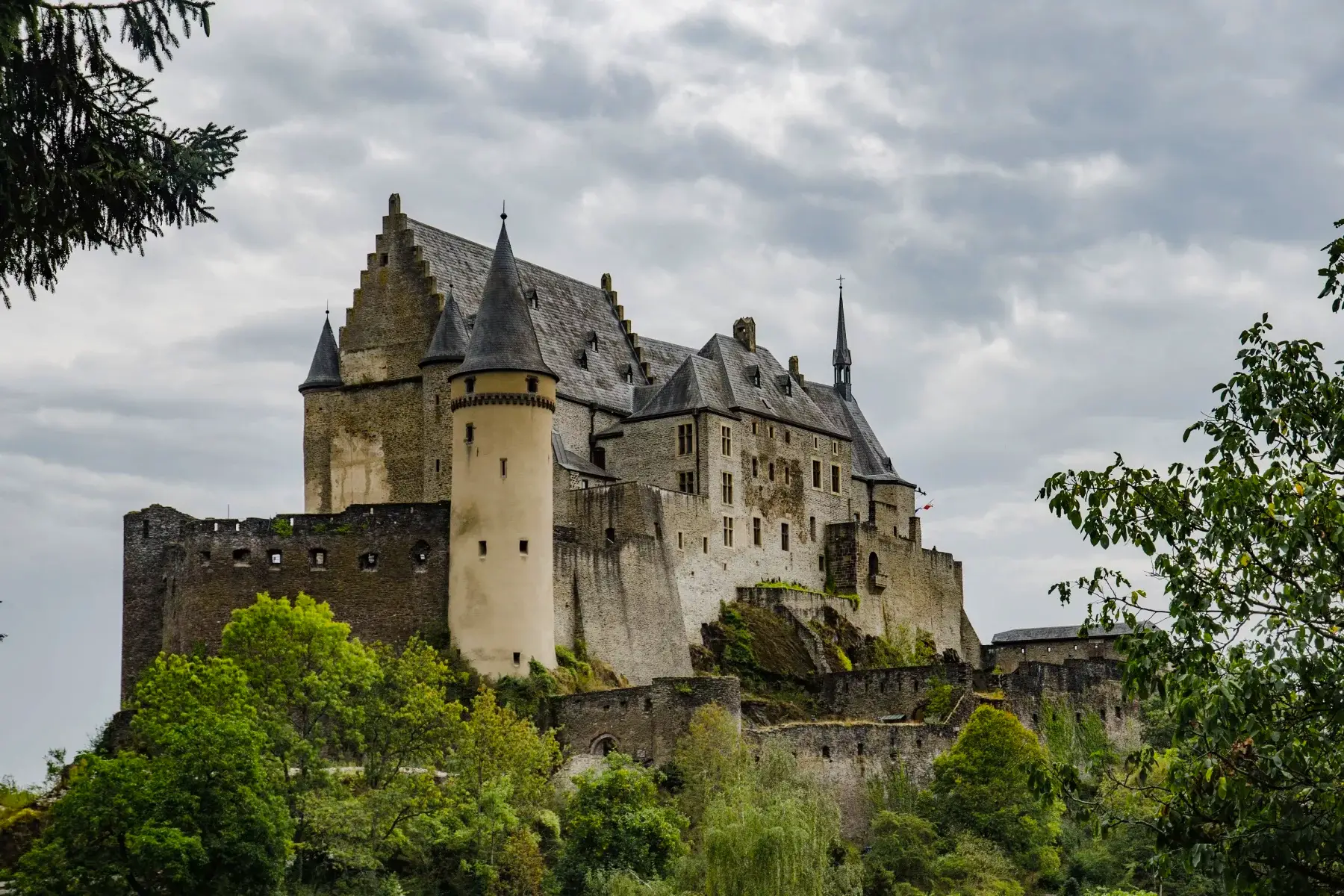
Some of the most popular locations include the following:
Castles and châteaux
Historical buildings with beautiful architecture
Sleek and modern
Secluded spots, beautiful gardens, or natural settings
Wedding traditions and customs in Luxembourg
Luxembourg is a melting pot of cultures and religions, influencing the traditions and customs you may expect at weddings.

However, for Luxembourgers, the reception is an opportunity to relax, have fun, and celebrate the commitment of the newlyweds with family and friends.
Last names
While in many cultures, the wife still takes her husband’s last name, women in Luxembourg tend to keep their maiden names. If you want to change your surname, you have to apply in writing to the Ministry of Justice (French: Ministère de la Justice, German: Ministerium der Justiz, Luxembourgish: Justizministère).
Wedding rings
The exchange of wedding rings is customary in many countries, including Luxembourg. Even though not mandatory, many couples exchange rings and vows during their wedding ceremony.
Wedding outfits
Luxembourgish wedding outfits can vary from the traditional Western white dress and formal suit to something more colorful, casual, or edgy. Of course, a religious or cultural wedding (e.g., Hindu, Muslim, Catholic, Jewish, Indian, Japanese, Nigerian, or other) may also dictate what the couple wears during the ceremony and reception.
Money and gifts
The couple may auction off their wedding outfits to the attendees to raise money for their new life as newlyweds. Guests also often gift money to the couple in addition to their wedding gifts. Of course, many couples set up a gift registry where the guests can make a selection. During some religious weddings, guests may also make a monetary offering to the place of worship.
Games, dancing, and wedding cake
During the Luxembourg wedding celebrations, the couple and guests may drop all formalities and stiffness of the civil ceremony by dancing and playing fun games. The games often include the couple’s hobbies and aim to test their relationship lightheartedly. Of course, cutting the wedding cake (Bamkuch) is another highlight of the celebration.
Useful resources
- Guichet.lu – official government website with information on marriages and PACS in Luxembourg
- Guichet.lu – explaining the legal implications of entering a PACS
- Guichet.lu – official information on tax implications for married couples


Did you find this guide helpful?