
'%20id='ico-down'%20stroke='%23000000'%20stroke-width='1.5'%3e%3cg%20transform='translate(1092.250000,%20254.750000)'%3e%3cpolyline%20id='Path-2-Copy-4'%20transform='translate(5.500000,%202.750000)%20scale(1,%20-1)%20rotate(-180.000000)%20translate(-5.500000,%20-2.750000)%20'%20points='0%200%205.5%205.5%2011%200'%3e%3c/polyline%3e%3c/g%3e%3c/g%3e%3c/g%3e%3c/svg%3e)


Moving
Visas & Immigration
Permanent residence in Germany
You can apply for permanent residence in Germany if you’ve lived there long enough and meet the eligibility criteria. Find out how.

If you’ve relocated to Germany to work, study, or join family members, chances are, you might want to settle there permanently. Germany offers permanent residence to foreigners who have lived in the country for several years and meet additional criteria. These include your nationality, the type of residency you have, and how long you’ve been in the country.
Interested in settling in Germany permanently? In that case, find out what’s required, including:
Use Wise for moving money abroad
Wise offers expatriate-friendly financial services including international money transfers at mid-market exchange rates with transparent, low fees, helping you save money when sending funds to family or managing finances across borders. Their multi-currency account allows you to hold, convert, and spend money in multiple currencies.

Permanent residence in Germany
Germany offers the chance of permanent residence to its foreign nationals if they live continuously in the country for a number of years. The route begins with a period as a temporary resident. Non-EU/EFTA nationals need to have a residence permit for work, study, or family reunion purposes before applying. The standard qualification period for settling in Germany is five years, but this is shorter for some categories of residents.
According to 2020 statistics, nearly 2.5 million foreigners live in Germany on a permanent residence permit. This permit is also known as a settlement permit (niederlassungserlaubnis). Once you become a settled resident, you will have a few more rights in Germany. After a few years as a permanent resident, you can also apply for German citizenship.
There are two official types of permanent residence permits in Germany: the general permanent residence permit and the EU permanent residence permit. Regardless of the type of permit, you’ll largely go through the same in terms of entitlements and application processes. The only difference is that the EU permit allows you to live in any other EU/EFTA country as well as Germany. EU/EFTA citizens who have been living in Germany for the qualifying period automatically receive permanent residence status, but they can apply for the EU permanent residence permit if they want official documentation.
The Federal Office for Migration and Refugees (Bundesamt für Migration und Flüchtlinge – BAMF) is responsible for all residence permits in Germany. BAMF is part of the Federal Ministry of the Interior and Community (Bundesministerium des Innern und für Heimat – BMI).
Difference between citizenship and permanent residence in Germany
There are several similarities between permanent residence and citizenship in Germany. These include:
- Full rights to work, study, start a business, or become a freelancer
- Access to social security in Germany
- The right to buy German property and take out a mortgage or other forms of finance such as bank loans
- Residence rights for an unlimited period and the freedom to leave Germany as many times as you want
However, there are also key differences between the two. Becoming a German citizen gives you additional rights and entitlements, such as:
- German passport
- The right to vote in all elections in Germany
- Additional citizenship rights for your children
- The right to leave Germany for an unlimited time – you can only leave for up to six months with a permanent residence permit.
Permanent residence has some advantages over citizenship. For example, it’s easier. You typically qualify for settlement after five years of living in Germany, whereas it’s eight years for citizenship. Becoming a German citizen also usually means giving up your existing citizenship.
Requirements for settlement in Germany
You can apply for settlement in Germany after five years of living in the country in most cases. In addition, you also usually have to meet the following requirements:
- Knowledge of German to at least A2 level (or B1 level in some cases)
- Ability to financially support yourself without using public funds
- Have been making pensions contributions for the duration of your stay
- Living in accommodation that is suitable for yourself and any family members living with you
- Sufficiently integrated into Germany. This sometimes means completing an integration course
- No major offenses on your criminal record
Certain groups can apply for a permanent residence permit sooner. These are:
- Students who have completed a degree or vocational qualification in Germany can apply after two years of working in a skilled job comparable to their qualifications.
- EU Blue Card holders can apply after 33 months or 21 months if they have B1 level German skills.
- Refugees can apply after three years if they have B1 level German skills and can earn a livelihood in Germany.
- Civil servants can apply after three years if they work for a public service employer.
- Self-employed workers can apply after three years.
- Family members of German nationals can apply after three years.
- Skilled workers can apply after four years.
Transfer Money to Germany for Permanent Residence Requirements
As you prepare for permanent residence in Germany, you may need to transfer funds from abroad to meet financial security requirements or support your settlement process. Wise allows you to send money to Germany using the mid-market exchange rate with transparent, low fees. This can help you efficiently manage the financial documentation needed for your permanent residence application, such as bank statements proving your ability to support yourself.
Learn more about Wise.
How to apply for permanent residence in Germany
Once you are eligible for settlement in Germany, you can make an application via your local immigration office (Ausländerbehörde). The office can provide you with an application form, but you will also need to provide the following:
- Valid passport or photo ID
- Biometric passport photo
- Proof of your permanent German address, for example, rental contract or utility bills in your name
- Proof of your financial security, for example, bank statements or a job contract
- Evidence that you have made social security contributions linked to a pension
- Your registration certificate (Anmeldebescheinigung), which you get from the residents’ registration office when you first arrive in Germany
- Health insurance details
- Certificate to prove your knowledge of German
- Any documentation relating to a fast-track application, such as your university degree certificate or marriage certificate
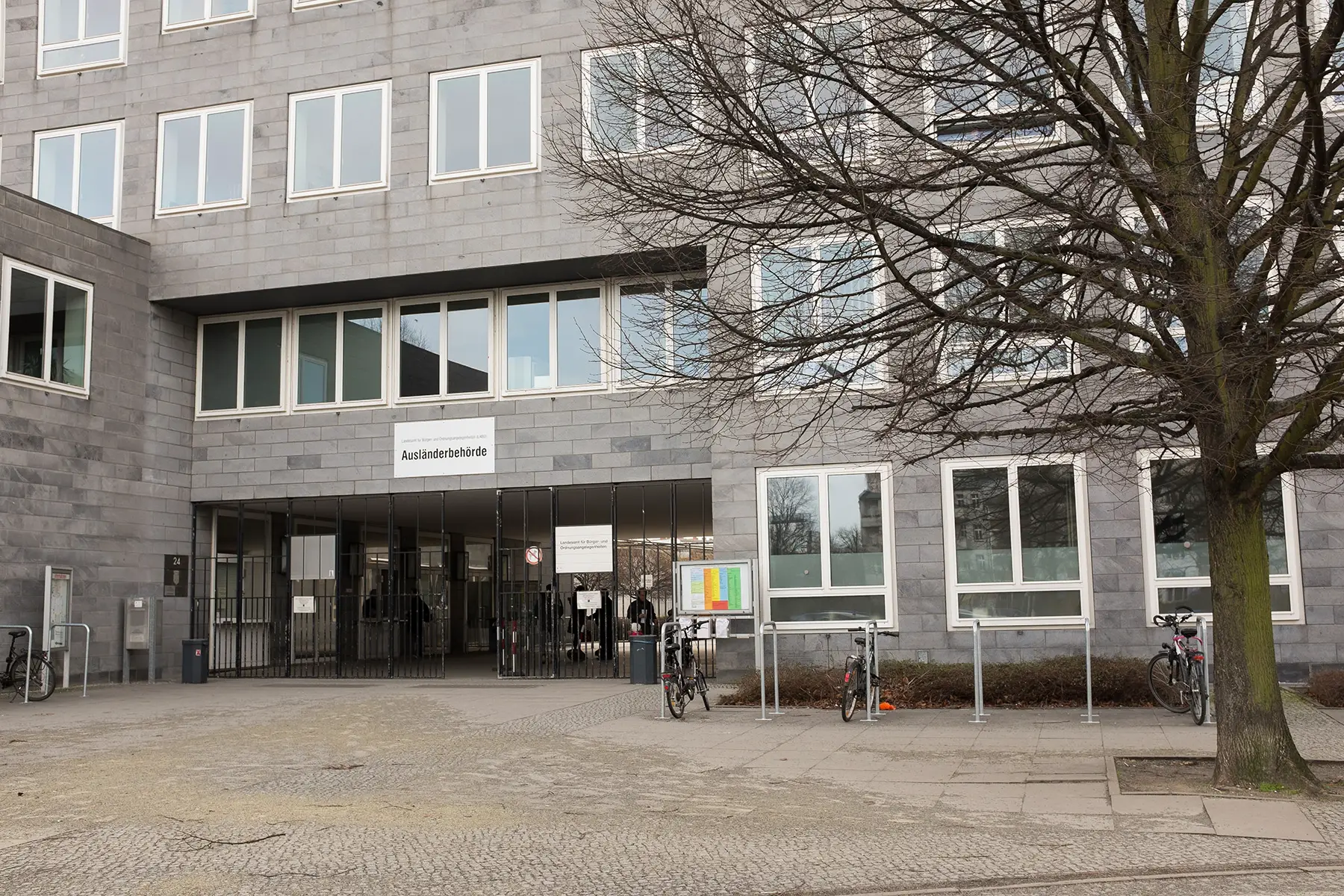
Once you have submitted your application, you will usually have to attend an interview at the immigration office. Your interviewers may test you on your knowledge of the German language or culture.
Applications usually take around 2-3 weeks to process. If you are successful, you will receive your German permanent residence card.
Permanent residence costs in Germany
According to the German Federal Government website, the current costs for permanent residence in Germany are:
- €113 standard cost
- €124 if you apply for fast-track through self-employment
- €147 if you apply as a highly qualified professional
Settlement in Germany for family members
Any family members living with you in Germany, for example, those living on a family reunion visa, will need to meet the same requirements. For instance, they will need to have the same language skills, integration, and residency rights. Family members coming to Germany to join relatives who are German nationals can apply for permanent residence after three years instead of waiting for the full five.

Suppose you become a German permanent resident and later obtain full German citizenship. In that case, you will qualify as a German national, which means relatives joining you can apply for their own permanent residence two years earlier.
Losing your permanent residence rights in Germany
You risk losing your permanent residence in Germany if you:
- Leave Germany and stay outside the country for more than six continuous months
- Are found guilty of giving false or misleading information to the immigration authorities when making your application
- Commit a serious crime which means that you are considered a threat to public order or public safety
If you commit certain types of serious crime, the German authorities may ban you from re-applying for settlement in Germany in the future. Otherwise, you can re-apply as soon as you are once again eligible.
What to do if your application for permanent residence in Germany is rejected
If your permanent residence application is rejected, the immigration authorities should give a full explanation detailing the reasons for this. You can ask for a reconsideration of the decision if you think you have been unfairly treated or that they have overlooked key information when assassin your application.
Beyond this, you can take your case to the German administrative courts. The German court system consists of three tiers, plus the Federal court and the European courts, which you can approach as a last resort. If you need support in building your case, you can contact the Counselling Center for Adult Migrants or the Youth Migration Service (Jugend Migrations Dienste – JMD).
Useful resources
- Federal Office for Migration and Refugees (Bundesamt für Migration und Flüchtlinge – BAMF) – German government body responsible for immigration, visas, and permits
- Federal Foreign Office (Auswärtiges Amt) – government information about immigration, visas, and residence permits


Did you find this guide helpful?