
'%20id='ico-down'%20stroke='%23000000'%20stroke-width='1.5'%3e%3cg%20transform='translate(1092.250000,%20254.750000)'%3e%3cpolyline%20id='Path-2-Copy-4'%20transform='translate(5.500000,%202.750000)%20scale(1,%20-1)%20rotate(-180.000000)%20translate(-5.500000,%20-2.750000)%20'%20points='0%200%205.5%205.5%2011%200'%3e%3c/polyline%3e%3c/g%3e%3c/g%3e%3c/g%3e%3c/svg%3e)


Moving
Visas & Immigration
Digital Nomad Visa in Germany
Learn the ins and outs of securing a digital nomad visa in Germany, including eligibility, health insurance requirements, and practical tips for finding housing and managing your finances as a freelancer.


Germany has plenty to offer, from the famous beer gardens of Munich to the non-stop creative energy of Berlin. For many internationals, the combination of a high quality of life, reliable public transport, and a great work-life balance makes it an ideal place to call home. While the idea of moving to the heart of Europe is exciting, navigating the paperwork for a long-term stay as a remote worker takes some careful preparation.
While Germany doesn’t officially offer a Digital Nomad Visa, most remote workers apply for the Freelance Visa. This residence permit can be a game-changer for non-EU citizens, providing a legal way to live in the country for up to an initial three years. It effectively bridges the gap between a quick visit and a permanent move, allowing you to enjoy life in Germany while working for yourself.
This guide covers everything you need to know for 2026, from eligibility and financial requirements to the more practical steps for settling in. You’ll find clear instructions on the application process and helpful tips to make your transition as smooth as possible.
The digital nomad landscape in Germany
Germany is a major hub for remote work, and you will find a different vibe depending on where you choose to set up your desk. Berlin remains the go-to spot for creatives and tech start-ups, offering a massive community of like-minded internationals. If you are looking for something more corporate or tech-focused, Munich is a powerhouse business hub, while Hamburg provides a unique atmosphere for those who enjoy a historic port-city setting.

The shift toward the Freelance Visa is a big step up from a standard 90-day Schengen tourist stay. Relying on a tourist visa means you are limited to three months and have no legal right to work while in the country. By obtaining the Freelance Visa, you gain the security of living in Germany for up to three years initially, allowing you to build a life rather than just pass through.
This legal security makes a huge difference if you are planning to stay long-term. Having an approved residence permit means you can sign rental contracts, set up utility accounts, and potentially work toward permanent residency in the future. It’s a reliable way to enjoy everything the country has to offer without the stress of a ticking clock on your passport.
Who is eligible for the digital nomad visa in Germany?
Before you start gathering your documents, you’ll need to check if you fall into the right category for this permit. Germany makes a distinction between two types of self-employed workers, and which one you are affects your application process.
Understanding the types of self-employment
To qualify, you must be either a freelancer (Freiberufler) or self-employed (Gewerbetreibende). Freelancers usually work in liberal professions, such as doctors, lawyers, engineers, or artists, while self-employed individuals are those setting up a commercial business or trade. For the visa to be approved, you usually need to show that your work will have a positive effect on the German economy or show evidence of interest from German-based clients.

Financial thresholds
Proving you can support yourself without relying on the German state is a major part of the application. Although there is no strictly fixed, nationwide minimum income amount for the Freelance Visa, applicants will need to show they can cover their living expenses.
As a general rule of thumb, most successful applicants show an annual income or savings of at least 9,000 EUR to 12,000 EUR. If you are planning to live in a more expensive city like Munich or Hamburg, showing a higher expected income will significantly strengthen your case.
Acceptable proof of finances can include bank statements, confirmed client contracts or proof of ongoing freelance income to ensure your revenue covers your rent, health insurance and basic daily costs.
Health and character
Simple travel insurance is rarely sufficient for the final residence permit. German law is strict when it comes to health insurance, and you’ll need to have a comprehensive policy that meets local standards.
As a freelancer, you can choose between public insurance (Gesetzliche Krankenversicherung), where contributions are based on your income, or private insurance (Private Krankenversicherung), which may be more accessible for younger internationals as premiums are based on your health profile and age.
Beyond healthcare, you’ll also need to provide a clean criminal record from your home country to satisfy good character requirements.

Tarah Ren
If you are over 45, you will likely need to present evidence of an adequate pension plan during your application. This demonstrates that you’ll have sufficient monthly income or assets by the time you reach retirement age.
Applying for your visa: A step-by-step guide
The application process for moving to Germany as a freelancer is generally broken down into two main parts: getting your entry visa and then securing your actual residence permit once you are on the ground. This phase is often the most intensive part of the move, as German bureaucracy is known for being thorough, but taking it one step at a time makes the transition much more manageable.

Step 1: Prepare your documents
Your paperwork is the foundation of a successful application. Beyond the standard documents, you’ll need to have:
- A professional CV and a detailed business plan.
- Proof of address in Germany.
- Letters of intent from potential German clients to prove there is a regional interest in your work.
- Translated documents: Most foreign documents will need to be officially translated into German and be apostilled to be recognised as valid by the embassy.
Step 2: Apply for a National Visa
Most non-EU citizens will need to start in their home country by applying for a National Visa at a German embassy or consulate. You will fill out the application form (usually via the Videx website) and schedule an in-person appointment to submit your biometric data. The initial entry visa fee is 75 EUR and usually takes around 45 days to process, though it can take longer depending on the volume of applications.
Step 3: Enter Germany and register at the local citizens’ office
Once your visa is approved, you can travel to Germany. Within your first 14 days, you must register your new address at the local citizens’ office (Bürgeramt). The registration certificate (Meldebescheinigung) is a vital piece of paper you will need for almost everything else, from opening a bank account to getting your tax number.
Step 4: Convert to a residence permit
After you’ve registered your address, visit the local Foreigner’s Authority (Ausländerbehörde) to transform your entry visa into a residence permit. In some cities, like Berlin, this process has moved significantly toward digital portals as of 2026. The permit is usually valid for up to three years. There is a separate fee for this process, which can go up to 100 EUR.
Step 5: Registering with the Tax Office
To start invoicing clients, you will also need to register with the German Tax Office (Finanzamt) to get your freelance tax number (Steuernummer). Since the German tax system can be complex, many internationals use digital services or consultants to help them submit the electronic registration form and ensure their first invoices are legally compliant.
Financial planning for your move
Moving to a new country is an exciting milestone, but it also requires some strategic financial planning to avoid any expensive surprises. One of the most important things to account for is the settling-in cost, which can be higher than many expect when you factor in rental deposits and the initial lack of a local bank account.
Initial costs
When you find an apartment, you’ll likely encounter the Kaution (housing deposit). In Germany, this is typically three times your “cold” rent (Kaltmiete), which is the base rent before utilities. For a one-bedroom apartment in a city like Berlin or Munich, this could mean an upfront payment of several thousand euros.
Keep in mind that many German apartments are rented completely unfurnished, often without light fixtures or even a kitchen. You should budget for these one-time setup costs alongside your deposit to avoid any immediate financial strain during your first month.
Understanding the cost of international transfers
Transferring large sums of money for a rental deposit or to prove your financial stability can be expensive if you rely on traditional methods. Many people assume their local bank is the easiest option, but it often comes with a hidden price tag.
Editor
Tarah Ren
Insider Tip
Moving large sums for a rental deposit via traditional banks can often result in 3–5% losses due to hidden exchange rate markups. Be wary of providers claiming low fees, as they often use a less favorable exchange rate to make up the difference.
Manage your Euros with Wise
Using a specialist provider like Wise can simplify the way you handle your finances as you settle in. You can use a Wise account to hold and convert Euros (EUR) at the mid-market rate, which is the same rate you would usually see on Google. This allows you to pay your German landlord or cover government fees without the immediate bureaucracy of a traditional bank account in your first few weeks.
A Wise multi-currency card also helps you avoid foreign transaction fees from your home bank while you’re buying essentials. It’s a convenient way to bypass the wait for local paperwork and start living like a local from day one.

Putting it into practice: A common freelancer hurdle
Many internationals moving to Germany face a chicken and egg situation: you often need a residence permit to sign a long-term lease, but you can’t get the permit without a registered address. One effective way to break this cycle is to book a short-term serviced apartment for your first month.
Choosing a short-term rental that officially allows address registration provides you with the registration certificate you need within your first week. It’s a golden ticket that allows you to secure your appointment at the immigration office (Ausländerbehörde) to finalise your visa.
Always confirm with a provider that they allow address registration before you book, or your visa process could stall before it even begins.
Taxes and social security in Germany
Understanding the German tax and social security system is a huge part of staying compliant while living as a nomad. While the paperwork might seem complex, the system is designed to provide high levels of protection once you are integrated.
Navigating tax residency and the 183-day rule
In Germany, your tax liability is mainly determined by where you live and how long you stay. Generally, if you spend more than 183 days within a 12-month period in the country, or if you maintain a permanent home here, you are considered a tax resident. That means you are liable for tax on your worldwide income, not just what you earn from German clients.
Germany uses a progressive income tax rate. For 2026, the tax-free allowance is 12,349 EUR – earnings above this amount are taxed at rates starting from 14% and rising to 45% for very high earners.
The Künstlersozialkasse (KSK): A safety net for creatives
Freelancing often comes with steep social insurance costs because you are responsible for both the employer and employee shares. However, if you work in a creative or journalistic field, the Künstlersozialkasse (KSK) is a game-changer.
The KSK isn’t an insurance provider itself, but a support system that acts as a pseudo-employer. If you’re accepted, the KSK covers approximately 50% of your statutory health, pension and long-term care insurance contributions, which can save freelancers between 400 EUR and 600 EUR per month.
- Who qualifies? You must be creatively self-employed in fields legally recognised as artistic or publicist (e.g., writers, musicians, designers, or bloggers).
- Income requirements: You generally need a minimum annual income of 3,900 EUR from your creative work. However, this requirement is often waived for newcomers in their first year of freelancing.
- The trade-off: Joining the KSK means committing to the German public insurance system and involves regular paperwork, like reporting your projected income every January.
Mandatory social insurance for all freelancers
Even if you don’t join the KSK, all freelancers in Germany are legally required to have health and long-term care insurance. You have the choice between the public (GKV) and private (PKV) systems.
While pension insurance is optional for many freelancers, it’s mandatory for certain groups, such as teachers or midwives. Even if it isn’t required for your specific job, contributing to the state pension or a private plan is a wise way to secure your long-term future while living abroad.
Setting up your life: Housing & healthcare
Finding a home and choosing the right insurance are the two biggest practical hurdles to clear once you land. Because the German systems for both are unique, arriving with a plan will save you plenty of time and stress.
Strategies for the competitive housing market
Securing a long-term apartment in major hubs like Berlin, Munich, or Hamburg is famously competitive. Many nomads start by booking a serviced apartment or a short-term furnished rental to obtain an Anmeldung (address registration) immediately.
Since you cannot finalise your residence permit without this registration, choosing a short-term provider that officially allows Anmeldung is essential. Once you have this all-access pass in hand, you can take your time to navigate the local rental market, which often requires attending in-person viewings and providing a German credit report (Schufa).

Understanding your healthcare options
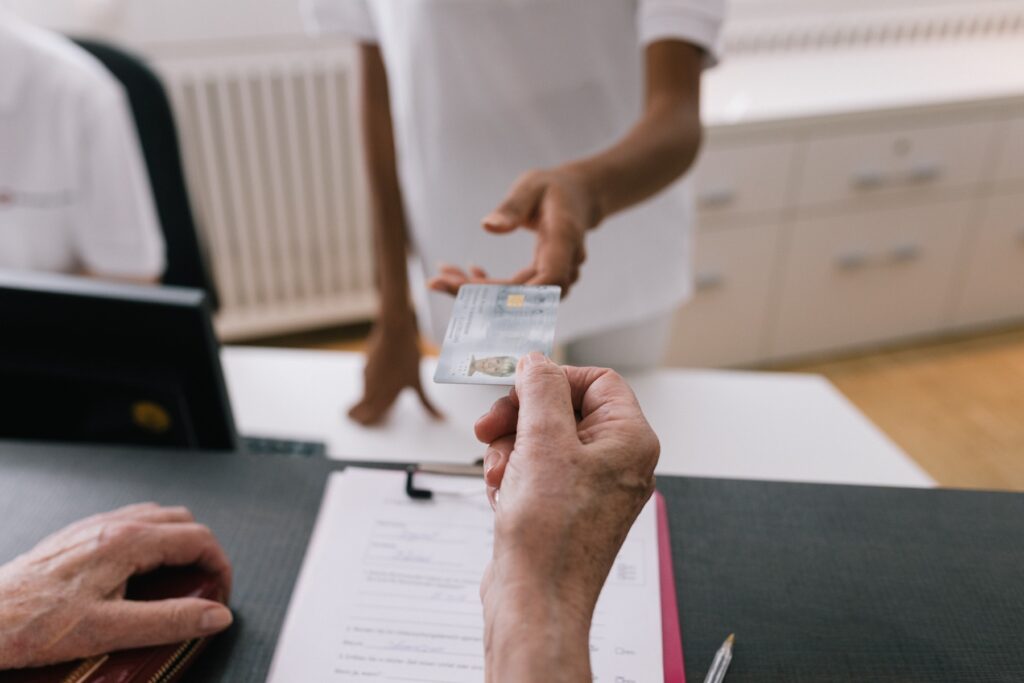
In Germany, health insurance isn’t just a good idea – it’s a legal requirement. As a freelancer, you have the flexibility to choose between two options:
- Public insurance (GKV): Premiums are calculated as a percentage of your income. In 2026, the base rate is 14.6% plus an average additional contribution (Zusatzbeitrag) of 2.9%. It’s often the best choice for families, as dependents are usually covered at no extra cost.
- Private insurance (PKV): While employees need to earn over 77,400 EUR to switch to private in 2026, self-employed individuals need an annual income of at least 30,000 EUR.
Private insurance tends to offer faster access to specialists and lower premiums for young, healthy nomads, but switching back to the public system later in life is notoriously difficult. It’s a decision that requires looking a few years down the road, not just at your current monthly budget. You can learn more about finding the right care in our guide to doctors in Germany.
Banking and managing money as a nomad
Financial freedom in Germany starts with having the right tools to handle Euros without the bureaucratic headache. While cash is still respected in many Kneipen (local pubs), digital payments and bank transfers are the backbone of your professional life and monthly bills.
Secure your local IBAN for the essentials
You’ll eventually need a German IBAN to navigate daily life. Most local utility providers, mobile phone companies and gym memberships rely on SEPA direct debits to pull payments. Having a local account also makes you more client-friendly, as many German businesses prefer domestic transfers over international wires.
Master the daily grind without the fees
Avoid the sting of foreign transaction fees from your home bank by using a Wise debit card for your daily Euro spending. Whether you are grabbing a Kaffee or paying for your transit pass, spending directly in EUR saves you from the hidden markups banks often sneak into the exchange rate.
Expatica advice: Banks can often result in 3–5% losses due to hidden exchange rate markups on international transfers. Look for providers that offer the mid-market rate to ensure your money goes further when paying your high initial costs like rental deposits.
You can open a Wise account before you even pack your bags to get instant access to EUR account details to pay your landlord or receive your first freelance invoice at the mid-market rate. It’s the fastest way to start living like a local from the moment you step off the plane.
Useful resources
- Federal Foreign Office: Access the official Auswärtiges Amt portal for visa application forms and the latest entry requirements.
- Expatica’s Guide to Healthcare: Navigate the complexities of the German health system with this comprehensive breakdown of insurance options.
- Wise EUR Account: Open an account to receive and manage Euro expenses at the mid-market rate without the usual bank bureaucracy.
Checklist: Before you go
- Passport Validity: Ensure at least 12 months remaining.
- Client Commitments: Secure at least two “Letters of Intent” from potential German clients.
- Health Insurance: Obtain a policy that specifically states it meets Section 11 of SGB V (German Social Security Code).
- Currency Setup: Open a Wise account to receive and spend EUR immediately upon arrival.


Did you find this guide helpful?