
'%20id='ico-down'%20stroke='%23000000'%20stroke-width='1.5'%3e%3cg%20transform='translate(1092.250000,%20254.750000)'%3e%3cpolyline%20id='Path-2-Copy-4'%20transform='translate(5.500000,%202.750000)%20scale(1,%20-1)%20rotate(-180.000000)%20translate(-5.500000,%20-2.750000)%20'%20points='0%200%205.5%205.5%2011%200'%3e%3c/polyline%3e%3c/g%3e%3c/g%3e%3c/g%3e%3c/svg%3e)


Moving
Visas & Immigration
Germany Schengen visa: requirements, checklist and steps
Understand Germany’s Schengen visa rules before you plan a short trip to Germany or across the wider Schengen area.


Non-EU travellers, family visitors, and expats often face differing entry requirements. Germany issues short-stay Category C visas for visits lasting up to 90 days. However, exact processing steps differ depending on your nationality and country of residence.
This guide breaks down who needs to apply, when Germany is the correct country to handle your file, which documents matter most, and how the application process works. Anyone seeking long-term options for work or study should start with Expatica’s guide to German visas and permits.
Germany Schengen visa at a glance:
| Rule | What to know |
|---|---|
| Who needs it | Many non-EU nationals need a short-stay visa for Germany, while some nationalities can travel visa-free for short visits. |
| Maximum stay | Up to 90 days in any 180-day period under the Schengen 90/180-day rule. |
| When to apply | Usually up to 6 months before travel, and generally no later than 15 days before departure. |
| Standard fee | €90 for most adults, €45 for children aged 6 to 12, free for children under 6. |
| Before you submit | Prepare your passport, form, photo, itinerary, accommodation, funds, insurance, and then re-check the local mission checklist before your appointment. |
Who needs a Germany Schengen visa?
Whether you need this visa depends mainly on your nationality, where you legally live, your travel purpose, and how long you will stay. If your stay in Germany will go beyond 90 days, you will usually need a national visa instead, such as a work visa, student visa, or family visa.
Who can travel visa-free and who must apply?
If your passport is from a visa-exempt country, you can usually visit Germany and the wider Schengen area without a visa for a short stay, but you still need to respect the 90/180-day rule. That rule means you cannot spend more than 90 days in any rolling 180-day period.
If your nationality is not visa-exempt, you normally need a Germany Schengen visa before travelling. A residence permit from another country may affect where you apply from, but it does not automatically make you visa-free for Germany, so check the official visa requirements list before booking.
When Germany is the correct country to apply through
You should apply through Germany when it is your main destination. Choose this route if you spend more days in Germany than anywhere else, or if an equally split schedule makes it your initial port of entry into the region.
For example, if you land in Frankfurt, stay two nights in Germany, and then spend five nights in Spain, Spain is usually the correct country to apply through.
Expatica tip
If Germany is simply your arrival airport but you spend more nights in another Schengen country, applying through the wrong embassy can derail your entire travel plan.
Germany Schengen visa checklist: documents you need
Gathering your paperwork is where most of the effort goes into securing a German Schengen visa. While the main requirements stay pretty standard, the exact supporting documents you need will depend on your nationality, trip purpose, and the embassy handling your file.
Core documents for most applicants
Every document in your file serves a clear purpose for the visa officer, establishing who you are, why you are travelling, how you will cover costs, where you are staying, and whether you hold proper insurance. If one document tells a different story from the others, the application can look weak even when every item seems reasonable on its own.
- A valid passport, usually issued within the last 10 years, with at least two blank pages and validity extending at least three months beyond your planned departure from the Schengen area.
- A completed short-stay visa form, often prepared through VIDEX. VIDEX is the official German online tool that generates the printed visa application.
- A recent biometric passport photo that meets current mission standards.
- Biometrics, which usually means fingerprints and a digital photo taken at submission.
- Proof of itinerary and transport reservations, with dates that match the rest of your file.
- Proof of accommodation, such as hotel bookings or a host address.
- Financial evidence, such as recent statements or sponsor documents, showing how the trip will be funded.
- A travel medical insurance certificate covering emergency treatment and repatriation for the full stay across the Schengen area.
- Supporting evidence for the travel purpose, such as leave approval, event details, or a host invitation.
Extra documents for tourism, family visits and minors
For a standard German tourist visa, the embassy or consulate may also want evidence that ties your travel plans back to your work, study, or home life. The key question is whether the added documents match the story told by your bookings and dates.
| Situation | Extra documents often requested | What to check |
|---|---|---|
| Tourism | Leave letter, self-employment evidence, hotel bookings, route plan | Dates should align across bookings, insurance, and transport |
| Family or friends visit | Invitation letter, host ID or residence proof, sponsor papers | Host address, relationship, and stay dates should be clear |
| Minor applicant | Birth certificate, parental consent, custody papers, parent passport copies | Signatures and custody evidence must match the child’s travel plan |
A Verpflichtungserklärung is a formal obligation letter issued in Germany to show that a host will cover certain costs.
How to apply for a Germany Schengen visa
Treat the application as a sequence of tasks, not a pile of paperwork. If you do each step in the right order, the process is easier to manage and easier to check for gaps.
Book the right appointment and fill in VIDEX
Find the correct embassy, consulate, or external visa centre through the German missions abroad finder. This sits under the Auswärtiges Amt, which is Germany’s Federal Foreign Office.
2. Complete the short-stay form in VIDEX, then print it for submission. Check your passport number, travel dates, main destination, and requested entry type carefully, because single-entry, double-entry, and multiple-entry visas do not allow the same travel pattern.
3. Book early. Appointment backlogs often cause more trouble than the visa decision itself, especially in peak travel periods, and most applicants still need to attend in person.
Attend biometrics and submit a complete file
At the appointment, staff usually collect your passport, photo, application form, and supporting documents, and then take biometrics. Biometrics means fingerprints and a digital photo, although some applicants may not need fresh fingerprints if they were already collected for a Schengen application within the last 59 months and the mission accepts re-use.
Bring your documents in the same order as the local checklist if possible. One thing worth knowing is that many weak applications fail because the paperwork tells different stories, not because the applicant forgot a single headline document.
- Bring the signed form and any declarations the embassy asks for.
- Bring your passport and proof that you are applying from the correct country of residence.
- Make sure hotel dates, flights, invitations, and insurance all match.
- Show clearly who is paying for the trip and how that is documented.
- Bring host and sponsorship evidence if you are staying with family or friends.
- Re-check the current required document list 24 to 48 hours before the appointment.
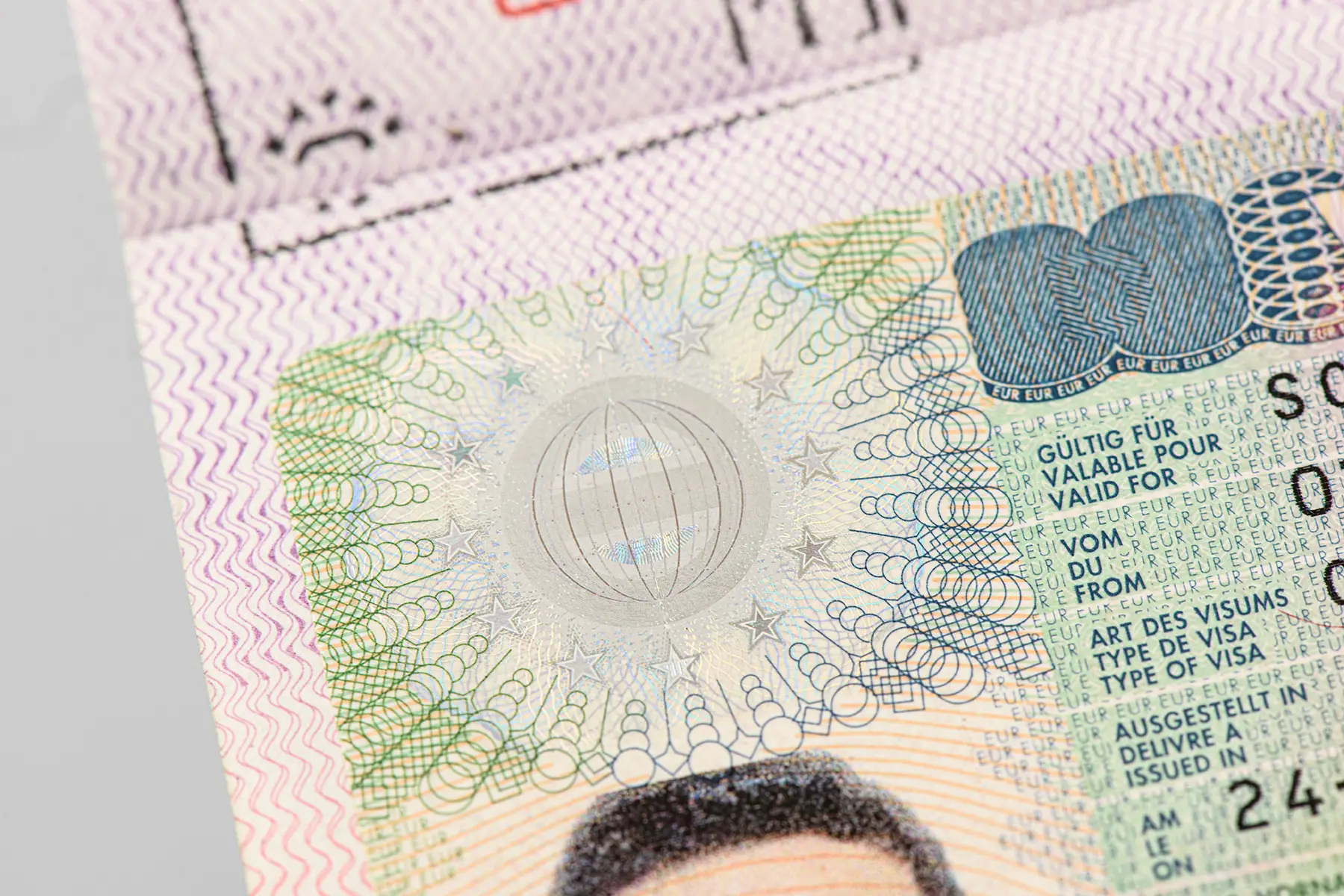
If your visa is issued, review the sticker before travelling. Check the spelling of your name, the validity dates, and the number of entries.
Fees, processing times and when to apply
The official visa fee is not the same as a visa centre’s service charge, and the decision time is not the same as the time needed to get an appointment. You need to plan for both.

What the visa costs in 2026
For most applicants, the official short-stay fee is set at EU level. Some categories can pay less or nothing, but external visa centres may still add a separate service fee.
| Applicant | Official fee | Notes |
|---|---|---|
| Adults | €90 | Standard short-stay fee |
| Children aged 6 to 12 | €45 | Reduced fee |
| Children under 6 | Free | Official fee waived |
| Other categories | Varies | Some applicants may qualify for a waiver or reduction, and visa centres can charge extra service fees |
How long it takes and how early to start
A correct Schengen application is usually decided within 15 calendar days, but a case that needs closer review can take longer. You can usually apply up to six months before travel and generally no later than 15 days before departure.
Many travellers still miss trips despite that short decision window because appointment slots can fill up quickly during summer peaks and school holidays. Building in extra buffer time ensures you are not relying on a best-case scenario.
Common reasons Germany Schengen visas are refused
A quick check of these common tripwires keeps your application on solid ground. Knowing what commonly goes wrong helps you stress-test your application before you hand it over.
Mistakes to avoid before you submit
- Applying through the wrong Schengen country, even though most of your stay is elsewhere.
- Using dates that do not match across flights, hotel bookings, insurance, and invitation letters.
- Showing weak or unclear proof of funds, or leaving sponsorship unexplained.
- Providing vague accommodation evidence, especially for private stays.
- Describing the travel purpose too loosely and not backing it up with documents.
- Submitting insurance paperwork that does not clearly show the right territory or trip dates.
For example, if your hotel booking starts on 10 August but your insurance starts on 12 August, that gap can create an avoidable problem.
What to do if your application is refused
Read the refusal notice carefully before you react. It should explain the reason for the decision and tell you whether an appeal route exists.
If the problem is missing or inconsistent evidence, reapplying with a stronger file may be simpler than challenging the same documents again. Keep the next application tightly focused on the exact issue named in the refusal, because procedures can vary and this article is not legal advice.
Travel medical insurance for a Germany Schengen visa
Insurance is a required part of the application, not an optional add-on. The safest way to compare providers is to start with the official rule, then test the certificate wording against that rule.
What your insurance must include
The certificate matters as much as the policy itself, because that is the document the visa officer will read.
- Validity across the Schengen area for the full trip
- Emergency medical treatment cover
- Hospital treatment cover
- Repatriation cover
- Dates that match your planned stay with no gap
- The current minimum coverage requirement shown in official guidance
How to verify: Compare the mission checklist with the insurer’s certificate, not just the sales page.

Comparing Allianz Worldwide Care, April International and Cigna Global
These are providers readers can compare for international medical cover, but brand name alone does not prove embassy acceptance. A standard travel policy can suit many short visits, while broader international health cover can make more sense for longer or more complex cross-border needs.
| Provider | Type of international cover | Useful features to verify | What to confirm before purchase |
|---|---|---|---|
| Allianz Worldwide Care | International medical cover | Emergency treatment, hospital care, repatriation, certificate wording | Confirm the certificate names the applicant, covers the travel dates, and is valid across the Schengen area |
| April International | International or expat-style medical cover | Territory, emergency cover, exclusions, policy dates | Confirm the certificate is suitable for a Schengen visa application and shows the required cover clearly |
| Cigna Global | International health insurance | Inpatient cover, emergency wording, excess terms, certificate availability | Confirm the insurer can provide a visa-ready certificate with the details your mission asks for |
Expatica tip: The embassy looks at the certificate you submit, not the provider’s brand name, so always check the document wording before paying.
Proof of funds and paying for your trip
Readers often confuse having money with proving money. For a visa, the issue is not only whether you can afford the trip, but whether your documents show that clearly and consistently.
What counts as financial proof and sponsorship
German embassies and consulates commonly ask for evidence such as recent bank statements, sponsor letters, or documents showing who is paying for accommodation and return travel. The exact proof-of-funds expectation can vary by embassy and applicant circumstances, so avoid internet claims about one universal balance that works for everyone.
If another person is paying, your file should show both the relationship and the source of funds. Where sponsorship comes from a host in Germany, check whether the embassy wants a simple invitation, a sponsor letter, or a formal Verpflichtungserklärung.
- Recent bank statements in the applicant’s name
- Sponsor letter plus proof of relationship where relevant
- Host support documents if someone in Germany is paying
- Evidence tied to accommodation or return travel where relevant
- Any local embassy form or checklist item linked to sponsorship
Using Wise to manage transfers, euros and card spending

Money tools can help you organise the trip, but they do not replace official proof-of-funds requirements unless the embassy accepts the evidence you submit. If you need to move money before travel, Wise* can be useful for sending money internationally or managing euros alongside your home currency.
That can help if you are paying a host, covering pre-trip costs, or setting aside travel spending before you arrive. If you later open an account with a major local bank such as Deutsche Bank, Commerzbank, or Postbank for a longer move, keep your visa evidence and your everyday money setup as separate tasks. If your plans are shifting beyond a short stay, Expatica’s guide to opening a bank account in Germany is a practical next step.
- International transfer: Ideal for moving funds to Germany or settling host expenses before your trip
- Wise account: Helps you hold and convert euros alongside your home currency in advance
- Wise card: Useful for spending in Germany after arrival without juggling multiple cards
If those features suit your plans, compare Wise with your current provider before you transfer or convert.
*Wise is a financial institution, not a bank.
FAQ
Frequently Asked Questions about Germany Schengen visas
Do I need a German tourist visa if I have a residence permit from another country? 
Not necessarily, but the residence permit does not decide this on its own. Your passport and nationality usually determines whether you need a visa to enter Germany, while the residence permit can affect where you are allowed to apply from.
How much money do I need in my bank account for a Germany Schengen visa?
There is no safe universal figure that fits every case. German missions usually want funds that are sufficient, consistent, and properly documented for your itinerary, so use the local checklist rather than relying on a number from a forum.
Can I visit other Schengen countries with a Germany Schengen visa?
Usually, yes, if the visa is valid and your stay remains within its conditions. But the application should normally go through the country of your main destination, and you should check the sticker carefully for dates, entries, and any limits before travelling.
Can I extend a Germany Schengen visa while I am in Germany?
Extensions are generally uncommon and usually limited to exceptional situations. Wanting extra holiday time is not normally enough, so contact the relevant authorities quickly if a serious issue affects your departure.
Useful Resources
- Visas for Germany – Federal Foreign Office: Official information on German visa categories.
- Overview of visa requirements/exemptions for entry into the Federal Republic of Germany – Federal Foreign Office: Details which nationalities need a visa and who is exempt.
- Applying for a Schengen visa – European Commission: Information on EU-wide policies and procedures for Schengen visa applications.
- VIDEX: Official online tool for filling out and preparing your visa application form.
- Enter a country name to find a German Mission abroad – Federal Foreign Office: Search tool to locate the German embassy or consulate responsible for your application.


Did you find this guide helpful?