
'%20id='ico-down'%20stroke='%23000000'%20stroke-width='1.5'%3e%3cg%20transform='translate(1092.250000,%20254.750000)'%3e%3cpolyline%20id='Path-2-Copy-4'%20transform='translate(5.500000,%202.750000)%20scale(1,%20-1)%20rotate(-180.000000)%20translate(-5.500000,%20-2.750000)%20'%20points='0%200%205.5%205.5%2011%200'%3e%3c/polyline%3e%3c/g%3e%3c/g%3e%3c/g%3e%3c/svg%3e)


Education
Language Learning
Where to learn Portuguese
From language schools and online courses to mobile apps and more, here are the best ways to learn Portuguese.

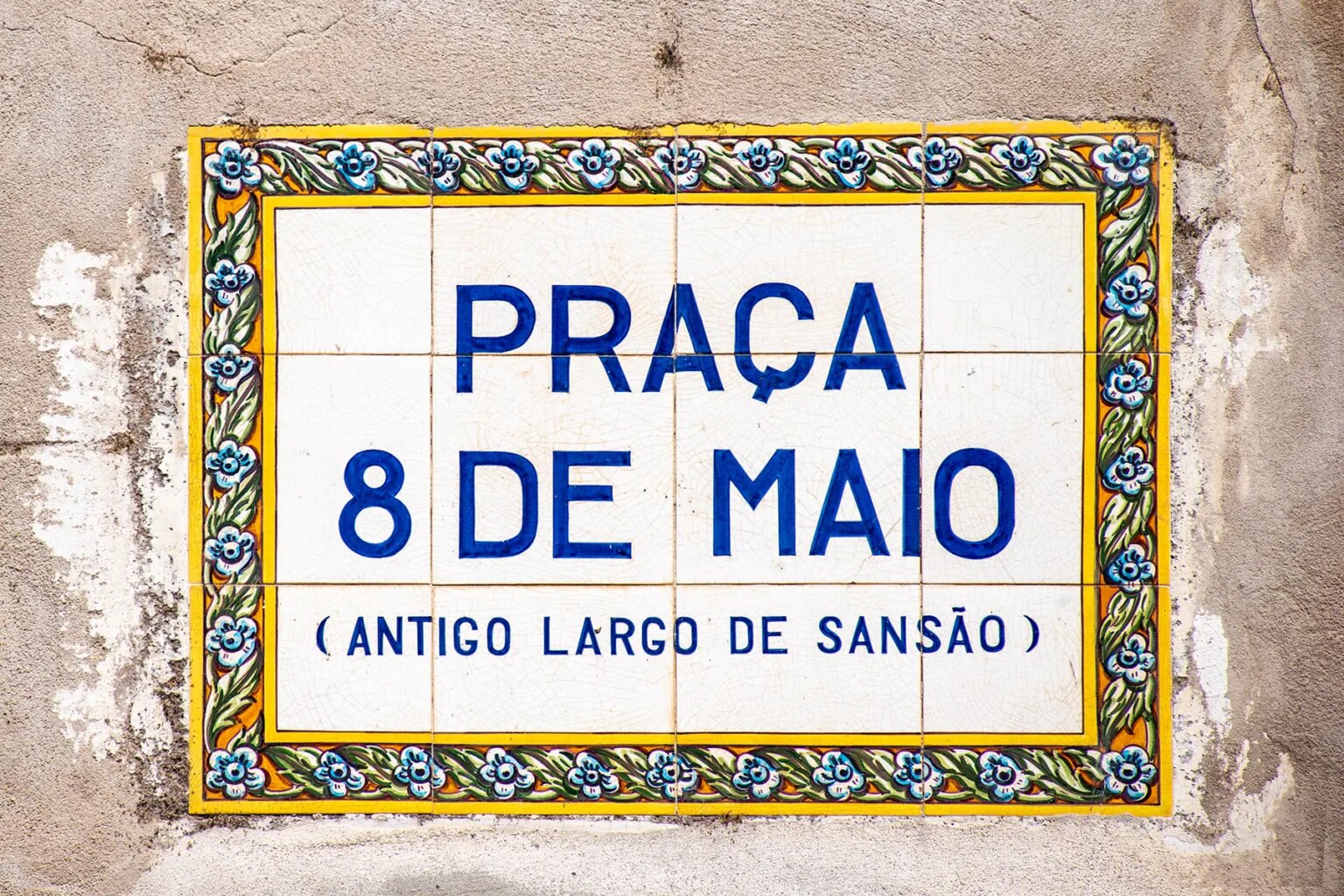
Whether you want to learn Portuguese before or after you relocate to Portugal, having a good grasp of the language will help make your transition into local life much easier; especially if you intend on staying long-term. This applies to everything from finding a place to live and setting up your utilities to navigating public transport and shopping at the local supermarket.
Fortunately, there are several ways to learn Portuguese, ranging from downloading free apps on your smartphone to taking intensive summer courses. And whether you prefer a traditional classroom environment, casual one-to-one lessons, or learning online, there are plenty of options to suit your needs and preferences.
To help you get started, this article walks you through the various ways to learn Portuguese and provides the following information:
Preply
Immerse yourself in the language of your new country with Preply. This app and website matches learners with online tutors so you can follow live, personalized language classes. With 50 languages to choose from, and tutors all over the world, there’s a course for everyone. Check out Preply to start your language-learning journey today.

Why learn Portuguese?
More than 260 million people speak Portuguese across the globe, making it the ninth most spoken language. While it is mainly spoken in Portugal and Brazil, it is an official language in eight other countries, spanning four continents. This includes Angola, Mozambique, Guinea-Bissau, Equatorial Guinea, Cabo Verde, São Tomé and Príncipe, Macao, and East Timor. In Portugal itself, 95.6% of the population speaks Portuguese as their native or second language. Needless to say, it is a language well worth learning.

Having said that, many new arrivals to Portugal will find that they can get by with English, given that the vast majority of locals (91%) speak the language. This is especially true in the main cities, such as Lisbon and Porto, which have a large international community. However, having a basic understanding of Portuguese is helpful if you want to stay in Portugal in the long run. Not only will it open up more job opportunities and help when it comes to acquiring Portuguese citizenship, but it will also allow you to engage with local culture and enjoy everything from local TV and radio to the infamous fado.

Interestingly, despite being a Latin language, many people compare Portuguese to Russian as they have similar rhythms and consonant sounds. And while it may take a while to get the pronunciation right, you will get there in the end, with a little effort. In fact, on average, it takes most English speakers around 600 hours to master the language, which is still less than the estimated 1,110 hours it takes to learn Russian.
Learning Portuguese before moving to Portugal
Depending on your circumstances, you might prefer to wait until you move to Portugal before learning the language. After all, being surrounded by locals will help you absorb it more quickly. That said, it is good to have a basic grasp of Portuguese ahead of time, as it will make some tasks less daunting. For instance, upon arrival, you will have an easier time when it comes to opening up a bank account, setting up your phone network, or tackling some of the bigger tasks like finding a house or finding a job.
International Portuguese-language schools
There are a few international Portuguese-language schools across the world. This means that you can start learning Portuguese before moving to the country, either by attending classes or learning online. Some of the biggest international schools and online resources that can help you get a headstart:
- Berlitz – a language school network that offers classes in a variety of different settings, ranging from private online lessons to in-person group classes
- Instituto Camões – a Portuguese public institution that promotes the Portuguese language and culture around the world with locations in 84 countries. They also offer online courses.
- Language International – an online search portal that allows you to find Portuguese language schools in Portugal and abroad
Learning Portuguese in Portugal
One of the obvious advantages of learning Portuguese in Portugal is having access to a wider network of classes. For instance, you can take your pick of casual conversational lessons, intensive courses, or even summer camps in your chosen city. Furthermore, you will have the chance to try different teachers and find one that suits your learning style. You will also be able to practice on a daily basis and pick up more informal Portuguese expressions when you head out to a café or restaurant.
Universities in Portugal
When it comes to finding a language school in Portugal, you certainly won’t be short of options. In fact, aside from private language centers, many universities in Portugal provide Portuguese language courses for foreigners. These offer the opportunity to engage with the local culture and study in beautiful, historical buildings such as the Universidade de Coimbra, Portugal’s oldest university. However, it is worth noting that while these are often cheaper, they are less flexible when it comes to the curriculum.

The Instituto de Camões – which is dedicated to the worldwide promotion of Portuguese – provides a list of universities where you can access language courses. The Institute for Employment and Vocational Training (IEFP) may also offer Portuguese lessons, so it’s worth contacting your local center.
Language schools in Portugal
Alliance Française – While the global organization is mainly known for offering French courses, it also provides Portuguese courses for expats. Students can choose between individual or group lessons. Corporate training is also available if you want to familiarize yourself with the local business culture.
Locations: Lisbon, Porto, Guimarães, Coimbra, Leiria, Caldas da Rainha, Santarém, Setúbal, Beja, Faro
Cambridge School – This might be a good option if you are looking for official certification in Portuguese. The school trains students from A1 to C2 levels and prepares them for the Portuguese language exams. You can opt for private lessons or join a small class of three to six students.
Locations: Lisbon, Coimbra, Porto, Funchal (Madeira)
Home Language International – Offers you the chance to share a home with an accredited teacher for a week, enabling you to fully immerse yourself in the language while living in Portugal. Classes range from 15 to 30 hours and can include fun activities and excursions across the capital. The program includes full board accommodation and private lessons.
Locations: Lisbon
International House World Organisation – The global network of private language schools has seven locations in Portugal, five of which offer Portuguese lessons. Classes are available for all levels, with flexible schedules for working adults.
Locations: Braga, Coimbra, Torres Vedras, Viseu
Lusa Language School – Offers a variety of Portuguese classes to suit your schedule, from part-time courses to three-month intensive ones. Students can also access their online learning platform or schedule private and conversational lessons.
Locations: Lisbon
Portuguese Connection – Set in the Príncipe Real neighborhood in Lisbon, the school is ideal for those who want to study close to the city center. It provides both online and in-person courses, and students can learn at their own pace by booking individual lessons. Alternatively, they can partner up with a friend and join a group class.
Locations: Lisbon
Government language lessons in Portugal
The Portuguese government provides free Portuguese Host Language (PLA) courses to help foreigners integrate into the country. This is part of the Português para Todos (Portuguese for All) program which was launched in partnership with the Alto Comissariado para as Migrações (High Commission for Migration).
The courses are available to citizens aged 16 or over whose native language is not Portuguese. They are held at public schools, EFP centers, and Qualifica centers throughout Portugal. Students who sign up for these classes can acquire certification from A1 to B2 levels.
Some local councils (junta de freguesia) also offer lessons for expats who live in the district. The duration of each course will vary according to each institution and the number of classes that are held each week.
In addition to these classes, you can also sign up with Plataforma de Português Online, an online platform that allows users to practice their listening, reading, and writing skills. Instructions are available in Portuguese, English, Arabic, and Spanish. You can also find learning resources such as books and CDs at public libraries across the country.
How to apply for free Portuguese courses
If you are interested in joining a PLA course, you should contact your local institution to learn more about the registration process, including starting dates and schedules. Alternatively, you can email the Portuguese Language Learning Promotion Office (GLPt) at [email protected], or call the Migrant Support Line at 808 257 257 – 21 810 61 91 to find out which location is closer to you.
To apply, you will need to have a resident permit or present one of the following documents:
- Proof of a request to extend stay in the national territory or for granting or renewing the residence permit
- Proof of submission of the application for international protection or temporary protection
- Proof of Social Security Identification Number (NISS) attribution.
Notably, PLA courses are also available to citizens with short-term visas for seasonal work, temporary stay visas, and residence visas.
Learning Portuguese online
Whether or not you are based in Portugal, online courses are a convenient way to learn Portuguese. After all, they allow you to choose how to organize your time and review challenging grammar exercises as often as you like.

If you want to start learning Portuguese online, here are a few places to start:
- Berlitz – Berlitz students have access to live online classes, which can be private or in a group. These feature interactive tasks, including debates and role-plays.
- CES (Centre for Social Studies Associate Laboratory University of Coimbra) – Created by the University of Coimbra, this online platform provides A1-level courses for six languages, including Portuguese. Students of the university have free access, while other users will need to pay an administrative fee of €20.
- CIAL – This language school offers one-to-one and group lessons. The courses last between five and 10 weeks, with prices starting at €280.
- FluentU – This allows you to learn Portuguese through a collection of Portuguese video content, including movie scenes and music videos
- Instituto Camões – This renowned institute offers three online courses: self-learning, basic, and premium. The self-learning option doesn’t include personal tutoring but allows you to learn at your own pace. Meanwhile, basic and premium versions include teacher assessments and 30-minute tutoring sessions with a group, or one-to-one, in the case of the premium course. All the programs are meant to last 12 weeks, and the fees range between €180 and €320.
- LanguaTalk – This allows you to find Portuguese tutors for private lessons at whatever time suits you
- Lusa Language School – This Lisbon-based school offers a mix of part-time and intensive online courses. These can last between two and 15 weeks, with prices ranging from €89 to €180 per module.
- Portuguese Connection – Classes at this school are available in packages of 10, 20, or 30 lessons. Each lesson is given by a certified tutor and lasts about 60 minutes. The cheapest package is €290.
- Preply – This smartphone app offers live, online, personalized courses so you can start speaking Portuguese straight away.
Other online resources
While learning Portuguese, it is always useful to have a few extra tools on hand to help you expand your vocabulary and improve your grammar. Here are a few to try:
Learning Portuguese with a computer or app
If you want to learn the basics of Portuguese but don’t want to commit to a whole course just yet, you can always start by downloading a language app. Some popular options include the following:
- Babbel – Offers interactive courses in Brazilian Portuguese that cover a variety of language skills
- Drops – The immersive app features more than 2,000 words and allows you to broaden your Portuguese vocabulary with the help of high-quality audio and visual associations that enable you to remember faster
- Learn Portuguese Vocabulary – Another app that helps you enrich your vocabulary with word games and flashcards
- L-Lingo – The premium version of this app gives you access to 105 lessons, covering topics such as greetings, food, and relationships
- Memrise – This allows you to practice both European Portuguese and Brazilian Portuguese. The app includes interactive games, including speed rounds, listening exercises, and vocabulary lists.
- Pimsleur – An audio course with dozens of lessons featuring speech recognition to help you improve your pronunciation
- Practice Portuguese – Beyond using the free resources available on this website, you can download an app and take advantage of the interactive lessons, including audio clips and videos with native speakers and a recording device that checks your pronunciation accuracy
- Transparent Language – The immersive app lets you learn on the go and develop your listening, speaking, reading, and writing skills
Learning Portuguese outside of the classroom
You can sign up for as many Portuguese lessons as you want, but to really master the language, you need to practice it outside the classroom, too. This might actually be harder than it seems, given that many locals speak English fluently and can be reluctant to switch languages.

Nevertheless, here are a few things you can do to practice:
- Find a hobby you enjoy, such as sports or crafts, and strike up a conversation with your colleagues
- Watch local programs on TV to catch more informal expressions or head to the cinema to see a film with Portuguese subtitles
- Listen to Portuguese music or turn on the radio whenever you go for a walk or drive
- Join a language exchange group like the ones advertised on Meetup, find a language partner on Tandem, or ask a local friend to practice with you
Portuguese for children
There are many schools and apps that are dedicated to teaching Portuguese to children. For example, the Instituto de Camões has created an online platform called Português Mais Perto, which features a series of interactive Portuguese classes for children who are native or descendants of Portuguese.
If you are living in Portugal with children, you can also pick up a children’s book at a local store or let them watch some cartoons on TV so they can familiarize themselves with simple words and expressions. That said, most children will be able to learn Portuguese directly at school and benefit from extra support classes. Portuguese exams also have different requirements for foreign students. That said, many parents still opt for private tutoring to help their children keep up with the curriculum.

Another option is to enroll your child at an international school in Portugal as they typically offer Portuguese as a second language. The online resource, Practice Portuguese for Kids, also has a separate section for parents and children. Other helpful resources include Dinolingo and italki.
Official language examinations and qualifications
If you need to obtain an official certificate that demonstrates your Portuguese skills, you will need to take the Portuguese as a Foreign Language exam (PLE). This is certified by the Portuguese as a Foreign Language Assessment Centre (Centro de Avaliação de Português Língua Estrangeira – CAPLE) and is recognized in institutions across the world. Notably, you can use it for both educational and professional purposes.
There are six levels of CAPLE exams which assess your writing, reading, listening, and speaking skills. The A2 is the minimum level required to obtain Portuguese citizenship. Courses are available in Portugal and in language schools worldwide. You can sign up online and submit your registration by selecting an examination center, schedule, and exam level. Once submitted, you will receive an email confirmation with a candidate code. The exam fee varies but can range between €45 and €145.
Useful resources
- Instituto Camões – A Portuguese public institution that promotes the Portuguese language and offers online courses and in-person classes in schools across the world
- Alto Comissariado para as Migrações (ACM) – The High Commission for Migration provides support for foreigners moving to Portugal including information about free Portuguese courses
- Plataforma de Português Online – An online platform created by the High Commission for Migration, which enables you to learn Portuguese
- Centro de Avaliação e Certificação de Português Língua Estrangeira (CAPLE) – A Portuguese entity connected to the Faculty of Letters in Lisbon which provides official certification in Portuguese


Did you find this guide helpful?