
'%20id='ico-down'%20stroke='%23000000'%20stroke-width='1.5'%3e%3cg%20transform='translate(1092.250000,%20254.750000)'%3e%3cpolyline%20id='Path-2-Copy-4'%20transform='translate(5.500000,%202.750000)%20scale(1,%20-1)%20rotate(-180.000000)%20translate(-5.500000,%20-2.750000)%20'%20points='0%200%205.5%205.5%2011%200'%3e%3c/polyline%3e%3c/g%3e%3c/g%3e%3c/g%3e%3c/svg%3e)


Moving
Visas & Immigration
Citizenship in France: how to become a French citizen
Have lived in France for a couple of years, and ready to make it official? Discover what you need to know about French citizenship and how you apply for it.


If you’ve just moved to France, there are a lot of things to explore: from its incredible food and beautiful castles to beautiful mountainscape and the hon hon hon dating scene. Before you know it, it’s been five years, and you’re thinking of staying forever. Luckily, France has many ways of welcoming new citizens to its ranks, including by descent, marriage, and naturalization.
Applying for French citizenship involves various administrative procedures and fees. Having efficient solutions for managing your finances internationally during this process can save you time and money. Wise can offer competitive exchange rates for international transfers, which can be particularly helpful when paying application fees, translation costs, or managing finances between your home country and France.
Find out which route you can take to become a French citizen in the following sections:
lingoking
If you're applying for French citizenship, make sure your translations are top-notch with lingoking. Whatever documents you need translating, their network of professional translators can help. You can order online 24/7 and take the stress out of becoming a citizen with lingoking.

French citizenship
With over 67.7 million people calling it their home, France ranks number 22 on the world’s list of countries (and dependencies) by population in 2022. The 2018 census calculated that roughly 10% of the population were foreign citizens, 2.4 million of which had acquired French nationality.

The country’s citizenship laws are a mix of jus soli (citizenship by birth), jus sanguinis (citizenship by descent), and the naturalization of foreign residents. The main paths to becoming a French citizen are:
- Being born in France or an overseas territory
- Having French parents
- Adoption by a French parent
- Marriage to a French citizen
- Naturalization through residency
The French Ministry of the Interior (Ministère de l’Intérieur) is the official government body that handles all citizenship requests.
Citizenship by birth
France has birthright citizenship. However, that does not mean that children born in France or one of the 13 overseas territories automatically receive French citizenship. Instead, they will get the nationality of their parents. If the parents are foreign nationals, the children, too, will be foreign nationals.
There are some exceptions to this rule. Children born in France can acquire French citizenship if:
- At least one of their parents was born in France, regardless of nationality
- At least one of their parents was born in Algeria before its colonial independence
- The child would otherwise be rendered stateless
If a child born in France or an overseas territory wants to apply for citizenship by birth, they will have to meet specific requirements:
- Children aged between 13 and 16 will need to have lived in France since they were 8 years old
- Youth between 16 and 18 can claim citizenship if they have continuously lived in France since the age of 11. The state will apply for them automatically when they turn 18.
- Young adults over 18 can also get French citizenship when they have lived in France since the age of 6, have attended a French school, and have a sibling with French citizenship
How to apply for citizenship through birth
If you weren’t given French nationality automatically after birth (e.g., because your parents are immigrants or because you were born in an overseas territory), you can submit an application at the judicial court (tribunal judiciaire) in France or a French embassy or consulate if you live abroad.

You’ll need to provide the following documentation:
- Birth certificate as proof of birth in France or an overseas territory
- Passport or photo ID
- Recent passport photograph
- Two signed copies of your citizenship declaration (signed by a legal representative if you are younger than 16)
- Proof of nationality/immigration status of parents
- Proof that you have lived continuously in France for a five-year period (e.g., school reports or medical records)
As part of the application process, the immigration authorities might schedule an interview with you and your parents. The whole application process takes between 12 and 18 months.
French citizenship by descent
Children with at least one French parent will automatically receive French citizenship as well. However, it is important to note that the parent must have ties with France.
For example, if they have lived elsewhere for the last 40 years, their children will not likely get French citizenship. You can only apply for French nationality by descent when you or your parent(s) have had links with France for at least 50 years or when you can demonstrate cultural, economic, professional, military, or family ties to France.

Parents and grandparents of French children can claim citizenship by ascent if they are over 65 and have lived in France for at least 25 years.
The application costs around €55 (or €27.50 in Guyana) and need to be paid in tax stamps. A tax stamp is a bond that proves that you have paid the tax (e.g., the stamps you see on a bottle of wine).
Wise account
Are you an expat or thinking of moving to France? Managing your money across borders shouldn’t be complicated. With a Wise account, you can hold over 40 currencies and pay with a Wise debit card in more than 150 countries. Whether you need to spend abroad, receive or send money home, Wise can help make international money management simpler.
How to apply for citizenship through descent
If you qualify for citizenship because of your ancestry, you can apply for a Certificate of French Nationality (Certificat de Nationalité Française – CNF) at the Justice Department (Ministère de la Justice). You’ll need to provide the following:
- Valid passport or photo ID
- Proof of address (e.g., a recent utility bill)
- Your birth certificate
- Proof of your parents’ French nationality
The process takes six months up to a year and a half. If you do not receive a reply after that, it means that your application was denied.
Citizenship by adoption in France
In France, there are two ways of adopting a child: a simple adoption and a plenary adoption (simple et adoption plénière). The main difference between the two is that a simple adoption allows the child to stay linked to their biological family, and a plenary adoption severs all contact. In that sense, you can compare it to open and closed adoptions.
French citizenship is only possible in the case of a plenary adoption. By law, plenary adopted children are viewed as birth children and, as such, have the same rights in terms of citizenship entitlements.
How to apply for citizenship through adoption
The adoptive parent needs to be French on the day of the adoption. If they lose their citizenship before that, the child cannot get French nationality based on being adopted.

To apply for citizenship for an adopted child, you (or the child when they are older than 16) will need to create a declaration file with documents, such as:
- Two copies of the declaration of French nationality (in French)
- A full copy of your birth certificate
- Valid passport or ID (e.g., a Republican identity card, a foreigner passport, a school card)
- Proof of home country
- Recent photo ID
- Certified copy of adoption judgment
- A full copy of the birth certificate of the adoptive parent
- The certificate of French nationality of the adoptive parent
- Valid passport or ID of the adoptive parent
Note that if the documents are written in a foreign language, you’ll need to provide the original document as well as a translation into French. If the birth certificate is multilingual (French and another language), it does not need to be translated.
Depending on your situation, the department might ask for additional documents. If you haven’t received a response within six months of sending the file, it means that the application has been accepted, and your child has officially become French.
Citizenship by naturalization or residence
In most cases, when you are 18 or older and have legally lived in France for an uninterrupted period of five years, you can apply for citizenship by naturalization. You’ll have to meet certain requirements, such as:
- Knowledge of French language (minimum of B1 level)
- Sufficient knowledge of French history, culture, and business
- Stable and sufficient income to support yourself and your household
- No criminal convictions that have resulted in imprisonment of six months or more
Depending on your situation, the minimum required period of residence can also be shorter than five years.

Minimum two years:
- When you graduate from a French higher education institution after two years of study
- When you have completed an exceptional integration journey (e.g., through cultural or sporting fields)
- When you contribute to the financial, social, or scientific development of France through extraordinary skills, abilities, or talents
No minimum years required:
- When you are a refugee
- When you have served in the French army
- When you joined the French army or an allied army in a time of war
- When you have rendered exceptional services to France
Applying for citizenship through naturalization or residence
You can submit an application online or with your local préfecture. Documents that you need to provide are:
- Two signed copies of the application form (in French)
- Two recent passport photographs
- Valid passport or photo ID
- Copy of your French residence permit
- Proof of your marital status and nationality
- Evidence of your income and payment of taxes (e.g., bank or tax statements)
- Proof of address (e.g., a recent utility bill)
- Certificate to prove French language skills (level B1)
- Proof of a clean criminal record if you have lived in France for less than 10 years
All foreign documents need to be translated into French. For this, you can use a trusted translation service like lingoking.
The application costs around €55 in France (or €27.50 in Guyana) and needs to be paid in tax stamps. Processing takes around 18 months, during which you’ll need to attend an integration interview and sign the French Citizen’s Charter (charte des droits et devoirs du citoyen Français, source: in French).
If your application is successful, you will receive an invitation to attend a citizenship ceremony at the local préfecture.
French citizenship by marriage
When you get married to a French partner, you don’t automatically receive French citizenship. You claim citizenship by marriage only after you’ve been married for at least four years. This increases to five years if you live abroad and have lived in France for less than three years.

Additionally, you must be able to demonstrate that:
- Your spouse is a French national
- You and your spouse live together as a married couple
- You have sufficient knowledge of the French language (B1)
- You have no criminal convictions to your name resulting in a jail sentence of six months or more
If your wedding took place abroad, you must enter it in the French civil registry yourself.
How to apply for citizenship through marriage
Once the four or five years have passed, you can apply for your citizenship at a local préfecture. If you live abroad, you can submit your application at the French embassy or consulate. You’ll need to provide:
- Two signed copies of the declaration form (in French)
- Proof of address
- Valid passport or photo ID
- Birth certificates (applicant and children)
- Recent passport photograph
- Marriage certificate
- Any proof that you live together as a married couple (e.g., joint bank statements, tenancy agreement, a title deed, or mortgage addressed to both parties)
- Proof of your spouse’s French nationality
- Extract from the foreign criminal records if you have lived in France for less than 10 years
- If you live abroad and have been married for less than five years, you need proof that you have lived in France for three years (continuously) or your spouse’s registration for French nationals living abroad
- Proof of dissolution of previous marriages
- Certificate to prove your French language skills (B1)
French citizenship after divorce
If you’ve lost your French citizenship because you took on your partner’s and that country does not allow dual nationality, you can regain it by decree or declaration after your divorce.
The application costs €55 (or €27.50 in Guyana) and needs to be paid in tax stamps. It usually takes around 12 months to process, during which the French authorities will investigate your married life. You and your spouse will also have to attend an integration interview.
Citizenship for refugees in France
Refugees do not need to wait five years before they can apply for citizenship through naturalization. They can submit an application as soon as they receive their refugee status.
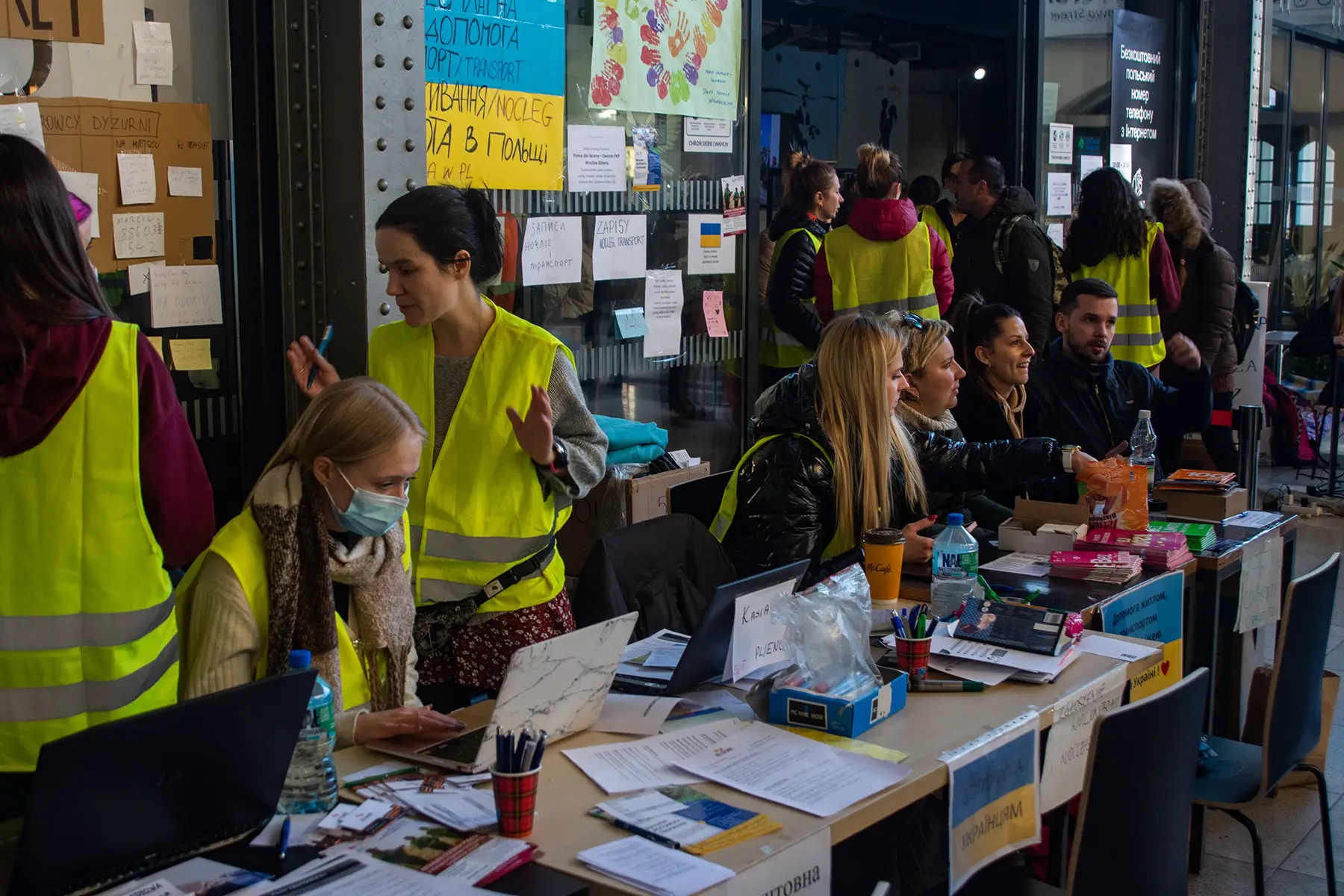
Those who’ve been granted subsidiary protection – rather than full refugee status – do still meet the five-year residence requirement. If they meet one of the early application criteria (e.g., graduated from a French university or have provided exceptional service to France), they can apply sooner.
French citizenship test
France does not have a formal citizenship test that you have to pass. However, you do need to prove your knowledge of the French language (at least B1/intermediate level). If you cannot provide a language certificate, you might be tested during your integration interview.

You will also have to demonstrate how well-integrated you are in terms of your knowledge of French culture, history, and society. In order to help you with this, you can download the French Citizen’s Booklet (livret du citoyen).
Managing Your Finances During the Citizenship Process
Applying for French citizenship involves various financial considerations beyond just application fees. From paying for document translations and demonstrating financial stability to managing money across borders, your financial organization plays an important role in a successful application. Many citizenship pathways require proof of “stable and sufficient income,” and having clear financial records is essential when proving your integration into French society.
For international applicants managing finances between countries, Wise offers practical solutions that can simplify the process. The Wise account allows you to hold and manage money in multiple currencies, making it easier to pay application fees, translation services, and other expenses.

Passports in France
Once you’ve become a citizen of France, you can get a French passport. This means that you can travel abroad and enjoy the rights of a French citizen worldwide. You can apply for a passport at any town hall or French embassy or consulate if you live abroad.

In addition to the standard passport, there are also cost-reduced children’s passports, diplomatic passports for official visits, and emergency temporary passports if your passport gets lost or stolen while abroad.
Dual nationality in France
France allows for dual citizenship, which means that you don’t have to renounce your existing citizenship when you take on the French one. Around 5% of the French population have dual nationality. Dual citizens have the same rights as those who have sole citizenship in France.

Some countries do not permit dual nationalities (e.g., the Netherlands) and require you to renounce your existing one when you do get French citizenship. Be sure to check with your country’s embassy or consulate to find out about their rules and procedures regarding dual nationality.
Losing or renouncing French citizenship
You can voluntarily renounce your nationality if you can prove that you have alternative citizenship elsewhere. To do so, contact your local préfecture for more information.
The French authorities can also revoke your citizenship if they believe you have committed acts against France (unless you would become stateless as a result). For this to happen, you will need to have done a serious crime, offense, or act of terrorism that is considered an attack on France.
If you have had your citizenship revoked, you cannot re-apply unless you can demonstrate sufficient reintegration into French society and have either been rehabilitated or had your conviction erased from your criminal record.
Citizenship appeals and complaints
The authorities can refuse your citizenship application if you do not meet the necessary conditions. They might also postpone your application if they feel that your citizenship would not be appropriate at this time. If that’s the case, they will outline their reasons and give you a deadline for resubmitting an improved application.
If your application is refused, you can appeal to the Ministry of the Interior within two months of the decision. After that, you can take your appeal to the Administrative Court (PDF, Conseil d’État) for a final review.
Useful resources
- Service-Public – French government website with information on the different forms of French citizenship and how to apply
- Ministry of the Interior – government ministry responsible for citizenship in France
- lingoking – translation agency for private customers
- Wise – international money transfer service and multi-currency account provider



Did you find this guide helpful?