
'%20id='ico-down'%20stroke='%23000000'%20stroke-width='1.5'%3e%3cg%20transform='translate(1092.250000,%20254.750000)'%3e%3cpolyline%20id='Path-2-Copy-4'%20transform='translate(5.500000,%202.750000)%20scale(1,%20-1)%20rotate(-180.000000)%20translate(-5.500000,%20-2.750000)%20'%20points='0%200%205.5%205.5%2011%200'%3e%3c/polyline%3e%3c/g%3e%3c/g%3e%3c/g%3e%3c/svg%3e)


Education
Children's Education
Secondary education in Spain
We outline all you need to know about secondary education in Spain, including the types of schools, enrollment process, curriculums, and more.


If you’re moving to Spain with secondary-school-age children, then sorting out their educational needs is likely high on your list of things to do. That said, understanding the Spanish education system might seem overwhelming, especially if you face a language barrier.
However, this comprehensive guide to secondary education in Spain will help you make sense of it, including the following:
Barcelona High School
Barcelona High School is an international American School in Barcelona, Spain. The school provides the US curriculum and High School Diploma, and is the only school to offer the AP program. This Social Wellness School provides student-centered learning so your child is ready for a bright international future.

The secondary education system in Spain
After children have completed primary school in Spain, they must attend compulsory secondary education from the age of 12 to 16. This stage is called Educación Secundaria Obligatoria (compulsory secondary education), or ESO for short.
There are several types of centers that teach ESO:
- Institutos de Educación Secundaria (IES): These state-funded institutions for secondary education are free to attend and are the most common type of secondary school in Spain.
- Colegios concertados: These are state-funded private schools. However, as they are often Catholic, you might pay a fee for tuition. Still, fees are lower than private schools.
- Centros privados: To attend these schools, you need to pay tuition and registration fees. As they run independently from the state, they may provide different curriculums.
Once students have finished their ESO, they may continue at school until the age of 18. After this, they can either study the Spanish Baccalaureate (or Bachillerato) in preparation for university or Formación Profesional (FP), which is vocational training. Conversely, students can begin working at the age of 16.
State/public secondary schools in Spain
State schools (IES) are by far the most popular choice among Spanish and international children alike. Indeed, 66% of ESO students study in public institutions across the country, while 34% study in semi-private or private schools. Furthermore, 73% of students studying the Bachillerato, and 70% of those in vocational training, choose to do so at a state school.
While there are no costs for tuition, parents might still need to pay for books and stationery. Moreover, the Organization of Consumers and Users (OCU) suggests that extra annual costs amount to around €844 for the ESO and €886 for the Bachillerato.
The other state-funded schools in Spain are colegios concertados, which around 30% of ESO students attend. While in theory, their fees are optional, in reality, these schools expect parents to pay for them. In fact, a survey conducted in 2020 shows that 89% of subsidized schools collect a mandatory base fee from families.
The curriculum in state secondary schools
The Ministerio de Educación y Formación Profesiónal (MEFP) governs education and vocational training in Spain. It also sets the curriculum in the country, while the local authority – Comunidad Autónoma – implements it.
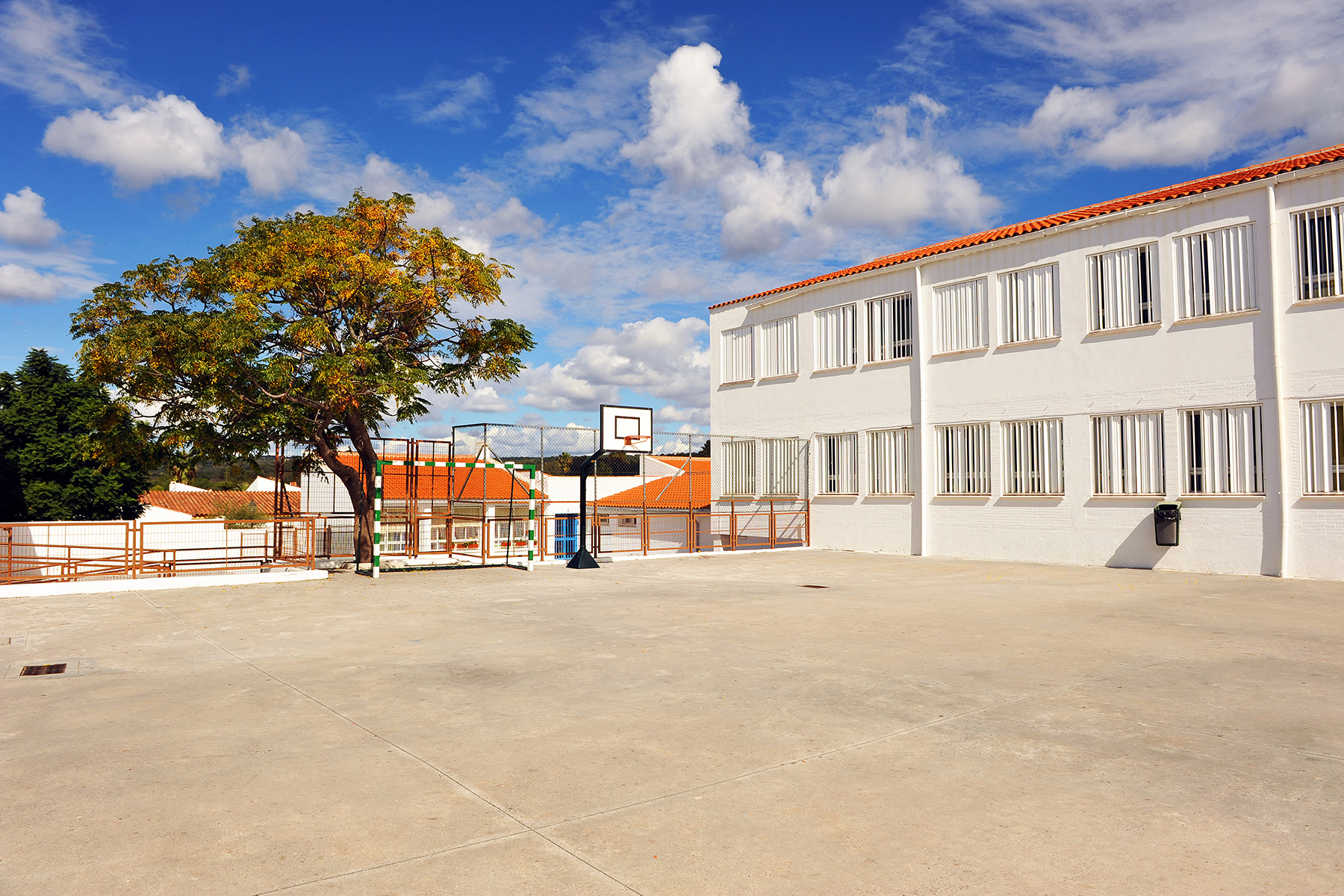
On average, there are 25 students per class in public secondary schools in Spain, and a typical school day runs from around 08:30 until 15:00. There is usually a half-hour break for lunch or two 15-minute breaks. After school, students often take part in extra-curricular activities.
The ESO curriculum is divided into two cycles:
- First cycle (primer ciclo) – Years 1 – 3
- Second cycle (segundo ciclo) – Year 4
The curriculum for each school year includes mandatory and elective subjects, and you can read more about these on the Eurydice website. During the year, schools continually assess the progress of students using Spain’s standard grading scale:
- Fail (insuficiente – IN): 1 – 4
- Pass (suficiente – SU): 5
- Good (bien – BI): 6
- Very good (notable – NT): 7 – 8
- Outstanding (sobresaliente – SB): 9 – 10
In order to graduate from the ESO phase, students must sit final exams. You can read more about this further down the guide.

If you are still unsure if state secondary education in Spain is a good fit for your child, then here are some of the main pros and cons to consider.
The pros of state secondary schools in Spain
- Integration: A state school may provide more opportunity for your child to integrate into the local culture, make friends, and learn Spanish
- Cost: While there are some costs involved, state schools are generally affordable
- Convenience: Every Comunidad Autónoma (local authority) aims to guarantee a place at a local school for every resident
- Options: There are far more public schools than private schools in Spain, offering more choice. Furthermore, because these schools choose their own teaching methods, you’ll likely find one that suits your child.
The cons of state secondary schools in Spain
- Varying quality: Conversely, having autonomy can lead to an unequal quality of education across the board
- Larger class sizes: State schools generally have larger classes than private schools and some schools are even oversubscribed
- Unfamiliarity: For a teenager whose second language is Spanish, attending a state secondary school might be intimidating. However, schools tend to support international students and help them develop their Spanish. Additionally, there are bilingual public schools to consider.
- Resources: As state schools don’t charge fees, they may not have the resources to offer the same facilities as private schools
Applying to secondary state schools in Spain
You must be a registered resident in Spain to be able to enroll your child in a secondary state school in the country. Most Comunidades (local authorities) list all the local secondary schools on their websites. Once you have found a school that you like, it’s important to keep an eye on when it opens up its places; this is generally in January or February.

Once places are released, you must complete and submit a municipal application form, which is usually available online. By June or July, you should know where your child will study. Suppose you are applying to secondary schools from abroad. In this case, you might not have proof of address yet and will need to contact your region’s school support services or Servicios de Apoyo a la Escolarización (link in Spanish).
Generally, schools allocate places on a first-come, first-served basis. That said, there are some exceptions and they might consider the following:
- Parents working at the school
- Siblings already enrolled
- How close the school is to the family home or work
- The family’s income
- Disabilities in the family
- Family size

Spain aims to include all children in mainstream schools, including those with special educational needs (Necesidades Educativas Especiales – NEE). Therefore, if your child needs extra support, you still need to follow a similar process. You can contact your region’s school support services to find out more or read our guide to social security in Spain to learn about child benefits.
Private secondary schools in Spain
Notably, Spain is also home to a range of fee-charging, private secondary schools. Below are some of the most popular types on offer.
Religious schools
Most religious schools in Spain provide a Catholic-based curriculum, and some integrate religion into the curriculum more than others. Many of these religious schools are colegios concertados, which the state oversees. However, these schools might expect parents to pay fees. Additionally, there are private international schools that are connected to other Christian churches and Jewish schools.
Method schools
Spain is also home to several Spanish and international Montessori and Waldorf-Steiner schools. These provide a child-led, hands-on education. Moreover, many offer the ESO and Bachillerato curriculums to prepare students for university. Ludus is a helpful search tool that allows you to look for alternative schools across the different provinces in Spain.
International schools in Spain
There are also 281 International Schools in Spain, which is the fifth-largest number in the world. These schools are located in 28 different cities, with the majority being in Madrid (56) and Barcelona (47). They follow another country’s curriculum and teach in another language such as English, French, or German. For this reason, they are very popular among expat families, particularly those with short postings, such as embassy staff and NGO workers.
International schools in Spain charge more than state schools or colegios concertados. For instance, you can expect to pay anywhere from €2,000 to over €20,000 a year in fees, plus registration costs. If you are unsure whether an international school is right for your child, below are some of the main pros and cons that you might want to consider.
The pros of international schools in Spain
- High quality: Various certification bodies monitor international schools, therefore they typically offer a high level of teaching, great resources, and facilities
- Familiarity: Attending an international school offers your child continuity if they are used to a specific system and curriculum
- International environment: Your child will meet teachers and students from all over the world and gain globally recognized qualifications
- Easier to make friends: If the language of tuition is the same as their home country, your child will easily make new friends and won’t have to face a learning barrier
- Special Educational Needs (SEN): Many international schools provide support for children with special educational needs (SEN). Local schools should also offer SEN (or NEE in Spanish) support, but learning Spanish may add another challenge for a child who already has a learning difficulty.
The cons of international schools in Spain
- Expense: International school fees can cost up to €20,000, which is much more expensive than state schools
- Integration: If you stay in Spain long-term, your child might take longer to learn Spanish and fit into the local culture
- Convenience: Most international schools are in big cities, so if you live elsewhere, your options might be limited
- High standards: Students might feel increased pressure to achieve academic excellence because of the prestigious level of education at international schools
Graduating in Spain
At the end of the ESO phase, students must take an exam that is set by the Ministry of Education (MEFP). If they pass all but two subjects, they will receive the lower compulsory secondary education certificate – or Graduado en Educación Secundaria Obligatoria (GESO). Notably, they must also pass either language or mathematics.
Students will receive a total mark (ranging from 1 to 10) which is an average of all their subjects, and the pass rate is 5 and above.
Once a student has their certificate (GESO), they can continue their secondary education in Spain by following the academic Bachillerato track, entering vocational training (FP), or seeking employment. If, on the other hand, they fail, they will receive a certificate with the subjects and number of years they have studied. They can also repeat failed courses.
The Bachillerato
The Bachillerato is a two-year academic course that prepares students aged 16 to 18 for university. It is available at public schools and many private and international schools in Spain.
The Bachillerato consists of three branches:
- Sciences
- Humanities and Social Sciences
- Arts
Then, within each branch of Bachillerato, students must study these core subjects:
- Philosophy
- Spanish (or co-official) language and literature
- A foreign language
- Spanish history
Each branch also has at least two optional science, humanities, or arts subjects.

At the end of the two years, students must undergo another external exam set by the MEFP to obtain their Bachillerato diploma. Once they have completed their secondary education in Spain along this academic track, they must then take entrance exams (EBAU or Selectividad) if they want to continue to university.
Trade schools in Spain
The academic Bachillerato track isn’t the only option for students wanting to complete their secondary education in Spain after the ESO phase. Indeed, many schools also offer Formación Profesional (FP), which is vocational training.
Basic training begins in the last year of ESO. After that, students can begin one or two years of intermediate vocational training – Formación Profesional de grado medio (CFGM).
The Spanish government publishes a list of available subjects and courses comprise the following:
- Modules in the chosen subject
- Spanish (plus the co-official language)
- A foreign language
- Related social and applied sciences
- Mathematics
- A work placement (formación en centros de trabajo – FCT)
If students pass their modules, they receive a technician certificate (Técnico). With this qualification, they can access higher technical education (ciclos formativos de grado superior) or even continue to the Bachillerato qualification.
International qualifications in Spain
Expat parents often want their child to study internationally recognized qualifications so that they have flexibility when choosing a university after secondary school. Fortunately, Spain has schools offering these, including the International Baccalaureate and Advanced Placement.
The International Baccalaureate (IB) is a globally recognized qualification for students aged 16 to 19. It is popular among expats, as it is transferable to many countries. Many private and international schools in Spain offer the IB program. Likewise, some state schools offer it. In fact, some schools even allow students to study for a double diploma to receive both the IB and the Bachillerato qualifications.
You can also follow the American Advanced Placement (AP) in Spain. This program allows high school students to engage in university-level coursework and exams across a wide range of subjects, from calculus to literature. By participating in the AP program, students can demonstrate their preparedness for university, improve their chances of admission to top-tier academic institutions, and earn university credits recognized by US colleges. The College Board has designated Barcelona High School as the AP exam center for Europe.
Useful resources
- Ministry of Education and Vocational Training – provides official information and up-to-date news about education and laws in Spain
- Eurydice – an overview of the education systems in Spain
Related Articles


Editor's picks
 Dating in Spain: finding love as an expatSingle and ready to mingle? Learn how to find love on Spain's dating scene, where casual meet-ups can spark genuine romantic connections.
 Top 10 Spanish foods – with recipesWhat better way to explore Spain than with your tastebuds? From tasty tapas to delicious dishes, here are the best Spanish foods.
 Guide to getting health insurance in Spain in 2026Find out whether you need private health insurance in Spain in 2026, with insider info on costs, coverage, and medical professionals.
Did you find this guide helpful?