
'%20id='ico-down'%20stroke='%23000000'%20stroke-width='1.5'%3e%3cg%20transform='translate(1092.250000,%20254.750000)'%3e%3cpolyline%20id='Path-2-Copy-4'%20transform='translate(5.500000,%202.750000)%20scale(1,%20-1)%20rotate(-180.000000)%20translate(-5.500000,%20-2.750000)%20'%20points='0%200%205.5%205.5%2011%200'%3e%3c/polyline%3e%3c/g%3e%3c/g%3e%3c/g%3e%3c/svg%3e)


Education
Language Learning
Language courses in Luxembourg
Discover everything you need to know about language courses in Luxembourg, including where to find them, duration, costs, and more.

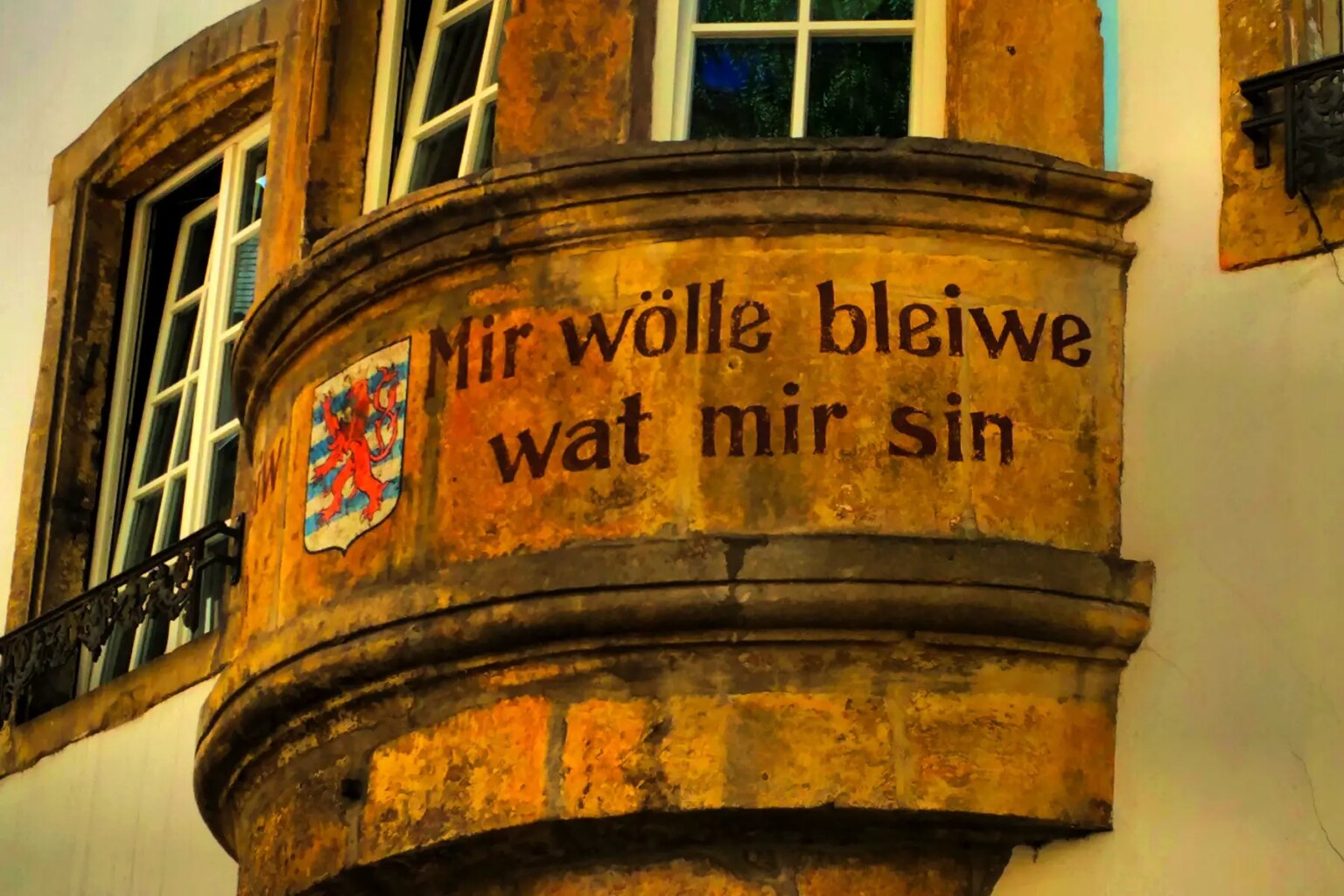
Like any relocation, there are plenty of things to organize when you first move to Luxembourg. For instance, you face the initial tasks of finding a home, setting up a bank account, and figuring out how to navigate public transport.
However, once you have crossed these off your to-do list, you might want to consider taking a language course so you can learn one of Luxembourg’s three official languages – Luxembourgish, French, and German. To help you get started, this article outlines everything you need to know, including the types of courses on offer, as well as the costs, duration, and more:
Babbel
Start chatting like a local in Luxembourg with Babbel. One of the most popular language-learning apps around, it offers many courses, resources, and live online classes. And, with 13 new languages to choose from, it will have the right course for you.

Why learn the languages of Luxembourg?
Luxembourg is a very multilingual country, in which the majority of residents speak four languages and 50% of the population consists of foreign residents. However, the languages that are spoken throughout the Grand Duchy vary according to the social context.
For instance, German is commonly used in print media and administrative documents, while French is the main language that people use in the hospitality industry; particularly in the capital. You might also hear Luxembourgish in cafes and shops, depending on where you are.

Given the complex nature of languages in Luxembourg, expats might find it useful to learn one or two of them so they can better navigate everyday life. After all, speaking the local language – or rather, languages – can help you not only integrate more smoothly into the local culture and meet – or potentially date – new people but also increase your chances of finding a job.
It can also make tasks such as buying groceries and setting up your utilities that much easier. Plus, should you eventually wish to gain citizenship in the Grand Duchy, you will need to prove your proficiency in Luxembourgish.
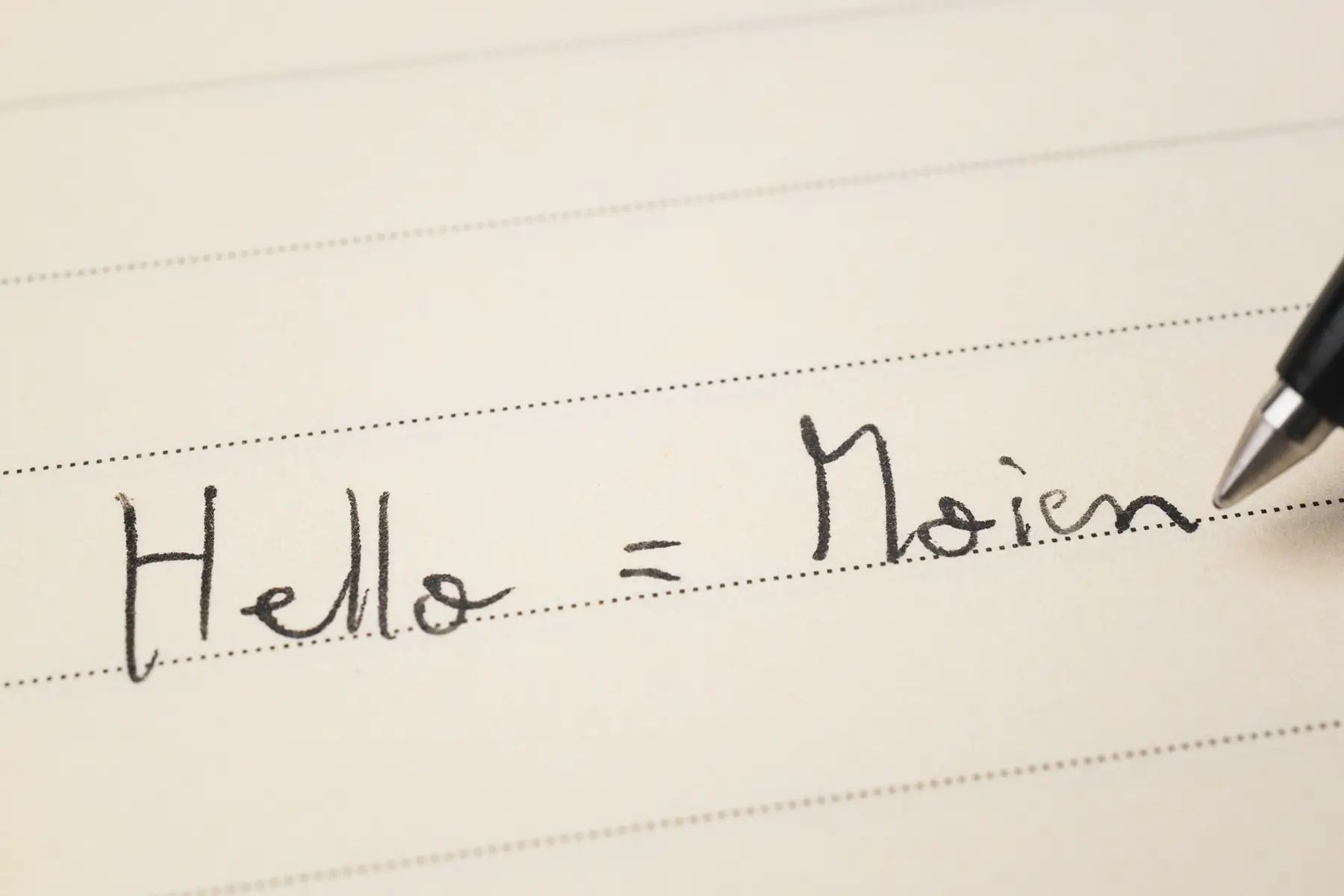
Learning the languages of Luxembourg may also allow you to converse with a much larger population across the world, given that French is the fifth most commonly spoken language in the world, with approximately 280 million speakers. Meanwhile, around 134.6 million people speak German. And while only 390,000 speak Luxembourgish, it can still be useful to know, given that it is commonly used in both social settings and for administrative purposes.
Learning languages before moving to Luxembourg
Although language courses are available in Luxembourg, starting one ahead of your relocation can be useful when you first arrive in the country. As mentioned, having a little French, German, or Luxembourgish up your sleeve can make it easier to tackle tasks such as setting up a bank account and navigating public transport. It can also give you a headstart on making new friends and understanding the local news.
International language schools
There are several schools that offer language courses in Luxembourg and other countries. Therefore, enrolling at one means that expats can begin learning a language in their home country and continue once they arrive in their new one.
Some of the main international language schools include:
- Berlitz: The popular global language school offers online and in-class courses in multiple languages, including French, German, and Luxembourgish. Its Luxembourg branch is located in Grand-Rue, in the heart of the city center, close to Galeries Lafayette, Palais Grand-Ducal, and Hotel des Postes.
- Goethe Institute: The famous Munich-based institute takes the German language and culture around the world. Its Luxembourg branch is called Institut Pierre Werner (IPW) and offers German courses with native German speakers.
- Institute Français de Luxembourg (IFL): This Luxembourg-based language school offers a variety of in-class and online courses in French
Learning languages in Luxembourg
Because the lead-up to a move can be stressful, some expats prefer to wait until they arrive in their new home country before they begin a language course. Of course, one of the key benefits of doing this is that you will be able to learn French, German, or Luxembourgish the way locals speak it.

Moreover, because you will be constantly hearing the languages around you, it may make them easier to learn. Not only that, but you will likely have access to a wider range of courses, making it easier to find one that suits your budget and schedule. In fact, once you are in Luxembourg, you will find that there are plenty of options for learning languages, and below are just some of them.
Language schools
If you want to take a language course in Luxembourg, you will find many schools to choose from. They each offer different types of courses, ranging from group classes for children and one-to-one sessions for adults to special courses that teach business language.
Some of the more prominent language schools in Luxembourg include:
- Berlitz: The popular global language school offers courses in Luxembourgish, French, and German
- Interlingua: A French language school that offers a wide range of courses, including exam preparation
- Languages.lu: This local language school provides courses for children and adults in Luxembourgish, French, and German
- Prolingua Language Center: Accredited by Eaquals, a world leader in accreditation for language teaching organizations, this school offers a range of courses for professionals and those wanting to learn business languages
Government language lessons
The Ministry of Education, Children and Youth collaborates with certain government-approved institutions to offer languages in French, German, and Luxembourgish. For example, the Institut National des Langues (INLL) offers government-subsidized language courses, and certain students can benefit from a fee of just €10.
Moreover, many local municipalities help expats integrate with the local culture by offering a series of language courses for free or with a minimal charge. For instance, if you live in the City of Luxembourg, there are three government centers that run affordable Luxembourgish language courses with fees ranging from €50 to €100.
Learning a language for free
Luxembourg recently launched LLO.LU, a government-backed website that allows users to learn Luxembourgish for free. To begin a language course in Luxembourg, you can simply sign up for an account and download an app.
Aside from this, you can find plenty of language conversation groups in Luxembourg where you can practice your skills in relaxed, everyday settings. You can find many of these online through platforms such as Facebook and MeetUp.
Learning languages online
There are several online language courses in Luxembourg that offer the convenience of being location independent. If you prefer the flexibility of learning French, German, or Luxembourgish from your home or while traveling, you can get in touch with one of these schools:
- Berlitz: The school offers several options for learning languages online in Luxembourg. Expats can choose from virtual group classes, private intensive courses, or self-paced sessions. It is also possible to take a 12-week course that has twice-weekly 90-minute sessions.
- Institute Français de Luxembourg (IFL): The institute offers private virtual courses in packages of 12 to 25 hours, ranging from €672 and €1,400. It is also possible to take the 30-hour E-Learning evening course for €600.
- LuxLessons: You can take a three-month online course for €149 which promises to have you speaking like a local in no time
Other useful online resources
There are many resources that can help you find the right language course in Luxembourg and many of these are online. Here are a few to keep in mind:
- Coffee Break French: A podcast that specializes in short French lessons
- Collins French Dictionary: A high-quality French dictionary
- Collins German Dictionary: A high-quality German dictionary
- Cultivate Your French: This podcast helps listeners improve their French comprehension
- Google Translate: A website and app that offer quick translations through text or images
- Lëtzebuerger Online Dictionnaire: A Luxembourgish dictionary
- Speaking of Berlin: Produced by language-learning app Babbel, this podcast uses local stories about Berlin to help listeners improve their German
- The Easy German Podcast: The podcast discusses contemporary German topics in an easy-to-listen-to setting
- Translate.com: The website offers quick translations for free as well as paid professional translation services
- Wierderbuch: A Luxembourgish dictionary app
Learn a language with a computer or smartphone app
Many expats choose to learn a language on their computer or through an app as it offers more convenience. This is because users can follow the course at their own pace and from any location. They can also fit lessons in with their own schedule which offers a greater degree of flexibility.

Moreover, many apps gamify their courses, which can make learning a language learning more fun for users. Some of the best apps on the market in Luxembourg include:
- 365 Days Luxembourgish: An educational app that provides brief daily lessons and exercises
- Aurelux: The app offers fast foundations for comprehension and conversation
- Babbel: The popular language-learning app offers quick lessons and live classes
- Batta Klang: A gamified app that teaches 1,000 words of Luxembourgish through images
- Drops: An app that uses mnemonic images and fun games to teach vocabulary
- Duolingo: This game-like app offers quick and easy lessons in a fun format
- FluentU: The app teaches languages by showing videos that depict real-world interactions
- Languages of Luxembourg 7: An offline app with audio and written lessons in seven languages
- Memrise: This app teaches languages through flashcards and repetition
- Mondly: The app uses a combination of language courses, games, and conversations for quick learning
- Pimsleur: Offers audio-led courses that focus on hearing comprehension and pronunciation
- Rosetta Stone: A website and app-based program that combines pictures, words, and audio snippets for full language immersion
Learning languages outside of the classroom
While formal language courses are useful, hearing and speaking the different languages of Luxembourg in daily life will go a long way in aiding your fluency.

There are many ways you can continue to learn French, German, and Luxembourgish outside of the classroom. Here are just a few tips to help you get going:
- Talk to your neighbors, local shopkeepers, friends, and other parents in the local language, and ask them to speak it to you
- Listen to music or watch TV shows and movies in the language you are learning; this will help you pick up how people use the language in real life. You can also use subtitles if it helps you!
- Join local clubs, societies, or other social spaces and encourage people to speak to you in the local language
- Join a MeetUp group or Facebook group for expats learning languages in Luxembourg
Language courses for children in Luxembourg
There are many language courses for children in Luxembourg, which means that they can easily pick up the local lingo. In most cases, little ones will learn some combination of English, French, German, or Luxembourgish at school. This is because all schools – including public, private, and international ones – use a combination of these languages. Moreover, children who do not have any experience with these languages can usually access special classes to help them get up to speed.
In addition, many language schools – including Berlitz – offer courses specifically for children and teenagers. For more comprehensive immersion, there are also numerous workshops and summer camps, including those by Languages.lu, Berlitz, and Institute Français de Luxembourg (IFL).
Learning courses for professionals in Luxembourg
Some language courses in Luxembourg are specifically designed for expats looking to learn the local language in a professional capacity. This is because some professions have very specific terms and it is important to know their translations.
The following schools offer business-focused language courses:
Official language examinations and qualifications in Luxembourg
The Lëtzebuergesch als Friemspooch (LaF) is the national diploma program for people who learn Luxembourgish as a foreign language. There are several certification levels within the program, which essentially correspond with the A2 to C1 levels of the Common European Framework of Reference for Languages (CEFR). The LaF can be useful in professional settings and can help if you are asked to prove your proficiency in the language for work.
Some expats also choose to take the Sproochentest to prove their Luxembourgish language skills. This is also necessary if you wish to obtain citizenship in Luxembourg. You will need to pass this at an A2 level in speech and a B1 level in listening. Notably, you do not need to take any official language courses in Luxembourg to sit the test.
Meanwhile, the Institute Français de Luxembourg (IFL) offers the Diplôme d’études en langue française (DELF). This is the official certification for the French language and can also be useful for work. Similarly, the Institut National des Langues (INLL) offers two German certificates for learners of the language. The Goethe Zertifikat is also available across four levels of proficiency and is suitable for most requirements. It is also possible to take the Test Deutsch als Fremdsprache, although this is more suitable for academics.
Useful resources
- luxembourg.public.lu – a government website that provides information about how languages work in the education system in Luxembourg
- luxembourg.public.lu – provides more information about the different languages spoken in the Grand Dutchy



Did you find this guide helpful?