
'%20id='ico-down'%20stroke='%23000000'%20stroke-width='1.5'%3e%3cg%20transform='translate(1092.250000,%20254.750000)'%3e%3cpolyline%20id='Path-2-Copy-4'%20transform='translate(5.500000,%202.750000)%20scale(1,%20-1)%20rotate(-180.000000)%20translate(-5.500000,%20-2.750000)%20'%20points='0%200%205.5%205.5%2011%200'%3e%3c/polyline%3e%3c/g%3e%3c/g%3e%3c/g%3e%3c/svg%3e)


Education
Language Learning
How to learn Italian as an adult
Italian is one of the easier languages to learn and is essential when moving to Italy. Discover all the learning options that will have you speaking Italiano pronto!


There’s no better way to learn a language than by moving to Italy and immersing yourself in the local culture and society. That said, just a basic ciao doesn’t cut it when you want to converse with neighbors and new-found friends.
Get a head start on your Italian language learning journey with this overview of classes and resources discussed in the following sections:
Babbel
Start chatting like a local with Babbel. One of the most popular language-learning apps around, it offers many courses, resources, and live online classes. And, with 13 new languages to choose from, Babbel will have the right course for you.

Why learn the Italian language?
When you’re moving to Italy – especially the more rural parts – you’ll notice that many residents do not communicate in English. In 2019, it was reported that only 56% of the population spoke English. Having a basic grasp of Italian, then, will get you a lot further.

Luckily, it’s said to be an easy language to learn. Native English speakers can expect to gain relative fluency after between 600 and 750 class hours.
Italian proficiency comes with a lot of additional benefits, including:
- Career prospects: it will be easier to communicate with colleagues and clients, find a job, and progress in your career
- Social life: you’ll be able to meet more people, explore the local dating scene, participate in more activities, and feel less isolated
- Integration: it will provide better access to Italian culture, books, news, magazines, TV, and radio to make you feel like part of your community
- Legal requirements: if you stay in Italy for longer and decide to apply for citizenship or residency, you’ll need to prove that you can understand Italian
Learning Italian also means you can converse with the few million Italian speakers who live around the planet. Most notably, you can find them in the US, Canada, Argentina, Brazil, and Australia.

Across Europe, there are 65 million native speakers. Most of them live (unsurprisingly) in Italy, but you can also find them in San Marino, Vatican City, and some parts of Switzerland, where Italian is one of the national languages.
In Bosnia and Herzegovina, Croatia, Romania, and Slovenia, the language is officially recognized as a minority language.
Learning Italian before moving to Italy
There are many ways to start picking up some vocabulary before you set foot on Italian soil. From watching movies, listening to podcasts, or attending language classes in your town, everyone can find an approach that suits them.
With a few basic phrases, you’ll feel less anxious when you land in Rome (Roma) or Milan (Milano) and want to find the best brioche in the neighborhood.
International Italian-language schools
To learn Italian abroad, there are various organizations that can help you out. You can check out which ones offer individual or group lessons near you:
- Dante Alighieri Society (società dante alighieri)
- Italian Cultural Institute (istituto italiano di cultura)
- The Italian department of your local university
- A local language center
Learning Italian in Italy
Arguably the best way of learning a new language is by taking an immersion course in the country itself. That way, you can immediately go from the classroom to the streets and practice your grammar or vocabulary at the hairdresser (parrucchiere) or a local restaurant (trattoria).

There are also many language schools, as well as municipal- and city-backed initiatives that offer Italian courses for foreigners (Italiano per stranieri).
Italian language schools
Some reputable language schools in Italy include:
- Dante Alighieri Society: in Rome, Florence (Firenze), Bologna, Milan, Turin, and online
- Scuola Leonardo da Vinci: in Rome, Florence, Milan, Torino, Viareggio, and online
- Scuola Romit: in Rome
- Scuola Toscana: in Florence
- David Institute (instituto il David): in Florence
- ILS International Language School: in Milan
If you are not in one of the major cities, you can use IT Schools, Language International, or the National Association of Italian Language and Culture Schools to find language schools across the country.
Government-backed Italian lessons
The RAI school portal offers tools and resources for people looking to study basic Italian (level A1–B2), as well as information on Italian civic culture and the constitution. This portal is an initiative of the Ministry of the Interior (Ministero dell’interno), the Ministry of Education, University, and Research (Ministero dell’istruzione dell’università e della ricerca – MIUR), and the TV channel Rai Scuola.
If you are looking for more face-to-face language learning, your local municipality (comune) will have information on Italian courses offered to foreigners. Many of these are reasonably priced. For example, the municipality of Milan offers language courses at all levels (i.e., 60 hours for €95), and the municipality of Florence offers free courses every month.
Learning Italian for free in Italy
To sign up for free Italian courses, you can contact your local adult learning center (centro provinciale istruzione adulti – CPIA). These centers offer free government-funded Italian courses aimed at newcomers from other countries (e.g., the Migrant School Network in Rome).
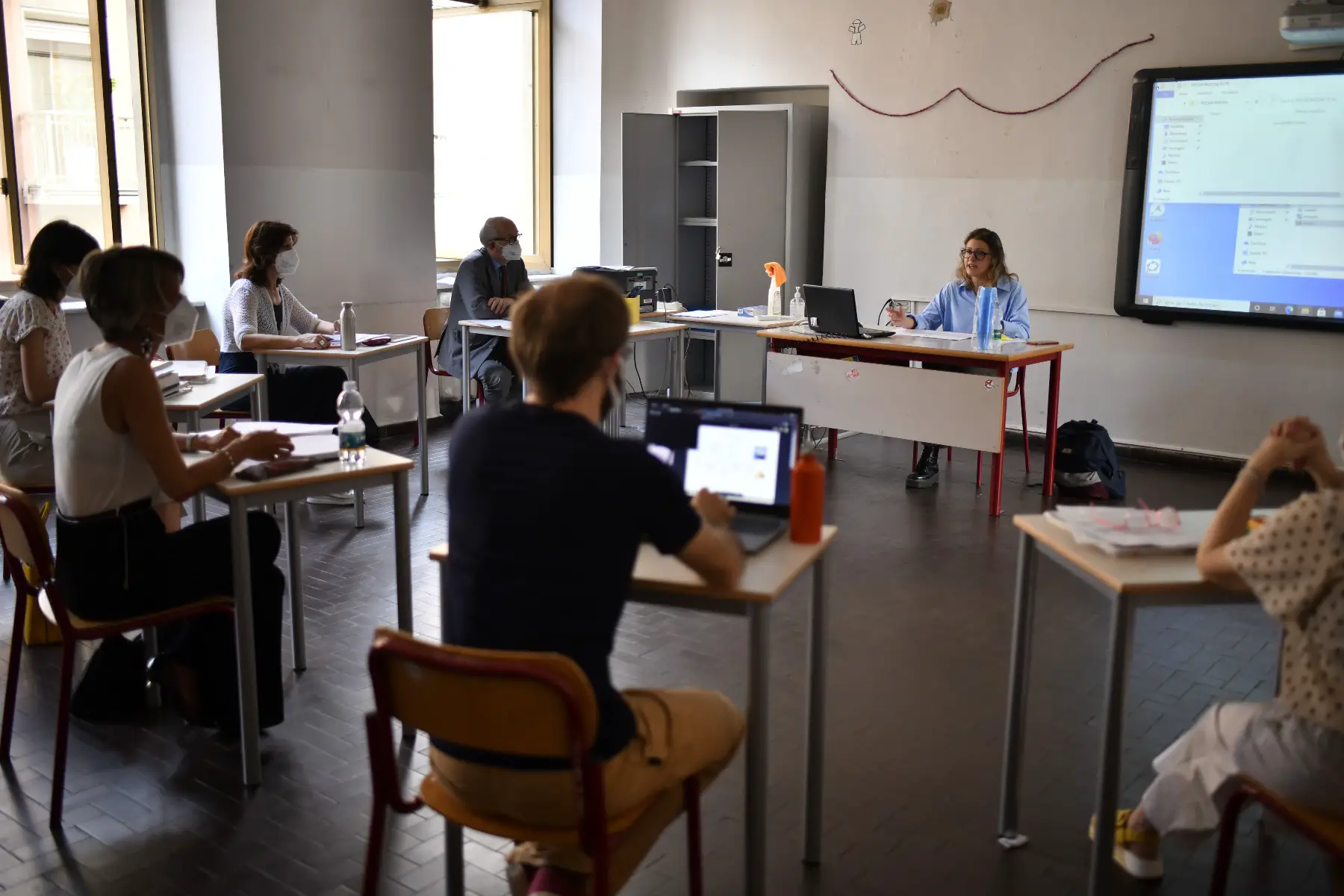
Another option is to visit local libraries and cultural centers for language-learning resources and events. For instance, the libraries of Rome offer free Italian language courses for migrants. They also have women-only classes, if this would make you feel more comfortable as a woman.
Moreover, if you’re self-motivated, libraries present a great way to learn a language for free. You can learn Italian by borrowing books, films, CDs, magazines, and other useful materials.
Learning Italian online
Many language schools in Italy and abroad offer in-person classes as well as online options. For example, the Dante Alighieri Society, also known as La Dante, offers a variety of options to suit every learning style and budget.
You can select a course by lesson type, duration, intensity, and budget. Examples of costs include (2022–2023):
| Type of course | Duration | Cost |
| Conversational Italian | 30 hours | €240 |
| Online | Varies | €38 |
| Hybrid on-and-offline | 12 weeks | €380 |
Other online resources to learn Italian
- La Mappa Misteriosa: created by the BBC, this interactive 12-episode miniseries lets you learn Italian by answering questions and making decisions about how the storyline unfolds. It is well suited for beginners, and if you can’t access it from your location, the videos are also on YouTube.
- Digital Dialects: offer interactive games for beginner to lower-intermediate learners of Italian
- Italian Made Easy: a language platform with useful resources, courses, and content in slow Italian that is easy to understand. The platform requires a membership, but its podcast and YouTube channel are free to use.
- News in Slow Italian: a podcast that talks about the latest headlines and explanations of grammar and idioms in easy-to-understand Italian. Part of the content is hidden behind a paywall.
Learn Italian with a computer or phone app
In addition to traditional online and offline lessons, you can use your phone or computer to access various free and paid language apps and programs. A lot of these have limited free access, so you can try out the platform before purchasing the full program.

Some of the more popular apps include:
- Babbel: a high-quality language app with short, interactive lessons and live classes
- Brainscape Italian Verbs: offering flashcards on Italian verb groups
- Duolingo: a very popular app with bite-sized daily lessons and an attractive interface
- Fluenz: a set of digital programs that teaches Italian from an English point of view
- Mondly by Pearson: both educational and addictive, this app offers courses, games, and conversations
- Pimsleur: a series of audio courses that focus heavily on auditory and verbal perception
- Preply: an online learning platform with lessons to learn languages and more
- Rosetta Stone: available on the web and through an app, this program uses images, text, and sound to teach a new language
If you want to practice the Italian you’ve learned so far, there are several language exchange sites and apps where you can connect with other speakers. These include:
Learning Italian outside of the classroom
Most Italians are friendly and talkative. It is very common for strangers to engage in small talk and start a conversation. So there are plenty of opportunities to practice and improve your Italian outside the classroom.
Here are a few tips to help you grow your language skills:
- Get chatting: interact with neighbors, local shop owners, market vendors, or bartenders
- Join an in-person language exchange: attend face-to-face meetups to connect with other new speakers and practice your language skills (e.g., Meetup, Polygot Club, and BlaBla Language Exchange)
- Attend a social gathering: neighborhood parties (or religious centers if you are so inclined) are a great way to connect with other people and put your Italian to the test
- Organize playdates: if you have children, host a playdate to practice your Italian with the parents and children
- Be persistent: speak only in Italian with new friends and colleagues
- Read Italian newspapers: local papers will give you insight into your own community, and national news platforms (e.g., La Repubblica and Corriere della Sera) will help you learn more difficult vocabulary
- Watch Italian TV and films (with subtitles): you’ll learn words and sentences gradually
- Visit museums and exhibitions: grab an Italian audio guide to accompany you and learn some vocabulary along the way
Language learning for children in Italy
Children are great at picking up languages through play. As such, the best way to engage them is to have them interact with other Italian-speaking youth.
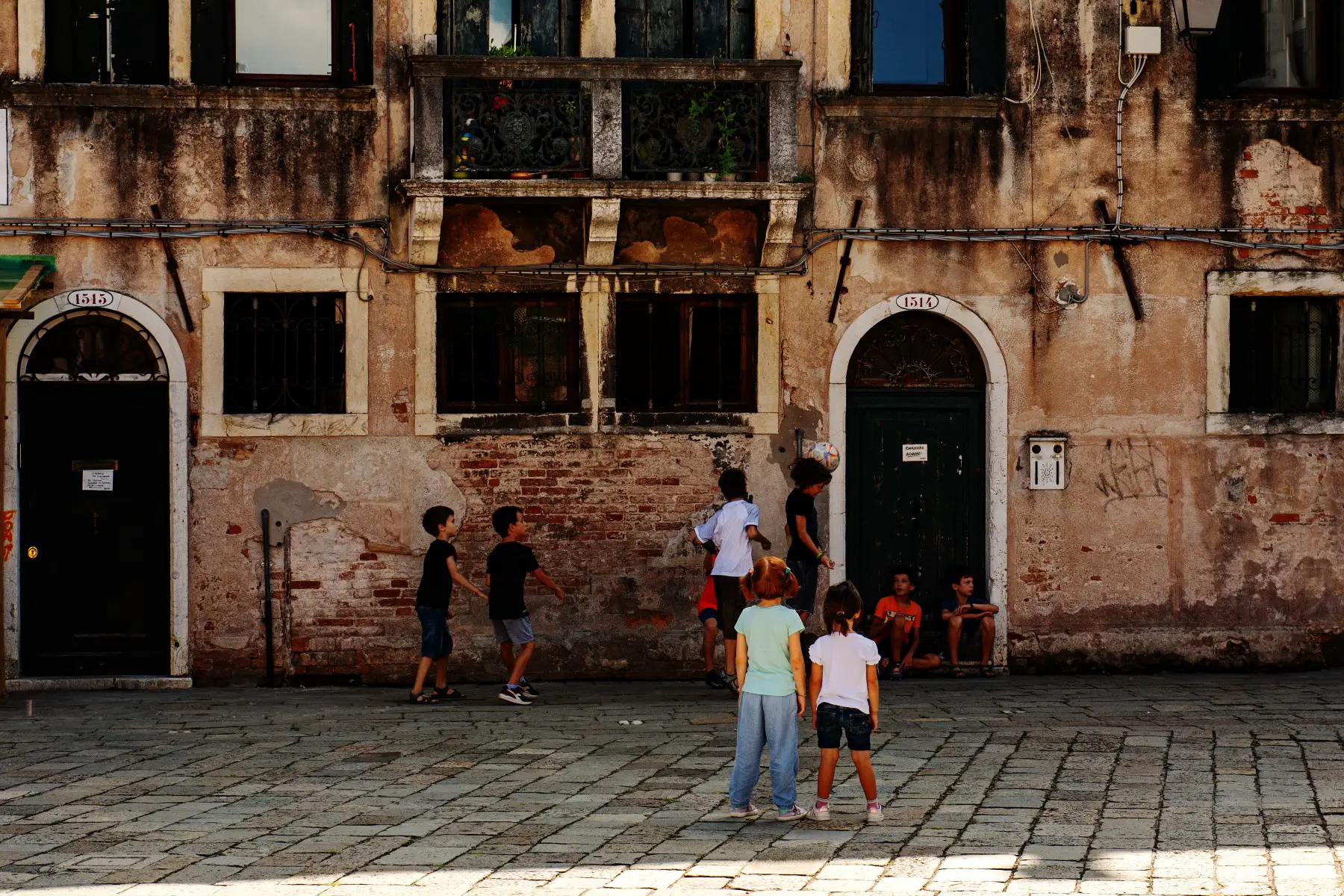
If you’re concerned about your child’s ability to integrate into the Italian education system, some options to consider are:
- Berlitz offers online and offline courses for children and teens on an individual or group level
- Finding a private tutor who has experience working with children
- Child-friendly websites and apps, such as Muzzy (web and app), the Italian Experiment (web), or MindSnacks (app, only iOS-friendly)
- Checking out the resources in your local library
- Introducing them to the Italian language by watching TV shows or listening to songs
Official language examinations and qualifications
If you want to apply for a residence permit, you’ll have to demonstrate a certain level of Italian. But, even without official necessity, it is valuable to have a certification.
Language qualifications in Italy reflect the Common European Framework of Reference for Languages (CEFR). These levels are A1–A2 (beginner), B1–B2 (intermediary), and C1–C2 (advanced).
There are four official language certificates in Italy:
- PLIDA (Progetto Lingua Italiana Dante Alighieri): the Dante Alighieri Society will earn you a PLIDA certificate. Since each center can set its own rates, it’s best to find one nearest to you to inquire about costs.
- CELI (Certificati di Lingua Italiana): the University for Foreigners of Perugia (università per stranieri di Perugia) offers various certificates for children and adult learners. Prices range from around €16 to 160 for internationals seeking teaching qualifications (the DILS-PG).
- CILS (Certificazione di Italiano come Lingua Straniera): the University for Foreigners of Siena (università per stranieri di siena) gives out CILS certificates, ranging from €40 to 160 depending on the level
- CERT.IT (certificazione Italiano): you can go to the Rome Tre University (università degli studi Roma Tre) for a CERT.IT certificate. Prices range from €35 for A1 to €200 (€40 per test) for a C2-level certification.
The Italian Language Quality Certification (certificazione lingua Italiana di qualità – CLIQ) oversees the four national language qualifications.

How to apply for a language certificate
Italian language certificates can be procured in Italy (PDF, in Italian) and around the world (PDF, in Italian). You can contact the language center (centro lingua) to sign up. Documents that you’ll need to provide include:
- a completed application form to the relevant institution
- a copy of your passport or ID card
- proof of payment
Some of the centers have online portals, and others you can email or call. On their websites, you will find exam dates and descriptions of the tests (e.g., written or oral).
Useful resources
- Ministry of the Interior – government website with information for foreigners looking to relocate to Italy
- Ministry of Foreign Affairs and International Cooperation (Ministero degli affari esteri e della cooperazione Internazionale) – government website that focuses on the Italian language and culture abroad
- RAI school portal – a free online platform with tools to learn Italian (level A1–B2) and information on Italian civic culture and the constitution



Did you find this guide helpful?