
'%20id='ico-down'%20stroke='%23000000'%20stroke-width='1.5'%3e%3cg%20transform='translate(1092.250000,%20254.750000)'%3e%3cpolyline%20id='Path-2-Copy-4'%20transform='translate(5.500000,%202.750000)%20scale(1,%20-1)%20rotate(-180.000000)%20translate(-5.500000,%20-2.750000)%20'%20points='0%200%205.5%205.5%2011%200'%3e%3c/polyline%3e%3c/g%3e%3c/g%3e%3c/g%3e%3c/svg%3e)


Moving
Visas & Immigration
Permanent residency in Belgium
Permanent residency is a great option for long-term residents of Belgium who are not ready to commit to full citizenship. Find out how to apply.

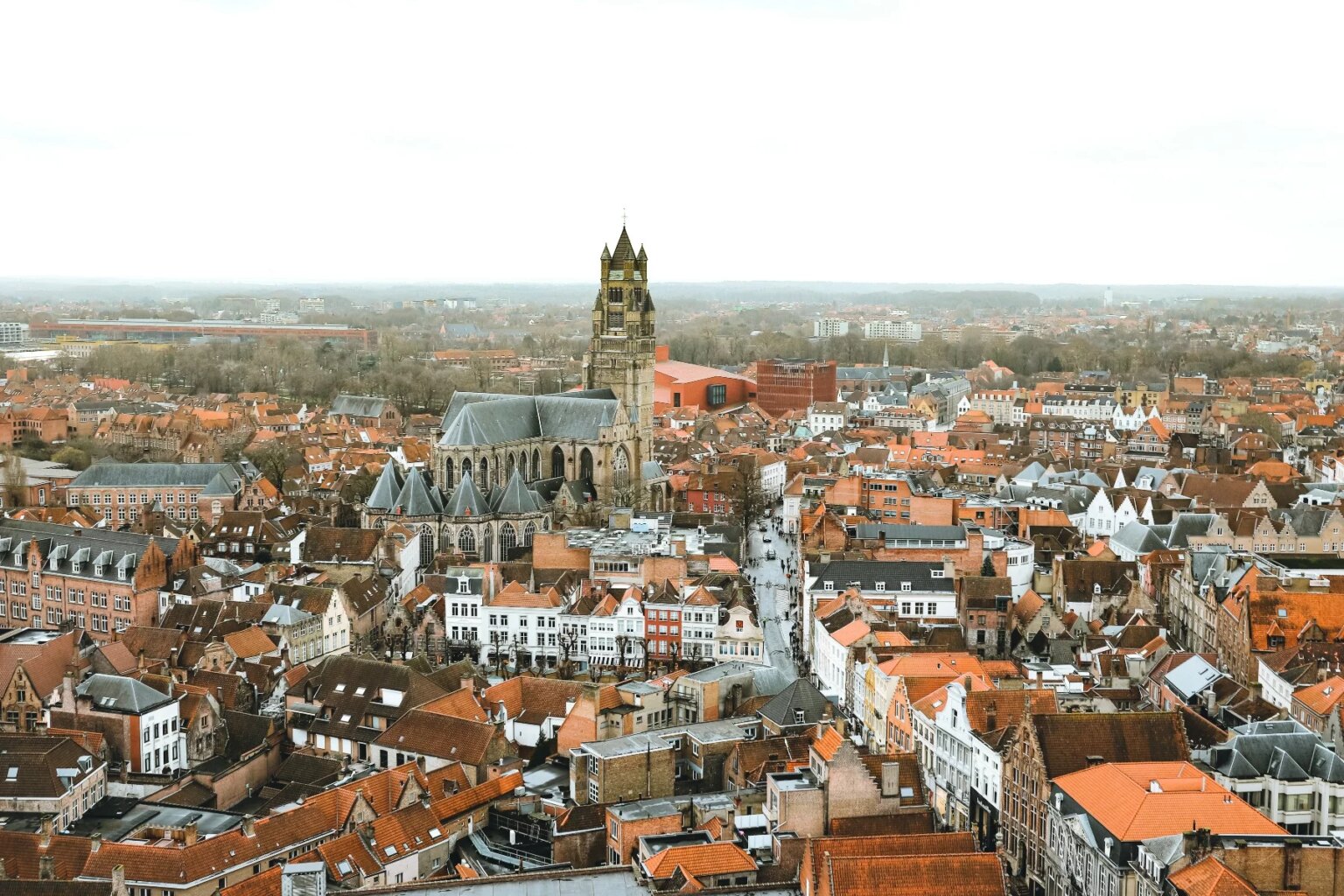
All expats who have been living in Belgium for a specific period can apply for permanent residency. It’s a good option for those residing in the country temporarily and who want to stay, but don’t want Belgian citizenship.
Get a tailored action plan for moving to Belgium
Let us plan your relocation to Belgium for you. Expatica’s relocation tool asks you a series of questions and generates you a tailored, interactive checklist for your move.
You can see everything you need to do ahead of your move and outstanding tasks once you arrive. Create a profile with Expatica to save your checklist and tick off tasks as you complete them.
Try the relocator tool here – it only takes 2 minutes.
Managing your finances during the permanent residency process — from proving stable income to paying application fees — is an important practical consideration as you prepare your application. Tools like Wise can help you hold and manage EUR efficiently with transparent fees and the mid-market exchange rate, simplifying the financial aspects of settling in Belgium.
Here’s what you need to know about the subject:
Spotahome
Looking for somewhere to rent in Belgium? Spotahome takes the hassle out of househunting by doing the hard work for you. Their online platform lets you find, view, and book rental properties all from the comfort of your own home. Take the stress out of househunting in Belgium with Spotahome.

Permanent residency
Everyone can apply for permanent residency after at least five years of legally living in Belgium. There are different types of residence cards depending on your nationality and the purpose of your stay.

Some cards are only available to expats from the European Union (EU) and EFTA. Others are designed for nationals from outside that region (i.e., third countries). EFTA stands for the European Free Trade Association and includes the countries Iceland, Liechtenstein, Norway, and Switzerland.
Belgium has the following permanent residence cards:
| Type | Description |
| EU+ card (formerly called the E+ card) | EU/EFTA nationals who have been living in Belgium legally for five years |
| F card | Family members of EU/EFTA nationals who have been legally living in Belgium for five years |
| B card | Third-country nationals (indefinite residency), have legally stayed in Belgium for five years on a work or family visa |
| K card (formerly called the C card) | Third-country nationals. Unlike the B card, it offers additional social welfare rights and allows entry into the civil registry (instead of the foreign registry). You can usually apply for a K card after you’ve had a B card, as long as you have lived in Belgium for at least five years. |
| L card (formerly called the D card) | Third-country nationals, also valid in other EU member states |
The Immigration Office (IBZ; Dutch: Dienst Vreemdelingenzaken – DVZ, French: Office des Etrangers – ODE) oversees all permanent residence applications in Belgium. The agency is part of the Federal Public Service for Foreign Affairs (Dutch: Federale Overheidsdienst Buitenlandse Zaken, French: Service public fédéral Affaires étrangères).
Permanent residency for UK nationals
Since Brexit, United Kingdom (UK) nationals traveling to and living in Belgium have become non-EU/EFTA nationals. That means they will need a visa for long stays in the country and can apply for a B, C, or D permanent residence card after five years.
As part of the Withdrawl Agreement, UK citizens already living in Belgium before 1 January 2021 could apply for an M residence card with the IBZ. This card would effectively give them the same rights as they had before as EU citizens.
The M card is a temporary residence card, valid for five years. If the UK national had a EU+ card beforehand, the M card functions as a permanent residence card, valid for 10 years.
Belgian citizenship or permanent residence?
Several benefits come with Belgian citizenship or permanent residency. For example, both allow you to work, study, or set up a business.

Other benefits include:
- Buying property and getting a mortgage without any restrictions
- Access the country’s social security benefits
- Multiply entries into Belgium
- Being added to the civil registry (although not available to B-card holders)
However, there are also a few key differences between the two. For one thing, you will typically need a permanent residence card before applying for citizenship.
Becoming a citizen has tougher requirements and the application takes longer and costs more. In some cases, you need to have been a Belgian resident for 10 years before applying.
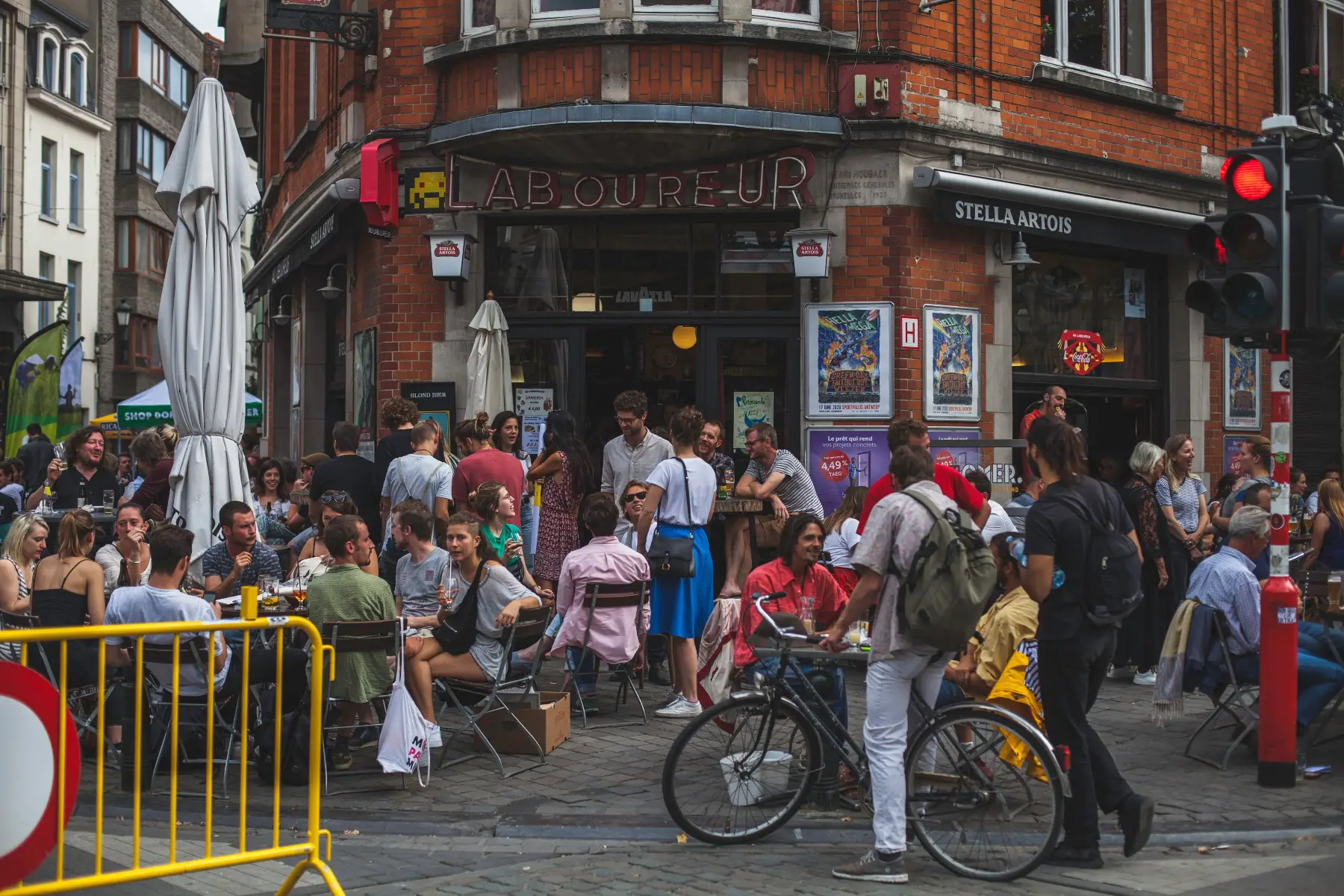
Although becoming a Belgian citizen is more complicated, it also comes with additional rights and privileges. These include:
- Entitlement to a Belgian passport and the right to travel abroad as a Belgian and EU-citizen
- The right to vote in all Belgian elections and stand for any public office position
- Freedom to unlimited travel outside of Belgium
Requirements for Belgian permanent residence
The main prerequisite for permanent residency in Belgium is time: you must have lived in the country for five years. If you have an EU Blue Card, you can include the time you spend in other EU member states.
The five-year period should be uninterrupted. You can only leave the country for up to six months at a time, and no more than 12 months during the entire five-year span.

Other requirements include:
- Proof that you still meet the conditions of any existing visa or permit (e.g., you are currently employed and in Belgium on a work visa)
- You don’t have serious criminal convictions that make you a public safety risk
- You have a valid health insurance policy
- Proof that you have a stable and regular monthly income to support yourself and any dependents (applicable when you are applying for the L residence card)
Proving stable monthly income
Wise for Expats
If you’re managing finances as an expat in Belgium, Wise can help you hold and manage EUR with low, transparent fees using the mid-market exchange rate—making it easier to pay bills, receive international income, demonstrate financial stability, and prepare for your permanent residency application.
Demonstrating stable and regular monthly income is crucial for your permanent residency application. Belgian authorities will want to see bank statements showing consistent deposits and financial activity over several months (typically 3-6 months of recent statements).
If you receive income from abroad or manage multiple currencies, having a clear and organized transaction history through a multi-currency account like Wise can simplify this documentation process. Wise provides transparent EUR statements that Belgian authorities can easily verify, showing your income deposits, regular bill payments, and overall financial stability — all important factors in demonstrating you won’t need to rely on Belgian social welfare.
Because your local municipality (Dutch: gemeente, French: commune) processes the application, there might be additional requirements specific to that region. For example, you might need to provide proof of social integration or knowledge of one of the regional languages, i.e., Dutch, French, or German.
In 2020, the Belgian government introduced new restrictions on permanent residence for those who live in the country on a work visa. Since then, foreign employees can only apply for the B card if they work for a Belgian company. Those working for a foreign business based in Belgium can only continue having a temporary permit.
How to apply for permanent residency
You can apply at your municipal office in Wallonia (Dutch: Wallonië, French: Wallonie), Flanders (Dutch: Vlaanderen, French: Flandre), or Brussels (Dutch: Brussel, French: Bruxelles). Some municipalities allow you to apply online and hand in electronic copies of documents. Others require you to make an appointment face-to-face. The exact process will depend on your local area.
To file an application, you will need to provide documents like:
- Valid ID (e.g., a passport)
- Two recent passport photos
- Proof of Belgian address (e.g., a recent utility bill)
- Your current Belgian residence permit (if you have one)
- Proof of health insurance
- Details of your income

The IBZ has five months to process your application and make a decision. After they approve it, you’ll receive an electronic ID card (eID). If the application was for a child under 12, they will get a Kids-ID.
EU/EFTA nationals
Generally, EU/EFTA residents will qualify automatically for Belgian permanent residence after they’ve lived in the country for five years. That said, you will still need to apply for the EU+ card or F card.
To start, you can fill out a so-called appendix 22 (Dutch: bijlage 22, French: annexe 22), the standard EU form.
Non-EU/EFTA citizens
There is no specific procedure for third-country citizens to apply for a B residence card. You can ask your local municipal office in Wallonia, Flanders, or Brussels what their application procedure is.
If you’re opting to get a K or L card, you need to fill out appendix 16 (Dutch: bijlage 16, French: annexe 16).
Cost of permanent residence cards
The application fee for a permanent residence card varies across municipalities but is typically around €10–25. The cards themselves cost around €25–30.
Managing EUR for application payments

While the application fees for Belgian permanent residency are relatively modest compared to some other European countries, you’ll need to have EUR available for payment when your application is processed. Payment methods vary by municipality and may include bank transfers, debit cards, or cash.
If you’re managing finances from another country or holding multiple currencies as an expat, Wise lets you convert to EUR at the mid-market exchange rate with low, transparent fees, helping you avoid the hidden markups that some banks add to currency conversions. This can be particularly useful if you’re receiving salary in another currency or transferring settlement funds to Belgium.
Losing your card or having it stolen
If your eID or Kids-ID is permanently misplaced or stolen, you must immediately call DOCSTOP at 00800 2123 2123. This free service from the IBZ, available 24/7, allows you to block your card and ensure it will not be used fraudulently. If you cannot reach the above number, dial +32 2 518 2123.

The next step is to report it to the nearest police station. If you have lost your card, you must also file a report at your municipality.
Renewing your permanent residence
Your permanent resident status does not expire but the electronic cards do need to be renewed. Cards are valid for:
| Card | Validity |
| B card | 5 years |
| EU+ card (formerly E+ card) | 10 years |
| F card | 5 years |
| F+ card | 5–10 years, depending on when it was issued |
| K card (formerly C card) | 10 years |
| L Card (formerly D Card) | 10 years |
| M card | 5–10 years, depending on whether it was issued as a temporary or permanent residence card |
When your card is about to expire, you will receive a request to renew it at the municipality. Living in Belgium without a valid residence card can result in a penalty of up to €500.
The processes and costs compare to that of your first card.
Permanent residence for family members
If you want to settle in Belgium as a family, your relatives can apply for a family reunion visa. There are strict requirements you’ll have to meet to before you are granted entry.

The following family members can apply:
- Spouses or registered partners over 21
- Dependent children under 21
- Dependent (adult) children with a disability (there is no age limit)
- Your or your partner’s dependent parents (though this is not possible when you and the parents are third-country nationals)
Once your relatives are in Belgium, they can apply for a residence card. Which one they qualify for depends on your nationality and situation, as well as theirs.
Family members of EU/EFTA citizens
Your relatives can join you when you are an EU/EFTA national who has been living and working in Belgium for an uninterrupted period of five years. If you have been unemployed during this time and the authorities agree this was involuntary, you can still count this as ‘working in Belgium’.

There are a few exceptions to this five-year requirement. Your family members can also join you when:
- You have lived in Belgium continuously for more than two years, and are unable to work due to
- being permanently incapacitated
- an accident at work or occupational disease that entitles you to Belgian benefits
- You have lived in Belgium for more than three years, have worked for at least one year, and are now retiring
- You have lived in Belgium continuously for two years, before your death or your death was the result of an accident at work or an occupational disease
If your relative is from the EU/EFTA region, they can apply for the EU+ residence card. Family members from third countries can get an F+ permanent residence permit.
Relatives of non-EU/EFTA nationals
There are no special rules or exceptions for family members of non-EU/EFTA citizens living in Belgium.
Third-country residents can apply for the B, K, or L card after continuously living in the country for five years.
Losing your permanent residence
Once you have permanent residency in Belgium, losing it is fairly difficult. However, it is possible. Your status can be terminated if you:
- Commit a serious crime that means you present a threat to public policy or national security
- Leave Belgium for more than two consecutive years
- If you have a B residence card, you cannot leave for more than one year
- If you have an L card, you can stay outside of Belgium for up to six years as long as you live within the EU region
- Have committed fraud or used false or misleading information or documents during the application process

Those who lose their permanent residency rights can reapply as soon as they become eligible again (i.e., after five years in Belgium).
Appealing a decision
The IBZ has the power to refuse an application on the grounds of appendix 20 (Dutch: bijlage 20, French: annexe 20) or terminate someone’s permanent residency status on the grounds of appendix 21 (Dutch: bijlage 21, French: annexe 21).
You can file an appeal against a refusal or termination with the Council for Alien Law Litigation (Dutch: Raad voor Vreemdelingenbetwistingen, French: Conseil du Contentieux des Etrangers) within 30 days of the decision. You should make the appeal in Dutch or French. If you need help translating your documentation, you can use a reliable translation agency such as lingoking.
If you are unhappy with the outcome of your appeal, you can take it to the Council of State (Dutch: Raad van State, French: Conseil d’État) within 30 days of receiving the verdict. They will assess your case and return a verdict within six months.
Useful resources
- IBZ – the Belgian government agency that deals with residence permits
- Federal Public Service for Foreign Affairs – the Belgian government department that oversees immigration and residence permits
- Council for Alien Law Litigation – an independent administrative court of law where you can file an appeal if your application was rejected or terminated
- Council of State – the supreme administrative justice court of Belgium
- Belgium.be – federal government portal with information for citizens and residents in Belgium
- Vlaanderen – website for the regional government of Flanders
- Wallonia – website for the regional government of Wallonia
- be.brussels – website for the Brussels-Capital region
- Ostbelgien – website for the German-speaking East Belgium region
- eID – website with information on electronic residence and ID cards in Belgium
- lingoking – translation agency for private customers



Did you find this guide helpful?