
'%20id='ico-down'%20stroke='%23000000'%20stroke-width='1.5'%3e%3cg%20transform='translate(1092.250000,%20254.750000)'%3e%3cpolyline%20id='Path-2-Copy-4'%20transform='translate(5.500000,%202.750000)%20scale(1,%20-1)%20rotate(-180.000000)%20translate(-5.500000,%20-2.750000)%20'%20points='0%200%205.5%205.5%2011%200'%3e%3c/polyline%3e%3c/g%3e%3c/g%3e%3c/g%3e%3c/svg%3e)


Moving
Visas & Immigration
Work visas in Portugal
From standard work visas to job seeker visas, here’s what you need to know about the requirements and process of setting up shop in Portugal.


With its azure blue waters, warm climate, and welcoming community, Portugal presents an incredible draw for working-age expats. However, as with most European Union (EU) member states, you might need a visa or residence permit before moving there for a longer period of time.
Read on to learn more about work visas in Portugal, including the following:
e-residence
Skip the queues and let e-residence take care of your moving admin. Use their online services for your tax numbers, bank account, social security, company creation, apostille, and more in your new country – all without having to fly out for appointments. Cross off your top moving priorities today with e-residence.

An introduction to working in Portugal
Portugal remains one of the countries with the strongest economic growth in the EU, according to Eurostat (2023). Among its biggest industries are wholesale and retail trade, transportation, and tourism.
The country presents an attractive workplace for expats and internationals who want to bask in its sunny climate, vibrant culture, warm community, and high quality of life.

Portugal offers one of the lowest living costs across Western Europe, with a reasonable work-life balance, good labor laws, and a strong social security net for workers. The average household net-adjusted disposable income is US$24,877 a year, and the 2022 unemployment rate was at a historical low of 6.01%.
Similar to other EU member states, Portugal has a two-tier immigration system. That means citizens from the EU and European Free Trade Association (EFTA – Iceland, Liechtenstein, Norway, and Switzerland) can move to and work there without restriction. Foreign nationals from outside those regions usually need a work visa and residence permit.
Portugal has a sizeable immigrant population, with just over 781,000 residents (in Portuguese) having an immigrant background (2022). This accounts for almost 12% of all residents. Of those, 76.9% are employed, compared to 69% of the overall population.
The Portuguese Agency for Integration, Migrations, and Asylum (Agência para a Integração, Migrações e Asilo – AIMA) handles all visas and permits in Portugal, including work visas.

Who needs a work visa in Portugal?
EU/EFTA citizens don’t need a visa or permit to work in Portugal. They can relocate to the country under the EU freedom of movement rules; however, they will need to get a Registration Certificate (Certificado de Registo para cidadão da UE/EEE/Suíça) from their local municipality if they stay for more than three months.

Non-EU/EFTA nationals (including people from the UK) do require a visa and residence permit (Autorização de Residência) if they want to move to Portugal for long-term work. This almost always involves securing a job offer first.
Portugal makes some exceptions for short-term stays of less than 90 days. Citizens from around 60 countries – including Brazil, Ukraine, the UK, and the US – can enter the country without a visa and stay up to three months. However, if they plan to extend their stay beyond that, they must apply for a work visa and residence permit.
General requirements for Portuguese visas
While each work visa has different requirements, some criteria remain the same. You must have:
- Sufficient financial resources to support yourself in Portugal, along with up-to-date tax and social security payments
- No serious criminal convictions on your record that have led to a prison sentence(s) exceeding (an accumulative of) one year
- No criminal convictions on your record for terrorism, violent crimes, or organized crime
Types of work visas in Portugal
Portuguese work visas can be broken down into the following broad types:
- Short-term work visas – usually valid for up to three months and usually non-renewable
- Temporary work visas – valid for up to two years and often renewable
- Job seeker visas – for people coming to Portugal to find work; valid for 120 days and renewable for another 60 days
Short-term work visas in Portugal
Short-term work visas are valid for 90 days, or a total of 90 days within a 180-day period. The two available are:
- Schengen category C short-stay visa – covering most short-term assignments lasting less than three months
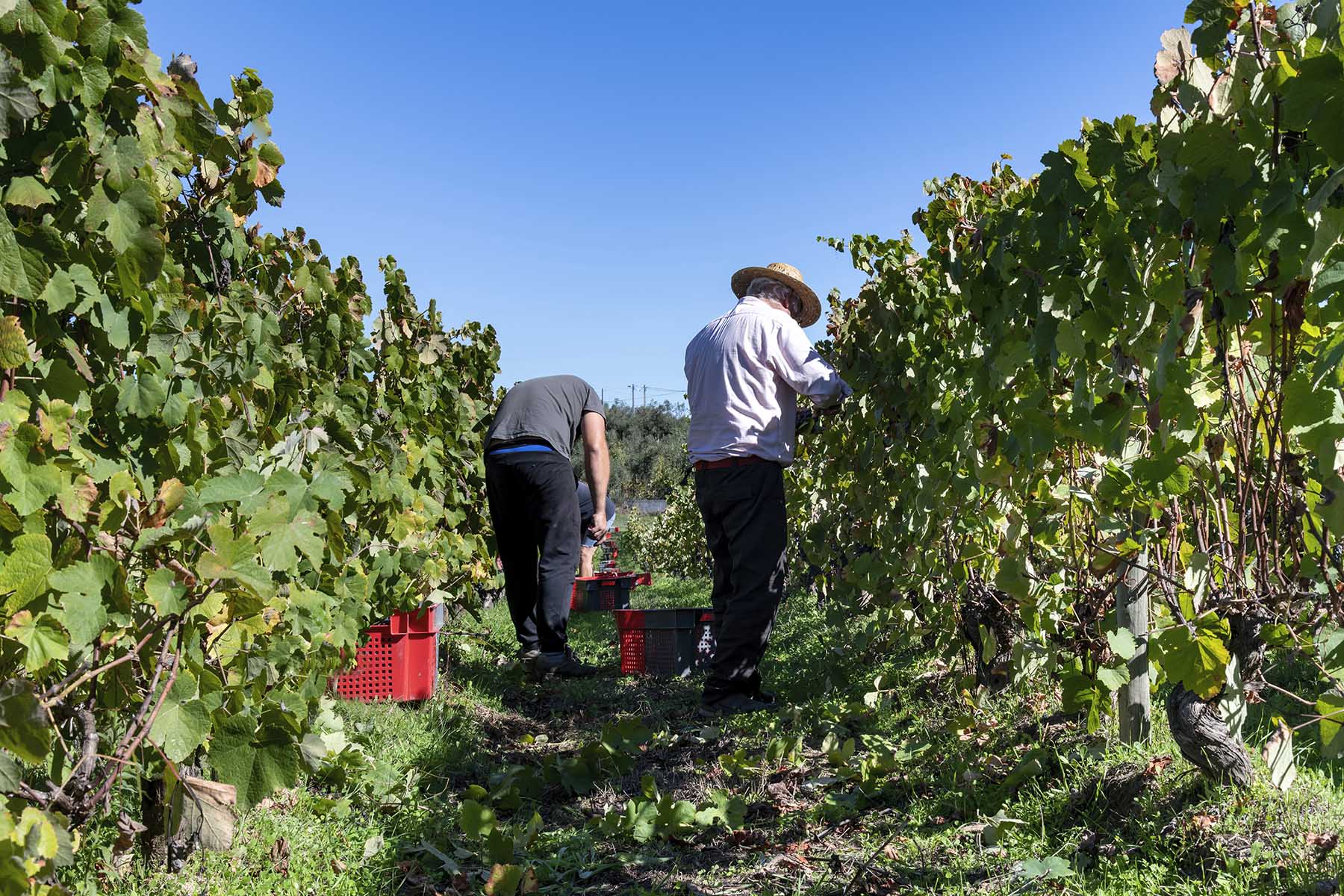
- Seasonal work visa – for seasonal work in approved sectors, such as agriculture, hospitality, and retail
The Schengen C short-stay visas are non-renewable. However, short-stay seasonal work visas can be extended for a maximum of nine months.
Requirements for short-term work visas in Portugal
You usually need a job offer or contract in place before you can apply for a work visa in Portugal. For the seasonal visa, your employment must be in one of the following sectors:
- Agriculture, livestock, hunting, forestry and fishing
- Hospitality, restaurants, or similar industries
- Food, liquor, and tobacco industries
- Gross and retail commerce
- Construction
- Land transport
Other requirements include:
- Valid travel return ticket
- Health insurance covering your stay
- Sufficient finances to cover your stay
How to apply for a short-term work visa
You can apply for a short-term work visa via the Portuguese embassy or consulate in your home country or a visa application center if there isn’t one. Alternatively, you can submit an online application through the government’s e-visa service.
You’ll need to provide the following documentation:
- Completed and signed application form
- One passport photo
- Passport or valid travel ID that expires at least three months beyond your departure date
- If you’re not living in your home country, your new country’s residence permit
- Details of your return flight leaving Portugal
- Proof of health insurance
- Confirmation of job offer (e.g., your employment contract), including the work location, your salary, working hours, job description, and the like
- Proof of sufficient finances (i.e., your three last bank statements)
- Details of your accommodation or a completed statement of responsibility
- If you are staying with a family member, you must provide evidence of your relationship. Details of their housing conditions may be required.
- If the person signing the statement of responsibility is not a Portuguese national, proof of being legally in Portugal is required
- Additional documents may be required
If necessary, you may need to attend an in-person interview at the Portuguese consulate. Decisions usually take no more than 30 days, although they may be up to 60 days in exceptional cases.

How much does a short-stay visa cost in Portugal?
The standard cost of a short-stay work visa is €80, though external service providers may charge an additional service fee. The visa fee is payable at the time of the application and is non-refundable.
Depending on your traveling purpose, you may also apply for free. Exceptions apply for:
- Researchers traveling for scientific research purposes
- Students and teachers/professors traveling for training
- Young representatives (under 25) of non-profit organizations attending a seminar or conference organized by a non-profit organization
Temporary Portugal work visas
Temporary work visas, also known as national visas, are valid for three months to two years, depending on your visa. They include:
| Work visa | Who is eligible? | Validity |
| Cultural activity | Foreign nationals collaborating in a cultural activity in Portugal | Two years, renewable for successive periods of three years |
| Diplomatic and consular work | Diplomats, consulate employees, and their families | Up to one year, possibly renewable |
| Highly qualified activity | Scientific researchers and those working in highly qualified fields | Two years, renewable for successive periods of three years |
| Highly qualified activity – teaching | Teachers of higher education | Two years, renewable for successive periods of three years |
| Highly qualified activity – Tech visa | Employees of certified companies in the technology and innovation sector | Two years, renewable for successive periods of three years |
| Independent/Digital Nomads | Freelancers, remote workers, and digital nomads | Two years, renewable for up to five years |
| Temporary seasonal work | Seasonal workers in preapproved sectors, such as agriculture, hospitality, and land transport | Nine months of the year, possibly renewable |
| Work transfers (TDE – ICT) | Intra-corporate transferees (ICT), meaning employees and service providers transferring to a Portuguese branch of an international company | Up to one year, renewable for up to three years |
| Work transfers (Mobile – ICT) | Expat ICTs who already have an ICT permit from another EU member state | Up to one year, renewable for up to three years |
Requirements for temporary visas in Portugal
Most temporary work visas require you to have a job offer or work contract in place. You must also take out health insurance, have sufficient financial means to cover your stay, and register with the Portuguese tax and social security authorities.

Aside from that, each temporary work visa has its own additional set of requirements:
Cultural activity work visa
The company in Portugal must supply a completed statement of responsibility and have it certified by the Agency for Competitiveness and Innovation (Agência para a Competitividade e Inovação – IAPMEI).
Diplomatic and consular work visa
You must have diplomatic accreditation in Portugal for a period of no less than three years.
Highly qualified activity
Applicants must provide a copy of their qualifications, either a BA degree (or higher) or a document proving at least five years of work experience.
Depending on the visa and job function, you must be paid a minimum salary:
- Salaried employees must earn at least 1.5 times the national average gross annual salary or three times the index value of social support (Indexante dos Apoios Sociais – IAS). In 2024, that corresponds to around €1,528–2,157 per month.
- Management, executive directors, senior members, and members of legislative bodies must make at least 1.2 times the national average gross salary (i.e., €1,725.60 per month) or twice the IAS value (i.e., €1,018.52 per month). In 2024, that translates to around €1,019–1,7526 per month.
- Tech visa applicants must make at least 2.5 times the IAS value (i.e., €1,273.15 per month)
If you’re applying for the tech visa, you must also be proficient in Portuguese, English, French, or Spanish, and master a language level suitable to the job function.
Independent/Digital Nomads
Freelancers, remote workers, and digital nomads must have a monthly salary of at least €3,280 to qualify.
Temporary seasonal work
For the seasonal work visa, your job must be in one of the following sectors:
- Agriculture, livestock, hunting, forestry and fishing
- Hospitality, restaurants, or similar industries
- Food, liquor, and tobacco industries
- Gross and retail commerce
- Construction
- Land transport

Work transfers
To qualify for the work transfer visa, you must be employed as a manager, specialist, or trainee. Other requirements include:
- You worked in your company or group for at least three months
- You have the qualifications and professional experience to work as a manager, specialist, or trainee
How to apply for a temporary stay visa?
If you need a visa to enter Portugal, you must apply through the Portuguese embassy or consulate in your home country or a visa application center if there isn’t one. Alternatively, you can submit an online application through the government’s e-visa service.
Once in Portugal, you’ll need to schedule an in-person appointment with any AIMA Store (Lojas AIMA) to apply for your temporary residence permit (Autorização de Residência Temporária). You must do so within the first three months of your stay.
General documentation requirements are:
- Completed and signed application form
- Two recent passport photos
- Passport or valid travel ID that expires at least three months beyond your estimated departure date
- If you’re not living in your home country, your new country’s residence permit
- Proof of health insurance
- Criminal record certificate
- Proof of sufficient finances (e.g., bank statements)
- Confirmation of your job offer (e.g., your work contract)
- Details of your accommodation or a completed statement of responsibility
- If you are staying with a family member, you must provide evidence of your relationship. Details of their housing conditions may be required.
- If the person signing the statement of responsibility is not a Portuguese national, proof of being legally in Portugal is required
- Other necessary documents
Temporary visa applications are usually processed within 30 days of their submission. However, they may take up to four months. As such, it’s recommended you apply well in advance.

How much does a temporary visa cost in Portugal?
Temporary work visa applications typically cost €90, though highly qualified researchers may apply for free. External service providers may charge an additional service fee.
Once in Portugal, you must pay an extra fee for the residence permit. Applying for the residence permit costs around €122, plus an additional €104.82 when it is approved.
Renewing your temporary residence permit requires you to pay another €104.82.
You can find a complete list of residence permit fees (in Portuguese) on the AIMA website.
Job seeker visas in Portugal
The DP job seeker visa allows you to come to Portugal to find work. It is valid for 120 days and renewable for another 60 days. If you haven’t found a job after those 120/180 days, you must leave the country and try again. You can reapply for the job seeker visa after one year after the first one expires.
Requirements for job seeker visas
Job seekers must have sufficient financial resources of at least three times the minimum monthly wage. In 2024, that calculates to €2460.
After entering Portugal, you must also register with the Portuguese Institute for Employment and Vocational Training (Instituto do Emprego e Formação Profissional – IEFP).
How to apply for a job seeker visa in Portugal
You can apply for a job seeker visa via the Portuguese embassy or consulate in your home country or a visa application center if there isn’t one. Alternatively, you can submit an online application through the government’s e-visa service.

You’ll need to provide the following documents:
- Completed and signed application form
- Two passport photos
- Passport or valid travel ID that expires at least three months beyond your expected departure date
- If you’re not living in your home country, your new country’s residence permit
- Details of your return flight leaving Portugal
- Proof of health insurance
- Criminal record certificate
- Proof of sufficient finances
- This may be waived if you are staying with a Portuguese resident who claims legal responsibility for you during your stay
- Details of your accommodation
- Completed declaration form that states your intention to register with the IEFP
If necessary, you may need to attend an in-person interview at the Portuguese consulate. Visa decisions usually take no more than 30 days to process.
Work visas for students in Portugal
Due to the freedom of movement rules, EU/EFTA students can work in Portugal without any fuss. Non-EU/EFTA students, on the other hand, have some restrictions.
If you are following a course that lasts less than three months, you are not allowed to get a job in Portugal. If the duration of your study program is more than three months, you may work a maximum of 20 hours per week during term time and full-time hours during vacation periods.
While you don’t need a separate work visa on top of your student visa, you should inform the AIMA before starting any job contract.
If you’re coming to Portugal for an unpaid internship, you must apply for a temporary-stay unpaid internship visa. These are valid for up to one year.
Freelancers, digital nomads, and entrepreneurs
Freelancers, digital nomads, and self-employed entrepreneurs can apply for a temporary Independent/Digital Nomad visa to work in Portugal long-term.

If you want to set up a business and have some cash lying around, you may also consider joining the Golden Visa program, also known as a D9 visa. This scheme requires you to invest at least €250,000 in a Portuguese business venture. However, the benefits of the Golden Visa include more lax immigration rules, fast-tracked citizenship, tax advantages, and more.

Volunteering and work experience in Portugal
You can apply for a Schengen Category C short-stay visa for short-term volunteering jobs or internships (lasting less than three months).
For long-term volunteer work or work experiences in Portugal, you should apply for a temporary visa. These are valid for up to one year and allow you to take up:
- A professional unpaid internship with a recognized vocational training company
- Volunteering with a credited voluntary organization or program in Portugal
- Professional training in a recognized course
Residents from nine countries can also apply for a Youth Mobility visa, which allows them to work and travel through Portugal. This permit is valid for one year and cannot be renewed.
To qualify for the Youth Mobility visa, you must be of a certain age:
- Argentina – aged between 18 and 30
- Australia – aged between 18 and 31
- Canada – aged between 18 and 35
- Chile – aged between 18 and 30
- Japan – aged between 18 and 30
- New Zealand – aged between 18 and 30
- Peru – aged aged between 18 and 31
- South Korea – aged between 18 and 34
- The US – no age limit
Citizens from Peru must also have completed a graduate degree or two years of a graduate program.

Application procedures and costs are largely the same as for standard work visas. In other words, you can submit an application with the Portuguese embassy or consulate in your home country, a visa application center, or the government’s e-visa service.
Work visas in Portugal for family members
When you hold a work visa, you can invite the following non-EU/EFTA relatives to come live with you in Portugal on a D6 family reunion visa:
- Spouse or registered partner
- Dependent (step)children aged under 18
- Dependent (grand)parents and grandchildren
- Dependent siblings aged under 18
Needless to say, if your family member is an EU/EFTA national, they can skip this process and just join you in Portugal.
Once there, your relative is allowed to work and find employment, but they need authorization from the AIMA first.

Permanent residence and Portuguese citizenship
After five years of legal residency in Portugal, you can apply for permanent residence (residência permanente) or Portuguese citizenship (cidadania). Both options offer expats more security and are a great way to firm up your rights. For example, the authorities cannot throw you out of the country if you become unemployed and you get access to the social security net.

While Portuguese citizenship may (for some!) have more advantages, it’s also more difficult to obtain and involves slightly more rigid requirements. You can read more about the similarities and differences between the two in our article on Permanent residence in Portugal.

How to appeal a work visa decision?
If your visa application was rejected, you can appeal the decision with the AIMA or the Portuguese embassy or consulate where you submitted it. You should do so within 15 days of receiving the decision.
If you are still unhappy with the outcome, you can take the matter to the Portuguese Ministry of Foreign Affairs (Ministério dos Negócios Estrangeiros – MNE) or the administrative court. You must do so within three months of the rejection.
It’s worth noting that these options are not mutually exclusive. For example, you can file a complaint with the MNE and the administrative court at the same time.
Useful resources
- Agency for Integration, Migrations, and Asylum (AIMA) – official government agency responsible for all visa and immigration in Portugal
- Ministry of Foreign Affairs – official government website with information on visas in Portugal


Did you find this guide helpful?