
'%20id='ico-down'%20stroke='%23000000'%20stroke-width='1.5'%3e%3cg%20transform='translate(1092.250000,%20254.750000)'%3e%3cpolyline%20id='Path-2-Copy-4'%20transform='translate(5.500000,%202.750000)%20scale(1,%20-1)%20rotate(-180.000000)%20translate(-5.500000,%20-2.750000)%20'%20points='0%200%205.5%205.5%2011%200'%3e%3c/polyline%3e%3c/g%3e%3c/g%3e%3c/g%3e%3c/svg%3e)


Living
Love, Marriage & Partnership
Dutch weddings: how to get married in the Netherlands
Tying the knot in the Netherlands? Discover how to plan a Dutch wedding and learn all about the requirements, processes, and paperwork.


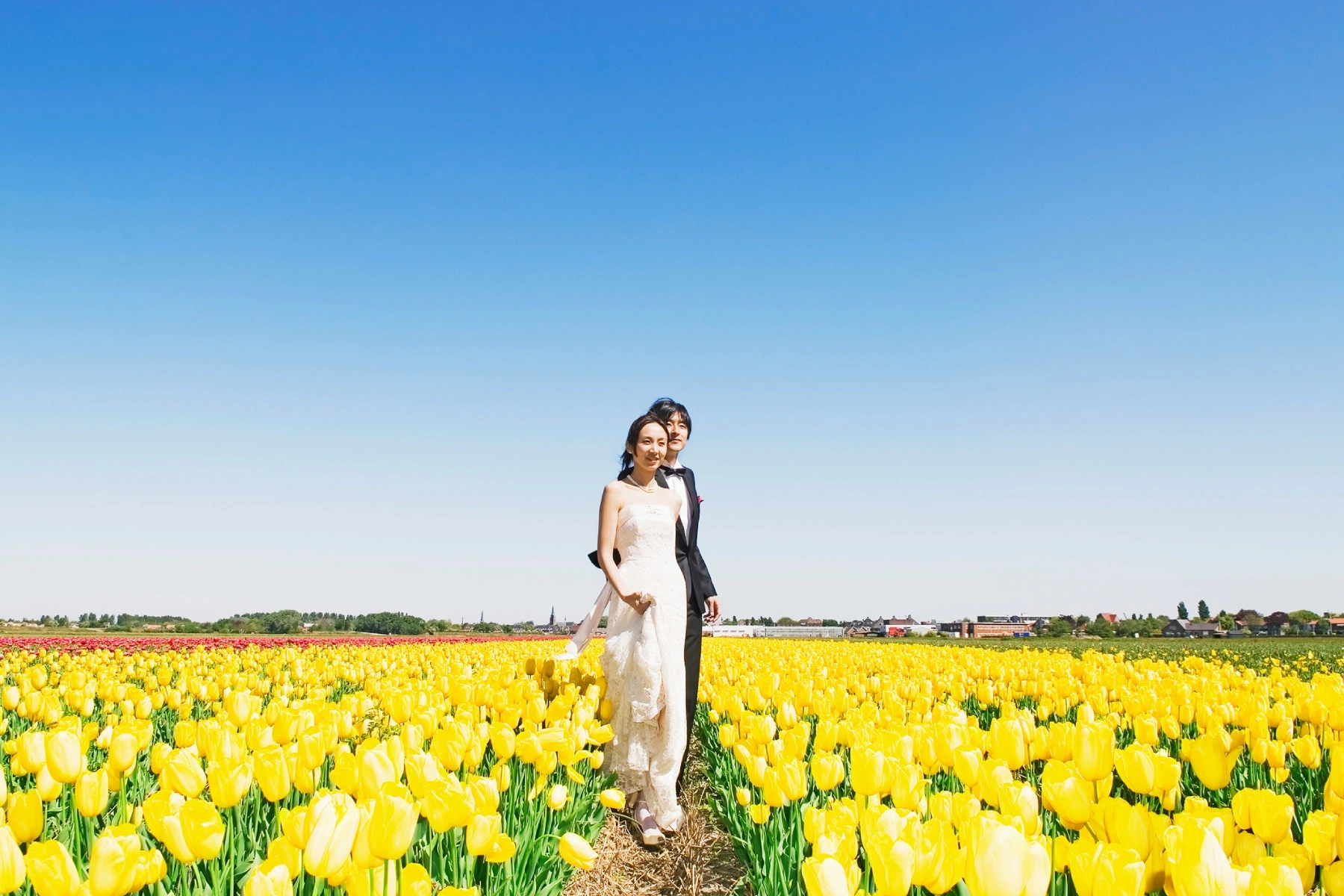
Whether you’re a citizen or a foreigner, getting married in the Netherlands is a fairly straightforward process. However, you will need to sort out the red tape before you can say ‘I do‘ among the tulips. Once you have completed the necessities, though, you are free to enjoy your special day at one of the country’s beautiful wedding locations.
To help you navigate the process of planning a smooth Dutch wedding, this article includes the following information:
Cigna Global
Enjoy peace of mind while living in the Netherlands with Cigna Global’s long-term international health insurance plans (12+ months). Get tailored coverage, direct billing with many providers, complex case management, and global care on demand, with access to a network of 1.5+ million doctors, specialists, and therapists.

An overview of marriage in the Netherlands
The Netherlands is a fairly liberal country when it comes to personal relationships. It offers three different ways of formalizing partnerships: marriage (huwelijk), civil partnership (geregistreerd partnerschap), and cohabitation agreement (samenlevingscontract). Notably, these are all available to both heterosexual and same-sex couples.
Although Dutch weddings are still commonplace, rates have declined in recent years. The marriage rate in the Netherlands was 3.2 per 1,000 people in 2021, which is below the European Union (EU) average of 3.9. It is also significantly lower than the marriage rate in 1964, which stood at 8.5.
Meanwhile, the divorce rate in the country increased from 0.5 per 1,000 people in 1964 to 1.5 in 2021, which is slightly below the EU average of 1.7.
It is important to note that only civil ceremonies are legally binding in the Netherlands. Couples often have a religious or secular wedding after their civil ceremony at a registry office.
If you choose to enter into a marriage or civil partnership in the Netherlands, your spouse or registered partner has certain automatic rights regarding property, inheritance, pensions, and children under the limited community of property regime.
However, this only applies to assets acquired during the marriage or jointly purchased before the wedding. You can change this by drawing up a marriage contract or pre-nuptial agreement.
Attitudes towards marriage in the Netherlands
Social attitudes are generally more liberal in the Netherlands than in most other European countries. This also applies to marriage. Although Dutch weddings are still the norm, more and more couples are choosing to enter into a civil partnership or simply live together without formalizing the relationship. In fact, one in four registered unions in the Netherlands were civil partnerships in 2022.

Things are equally liberal when it comes to gender roles within a marriage. Indeed, data published by the Pew Research Center in 2019 reveals that 78% of Dutch people prefer an egalitarian marriage where both partners work and share childcare responsibilities.
The Netherlands is famously one of the more progressive countries when it comes to same-sex marriage too, being the first to legalize it in 2001.
What are the different types of Dutch weddings?
A Dutch marriage is only legal if there is a civil ceremony conducted according to certain procedures. There can also be a religious ceremony if the couple wishes, however, this has to take place after the civil ceremony.
Civil ceremony
Dutch civil ceremonies usually take place at the local city or town hall, typically in front of a small number of guests. You can choose your own location for the ceremony for an additional fee, but this must be approved in advance.
The ceremony is carried out in Dutch by an official registrar (ambtenaar). There must be between two and four witnesses who need to bring their own ID. The registrar will give a short speech that may include a few personal details such as how the couple met. Following the ceremony, there is usually a reception and sometimes an evening party which more guests attend.
There are three different types of civil ceremony in the Netherlands:
- Standard ceremony: The couple can choose the venue as well as the registrar and they also have more control over how the ceremony runs. This usually lasts around 45 minutes.
- Budget ceremony: This is held in the local city/town hall and only includes the official wedding vows. There are no speeches or music, and there are limited guests. Some places allow photographers but requests must be in advance. The ceremony lasts around 10 minutes.
- Free ceremony: This is similar to a budget ceremony but there are tighter restrictions regarding the number of guests and photographers who can attend
Religious ceremony
You can have a bigger ceremony in a religious building or one that incorporates religious elements and traditions, as long as you have the civil ceremony first.
Notably, if you pay for a standard civil ceremony, it is possible to have it at a venue such as a church or a mosque and then follow the ceremony with additional rituals.
The Netherlands is a multicultural country, but according to 2020 statistics, more than half the population (55.4%) are not religious. However, 19.4% of Dutch people are Roman Catholic, 14.4% are Protestant, and 5.2% are Muslim. Meanwhile, the remaining 5.1% belong to other religious groups.
Are gay marriage and same-sex partnerships legal in the Netherlands?
The Netherlands was the first country in the world to legalize same-sex marriage in 2001. Since then, more than 20,000 LGBT+ couples have tied the knot in the country.
Notably, marriage rights in the Netherlands are equal, with both heterosexual and same-sex couples being able to marry or enter into a registered partnership.
Dutch attitudes towards same-sex marriage and relationships are very liberal. In fact, the 2023 IPSOS LGBT+ Pride Survey shows that 80% of people in the Netherlands support gay marriage, which is the highest of the 30 nations surveyed.

In general, the situation for LGBT+ people in the Netherlands is pretty positive, although there is room for improvement. The country ranks 5th out of 197 countries on the LGBT Equality Index and 14th out of 49 countries on the 2022 ILGA-Europe Rainbow Index, with a score of 56%.
Same-sex couples can have a religious ceremony for their wedding, however, religious buildings and institutions can choose whether or not they allow such ceremonies to take place.
Civil partnerships in the Netherlands
Civil partnerships are an alternative for both heterosexual and same-sex couples in the Netherlands. The processes and rights are largely the same as they are for marriage. The only real differences are:
- You don’t need to read out vows when you enter into a civil partnership
- It is possible to dissolve registered partnerships without going through the courts as long as there are no children aged under 18 involved
- Civil partnerships registered in the Netherlands might not necessarily be recognized if you move to another country that doesn’t offer this as a form of union
You can also turn a civil partnership into a marriage in the Netherlands. However, you cannot do the reverse and convert a marriage into a civil partnership.
If you want to enter into a civil partnership in the Netherlands, you will need to contact your local municipal authority at least two weeks prior to the marriage date.
Cohabitation agreements
If you don’t want to get married or enter a civil partnership, you can formalize your relationship by signing a cohabitation agreement (samenlevingscontract).

In this case, your rights regarding property and children depend on the contents of the agreement you have drawn up. If you choose this option, you will need to hire a Dutch notary to authorize the agreement.
Notably, having a cohabitation agreement in the Netherlands can make sense if you want to simplify or combine your financial and tax responsibilities without going through the formalities of a marriage or civil union.
What are the legal requirements to get married?
Requirements for Dutch weddings
To legally get married in the Netherlands and have a Dutch wedding, you must meet the following conditions:
- You must be aged at least 18 (or 16 in the case of pregnant females as long as they can provide parental permission)
- At least one partner must be a Dutch citizen or resident registered with the local municipality where the marriage takes place
- Partners must not be directly related, in other words, you cannot marry siblings or direct descendants/ascendants
- Neither partner can already be in a marriage or civil partnership
There are additional requirements if one partner is a foreign national living outside the Netherlands. However, these vary across the different regions, so it is important to check with your municipality.
Typically, you will need to provide a personal declaration stating the reasons for the marriage and/or evidence that you are not already married. If your spouse intends to live with you in the Netherlands, they may also need a family visa.
All Dutch marriages enter into the Municipal Personal Records Database (Basisregistratie Personen – BRP).
Marital property rights in the Netherlands
Since 2018, the statutory limited community of property system automatically applies if you get married or form a civil partnership in the Netherlands.
This means that shared property includes all assets and debts acquired during the marriage as well as those shared before the wedding date. Anything belonging solely to one partner before the wedding date is not included in community property.
Prior to 2018, the general community of property regime applied, whereby all property is automatically considered joint property.
If you want, you can choose another property regime by drawing up a pre-nuptial or partnership agreement. This means that assets gained during the marriage can be kept separate, or you can even specify that assets acquired separately prior to the marriage are now jointly owned.
Necessary paperwork and documentation for Dutch weddings
You will need to provide certain documentation when you apply for a marriage license from your municipal office. However, the exact requirements vary across the different municipalities and also depend on the residence status of the two people getting married. Therefore, it is best to check with your local authority well in advance to give yourself plenty of time to gather all the information.
You can generally expect to provide:
- Valid identification; for example, your passport
- Birth certificate
- Proof of Dutch residency status
- Proof of address; for example, a utility bill or rental agreement
- Divorce or death certificate if you were previously married
- Certificate of marital status or certificate of no impediment to marriage, if you are from another country
If you are a Dutch citizen, permanent resident, or long-stay resident with a Dutch identity number, your personal details should be on the BRP. This minimizes the amount of paperwork you have to provide.
However, it is important to bear in mind that any documentation in a foreign language will need to be translated into Dutch. This is where hiring the services of a translation company such as lingoking can help. Notably, foreign documents may also require authorization with an apostille stamp.
How to plan a Dutch wedding
Similar to any country, the amount of time and planning that goes into a Dutch wedding depends on what type of occasion you want to have.
Some people want a small and simple affair while others desire a grand and expensive occasion at a venue that may have to be booked well in advance. However, even for straightforward weddings, you should give yourself at least six months to sort everything out. And if you want a fairytale bash fit for royalty, it is better to give yourself around one or two years to organize it.
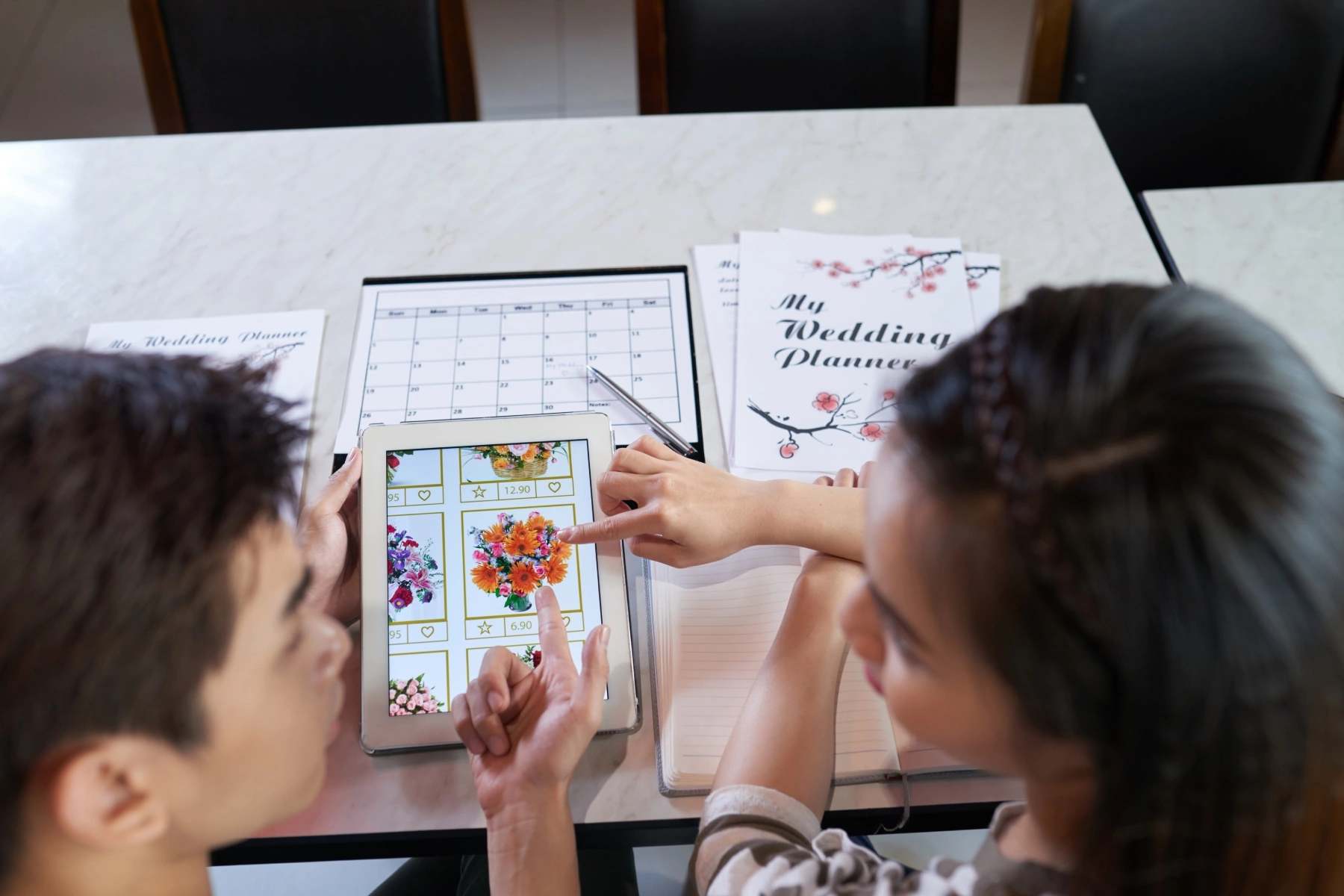
Of course, you don’t have to do everything yourself and may decide to employ a professional wedding planner to organize everything and take the stress out of your big day. Fortunately, there are many wedding planners in the country who can help with everything from scheduling and structuring events to sourcing supplies and more.
Here is a rough outline of the steps you need to take when planning a Dutch wedding.
Initial considerations
The following factors will determine how much overall planning you need to do for your Dutch wedding. These should include:
- The type of wedding: Do you just want a simple civil ceremony or a follow-up religious ceremony? What about a wedding dinner or evening reception?
- Possible venues: Where do you want to host the ceremony and any following events? Do you want everything at the same venue or spread them across different sites?
- The date: You will need to set this as early as possible to start booking things and informing people
- The budget: How much do you want to spend on your big day?
- Planning duties: Will you do it yourself, get help from friends/family, or outsource to a professional planner?
Early planning steps
Once you have set the wedding date, you can start organizing the following things in the first couple of months:
- Book the venues: It is advisable to do this as soon as possible, especially if you plan to get married in the peak summer season as venues get booked up pretty quickly
- Draw up a guest list and send invites: You don’t necessarily have to send out the written invitations just yet, but make sure you let anyone you really want to be there know the date as soon as you can
- Sort out your best man, bridesmaids, etc: Again, it is crucial that you get this done early to avoid potential date clashes
- Book time off work: This is something that often gets overlooked unless you are getting married at the weekend when you don’t work. However, you certainly don’t want to miss your own wedding because you’re putting in a shift at the office!
Essential administration
A lot of wedding planning involves dealing with fun stuff like deciding on outfits or booking music artists. However, there is also some essential admin that you can’t afford to overlook.
Notification of your intention to marry
The main thing is booking your civil ceremony and giving your municipality advance notification (ondertrouw) of your intention to marry.
You need to do this at least two weeks before the wedding date. However, in some cities, such as Amsterdam, the deadline can be as much as six weeks in advance. Therefore, it is a good idea to do this long before the deadline, especially if you are having a budget or free ceremony where you are relying on the availability of the registry office and registrar.
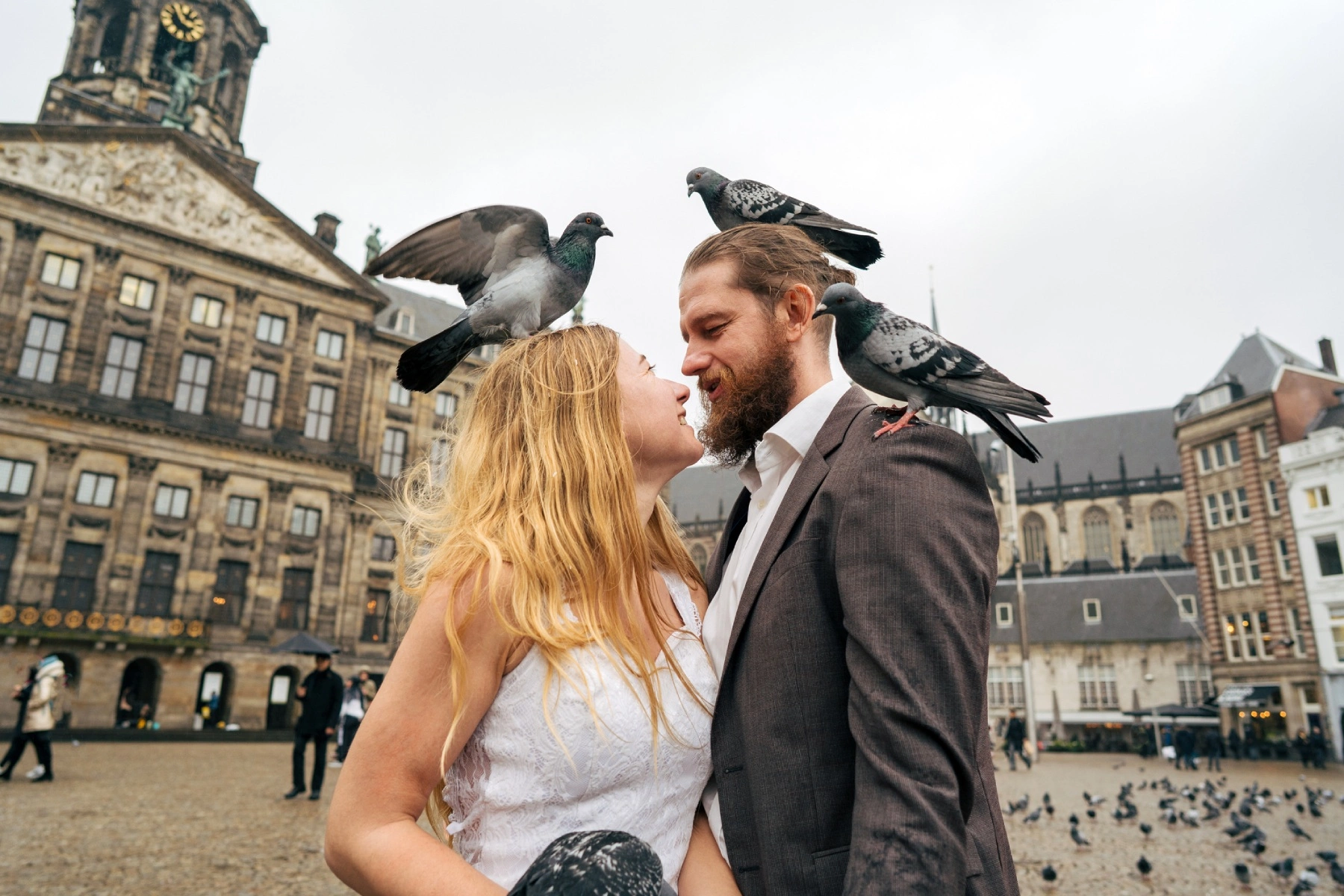
Another good reason for giving ample notice is that it gives you plenty of time to sort out your paperwork and get translations done if needed. Again, you might want to consider hiring the services of a translation company such as lingoking to help with this.
You can notify the authorities as much as one year in advance. If both partners are Dutch residents listed in the BRP, you can give this notice online. Otherwise, you will need to make an appointment at your municipal office and will usually have a short meeting with the registrar.
Arranging witnesses
Another key thing to arrange is your witnesses. You can have between two and four of these and they must be aged 18 and above. The registrar will need the names of the witnesses, as well as copies of their identification, before the big day.
Finally, you will need to decide on the marital property regime. If you are using the default limited community property regime, you don’t need to do anything. However, you will need to draw up a notarized marital contract (huwelijkse voorwaarden) or a pre-nuptial agreement if you want something different.
Months leading up to the big day
Here are some tasks that you should ideally tick off your list somewhere between 12 months and one month before the wedding day, depending on how much overall planning you are doing and the time you have given yourself:
- Book the catering
- Arrange the music, including ceremony music (if you are having any) and reception music. This can range from choosing your own selection of songs to play from a laptop to booking a DJ or full band.
- Choose the wedding outfits for bride, groom, best man, bridesmaids, etc
- Sort out the flower arrangements which usually means booking a florist to take care of everything
- Organize the transport. This is chiefly for the bride and groom on the day but may also extend to transporting guests, especially if you are moving between two venues.
- Draw up a wedding gift list
- Book the wedding photographer
- Choose and buy the wedding rings
- Sort out someone to do the hair and make-up for the bride on the day
- Write your wedding vows
- Make seating arrangements if you are having a reception dinner
- Draw up a timetable for the day so everyone knows what is happening and when
- Book your honeymoon if you are having one
Of course, some of the above may not apply if you are having a smaller wedding, in which case you can just pick those that do and make a plan for getting them done by a certain date.
The final week
By this point, most of the heavy lifting will have been done. The final week is really when you should be making final checks to see that everything is in order and on schedule:
- Confirm all of the important bookings, for example, the photographer and DJ/performers
- Make sure that everything is being delivered or transported to where it is supposed to be in time for the wedding day
- Collect the rings and wedding attire
- Meet with the registrar to discuss the running order for the ceremony
- Have a dress rehearsal a day or two before the wedding if you feel it is necessary
Your Dutch wedding day
Hopefully, everything has gone smoothly and all that is left is for the happy couple to enjoy their big day. Of course, every Dutch wedding is different but the general order of things is typically:
- The registrar will make a short speech which typically includes the legal aspects of marriage in the Netherlands and any personal information or anecdotes provided by the bride or groom
- Exchange of marriage vows and wedding rings
- Pronouncement of marriage by the registrar
- Presentation of the Dutch marriage certificate. The registrar will enter the marriage details into the matrimonial property register (Huwelijksgoederenregister) which you can view online
- Official wedding photos, followed by a wedding reception if included
How much does it cost to get married?
Weddings are one of those occasions where costs can fluctuate dramatically depending on what kind of event you plan and for how many people.
The Destination Wedding website estimates that costs can be anything from €350 to €25,000. According to a 2019 survey, the average cost for a Dutch wedding is €14,858.
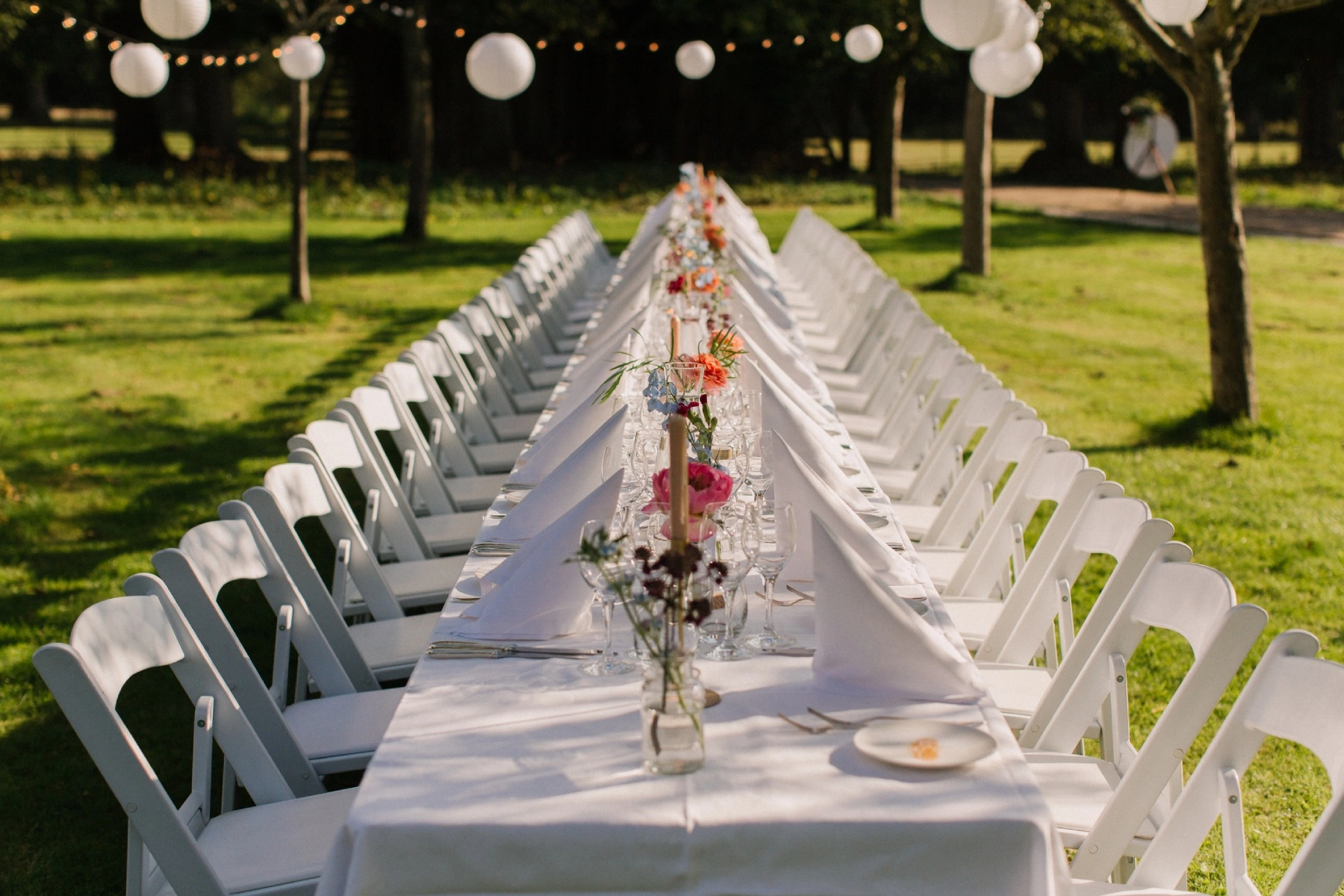
Here is a breakdown of some of the main costs:
- Civil ceremony: €0 for a free ceremony, €50–200 for a budget ceremony, and up to €1,200 for a standard ceremony in a wedding hall
- Venue hire for a religious ceremony: Anything from €250–2,000
- Reception venue: Anything from around €300–8,000
- Catering: Typically between €5 and €50 per person
- Wedding dress: €300–500 for a rental or €1,000–2,500 when bought
- Wedding rings: €500-2,000
- Groom suit: €100–500
- Bridal bouquet: €100–250
- Additional flowers: Around €400–500
- Transport: €300–500
- Hair and make-up: €150–300
- Photographer: €1,400–2,500
- Music: €600–1,200
- Invitations: Up to €300
- Wedding cake: Up to around €500
- Honeymoon: Around €2,000–3,000
Top wedding locations in the Netherlands
The Netherlands has some beautiful wedding locations all across the country, including stunning castles, grand estates, and glorious canal boats.
Amsterdam is an obvious Dutch wedding favorite. The Dutch capital is known as the ‘Venice of the North’ and you can take advantage of its abundance of waterways by getting married aboard the Rederij Prinsengracht. If you prefer to tie the knot on land, however, you might want to check out this list of wedding venues (in Dutch).
Other popular locations include:
- De Hazelhof, Rijsbergen: A splendid garden venue if you are looking to have an outdoor wedding
- Domaine D’heerstaayen, Strijbeek: A charming vineyard in the middle of a village
- Hotel New York, Rotterdam: One of the most popular wedding venues in the Netherlands
- Hotel van Oranje, Noordwijk: A luxury five-star hotel on Koningin Wilhelmina Boulevard
- Huygens’ Hofwijck, Voorburg: A 17th-century mansion on the Vliet canal
- Kasteel de Haar, Utrecht: The largest castle in the Netherlands
- Kasteel Montfort, Limburg: A 13th-century village castle
- Stania State, Friesland: A beautiful woodland venue
- Veur Theater, Leidschendam: A quirky alternative to make your big day a little bit different
Luckily, you don’t have to spend a fortune to secure a beautiful wedding venue in the Netherlands. City offices across the country have stylish wedding halls (trouwzalen) designed to give newlyweds everything they need for a fantastic experience. You can visit your municipality website to find more details.
What are the main Dutch wedding traditions and customs?
Like any country, the Netherlands has its own wedding traditions that make the big day uniquely Dutch. Here are a few suggestions to consider if you want to give your wedding a Dutch twist.
The wishing tree
This is a creative Dutch alternative to a guest book. Instead of writing a message in a book, attendees are encouraged to scribble on leaves or ribbons attached to a small tree. This can be a real tree or something ornamental.
Bed of flowers
Another tradition is for the bride and groom to walk down an aisle covered in flowers. As they leave the ceremony, guests may also throw flowers at them. Suitable ones include roses, lilies, orchids, carnations, and, of course, tulips.
Bridal sugar
It is customary to hand out ‘bridal sugar’ to guests at the end of the wedding. This is typically a small pouch of five sugar-coated almonds which represent happiness, love, fidelity, prosperity, and fertility.
Herring for dinner
Don’t worry if you’re not a big fan of the salty fish. This Dutch culinary favorite is typically served as a snack or starter at the reception. If you want the full Dutch experience, however, you can get guests to eat it in traditional fashion by holding it by the tail and lowering it into their mouths.
The ceremoniemeester
In traditional Dutch weddings, there is usually no Best Man or Maid Of Honor. Instead, there is a ceremoniemeester. This can be male or female and is normally a good friend or family member whose job it is to help organize the wedding, help out on the big day, and maybe give a speech at the reception.
Wedding rings
Interestingly, while many countries have a particular wedding ring hand (which can be left or right), the Netherlands is a bit more flexible. Spouses can choose to wear their ring on the fourth finger of either hand. Traditionally, Catholics in the Netherlands wear it on the left hand (the opposite of Catholics in most other countries) while Protestants choose the right hand.
Surnames
In keeping with the generally egalitarian culture of the Netherlands, there are no hard and fast gendered rules when it comes to one Dutch spouse adopting the other’s surname.
On the contrary, the bride can take the groom’s surname, the groom can take the bride’s surname, they can each keep their original surnames, or they can create a new double-barrelled name.
Similarly, if the couple has a child, the newborn can be given either surname or, from 1 January 2024, a double-barrelled surname.
Useful resources
- government.nl – the Dutch government website which provides information on marriages, civil partnerships, and cohabitation agreements in the country
- Netherlands Worldwide – provides information about applying to get married in the Netherlands
Related Articles



Editor's picks
 Secondary schools in the NetherlandsWe explain the complex secondary school system in the Netherlands, including the three public streams and various international options.
 Where to live in the Netherlands: the best cities for expatsAlthough Amsterdam is typically the number one hub for expats, there are plenty of other cities in the Netherlands worth your while.
 Higher education in the Netherlands: a guide to Dutch universitiesThe Netherlands is home to some of the world's top universities. Learn all about the different subjects available at Dutch institutions.
Did you find this guide helpful?