
'%20id='ico-down'%20stroke='%23000000'%20stroke-width='1.5'%3e%3cg%20transform='translate(1092.250000,%20254.750000)'%3e%3cpolyline%20id='Path-2-Copy-4'%20transform='translate(5.500000,%202.750000)%20scale(1,%20-1)%20rotate(-180.000000)%20translate(-5.500000,%20-2.750000)%20'%20points='0%200%205.5%205.5%2011%200'%3e%3c/polyline%3e%3c/g%3e%3c/g%3e%3c/g%3e%3c/svg%3e)


Moving
About Luxembourg
30 facts about Luxembourg
How well do you know the Grandest Duchy of them all? Here’s an overview of 30 facts about Luxembourg you (maybe) didn’t know.
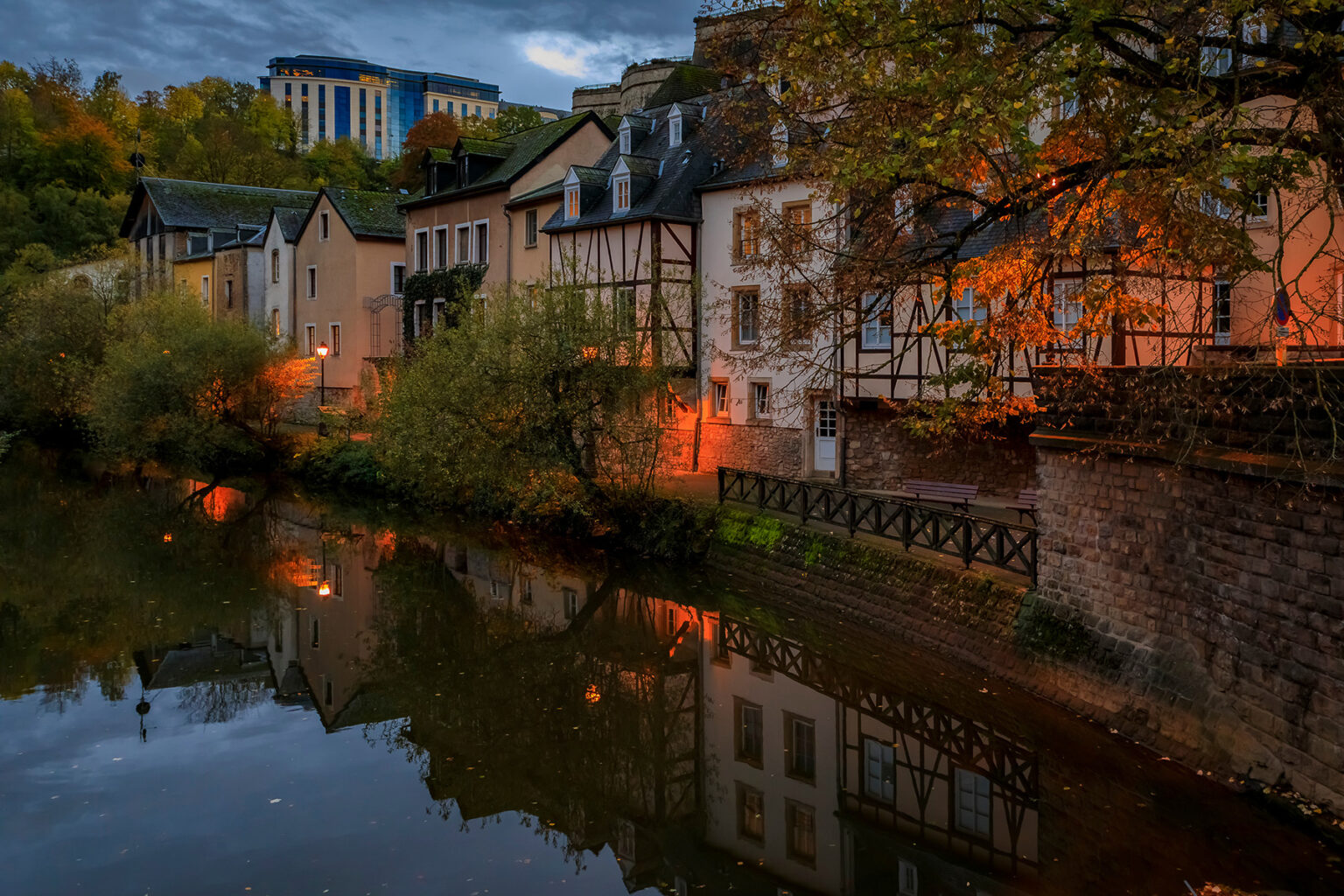
In 2015, comedian John Oliver called Luxembourg “France without all its cultural institutions.” The political commentator rammed home his point by adding: “If you Google interesting Luxembourg facts, the result is just a page that says ‘no.'”
From cultural highlights to national dishes, here are 2,500+ words that aren’t “no” about some of the unique and lesser-known facts about Luxembourg:
Sirelo
It's no secret that moving abroad can be stressful. Sirelo's team of removal advisers is here to help. They provide five free quotes from international shipping companies so you can find the best options at the best prices. Take the stress out of your relocation to Luxembourg with Sirelo.

Cultural facts about Luxembourg
1. Luxembourg has won the Eurovision Song Contest five times
With both seven victories, Ireland and Sweden are the most successful countries in the international song competition. Luxembourg is in shared third place with France, the Netherlands, and the UK, each having five wins on their books.
The Grand Duchy scored first place in 1961, 1965, 1972, 1973, and 1983, and has hosted the contest four times.
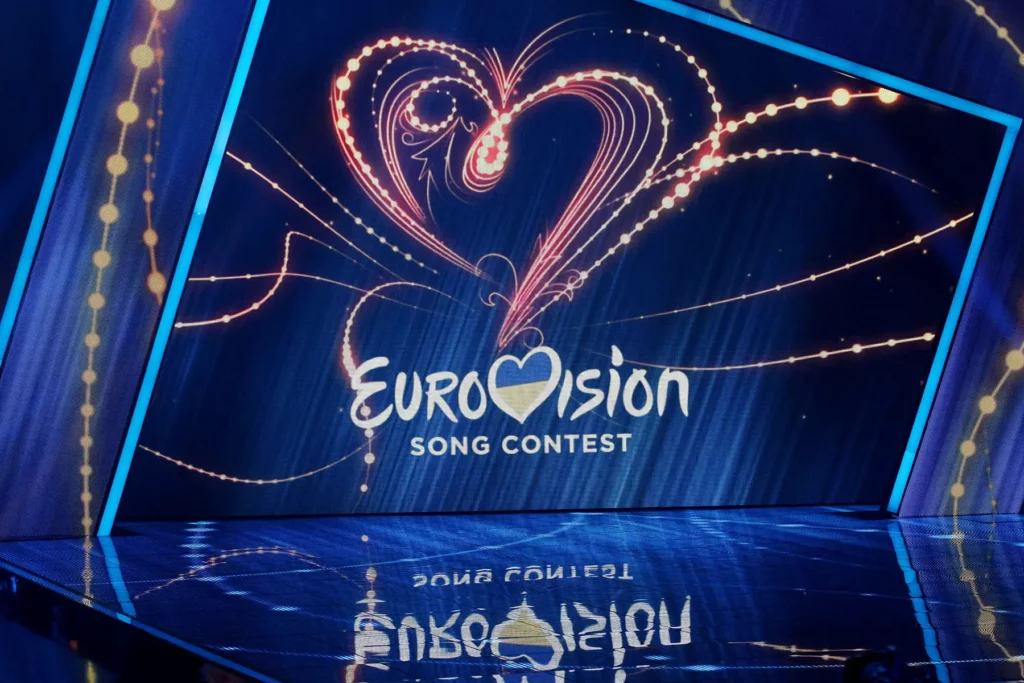
After being relegated from participating in 1994, Luxembourg withdrew from the competition until 2023. After 31 years of absence, the country returned to the contest in 2024, which took place in Malmö, Sweden.
The song Fighter, performed by Tali, placed 13th out of 25.
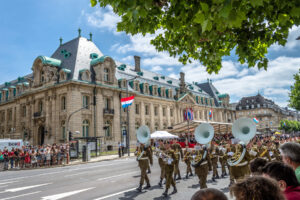
2. The Grand Duke’s official birthday is on 23 June
Also known as National Day (French: Fête Nationale Luxembourgeoise, German: Luxemburgischer Nationalfeiertag, Luxembourgish: Lëtzebuerger Nationalfeierdag), the Grand Duke’s official birthday is celebrated on 23 June. However, interestingly, neither the current Grand Duke nor any ruler in the history of the Grand Dutchy was ever born that day.
The date actually goes back to Grand Duchess Charlotte’s birthday (1919–1964) on 23 January. In 1962, the practical decision was made to move the public holiday to June and enjoy the warmer weather.
3. The country’s official motto is mir wëlle bleiwe wat mir sinn
Meaning ‘we want to remain what we are,’ the motto refers to the country’s tumultuous history and the wish to remain independent (now and in the future).
One of the more interesting facts about Luxembourg is that it was passed back and forth between various European powers – from France to the Spanish to the Austrians and back to the French.
Over the centuries, three partitions of Luxembourg have reduced the territory from 10,700 km2 (4,100 sq mi) to the present-day area of 2,586 km2 (998 sq mi). The lost regions are now part of modern-day Belgium, France, and Germany.
4. Luxembourg is one of the safest countries in the world
Crime rates in Luxembourg are impressively low. In 2019, it was even named the safest country in the world for expats. One of the most telling facts about Luxembourg’s safety is that the police force has around 2,800 officers working for them, while there are just three jails in the entire Grand Duchy.
5. The capital is a UNESCO World Heritage Site
From the 16th to the 19th century, Luxembourg was one of Europe’s greatest fortified sites, constantly reinforced as it passed through the hands of the Holy Roman Emperors, the House of Burgundy, the Hapsburgs, various French and Spanish kings, and, eventually, the Prussians.
These have all left archeological and cultural marks in the various gates, bastions, and forts. The historical part of Luxembourg City has also kept its original layout and public buildings.
6. There are over 70 castles in the Grand Duchy
Some estimate that the country has more than 130 châteaus – though many of those should actually be classified as large residences or manor houses rather than castles. Plus, several are in various states of repair.
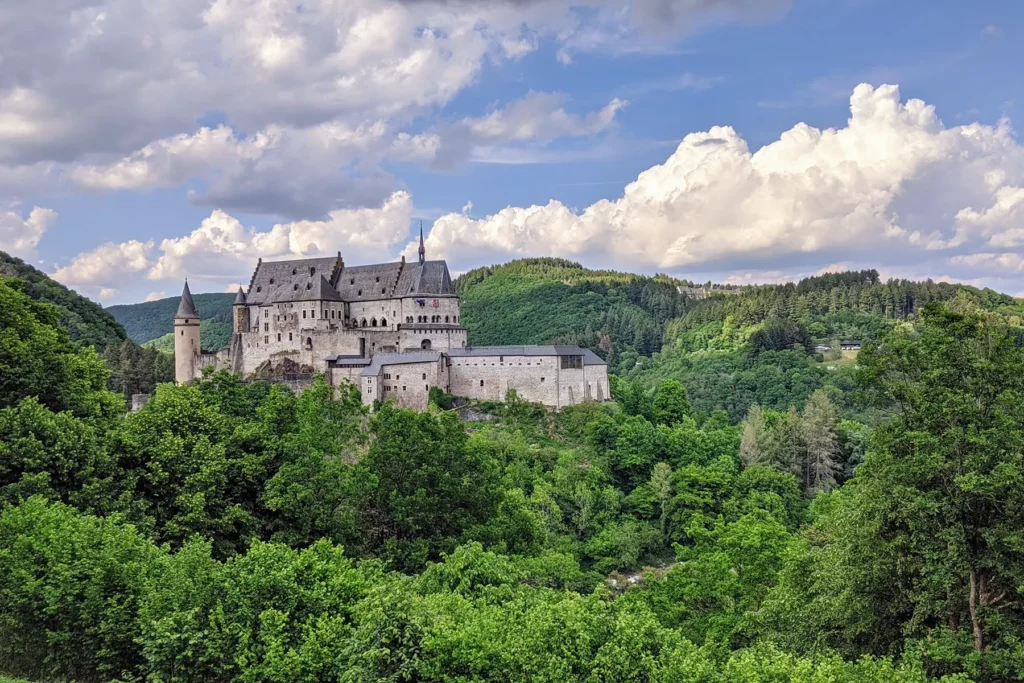
Still, plenty of them are in good shape, and the official number of castles given by the government is over 70.
7. The national dish of Luxembourg is pork and beans
The national dish – and perhaps the most traditional – of Luxembourg is Judd mat Gaardebounen, a savory dish of smoked (or cured) pork with broad beans in a creamy sauce.
The pork is soaked in water overnight, then boiled and skimmed, and cooked with vegetables and spices. It is served with beans and boiled potatoes and is considered to be the Luxembourg.
You can find a recipe on the website of Luxembourg Times.
8. Luxembourg once boasted the world’s largest wine list
Restaurant Chiggeri was once the proud holder of the Guinness World Record for the most varieties of wine commercially available in a single restaurant. In 2008, the award-winning establishment in Luxembourg City offered a staggering 1,746 selections.
The record has since been usurped by the Grand Lisboa in Macau, China. The casino hotel is home to Asia’s most extensive wine collection and has a wine list with 16,800 different labels.
Historical facts about Luxembourg
9. Luxembourg gets its name from an ancient fortress
The official founding date of Luxembourg is 963 CE, with the construction of Luxembourg Castle by Count Siegfried I of the Ardennes. However, before that, the area was already known as Lucilinburhuc (‘little fortress’). While there isn’t much archeological evidence, its strategic position means there was likely an ancient fortress before that, dating back to Roman times.
The etymology of Lucilinburhuc can possibly be traced back from Old High German Lucilinburhuc to Proto-Germanic *lūtilaz and *burgz.
10. There’s a giant network of underground tunnels underneath Luxembourg City
Cut out of the solid rock, the Bock and Pétrusse casemates (French: casemates du Bock et de la Pétrusse, German: Bock- und Pétrusse-Kasematten, Luxembourgish: Bock och Péitruss-Kasematte) were used as part of the city’s defenses. The underground vault and tunnel system dates back to the 17th and 18th centuries and contains an area of over 17 kilometers.
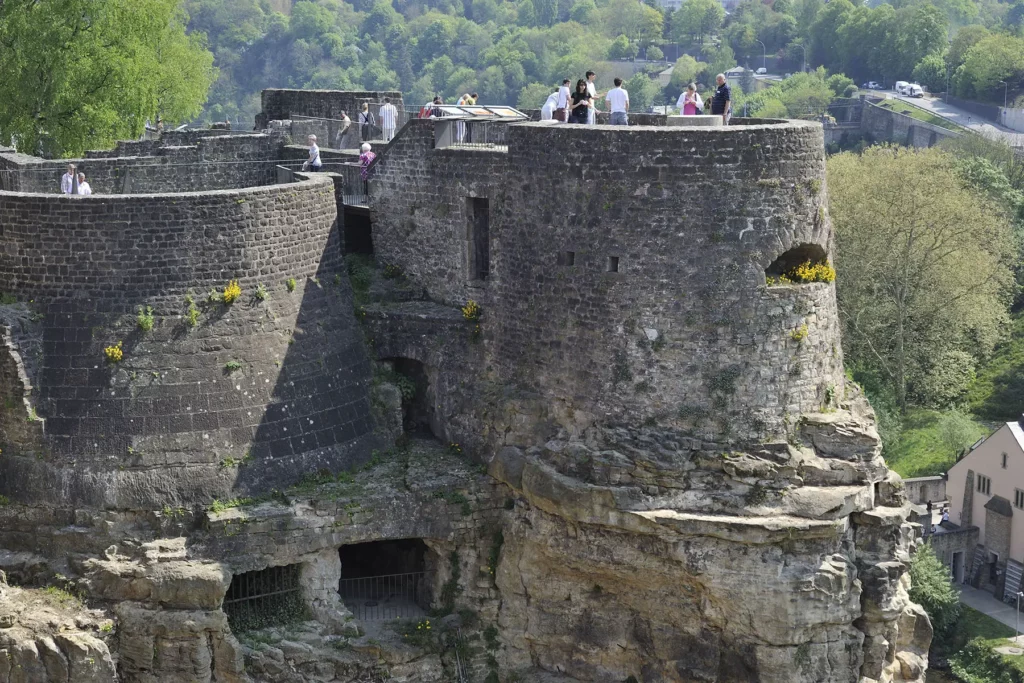
Luxembourg was granted full independence and neutrality by the 1867 Treaty of London. After the casemates lost their military use, they were repurposed in various ways. For example, over the centuries, they have functioned as a shooting range, mushroom farm, market and concert hall, and champagne vault. The casemates were also air-raid shelters during both world wars.
In 1994, the Bock and Pétrusse casemates became UNESCO World Heritage Sites and are now open to the public.
11. The country became one of the leading exponents of international cooperation after World War II
Despite its neutrality, Luxembourg was occupied by German forces during World War I and II. Perhaps realizing its small stature, exiled representatives of the country formed the Benelux Customs Union together with Belgium and the Netherlands in 1944. This alliance later transformed into the current politico-economic Benelux Union (French: Union Benelux, German: Benelux-Union, Luxembourgish: Benelux-Unioun).
Luxembourg was also a founding member of the European Economic Community (EEC) in 1957 (which became the EU in 1993) and the North Atlantic Treaty Organization (NATO) in 1959.
12. The Schengen Agreements were signed in Luxembourg
The two agreements, which allow EU citizens to travel visa-free across certain borders, were signed in 1985 and 1990 in the tiny village of Schengen. Located in Luxembourg’s wine-growing Moselle region, this town borders France and Germany and is a symbol of free movement.
13. Luxembourg City has been listed twice as the European Capital of Culture
The tradition of naming an EU city as the Capital of Culture started in 1985. Since then, Luxembourg City has been featured twice (in 1995 and 2007), the only city to ever have done so.
During the year it is a Capital of Culture, the city will organize cultural events with a strong pan-European flavor. This often results in significant cultural, social, and economic benefits, as well as urban regeneration and international visibility. Multiple cities can be European Capitals of Culture at once.
14. Luxembourg’s former Prime Minister Xavier Bettel was the first EU leader to enter into a same-sex marriage
Same-sex marriage has been legal in Luxembourg since 1 January 2015, after a 2013 poll found that 83% of citizens supported it. As such, Xavier Bettel married his partner, Belgian architect Gauthier Destenay, in May 2015.

The politician, who served as Prime Minister from 2013 to 2023, was the third openly gay head of government worldwide, following Iceland’s Prime Minister Jóhanna Sigurðardóttir and Belgium’s Prime Minister Elio Di Rupo.
15. The tiny country has won one gold medal (in total!) at the Olympics
The modern sports event originates from 1896 when Athens hosted the first Olympic Games since ancient times. Luxembourg has been competing since the 1912 Summer Olympics in Stockholm.
In all those years, the country won only one official gold medal, with Josy Barthel taking down the Men’s 1500 meters at the 1952 Summer Olympics.
Money and power: typical Luxembourg?
16. Luxembourg is the only Grand Duchy in the world…
After the defeat of Napoleon in 1815, the Congress of Vienna made Luxembourg into a Grand Duchy, a state or territory ruled by a grand duke or duchess.
The present Grand Duke is Crown Prince Henri, who assumed the throne in October 2000.
17. …one of the smallest countries in Europe…
The tiny European state has an area of around 2,586 square kilometers, which is about the same size as the county of Dorset (UK) and slightly smaller than Rhode Island (US).
However, six countries are even more miniature than Luxembourg. From smallest to largest are Vatican City, Monaco, San Marino, Liechtenstein, Malta, and Andorra.
18. …and yet the richest country in the world
Despite its size, the country has the world’s highest GDP per capita (IMF, 2024). At nearly US$143,740, Luxembourg ranks miles above the world’s second and third richest countries, Macao SAR (US$134,140) and Ireland (US$133,900).
But before you pack your bags and move to Luxembourg, the International Monetary Fund estimates that Ireland will overtake the country as the world’s wealthiest nation in 2027.
19. Luxembourg has the highest minimum wage in the world
The country pays unskilled workers a minimum of €2,571 per month (2023). Skilled workers earn at least €3,085 per month.

This is roughly US$15.87 per hour, which – according to the World Economic Forum – beats Australia ($14.97) as the country with the highest minimum wage in the world.
20. Luxembourg is a notorious tax haven
The tiny country ranks sixth on both the 2021 Corporate Tax Haven Index and the 2020 Financial Secrecy Index (FSI), measuring the world’s biggest private tax havens.
Interestingly, investigative journalists leaked some 28,000 tax agreements, tax returns, and other documents at the end of 2014 – exposing how around 350 of the world’s largest companies, including Pepsi, IKEA, Procter & Gamble, JP Morgan, and FedEx, were able to save millions by using schemes made possible by Luxembourg’s favorable corporate tax laws.
‘LuxLeaks’ showed how companies set up complicated accounting and legal structures to legally move their profits from the high-tax countries where they have their HQs to low-tax Luxembourg – and in some cases, pay less than 1% in tax.
While the government promised reforms, these had yet to come to fruition seven years later.
21. The highest court in matters of EU law is located in Luxembourg
The state is the headquarters of the European Court of Justice (ECJ), which makes sure that EU law is interpreted and applied the same way across all Member States. For example, in 2022, it ruled that a public register of business stakeholders was against EU privacy laws.
The court is not to be confused with the International Court of Justice, located in The Hague (the Netherlands), which advises on and settles international disputes (such as crimes against humanity).
Facts about the people of Luxembourg
22. Luxembourg has the lowest population of all the EU countries
Understandably, the Grand Duchy has the smallest population in the EU. In 2021, Luxembourg had around 339,900 citizens, roughly representing 53% of all inhabitants. The remaining 47% comprised approximately 180 nationalities, among which:
- Portuguese (14.5% of the total population)
- French (7.6%)
- Italian (3.7%)
- Belgian (3.1%)
- Germans (2.0%)
23. Nearly half of the workforce are cross-border commuters
Cross-border workers live in one country and work in another. In fact, they are in almost every sector of the Luxembourgish economy.
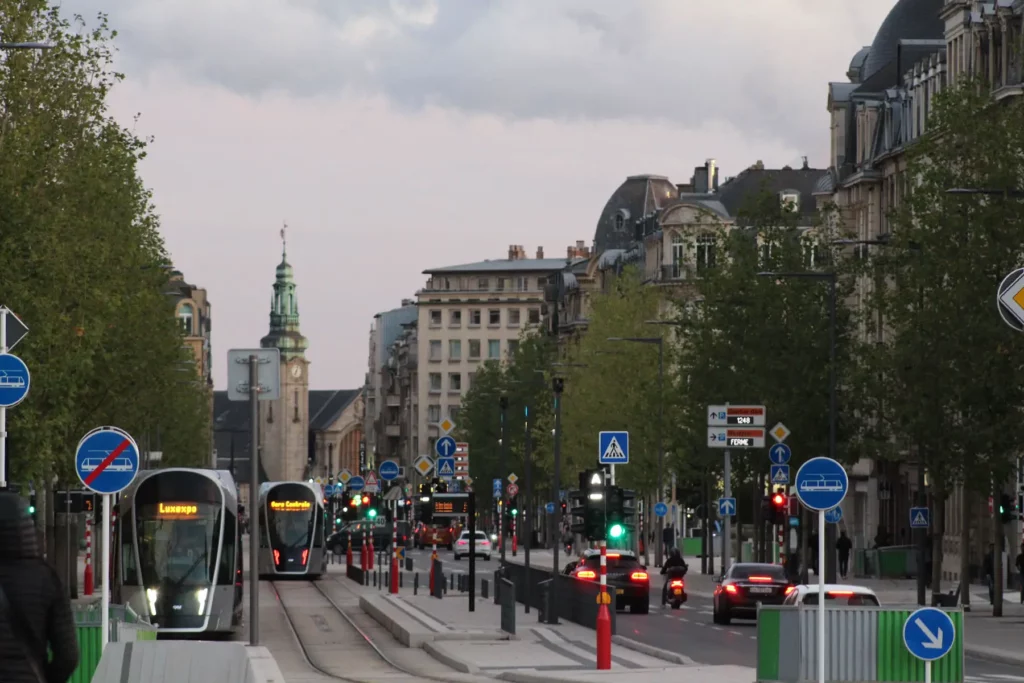
Most non-Luxembourg nationals traveling across the border are French (78,500 workers), Belgians (39,400 workers), and Germans (39,100 workers). Luckily, the country offers free public transportation, making well-worthwhile to hop across the border.
24. Luxembourg is the first country in the world to provide free public transport
Since 29 February 2020, you no longer have to pay to take the train, bus, or the brand-new tram. All public transportation in Luxembourg is free for both residents and tourists. Keep in mind, however, that if you want to travel in first class, you will have to buy a ticket.
Other random facts about Luxembourg
25. Luxembourg has three official languages
The national languages of Luxembourg are French, German, and Lëtzebeurgesch or Luxembourgish. Usually, Luxembourgish is taught in nursery schools, while French and German are spoken in primary schools.
In the workplace, media, and everyday life, it’s generally common to hear all three languages, as well as Portuguese and English. At parliament, however, they only use Luxembourgish, while laws are written in French.
26. Over a third of the country is covered in trees
In 2010, Luxembourg had 38.9 kilo hectares of natural forest, which meant over 40% of its territory was denoted as forest area. By 2022, however, it had lost around 85 hectares of natural forest, leaving a little over a third of Luxembourg as forest areas.
The most treed-up province of Luxembourg is Diekirch.
27. The average temperature is only 9.4 °Celcius
Luxembourg’s climate can be described as a moderate oceanic Western European climate, with mild winters and pleasant summers. The warmest month is July (averaging around 25 °C), and the coldest month is January (with an average of 5 °C). Taking all twelve months into account, the average temperature in Luxembourg is only 9.4 °C.
Interestingly, the highest temperature ever recorded in Luxembourg was 40.8 °C (2019). The lowest temperature, on the other hand, was −24.6 °C (1956).
28. Luxembourg has the highest rate of car ownership in the EU
With 681 cars per 1,000 population, the tiny nation boasts the highest rate of motorization ownership in all EU member states. That said, this number might be impacted by cross-border workers (i.e., not inhabitants) using company cars registered in the country.
Perhaps understandably then, Luxembourg’s petrol is one of the cheapest in the EU.
29. The Luxembourg flag is red, white, and blue – just like the Dutch one
People often wonder, why does Luxembourg have the Dutch flag? The answer is simple: it doesn’t.
While both flags look similar with their three horizontal stripes, the colors are completely different. Luxembourg’s flag is red (silken ruby), white, and light blue (astro blue). The Netherlands, on the other hand, has red (super rose red), white, and dark blue (philippine blue).
In recent years, there have been a couple of petitions to change the national flag to the Roude Léiw (Red Lion). These never received enough signatures, however.
30. Luxembourg is a prime wine country
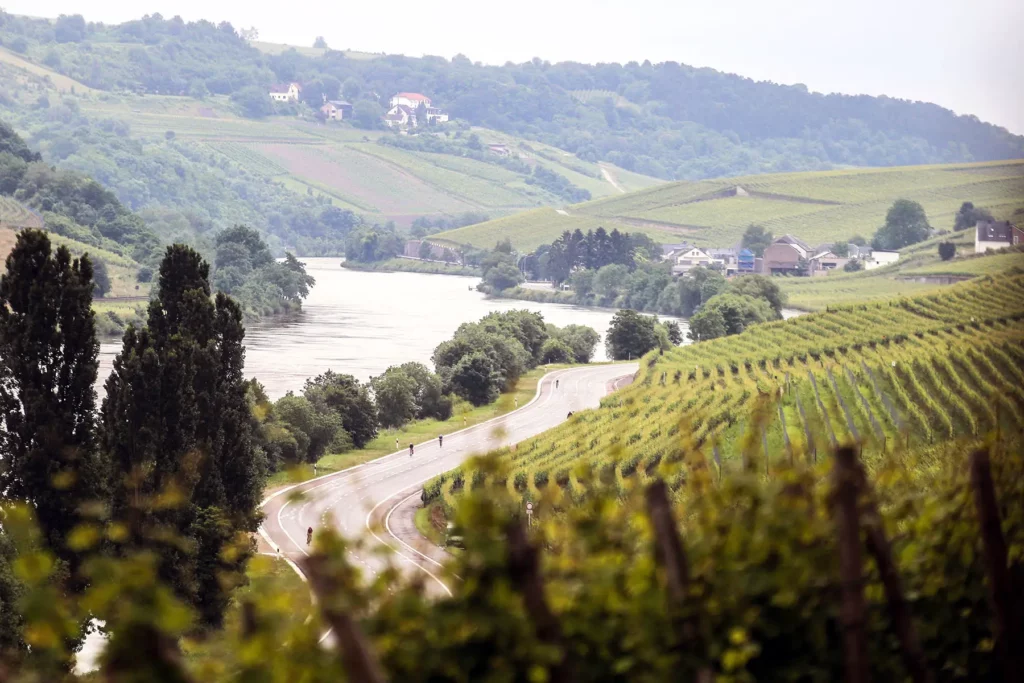
The Moselle region in eastern Luxembourg is world-renowned for producing wines from eight grape varieties, including Auxerrois, Elbling, Chardonnay, Gewürztraminer, Pinot Blanc, Pinot Gris, Riesling, and Rivaner.
The most famous of all Grand Duchy’s wines is Riesling, a classy, fruity wine with mineral notes.
Did you find this guide helpful?