
'%20id='ico-down'%20stroke='%23000000'%20stroke-width='1.5'%3e%3cg%20transform='translate(1092.250000,%20254.750000)'%3e%3cpolyline%20id='Path-2-Copy-4'%20transform='translate(5.500000,%202.750000)%20scale(1,%20-1)%20rotate(-180.000000)%20translate(-5.500000,%20-2.750000)%20'%20points='0%200%205.5%205.5%2011%200'%3e%3c/polyline%3e%3c/g%3e%3c/g%3e%3c/g%3e%3c/svg%3e)


Finance
Taxes
Corporate tax in Spain
From tax rates and exemptions to fines and advice, we explain how the corporate tax system in Spain works for expats looking to set up a company.


If you are thinking about starting a business in Spain, you will need to understand how the local tax system works. This will help you with everything from getting a tax number and filing your tax returns to producing invoices and dealing with social security in Spain.
Explore the details of corporate tax in Spain by reading the following information:
Accompany
Accompany is an English-speaking consultancy firm supporting international companies, investors, and entrepreneurs in Spain. Their range of services covers all administrative needs for legal, fiscal, and social compliance. Handle the challenges and opportunities of doing business in Spain with confidence with Accompany.

The corporate tax system in Spain
Corporate tax in Spain falls under the purview of the Agencia Tributaria, the national tax agency. As such, all companies have to file tax returns with the Agencia Tributaria every year. And, in Spain, tax rates apply to the global income and profit of a company.
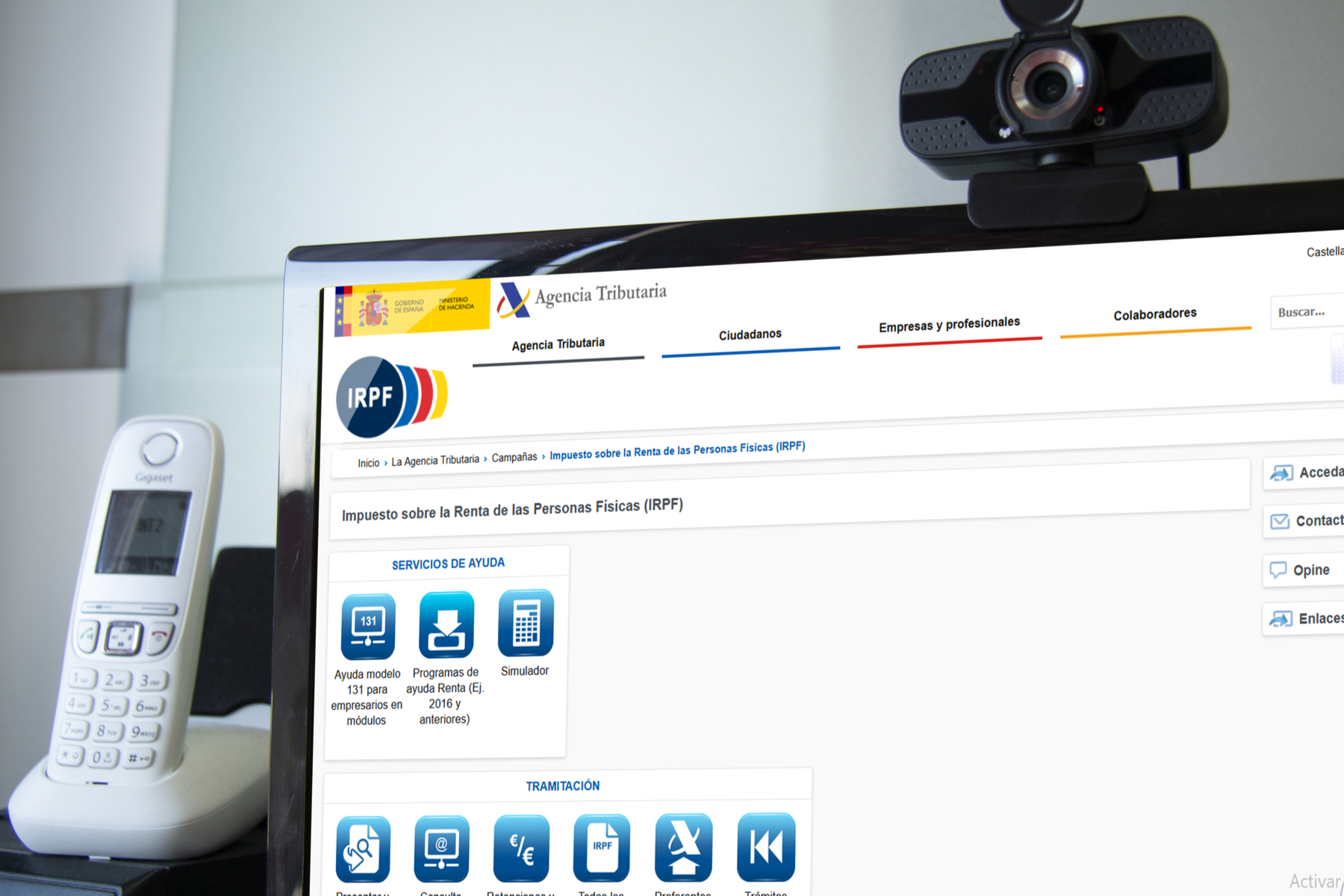
Although the country has federal-level corporate tax, some regions have their own taxes that businesses might be subject to as well. This is important to bear in mind if you are considering setting up a company in the country.
Who pays corporate tax in Spain?
Corporate tax in Spain applies to all companies and businesses that are legal entities in the country. In some cases, non-resident companies may also be required to pay tax if they are doing taxable business in Spain. As such, companies that are established or headquartered in Spain or have registered offices in the country will have to pay corporate tax there, too. That said, the rules are slightly different depending on the type of company you own.
Corporate tax for sole traders and freelancers
In Spain, sole traders and freelancers don’t pay corporate tax in the same way that other types of companies have to. Instead, they pay a progressive tax rate on personal income that varies between 19% and 47%, depending on their profits and region.

They will also likely need to report and pay VAT. However, there are many tax deductions available for sole traders. For example, they may be able to offset expenses such as social security contributions, rent or utility bills, and internet services.
If you require guidance when filing your corporate tax, it’s worth getting in touch with professionals who offer tailored assistance to internationals. Firms providing these services include
Corporate tax for partnerships
Although partnership businesses do have to pay corporate tax in Spain, the rates are not the same as those that are generally applied to companies. In some cases, the partners may just need to pay personal income tax. However, if the partnership is a flow-through business entity, they are subject to different rules.
Corporate tax for limited companies
In general, limited companies will need to pay the usual corporate tax rate in Spain. You can read more about this in the next section.
Corporate tax rates in Spain
Generally speaking, most corporate entities in Spain are subject to a 25% corporate tax rate. And, as previously mentioned, resident companies in Spain have to pay tax based on their global income.
Of course, there are several exceptions to these rules. New companies only have to pay a 15% tax rate for the first two tax periods in which they turn a profit. However, this reduced rate does not apply to companies that form part of a corporate group, whether domestic or international, nor to entities created as a continuation of an existing business.
Furthermore, startup companies that began in 2025 or later with turnover between €1 million and €10 million pay a corporate tax rate of 23% on their profits. Those with a turnover of less than €1 million pay 19% on their first €50,000 of profits and 21% on the rest.

Spain levies a Business Activity Tax (Impuesto sobre Actividades Económicas) on businesses, professionals, and artistic activities. This tax is not calculated as a percentage of profits, but is instead based on the nature of the activity, the location, and other objective criteria set out in the tax schedules.
Companies are exempt from paying this tax if their net turnover is less than €1 million in the relevant tax year. Newly established companies are also exempt during their first two years of activity.
Below are a few other types of corporate tax rates in Spain:
- Banks and credit unions: 30%
- Tax-protected cooperatives: 20%
- Entrepreneurs: 15%
- Non-profit associations and foundations: 10%
- ZEC entities (Canary Islands): 4%
- Investment companies: 1%
Corporate tax exemptions and credits in Spain
Like most countries, there are certain exemptions and credits under corporate tax law in Spain. However, it can be tricky to navigate these. Below are some of the most useful exemptions, credits, and deductions that are useful to know about as an expat.
Corporate tax exemptions
Sole traders and freelancers (or autónomos in Spanish) are exempt from Spain’s usual corporate taxes. Companies also pay a reduced rate of 15% for their first two tax periods in which they are profitable. Until recently, foreign dividends and capital gains were previously fully exempt from tax. However, recent developments in Spanish tax laws mean that the exemption is now 95%. As such, 5% of a company’s foreign dividends and capital gains will now be subject to the prevailing corporate tax rate.
Corporate tax credits in Spain
Spain offers numerous corporate tax credits, and companies should be aware of this. For example, certain highly specific activities carried out by public entities or entities closely linked to public administrations may qualify for very substantial tax credits, in some cases up to 99%, subject to strict statutory conditions. Corporate income generated in Ceuta and Melilla can also receive a 50% tax credit.

Additionally, companies specializing in research and development can benefit from several tax credits. In addition to the 25% base credit, an enhanced credit (up to 42%) may apply to R&D spending that exceeds the average of the previous two years. There is also a 17% tax credit available for staff expenses, but only for staff that is exclusively involved in R&D. Finally, if a company has assets exclusively for R&D, a further 8% tax credit applies. Similarly, the Spanish government is encouraging technological innovation with a separate 12% tax credit.

For film productions and performing arts, Spain’s corporate tax laws also offer some credits. Of course, this is designed to encourage the use of Spain as a filming destination and creative hub. For example, producers and qualifying investors can benefit from a 30% tax credit on the first €1 million they contribute, and a 25% credit for further contributions up to €20 million. Additionally, a tax credit of 20% applies to the first €500,000 of expenses incurred while producing live performances and musicals, reduced to 15% on expenses above this amount.
To encourage employers to give jobs to disabled persons, there is also a €9,000 tax credit for every disabled worker employed on a permanent basis. This is for workers whose disability is assessed at 33% to 65%. If the level of disability is over 65%, then the tax credit is €12,000.
Manage your international business finances with Wise
Wise Business allows you to hold and manage money in 40+ currencies, send international payments at the mid-market exchange rate with low fees, and receive payments with account details. You can pay international suppliers, easily receive payments from clients abroad or manage expenses across different currencies.

Corporate tax deductions
Corporate tax law in Spain allows companies to claim a number of deductions. For instance, a business may claim depreciation deductions on certain assets such as warehouses (typically around 2–3%/annum), furniture (up to 10%/annum), and computers (up to 25%/annum). Companies are also able to deduct financial expenses up to 30% of their operating profit, subject to a minimum deductible amount of €1 million per tax period. Severance pay is also deductible, as long as it legally required, contractually agreed, and not excessive under Spanish tax law.
VAT in Spain
Spain applies value-added tax (Impuesto sobre el Valor Añadido or IVA for short) to all goods and services in the country. This specific tax also applies to imports and services within the European Union. However, there are three tiers of IVA, as follows:
- Ordinary rate for regular goods and services: 21%
- Reduced rate for basic necessities (including food and agricultural products), live cultural events, and cinema tickets: 10%
- Highly reduced rate for very basic necessaries (including bread and medicine): 4%
Notably, the Spanish IVA rates do not apply to the Canary Islands or Ceuta and Melilla. Instead, the Canary Islands have the Impuesto General Indirecto Canario (IGIC). As such, companies based there will usually pay a 7% rate, although a 20%, 15%, 9.5%, 3%, or 0% rate applies for certain goods and services. Similarly, Ceuta and Melilla apply a sales tax in place of a value-added tax.

All companies that deal in IVA-liable transactions must register for this tax after making their first taxable transaction. For example, if a company specializes in imports into Spain, holds goods in a warehouse for resale, or sells products from Spain to other EU countries, it must register for IVA. This can be done within one or two weeks.

To get a tax number for Spain, you will have to produce the appropriate documentation. For example, you may need to show a VAT certificate if the company is registered in another EU member state, produce the company’s Memorandum and Articles of Association, or show the extract from the business’s national trade register.
The corporate tax year in Spain
In Spain, the tax year for companies is the same as the company’s accounting year and should not be more than 12 months. Additionally, companies have to file their tax return within 25 calendar days after the six months following the end of the tax year. For example, if a company’s tax year ends on 31 December, the tax return should be filed between 1 July and 25 July of the following year.

In addition, companies need to make three advanced payments of their annual tax liabilities. As such, most companies will need to make tax payments in the first 20 days of April, October, and December.
How to file your corporate tax return in Spain
Although corporate tax in Spain can be tricky, filing a company’s returns is a bit easier. In fact, there are three forms to fill out, and all can be completed and filed online through the Agencia Tributaria website. Of course, the most important filing is Form 200, the annual corporation tax return, which must be submitted 25 days following the six months of the end of the tax year.
Talenom
Are you looking for legal or financial advice on moving to Spain? Talenom’s team of lawyers, economists, real estate professionals, relocation specialists, and accountants are ready to help you with your investments and business in Spain. Get in touch with Talenom and make your move to Spain a success.
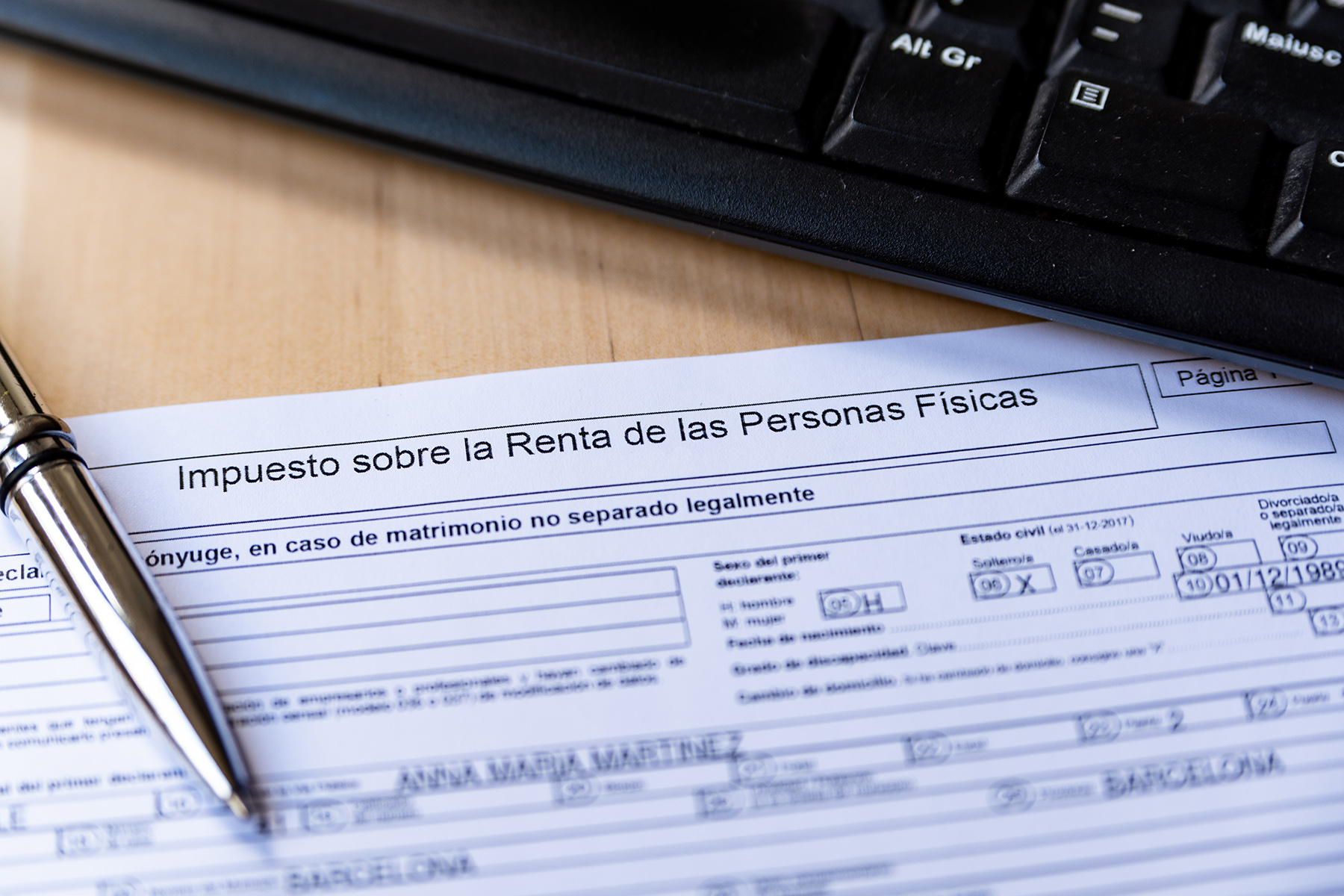
In addition, companies will need to file Form 202 – pre-payment of the corporation tax – three times a year, in April, October, and December. Finally, corporate groups taxed under the Spanish tax consolidation regime will also have to file the 220 tax form.
Other types of Spanish business taxes
In addition to the corporate taxes we have previously discussed, different regions of Spain may apply local business taxes. These might include:
- Real estate tax
- Tax on increase in value of urban land
- Vehicle tax
- Construction tax
- Fees for waste collection
Corporate tax fines in Spain
Penalties and surcharges apply in Spain where corporate income tax returns are filed late or incorrectly. Where a company voluntarily files and pays late before any action by the tax authorities, a surcharge applies instead of a penalty. This surcharge is calculated at 1% plus an additional 1% for each full month of delay, up to a maximum of 12%.
Where the delay exceeds 12 months, a 15% surcharge applies, together with statutory late-payment interest, which is charged at the applicable annual rate on a daily pro-rata basis. If the tax authorities have already initiated proceedings, formal penalties may apply, generally calculated as a percentage of the unpaid tax.

Spain also imposes penalties for corporate tax evasion. If a company is found guilty of this, it may be fined up to twice the defrauded amount. There may also be a prison sentence for the responsible legal representatives, for example directors or executives.
Corporate tax advice
It can be tricky to navigate the corporate tax system in Spain. Because of this, most companies in the country hire accountants. However, if it doesn’t make sense to have a full-time, in-house accountant for your company, you can easily hire an external consulting accountant. In this case, you should look for an accredited accountant or try and get a recommendation from someone you trust.
Useful resources
- Agencia Tributaria – the website of the Spanish Tax Agency
- PwC – read more about corporate tax credits and incentives in Spain
- GLI – information about corporate tax laws and regulations in Spain
- ICLG – read more about corporate tax laws and regulations
Related Articles


Editor's picks
 Top 10 Spanish foods – with recipesWhat better way to explore Spain than with your tastebuds? From tasty tapas to delicious dishes, here are the best Spanish foods.
 International schools in SpainWant to send your child(ren) to an international school in Spain? Find out everything you need to know about fees, exams, and more.
 Guide to getting health insurance in Spain in 2026Find out whether you need private health insurance in Spain in 2026, with insider info on costs, coverage, and medical professionals.
Did you find this guide helpful?