'%20id='ico-down'%20stroke='%23000000'%20stroke-width='1.5'%3e%3cg%20transform='translate(1092.250000,%20254.750000)'%3e%3cpolyline%20id='Path-2-Copy-4'%20transform='translate(5.500000,%202.750000)%20scale(1,%20-1)%20rotate(-180.000000)%20translate(-5.500000,%20-2.750000)%20'%20points='0%200%205.5%205.5%2011%200'%3e%3c/polyline%3e%3c/g%3e%3c/g%3e%3c/g%3e%3c/svg%3e)




You may need to provide proof of address in the UK when setting up many aspects of your new life after you first arrive. This can create a classic “catch 22” for expats – for example, needing an address to open a bank account while also needing a bank account to secure accommodation or access other services.
While this can be frustrating, these checks are in place to help prevent fraud and financial crime. Fortunately, there are a few fast workarounds for new arrivals to get the documentation they need.
UK proof of address at a glance
| Topic | UK reality |
|---|---|
| Standard requirement | Documents usually need to be recent, typically dated within the last 3 months. |
| Commonly accepted | Council tax bills, utility bills, UK driving licences, bank statements. |
| Often rejected | Mobile phone bills, handwritten letters from family or friends. |
| New arrival workarounds | Employer or university letters, NHS or GP letters or registration documents, DWP correspondence. |
What counts as valid proof of address in the UK?
Standard accepted documents
You can generally use the following if it clearly states your name and address. Check with individual providers how recent these have to be:
- Utility bills (gas, electricity, water, broadband/landline telephone) Important note: mobile phone bills are often not accepted
- Bank, building society, or credit card statements
- Council tax bill (valid for the current tax year, up to 12 months)
- UK driving license (can be a provisional or full license, but must show photo and include current address)
- Valid tenancy agreement or council rent card
- Mortgage statement (current or previous tax year)
Official government and medical letters
- HM Revenue and Customs (HMRC) correspondence such as income tax statements or bills
- Department for Work and Pensions (DWP) correspondence, for example regarding National Insurance (NI), social security benefits, or state pensions
- National Health Service (NHS) correspondence, for example local GP registration letter or hospital appointment letter
Document rules and validity
- Most documents must be under 3 months old, although some places will accept documents up to 6 months old. Annual statements like Council Tax or mortgage statements should be within the last 12 months.
- The name on the document must exactly match the applicant’s official ID.
- Names and addresses should be clearly legible and not blurred, smudged, or obscured.
- Check whether institutions accept downloaded PDFs; while many do, some traditional high-street branches still require original paper copies mailed directly to the address.
How to get proof of address when you are new to the UK (The Catch-22)
Getting valid proof of address can be tricky for foreigners new to the UK. For example, in order to obtain many of the valid proof of addresses listed in the previous section, you need to present evidence of your current address. This presents a “Catch-22” situation.
Fortunately, there are a number of legitimate ways of getting a proof of address that many organizations will accept. You can use these as a stepping stone to acquiring more widely accepted documents.
Ask your employer or university
If you are working or studying in the UK, you can often use official correspondence from registered employers or educational institutions. This could include:
- Employment contract
- Payslips
- University enrolment letter
- Official UCAS correspondence
If you don’t have any of these to hand, you can ask your employer or university/college to provide you with a headed, signed, and dated letter confirming your start date and UK address.
Register for a National Insurance (NI) Number or GP
If you apply for a NI number for work purposes when you arrive in the UK, this often triggers correspondence from the DWP to your current address. This is commonly accepted as a legitimate proof of address in the UK.
If you’re not planning to work, registering for healthcare with a local GP will also usually result in an official NHS registration or appointment letter. Many organizations accept this as valid proof of address.
Open a basic or digital bank account
Opening a bank account in the UK can be a good way of overcoming the “Catch-22”. UK high-street banks such as Lloyds and Barclays often offer basic “no-frills” accounts aimed at new arrivals or others without UK credit history. These sometimes have simpler eligibility requirements and may accept alternative proof of identity or address for new arrivals. Requirements vary by bank.
Alternatively, digital banks and multi-currency account providers may allow you to open an account before you have permanent UK accommodation, although you’ll usually need to update your address once you move and may be asked to verify your UK address later.
How to get proof of address without bills (e.g., flatsharing or living with family)
If you’re not a named occupant at your home address – for example, you’re flatsharing, lodging, or living with family, you may not have documents such as utility bills or Council Tax bills in your name. This can make it harder to prove your UK address.
Here are a few options that may help.
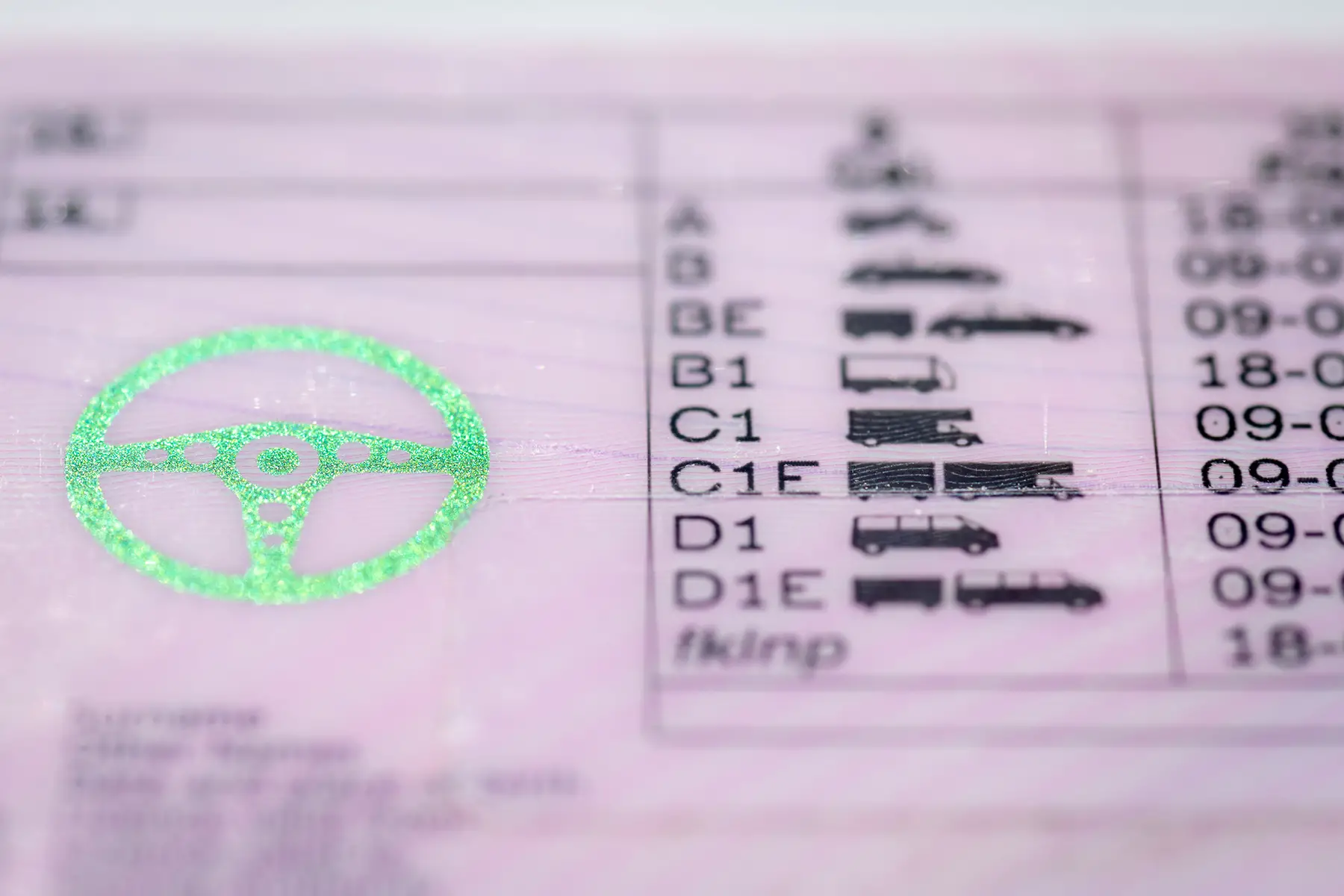
Update your driving licence
Many organizations accept a valid UK driving license as proof of address. If you have a UK license, you can update it with your new address. If you hold an eligible foreign driving license, you may be able to exchange it for a UK license before updating your address. This provides you with both valid proof of ID and address.
Ask to be added to the Council Tax bill or electoral register
If you’ll be living at your address for the longer term, you may be able to add your name to the Council Tax account, or the UK electoral register if you’re eligible. Both can provide widely accepted proof of address.
Always ask permission from the person responsible for the property before requesting any changes.
Get someone to vouch for your identity
Some organizations, including a few UK banks, may accept “vouches” from someone who can confirm your address, such as your landlord, employer, doctor, teacher, or another trusted person in a recognized position.
Not all organizations accept these letters as proof of address, so check their requirements before relying on this option.
Managing your money while settling in
When you first arrive in the UK, you’ll need a convenient way of managing your day-to-day finances. It can be difficult paying rental deposits and setting up services before you’ve secured a bank account.
As an alternative, you can open up a multi-currency account before you relocate. This will mean you can manage GBP spending immediately, converting funds from your home currency at low cost and making necessary payments as soon as you arrive.
Use a Wise account to manage your spending when you move
If you’re moving to the UK, Wise can help you get paid and manage your spending in GBP before you secure standard UK utility bills. You can open a Wise account with low, transparent fees to handle initial expenses seamlessly.

Step-by-step: how to secure your first UK proof of address (2026)
Here are the steps to follow to arrange your proof of address when you arrive in the UK:
- Use an employer or university letter to open a basic high-street bank account or digital account.
- Apply for your National Insurance number immediately to trigger an official DWP letter to your address.
- Register with a local GP to receive an official NHS medical letter.
- Sign your tenancy agreement officially rather than subletting informally.
- Set up essential bills (council tax, water, broadband) in your name as soon as you move in.
- Wait for your first bank statement or utility bill (or request a paper copy) to use for stricter applications.
FAQ
Can I use a mobile phone bill as proof of address in the UK?
Usually not. Most UK banks, government departments, and other organisations do not accept mobile phone bills as proof of address because they are considered easier to obtain than utility or Council Tax bills. Always check the organisation’s requirements, as some may accept them in limited circumstances.
Can my landlord or friend write a letter for me as proof?
Sometimes. A letter from your landlord may be accepted by some banks or organisations, particularly if it is signed and on official letterhead where applicable, but a letter from a friend or family member is much less likely to be accepted. Always check the organisation’s proof of address requirements before relying on a letter.
What if I live in temporary accommodation (like a hostel or Airbnb)?
Getting proof of address can be more difficult if you’re staying in temporary accommodation such as a hostel or Airbnb. You may be able to use official correspondence sent to your temporary address, such as a letter from your employer, the NHS, or a government department, but acceptance varies. If possible, ask the organisation you are dealing with what alternative documents they will accept.
Useful resources
- GOV.UK Apply for a National Insurance number: https://www.gov.uk/apply-national-insurance-number
- GOV.UK Proof of identity checklist: https://www.gov.uk/government/publications/proof-of-identity-checklist/proof-of-identity-checklist
- Citizens Advice (Getting a bank account): https://www.citizensadvice.org.uk/debt-and-money/banking/getting-a-bank-account/