
'%20id='ico-down'%20stroke='%23000000'%20stroke-width='1.5'%3e%3cg%20transform='translate(1092.250000,%20254.750000)'%3e%3cpolyline%20id='Path-2-Copy-4'%20transform='translate(5.500000,%202.750000)%20scale(1,%20-1)%20rotate(-180.000000)%20translate(-5.500000,%20-2.750000)%20'%20points='0%200%205.5%205.5%2011%200'%3e%3c/polyline%3e%3c/g%3e%3c/g%3e%3c/g%3e%3c/svg%3e)


Living
Family & Pets
Child benefits in the Netherlands
You can claim different types of child benefits in the Netherlands to help with the costs of raising a child, schooling, and childcare.


If you have children in the Netherlands or move to the country with kids, you can claim child benefits to help with the costs of raising and caring for them. There are distinct forms of financial support available, each with their own criteria and application processes. Make sure you know what’s on offer so that you don’t miss out.
Find out all about child benefits in the Netherlands by reading the following sections on:
ABN AMRO
Need a Dutch bank account for your child? With ABN AMRO, your child has access to an account which you can oversee with debit card limits and payment alerts. Services are available in Dutch and English both online and in-branch. So, whatever your child’s financial needs, ABN AMRO can help.

Social security in the Netherlands
The Netherlands has a fairly comprehensive social security system that is largely financed by insurance payments. Temporary residents, permanent residents, and Dutch citizens can claim benefits such as:
- Dutch pension
- Child benefits
- Employment benefits, including unemployment benefits and sick leave
- Long-term care
Families with children can claim child benefits in the Netherlands. These are part of the national insurance (volksverzekeringen) program managed by the Social Insurance Bank (Sociale Verzekeringsbank – SVB).

The Netherlands spends approximately €500 per year per inhabitant on family and child benefits. This is the 12th highest in the EU and below the overall average of €695.
Types of child benefits in the Netherlands
There are essentially two different types of child benefits in the Netherlands. These are:
- Child benefit (kinderbijslag) – part of the social insurance package from the SVB to help cover the costs of bringing up a child
- Tax allowances (toeslag) – these are from the Dutch tax office (Belastingdienst), consisting of two separate allowances covering childcare costs and a low-earners allowance.
Child benefit (kinderbijslag) in the Netherlands
What is kinderbijslag?
Child benefit is a regular payment for parents/guardians of children aged up to 18 in the Netherlands. It is a cash payment to contribute towards the costs of raising a child.
Who can claim kinderbijslag?
Parents living in the Netherlands can claim if they register for Dutch social security. Only one parent can claim child benefit per child in the Netherlands. This is usually the parent that lives with the child. Both parents can split the child benefit if they co-parent. If you are a single parent claiming child benefit and you marry or move in with someone else with children, you can choose whether to both carry on claiming individually or to switch to one of you claiming for all children in the household.

You can claim child benefit in the Netherlands for:
- your own biological children
- adopted or fostered children
- children that you care for as if they are your own
How much you’ll get
You receive child benefit payments in the Netherlands per quarter. This arrives in the first week of each quarter (January, April, July and October). If you have a baby in the Netherlands, you can check when you will receive your first child benefit payment.
The current Dutch child benefit rates per child are:
- €230.60 for children aged 0-5
- €280.12 for children aged 6-11
- €329.56 for children aged 12-17 (you only receive the benefit for children aged 16/17 if they are in full-time education or have left education due to illness or disability)
You may be able to claim twice the basic rate if your child lives away from home for a particular reason, or if they need extensive care. Child benefit amounts are not affected by other income your child receives, for example student funding or money from a part-time job.
How to claim kinderbijslag
You usually receive an invitation to apply for child benefit in the Netherlands if you register the birth of a newborn with your municipality (gemeente) and also register for social insurance. If this is the case, you can usually file your claim online if you have DigiD (in Dutch). Alternatively, you can ask for a paper application form.
If you don’t receive an invitation, you can apply via the SVB website. You will usually need to provide:
- Your Burgerservicenummer (BSN)
- Details of your child’s health insurance
- Child’s birth certificate or proof of date of birth
It is also possible to apply for Dutch child benefit if you live in another EU/EFTA country, or in a non-EU country that has a social security agreement with the Netherlands, as long as you register for social security in the Netherlands.
What to do if you cannot claim kinderbijslag
There are situations where you cannot claim Dutch child benefit for your child even if you live in the Netherlands. These include:
- If you live in the Netherlands only temporarily and don’t have the right to work
- You work outside the Netherlands and don’t have coverage for Dutch social security payments
If you live in the Netherlands and work abroad in an EU/EFTA country, or somewhere that has a social security agreement with the Netherlands, ask your employer for a posting certificate. This will ensure that you receive Dutch social security, including child benefit payments.
If you want to complain because you feel you are being unjustly denied child benefit in the Netherlands, you should contact the SVB in the first instance. You can use the online complaint form. The SVB has six weeks to respond to your complaint. If you don’t hear back or are unhappy with the outcome, you can take the matter to the National Ombudsman (in Dutch).
Child allowance (toeslag) in the Netherlands
Toeslagen are tax allowances in the Netherlands. There are two Dutch child-related allowances. These are:
- Childcare allowance (kinderopvangtoeslag) – this covers some of the costs of registered childcare in the Netherlands, including both pre-school care for very young children and after-school care for school-aged children
- Child budget (kindgebonden budget) – this is an allowance you can get if your income is below a certain limit.

There are also two other types of toeslag not related to child benefits in the Netherlands. These are:
- Healthcare allowance (zorgtoeslag) – this contributes towards Dutch health insurance costs
- Rent allowance (huurtoeslag) – this contributes towards costs of rented accommodation in the Netherlands
The Dutch tax office website has a simulator where you can calculate all four allowances at once.
Mijn Toeslagen
If you are registered with the Dutch tax office, then you will have a Mijn Belastingdienst account which allows you to manage all your tax affairs online. In the same vein, the Belastingdienst offers a Mijn Toeslagen portal, which is linked to your tax account and already contains your basic identity and income information (straight from your tax returns). You can use that portal to easily start claiming any of your allowances in the Netherlands.
If you have just moved to the Netherlands and/or have not registered with the Belastingdienst, you will have to request the allowances manually as instructed below.
Allowance partners and child benefits
When you claim allowance in the Netherlands, the income and situation of your allowance partner (in Dutch) is also taken into consideration. Your allowance partner could be:
- your spouse or registered partner
- the other parent of the child
- someone who has agreed to share responsibility of the child with you, for example someone you are in a relationship with
- another person registered at your address if you are part of the same household
- someone you own property with or are in a pension scheme with
Not everyone has an allowance partner. However, if you do have one, then they will also need to meet the above criteria or they cease to be your allowance partner. If you live apart from your child’s other parent and you share childcare responsibilities, for example the child splits time between you both, then you can claim part of the allowance as a co-parent.
Be careful, as sometimes a simple roommate will be considered your allowance partner by the Belastingdienst, and depending on their financial and/or family situation, you may not be entitled to a toeslag because of them. In this case, it will be very difficult to object, and you may even have to pay back previously received allowances. Better call the Belastingdienst to explain your situation before claiming.
Childcare allowance (kinderopvangtoeslag)
Childcare allowance (in Dutch) is a tax credit that you can claim if you work or study and have preschool or school-age children. It is to partly cover your childcare costs.
Who can claim kinderopvangtoeslag?
You can claim childcare allowance in the Netherlands if you:
- are a Dutch national or have a valid residence permit.
- have children for whom you receive child benefit (kinderbijslag) in the Netherlands, who are registered at your address. This includes adopted or fostered children.
- are working or studying and need to pay childcare fees. Check here (in Dutch) to see what counts as work or study.
- have enrolled your child(ren) with registered childcare (in Dutch), and have a written agreement with your provider that includes hourly rates and number of care hours provided. As it needs to be registered childcare, you cannot use the allowance to pay for babysitters or au pairs.
- agree to pay part of the costs yourself. The amount you have to pay depends on your earnings.
In some cases, you can still claim Dutch childcare allowance if you live or work in another EU/EFTA country (in Dutch).
How much you’ll get
The amount you get depends on your income, the number of children you claim for and the type of childcare. You can receive the allowance for a maximum of 230 hours of childcare per child per month. However, it is important to know that the amount of hours you qualify for depends on the amount of hours you work or study. There is also a maximum hourly rate (in Dutch) which depends on the type of childcare. For example, it is currently €8.50 for daycare.

The Dutch government will only pay a percentage of the costs and you will have to cover the remainder. This depends on income and is a sliding scale (in Dutch) ranging from:
- 33.3% costs covered for the first child and 67.1% covered per child for subsequent children if your joint annual income is over €200,909
- to 96% costs covered for each child if your joint annual income is below €26,067
You can check the amount you are likely to get using this simulator (in Dutch). You can also calculate your qualifying income (in Dutch) for any tax year.
If you prefer, you can choose to have the payment made directly to the childcare provider (in Dutch). What’s important to bear in mind is that you should inform the tax office immediately of any changes to your childcare situation. This could be changes to the type of childcare, your income, or relationship status (if you have an allowance partner).
If you stop working, you can still claim childcare allowance for up to three months from your last day. However, make sure that you tell the tax office that you want to stop your allowance (in Dutch) as you will have to pay back any overpayments.
How to claim kinderopvangtoeslag
If you do not have a Mijn Belastingdienst and Mijn Toeslagen account, you need to apply to join these platforms. To do this, you will need a DigiD (in Dutch) to complete an online application (in Dutch). Once you have this, you can set up an online account and submit all necessary documents. You will typically need to provide:
- your Burgerservicenummer (BSN), plus your allowance partner’s BSN if you have one
- proof of your income (joint income if you have an allowance partner), for example pay slips or tax statements
- details of your childcare, including name and address, childcare registration number, childcare costs and hours per month
Childcare allowance applications can take up to five weeks to process. You only need to apply for your first child. If you have additional children, simply inform the tax office of your change of circumstances.
What to do if you cannot claim kinderopvangtoeslag
If you stop working or studying in the Netherlands, don’t forget that you can continue claiming for up to three months after the date you stopped. You can also check to see if you have any unused hours (in Dutch) as you can usually claim these until the end of that tax year. There are certain situations where you can continue to claim (in Dutch) if you’re neither working nor studying, for example if you receive long-term care, or if you have been detained and are prevented from working or studying.
If your claim period ends or you are unable to claim, you might be able to get an alternative form of child benefit in the Netherlands through your municipality (gemeente). This is provided through social services (social dienst) as a safety net to prevent families from getting into difficulties. Check with your local municipality (in Dutch) to see what’s available and if you might qualify.
Following a big scandal where thousands of families were wrongly accused of childcare allowance fraud in the Netherlands, there are now various compensation schemes (in Dutch) where those affected can claim up to €30,000. If you think you are entitled to compensation because you were unfairly denied childcare allowance in the Netherlands, you should check the tax office website (in Dutch).
Child budget (kindgebonden budget)
The child budget in a form of child benefit in the Netherlands that is a means-tested tax credit paid to low-income families.
Who can claim kindgebonden budget?
You can claim child budget in the Netherlands if you (and your tax allowance partner, if applicable):
- are a Dutch national or have a valid residence permit.
- have children aged under 18 and receive child benefit (kinderbijslag) for them in the Netherlands. This includes stepchildren and adopted children but usually not foster children.
- meet income requirements which depend on your situation and number of children.
- do not own assets of more than €120,020, or €151,767 if claiming jointly with an allowance partner (2022 figures).
You can check your income eligibility on the Dutch tax office calculator (in Dutch).
There are different eligibility rules to account for various different personal situations, for example if you are a co-parent or if you live or work abroad. Check the tax office website (in Dutch) for details.
How much you’ll get
The amount of child budget you get depends on your income, assets and personal situation. Your allowance partner’s details are also taken into account if you have one. Single parents usually get a slightly higher amount. Those with children aged over 12 also get extra to account for additional costs.

You can check the amount you will get on the Dutch tax office calculator (in Dutch) as well as work out your qualifying income (in Dutch).
Child budget payments are made monthly. Don’t forget to inform the tax office (in Dutch) if your circumstances change or you want to stop receiving payments.
How to claim kindgebonden budget
In most cases, if you are already registered with the Dutch tax office, you don’t need to apply for the child budget and will receive it automatically if you are eligible. However, you can make an application if you haven’t received anything and think you’re entitled to payments.
You will need a DigiD (in Dutch) to set up an online account where you can complete your application (in Dutch). Make sure that you have the following to hand:
- Your Burgerservicenummer (BSN) along with your allowance partner’s BSN if you have one
- Proof of your income (joint income if you have an allowance partner), for example pay slips or tax statements
You should receive a decision from the tax office within five weeks.
What to do if you cannot claim kindgebonden budget
If you are unable to make a claim, check with your local municipality (gemeente) to see if there are any alternative forms of child benefit available in the Netherlands. Each municipality provides social services (sociale dienst) to help families in need.
If the tax office has rejected your claim or you feel you have been treated unfairly, you should raise an objection (in Dutch) within six weeks of the decision. You can do this online or in writing. The tax office should respond within 12 weeks of receiving the complaint. If you are unhappy with the outcome, you can appeal to the Dutch court (in Dutch).
You can also make a more general complaint about the tax office by calling the Tax Information Line 0800-0543 (Mon-Fri 08:00-20:00, closes 17:00 on Fridays). Alternatively, you can use the online complaint form (in Dutch) or write a letter.
Read more about complaints and objections here.
Other forms of financial support for parents in the Netherlands
Dutch parents can take paid maternity and paternity leave when they have a baby in the Netherlands. Mothers can take 16 weeks of leave at full pay. This is capped at €228.76 in 2022. Fathers can take one week of leave at full pay, and five further weeks of unpaid leave reimbursed through social security at up to 70%. Working parents with children up to the age of eight can also take parental leave, equivalent to 26 times your normal weekly working hours. This can be taken in one go or spread across the eight years. Many parents for example opt to start working four days per week instead of five, without requiring a change in employment contract. Parental leave is usually unpaid, however some employers (typically bigger organizations) do pay this.
For other forms of financial support, you can check with your local municipality (gemeente) to see what is available. If you are a low-income household, you may be eligible for social assistance benefit (bijstandsuitkering) or other local social support. This includes help paying for school-related expenses – while education is free in the Netherlands, parents often have to contribute to the ouderbijdrage, which pays for school trips and events. You can also get financial assistance to help defray the costs of extra-curricular activities such as the sacrosaint Dutch swim lessons (zwemles).

Child benefit in the Netherlands stops when your child turns 18. However, they may be able to get other forms of support such as study allowances or a healthcare benefit.
Childcare in the Netherlands
You can choose from a variety of different types of childcare in the Netherlands. This includes:
- Daycare (kinderdagverblijf) – registered public centers providing care for children aged up to four years old, available for around 10 hours per day.
- Childminders (gastouder) – usually available for babies, toddlers and primary school-age children, sometimes for out-of-hours childcare. Need to be registered.
- Preschools/kindergarten (peuterspeelzalen) – for children aged 2-4, this type of care is in a slightly more formal learning setting to help children prepare for primary school.
- After-school/outside school care (buitenschoolse/naschoolse opvang) – activities for children aged 4-12 that take place either before and after school hours on weekdays, or during school holidays.
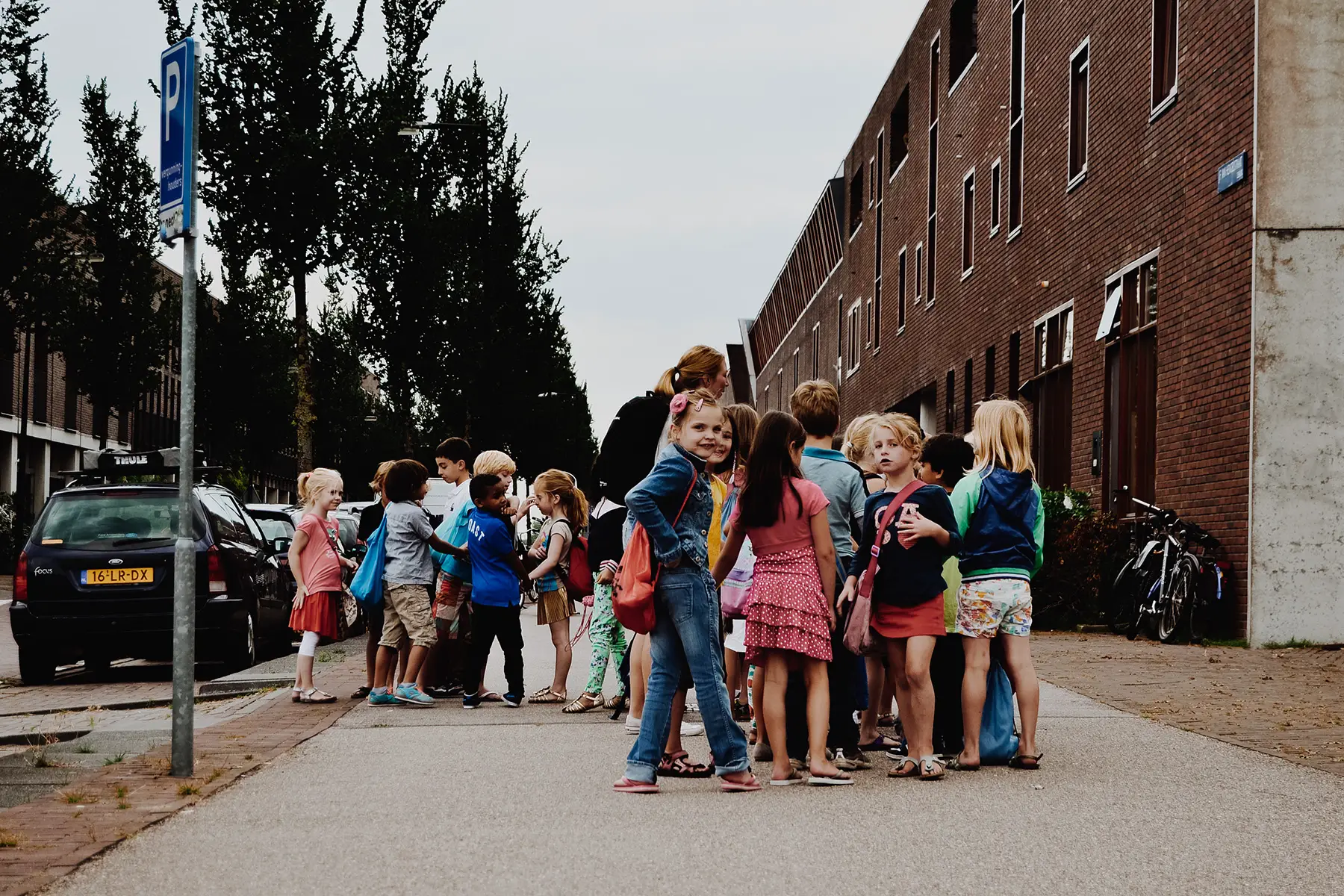
You can also find more informal, occasional forms of care such as playgroups (peutergroep) or babysitters (oppas), or use live-in services such as nannies or au pairs. However, you will only be able to use your childcare allowance for providers registered with the National Childcare Register (Landelijk Register Kinderopvang).
Useful resources
- Social Insurance Bank (Sociale Verzekeringsbank) – information on child benefit in the Netherlands
- Dutch Tax Office (Belastingdienst) – information about tax allowances in the Netherlands (in Dutch)
Related Articles



Editor's picks
 Human and civil rights in the NetherlandsFrom the right to protest to protection from discrimination, here's what you need to know about human rights in the Netherlands.
 Where to live in the Netherlands: the best cities for expatsAlthough Amsterdam is typically the number one hub for expats, there are plenty of other cities in the Netherlands worth your while.
 Primary schools in the NetherlandsConfused by the primary school system in the Netherlands? We explain how it works, from educational approaches to international options.
Did you find this guide helpful?