
'%20id='ico-down'%20stroke='%23000000'%20stroke-width='1.5'%3e%3cg%20transform='translate(1092.250000,%20254.750000)'%3e%3cpolyline%20id='Path-2-Copy-4'%20transform='translate(5.500000,%202.750000)%20scale(1,%20-1)%20rotate(-180.000000)%20translate(-5.500000,%20-2.750000)%20'%20points='0%200%205.5%205.5%2011%200'%3e%3c/polyline%3e%3c/g%3e%3c/g%3e%3c/g%3e%3c/svg%3e)


Education
Children's Education
Primary schools in Spain
Discover all you need to know about sending your child to primary school in Spain, be it state-funded, private, religious, or international schools.


Finding the right school for your child in Spain and getting them enrolled might seem like a huge undertaking. But help is at hand as this guide will outline the main types of schools in Spain and explain the enrolment process. We will also list the pros and cons of each type of school, making your choice a little easier.
The guide includes the following information:
St. Peter's School, Barcelona
Looking for a fully IB accredited school in Barcelona? Located in the city's Les Corts district, St Peter's international school offers IB programs for children aged 12 months onwards. Students enjoy an international, open-minded learning space that encourages academic excellence and personal growth. Give your little ones the best start in life at St. Peter's School.

The primary education system in Spain
Schooling is mandatory in Spain from ages six to 16. Educación Primaria (Primary Education) covers ages six to 12. There are three types of schools in Spain: state-funded, private-subsidized, and private. You will probably come across several acronyms, such as:
- CEIP (Centro de Educación Infantil y Primaria): These schools have preschool and primary-age facilities.
- CC (Colegio Concertado): State-supported private schools
- CPEIP (Centro Privado de Educación Infantil y Primaria): Private infant and primary schools
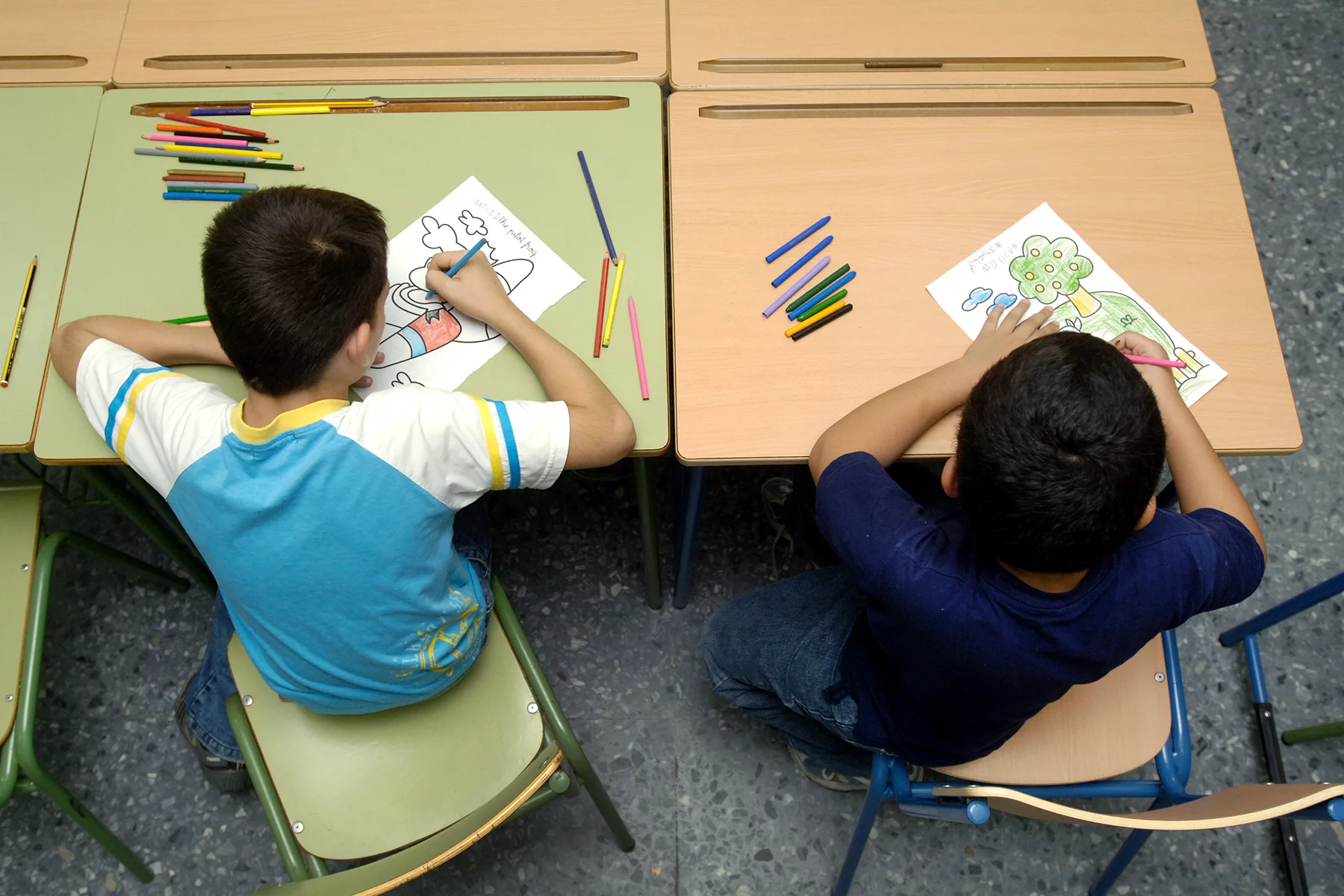
Most parents send their children to infant school while many primary schools also offer pre-school (Educación Infantil). For more information on how education works, check out our guide to education in Spain.
State/public primary schools in Spain
Public primary education is popular: Spain has nearly 14,000 public schools. State schools have, on average, 21 students per class, which is in line with other OECD countries. Tuition is free, but there are often extra costs, such as textbooks and school trips. Books alone can cost up to €200 per year, so it’s worth budgeting or shopping around for second-hand ones. However, it is unlikely you’ll need to buy a uniform as only about 13% of Spanish state schools require one.
As well as fully funded state schools, Spain has around 3000 colegios concertados. Most of these are Catholic and provide religious education at a lower fee than private schools. The state provides some funding, so they are under the supervision of the local authorities (Comunidades Autónomas).
Extra costs can include:
- A monthly fee: by law, this is voluntary, but in practice, most schools treat it as mandatory
- A uniform: not all schools require one, but they are more common in colegios concertados
- All the other costs are similar to a fully subsidized public school
The curriculum in state primary schools in Spain
Primary schools in Spain teach around 25 hours a week. There are two common types of school days, with these regular hours:
- Split school day (jornada partida): lessons 09:00 to 12:30, lunch break 12:30 to 14:30, lessons 14:30 to 16:00. Children either come home or stay at school to have lunch.
- Continuous school day (jornada continua): lessons from 09:00 until 14:00. Some schools add an extra half hour for lunch or two 15-minute breaks.
The Spanish school year begins in September and ends in June or July. Children have around two weeks free at Christmas, one or two weeks at Easter, and several weeks in summer. They also enjoy several national and regional holidays.
Primary schools in Spain teach several core subjects, which students take every year, including:
- Natural and social sciences
- Spanish language and literature
- Mathematics
- A first foreign language
Parents choose specific subjects for their child, including physical education (PE), religious education (RE), or social and civic values. Each school must provide three hours of PE per week. Finally, the Comunidad Autónoma lets schools offer additional topics, such as the co-official language.
Teachers use the following grading system to assess children:
- SB – sobresaliente (excellent)
- BI – bien (good)
- SU – suficiente (sufficient)
- IN – insuficiente (insufficient)
SB, BI, and SU are passing grades, while IN is a failing grade. Children are tested on language and math at the end of their third and sixth years. In their sixth year, they also take a test on science and technology. Students can repeat a year during the primary stage, but this is exceptional.
Extra-curricular activities are popular in Spain. There are many on offer, including sport, language clubs, and music, some also charge for membership or equipment. Visit our directory for information on after-school daycare.
The pros and cons of state schools in Spain
Pros
- Free tuition: There are costs associated with sending your child to school, such as textbooks, but it works out far cheaper than private school.
- Convenience: In theory, every child should find a free school place in their local municipality.
- Integration: As most children in the school will live locally, your child will integrate more readily. They will also learn Spanish or the local language more quickly.
- Choice: State schools in Spain have much freedom in their teaching methods. Therefore, you should be able to find a school that suits your child.
Cons
- Varying quality: While schools in Spain have freedom as to how they teach, some schools might be less suitable for your child.
- Over-subscription: Some schools have smaller quotas, making competition for a place higher.
- Integration: While young children might find it easy to fit in, older children with no Spanish might have more difficulty at a local state school. As well as the usual school pressures, they will have a language barrier to overcome.
- Fewer resources: Your local state school might be less well-equipped than a private school. Although private schools come at a high price, this pays for a higher standard of facilities.
Applying to state primary schools in Spain
If you decide to send your child to a state school in Spain, you need to research schools. You will find your local town hall (ayuntamiento) on the Department for Education website, which should provide a list of CEIPs. Each school has a yearly quota, handled on a first-come, first-served basis. Keep an eye on enrollment dates – schools usually make their spaces public between January and February for the coming school year.
To apply for a school placement for your child, make sure you register as a resident at the ayuntamiento. On their website, you can also find out how to apply to local schools. The first step is to complete an application form from the ayuntamiento. Many municipalities have an online platform to do this. Once you have completed the application, follow your chosen school’s instructions. Applications typically take place between March and April. By June or July, you should know which school accepted your child. Different schools follow different timelines, so keep in close contact.
Private primary schools in Spain
If you’re moving to Spain with young children, you’ll be pleased to know that there is a wide range of options to choose from when it comes to private primary schools. These include:
Before choosing the right school for your child(ren), be sure to research what would be the best option for your child in terms of educational programs, location, and extra-curricular activities. Depending on your situation, you should also make note of the costs involved in privately educating your child(ren) to avoid any unexpected costs.
Types of private primary schools in Spain
Just under a third of primary students in Spain attend a private school. Private primary schools in Spain require registration and tuition fees. They must meet specific class size and curriculum standards but are otherwise free to choose what they teach and how. As with public schools, the average primary school class size is 21 pupils.
Tuition fees usually begin at a few hundred euros per year. Still, they can reach €10,000 at some international private schools and over €30,000 for boarding options. There are several different types of private schools, some of which are listed below.
Religious schools
Most religious schools in Spain are colegios concertados connected to the Catholic Church. As the Ministry of Education supervises these schools, they must follow the same curriculum as state schools. The degree to which schools emphasize Catholic values varies; some schools have chapels and might teach prayer in lessons. In contrast, others consider religious expression as voluntary.
As well as Catholic colegios concertados, Spain has many private and international schools from other Christian churches and a few Jewish schools.
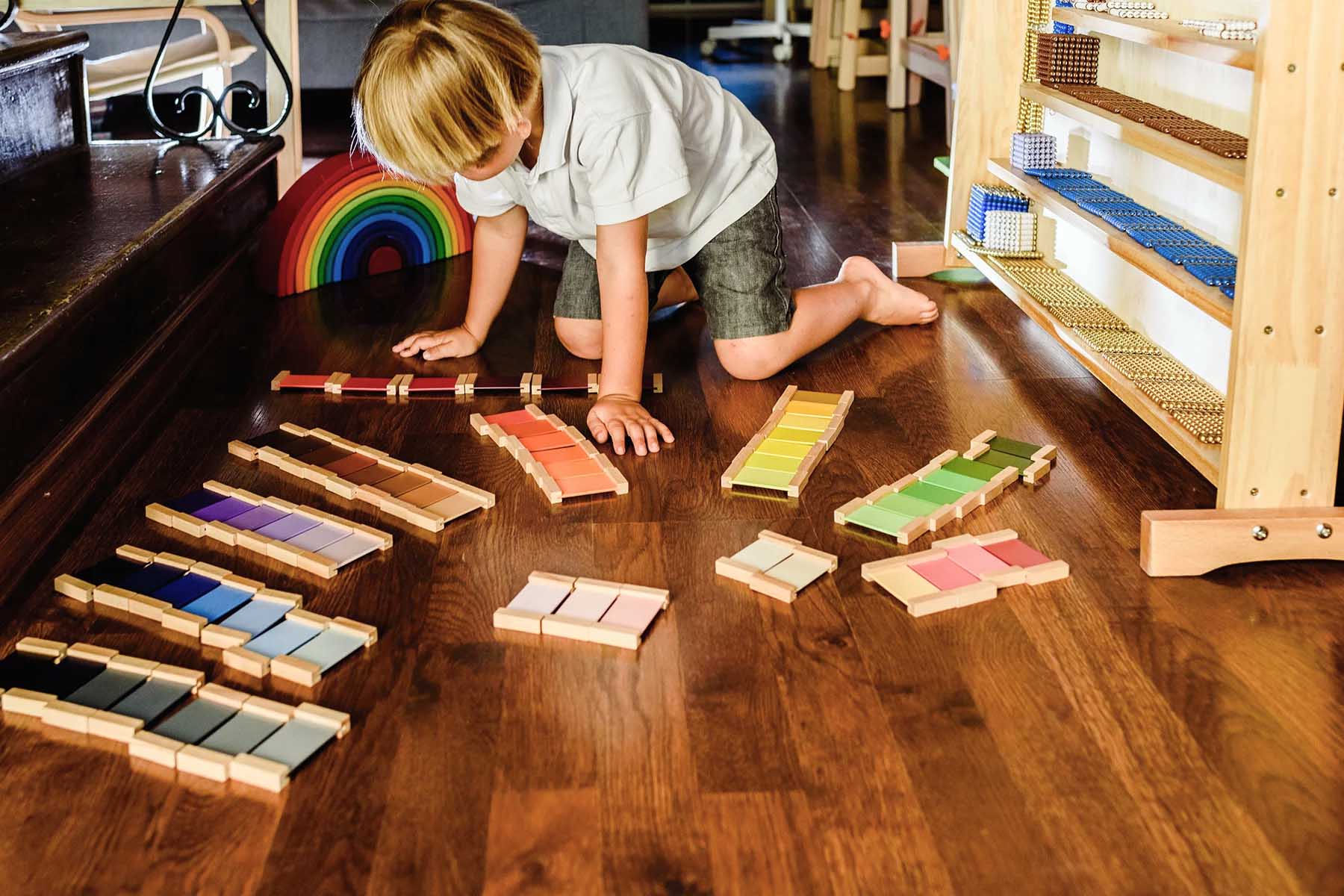
Montessori schools
Montessori schools are popular in many countries, including Spain, with at least 28 Spanish and international Montessori schools. Their curriculum focuses on child-led activities and hands-on learning.
Waldorf-Steiner schools
Waldorf–Steiner schools are another type of method school, of which there are over 70 in Spain. These schools encourage children to discover the world around them through their senses and experimenting. Additionally, there is a strong focus on nature and artistic skills.
International schools in Spain
There are 258 international schools in Spain spread across 27 cities. These schools teach in non-Spanish languages and follow curriculums from other countries. If you’re only in Spain for a short time, an international school might be a good fit for your child.
There are British, American, and French schools, among others. These include:
These can cost from €2,000 to €30,000 and up, depending on the school and whether you opt for boarding.
The pros and cons of international schools in Spain
Want to know whether an international primary school is the best choice? Consider the pros and cons:
Pros
- International schools often have better facilities
- Your child can study international qualifications, such as the International Baccalaureate (IB)
- Classes are usually smaller
- Your child can follow a familiar curriculum in their native language
- You can communicate with the school in your native language
Cons
- International schools can be costly
- It can be more challenging for children to integrate into the local community
- Not every city has an international school
Useful resources
- Ministry of Education and Vocational Training – gives updates and information on Spanish education
- Eurydice – provides a detailed outline of education systems in the Erasmus+ countries
- British Council in Spain – works with Spanish authorities to provide bilingual programs
Related Articles

Editor's picks
 Top 10 Spanish foods – with recipesWhat better way to explore Spain than with your tastebuds? From tasty tapas to delicious dishes, here are the best Spanish foods.
 Guide to getting health insurance in Spain in 2026Find out whether you need private health insurance in Spain in 2026, with insider info on costs, coverage, and medical professionals.
 Dating in Spain: finding love as an expatSingle and ready to mingle? Learn how to find love on Spain's dating scene, where casual meet-ups can spark genuine romantic connections.
Did you find this guide helpful?