
'%20id='ico-down'%20stroke='%23000000'%20stroke-width='1.5'%3e%3cg%20transform='translate(1092.250000,%20254.750000)'%3e%3cpolyline%20id='Path-2-Copy-4'%20transform='translate(5.500000,%202.750000)%20scale(1,%20-1)%20rotate(-180.000000)%20translate(-5.500000,%20-2.750000)%20'%20points='0%200%205.5%205.5%2011%200'%3e%3c/polyline%3e%3c/g%3e%3c/g%3e%3c/g%3e%3c/svg%3e)


Living
Government & Law
The Spanish government: politics in Spain
Discover more about Spain’s political system, the local and national political parties, its government, and the like.
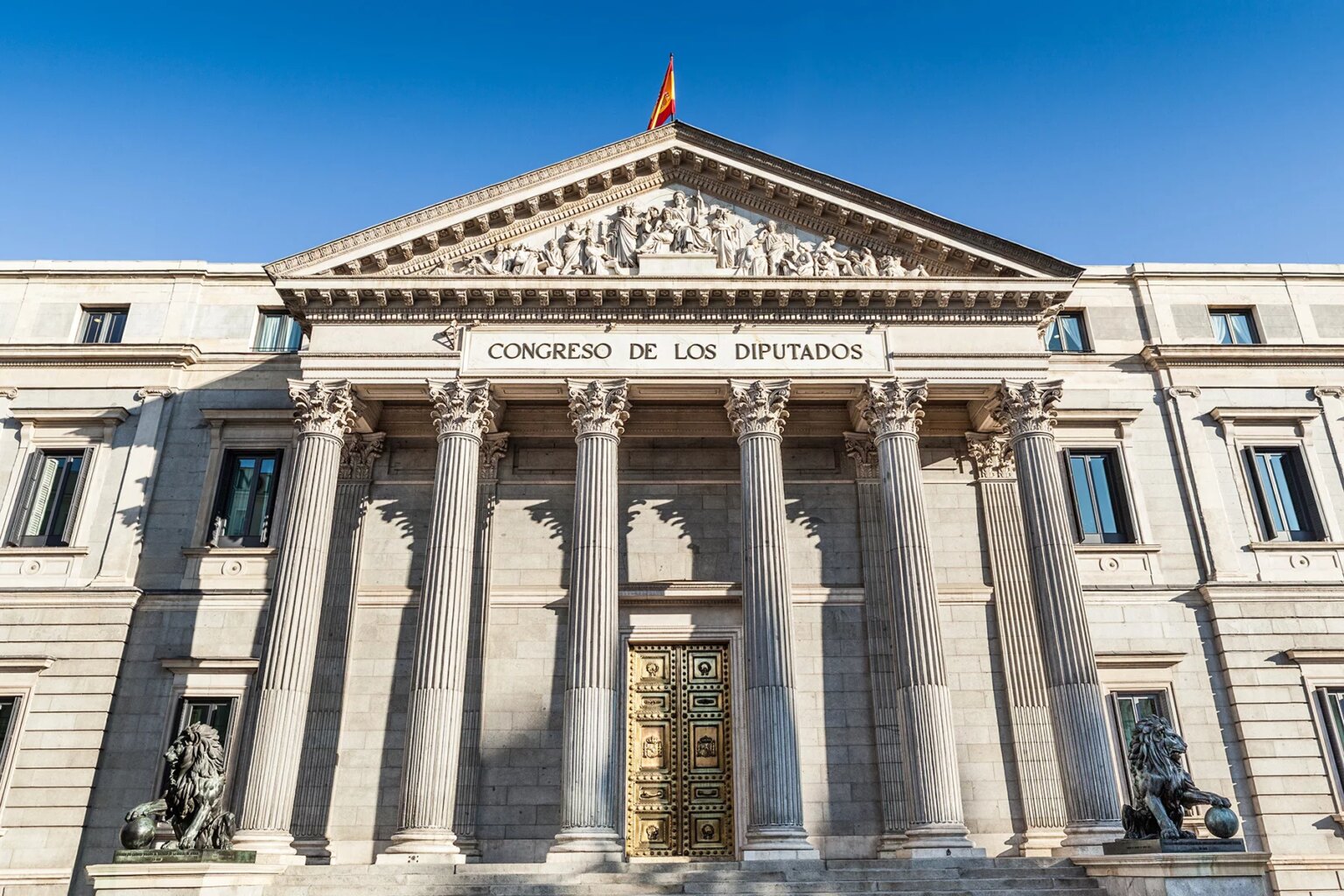
When moving to a country as exciting as Spain, there can be a lot to get your head around. From finding somewhere to live to finding a job that you love, there is often a lot on your to-do list. And that’s without even mentioning finding your local tapas bar!
However, if you’re considering relocating to Spain, it’s also a good idea to gain a deeper understanding of this diverse country. And one way to do this is to read up on its national and regional politics. After all, in times of national crisis, it’s important to know who you should be listening to.
Here’s what you need to know:
Ground News
Get every side of the story with Ground News, the biggest source for breaking news around the world. This news aggregator lets you compare reporting on the same stories. Use data-driven media bias ratings to uncover political leanings and get the full picture. Stay informed on stories that matter with Ground News.

Introduction to the political system in Spain
Spain is classified as a democratic constitutional monarchy, which is also known as a parliamentary monarchy. This means that the ruling monarch acts as the largely ceremonial head of state. The democratically elected Prime Minister, meanwhile, acts as the head of the national government. Spain ranks relatively high in the 2023 EIU Democracy Index, coming in at position 23.
The current political system in Spain has been in place since La Transición. This was a period in the late 1970s that saw the country transition from dictatorship to democracy under the former king, Juan Carlos I, after decades of General Francisco Franco’s military rule. This transition involved the enactment of the Spanish constitution in 1978. This serves as the framework for the current national and regional political systems.
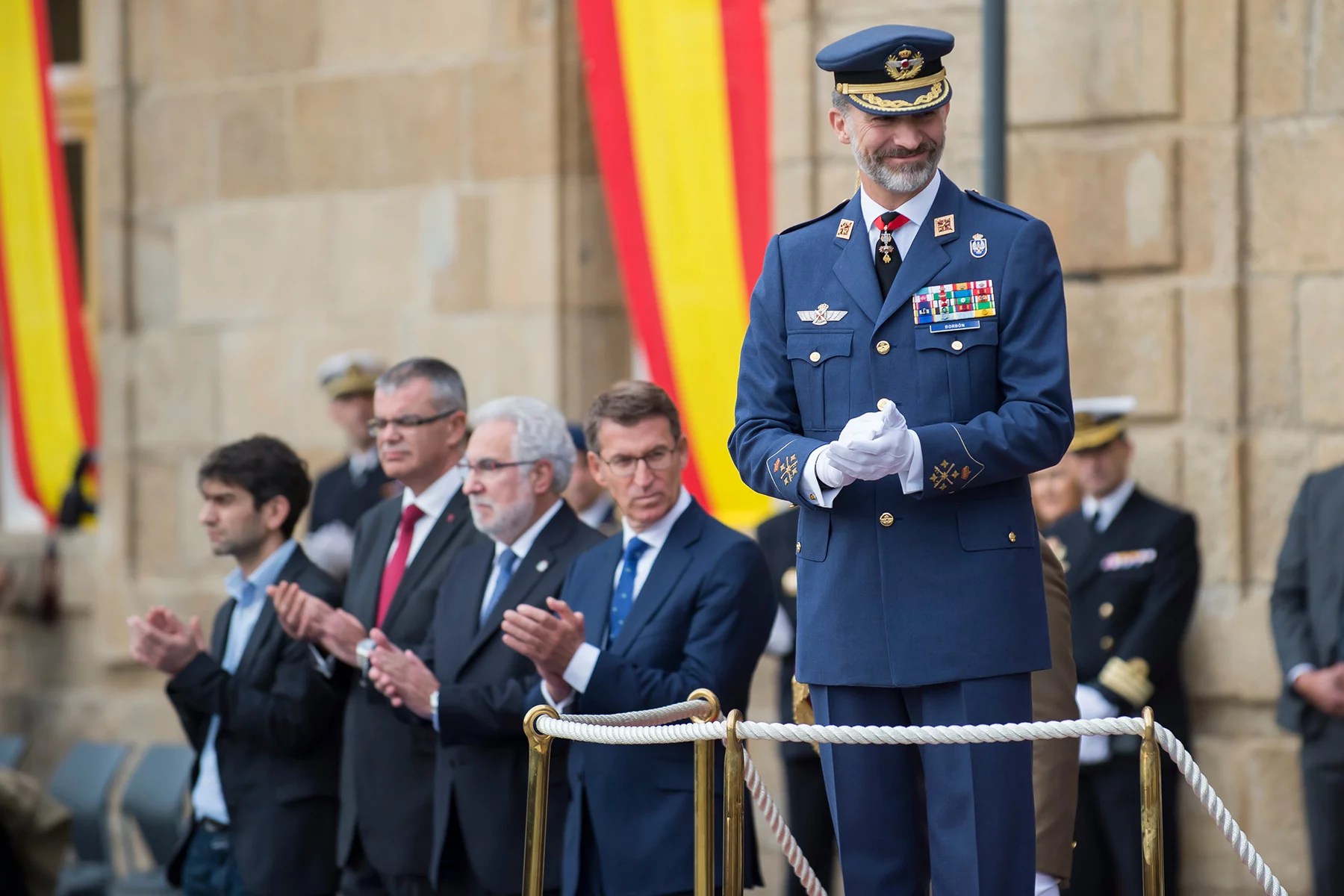
As of July 2021, the current head of state is Felipe VI. He came to the throne in 2014 following the abdication of his father, Juan Carlos.
The current leader of the national government is Pedro Sánchez, head of the Spanish Socialist Workers’ Party (PSOE). He became Prime Minister in June 2018.
Branches of government in Spain
Enacted in 1978, the Spanish constitution outlines the separation of powers into the executive, legislative and judicial branches. It also advocates the essential values of freedom, justice, and equality, among many other pillars of the current Spanish democratic system. These three branches of government act as follows:
- Executive: Spain’s Prime Minister (currently Pedro Sanchez) leads the national government, the executive branch of Spain’s governmental system. This branch includes the deputy Prime Ministers and other ministers.
- Legislative: Spain’s parliament, or the Cortes Generales, is the legislative branch and comprises two chambers: the directly-elected lower house, Congreso de los Diputados (Congress of Deputies) and the upper house, Senado (Senate).
- Judicial: Spain’s judges and magistrates make up the judicial branch and are independent, liable, and subject only to the rule of law. The president of the Tribunal Supremo (Supreme Court) is nominated by 20 judges of the General Council. These judges are appointed through a three-fifths vote in parliament.
Under the national branches of government, Spain’s regions, or autonomous communities (Comunidades Autónomas) are also organized along these lines. They each consist of an executive and a legislative body, with their own Statute of Autonomy, approved by the national parliament. However, the exact structures vary between the communities. Furthermore, more power is devolved to the “historic nationalities” in the Basque Country, Catalonia, and Galicia.
Political parties in Spain
There are a number of political parties in Spain, and many of them operate at local, regional, and national levels. Here is a brief overview of the main political parties in Spain:
- Partido Socialista Obrero Español (PSOE): Founded in 1879 and known as the Spanish Socialist Workers’ Party in English, PSOE is the oldest party currently active in Spain. It has been in government longer than any other political party in modern democratic Spain. The party has a largely progressive ideology. Pablo Iglesias Posse, a union organizer, found the party. As of July 2021, the current leader is Prime Minister Pedro Sanchez.
- Partido Popular (PP): Formed back in 1976 by Manuel Fraga, a Spanish professor and politician under Franco’s dictatorship, the Popular Party (in English) has a liberal-conservative, Christian-democratic ideology. The party was in power until 2018 and is currently in opposition and led by Pablo Casada.
- Unidas Podemos (UP): Previously known as Unidos Podemos, this alliance of smaller progressive parties was created in the run-up to the 2016 general election. These include Podemos, Izquierda Unida, and other smaller parties. The party has been in the governing coalition with PSOE since the 2020 general election. UP is currently led by Yolanda Díaz Pérez.
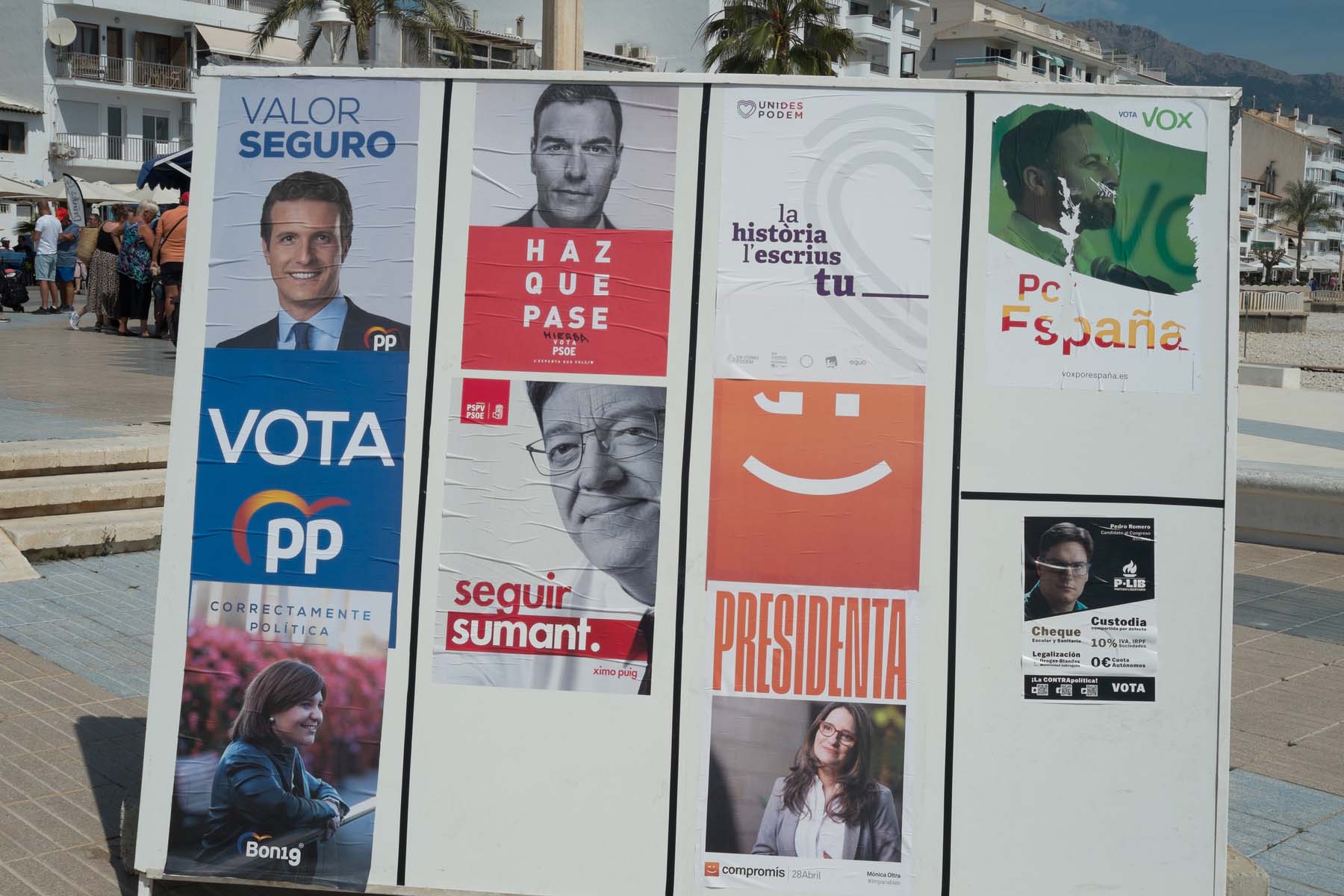
- Ciudadanos (Cs): Known as Citizens in English, this party came into being in Catalonia back in 2006. It is a liberal-conservative, pro-European party. Since then, Ciudadanos‘s fortunes have varied significantly. The current party president is Inés Arrimadas.
- Vox: Former members of the Partido Popular found this anti-immigration, nationalist party in 2013. It has risen in popularity over recent elections, both on a national and regional level. Vox is led by Santiago Abascal.
The Spanish Prime Minister: who holds power in Spain?
Pedro Sánchez, Secretary-General of the progressive PSOE party, has been Prime Minister since 2018. The former basketball player-turned-economist came to power following a vote of no confidence of the previous Prime Minister, Mariano Rajoy, of the Partido Popular. At that time, the government had been involved in a corruption scandal, and Rajoy was accused of failing to take responsibility for his party’s role in this.
Despite only being in power since 2018, Sanchez’s time in office has been bumpy, to say the least. Firstly, there was not one but two general elections held in 2019 (in April and November, respectively). Sanchez’s PSOE party received the most votes in both of these elections. However, they failed to gain a majority in either, forcing them into coalition negotiations with other progressive parties. Sanchez also faced a vote of no confidence in his leadership in October 2020, which was tabled by members of Vox.
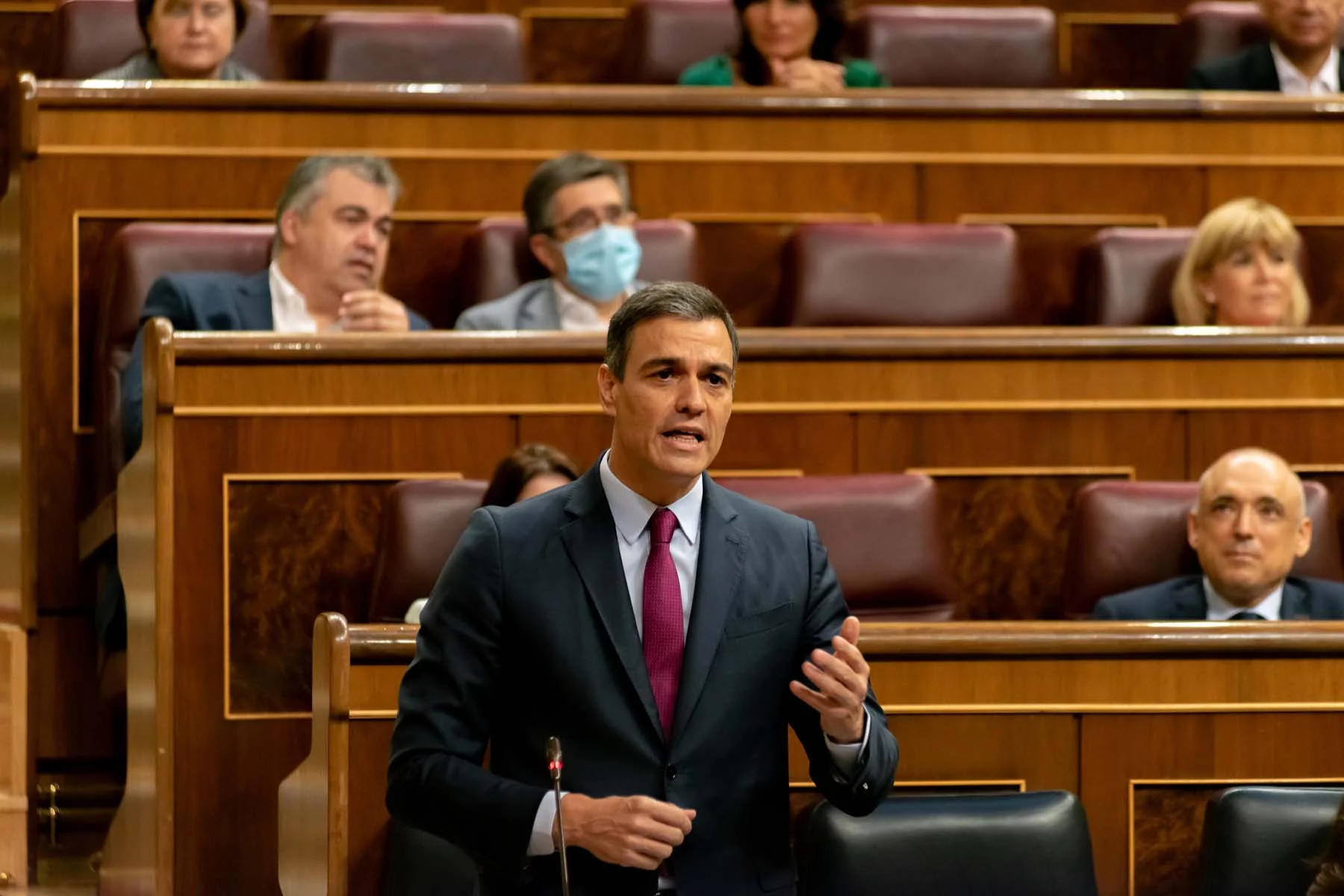
In 2024, his wife, Begona Gomez, is facing a judicial investigation for alleged corruption and influence peddling. Meanwhile, his brother has been targeted by an investigation into how he got a job in a provincial government’s culture department.
In a response, Sánchez has said he and his family are victims of a rightwing smear campaign and accused the PP of “colluding with judges.” He also claims that neither of his family members has done anything wrong.
Spanish general election: July 2023
The most recent general election in Spain took place in July 2023. It had a voter turnout of 66.6%.
In the closest election since 1996, the PP had the largest increase in support, winning 137 seats in Congress. The PSOE came in second, gaining over 1 million more votes compared to previous elections. This marked its best result since 2008 in terms of total votes and vote share.
Neither the left nor the right bloc won a majority.
After Alberto Núñez Feijóo from the PP failed to form a government, former and current Prime Minister Pedro Sánchez from the PSOE negotiated coalition agreements with Junts and other regionalist and nationalist parties. He subsequently won re-election as Prime Minister with an absolute majority of 179 votes on 16 November.
Spain’s electoral system
Terms for the national Spain parliament (Cortes Generales) typically last four years. After this, a general election is held to elect the next set of parliamentary representatives. However, general elections can take place before the end of the four-year term if the Prime Minister calls an early election; as Sanchez did in 2019. The current parliamentary term is due to expire in 2027.
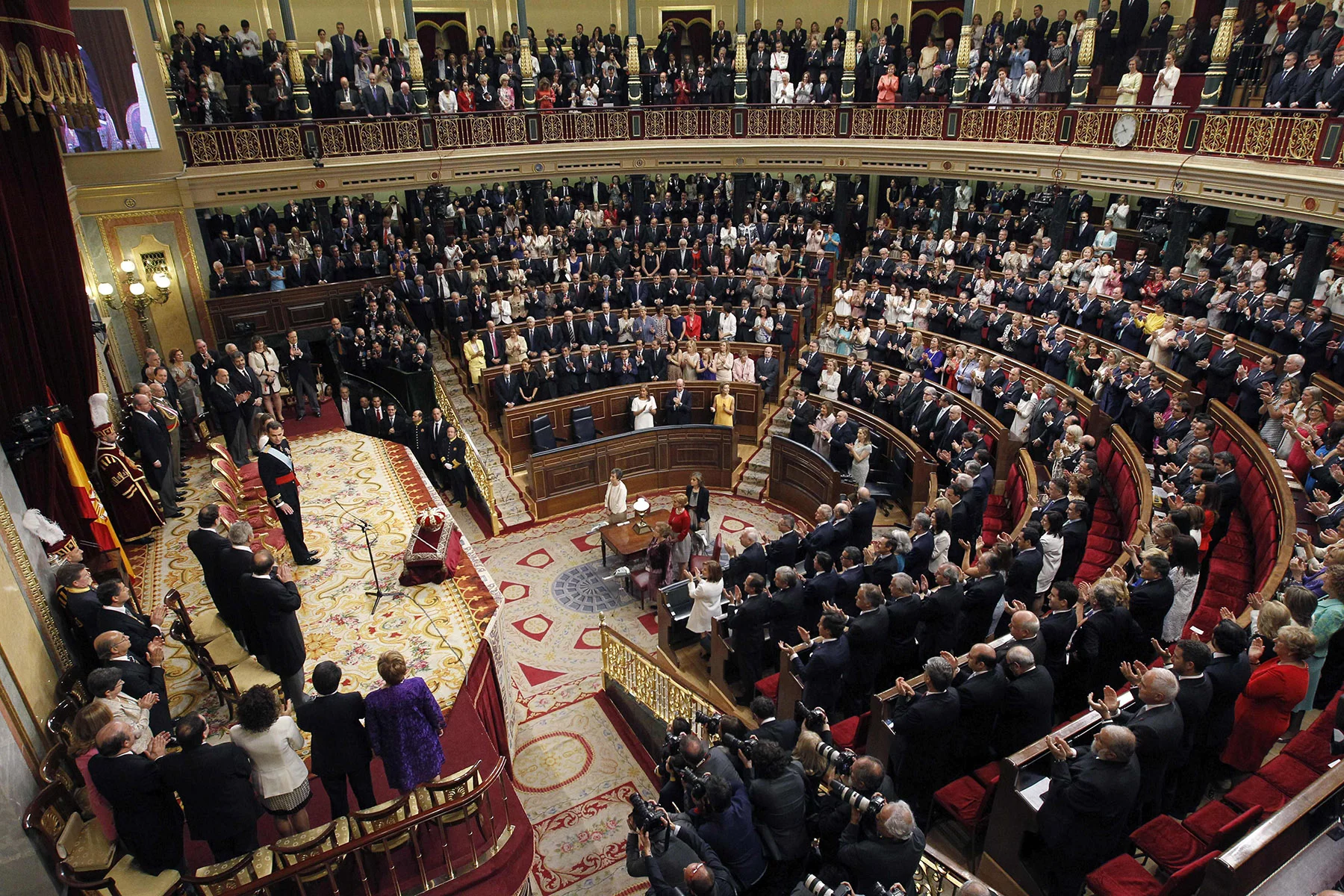
General elections in Spain see the public directly elect members for both houses of the Spanish parliament: the Congress of Deputies (Congreso de los Diputados) and the Senate (Senado). Below is an overview of both houses:
- Congress of Deputies: The lower house of the Spanish parliament consists of 350 elected officials representing 52 constituencies across the country. All 350 seats are directly elected in a general election, through universal adult suffrage. The Congress has greater legislative power than the Senate and meets at the Palace of the Parliament (Palacio de las Cortes) in Madrid.
- Senate: The upper house of the Spanish parliament consists of 265 members and meets in the Palace of the Senate (Palacio del Senado) in Madrid. A total of 208 members of the Senate are directly elected in a general election through universal adult suffrage. Regional legislatures appoint the remaining 57 senators.
Voting in Spain
Universal suffrage was originally granted during Spain’s Second Republic (1931-6), when women were finally given the right to vote. Franco revoked this during his rule, but it was brought back in 1977 as part of Spain’s transition back to democracy. Today, all Spanish citizens aged 18 or above are eligible to vote and can do so as long as they are registered.
Spain’s electoral system is mostly based on the d’Hondt method of party-list proportional representation. This features in elections at the country’s four administrative levels: general elections, regional elections, local elections, and elections to the European Parliament. General elections take place on Sundays, and local elections often take place on the same day as regional and national votes.
Can I vote in a Spanish election?
That largely depends on your circumstances and which election you want to vote in. Only Spanish citizens can vote in general elections. However, if you are an official resident of Spain and an EU citizen, you can vote in local municipal elections. EU citizens can also vote in European elections – as well as in all EU member states – while living in Spain.
Local and regional government in Spain
In addition to the national government, there are three other tiers of government in Spain that you should be aware of when moving to the country. Regional identity, in particular, is extremely strong in certain parts of Spain, and because of this, regional electoral politics can play a leading role in political discourse throughout the country.
Regional politics in Spain
There are 17 regions in Spain – known as autonomous communities (Comunidades Autónomas) – as well as two autonomous cities on the North African coast, Ceuta and Melilla. The 1978 Constitution emphasized the right to autonomy and self-government for these communities, whose regional identities had suffered decades of suppression under General Franco. However, Spain is not a federal state in the same vein as Germany, Brazil, or the United States. Instead, it is a decentralized unitary country, with the central government retaining full sovereignty.
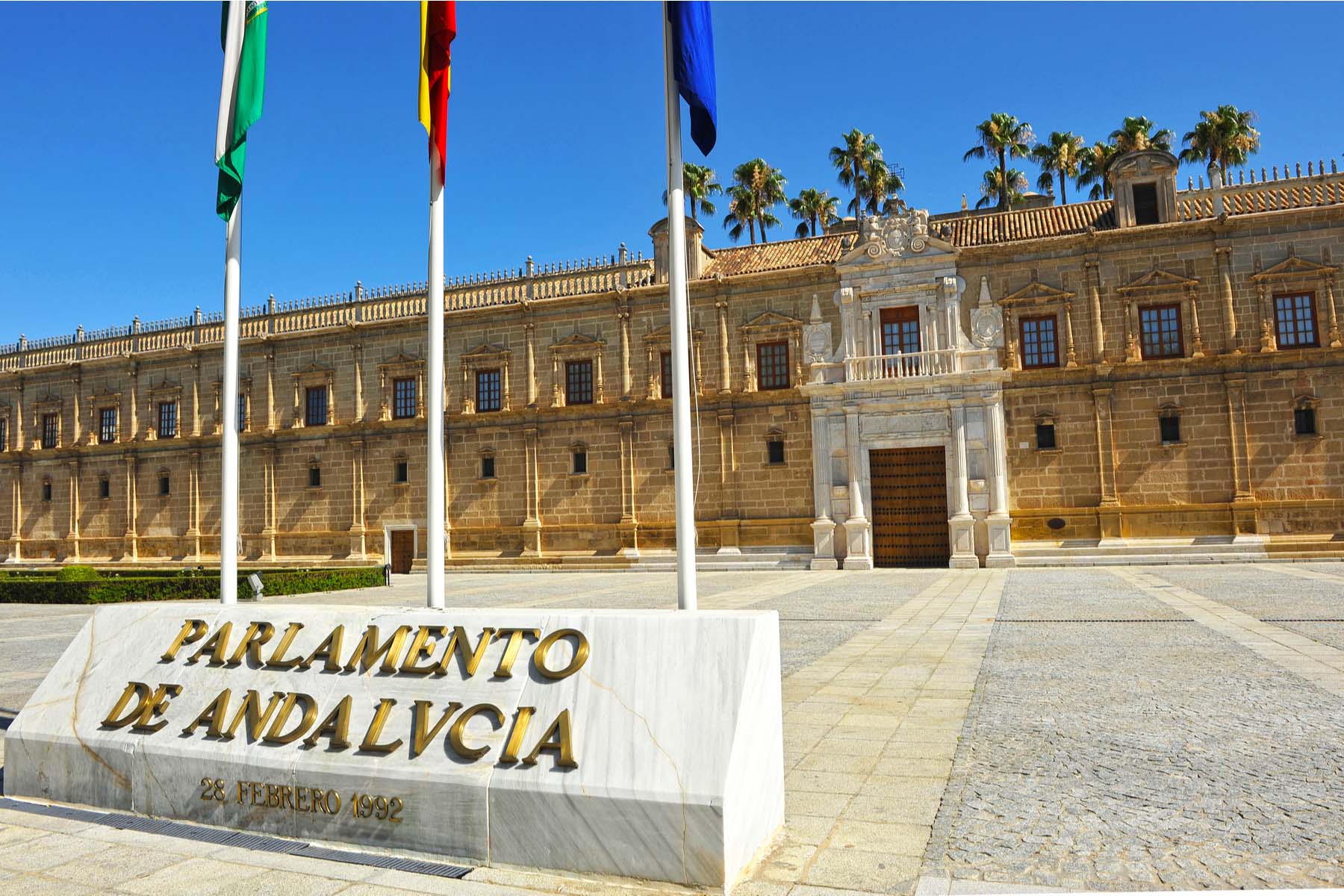
The autonomous communities are organized along the same lines as the national parliamentary system. Each regional parliament has an executive branch – led by a regional president – and a legislative branch with its own Statute of Autonomy, approved by the national parliament. Each autonomous parliament has its own set of devolved powers, although the nature of these powers varies between the communities. For instance, the “historic nationalities” – the Basque Country, Catalonia, and Galicia – are given more power.
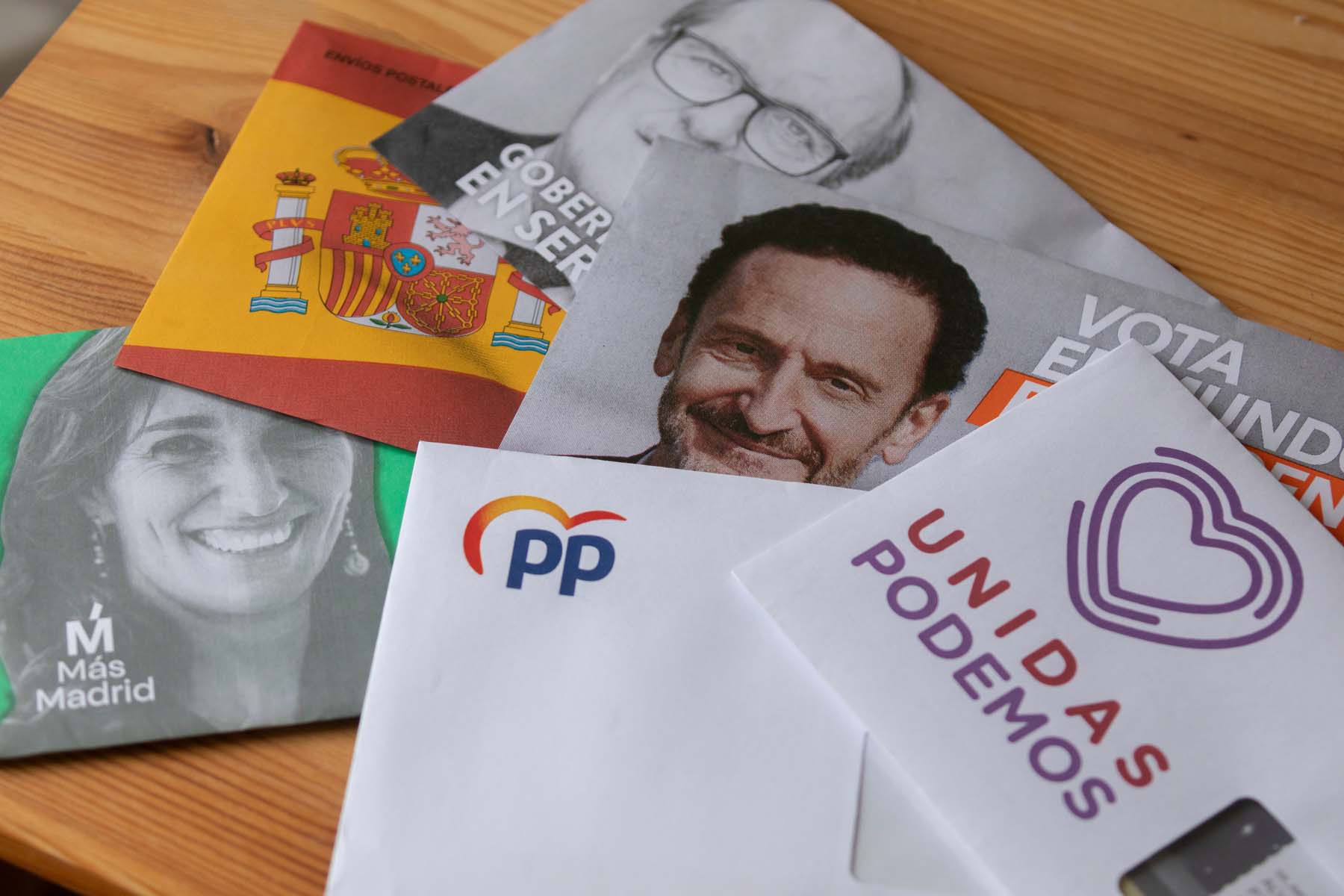
Generally speaking, the main national political parties also have representatives in Spain’s regional parliaments. This is especially true for the more established parties of PSOE and PP. However, in these autonomous communities, regional political parties also play a significant role, attracting high vote shares and, in some cases, gaining the highest number of seats. They are also traditionally stronger in these “historic nationalities.” The number of more locally-focused parties, however, is increasing, so you should search online to find out more about the political parties active in your region.
Regional elections in Spain
As with the national government, voters elect members of all regional parliaments for four-year terms. However, the regional president does have the power to dissolve parliament and call early elections. The number of seats in each regional parliament varies between Spain’s autonomous communities. In most of these communities, elections take place on the last Sunday of May, along with local municipal elections.
Local politics in Spain
Local government in Spain operates at the municipal level, with residents electing local councilors who then choose a mayor (alcalde). The mayor then appoints a board of governors for the local municipality. In Spain, local municipalities are responsible for the local police, traffic policy, urban planning, social services, and certain taxes.
The political landscape in Spain
Along with the rest of Europe and, indeed, the world, the 20th-century was a tumultuous period for Spain and its politics. However, as we move ever further into the 21st-century, events of the last hundred years continue to resonate in Spanish politics and wider society. To give you an insight into the current political landscape within the country, we take a brief look into some of the tensions in Spain.
The Spanish Civil War
Spain’s bloody Civil War (Guerra Civil) took place from 1936 to 1939, between Republican and Nationalist forces. Following the Nationalist victory, the country entered a period of military dictatorship, under General Franco. This continued until the late 1970s when Spain transitioned back to a democratic state. Despite ending over 80 years ago, the brutal nature of the conflict and the dictatorship following the Civil War means that it still influences modern party politics and wider Spanish society. Understandably, therefore, the legacy of the civil war remains a highly contentious issue in Spain.
Regional separatism
The separatist movements in the autonomous communities of both the Basque Country and Catalonia have been a continuous source of political tension in Spain in recent years.
Basque separatism
Located in the north of Spain, the Basque Country is an area with a distinct local identity, including its own language, Basque (vasco/Euskara), and culture. Following elections in 2020, both the largest governing party and the largest opposition party in the regional Basque parliament are Basque nationalist parties. However, the movement gained international attention decades earlier due to the armed separatist group ETA (Euskadi Ta Askatasuna). The group carried out a series of violent, fatal attacks across Spain from the late 1960s but officially dissolved in 2018.
Catalan separatism
Recent decades have seen the movement for Catalan separatism grow in prominence, both nationally and internationally. Located in the northwest of Spain, the region also has a distinct local identity. The movement for Catalan independence has a long history; dating back to the founding of the first pro-independence party, Estat Català (Catalan State), in 1922. Following the establishment of regional parliaments, Catalan nationalist parties have typically performed well in regional elections.
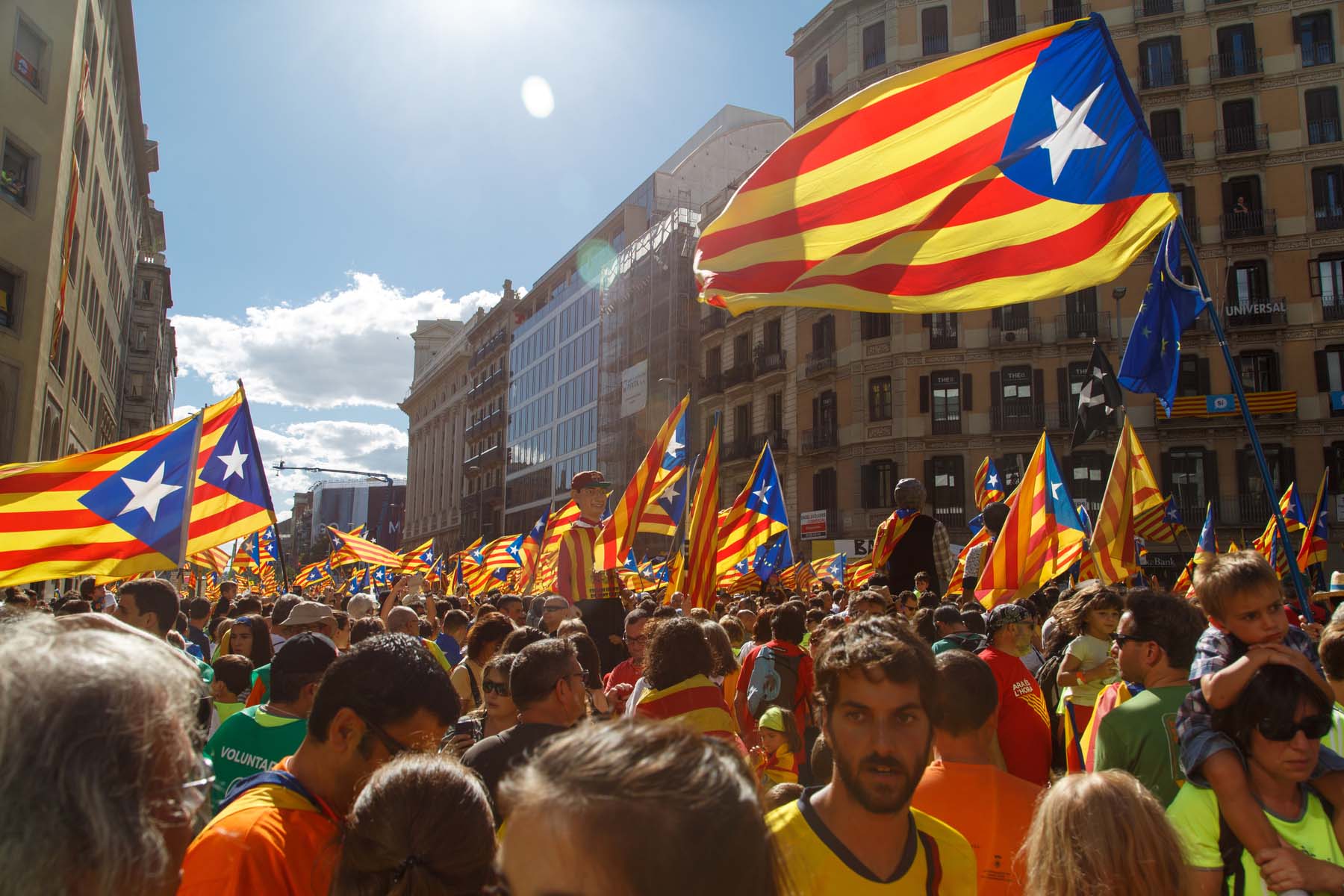
In 2014, a Catalan separatist movement initiated a symbolic referendum, which was outlawed by the central government. More pro-independence demonstrations followed along with a further referendum in October 2017. The majority (90%) voted in favor of independence, but voter turnout was low, at just 43%. Once again, the central government saw this vote as illegal and sent police forces into Catalonia to prevent voters from casting their ballot. As a result of the violent scenes, many international leaders called for calm and dialogue.
A few weeks later, the Catalan Parliament approved a resolution declaring independence from Spain. The then-Prime Minister Mariano Rajoy retaliated by dismissing the Catalan parliament, and new elections took place in December 2017. Many of the leaders involved in the declaration of independence went into detention in 2018 and faced insurrection charges. To avoid charges, Carles Puidgemont, the Catalan president at the time of the declaration of independence, fled the country. In 2021, Pedro Sánchez pardoned the nine leaders of the breakaway attempt.
Recessions and COVID-19
The 2008 Global Financial Crisis hit the Spanish economy hard. This was partly due to the collapse of the real estate and construction sector. Almost half of the under-25 population had no job, while more than a million people left the country in search of a new life overseas. The fallout of the crisis also led to a political realignment in the country, as new movements challenged the status quo.
The COVID-19 pandemic and the ensuing economic crisis have also affected Spain. This is particularly acute in areas that are reliant on tourism from other European countries. While the fallout from the pandemic remains to be seen, the relative volatility in Spanish politics over the last decade or so is likely to impact the country’s political landscape even further.
Spain and the European Union
Spain has had economic and political ties with European Union since 1970 and became a member state in 1986. In 1999, the country entered the Eurozone as one of its first members; replacing the peseta with the euro, which remains the country’s currency.
Traditionally, Spanish citizens have supported the European Union, especially during times of economic growth. However, following the global economic crisis of 2008, levels of support for the EU reduced as the Spanish economy suffered significantly. Attitudes have shifted as Spain rebounded from the crash, although support remains changeable.
European elections in Spain
As a member of the European Union, Spanish citizens are represented in the EU parliament by 59 representatives. All EU citizens living in Spain are able to vote in EU parliamentary elections. These take place every five years. The next election will take place in 2029.
Related Articles

Editor's picks
 Top 10 Spanish foods – with recipesWhat better way to explore Spain than with your tastebuds? From tasty tapas to delicious dishes, here are the best Spanish foods.
 International schools in SpainWant to send your child(ren) to an international school in Spain? Find out everything you need to know about fees, exams, and more.
 Guide to getting health insurance in Spain in 2026Find out whether you need private health insurance in Spain in 2026, with insider info on costs, coverage, and medical professionals.
Did you find this guide helpful?