
'%20id='ico-down'%20stroke='%23000000'%20stroke-width='1.5'%3e%3cg%20transform='translate(1092.250000,%20254.750000)'%3e%3cpolyline%20id='Path-2-Copy-4'%20transform='translate(5.500000,%202.750000)%20scale(1,%20-1)%20rotate(-180.000000)%20translate(-5.500000,%20-2.750000)%20'%20points='0%200%205.5%205.5%2011%200'%3e%3c/polyline%3e%3c/g%3e%3c/g%3e%3c/g%3e%3c/svg%3e)


Living
Transportation
Public transportation in Germany
From high-speed trains and modern trams to rowing boat ferries and dangling rail carriages, the options for public transportation in Germany are almost endless.


Getting around Germany using public transportation is a delight. With modern infrastructure and well-integrated connections, planning your route and buying your tickets is simple. Whether you’re commuting or just traveling for pleasure, here are some key topics to get you started:
Omio
Want to fly away from it all? Or maybe you're looking for a family adventure by train? Wherever you're going, Omio can help you find the best deals for your journey. This one-stop shop lets you compare a range of transport modes, explore new destinations, and buy tickets at the touch of a button. Wherever adventure takes you, get there with Omio.

Public transportation in Germany
There are a wealth of options when it comes to avoiding driving in Germany. With an effectively nationalized railway network, crossing the country by train means buying a ticket from Deutsche Bahn. At the local level, Germany’s states manage buses, trams, metro networks, suburban trains, and ferries.
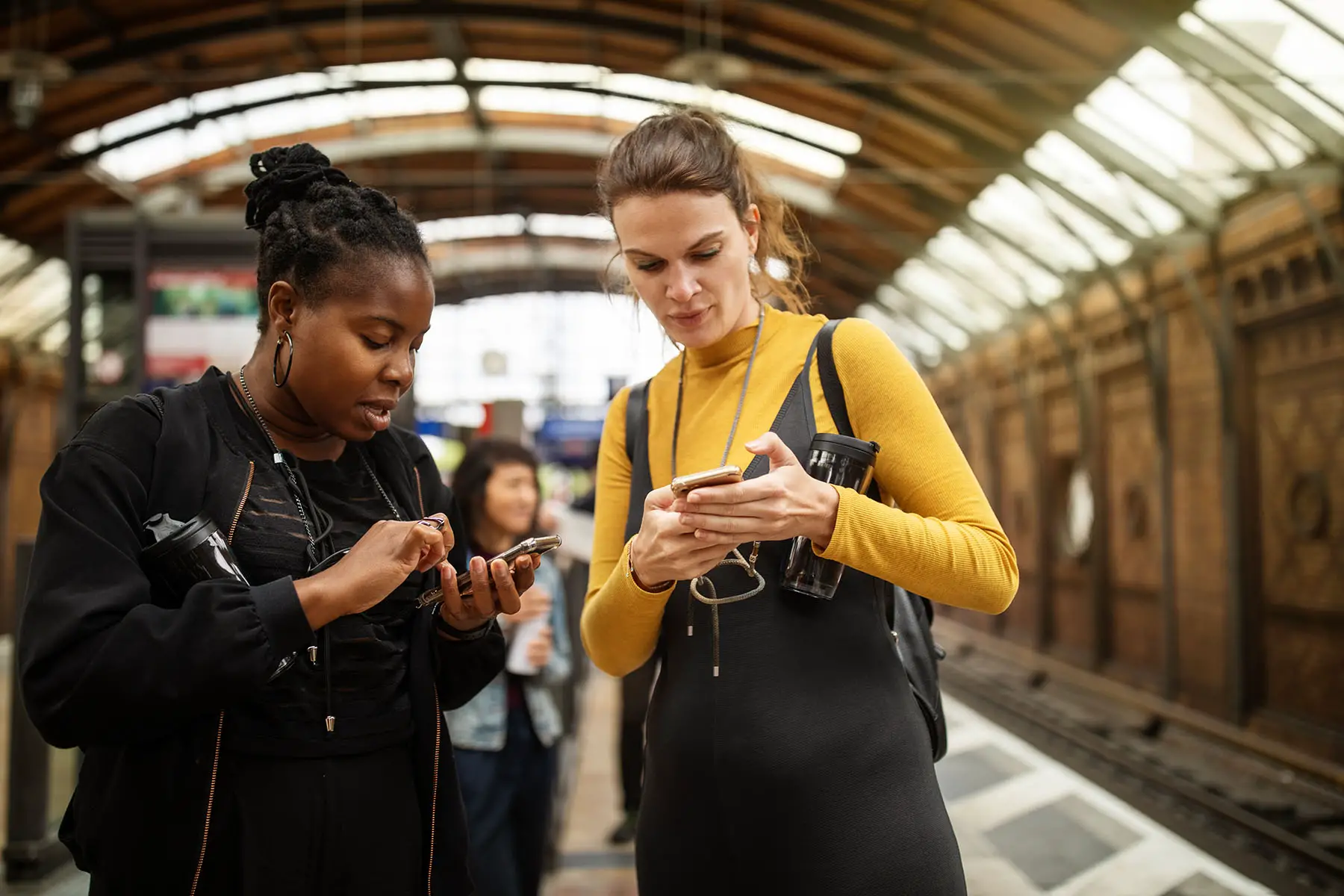
Public transportation systems in Germany are safe, efficient, and fairly easy to use. As a result, some German cities are starting to shake off the stereotype of being a car-loving nation; only 30% of trips in Berlin are by car, while 33% of trips in Munich are. Across the country, 30 million passengers use public transportation in Germany on an average day.
Public transportation apps in Germany
There are quite a few route-planning and ticketing apps available to make using public transportation in Germany easier. Some of these include:
- Citymapper is available in a handful of German cities, including Berlin, Cologne, Dortmund, and Hamburg. Citymapper is available for Android, iOS, and in your browser.
- FAIRTIQ is an alternative ticketing app. It works with local public transportation authorities in Germany, including Aschaffenburg, Flensburg, Göttingen, Halle, Lörrach, Mittelthuringen, and Oberelbe. FAIRTIQ is available for Android and iOS.
- Google Maps has probably the widest availability of them all, with integrated timetables and route-planning across most of the country. Google Maps is available for Android, iOS, and in your browser.
- Öffi covers almost all local and regional transportation networks in Germany. Öffi is available for Android.
- Omio is a great tool for comparing and booking different transport options, especially trains, buses, and flights.
Many of Germany’s local public transportation authorities also have their own apps, offering route planners, ticket purchases, network maps, and service timetables directly from your Handy (that’s mobile phone in German). A few companies have their own app, such as:
- Berlin’s BVG
- Cologne and Bonn’s VRS
- Dresden’s DVB
- Frankfurt am Main’s RMV
- Hamburg’s HVV
- Munich’s MVV
- Nuremberg’s VGN
- Rhein-Neckar’s VRN
- Rhein-Ruhr’s VRR
For train passengers, the national railway company, Deutsche Bahn, has an app of their own. DB Navigator allows passengers to search for itineraries, book their tickets, and check train compositions.
Trains in Germany
The rail network in Germany is one of the biggest and busiest in the world. Passengers traveled a staggering 47.439 billion kilometers along Germany’s 33,399-kilometer-long rail network in 2021 (and that’s not even accounting for passengers not riding with Germany’s state-controlled railway company). As a large and densely-packed country in the heart of Central Europe, German trains do a lot of heavy lifting.
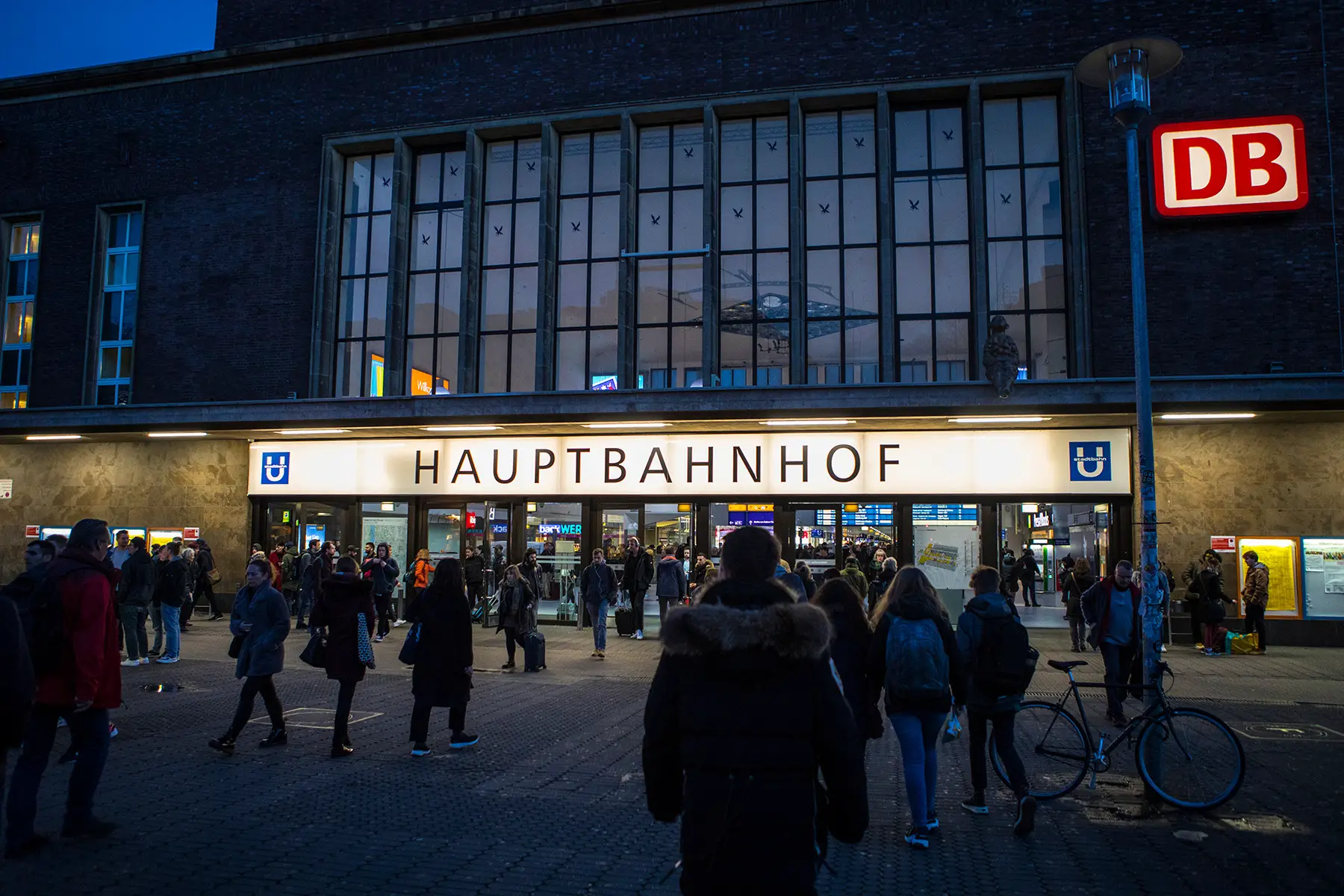
Germany’s main railway company is Deutsche Bahn, or DB for short. Although Deutsche Bahn is a private company, Germany is the company’s sole shareholder; in practice, Deutsche Bahn is basically a state-run railway provider. DB runs high-speed, intercity, regional, and urban trains throughout the entire country, as well as some cross-border routes.
While the vast majority of trains in Germany are painted in DB’s familiar shade of red, a few other companies do offer service in Germany. Eurostar has some high-speed routes partially in Germany, while ÖBB (Austrian Federal Railways) has night trains that through German stations. Open-access train operators such as Flixtrain also operate limited services in Germany.
In general, there are three types of train services in Germany connecting major urban areas:
- Intercity-Express (ICE): high-speed trains that reach speeds up to 320km/h. ICE trains have first-class seating and a dining car.
- Intercity (IC): express trains. IC trains have first-class carriages and usually also have catering services of some kind.
- EuroCity (EC): Intercity trains with scheduled stops outside of Germany. Not all Intercity-type trains that travel outside of Germany are EC trains, however.
Despite the enduring stereotype of German punctuality, German trains are increasingly running late. Deutsche Bahn could once boast that 95% of their trains arrived on time; however, in 2021, only about 75% of DB trains operated according to their schedule.
Urban and regional trains in Germany
In addition to intercity services, Germany also has regional and urban train services. These services include:
- Interregio-Express and Regional-Express: regional trains providing service between cities and towns within a specific region.
- Regionalbahn: local trains that have scheduled stops at all stations along a particular route.
- S-Bahn: local trains that connect urban centers with their surrounding suburbs.
- U-Bahn: metro networks within a city.
Deutsche Bahn generally runs Regional-Express, RegionalBahn, and S-Bahn networks, although some private train companies do exist; there are dozens of regional train services in Germany. U-Bahn networks and trams are run by municipal public transportation authorities in Germany.
There are 14 S-Bahnen (suburban rail networks) in Germany:
- Berlin
- Bremen
- Dresden
- Hamburg
- Hanover
- Magdeburg
- Mitteldeutschland (covers the area surrounding Leipzig as well as Halle)
- Munich (München)
- Nuremberg (Nürnberg)
- Rhein-Main (covers the area surrounding Frankfurt am Main)
- Rhein-Neckar (covers the area surrounding Heidelberg and Mannheim)
- Rhein-Ruhr (covers the area surrounding Bonn, Cologne [Köln], Dortmund, Düsseldorf, and Essen)
- Rostock
- Stuttgart
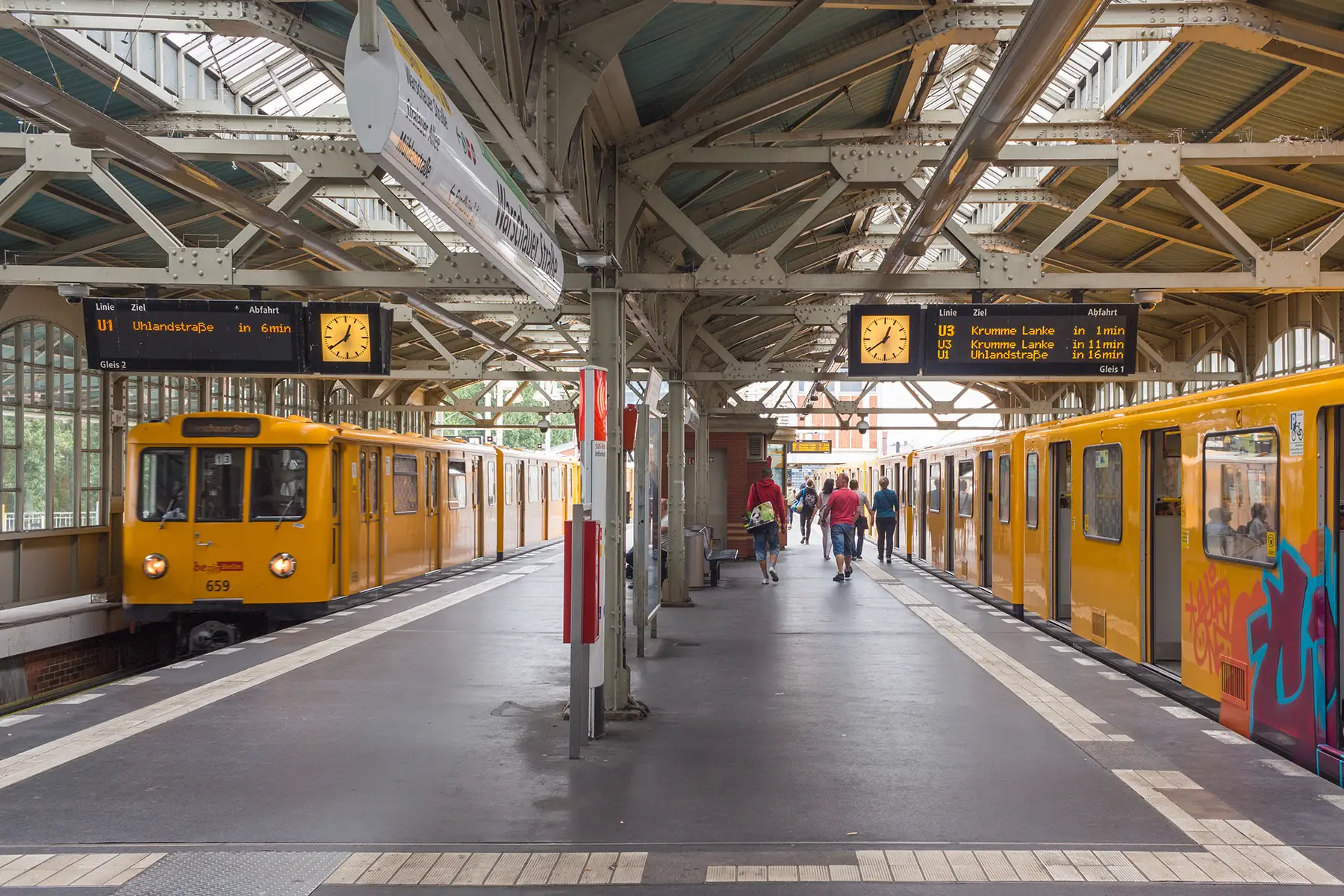
There are also four U-Bahnen (urban metro networks) in Germany:
- Berlin
- Hamburg
- Munich
- Nuremberg
Train tickets and costs in Germany
Train ticket prices in Germany vary due to the wide variety of train services available to passengers.
In general, buying tickets in advance isn’t necessary for regional and urban trains; the ticket prices are fixed and reservations are neither necessary nor possible. The price is the same if you buy it online or from a ticket machine at the train station.
For intercity services, advance booking is the norm. Tickets for any intercity service (i.e., IC, EC, and ICE) have three types of fares: Flexpreis, Sparpreis, and Super Sparpreis. Each fare type has its own conditions:
- Flexpreis: Full fare price (second-class tickets up to a maximum of €157.50). Exchanges and refunds are free. Valid on any train in the same service class or lower on the same day. Includes same-day public transportation if your journey is longer than 100 kilometers.
- Sparpreis: Lower fare price (second-class tickets as low as €21.10). Cancellations are possible before the day of travel and cost €10. Refunds are only possible in the form of a voucher. Tickets are only valid on the trains listed on the ticket. Includes same-day public transportation if your journey is longer than 100 kilometers.
- Super Sparpreis: Lowest possible fare price (second-class tickets as low as €17.50). No cancellations or refunds. Tickets are only valid on the trains listed on the ticket. Doesn’t include local public transportation, however.
Advance ticket sales in Germany open 180 days prior to the departure date. Tickets are available at a DB ticket office, through DB Navigator, and on the Deutsche Bahn website. Online ticket sales are possible in a number of languages besides German and English, including Czech, Danish, Dutch, French, Italian, Polish, and Spanish.
Train timetables and maps in Germany
Given the sheer size of their network, Deutsche Bahn doesn’t offer a downloadable version of their complete timetable. Instead, curious travelers can use Deutsche Bahn’s booking tool to search for itineraries. In fact, DB’s timetable contains network schedules for most of Europe, so you can easily look up the itinerary for the 70-hour journey from Stockholm to Sofia.
Deutsche Bahn’s German-language site provides route maps (Streckenkarten in German) for ICE routes and IC/EC routes. They also offer departure and arrival plans (Fahrpläne in German) for individual stations; just type in the station name to search for it.
Train stations in Germany
Germany is home to about 5,400 train stations. With so many stations of varying size, Deutsche Bahn has a handy series of categories to inform passengers what kind of services they can expect at the station.
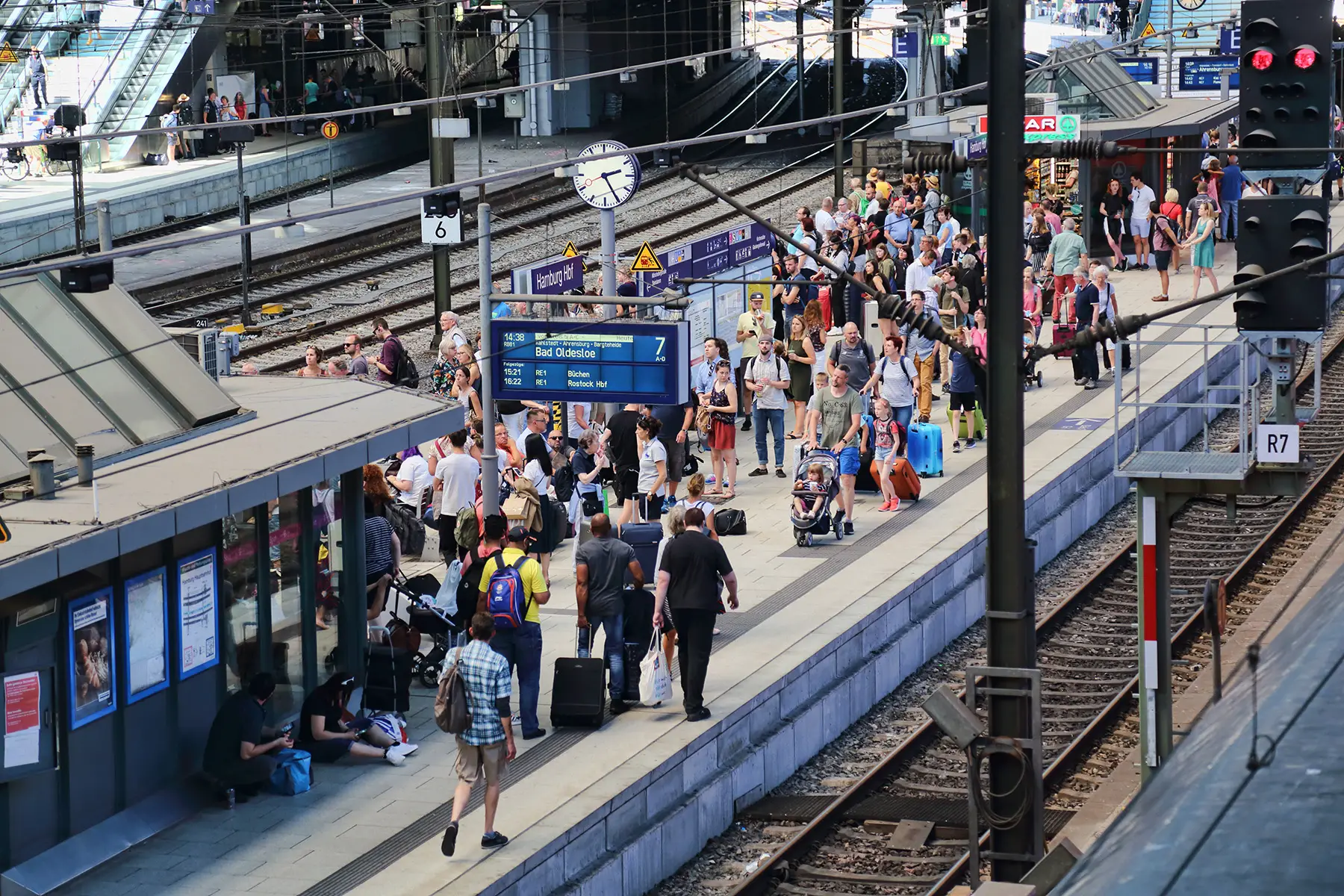
There are seven categories (Preisklasse in German):
- 1. Preisklasse: These 21 stations are Germany’s main transportation hubs. Category 1 stations always have staff on-hand, shopping, places to eat, and accessible platforms. Stations such as Berlin Hauptbahnhof and Düsseldorf Hauptbahnhof are Category 1.
- 2. Preisklasse: These 86 stations are important stations with intercity services. Category 2 stations generally have staff available while trains are in service. Stations such as Braunschweig Hauptbahnhof and Hagen Hauptbahnhof are in this category.
- 3. Preisklasse: There are 239 stations in the third category, usually serving cities with populations of about 50,000. Category 3 stations have a station hall with some shopping, though the stations are not permanently staffed. Stations such as Eisenach and Bad Hersfeld are Category 3.
- 4. Preisklasse: These 630 stations are hubs for regional traffic serving commuters. Category 4 stations don’t have ticketing offices. Stations such as Ludwigslust and Meiningen are in this category.
- 5. Preisklasse: 1,070 stations serving small towns and outer suburbs. Equipment at these stations tends to be basic and robust in order to withstand vandalism. Stations such as Marburg Süd and Wedel (Holst) are Category 5.
- 6. Preisklasse: These 2,500 stations are in sparsely populated areas and have the bare minimum of equipment for a train station. Stations such as Niesky and Raddusch are in this category.
- 7. Preisklasse: There are 870 Category 7 train stations in Germany. They are in rural areas and generally only have a single platform. Services at Category 7 stations are infrequent. Stations such as Miesterhorst and Ueckermünde Stadthafen are in this category.
Facilities at German train stations
Keep in mind that in-station toilets (WC in German) require payment, usually under €1. On-board toilets on a train are free, but their level of cleanliness can be disappointing on a busier route.
Larger stations also generally have paid lockers, so you can safely store your luggage for a few hours. Payment for these is usually with coins only, though newer systems may also accept cards.
Deutsche Bahn updates their categories on an annual basis, with an English-language list available on their website. DB also maintains bahnhof.de, an entire website dedicated to their stations and listing all the services available at them.
International trains in Germany
Germany lies right in the middle of Europe, counting nine different countries as neighbors. As a result, there are plenty of direct international trains running from German train stations.
Deutsche Bahn’s high-speed service, the ICE, runs a number of international routes, including routes such as:
- Austria: München Hbf – Kufstein – Innsbruck Hbf
- Austria: München Hbf – Salzburg Hbf – Wien Westbf
- Belgium: Köln Hbf – Aachen Hbf – Liège-Guillemins – Brussel-Zuid/Bruxelles-Midi
- France: Saarbrücken Hbf – Paris-Est
- The Netherlands: Duisburg Hbf – Amsterdam Centraal
- Switzerland: Basel SBB – Interlaken Ost
- Switzerland: Basel SBB – Zürich HB
There are also InterCity/EuroCity services to:
- Austria: Frankfurt (Main) Hbf – Salzburg Hbf
- Czechia: Berlin Hbf – Praha hl. n.
- Denmark: Hamburg Hbf – København H
- Italy: München Hbf – Innsbruck Hbf – Bologna Centrale
- The Netherlands: Berlin Hbf – Amsterdam Centraal
- Poland: Berlin Hbf – Poznań Główny – Warszawa Wschódnia
- Switzerland: München Hbf – Zürich HB
- Switzerland: Stuttgart Hbf – Zürich HB
Although Deutsche Bahn scrapped their City Night Line services in 2016, Austrian Federal Railways (ÖBB) came to the rescue to re-open Europe’s bustling night train services. Passengers from Germany can travel directly with the ÖBB Nightjet to Vienna, Innsbruck, and Zürich; upon reaching Vienna, travelers can also travel further to Croatia, Czechia, Italy, Poland, and Slovakia with another overnight journey.
Buses in Germany
There isn’t a single national public transportation authority in Germany that provides bus service. Instead, each German Land (state) manages local transport within their own borders. As a result, there is a fairly complex set of providers, with dozens of authorities dispatching buses to each and every corner of Germany.
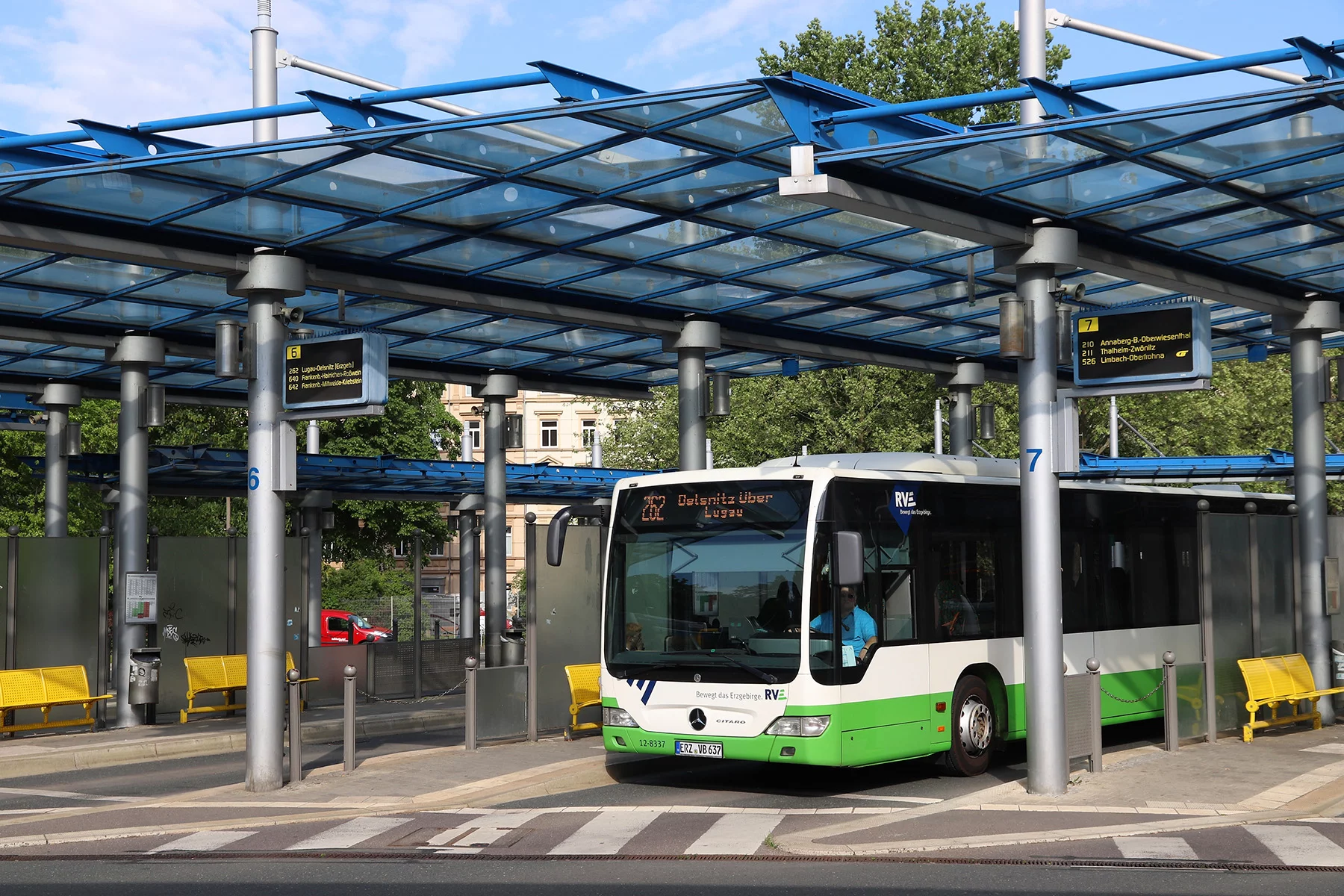
Each Verkehrsverbund (transport association) is generally responsible for buses and trams within their region, although they do occasionally overlap. Some of the public transportation companies in the larger cities of Germany include:
- Berlin: BVG
- Bremen: VBN
- Cologne and Bonn: VRS
- Dresden: DVB
- Frankfurt am Main: RMV
- Hamburg: HVV
- Hannover: GVH
- Leipzig and Halle: LVB (only in German)
- Magdeburg: MVB (only in German)
- Munich: MVV
- Nuremberg: VGN
- Rhein-Neckar (Heidelberg, Kaiserslautern, Karlsruhe, and Mannheim): VRN (only in German)
- Rhein-Ruhr (Bochum, Dortmund, Düsseldorf, Duisburg, Essen, Hagen, Mönchengladbach, Wuppertal): VRR
- Rostock: RSAG
- Stuttgart: VVS
Many German cities also complement their core bus service with trams (Straßenbahnen). Trams are generally higher capacity with greater frequency than buses, but they tend to only serve the busiest neighborhoods. Night buses are particularly common in urban areas, though less so in smaller towns.
Bus tickets and costs in Germany
Ticket prices for buses in Germany are at the discretion of the public transportation authority running them. In general, there are five kinds of tickets:
- Kurzstecke (short trip ticket): These tickets are valid only for a very short period, typically 30 minutes or even less. Passengers can usually only travel a few stops without changes.
- Einzelfahrt (single ticket): These tickets are valid for longer (60–90 minutes), giving you enough time to change vehicles. In cities such as Berlin, single tickets are different prices based on the number of zones you travel in.
- Tageskarte (day ticket): Day tickets either offer a full 24 hours of travel from the moment of purchase or unlimited travel on a specific calendar day (though often with a couple of additional hours of validity after midnight).
- Wochenkarte (week ticket): Similar to day tickets, a week ticket offers the same unlimited travel within a specified area for a full week.
- Gruppentageskarte (group day ticket): Some public transportation authorities in Germany offer these tickets for as many as five passengers on a single ticket. These are the ideal option for a day trip.
Most networks in Germany require passengers to validate their tickets either before boarding or immediately after boarding the vehicle. Take a look at your ticket after you purchase it; if it says ‘Bitte entwerten‘ (‘please validate’ in German) on it, then you’ll have to use a ticket validation machine (Entwerter). Their use and placement depend on the network, but they’re usually in highly visible locations at the bus stop or inside the bus.
Using public transportation in Germany without buying the right ticket can be costly. Fines start at €60 for the first violation. If you’re caught Schwarzfahren (literally, ‘to travel black’) three times, you risk a prison sentence and a hefty fine.
Bus stations and stops in Germany
Bus stops in Germany tend to be fairly similar, regardless of the bus company that serves them. Typically, bus stops (Haltestelle in German) have the ubiquitous green ‘H’ inside of a yellow circle indicating it as a stop. Busier stops have weather shelters, ticket machines, as well as electronic signs with live departure times. On the other hand, humble stops in more rural areas may only consist of the sign and the bench.
The public transportation network in Germany is, in general, quite dense and well-developed. As a result, all bus networks, even the lines serving villages and rural areas, provide punctual service to local transportation hubs like train stations.
Taxis and ride-sharing services in Germany
With such good public transportation in Germany, it’s no surprise that taxis are costly. Hailing a taxi is fairly easy at hotels, transportation hubs, and taxi stands. Hailing one off the street is more difficult, however; you’re better off using an app, calling directly, or asking the business you’re at to call one for you.
Taxi cabs in Germany have strong regulations, so passengers can set their expectations accordingly. In Germany, taxi fares are standard with regional variations; in general, there is a base fare (Grundpreis) of €3-5 with a distance-based rate after (€1-3 per kilometer). Longer trips result in discounts or fixed fares (e.g., to an airport); the driver and the passenger must agree to a price beforehand if the ride is longer than 50 kilometers. Taxi drivers in Germany must take the shortest route.
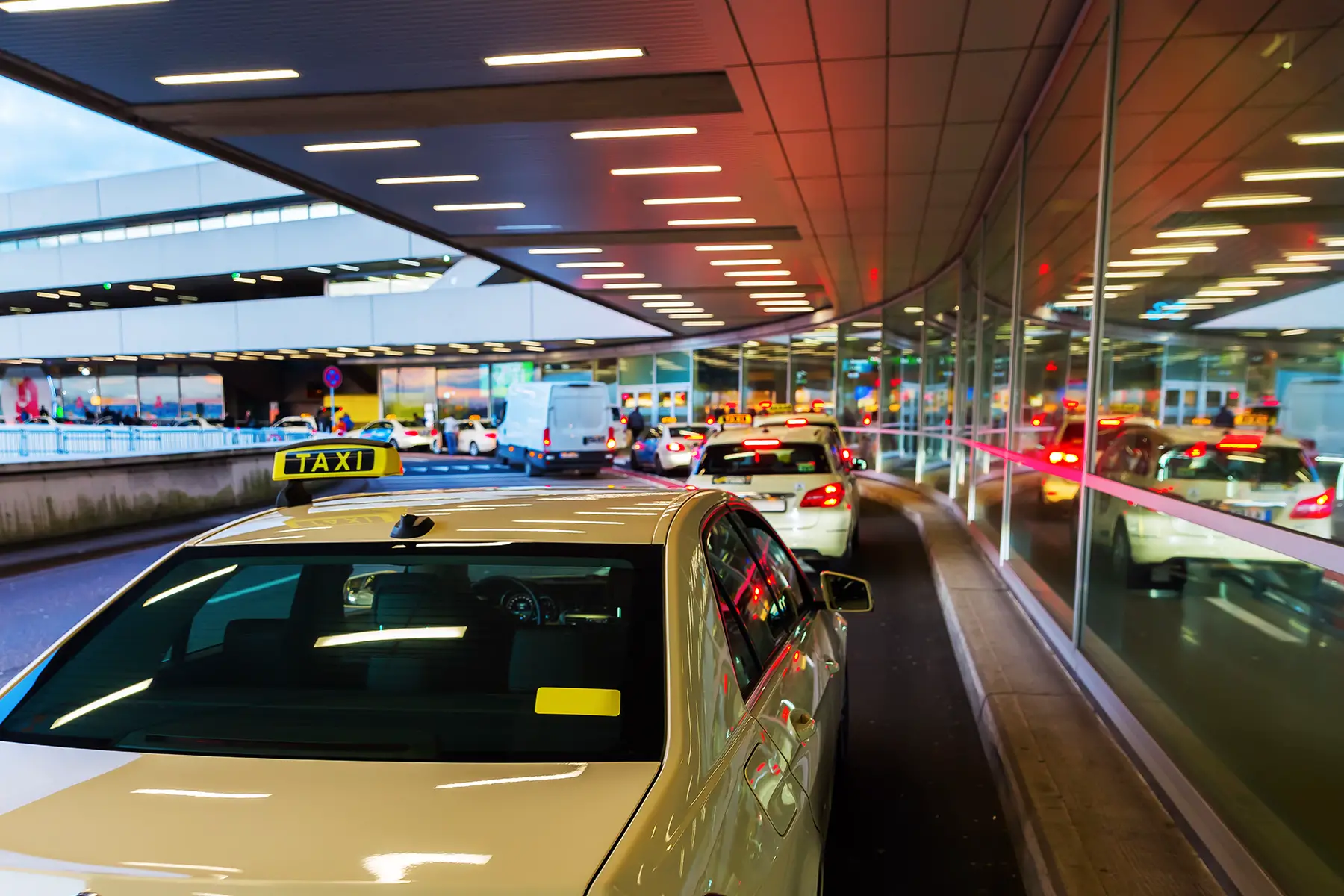
German taxis are pretty beige. While the 1971 law stipulating the uniform paint color is no longer in place, German cab drivers err on the side of caution and stick with the popular color. Taxi drivers in Germany mostly drive the same car, too: the Mercedes-Benz E-Class.
In Germany, ride-hailing services cannot operate as they do elsewhere. German courts routinely strike down Uber’s business practices, meaning Uber can usually only offer rides through nearby taxis. Other taxi-hailing apps, such as FREE NOW, have wider availability in Germany.
If you didn’t order your taxi through an app, payment is with cash; payments by Girocard or credit card are uncommon. Taxi-hailing apps, however, accept cards.
Tips are uncommon in Germany, and that also applies to getting a lift. It’s customary to round up the fare price to the nearest euro for a shorter trip; for longer trips, a 10% tip is fine.
Long-distance coaches in Germany
Intercity bus services in Germany are still in their infancy, as they were actually illegal until 2012. Since then, a number of fledgling long-distance bus companies have been competing for popular routes, with a number of company takeovers in the process.
Long-distance coaches are a popular option in Germany due to their much lower ticket costs in comparison to taking an intercity train. Be warned, however, that some bus stops may be located in more remote areas of the city instead of at central train stations.
The main intercity bus companies in Germany is FlixBus, which has a wide network that covers much of Western and Central Europe.
Outside of the official company websites, some long-distance bus tickets are available through third-party ticketing agents such as busradar and fahrplan.guru.
Airports in Germany
Germany is a fairly large country, so domestic air travel remains fairly popular despite the environmental consequences. In fact, Germany is home to over 300 airports, including Frankfurt Airport, the sixth-busiest airport in Europe. Lufthansa has the densest domestic route network, while the low-cost airline Eurowings also offers some domestic flights.
Civil aviation in Germany is overseen by the Luftfahrt-Bundesamt (LBA) and the European Union Aviation Safety Agency.
Frankfurt Airport
Frankfurt Airport is the busiest of Germany’s airports. It’s home to Lufthansa, Germany’s flag carrier. This airport is one of the world’s most connected, with flights to around 300 destinations across the globe. As well as being busy, this airport is huge. Make sure you leave plenty of time between connecting flights if possible, as you might need to take the SkyLine train or a shuttle bus between terminals.
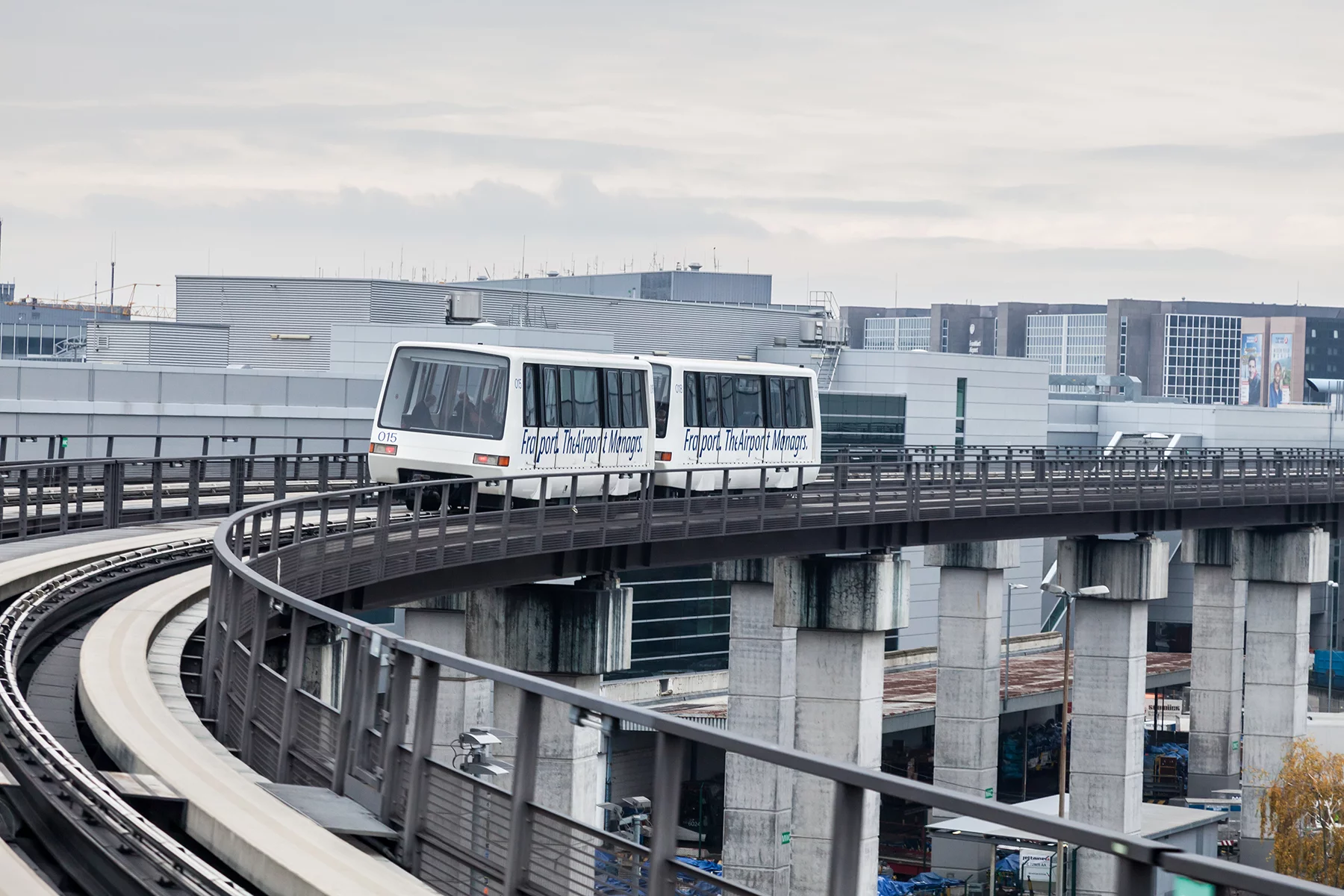
You can reach Frankfurt Airport directly on the A3, A67, and A5 motorways, but there are also plenty of public transit options. The airport has two stations: Frankfurt Airport Long-Distance, and Frankfurt Airport Regional. The former has connections to the rest of Germany, Belgium, and the Netherlands, while the latter serves the Frankfurt/Rhine-Main region. You can also catch a public bus, long-distance bus, and hotel shuttles to and from the airport. In addition, the Lufthansa Express Bus runs between Strasbourg and Frankfurt.
Munich Airport
The next busiest German airport is Munich Airport. It’s located nearly 29km outside of Munich, near Friesing. It has routes to destinations worldwide.
Munich Airport is reachable on the A92 motorway and the B301. Otherwise, you can reach it on the S1 and S8 S-Bahn lines, with trains every 10 minutes, taking 40 minutes from the city center. Like Frankfurt, Munich is accessible with the Lufthansa Express Bus.
Berlin Brandenburg Airport
Until 2020, Berlin had two airports: Berlin Tegel (the capital’s primary airport) and Berlin Schönefeld (the mainly low-cost airport). These both closed in November 2020, and flights from both airports moved to Berlin Brandenburg in October 2020. The airport mainly offers destinations in Europe and the Middle East.
Berlin Brandenburg is located about 18 kilometers away from Berlin city center, and you have several options to get there. Terminal 1 has a train station, while Terminal 5 has an S-Bahn station where lines S9 and S45 stop. You can also reach the airport with the X7 and X71 buses. Finally, if you wish to drive, take the Flughafen Berlin Brandenburg exit from the A113 highway.
Düsseldorf Airport
Germany’s next-largest airport, Düsseldorf, is located seven kilometers from the city. It has flights mostly to other European destinations, as well as some to the Middle East, North Africa, North America, and the Caribbean. All types of regional and intercity trains stop at the Düsseldorf Flughafen station, and there are several buses that stop at the arrivals hall and station.
Other methods of public transportation in Germany
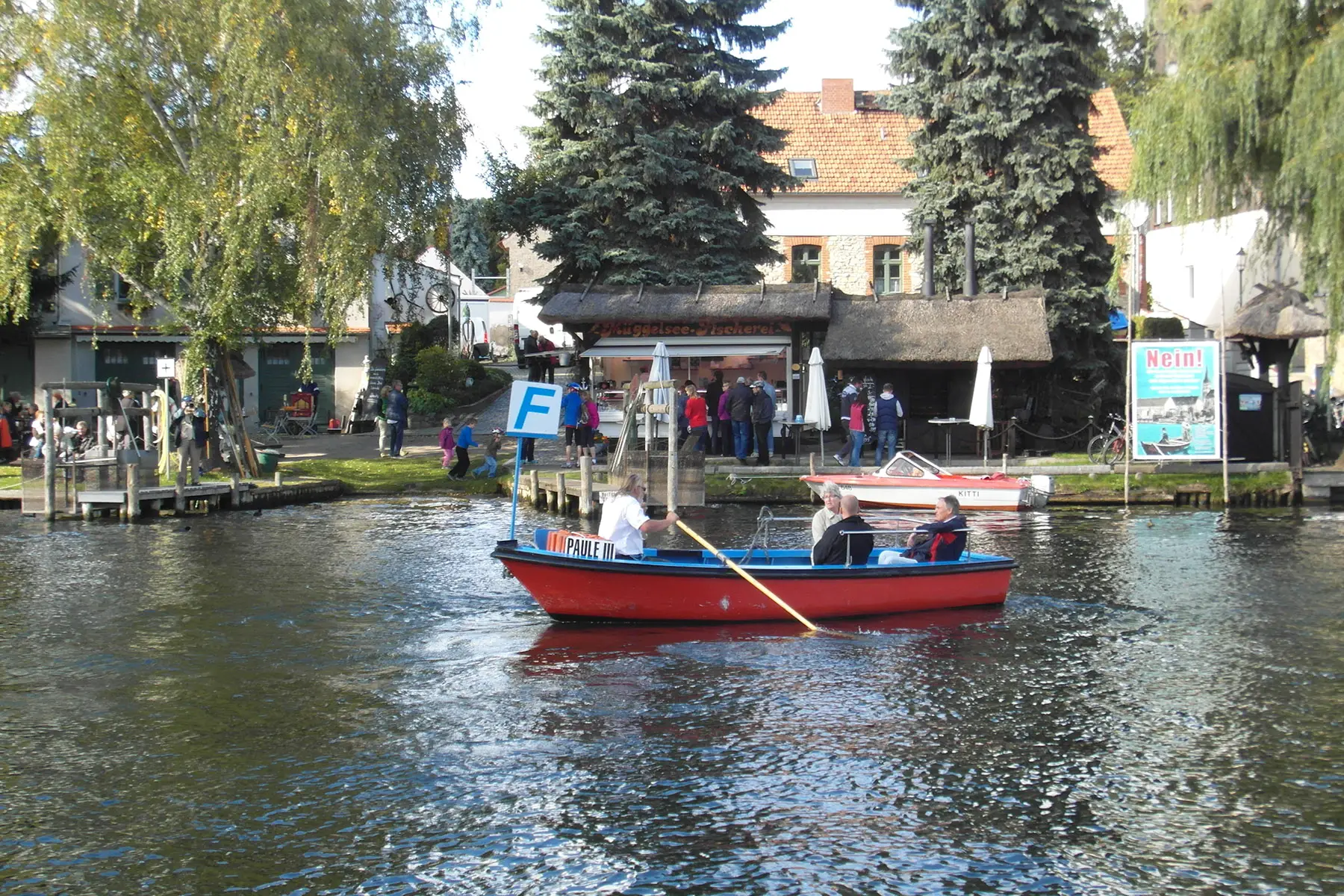
Ferries are not a common method of public transportation in Germany with two exceptions: Hamburg and Berlin. In Hamburg, HADAG runs seven ferry routes that cross the Elbe. In Berlin, BVG oversees six urban ferries, including the city’s cult favorite, Line F24, a rowing boat that crosses the Müggelspree.
Bike sharing schemes are increasing in popularity, though they’re often managed at the municipal level. Well-known bike-share companies in Germany include companies such as:
- Call a Bike (run by Deutsche Bahn)
- metropolradruhr
- nextbike
Public transport discounts in Germany
Policies for discounts on public transportation in Germany vary, as they’re up to the transport authority to decide.
If you take the train regularly, Deutsche Bahn offers a series of BahnCards that provide discount on ticket prices. These include the following:
- BahnCard 25: 25% off all train tickets (Flexpreis, Sparpreis, and Super Sparpreis)
- BahnCard 50: 50% off Flexpreis tickets; 25% off Sparpreis and Super Sparpreis tickets
- BahnCard 100: Unlimited travel across the Deutsche Bahn network
- Youth BahnCard 25: 25% off Flexpreis and Sparpreis tickets for travelers between the ages of six and 18
The three main BahnCards are also available in the form of a trial BahnCard, which is valid for three months.
Local public transportation authorities in Germany also offer seasonal tickets at a discount. Further discounts are also often available for the elderly (over 65), youth (under 18), apprentices, and those receiving unemployment benefits such as Arbeitslosengeld II or Sozialhilfe. Students attending a university in Germany are also eligible for public transportation discounts; consult your university for further information.
How disability-accessible is public transportation in Germany?
Public transportation in Germany is, for the most part, built with accessibility concerns in mind.
Deutsche Bahn has a dedicated Mobility Service Center that helps travelers with booking tickets and arranging assistance from station staff. Mobility service staff are available for ad-hoc support at the station (as long as it’s during their staff’s working hours), but passengers with particular needs should contact the Mobility Service Center at least 24 hours before traveling.
Accessibility infrastructure varies by city and the local transport authority. In general, most cities use new vehicles with manual ramps or barrier-free entry. Buses, trams, and metro trains have priority spaces, as well. Bus stop timetables show which departures are fully accessible.
Some infrastructure is lacking, however. Older stations on Berlin’s U-Bahn system may not have elevators that reach the platform from the street, for example. Check with the transport authority you’re using to make sure the stations you want to use are indeed fully accessible.
In some cases, people with severe mobility issues can use public transportation free of charge. Public transportation users in Germany can get a special token (Beiblatt mit Wertmarke) that accompanies their transit pass. Contact a German pension office for more information.
How environmentally friendly is public transportation in Germany?
Germany has long had ambitious plans to make public transportation a key part of the country’s sustainable vision for the future. A 2009 report from the Brookings Institute cited plenty of reasons why Germany is a leader in sustainable transport, including the integration of cycling and walking into urban mobility plans as well as government-led urban planning measures that foster walkable, mixed-use neighborhoods.
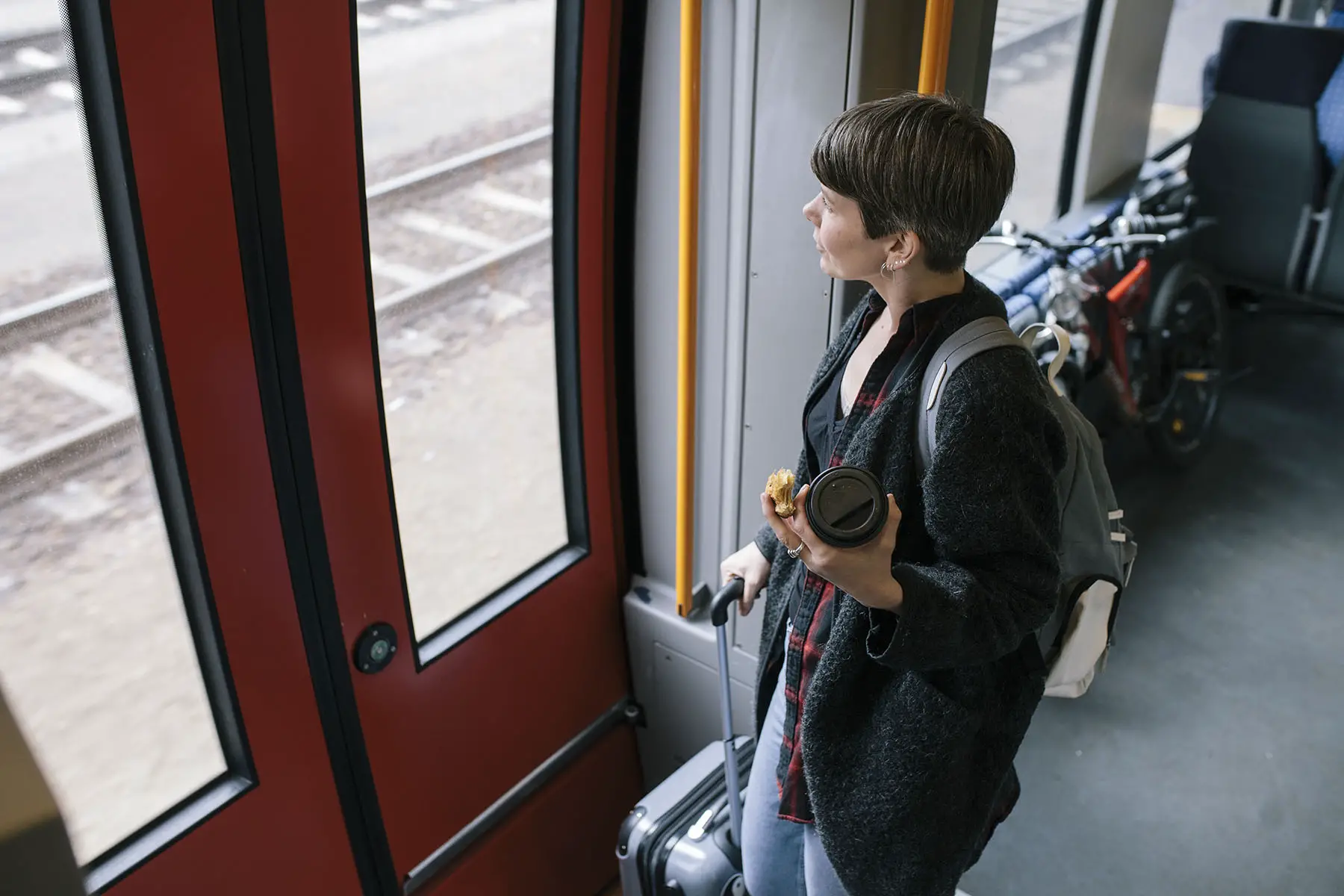
Germany’s approach is bearing fruit today. The federal government continues to pump billions of euros into replacing diesel buses with electric ones, while Deutsche Bahn aims to use only renewable energy by 2038.
In fact, the German railway company is pushing ahead with a number of sustainability initiatives, including designing carbon-neutral stations, increasing recycling rates, and reducing noise pollution. On city streets, public transportation authorities in Germany often have dedicated lanes for buses and trams to ensure that their use is not only sustainable but also more efficient.
Public transport safety tips in Germany
While public transport in Germany is pretty safe, when you move to a new country it’s a good idea to have some tips in mind:
- Keep an eye on your luggage at all times.
- Keep to the right on escalators.
- Dogs need to be on leads.
Making a public transportation complaint in Germany
If you miss a train because of a delay or your train is cancelled, you’re likely entitled to some form of compensation for the delay. Deutsche Bahn publishes the passenger rights and regulations in English.
Complaints relating to services provided by a public transportation authority in Germany should be sent directly to the authority itself.
Useful resources
- Deutsche Bahn – Germany’s national train company
- BVG – public transportation in Berlin
- DVB – public transportation in Dresden
- GVH – public transportation in Hannover
- HVV – public transportation in Hamburg
- LVB – public transportation in Leipzig and Halle
- MVB – public transportation in Magdeburg
- MVV – public transportation in Munich
- RMV – public transportation in Frankfurt am Main
- RSAG – public transportation in Rostock
- VBN – public transportation in Bremen
- VGN – public transportation in Nuremberg
- VRN – public transportation in Rhein-Neckar
- VRR – public transportation in Rhein-Ruhr
- VRS – public transportation in Cologne and Bonn
- VVS – public transportation in Stuttgart


Did you find this guide helpful?