
'%20id='ico-down'%20stroke='%23000000'%20stroke-width='1.5'%3e%3cg%20transform='translate(1092.250000,%20254.750000)'%3e%3cpolyline%20id='Path-2-Copy-4'%20transform='translate(5.500000,%202.750000)%20scale(1,%20-1)%20rotate(-180.000000)%20translate(-5.500000,%20-2.750000)%20'%20points='0%200%205.5%205.5%2011%200'%3e%3c/polyline%3e%3c/g%3e%3c/g%3e%3c/g%3e%3c/svg%3e)


Living
Transportation
Taxis in Germany: apps, fares and payment tips
Navigate taxi travel in Germany with more confidence, whether you have just landed at the airport or need a late night ride home.


While getting from A to B in a German cab is usually straightforward, local rules can catch newcomers off guard. Things like standing at the right rank, app availability in smaller towns, meter regulations, and whether a driver takes card payments can vary depending on where you are.
This guide is for expats who want quick, practical answers. It explains how to get a taxi in Germany, how it compares with Uber style options, and when public transport in Germany is the easier choice.
Key takeaways
| What to know | Quick answer |
|---|---|
| How to find a taxi | Use an official taxi rank, hail one where allowed, or book by phone or app |
| Which apps matter | Free Now is a strong starting point in big cities, but local coverage still matters |
| Card payments | Many taxis take cards, but not all, so check before the ride and keep some cash on hand just in case |
| How fares work | Taxi fares in Germany are set locally, not by one national tariff |
| Uber and Bolt | They are mostly useful in larger cities and do not replace taxis everywhere |
| Safest airport habit | Ignore unsolicited offers and go straight to the marked taxi rank |
How taxis work in Germany
Germany uses licensed taxis, official taxi ranks, street hailing in many urban areas, and pre-booking by phone or app. The system is regulated, but the exact tariff, supplements, and payment setup can change from one city to another.
That is the key point many newcomers miss. National advice is only a starting point, and the city tariff is what counts in practice. Berlin’s official taxi fares and rules page is a good example of how local authorities publish the details.
How to spot a licensed taxi
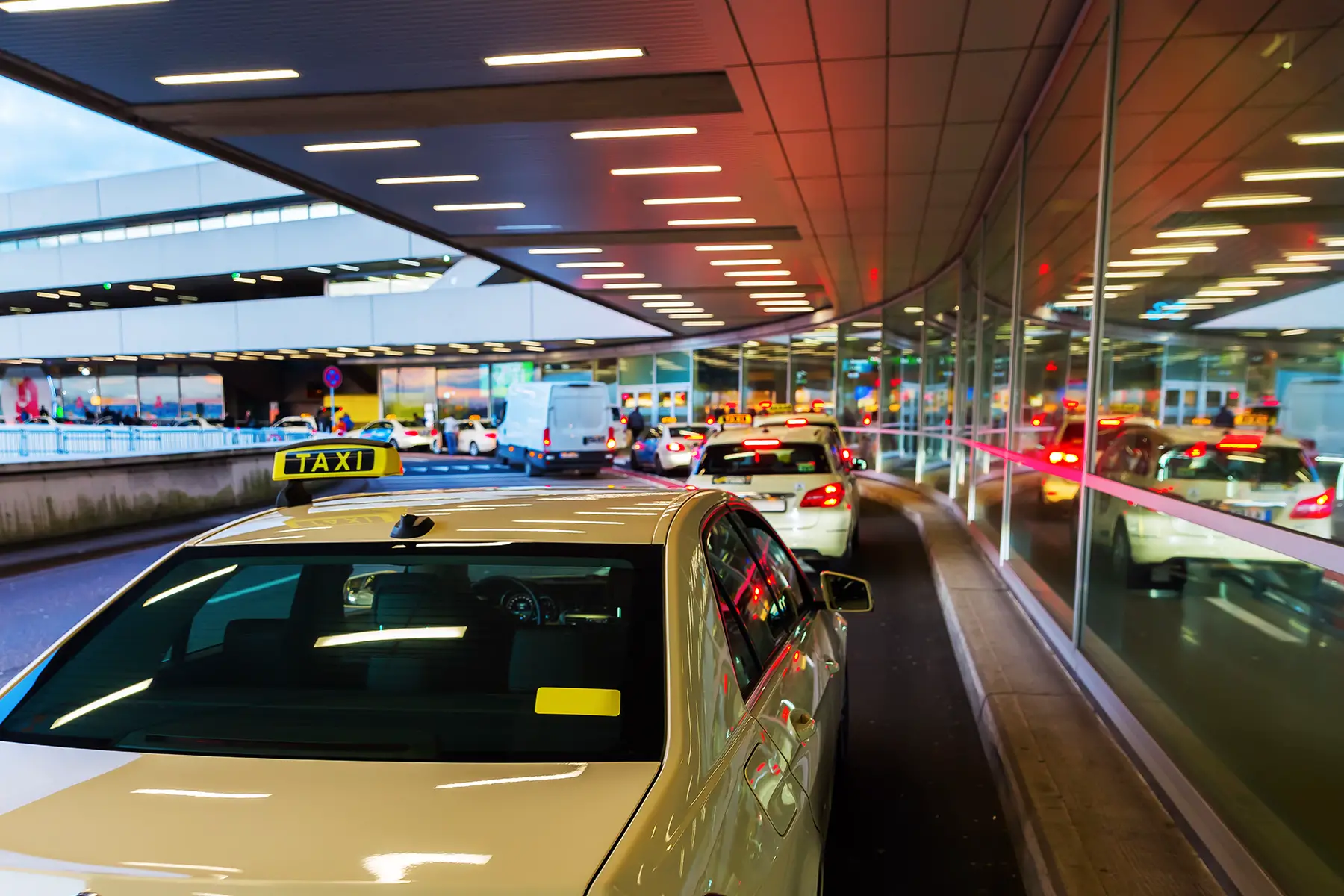
Look for a marked vehicle with a roof sign showing Taxi, a visible meter, and operator or licence details inside the car. At stations and airports, use the signed rank instead of accepting a ride from someone who approaches you first.
When you book a ride through an app in Germany, you aren’t always getting a traditional taxi. Some platforms connect you directly to official, metered taxis, while others match you with private hire car services (Mietwagen) operating under entirely different rules.
Where taxis are easiest to find
Taxis are easiest to find at airports, major train stations, hotels, nightlife areas, and busy city centres. In Berlin, Munich, Hamburg, Frankfurt, and Düsseldorf, grabbing a cab is rarely a problem.
In smaller towns or outer suburbs, availability can thin out late at night. Calling local dispatch, or asking a hotel or restaurant to book for you, can be more reliable than waiting for an app match.

Best ways to book a taxi or ride
Use the option that matches your situation, not just the one you know from home.
| Booking method | Best for | Payment flexibility | Reliability at busy times |
|---|---|---|---|
| Taxi rank | Airports, stations, city centres | Varies by car | Usually strong |
| Phone dispatch | Smaller towns, pre booked rides | Ask when booking | Often strong |
| Taxi app | Cashless payment, tracking, receipts | Usually best | Good in larger cities |
| Ride hailing app | Big cities, fare estimates before pickup | Usually app based | Can vary by demand |

Content Specialist
Philipp Spitzenpfeil
Insider tip
In smaller German cities, asking your hotel or restaurant to call the local taxi dispatch can still be faster than waiting for an app late at night.
Which apps matter in Germany
If you are looking to use a taxi app in a big city, Free Now is usually the best place to start. It is widely used across major urban areas and makes handling cashless payments and digital receipts effortless.
The Taxi Deutschland app is another common option, and some cities also rely on taxi.eu or their own dispatch app. One thing worth knowing is that app coverage drops outside the biggest urban areas, so do not assume the same setup works everywhere.
If you want local operators as well as booking options, Expatica’s car sharing and taxis directory is a useful extra starting point.
Uber, Bolt and taxi apps: what changes by city?
Uber Taxi lets riders book licensed local taxis in select German cities, though availability varies as it isn’t a single nationwide service. Bolt follows a similar pattern, concentrating its fleet mainly in major urban centers.
Because of these regional differences, choosing between Uber, traditional taxis, and local apps usually comes down to city coverage and local regulations. While you won’t use the standard Lyft app directly in Germany, Lyft owns Free Now, which is widely used across European cities. Booking through app-based taxi platforms connects you directly to licensed local drivers, making them a particularly reliable choice for airport pickups, family travel, or navigating smaller towns.
Taxi, Uber or public transport: when each makes sense
If you are not sure which option to choose, start with the reason for the trip. The risk here is paying for a taxi when Germany’s transport network would have done the job more easily, or relying on an app that has weak coverage where you are standing.
| Option | Best use case | Cost expectation | Late night reliability | Luggage convenience | City coverage |
|---|---|---|---|---|---|
| Taxi | Airport arrival, family ride, suburbs | Higher but regulated | Usually good | Strong | Broad |
| Uber or Bolt | Large city app booking | Varies by demand and city | Mixed | Good | Patchy outside big cities |
| Public transport | Daily travel, city centre routes | Usually lowest | Often good in big cities | Weaker with heavy bags | Strong in most cities |
A taxi often makes sense when you arrive late, carry heavy luggage, travel with children, or face poor suburban connections. Public transport is usually the better everyday choice, especially if you already use local buses, trams, S Bahn, or U Bahn.
If you are heading to the airport with your own car instead, Expatica’s guide to driving and parking in Germany can help you compare the trade off.

Fares, card payments and tipping
Taxi rates in Germany are locally regulated, usually combining a starting fee with charges for distance covered and waiting time. Cities may also add small surcharges for extras like airport pickups or larger vehicles.
Because tariffs vary by region, it is best to check local rates or rely on your app’s upfront fare estimate. In Berlin, for instance, official meters start at a €4.30 base fare before distance pricing kicks in, alongside a dedicated surcharge for departures from Berlin airport.
When it comes to payment, card acceptance is standard, but keeping a few euros on hand remains a smart backup. Tipping is customary yet modest, so rounding up the bill by a euro or two for good service is plenty.
Do taxis in Germany take credit cards?
Many do, but not all. App bookings are usually the most predictable way to pay without cash.

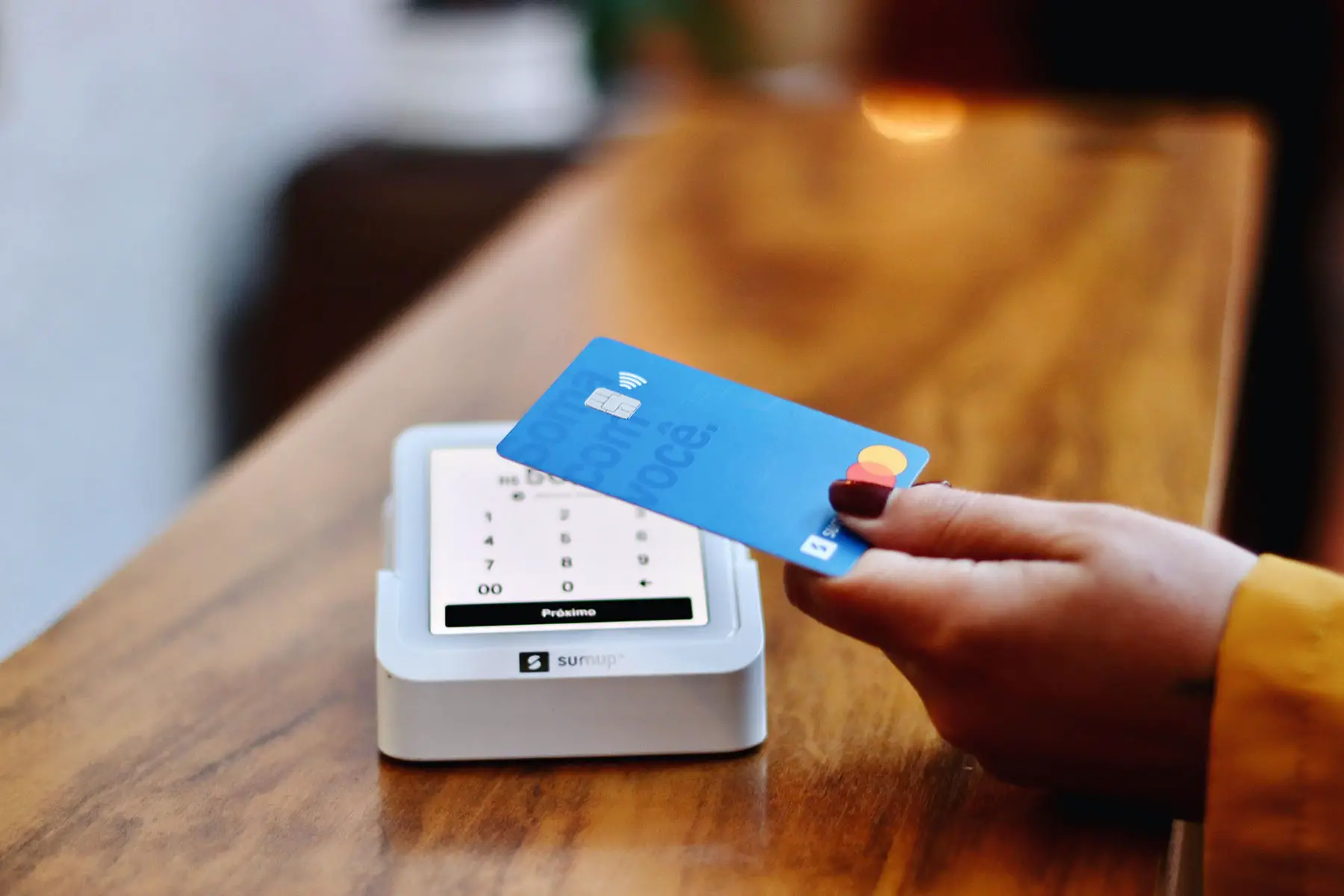
In larger cities, debit card and credit card acceptance is common, but operators can still differ. Girocard remains familiar in Germany, alongside Visa and Mastercard, while American Express can be less consistent. Even if your main account is with Deutsche Bank, Commerzbank, or Sparkasse, it is still smart to ask before the ride starts.
Berlin’s official guidelines state that passengers can pay by cash, debit, or credit card. However, drivers aren’t required to accept every specific card type, making cash a smart backup.
A multi-currency card such as Wise can be useful for paying in euros and tracking spending across currencies. It links directly to a multi-currency account, letting you hold and convert over 40 currencies at the mid-market exchange rate with transparent, low conversion fees. When paying for your ride at any Visa or Mastercard terminal, Wise’s Smart Conversion technology automatically selects the balance with the lowest conversion fee or the strongest exchange rate, saving you from manual calculations.
If you’ve just arrived and are still setting up your money basics, check out Expatica’s guides below to help:


Airport, family and late-night taxi tips
Stepping off a plane tired and burdened with bags is the worst time to second-guess your transport options. To keep your arrival completely stress-free, stick to the official, marked taxi ranks outside the terminal or use a designated app pickup zone.
At BER, the official airport taxi page says arriving passengers for Terminals 1 and 2 should use the north and south taxi ranks in front of Terminal 1 on level E0. It also warns travellers to use only marked taxis at the designated stands.
Content Specialist
Philipp Spitzenpfeil
Insider tip
At BER and other major stations, ignore anyone offering an immediate ride inside the terminal and go straight to the signed taxi rank outside.
Quick checklist:
- Use the official taxi rank or app pickup point
- Check card payment before the ride if you need it
- Ask for a receipt
- Confirm the pickup point in busy terminals
- Pre book if you arrive very late, travel early, or need extra space
Child seats, larger vehicles and accessibility
If you are travelling with extra luggage, mobility aids, or a larger group, it is always best to reserve your ride in advance rather than waiting at the rank.
Under German law, children under 12 years old (or shorter than 150 cm) must travel in a suitable car seat. While it is possible to book a taxi with a basic booster seat at short notice, they rarely carry infant seats, and drivers can refuse trips if a child cannot be secured safely. To avoid delays, especially for late-night airport runs, specify any child seats, wheelchair accessibility, or extra trunk space directly in the app or when calling dispatch.
How to stay safe and avoid common taxi mistakes
Most taxi trips in Germany are simple, but a few common mistakes cause the most stress.
- Taking an unofficial airport ride: Use the marked taxi rank or an app booking, not a driver who approaches you inside the terminal.
- Assuming every taxi takes a card: Ask before the journey starts, even in larger cities.
- Relying on one app everywhere: Coverage can weaken fast outside major urban areas.
- Forgetting the receipt: A receipt helps with lost property, work claims, and fare disputes.
- Missing the pickup point: In airports, stations, and nightlife areas, pickup confusion is common, so check the exact meeting point in the app.
One thing worth knowing is that route anxiety is normal for newcomers. If you are unsure, watch the route on your phone and confirm the destination before you set off.
Frequently asked questions about taxis in Germany
What is the best taxi app in Germany?
There is no single best app for every city. Free Now and Taxi Deutschland are good starting points, but local coverage matters more than brand familiarity, so check city availability and payment options before relying on one app.
Do taxis in Germany take credit cards?
Many do, but not all. Card acceptance is strongest in larger cities and app booked rides, while cash is still a sensible backup, especially outside major urban areas.
Is Lyft available in Germany?
The Lyft app is not the normal taxi booking tool in Germany. Free Now is owned by Lyft, but if you want a ride in Germany, you are more likely to use Free Now, Uber, Bolt, or a local taxi dispatch service.
Is Uber cheaper than a taxi in Germany?
It depends on the city, the time, and the service type. Do not assume Uber will be cheaper, because regulated taxis can be more predictable, while app based prices can move more with demand and location.
Useful resources
- BER Airport Taxi Information: Guidance on official, safe taxi ranks at the airport.
- Expatica Taxi Directory: A practical list to help find local taxi operators.



Did you find this guide helpful?