'%20id='ico-down'%20stroke='%23000000'%20stroke-width='1.5'%3e%3cg%20transform='translate(1092.250000,%20254.750000)'%3e%3cpolyline%20id='Path-2-Copy-4'%20transform='translate(5.500000,%202.750000)%20scale(1,%20-1)%20rotate(-180.000000)%20translate(-5.500000,%20-2.750000)%20'%20points='0%200%205.5%205.5%2011%200'%3e%3c/polyline%3e%3c/g%3e%3c/g%3e%3c/g%3e%3c/svg%3e)




'%20fill='%23000000'%3e%3cg%20id='icons'%20transform='translate(56.000000,%20160.000000)'%3e%3cpath%20d='M144,7339%20L140,7339%20L140,7332.001%20C140,7330.081%20139.153,7329.01%20137.634,7329.01%20C135.981,7329.01%20135,7330.126%20135,7332.001%20L135,7339%20L131,7339%20L131,7326%20L135,7326%20L135,7327.462%20C135,7327.462%20136.255,7325.26%20139.083,7325.26%20C141.912,7325.26%20144,7326.986%20144,7330.558%20L144,7339%20L144,7339%20Z%20M126.442,7323.921%20C125.093,7323.921%20124,7322.819%20124,7321.46%20C124,7320.102%20125.093,7319%20126.442,7319%20C127.79,7319%20128.883,7320.102%20128.883,7321.46%20C128.884,7322.819%20127.79,7323.921%20126.442,7323.921%20L126.442,7323.921%20Z%20M124,7339%20L129,7339%20L129,7326%20L124,7326%20L124,7339%20Z'%20id='linkedin-[%23161]'%3e%3c/path%3e%3c/g%3e%3c/g%3e%3c/g%3e%3c/svg%3e)
'%20fill='%23000000'%3e%3cg%20id='icons'%20transform='translate(56.000000,%20160.000000)'%3e%3cpath%20d='M335.821282,7259%20L335.821282,7250%20L338.553693,7250%20L339,7246%20L335.821282,7246%20L335.821282,7244.052%20C335.821282,7243.022%20335.847593,7242%20337.286884,7242%20L338.744689,7242%20L338.744689,7239.14%20C338.744689,7239.097%20337.492497,7239%20336.225687,7239%20C333.580004,7239%20331.923407,7240.657%20331.923407,7243.7%20L331.923407,7246%20L329,7246%20L329,7250%20L331.923407,7250%20L331.923407,7259%20L335.821282,7259%20Z'%20id='facebook-[%23176]'%3e%3c/path%3e%3c/g%3e%3c/g%3e%3c/g%3e%3c/svg%3e)

This guide explains the eligibility requirements, documents, application process, and common pitfalls, although exact evidence requirements can vary by Italian consulate.
Editor’s note: Rules can change, and the relevant Italian embassy or consulate in your country of residence may have its own requirements that slightly differ from the information given here.
Table of contents
- Key takeaways
- What the elective residence visa is and who it suits
- Eligibility and financial requirements
- Documents and accommodation proof
- How to apply and what happens after arrival
- Common refusal reasons and how to avoid them
- Elective residence visa vs other Italy visa options
- Managing money for your move to Italy
- Useful sources
Key takeaways
- The elective residence visa is for financially independent non-EU/EEA nationals who can support themselves in Italy without taking up employment.
- Do not plan to work while using this visa. This generally includes employment, self-employment, and active remote work for an overseas employer or clients.
- Income requirements are not completely uniform. Around €31,000 a year for a single applicant is a commonly cited benchmark, but consulates may assess the amount, stability, and source of income differently.
- Apply through the Italian consulate responsible for your legal place of residence. Check that consulate’s current document requirements before preparing your application.
- The visa is only the first stage. After arriving in Italy, you generally need to apply for your permesso di soggiorno (residence permit) within eight working days.
What the elective residence visa is and who it suits
The elective residence visa is a long-stay Italian national visa for people who want to make Italy their main home rather than simply spend an extended holiday there. You need to show substantial, stable financial resources that can support you without working in Italy.
It is often described informally as an Italy retirement visa, and retirees are a natural fit, but it is not restricted to them. If you’re using a pension, investment or property income, or other qualifying financial resources to retire in Italy, or simply want to relocate without working, this route may be suitable.
With this route you can:
- Live in Italy for more than 90 days
- Rent or buy a home and establish your residence
- Apply for the required residence-permit after arrival
- Renew your residence permit if you continue to meet requirements
One thing worth knowing is that consulates usually look for genuine intention to settle in Italy, not simply a way to extend a tourist stay.

Can you work or work remotely on this visa?
No. The elective residence route does not permit you to work in Italy, and applicants must demonstrate that they can support themselves without relying on employment.
That means it is generally not suitable if you plan to continue actively working after you move:
- Salaried employees: not suitable if you intend to keep working remotely.
- Freelancers and consultants: not suitable if you plan to continue providing services from Italy.
- Business owners: potentially more complicated, particularly if your income depends on your active day-to-day work.
Wise account
Are you an expat or thinking of moving to Italy? Managing your money across borders shouldn’t be complicated. With a Wise account, you can hold over 40 currencies and pay with a Wise debit card in more than 150 countries. Whether you need to spend abroad, receive or send money home, Wise can help make international money management simpler.

Eligibility and financial requirements
Financial self-sufficiency is one of the main tests for the elective residence visa. Italian consulates assess whether you have substantial, stable, and ongoing resources that can support you in Italy without working, and the exact evidence and financial thresholds used can vary between consular offices.
Around €31,000 net income a year for a single applicant is a commonly published starting point on many consulate websites, but you should not treat it as a universal guarantee of eligibility. Family applications require greater resources, and the way additional amounts are calculated can differ between consulates.
- Check the current financial requirements published by your embassy or consulate.
- Show that your resources are substantial, stable, and available over time.
- Make sure bank statements, tax returns, pension statements, and other evidence are consistent.
- Expect to demonstrate additional resources for a spouse or dependent children.
- Provide clear supporting evidence if your finances come from several different sources.
| Source type | Usually helpful | Common weak point |
| Pension/annuity | Regular and easy to evidence | Outdated or unclear supporting letters |
| Rental income | Can qualify if documented and ongoing | Irregular payments or weak evidence of ownership/income |
| Dividends/investments | Can demonstrate substantial financial resources | Relying only on a current investment balance without evidence of ongoing income |
What counts as qualifying passive income?
“Passive income” is often used as shorthand for the type of financial resources needed for an elective residence visa, but consulates can consider a broader range of resources. Common examples include:
- State or private pensions
- Annuities
- Dividends or investment income
- Rental income from property
- Income from stable economic or commercial activities
The key distinction is that you must be able to support yourself without working in Italy. If most of your income depends on continuing a salaried job, freelance work, consulting, or another active day-to-day role, it is unlikely to fit the elective residence route.

Documents and accommodation proof
Think of this as your file-building stage. Italian consulates generally ask for the same core categories of evidence, but requirements can differ on passport validity, translations, legalization, insurance, and whether you need originals, copies, or both.
Accommodation is one area where applications can run into problems. You normally need to show that you have suitable accommodation to establish as your residence in Italy, and some consulates specifically require a registered long-term lease or property deed rather than a flexible short-term booking.
Depending on your consulate, your application may include:
- Valid passport that meets your consulate’s validity and blank-page requirements
- National visa application form and photo
- Proof of substantial, stable, and ongoing financial resources
- Bank, pension, investment, or other official financial statements
- Recent tax returns, where required
- Letter explaining your reasons for moving to Italy, where required
- Civil-status documents for a spouse or dependents, if relevant
- Proof of accommodation, such as a registered lease or property deed
- Proof of travel or health insurance, where required
Check your consulate’s current checklist before your appointment and keep paper and digital copies of your documents for the application and post-arrival paperwork.
Health insurance, translations, and consulate differences
Supporting-document requirements can vary between Italian consulates, so check the rules for the office handling your application before your appointment.
- Private health insurance or travel insurance is required by some consulates for the visa stage
- Foreign-issued documents may need translation, an apostille, or other legalization, depending on where they were issued.
- Your consulate may require specific forms, originals and copies, proof of local residence, or additional supporting documents.
Consulates can also request further evidence when assessing an individual application. Use the official website of the Italian consulate responsible for your legal place of residence as your final checklist rather than relying on a generic document list.
Cigna Global
Enjoy peace of mind while living in Italy with Cigna Global’s long-term international health insurance plans (12+ months). Get tailored coverage, direct billing with many providers, complex case management, and global care on demand, with access to a global network of 2.4 million hospitals and healthcare professionals.
How to apply and what happens after arrival
Order matters here. Before committing to housing or non-refundable travel, check exactly what the Italian consulate responsible for your place of residence requires.
- Confirm the route. Use the Visa for Italy tool and your consulate’s website to make sure elective residence, not another visa, matches your plan.
- Book the right appointment. National visa appointments can fill up, so allow time to arrange accommodation, translations, legalization, and other supporting documents.
- Build one consistent file. Your income proof, tax returns, intent letter, and accommodation documents should support the same application.
- Attend the appointment as required. Bring originals, copies, and payment in the format your consulate requires.
- Wait for the decision. Processing time is typically up to 90 days but can be longer in some cases, and your consulate may request additional documents or checks.
- Travel within your visa’s validity. Once approved, check the dates and conditions on your visa and keep copies of your application documents for the next stage in Italy.
The standard fee for an elective residence national visa in August 2026 is €116, normally paid in the local-currency equivalent, although additional service fees may apply depending on where you submit the application. After arrival, you will also have separate costs associated with obtaining your residence permit.
What happens after you arrive in Italy?
The visa gets you into Italy for your intended long-term stay, but the process does not end at the border. You must apply for a permesso di soggiorno (residence permit) after arrival to establish your lawful residence in Italy.
- Apply within eight working days, usually through the local process tied to the Questura (provincial police headquarters).
- Attend your Questura appointment for fingerprinting and document checks when instructed, keeping copies of the documents used for your visa application.
- If you establish your residence in Italy, you will generally also need to deal with your Comune (municipality) for residenza registration. Over time, qualifying legal residence can also count towards eligibility for permanent residence in Italy.
Residence-permit processing times can vary considerably between Questure, so keep your application receipt and copies of your paperwork while you wait. Your move may also affect your tax-residence and reporting obligations, so get case-specific tax advice if you have income or assets in more than one country.
Common refusal reasons and how to avoid them
Elective residence applications can run into problems when the evidence does not clearly demonstrate financial self-sufficiency, suitable accommodation, and a genuine intention to settle in Italy. Even a financially strong applicant can face questions if the documents are incomplete or inconsistent.
Use this checklist to stress-test your application before your appointment:
✅ Financial resources are insufficient, poorly documented, or not clearly stable and ongoing.
✅ Income still depends on active work.
✅ Accommodation does not meet your consulate’s requirements or a rental contract is not properly registered where required.
✅ Required translations, apostilles, legalization, or supporting documents are missing.
✅ Financial, accommodation, and other documents contain inconsistencies.
✅ The overall application does not clearly demonstrate a genuine plan to establish residence in Italy.
Meeting every published requirement does not guarantee approval. However, checking your application against your consulate’s current checklist can reduce the risk of delays, requests for additional documents, or refusal.
Elective residence visa vs other Italy visa options
If you’re not sure whether elective residence is the right route, start with one question: do you have sufficient independent financial resources, or will you need to keep working after you move? If work is still part of your plan, compare elective residence with other Italian long-stay visas. Italy’s digital nomad visa.
| Route | Best for | Work rules | Main limitation |
| Elective residence | Financially independent movers | Work not permitted | Requires substantial, stable financial resources |
| Digital nomad | Highly skilled and qualified remote workers | Qualifying remote work permitted | Specific professional, income, and documentation requirements |
| Employment | People taking a job in Italy | Work permitted under the relevant authorization | Often subject to employer sponsorship |
| Family route | Eligible family members joining or accompanying someone | Family residence permits generally allow work, but check conditions | Eligibility depends on the family relationship and sponsor’s status |
Managing money for your move to Italy
Visa approval depends on the financial evidence you submit, not the payment service you use to manage money after the move. Still, planning ahead can help when you need to transfer savings, pay a rent deposit, and start spending in euros.
- Compare exchange rates, transfer fees, and receiving costs with major Italian banks such as Intesa Sanpaolo, UniCredit, and Banco BPM.
- Keep clear records of transfers, rent payments, and account balances for financial and administrative records.
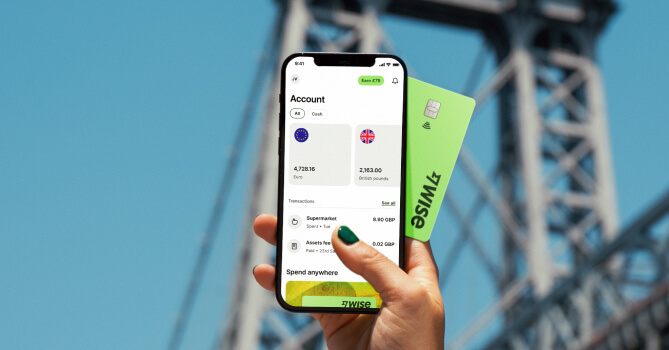
Some expats use Wise for day-to-day money management. The Wise Account can hold 40+ currencies, let you convert, send, and receive money, and use the Wise card in 150+ countries. It can be useful for transferring and managing money, but it does not prove elective residence visa eligibility or replace the financial evidence required by your Italian consulate.
FAQ
Frequently asked questions about the elective residence visa in Italy
How much income do you need for an elective residence visa in Italy? 
Around €31,000 a year for one applicant is a commonly published benchmark, but it is not a universal figure across every consulate. You will generally need additional financial resources for accompanying family members, so check the current requirements of the consulate handling your application.
Can you work remotely on an elective residence visa in Italy?
No. The elective residence visa does not permit work, so if you plan to continue salaried employment, freelance work, or other active remote work after moving, you should consider Italy’s digital nomad, remote worker, or another appropriate work visa instead.
Does buying property help you get an elective residence visa in Italy?
Owning a home in Italy can satisfy the accommodation requirement, but buying property does not give you an automatic right to an elective residence visa. You still need to meet the financial and other eligibility requirements set by the consulate handling your application.
Can family members join you on an elective residence visa in Italy?
Yes, the visa can also be issued to a dependent spouse, minor children, and certain dependent adult children if the relevant conditions are met. You will need to demonstrate sufficient additional financial resources to support them, and documentation requirements can vary by consulate.
How long does it take to get an elective residence visa for Italy?
Allow up to 90 days after submitting your application, although the exact processing time can vary and additional checks may take longer. Plan further ahead for appointment availability, translations, accommodation paperwork, and any additional documents your consulate requests.
Useful sources
(accessed on 21 August 2026)
- Visa for Italy: official visa questionnaire and route finder for checking whether elective residence matches your case.
- Italian Ministry of Foreign Affairs and International Cooperation: official ministry source for visa policy, consular services, and country guidance.
- Polizia di Stato: official guidance on residence permit steps and the role of the local Questura.
- Portale Immigrazione: official immigration portal with permit information and tracking tools.
- Agenzia delle Entrate: official tax-agency guidance on lease registration and other practical admin points.