
'%20id='ico-down'%20stroke='%23000000'%20stroke-width='1.5'%3e%3cg%20transform='translate(1092.250000,%20254.750000)'%3e%3cpolyline%20id='Path-2-Copy-4'%20transform='translate(5.500000,%202.750000)%20scale(1,%20-1)%20rotate(-180.000000)%20translate(-5.500000,%20-2.750000)%20'%20points='0%200%205.5%205.5%2011%200'%3e%3c/polyline%3e%3c/g%3e%3c/g%3e%3c/g%3e%3c/svg%3e)


Finance
Insurance
Insurance in France
Compulsory insurance in France reaches across many sectors. Here’s an essential guide to make sure you’re properly insured while living in France.

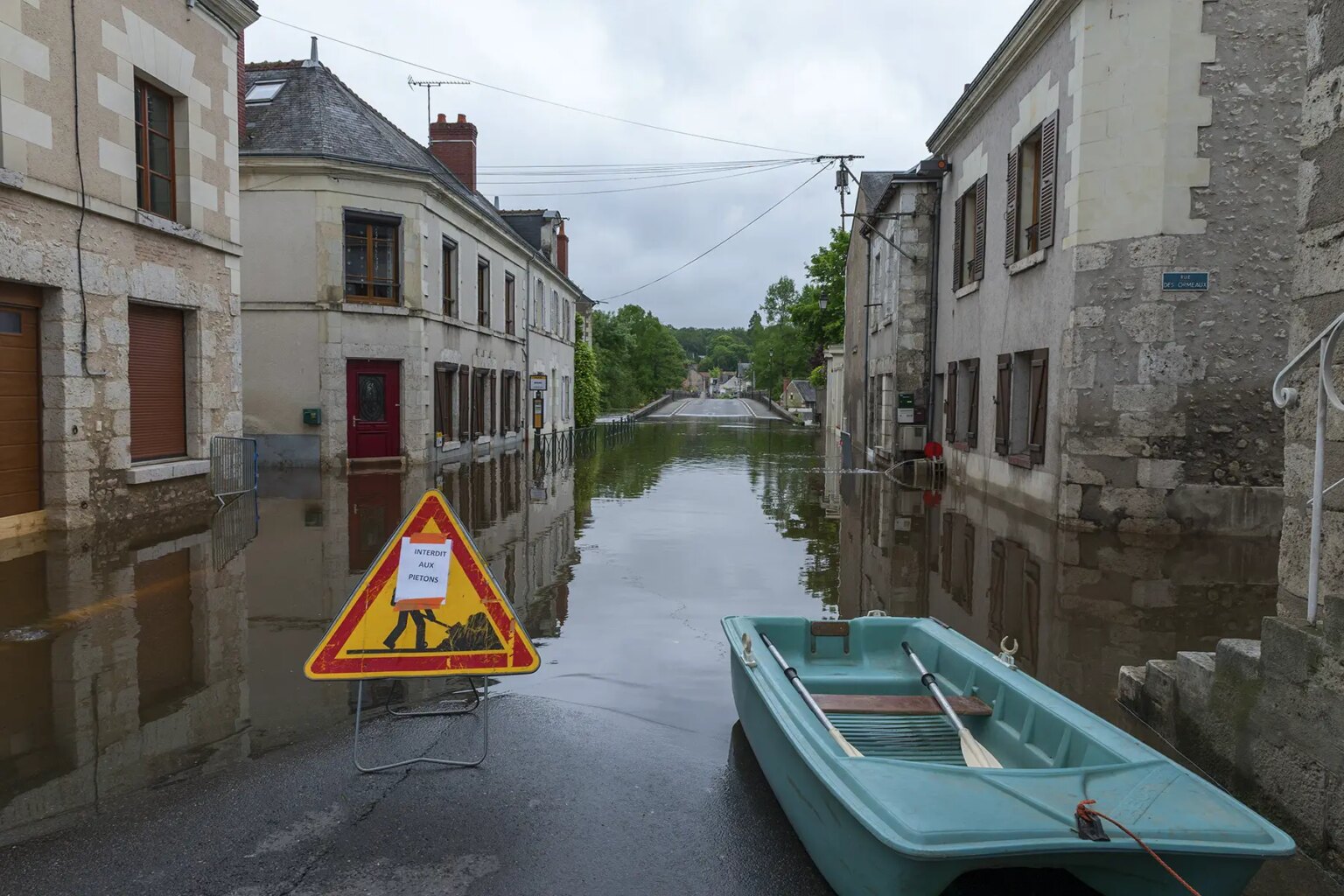
The French have a more dirigiste approach to insurance than many new arrivals may be used to. Where liability is concerned, for example, you will often need coverage. This guide is designed to offer a complete picture of insurance in France, and to make sure you are properly insured while living in France.
Topics covered in this guide include:
Lemonade
Think you know insurance? Think again. Lemonade brings insurance into the 21st century, letting you take out liability and contents coverage in minutes. On their easy-to-use English app, you’ll be able to buy and manage your cover from the comfort of your own phone. Protect your home and belongings instantly with Lemonade.

Overview of insurance in France
France is one of the world’s most developed insurance markets, ranking fifth globally and second in Europe (behind only the UK). The French insurance sector brought in a revenue of €293 million in 2017 and there are 285 insurance companies operating in the country.
The Banque de France regulates insurance in France through the Autorite de Controle Prudentiel et de Resolution (ACPR). Over 260 insurance companies in France belong to the French Insurance Federation (Federation Francais de l’Assurance – FFA).
French residents are legally required to take out a number of different insurances. In addition to this, you can purchase various optional insurances too.
Naturally, there are many companies and policies to choose from. You may contact an insurer online, through a local agent or via a broker. Banks and supermarkets also offer insurance policies. Insurance companies in France include:
You can also check out our directory of insurance companies in France.
Which insurance in France is legally required?
Health insurance
All residents in France need to have health insurance coverage. As of 2016, France’s Protection Universelle Malade (PUMA) has covered residents in the country. This covers expats working in France from their first day, while other legal residents can access state health insurance if they have lived in the country for three consecutive months on a ‘stable and regular basis’.
However, the scheme has its limits. Many expats and French citizens will, therefore, take out top-up private insurance. Large private international health insurance companies which provide coverage packages for expats include:

Home insurance
Whether you rent or own your French home, you must have a home insurance policy before moving in. Around 90% of homeowners in France have a multi-risk policy, but you can also purchase separate coverage. Home insurance should cover:
- Building insurance – covers damage to the building caused by things such as fire, water damage, natural damage, and vandalism. Check individual policies for exact coverage. This is mandatory for renters and those with a mortgage but not for those who own their home outright.
- Public liability insurance – compulsory for all residents to cover their own responsibility for damage to third parties and property. Tenants in rented accommodation will usually need this. It’s possible to purchase this as part of a separate third-party liability insurance, but home insurance packages often include it.
- Contents insurance – optional coverage for personal belongings but often available for a lower premium when included as part of a multi-risk home insurance policy.
- Construction insurance – it is mandatory to insure major construction works carried out on your property by a decennial cover called dommages ouvrage. This protects against defects in the work carried out. Some multi-risk packages offer this. You can also purchase it separately.
Policies can cost from as little as around €100 a year although can rise to
€300-400 depending on property value and extent of coverage. With an expat-friendly insurance broker, you can obtain coverage or helpful advice, often in English. These include Allianz Habitation and Lemonade.
Be sure to read the small print of any policy, especially regarding the excesses you will have to carry and your obligations to protect the property. With some policies, you may need to install an alarm or close shutters at night or during long absences.
Insurance for schoolchildren
Some home insurance policies will automatically cover your liability for any damage or injury your child may cause at school; others will offer this as a separate cover at a nominal premium. In both cases, the insurer will give you a certificate or attestation that the school will ask you for at the beginning of the school year.
While not strictly mandatory for school attendance, you will need this for any activities outside the official curriculum including field trips of any kind as well as extracurricular sports.
Motor vehicle insurance
You must insure all motor vehicles in France for collision liability, even if they are not in use unless all four wheels are removed. Policies are either third-party (tiers collision), third-party fire and theft, or comprehensive (tous risques). Car insurance providers in France include:
Whenever you drive your vehicle, you must carry a document – the attestation d’assurance – which the insurance company issues to prove you are insured. Part of this is a green certificat d’assurance testifying to the validity of your insurance. You must fix this to your vehicle windscreen, so as to be clearly visible.
Your insurer will also issue you with an internationally standard form, le constat amiable, to complete in the event of an accident.
Costs of car insurance in France depend on factors such as vehicle value, the extent of coverage, and driver history. No-claims deductions accrue at the rate of 5% a year and it takes 13 years of no-fault driving to obtain a full 50% no-claims bonus.
This can result in some drivers offering to pay directly for the damage they cause, so as to avoid an increase in the cost of their policy. You should think carefully before accepting such an offer. If the damage is more expensive to repair than the amount you have received from the other party, you will have no recourse to an insurance claim.
Social insurance
Those who are working in France or studying in France have to register for social security payments. Public social security schemes in France cover:
- Sickness, accidents, and disability
- Parental leave
- Family benefits
- Old-age French pensions
- Unemployment
- Survivor benefits
Employers normally enroll their employees in a social security scheme. However, self-employed workers need to register themselves into a self-employed scheme. More information can be found in our guide to social security in France.
Optional forms of insurance in France
Life insurance
There are two types of life insurance in France:
- Assurance vie
- Assurance deces
The form of insurance known as assurance vie translates literally as “life insurance”. This refers to a savings program that sets aside and invests money for retirement or other long-term financial projects. It will also pay in case of death before the end of the policy term. Many people take this out as a complementary form of insurance to state-provided social insurance.
Assurance deces translates literally as “death insurance”. However, this is the equivalent of what in many countries is called a life insurance policy. This will only pay a premium to your family in case of your death, linked to loss of earnings.
Assurance décès following an accident only is very cheap (around €20 per month to cover all of the family) but, when death through illness is included, the price is considerably more and takes into account your age and your existing state of health.
If you take out a sizable home-loan with a French bank, you may be required to take out life insurance. This is intended to protect both the bank and your family by paying off the outstanding mortgage in case of you or your partner’s death.
Third-party liability insurance
Third-party liability insurance is a compulsory part of home and vehicle insurance. It is also possible to have separate liability insurance that extends to damage or injury to others caused in other circumstances. For example, if you accidentally damage someone else’s property or if your dog bites someone.
You can purchase liability insurance separately from home insurance and have it cover incidents that occur in the home. The cost of a separate policy is usually around €160 a year.
Legal insurance
This optional form of insurance is not as common in France as life insurance or liability insurance. However, with access to legal aid becoming more difficult to obtain, more people are taking out policies to cover legal expenses.
Legal insurance (assurance de protection juridique) covers the costs of legal proceedings in the event of a lawsuit or legal dispute. You can take it out separately or sometimes have it as part of home or car insurance as an add-on.
Commercial insurance in France
If you intend to run a business in France, it is essential that you get the right insurance cover to protect your assets and reputation. Some business insurances in France are mandatory, others optional. The main ones are:
- Business liability insurance – also known as public liability and professional indemnity insurance (l’assurance en responsabilité civile professionnelle). Compulsory for all limited businesses. If you’re a freelancer or sole trader, you might be able to cover your business activities through your personal liability insurance, but you will need to specify your activities and probably pay extra for coverage.
- Premises, equipment, and vehicle insurance – you can take these out as separate insurances or combine them in a multi-risk policy (assurance multi risque et perte d’exploitation). None of these are compulsory for most businesses but highly recommended to protect against theft or damage caused by fire, water, storms, etc.
- Business interruption insurance (assurance perte d’exploitation) – this protects against loss of income, including employee salaries, in the event of the business being unable to operate for a period. Some insurers offer packages where you can combine this with premises, equipment and vehicle insurance.
- Assurance decennale – this is a compulsory insurance for trades such as builder, plumber, and electrician. It covers your work for a period of 10 years against defects affecting the quality.
Tools for comparing insurance in France
- Le Comparateur Assurance – allows you to compare auto insurance and other products
- AutoMotoCompare – a car and motorcycle insurance comparison site with a wide range of insurers
- Le Lynx – another popular site where you can compare insurances as well as energy providers
Useful resources
- Autorite de Controle Prudentiel et de Resolution (ACPR) – insurance regulatory authority in France
- Federation Francais de l’Assurance (FFA) – insurance federation that represents over 250 French insurance companies



Did you find this guide helpful?