
'%20id='ico-down'%20stroke='%23000000'%20stroke-width='1.5'%3e%3cg%20transform='translate(1092.250000,%20254.750000)'%3e%3cpolyline%20id='Path-2-Copy-4'%20transform='translate(5.500000,%202.750000)%20scale(1,%20-1)%20rotate(-180.000000)%20translate(-5.500000,%20-2.750000)%20'%20points='0%200%205.5%205.5%2011%200'%3e%3c/polyline%3e%3c/g%3e%3c/g%3e%3c/g%3e%3c/svg%3e)


Moving
Visas & Immigration
Blocked account Germany: rules, amounts, and how it works
Moving to Germany to study or find work often means proving you can support yourself financially before you arrive.


For many people, a blocked account in Germany is the clearest proof of funds. Below, you can see who usually needs one, how much may be required in 2026, how the setup works, and what happens after you’ve arrived in the country.
Key takeaways
- A Sperrkonto is one accepted proof-of-funds route.
- For study under Section 16b, the current benchmark is €11,904 total, or €992 per month.
- Opportunity Card and job-search rules can have different financial requirements.
- Check the latest amount and accepted proof type with the German mission abroad or the Consular Services Portal before you pay.
- Money is released monthly after you arrive in Germany, and you may still need extra cash in your first week.
Wise for managing money around your move to Germany
Transfer funds for your blocked account using real mid-market exchange rates and transparent fees. Once you arrive, hold multiple currencies and spend like a local, helping you manage initial relocation costs without hidden markup fees on your international transfers.

Not a blocked account or Girokonto
What a blocked account in Germany is
A blocked account, or Sperrkonto, is a restricted account used to show German authorities that you have enough money for living costs. The Federal Foreign Office says only a limited amount can be withdrawn each month.
Unlike an everyday account, most of the balance stays locked until the monthly limit applies. The money is still yours, but you cannot usually spend the full amount on day one.
Who needs a blocked account in Germany?
This will depend on your nationality, your visa route, and whether you can use another accepted way to show you have enough money. Many non-EU students and some job-search applicants use a blocked account because it is familiar and easy for caseworkers to assess.
However, it is only one option. The Federal Foreign Office and the mission handling your case decide what else is accepted.
| Visa route | Who usually needs it | Are alternatives possible? | Where to verify |
|---|---|---|---|
| Student visa, Section 16b | Many non-EU degree applicants | Yes, sometimes | Mission abroad, portal |
| Studienkolleg or preparatory study route | Many non-EU preparatory applicants | Yes, sometimes | Mission abroad, study guidance |
| Opportunity Card, Section 20a | Many non-EU job-search applicants | Yes | Mission abroad, Opportunity Card guidance |
| Language course or other temporary study route | Some route-specific cases | Yes | Mission abroad, route checklist |
| Extension or year-two residence proof | Local case by case | Yes | Local Ausländerbehörde |
Student visa and Studienkolleg applicants
If you are going to study in Germany and need a student visa, a blocked account is a common way of proving your finances. The official Visa for studying guidance says applicants under Section 16b of the Residence Act can usually prove funds through a blocked account, a scholarship, or a Verpflichtungserklärung.
If you are applying for a German student visa, check the requirements set out by the German mission handling your application. Rules can differ depending on whether you have a university place, are seeking a place in higher education, or are attending a Studienkolleg preparatory course.

Opportunity Card and job seeker contexts
Those looking for work in Germany can use different ways to show they have enough money to support themselves. finances. The official Opportunity Card guidance says applicants under Section 20a of the Residence Act may prove financing through a blocked account, a declaration of commitment, or qualifying part-time income. If you are comparing this with Germany work visas, keep the job-search route separate from the student route because the funding rules are different.
How much money do you need in 2026?
For 2026, you’ll need to show at least €11,904 a year, or €992 per month, to meet the financial requirement for the student route under Section 16b.
This is the minimum amount used to show you have enough money to cover your liv8ing costs while studying in Germany. It doesn’t mean the money will necessarily cover your expenses, particularly in more expensive cities or when you first arrive.
You may also need additional money for rental deposits and early expenses. Compare the official minimum with the cost of living in Germany in 2026 when you create your moving budget.
| Route | Current official benchmark | What it means in practice | Verify with |
|---|---|---|---|
| Student visa, Section 16b | €11,904 total, usually €992 per month | Study proof released monthly | Mission, portal, study guidance |
| Seeking a place in higher education or some preparatory routes | €1,091 per month as of 2026 | Route-specific monthly proof | Mission, study guidance |
| Opportunity Card, Section 20a | €1,091 per month as of 2026 | Qualifying income may reduce the blocked amount | Mission, Opportunity Card guidance |
| Other routes | Varies | No universal figure | Mission, portal |

Germany student visa blocked account amount 2026
For the student route, you need to show €11,904 for one year, equivalent to €992 a month in 2026. But check the current requirement with the Federal Foreign Office, the Consular Services Portal, or the mission handling your application before you transfer money.
When another amount or proof route may apply
Other routes, such as the Opportunity Card, job-search, language-course, training, or prospective-student, may require a different amount or another proof type. Head to the Consular Services Portal, select your visa purpose, and compare that guidance with the checklist on the website of the German mission where you will apply.
Blocked account providers in Germany
At the time of this check, 17 September 2026, the two large online providers below were clearly advertising blocked-account applications for Germany. Fees and rules can change, so treat the provider page as the final check before you apply.
| Provider | Best for | Setup fee | Monthly fee | Confirmation speed | Refund policy | Bundled current account | Notable restrictions |
|---|---|---|---|---|---|---|---|
| Expatrio | All-in-one setup | €119 | €9 | 1 business day review, instant after funds | Full fees refunded for visa rejection | Yes | Own or close-family funding rules |
| Fintiba | Fast digital setup | €159 | €9.90 | Automatically issued after funds arrive; instant with credit card payment in some cases | Blocked funds refunded, setup and transfer fees may stay payable | No | US tax status and some country restrictions |
The best provider depends on your visa type, nationality, refund priorities, and whether you want a built-in payout account or just the blocked-account document fast.
How to choose between providers
If you are not sure which provider to pick, look beyond the headline price and consider what will matter throughout the visa application process and after you arrive.
- If your visa appointment is close, check how quickly the account can be opened and funded.
- If you want things to be simple after you arrive, check how you activate the account and access your payments.
- If your application still feels uncertain, check the provider’s refund terms before paying in.
- Check eligibility criteria as your nationality, age, and tax-status rules can rule a provider out, regardless of the price.

How to open a blocked account from abroad
Opening a blocked account from abroad usually involves the following steps:
Confirm your visa route and how you need to prove you have enough funds.
Choose a provider after comparing fees, identity checks, and accepted transfer methods.
Complete the application and identity checks, usually with your passport and visa or admission papers.
Transfer the required amount and any required fees, using the exact payment reference.
Receive the blocked-account confirmation, often called a Sperrbescheinigung, for your visa file.
Activate the account after arrival and complete any linked payout setup.
Documents, timeline, and provider checks
Providers often ask for a passport, admission letter or other visa-related papers, and proof of identity. Some may ask for a local address later in the process. If your visa route also needs health cover, check Student health insurance in Germany early, because many applicants prepare these documents at the same time. Timelines vary, so start well before your appointment. Acceptance comes from the live instructions published by your German mission abroad or in the Consular Services Portal, not from provider marketing pages.

Sending the money and getting the confirmation
Many delays happen at this stage. If your payment reference is wrong or the transfer amount is incorrect, the provider may not be able to process the payment or issue the confirmation in time.
If you are comparing ways to send euros, Wise international money transfer can be one option to consider because it shows fees and exchange rate details before you pay. But the provider’s transfer instructions and official visa rules come first. If you expect family support or later top-ups, the broader question of receiving money from abroad in Germany is separate from the blocked account itself.

What happens after you arrive in Germany?
Opening the account is only the first half of the process. After arrival, you may still need Anmeldung, the process of registering your local address and activating your account so monthly payments can start.
First-week cash flow matters. Rent deposits, transport, food, and temporary housing may need to be paid before your blocked-account payments begin. Think of the blocked account as visa proof first and everyday access second.
- Book your Anmeldung appointment early.
- Check whether your provider needs a German address or arrival documents for activation.
- Confirm how monthly payouts are sent and when the first release usually starts.
- Keep separate spending money available for your first days.
- Store your blocked-account papers with your visa and residence documents.
Activation, Anmeldung, and the linked current account
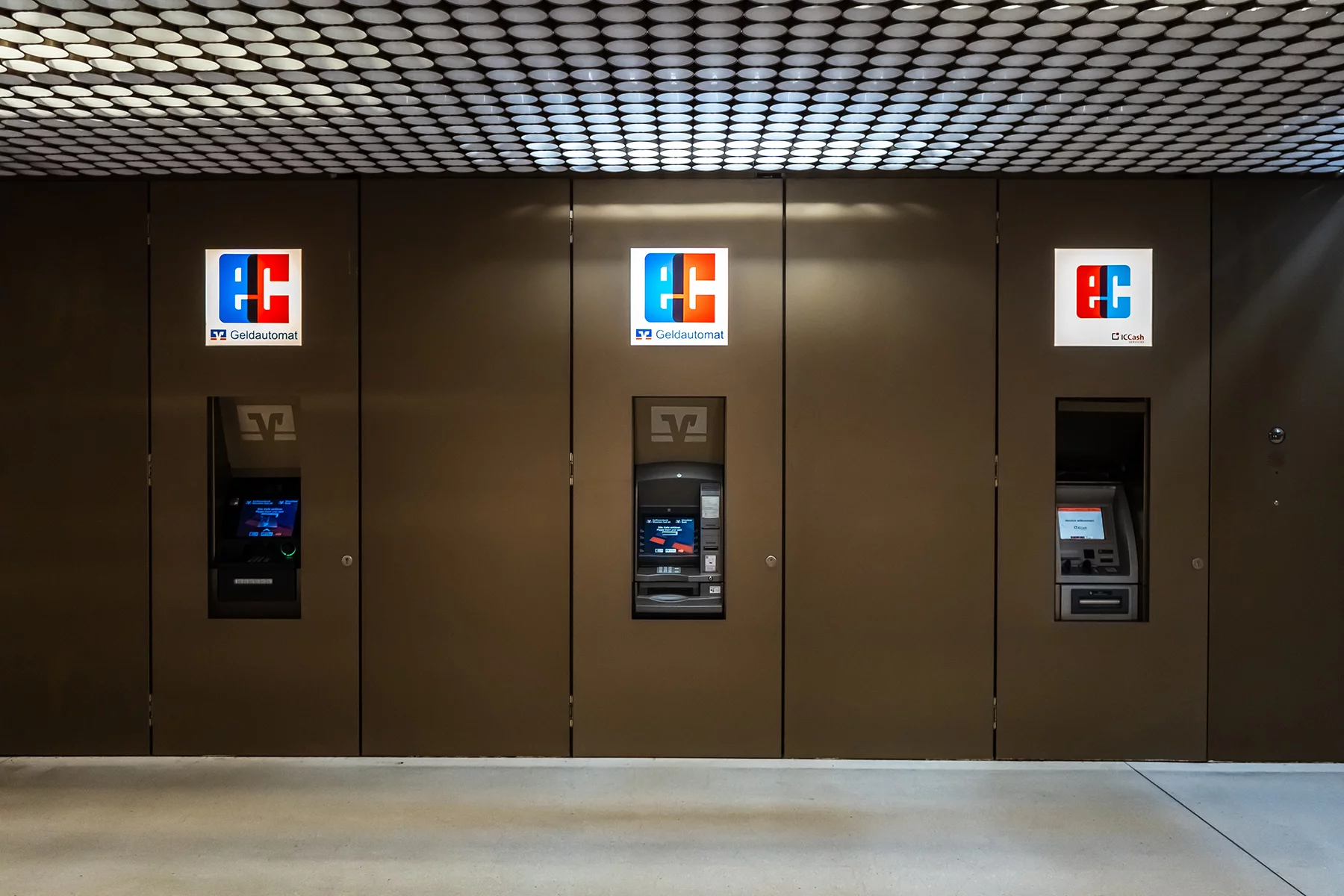
Many providers release your monthly funds into a linked everyday account, often called a Girokonto. That is the account you use for rent, groceries, and direct debits, not the blocked account itself.
Newcomers often compare options from major local banks such as Deutsche Bank, Commerzbank, and Sparkasse while setting up everyday banking in Germany. A Wise multi-currency account may help some readers hold and manage euros alongside home currency before their full setup is ready, but it does not replace the blocked account and may not replace a local Girokonto where provider-specific payouts or direct debits are required.
Refunds, extensions, and year-two proof
If your visa is refused, the Federal Foreign Office says you can usually use the visa refusal notice to lift the blocking notice. For extensions or a second year, do not assume the same proof route will apply automatically. Some students use savings or work income instead, while others need new proof from the local Ausländerbehörde.
Alternatives to a blocked account
A blocked account is not the only way to prove funds. Scholarships, sponsor documents, or support from someone in Germany may also work.
The important point is acceptance. If the mission or authority does not accept the alternative for your route, it will not help your application. Check if you can use the following:
- Parental income or financial documents
- A scholarship letter
- An annually renewable bank guarantee
- A Verpflichtungserklärung from someone in Germany
- Qualifying part-time income in some Opportunity Card cases
For student visas, the Federal Foreign Officelists several of these options. For the Opportunity Card, check the official guidance and the website of the German mission handling your application before relying on an alternative to a blocked account.
Where Wise can help before and after your move
Wise can be useful here, but only as a support tool. It is not a blocked account provider, it does not issue official proof-of-funds certificates, and it does not replace visa compliance.
You may compare Wise for sending money to Germany, holding home currency and euros in one place, or covering first-week spending with extra non-blocked funds after arrival. Expatica’s guide to how to use the Wise Card in Germany explain those use cases in more detail.

Common mistakes and how to avoid delays
- Mixing up visa routes and receiving the wrong amount.
- Not factoring in transfer fees which could reduce the amount you receive.
- Leaving it late in peak season leaves little room for fixes.
- Assuming the money will be available immediately.
- Relying on outdated information from provider websites or forums.
- Forgetting other arrival requirements such as health insurance, Anmeldung, and a payout account.
- Assuming a regular bank account will be accepted as proof of funds.
Before you transfer or apply, recheck the latest route-specific rules with the Federal Foreign Office, the relevant German mission abroad, and the Consular Services Portal.
FAQ
Frequently asked questions about blocked account Germany
What is blocked account in Germany for students? 
It is a restricted proof-of-funds account commonly used by non-EU students to show they can cover living costs in Germany. The money still belongs to the student, but most of it is released only in monthly amounts after arrival.
What is the Germany student visa blocked account amount in 2026?
The current student benchmark is €11,904 for one year, usually understood as €992 per month. Because official figures can change, check the date on the guidance you are using before you transfer money.
Do you need a blocked account for the Germany Opportunity Card?
You may need to prove funds for the Opportunity Card through a blocked account or another accepted route. The exact 2026 amount and accepted evidence should be confirmed through current official guidance and the mission handling your application.
Can you use a regular bank account instead of a blocked account in Germany?
Not automatically. In some cases, a scholarship, bank guarantee, or Verpflichtungserklärung may be accepted instead, but the mission or authority handling your case decides.
How long does it take to open a blocked account for Germany?
There is no single guaranteed timeline. Identity checks, payment speed, provider processing, and peak-season demand all affect how long it takes, so start early.
Sources
Expatica’s experts are all about providing the most up to date and accurate information. All guides are fact checked, and whenever we use external sources (like government websites or research papers) we’ll make a note of them here so you can check them out too.
- Core rules for blocked accounts, monthly withdrawals, and release of the blocking notice, Federal Foreign Office: Opening and closing a blocked bank account
- Accepted alternatives for proving student visa financing, Federal Foreign Office: Student financing FAQ
- Live German visa routes and application requirements, Consular Services Portal
- Student funding and living-cost context, Study in Germany: Funding
- Study visa requirements, financing, and Section 16b guidance, Make it in Germany: Visa for studying
- Opportunity Card financing rules and accepted proof routes, Make it in Germany: Opportunity Card Q&A



Did you find this guide helpful?