
'%20id='ico-down'%20stroke='%23000000'%20stroke-width='1.5'%3e%3cg%20transform='translate(1092.250000,%20254.750000)'%3e%3cpolyline%20id='Path-2-Copy-4'%20transform='translate(5.500000,%202.750000)%20scale(1,%20-1)%20rotate(-180.000000)%20translate(-5.500000,%20-2.750000)%20'%20points='0%200%205.5%205.5%2011%200'%3e%3c/polyline%3e%3c/g%3e%3c/g%3e%3c/g%3e%3c/svg%3e)


Finance
Banking
Banking in Luxembourg: the best banks for expats in 2026
Banks in Luxembourg are leaders in financial services. This guide explains banking in Luxembourg and private banking, investment and asset management options for foreigners.

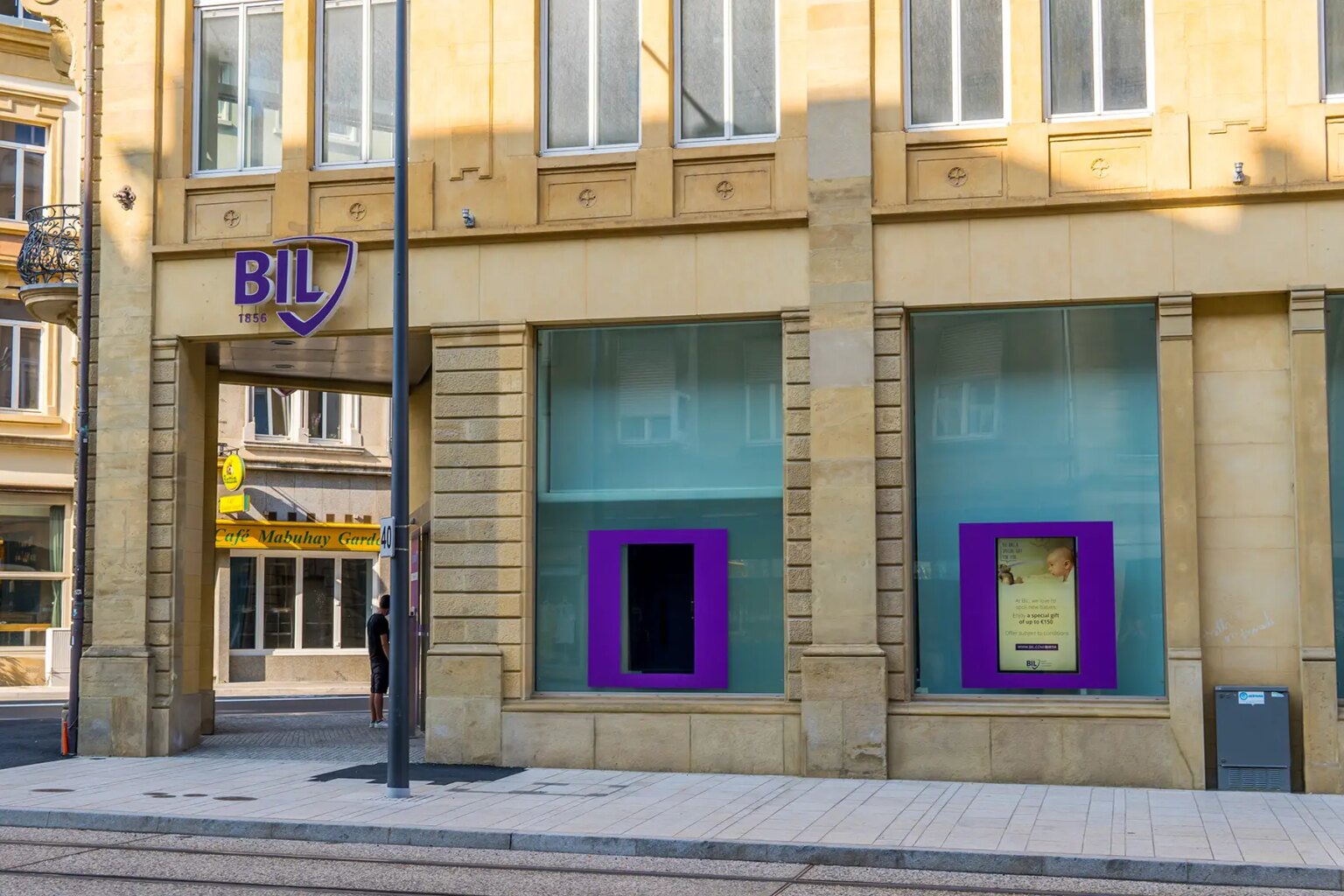
Luxembourg’s banks are world leaders in financial services, offering investment, multi-currency accounts, and offshore banking – what benefits can foreigners get from banking in Luxembourg, investing or opening a multi-currency or offshore account?
Our guide includes sections on:
N26
N26 is the bank you'll love to use: open your bank account in just eight minutes without paperwork. Take control of your finances with one app where you can manage limits, set PIN, lock/unlock cards, and make no-fee transactions anywhere in the world.

Banking in Luxembourg
Banking in Luxembourg has long been core to the economy, with banks attracting many international investors. The country’s focus on financial services has transformed many of its banking institutions into investment banks that require a certain investment amount to open an account (€50,000–100,000), and only a small proportion of Luxembourg’s banks cater to retail banking for individuals.
Despite the country’s small size, there are currently 136 banks in Luxembourg, of which some 30% are branches of international banks. There are 68 bank branches per 100,000 people in Luxembourg, which is among the highest anywhere in the world.
The Banque Centrale du Luxembourg is the national central bank. The regulator for banking and financial services is the Commission de Surveillance du Secteur Financier (CSSF). Most banks in Luxembourg belong to the Luxembourg Bankers Association.
Currency in Luxembourg
Luxembourg is a eurozone country that uses the euro (€) along with 18 other EU nations. The current exchange rate of the euro (November 2019) is 1.16 against the UK pound (£) and 0.90 against the dollar ($).
Notes in circulation are €5, 10, 20, 50, 100, 200, and 500, although smaller stores may not accept notes above €100. Coins include 1, 2, 5, 10, 20 and 50 cents, although 1 and 2 cent coins are becoming less common. Many stores now round goods up or down to the nearest five cents.
Cash machines and ATMs in Luxembourg
Because of the vast number of banks per square kilometer in Luxembourg, finding an ATM is fairly easy. You can find them in or outside bank branches, shopping centers, and supermarkets.
You can use international cards such as Visa and Mastercard in Luxembourg cash machines. Not all machines take American Express. Some ATMs may have a withdrawal limit of €250.
If you use an ATM not connected to your bank, you will usually have to pay a small fee for cash withdrawals. Foreign currency withdrawals will be subject to exchange rate fees. Check with your bank or card supplier for a list of ATM fees.
You can find the nearest cash machine in Luxembourg by using ATM locator websites for Visa, Mastercard, and American Express.
Banks in Luxembourg
National retail banks in Luxembourg
Big-name retail banks in Luxembourg usually offer the usual range of services such as current and savings accounts, credit cards, borrowing, and insurance. Most banks are open from 08:30–16:30 Monday to Friday, with some open 09:00–13:00 on Saturdays.
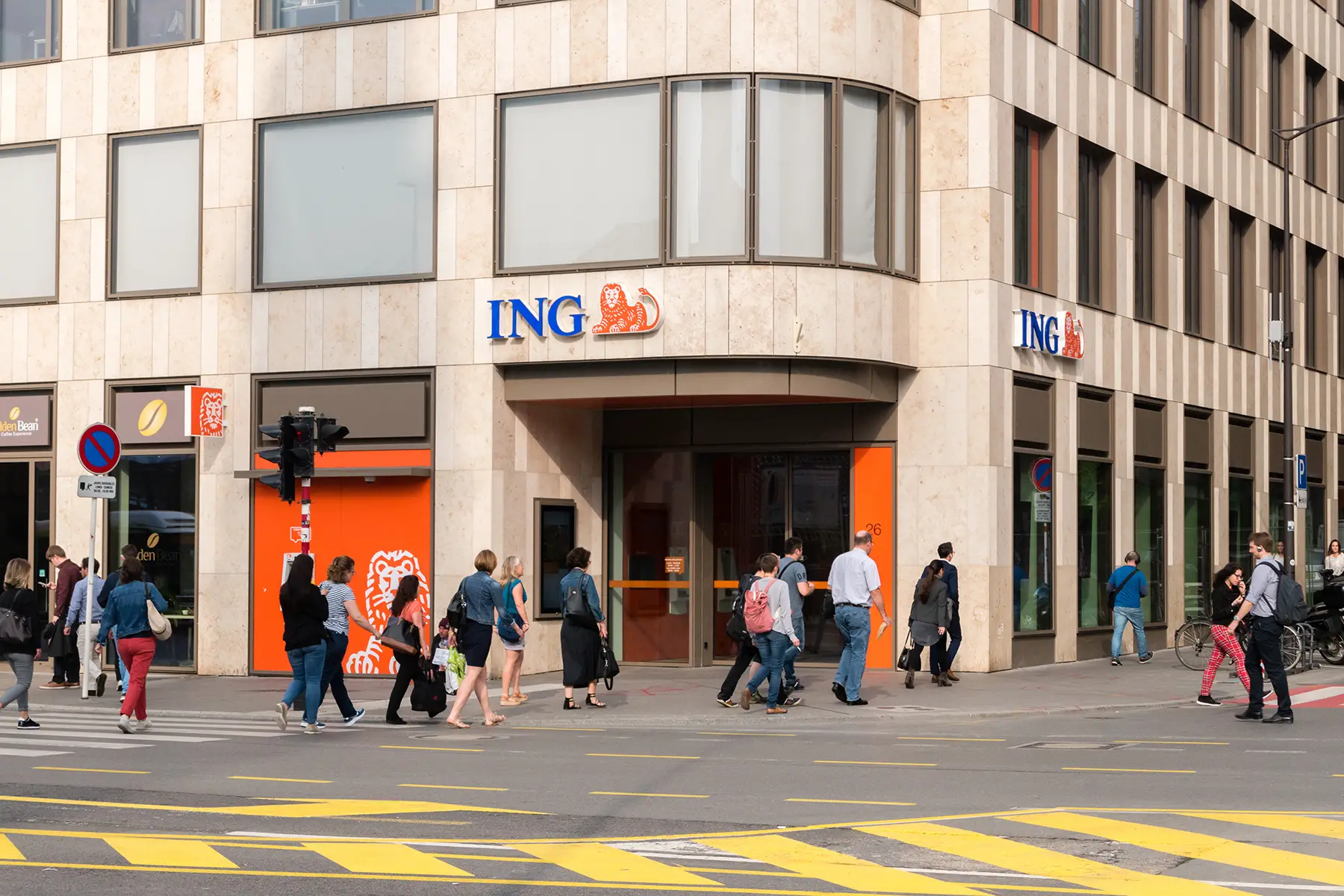
Private banks in Luxembourg include:
- Banque Internationale à Luxembourg
- Crédit Agricole
- Fortuna Bank
- ING Luxembourg
- KBL
- LBBW Luxembourg
- SEB Luxembourg
- Spuerkeess
International banks in Luxembourg
Luxembourg has many big global banks. These offer similar services and open during similar hours as national banks in Luxembourg.
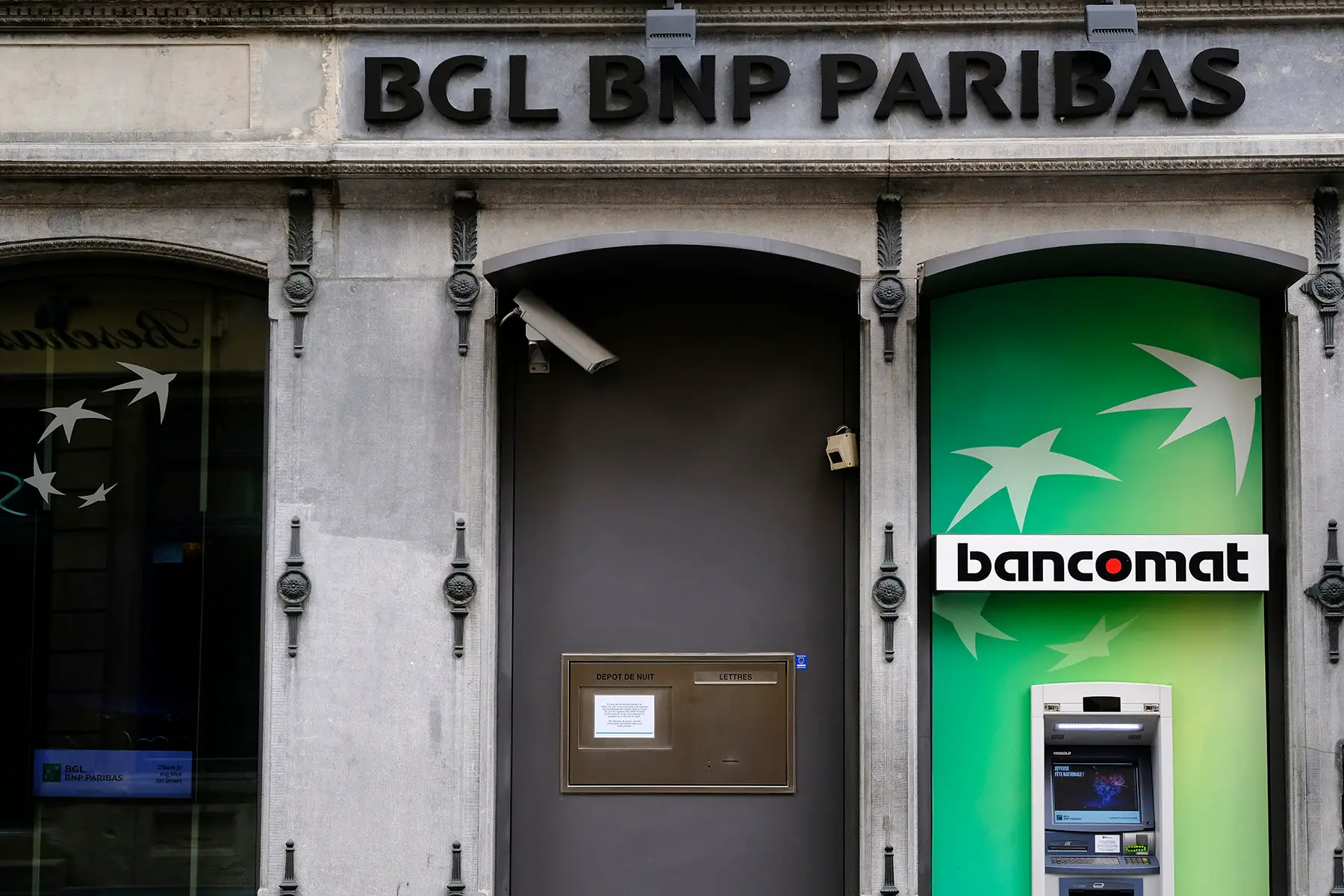
International banking in Luxembourg includes:
- Banco Santander
- BNP Paribas Fortis
- Citibank
- Deutsche Bank
- DZ Bank
- HSBC
- Raffeisen
Investment banks in Luxembourg
Investment banking in Luxembourg is prevalent. There is a wealth of national and international service providers, including:
- Bank Delen
- Banque Carnegie Luxembourg S.A.
- Banque Privee Edmond de Rothschild Europe
- BNP Paribas Wealth Management
- Catella Bank
- Nomura Bank
Online and mobile banks in Luxembourg
A number of online-only banks have appeared in recent years to rival traditional banks. These banks offer accounts that can be opened and operated remotely and are a convenient way of banking for people who travel around a lot. Providers of online banking in Luxembourg include:
Central bank in Luxembourg
- Banque Centrale du Luxembourg
Banking services in Luxembourg
Banks in Luxembourg cover the wide spectrum of client services, with investment banks focusing on asset management and investment portfolio options. Services include:
- Current accounts – retail banks offer a range of everyday accounts including standard accounts plus tailored products for groups such as students and young people.
- Loans and overdrafts – these are available for things such as home improvement, holidays and vehicle purchases.
- Mortgages – many banks offer mortgages in Luxembourg including adjustable and fixed-rate mortgages.
- Savings and investments – retail banks usually offer savings accounts, Luxembourgish pension funds, and investment schemes, with a wider range of wealth management options available through the many investment banks in Luxembourg, including stocks and ETFs.
- Insurance – many banks offer a variety of insurance options in Luxembourg including home insurance and life insurance.
- Digital and online banking – internet banking is available through most banks to customers who want a more convenient way of keeping track of their finances.
- Mobile banking – mobile banking in Luxembourg is now offered by many banks through banking apps so that customers can access accounts and make payments from their mobile phones and tablets.
- Business banking – there is a range of banking solutions for those starting their own business in Luxembourg or becoming a freelancer, including loans, insurance, and business banking advice.
- Expat services – many banking providers have products, services, and account options for international residents and non-residents. These include multi-currency accounts.
Opening a bank account in Luxembourg
There are no restrictions placed on foreigners owning a bank account in Luxembourg, therefore both residents and non-residents can bank and invest in Luxembourg.
Opening an account in Luxembourg is fairly straightforward. You will typically have to show proof of your ID and your address (which can be in your home country). You may also need to provide a work contract if you are a resident of Luxembourg.
Some banks, including digital and mobile banks, operate completely online where opening a bank account and investment can all be done from abroad. If you want a debit or credit card, in most cases you will also need to show proof of income.
Payment methods in Luxembourg
Cash
Although Luxembourg has embraced digital and mobile payments, cash is still frequently used and most people carry euros around with them. In 2016, around 62% of store payments were made by cash. Shoppers more commonly used cash for smaller payments, although Luxembourg has the second-highest average cash transaction value in the EU (€18).
Check
It is still possible to pay by check in Luxembourg. However, they are no longer popular and banks don’t issue checkbooks as standard. You can request a checkbook from your bank if this is your preferred method of paying for goods or bills. Checks take around eight days to clear in Luxembourg.
Debit cards
Most banks in Luxembourg will issue a debit card which can also be used as a cash card when you open a bank account. Debit cards are commonly used for both store payments and online payments in Luxembourg. In 2017, they were the 4th most popular overall form of payment with 30% of shoppers in Luxembourg frequently using them.
Luxembourg uses the V-Pay debit card network which means that debit cards can be used throughout Europe. Cards use chip and PIN technology, although contactless payments can now be made up to €25 with many cards. For all debit card payments, money is taken from the payer’s account at the point of sale.
Credit cards
Credit cards are slightly more popular than debit cards in Luxembourg, with 34% of the population using them frequently in 2017. They tend to be used for larger payments than debit cards, due to the fact that credit card bills don’t need to be paid immediately.
Banks in Luxembourg offer a range of different Visa and Mastercard credit cards. They often come with benefits such as insurance coverage. Key differences between debit and credit cards in Luxembourg include:
- debit cards are usually issued as standard on all current accounts, whereas credit cards need to be applied for;
- you need to be 18 and have good credit in order to have a credit card;
- cash withdrawal using a debit card is usually free if you use your bank’s ATM, whereas there is usually a small fee for using a credit card;
- credit cards can be used for online payments worldwide, whereas there are limits to online payments with debit cards;
- you will need to have the money in your bank at the time of payment if using a debit card. With a credit card, you can pay later. The exact limit on your credit card will depend on your bank.
Direct debits and standing orders
Direct debits and standing orders are popular ways for people in Luxembourg to pay regular bills. Most banks offer direct debit and standing order services for payments such as rent, utility bills, and loan repayments.
The difference between the two is a direct debit is a granting of permission to a third party to charge your bank account, whereas a standing order is an instruction to your bank to make a regular payment to a third party.
You can cancel a direct debit or standing order at any time. Disputed direct debit payments can be contested up to eight weeks after the payment is made, or anytime up to 13 months if the payment was unauthorized.
Online and mobile payments
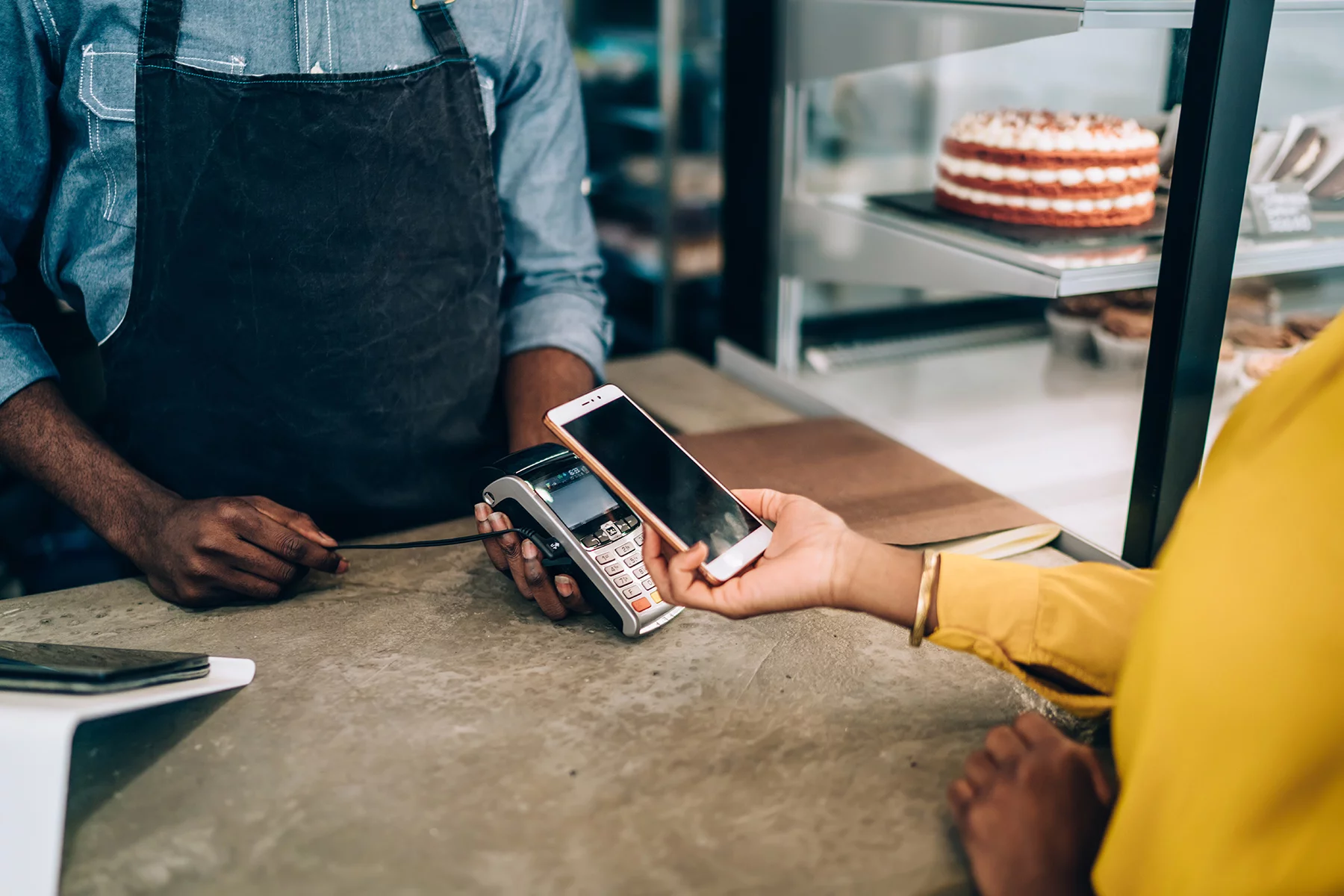
Luxembourg is one of Europe’s leading countries when it comes to mobile payments. The leading mobile payment service is Digicash, which launched as a smartphone app in 2014. It was the 3rd most popular payment form in Luxembourg in 2017, frequently used by 31% of shoppers.
Other popular mobile payment providers in Luxembourg include PayPal, Apple Pay, and Google Pay.
Local money transfers
Money transfers within the Eurozone can be done by Single Euro Payments Area (SEPA) transfer, which costs no more than a transfer between two Luxembourg bank accounts providing the amount is less than €50,000.
You will need the International Bank Account Number (IBAN) and SWIFTBIC (Bank Identifier Code) for the bank that is receiving payment. You can usually complete a local transfer between two Luxembourg banks on the same day if done early in the day. SEPA transfers are usually 1–2 days.
International money transfers
You can transfer money to countries outside the EU/EFTA through banks but this may be subject to fees from both the issuing and receiving banks. Costs will depend on your bank, where the money is going, and how much is being sent. Transfers can take up to 3–5 working days.
For international money transfers, there are alternative solutions to banks which could prove cheaper and more convenient, such as:
Banking fees in Luxembourg
Fees for banking in Luxembourg will depend on your provider. You should be able to access a list of charges on the bank’s website or by asking a branch for a fee list.
General administration fees for both current and savings accounts can vary from free to around €3 a month for standard accounts. Premium accounts can cost as much as €100 a year or more. Online bank accounts are usually cheaper and more likely to be free.
Both debit and credit cards can have annual or monthly fees attached plus an annual percentage rate (APR) charge. Debit cards are cheaper and more likely to be without a fixed monthly/yearly fee. Credit cards usually come with a fixed charge which can be anything from €15 to €100+ a year.
Mobile payments through Digicash are usually free, although individual banks may apply small administration fees. SEPA transfers within the Eurozone are charged at around 0.2% of the transfer amount. International transfers outside the Eurozone region will be more expensive, usually starting at around €10 a transfer. It might be worth looking into other payment providers for these.
There are small charges for ATM use if the machine is not connected to your bank. These vary but will usually be a maximum of around €2.50 per withdrawal. Direct debits and standing orders can usually be carried out for free. There may be additional charges for special services (e.g., making a sudden urgent payment or requesting paper confirmation of payment).
Administration fees are typically more expensive for business and commercial accounts. Again, your bank should be able to provide you with a full list of charges.
Offshore banking in Luxembourg
Internationals often use Luxembourg as an offshore bank — in fact, many of the country’s banking clients are non-residents. Besides those that simply work in the country and live across the border (cross-border workers), other customers have chosen to bank in Luxembourg due to:
- its greater privacy
- favorable taxation for companies (it boasts one of the lowest total tax rates in Western Europe)
- access to deposits and protection against local, political, or financial instability.
Read more about offshore banking and its benefits in our detailed guide.
Banking security and fraud in Luxembourg
Luxembourg, like many other countries, has had to deal with its fair share of banking fraud and scams. These include credit card fraud, telephone scams, and phishing.
Banks in Luxembourg now offer a range of secure banking options. This includes online and mobile banking protected with biometric data (e.g., fingerprint or photo recognition).

You can contact the European Consumer Center Luxembourg for more information on protecting yourself against banking fraud. You can also help to protect yourself by following simple tips such as:
- Never clicking on a link to a bank website in an email and never giving personal information or agreeing to any financial transactions if you receive a cold call from someone claiming to be from your bank.
- Never giving out your password or PIN number in an e-mail or phone conversation.
- Only using secure payment platforms when making online payments
- Never leaving yourself logged in on a mobile or shared device.
Lost or stolen bank cards in Luxembourg
If your Visa, Mastercard, or V-Pay card is lost or stolen, you should call the SIX Payment Services 24-hour line on (+352) 49 10 10. You should also report the incident to the police within 24 hours.
For all other cards, you should contact your bank or card provider as soon as possible to prevent any further transactions.
Making a complaint about banks in Luxembourg
If you are unhappy with the service provided by a bank in the UK, you should first try to resolve the issue through the bank’s complaints department.
If you are unhappy with the outcome, or you don’t hear anything back within one month of contacting them, you can complain to the CSSF.
Useful resources
- Banque Centrale du Luxembourg – the central bank of Luxembourg
- Commission de Surveillance de Secteur Financier – banking regulator in Luxembourg
- Luxembourg Bankers’ Association – the main representative body for banking organizations in Luxembourg


Did you find this guide helpful?