
'%20id='ico-down'%20stroke='%23000000'%20stroke-width='1.5'%3e%3cg%20transform='translate(1092.250000,%20254.750000)'%3e%3cpolyline%20id='Path-2-Copy-4'%20transform='translate(5.500000,%202.750000)%20scale(1,%20-1)%20rotate(-180.000000)%20translate(-5.500000,%20-2.750000)%20'%20points='0%200%205.5%205.5%2011%200'%3e%3c/polyline%3e%3c/g%3e%3c/g%3e%3c/g%3e%3c/svg%3e)


Moving
Visas & Immigration
Health and care worker visa UK: how to apply
The UK Health and Care Worker visa can suit eligible healthcare and care-sector professionals with a qualifying job and sponsor, and this guide explains how occupation codes and family rules affect eligibility, what documents and steps are required to apply, and what to do after approval—while advising you to confirm the latest GOV.UK guidance before applying.


If you are a doctor, nurse, allied health professional, or eligible care-sector worker planning a move to the UK, the Health and Care Worker visa can be a suitable route, but only if your job, sponsor, and occupation code meet the current rules. Care worker and dependant rules can affect your options, so it is important to check the requirements that apply to your role. If you are comparing this route with other UK work visas, similar healthcare job titles do not always lead to the same visa outcome. This guide covers eligibility, documents, family rules, the application process, and the first steps after approval; it is for general information only, so confirm the latest Home Office guidance on GOV.UK before applying.
Key takeaways
- You need an eligible job, an approved sponsor, and a valid Certificate of Sponsorship before you can apply.
- The official occupation code matters more than the job title, so two similar roles can be treated differently.
- From 22 July 2025, the route is closed to new overseas applications for care worker and senior care worker roles, while many eligible clinical roles remain open.
- Dependants are not treated the same across all roles, especially in care worker and some medium-skilled cases.
- Visa approval is only the start, because you still need to plan housing, money, NHS registration, and first-month admin in the UK.
Wise for managing money when you move to the UK for healthcare work
Once your Health and Care Worker visa is approved, you may need to cover deposits, travel costs, and first-month expenses before your UK salary starts. A Wise account can help eligible customers hold and convert GBP, receive money from abroad, and send low-cost international transfers with transparent fees.

What the health and care worker visa is
The Health and Care Worker visa is a sponsored UK work visa for eligible medical professionals and eligible adult social care professionals who have a job offer from the NHS, an organisation providing medical services to the NHS, or an organisation providing adult social care. It sits inside the wider Skilled Worker system, but it has its own lower application fees and successful applicants do not pay the Immigration Health Surcharge.
You must have the job offer before you apply. The route is designed to bring essential staff into the UK health and care system, not to let people arrive first and search later.
“Health and care” is not a broad label that covers every care-related job. UKVI looks at the role itself, the sponsor type, and the occupation code, and many NHS jobs are also linked to Agenda for Change, the national pay framework used for many clinical roles.
How it differs from the Skilled Worker visa
| Route | Who it is for | Main cost difference | What to watch |
|---|---|---|---|
| Health and Care Worker visa | Eligible health and adult social care roles with approved sponsors | Lower fee and no Immigration Health Surcharge | Role-based restrictions still apply, especially for care jobs |
| Skilled Worker visa | Wider range of sponsored roles across sectors | Higher fee and the healthcare surcharge usually applies | Some healthcare workers may still need this broader route instead |
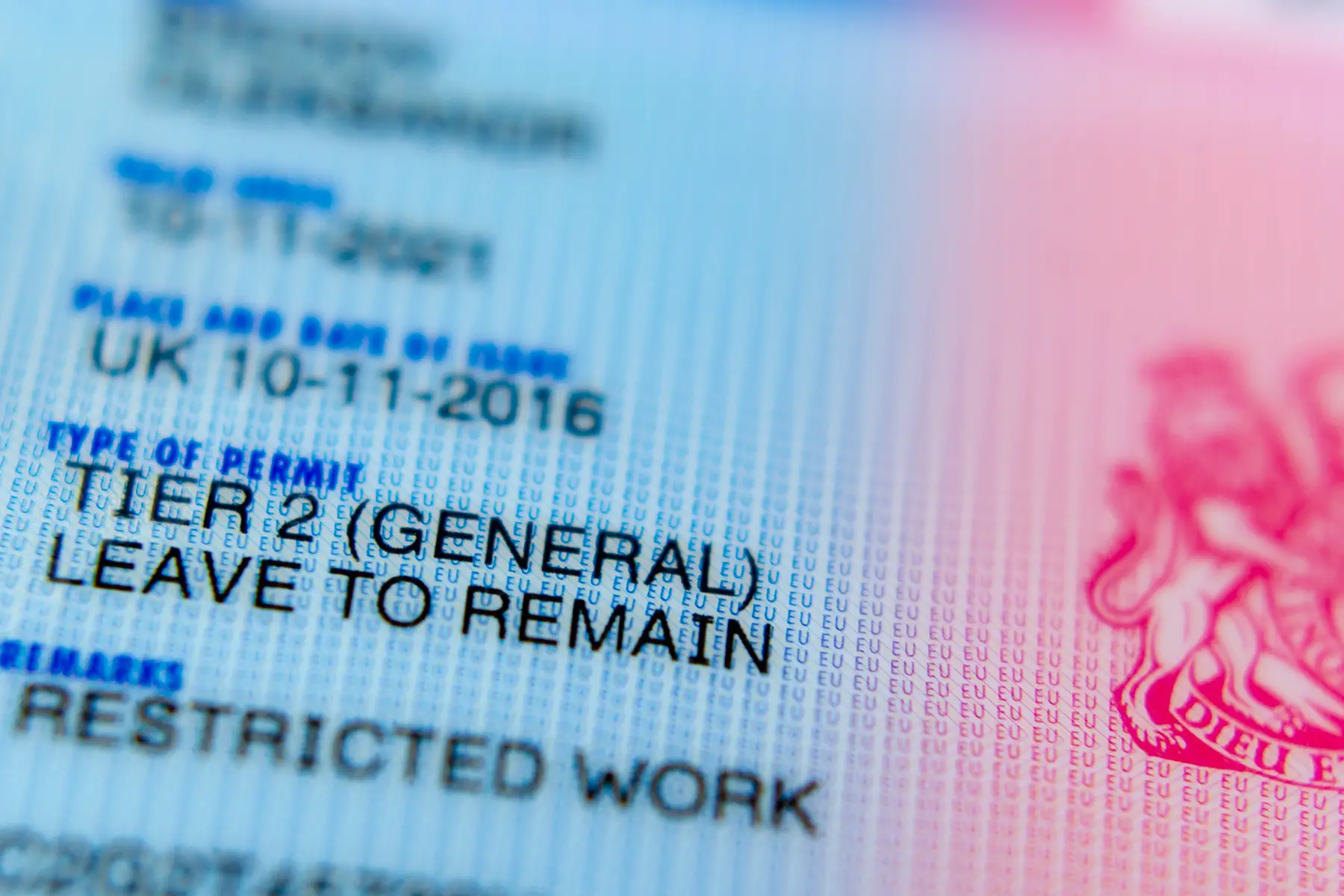
Who can apply
Use a simple three-part test before you go any further. You need an eligible job, an approved sponsor, and evidence that the role meets the relevant salary and English rules. A job title alone is not enough.
In practice, UKVI checks the occupation code attached to the role, not just the wording on your offer letter. That is why two jobs that sound similar can lead to different visa options, salary rules, or family rights.
Eligible jobs and occupation codes
The most common role families on this route include:
- doctors and specialist medical practitioners
- registered nurses and midwives
- allied health professionals such as physiotherapists, occupational therapists, radiographers, paramedics, and speech and language therapists
- some health support or adult social care roles, but only where the code is eligible under the current rules
A useful tip is to ask your employer for the exact occupation code before you accept the offer, because two similar care or nursing job titles can carry different salary or dependant rules. If you do not know the code, ask before you spend money on documents or travel.
Sponsor and employer checks
An approved sponsor is an employer licensed by the Home Office to sponsor workers. For this route, that usually means the NHS, an organisation providing medical services to the NHS, or an organisation providing adult social care. If you are offered a care worker or senior care worker role in England, the employer should also be registered with the Care Quality Commission.
This matters because some applicants prepare for months before discovering the employer is not licensed for the route they need. Before you apply, ask for the sponsor licence number, the Certificate of Sponsorship reference, the exact occupation code, and the salary basis, then compare those details with the official Health and Care Worker visa sponsor and job rules on GOV.UK.
What you need before you apply
Check the rules before you open the online form. Salary rules, English evidence, maintenance funds, TB testing, and criminal record requirements can all cause delays if you leave them until the end.
Unlike a short visitor application, this route depends on matching evidence to the job. A missing or mismatched document can slow the decision even when the job offer itself is genuine.
Salary, English and money requirements
Applicants often blend these checks together, but they work differently. The salary must meet the rule for your occupation code or pay band, your English evidence must fit one of the accepted routes, and you may need maintenance funds unless an exemption or sponsor certification applies.
Use this pre-application checklist:
- confirm whether your role follows a national NHS pay scale or a separate going rate rule
- check whether you are relying on a degree, a Secure English Language Test, or a professional regulator route for English
- confirm whether your sponsor will certify maintenance on the Certificate of Sponsorship
New applicants usually need English at CEFR B2 unless they are exempt. Doctors, dentists, nurses, and midwives do not need to prove English again if they have already passed an English-language assessment accepted by the relevant regulated professional body. If you had this visa before 8 January 2026 and are extending or updating it, the rule can differ, so check the current GOV.UK guidance before you submit.
Some people already in the UK can switch into this route, but not everyone on every visa can do so, so confirm the current switching rules before you resign or accept a new offer. If you are switching as a care worker or senior care worker, you must also meet the current in-country rules, including having worked legally in the job for your sponsor for at least 3 months.
Documents, TB tests and criminal record checks
Your document pack should usually include:
- valid passport or other identity document
- Certificate of Sponsorship reference number
- proof of English, unless exempt
- job title, annual salary, occupation code, employer name, and sponsor licence number
- bank evidence if you need to prove maintenance funds
- proof of relationship if your partner or children are applying
- TB test certificate if you have lived in a listed country and the rule applies
- criminal record certificate if your role requires one
- certified translations for documents that are not in English or Welsh
Some requirements are conditional. TB testing depends on where you have lived, and criminal record rules depend on the role and your residence history.
How to apply step by step
Secure a job offer from an approved sponsor and get your Certificate of Sponsorship. This is an electronic record, not a paper certificate, and you normally need to apply within 3 months of it being issued.
Check your occupation code, salary basis, English route, and maintenance position before you start the form. This is where many avoidable mistakes begin.
Complete the online application. If you are applying from outside the UK, you use the Skilled Worker application flow and select that you are applying for the Health and Care Worker visa.
Upload or prepare your supporting documents, including any TB or criminal record evidence if required. Double-check that the salary, sponsor details, and occupation code match your Certificate of Sponsorship.
Prove your identity. You will either use the UK Immigration: ID Check app and sign in to a UKVI account, or attend a visa application centre for biometrics if the system tells you to do that.
Attend a biometric appointment if required. Some applicants need to travel to the nearest centre, and in some countries that may mean crossing a border.
Submit the application and wait for the decision. Processing normally starts after you have applied, proved your identity, and provided your documents, not just when you first save the form.

What happens after you apply
Once you have applied online, proved your identity, and provided your documents, decisions are usually made within 3 weeks for applications from outside the UK. Delays are more likely if documents need checking, you are asked to interview, or your circumstances are more complex.
If approved, you will usually get instructions by email on how to access your status. An eVisa is your digital immigration record, and you access it through your UKVI account. Approval gives you permission to travel and work under the visa conditions, but you still need to handle the practical side of arriving and starting work.

Can your partner or children join you?
Some can, but not everyone. For many doctors, nurses, and allied health professionals, a partner and children can still apply as dependants if they meet the rules. Their visas usually end on the same date as yours.
Care worker routes diverge sharply from clinical roles here. If you are a care worker or senior care worker, dependant rights are much narrower and usually depend on UK employment history before 11 March 2024 or a limited child-related exception. Each dependant normally pays the visa fee as well, and maintenance rules can apply unless the sponsor covers them.
Extensions, job changes and settlement
The visa can last up to 5 years at a time, and you can usually extend it as long as you still meet the route requirements. If you change employer or move into a different occupation code, you may need a new Certificate of Sponsorship and an updated visa before starting the new job.
Some people already in the UK can switch into this route, but not everyone on every visa can do so, so confirm the current switching rules before you resign or accept a new offer. In principle, you may be able to apply for indefinite leave to remain after 5 years if you meet the residence and route rules at that point, but it is worth checking the settlement page again when you are close to applying.
What to do after approval and arrival
Once your visa is granted, start planning the first month, not just the flight. You may need temporary accommodation, right-to-work checks, travel funds, and a plan for the gap between landing and your first UK salary.
Use the first week to focus on employer onboarding and settling in the UK, not just sightseeing. Keep your passport details up to date in your UKVI account and make sure you can access your eVisa. Your employer may ask for a share code for right-to-work checks before or when you start. That first-month planning often matters more than people expect, especially if you need a rent deposit, transport costs, or help from family back home before payday.

Setting up money and everyday essentials
In your first weeks, focus on the basics that unlock everything else:
- get a UK mobile number so employers, landlords, and banks can contact you
- use short-term accommodation if you need time to understand how renting in the UK works before signing a longer tenancy
- register for healthcare and learn how Healthcare in the UK: understand how the NHS works fits around your new job
- compare everyday money options, including opening a bank account in the UK and budgeting for the cost of living in the UK
- keep your National Insurance and payroll details ready so your first pay is not delayed
Short-term proof of address can also affect bank onboarding, payroll, and some tenancy steps. Your first payslip may look different from home once National Insurance and the UK tax system start to apply.
Major local banks such as Barclays, Lloyds Bank, and NatWest are common starting points for salary and day-to-day banking. A Wise account can also be useful after approval if you need to hold GBP, receive money from home, or convert another currency for early costs.
Common mistakes and how to avoid them
- Relying on the job title instead of the occupation code: UKVI assesses the code, so always get the exact code from the sponsor before you proceed.
- Assuming care workers can still apply from overseas: from 22 July 2025, the route is closed to new overseas applications for care worker and senior care worker roles, although transitional in-country rules can still apply in certain cases.
- Treating dependant rights as automatic: partner and child rules change by role, timing, and route history, especially for care workers.
- Submitting incomplete English or maintenance evidence: if your exemption or sponsor certification is not clear on the application, expect delays.
- Using old fee pages or outdated guidance: application costs, English rules, and extension conditions are live variables and can change.
Before you pay or submit anything, go back to the latest official GOV.UK pages for the route, the job code, the fee page, and the family rules. That last check is often what prevents an avoidable refusal or delay.
Conclusion
The Health and Care Worker visa can be a practical route for eligible healthcare professionals, but the details of your occupation code, sponsor, salary, English evidence, and family situation all matter. Check those points before you spend money on the application or make travel plans. Once approved, plan the first weeks in the UK around work onboarding, housing, healthcare, and everyday finances. Because immigration rules can change, confirm the latest requirements on GOV.UK before you submit or update an application.
FAQ
FAQ
Can care workers still apply for a health and care worker visa from outside the UK? 
Not in the same way as many clinical roles. New overseas applications for care worker and senior care worker roles are restricted, so you should check the current occupation code rules on GOV.UK rather than assume a care job offer is enough. Nurses, doctors, and many allied professionals are in a different position.
How much money do you need for a health and care worker visa?
You usually need to show £1,270 for your own application unless you have been in the UK on a valid visa long enough to be exempt or your sponsor certifies maintenance. If dependants apply, extra funds can also be required, so confirm the current family maintenance figures before you submit.
How long does a health and care worker visa decision take?
For applications from outside the UK, decisions are usually made within 3 weeks once you have applied, proved your identity, and provided your documents. That is a typical timeframe, not a guarantee, and extra checks or missing evidence can slow things down.
Can you change employers on a health and care worker visa?
Sometimes, but not by simply starting a new job and sorting the paperwork later. If the new role needs new sponsorship or a different occupation code, you may need to update your visa before you move, so verify the rule first and avoid resigning too early.
Can you get indefinite leave to remain on a health and care worker visa?
Yes, in principle, many people can apply for indefinite leave to remain after 5 years if they meet the route rules, including continuous residence and ongoing eligibility. Because settlement rules can change, check the current requirements again when you are close to applying.
Sources
Expatica’s experts are all about providing the most up to date and accurate information. All guides are fact checked, and whenever we use external sources (like government websites or research papers) we’ll make a note of them here so you can check them out too.
- Health and Care Worker visa overview, stay length, fees, and general route conditions, GOV.UK — Health and Care Worker visa
- Eligible occupations, sponsor requirements, salary rules, and care worker restrictions, GOV.UK — Your job
- Application fees, maintenance funds, and sponsor certification, GOV.UK — How much it costs
- Application process for applicants applying from outside the UK, GOV.UK — Apply from outside the UK
- Required and conditional supporting documents for the visa application, GOV.UK — Documents you must provide
- Partner and child eligibility, care worker restrictions, and dependant requirements, GOV.UK — Your partner and children
- Locations and information for UK visa application centres, GOV.UK — Find a visa application centre
- Tuberculosis testing requirements for UK visa applicants, GOV.UK — Tuberculosis tests for visa applicants
- Healthcare careers, roles, and employment information in the NHS, NHS Careers
- Professional registration and standards for nurses and midwives, Nursing and Midwifery Council
- Registration and licensing information for doctors, General Medical Council — Registration and licensing
- Registration information for health and care professionals, Health and Care Professions Council — Registration
- Regulation and registration information for health and social care providers in England, Care Quality Commission
- Guidance and support for international doctors working in the UK, British Medical Association — International doctors
- English-language requirements and accepted evidence routes, GOV.UK — Knowledge of English
- Digital immigration status and access through a UKVI account, GOV.UK — eVisa
- Share codes and online proof of the right to work, GOV.UK — Prove your right to work
- How to register with a GP surgery in England, NHS — Register with a GP surgery


Did you find this guide helpful?