
'%20id='ico-down'%20stroke='%23000000'%20stroke-width='1.5'%3e%3cg%20transform='translate(1092.250000,%20254.750000)'%3e%3cpolyline%20id='Path-2-Copy-4'%20transform='translate(5.500000,%202.750000)%20scale(1,%20-1)%20rotate(-180.000000)%20translate(-5.500000,%20-2.750000)%20'%20points='0%200%205.5%205.5%2011%200'%3e%3c/polyline%3e%3c/g%3e%3c/g%3e%3c/g%3e%3c/svg%3e)


Moving
Visas & Immigration
UK ancestry visa: eligibility, costs and process
The UK Ancestry visa lets eligible Commonwealth citizens and certain related British-status holders with a UK-born grandparent live and work in the UK, and this guide explains the key eligibility rules (especially nationality), required documents, costs, dependant options, and the path to settlement.


Thinking about moving to the UK because one of your grandparents was born there? The UK Ancestry visa can be a strong route, but only if you meet the nationality rule as well as the family link. Within the wider UK visas and immigration system, this route is for Commonwealth citizens and certain related British statuses who want to live and work in the UK. The biggest misunderstanding is simple: a UK-born grandparent alone is not enough; you must also hold the right nationality or status to apply. Below, you will find the main UK ancestry visa requirements, the document chain, costs, dependant rules, and the route to settlement.
This guide is for general information only and is not legal or immigration advice.
Key takeaways
- You may qualify if you are 17 or over, hold Commonwealth citizenship or another eligible status, and can trace one qualifying grandparent.
- The route usually starts outside the UK, and first-time applicants should not treat it as an in-country switch option.
- Your evidence must show a clear line from you to your parent and then to the qualifying grandparent, with name-change or adoption records where needed.
- A UK Ancestry visa can lead to settlement after five years if you still meet the rules.
- Some readers may be better checking right of abode or British citizenship first, especially if the family link is closer than a grandparent.
Wise for funding your UK Ancestry visa move
UK Ancestry applicants often pay overseas for certificates, visa fees, and the Immigration Health Surcharge, then need GBP for flights and a rental deposit. A Wise account can help eligible customers convert and hold GBP, send money to the UK with transparent fees, and manage multi-currency savings while they get established.

Who can get a UK ancestry visa?
Use this as a quick eligibility check before you order records or pay any fees.
Commonwealth citizenship and age rules
This route is not for everyone with British family history. The main applicant must be a Commonwealth citizen, a British overseas citizen, a British overseas territories citizen, a British national (overseas), or a citizen of Zimbabwe, and must be 17 or over on the date they plan to arrive.
Most applicants apply from outside the UK and must get entry clearance before travelling. If you are unsure whether your passport status counts, check the latest GOV.UK eligibility page and your passport category before you go further. If your claim may be closer than a grandparent, for example through a parent, it is also worth checking citizenship or right of abode first.

Which grandparents count?
A qualifying grandparent can be someone born in the UK, the Channel Islands, the Isle of Man, or in what is now Ireland before 31 March 1922. Birth on certain British-registered ships or aircraft can also count.
You can rely on an adopted parent or adopted applicant where the adoption is recognised by UK law, and unmarried parents or grandparents do not block the claim. You cannot claim through a step-parent or step-grandparent. Worth doing early: order full birth certificates and any marriage or deed poll records together so you can document name changes across generations.
What are the UK ancestry visa requirements?
This route is more flexible than some other UK work visas, but you still need to prove that you can support yourself, have somewhere to live, and plan to work in the UK.
Money, accommodation and work intention
There is no simple fixed savings threshold for this route, but you must still show that you can maintain and accommodate yourself, and any dependants, without recourse to public funds. Public funds means most UK benefits and some housing support.
You also need to show that you are able to work and intend to seek and take employment in the UK. A job offer helps, but it is not the only way to meet this test.
Useful evidence can include:
- bank statements dated within 31 days of your application
- a tenancy plan, host letter, or other proof of where you expect to live
- a recent CV showing your work history
- job applications, recruiter emails, or interview invitations
- a short business plan if you plan to be self-employed
Check the latest GOV.UK guidance and Appendix UK Ancestry before you apply. Caseworkers look at the whole picture, not one magic document, so the aim is to show a clear and credible plan.

Documents you need to prove your ancestry claim
Your ancestry claim usually stands or falls on the document chain. In most cases, you will need full certificates that connect you to the parent and grandparent named in the application.
Prepare a checklist with:
- your current passport or valid travel document
- your full birth certificate
- your parent’s full birth certificate
- your grandparent’s birth certificate
- marriage certificates, civil partnership certificates, or deed poll records for any name changes
- adoption papers, if you or your parent was adopted
- financial evidence and proof that you plan to work
- a TB test certificate if your country of application requires one
- certified translations if documents are not in English or Welsh
Short-form or abridged certificates often do not show the full family link. If you cannot get a standard record, check the issuing authority early and be ready to explain any gap with alternative evidence.
How to apply for a UK ancestry visa
For most readers, this is an overseas application route. Timing, biometrics, and document accuracy matter just as much as basic eligibility.
Application steps, biometrics and processing times
Confirm that you meet the nationality, ancestry, age, and work-intention rules.
Gather your birth records, name-change records, financial evidence, and work evidence.
Complete the online application no earlier than 3 months before your planned travel date.
Book a visa application centre appointment to provide your biometric information, which means your fingerprints and photograph.
Upload or submit the required documents and wait for a decision.
Overseas decisions are usually made within 3 weeks after you apply online, prove your identity, and provide your documents, but you should always check live GOV.UK timings before you submit. Successful applicants now rely on digital immigration status, called an eVisa, rather than older physical visa documents, so check the latest UKVI account steps before you travel.

Fees and the immigration health surcharge
The visa fee and the Immigration Health Surcharge, or IHS, are separate costs. The IHS helps cover access to the National Health Service, but some NHS charges can still apply, such as prescriptions, dental care, and eye tests.
As checked on 19 August 2026, the main costs are:
- initial UK Ancestry visa fee: £726
- extension fee: £1,407
- settlement fee: £3,226 per person
- IHS: usually £1,035 per year for most adult applicants
- optional priority services, if offered in your country or route
For a 5-year route, the surcharge can be one of the biggest costs after travel, so budget for the full application pack, not just the visa fee. Treat these figures as a snapshot and recheck the live GOV.UK fee pages before you pay.
Can your partner and children join you?
Eligible partners and children can usually accompany you or join you later, and the main applicant must show enough maintenance and accommodation for the whole family. Dependants do not need to be Commonwealth citizens, but they still need to meet the relationship and child-dependency rules.
Family members can often apply later, but timing matters. If the main applicant extends their visa or moves toward settlement first, each dependant still needs valid permission and the right evidence for their own application.
Key points to check are:
- Who may qualify: usually a spouse, civil partner, unmarried partner, child under 18, or an older child already on the route as a dependant.
- What evidence is needed: such as marriage, birth, cohabitation, or ongoing relationship records.
- What dependants can do: they can usually work or study in the UK if their application is granted.
- What to check if applying later: including visa expiry dates, switching limits, and whether the child is still classed as dependent.
If a partner may apply later, keep records of ongoing contact and shared finances from the start. It is much easier to collect relationship evidence as you go than to rebuild it months later.
What can you do on a UK ancestry visa?
Once granted, this visa is flexible enough for most everyday plans, but it still comes with conditions.
You can:
- work in employed work, self-employment, or voluntary work
- study in the UK
- bring eligible dependants
You cannot:
- claim public funds, which usually means benefits and certain housing support
- switch into this route for the first time from another visa inside the UK
Unlike sponsored work routes, this visa does not tie you to one employer. That means you can change jobs, work part time, or build a self-employed plan, but you still need a clear plan to work because that is part of the route itself.
What happens after five years?
After five years on the route, some people extend their permission and others move on to settlement, depending on their residence history and whether they meet the current rules.
Extending your visa
You can apply to extend your visa for another 5 years, and there is no set limit on the number of extensions as long as you still qualify. Your partner or child does not extend automatically just because you do, and you must apply before your current permission expires.
Before you extend, check the expiry date, refresh your financial and work evidence, and make sure each dependant has their own plan to extend on time. Most in-country applicants are also asked to deal with biometrics and document submission through UK Visa and Citizenship Application Services, or UKVCAS.
Do not travel outside the UK, Ireland, the Channel Islands, or the Isle of Man while an in-country application is pending, because the application can be withdrawn.
Applying for settlement and British citizenship
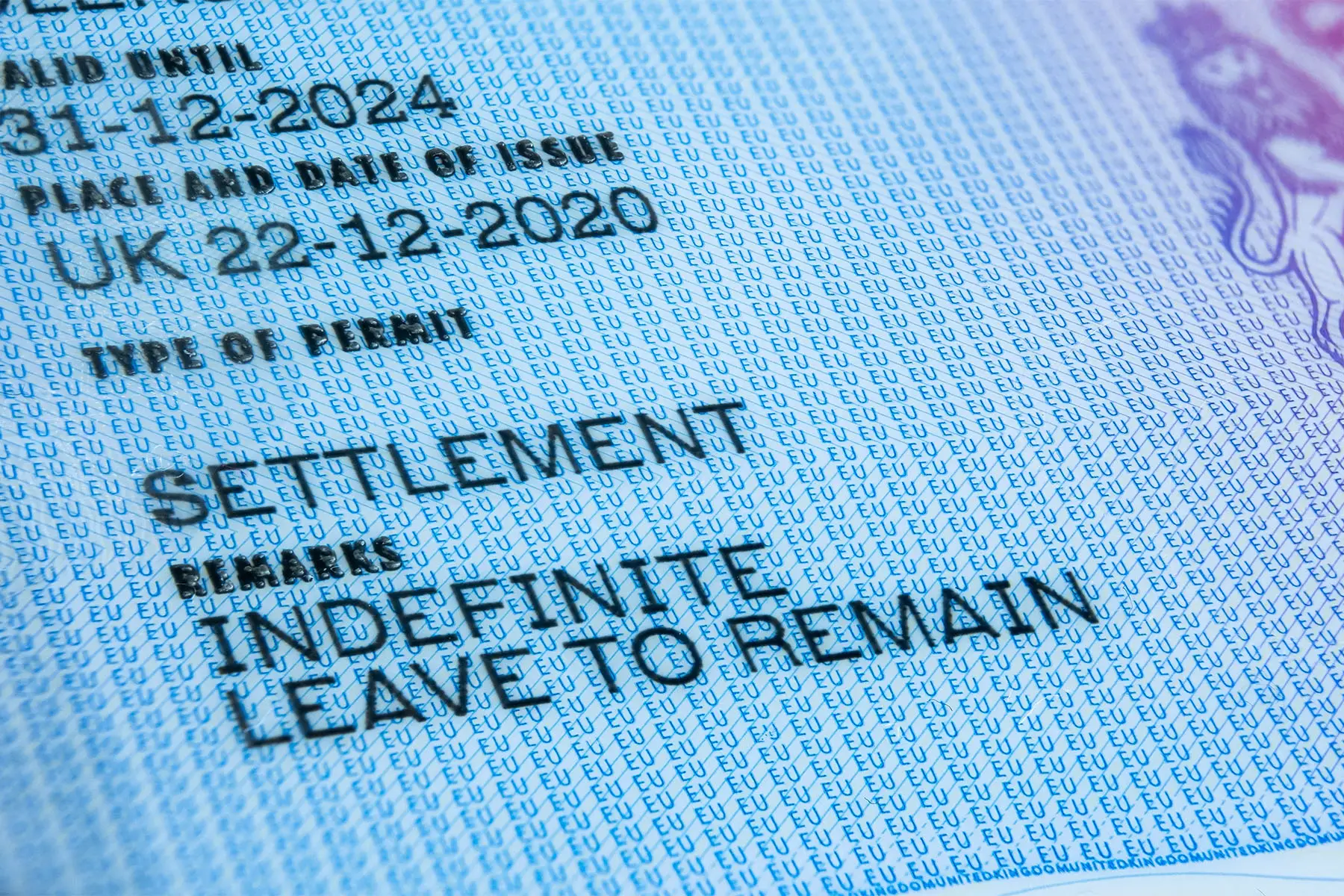
For many readers, the real value of this route is that it can lead to indefinite leave to remain, also called settlement. That means permanent permission to stay in the UK, but it is not automatic, and citizenship is a separate step.
In broad terms, the path works like this:
Complete 5 years on the route and do not apply for settlement more than 28 days early.
Check your absences carefully, because in most cases you must not spend more than 180 days outside the UK in any 12-month period.
Show that you still meet the ancestry, maintenance, and work rules, and meet the English language and Life in the UK requirements.
If settlement is granted, check the separate nationality rules before applying for citizenship.
The settlement rules currently point to B1 speaking and listening for applications made before 26 March 2027, with B2 due to apply from that date unless the rules change again. Citizenship is usually later still, and for many people that means waiting until after settlement has been granted and any extra nationality timing rules are met.
This route can form part of a wider plan for permanent residence in the UK, and some people later move on to British citizenship. Check the latest GOV.UK settlement and nationality guidance before you apply, especially if your absences, work history, or family circumstances are complex.
Common mistakes and refusal risks
Applications can run into problems when evidence is missing or inconsistent, or when the route requirements are not met. These are some of the common issues to check before you apply:
- Missing lineage records: avoid this by ordering full certificates early and checking that names, dates, and places match across generations.
- Relying on a step-grandparent: avoid this by checking the official ancestry definition before you spend money on an application.
- Weak work-intention evidence: avoid this by showing a realistic plan to work, not just a general wish to move.
- Outdated fee assumptions: avoid this by checking live GOV.UK fee pages right before payment.
- Poor translation support: avoid this by using certified translations where documents are not in English or Welsh.
- Inconsistent or unreliable civil documents: avoid this by checking records carefully and never submitting altered or misleading evidence.
- Assuming you can switch into the route from inside the UK: avoid this by treating the first application as an overseas route unless official rules clearly say otherwise.
If you have a criminal record, a previous refusal, overstaying history, disputed family records, or missing civil documents, it may be sensible to get regulated immigration advice before you apply.
Moving to the UK on an ancestry visa: money and first steps
Approval is only the start of the move. You may still need to pay visa costs, move funds, budget for rent and deposits, and sort out access to money quickly after arrival.
Using a Wise account to prepare for UK costs
A Wise account may help with the practical side of the move rather than the visa itself. Some readers use it to manage money in multiple currencies, convert funds to GBP before travel, and handle early spending while they set up with a major local bank such as Barclays, HSBC UK, or Lloyds. It can also be useful if you want to organise some of your first UK costs before you are fully settled or before you finish opening a bank account in the UK. If that would help your move, compare Wise account features and fees before you travel.
Conclusion
The UK Ancestry visa can offer a flexible route to living and working in the UK, but eligibility depends on both your nationality or status and a qualifying family link. Preparing the full document chain, evidence of your work plans, and enough financial evidence early can make the application easier to manage. If you later plan to settle permanently or apply for citizenship, keep checking the current residence, absence, language, and nationality rules as your circumstances develop.
FAQ
Frequently asked questions about the UK ancestry visa
Do you need a job offer for a UK ancestry visa? 
No. A job offer is not usually required, but you must be able to work and intend to seek and take employment in the UK. In practice, you should provide evidence of a credible work plan.
Can you apply for a UK ancestry visa from inside the UK?
Usually not for a first application. You should normally apply before travelling to the UK and check the latest GOV.UK guidance for any route-specific exceptions or updates.
What if your grandparent was born in Ireland before 31 March 1922?
That can count as qualifying ancestry for this route. Birth in what is now Ireland before 31 March 1922 is specifically covered by the UK Ancestry visa rules.
Can your partner and children work in the UK on this route?
Usually yes if they are granted permission as UK Ancestry visa dependants. They must still meet the relevant relationship or dependency rules and cannot normally access public funds.
How much money do you need for a UK ancestry visa?
There is no single fixed savings amount. You still need to show that you can maintain and accommodate yourself and any dependants without public funds, so check the latest GOV.UK evidence requirements before applying.
Does a UK ancestry visa lead to indefinite leave to remain and citizenship?
It can lead to settlement after five years if you meet the applicable rules. British citizenship is a separate later step with its own eligibility and timing requirements.
Sources
Expatica’s experts are all about providing the most up to date and accurate information. All guides are fact checked, and whenever we use external sources (like government websites or research papers) we’ll make a note of them here so you can check them out too.
- Overview of the UK Ancestry route, visa duration, headline fee, processing time, work rights, and restrictions., GOV.UK — UK Ancestry visa: Overview
- Age, nationality or status, maintenance, work-intention, and qualifying ancestry requirements., GOV.UK — UK Ancestry visa: Eligibility
- Passport, birth certificate, employment-plan, financial, TB, relationship, adoption, and name-change evidence., GOV.UK — UK Ancestry visa: Documents you must provide
- Overseas application timing, online application, biometrics, and standard decision timing., GOV.UK — UK Ancestry visa: Apply from outside the UK
- Immigration Health Surcharge rules and healthcare access information for visa applicants., GOV.UK — Pay for UK healthcare as part of your immigration application
- Eligibility, relationship evidence, and application rules for partners and dependent children., GOV.UK — UK Ancestry visa: Your partner and children
- Extension eligibility, application fee, biometrics, supporting documents, travel restrictions, and processing., GOV.UK — UK Ancestry visa: Extend your visa
- Settlement timing, fee, English language requirements, Life in the UK Test, and application conditions., GOV.UK — UK Ancestry visa: Apply for indefinite leave to remain
- Formal immigration rules covering the UK Ancestry route, dependants, permission, and settlement., GOV.UK — Immigration Rules Appendix UK Ancestry
- Decision-maker guidance on assessing ancestry applications and supporting evidence., GOV.UK — UK ancestry: caseworker guidance
- Definition of an eVisa and guidance on accessing and using digital immigration status., GOV.UK — eVisas: access and use your online immigration status
- Rules for determining whether a tuberculosis test is needed for a UK visa application., GOV.UK — Tuberculosis tests for visa applicants
- Biometric appointments and supporting-document procedures for in-country applications., GOV.UK — UK Visa and Citizenship Application Services
- Current list of Commonwealth member countries., The Commonwealth — Member countries
- Wise account product information relevant to managing money in multiple currencies and the distinction from a bank account., Wise — Wise account


Did you find this guide helpful?