
'%20id='ico-down'%20stroke='%23000000'%20stroke-width='1.5'%3e%3cg%20transform='translate(1092.250000,%20254.750000)'%3e%3cpolyline%20id='Path-2-Copy-4'%20transform='translate(5.500000,%202.750000)%20scale(1,%20-1)%20rotate(-180.000000)%20translate(-5.500000,%20-2.750000)%20'%20points='0%200%205.5%205.5%2011%200'%3e%3c/polyline%3e%3c/g%3e%3c/g%3e%3c/g%3e%3c/svg%3e)


Living
Transportation
Public transport in the UK
Learn everything you need to know about trains, buses, metros, and more with our guide to public transport in the UK.

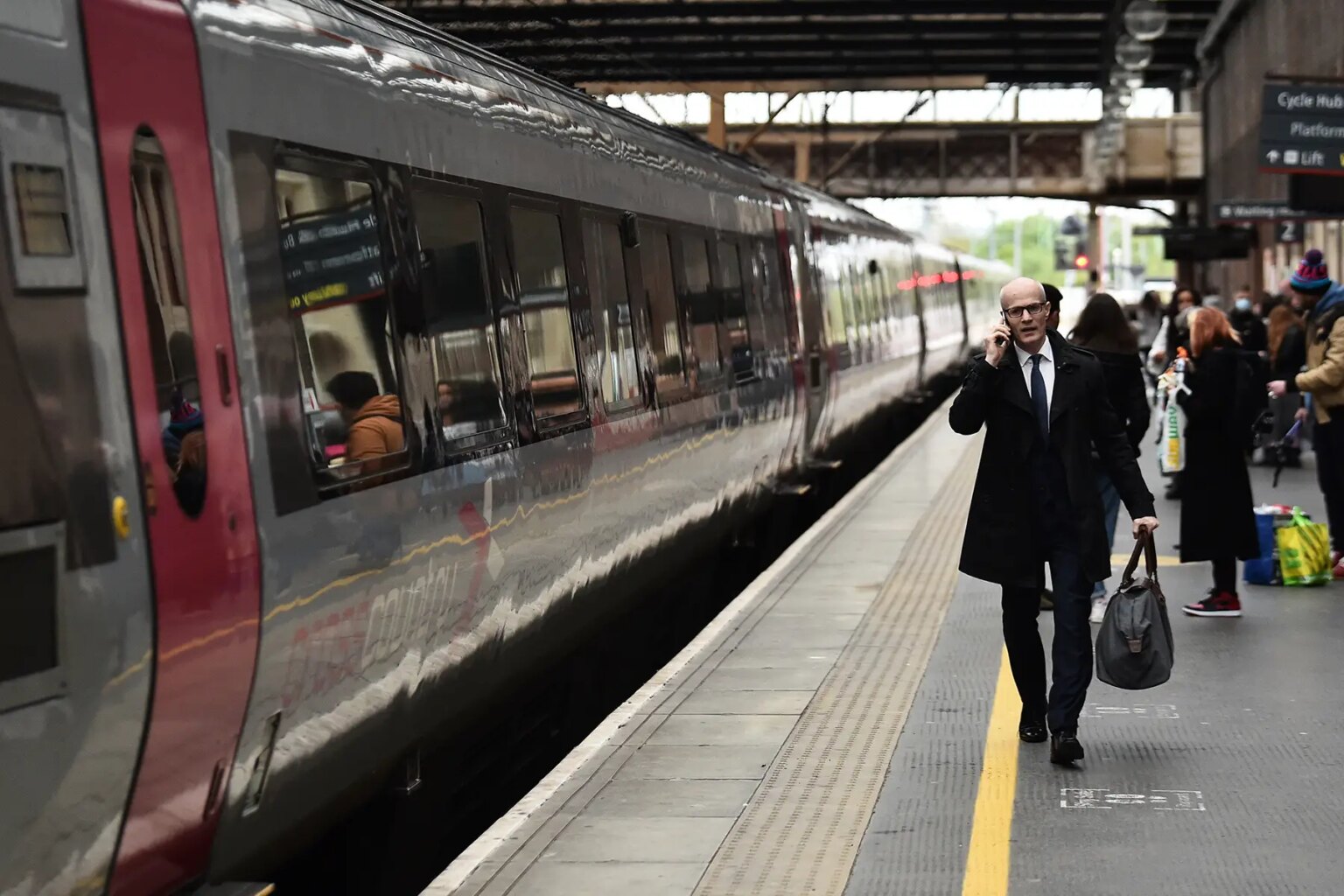
Getting your head around the public transport system in a new country can be challenging. Whether you’re catching the bus to work or taking the train for a weekend away, it’s good to know what to expect when you take public transport in the UK.
Get a tailored action plan for moving to the UK
Let us plan your relocation to the UK for you. Expatica’s relocation tool asks you a series of questions and generates you a tailored, interactive checklist for your move.
You can see everything you need to do ahead of your move and outstanding tasks once you arrive. Create a profile with Expatica to save your checklist and tick off tasks as you complete them.
Try the relocator tool here – it only takes 2 minutes.
To help ensure you have everything you need to know, our guide to UK public transport includes the following information:
Omio
Want to fly away from it all? Or maybe you're looking for a family adventure by train? Wherever you're going, Omio can help you find the best deals for your journey. This one-stop shop lets you compare a range of transport modes, explore new destinations, and buy tickets at the touch of a button. Wherever adventure takes you, get there with Omio.

Introduction to public transport in the UK
If you’re new to the UK, you’ll soon discover that one of the British public’s favorite pastimes is complaining about the country’s public transport. But are all those complaints justified?
Well, like many of the UK’s public services, that largely depends on where you live. In large cities, public transport networks are well-developed and cost-effective. However, in smaller towns and cities, the service can be temperamental at best.
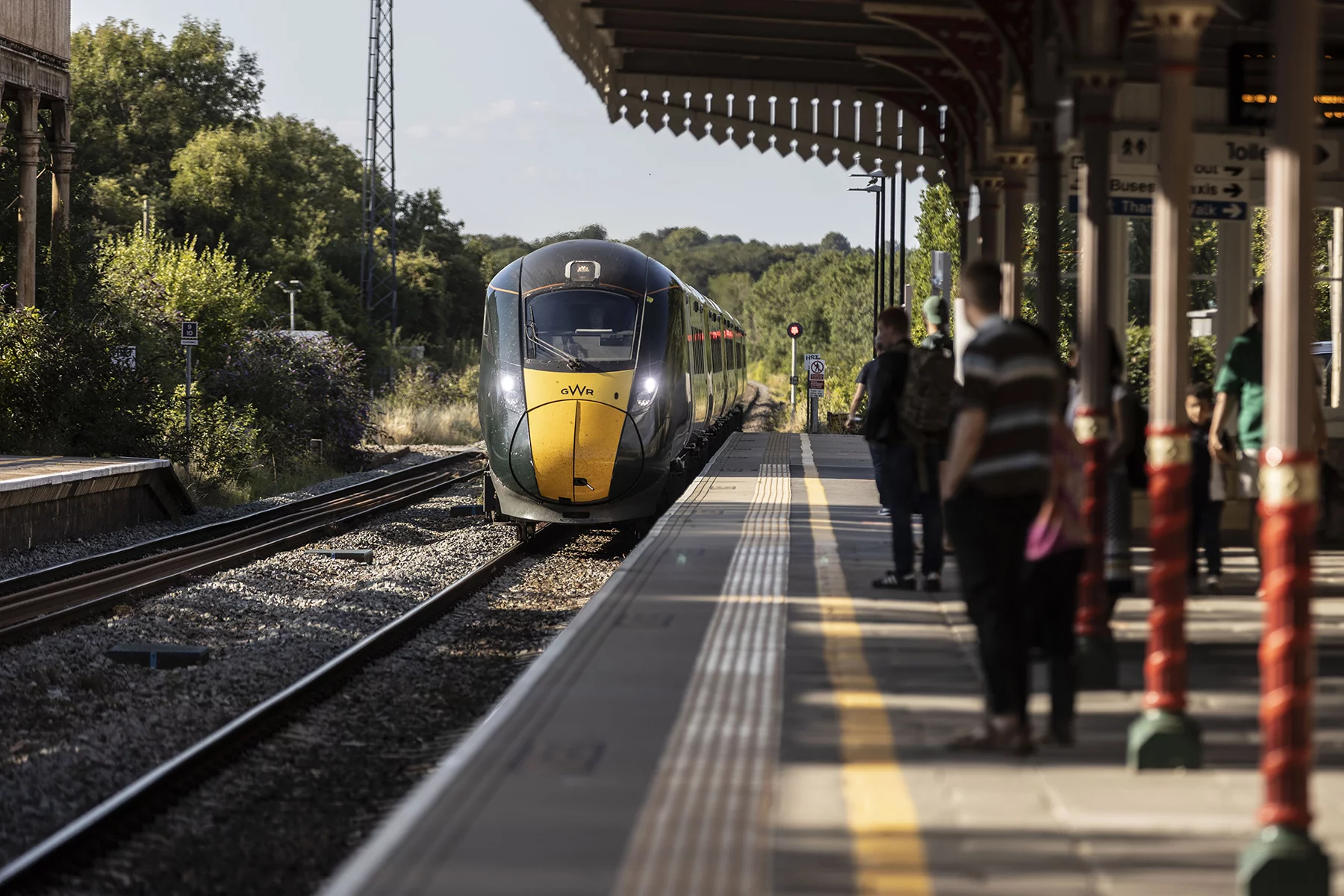
Public transport in the UK takes on many forms. For longer journeys, the UK offers trains, long-distance coaches, and airplanes. On the other hand, you can use buses, the metro, trams, and taxis to cover shorter distances.
Public transport is widely used across Great Britain. In the year ending March 2025, passengers made around 7 billion journeys by public transport. This included around 4 billion local bus journeys, 1.7 billion National Rail journeys, 1.2 billion journeys on the London Underground and Glasgow Subway, and 0.2 billion light rail and tram journeys.
Public transport apps in the UK
There are plenty of reliable and useful apps and websites to help you plan your commute in the UK. Some of these include:
- Citymapper is a popular journey-planning app covering London and many other UK cities and regions, including Birmingham and the West Midlands, Manchester, Liverpool, Yorkshire, Edinburgh, Glasgow, Bristol, Cardiff, and Newcastle. It combines public transport information with walking, cycling, and other mobility options. You can access it on iOS, Android, or your web browser.
- Omio is a useful website and app for planning longer journeys and comparing options by road, rail, and air. They also allow you to book tickets and set up alerts so you can catch great deals.
- Trainline UK helps you plan your train and bus journeys all across the UK. A handy feature of this app is that it compares ticket prices between train and bus operators. This enables you to save some extra cash. You can access it on Android, iOS, or through your browser.
- Transport for London (Tfl) tracks public transport all over London, from buses, the tube, trams, the London Overground, and ferries. Tfl is available on Android, iOS, and browser.
- Uber is one of the UK’s most popular taxi apps. It operates in most UK regions and enables you to see your taxi fare ahead of your journey. You can download it on Android or iOS.
- UK Bus Checker tracks bus journeys all over the UK, covering over 300,000 bus stops. With real-time bus information and the option to purchase mobile tickets, it is your go-to app for catching a bus in the UK. You can download it on Android and iOS.
Bus transport in the UK
Whether you’re in the city or the country, the local bus is one of the most common forms of public transport in the UK. In the year ending March 2025, passengers made around 4 billion local bus journeys across Great Britain. In England alone, there were 3.7 billion journeys. That said, the quality, cost, and frequency of bus services can vary significantly by area.
How bus networks are organised varies around the UK. In London, Transport for London (TfL) plans and regulates the network, sets fares and service requirements, and contracts private companies to operate most routes. Elsewhere, local authorities have different powers and arrangements, including franchising, enhanced partnerships, and supported services. As a result, fares, frequencies, and ticketing can vary considerably between regions.
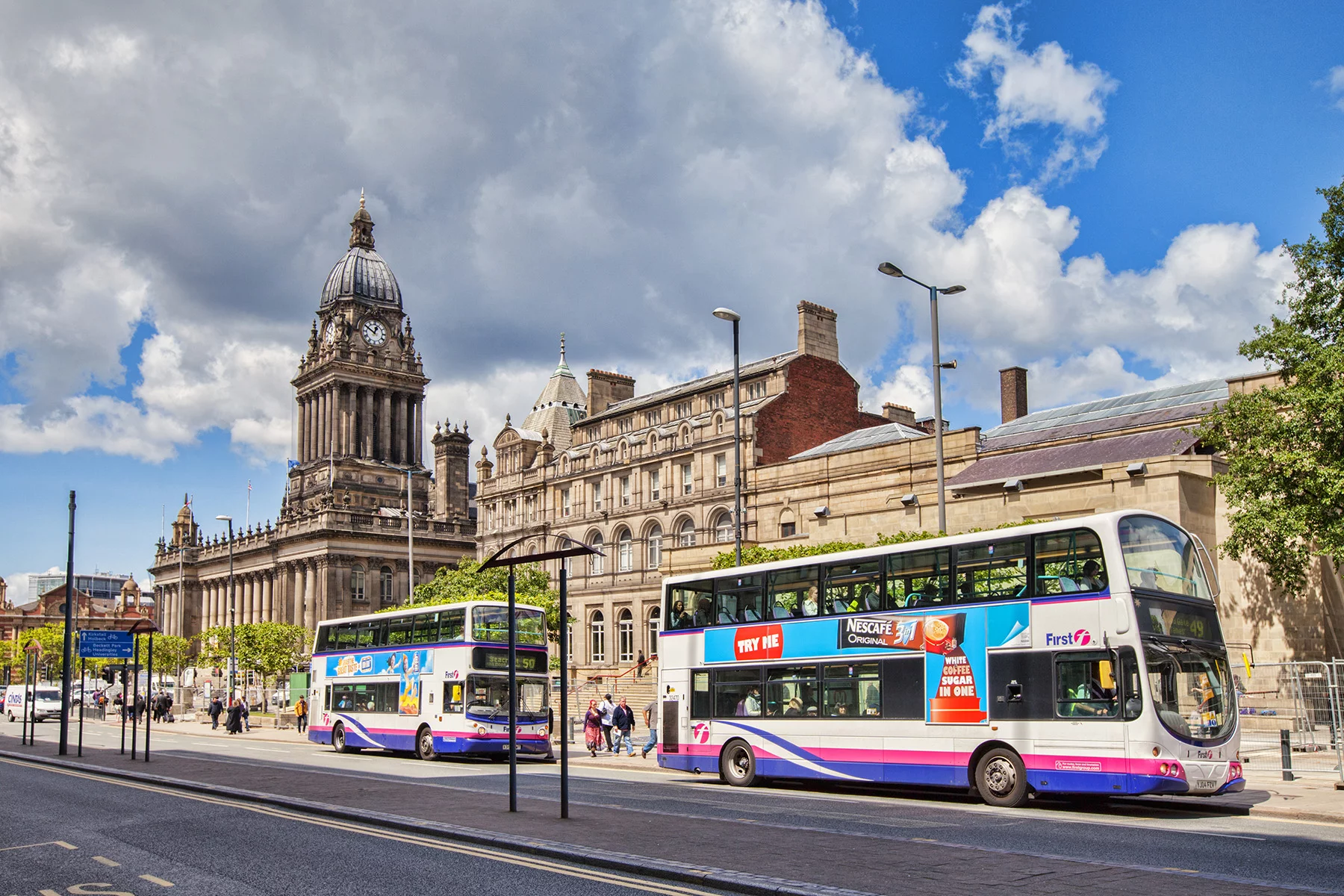
How you board and pay depends on the local network. Some buses use flat fares, while others charge by distance or zone. You may need to tell the driver your destination, tap a contactless card, scan a mobile ticket, or validate a local travel card when boarding.
When exiting a bus in London, you do not need to check out with a travel card. However, outside the capital you may need to, so check what your fellow passengers are doing when leaving the bus.
Free Wi-Fi is available on some bus routes.
Bus tickets and costs in the UK
Bus prices differ depending on who is traveling, the destination, and the local ticketing system. In London, the adult pay-as-you-go bus and tram fare is £1.75 until 1 November 2026, when it will rise to £1.85. TfL’s Hopper fare allows unlimited bus and tram transfers within one hour of the first paid journey.
In England outside London, eligible single fares on participating local bus services are capped at £3 until 31 December 2026. The cap is due to fall to £2 from 1 January to 31 December 2027. Not every operator or route participates, and coach, school-only, and some airport services are excluded, so check your local operator before traveling.
Types of bus tickets in the UK
There are different types of tickets you can buy aboard UK buses:
- Single tickets: a ticket valid for a one-way journey
- Return tickets: valid for one journey from one destination and back again
- Day tickets: useful for tourists, this ticket provides unlimited trips on the day of issue with the bus operator’s services
- Group tickets: suitable for families, a group ticket generally covers up to six people and can help you save on paying for individual tickets
Contactless payment is widely accepted on buses in larger towns and cities. In London, buses are cashless: you can pay with a contactless bank card or device, an Oyster card, or another valid TfL ticket or pass.
In more rural areas, contactless payment may not be possible. However, there may be a ticket machine at the bus stop/station. Alternatively, take cash to avoid disappointment or check with your local operator ahead of time. Bear in mind that some bus companies do not give change, so take coins with you where possible.
Discounted bus tickets in the UK
Bus concessions are devolved, so eligibility depends on where you live. Common discounts include:
- Older people – in England, you generally qualify for an older person’s bus pass when you reach State Pension age. The qualifying age is gradually rising from 66 to 67 between 2026 and 2028. In Wales, Scotland, and Northern Ireland, older-person concessionary bus travel is generally available from age 60. London residents aged 60 or over may also qualify for the separate 60+ London Oyster photocard for travel within London.
- Students – discounts depend on the operator and area. In London, eligible students aged 18 or over can get 30% off adult-rate Travelcards and Bus & Tram Pass season tickets with an 18+ Student Oyster photocard.
- Children and teenagers – rules vary around the UK. In London, children aged 5–10 travel free on TfL services subject to the applicable rules, while 11–15-year-olds can travel free on buses and trams with an 11–15 Zip Oyster photocard. Eligible 16–17-year-olds can receive free or discounted travel with a 16+ Zip Oyster photocard.
- People with disabilities – concessionary travel schemes are also administered separately across the UK. In England, eligible residents can apply for a disabled person’s bus pass for free off-peak travel on eligible local buses in England.
Local councils and operators may offer additional concessions, so check the rules where you live before applying or traveling.
Bus timetables in the UK
Bus timetables differ depending on the region in the UK; however, most buses start running at around 05:00 and stop running at around 00:00 on weekdays. Outside of urban areas, buses often stop running in the early evening.
On the weekend, on the other hand, buses may run past 00:00 but might pass less frequently.
To find out when your last bus will pass, check your local timetable ahead of time.
Coach transport in the UK
While buses run on local routes, coach travel in the United Kingdom operates on an intercity network that connects the country’s largest towns and cities. At your local bus station, you’ll be able to buy tickets and plan your journey. Alternatively, you can book your tickets online.
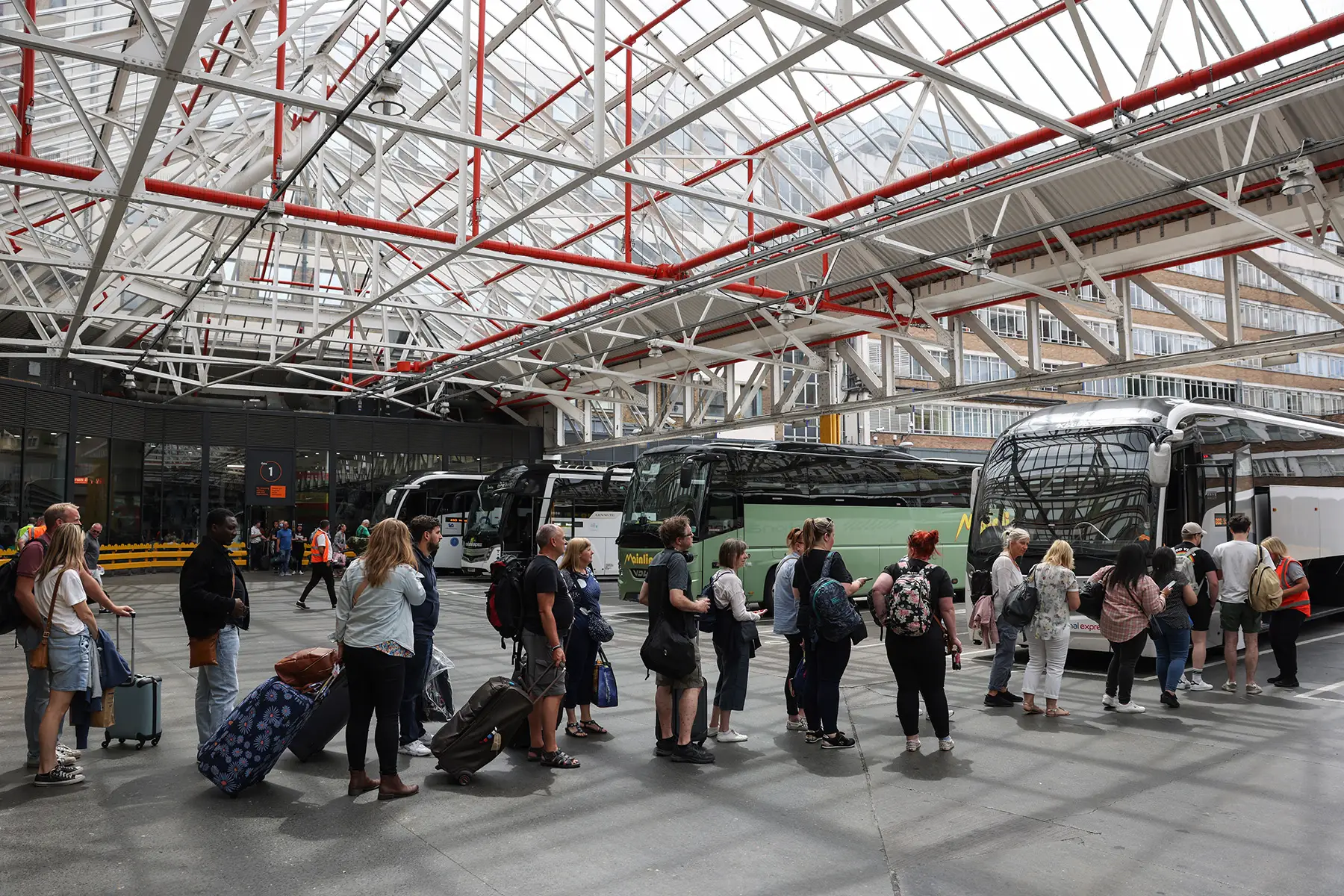
There are several regional and national coach companies, although National Express and Megabus operate the largest number of nationwide routes.

Long-distance coaches may make comfort stops at service stations, where you can use the toilets, buy refreshments, and stretch your legs. The driver will tell passengers when to return to the coach. Facilities such as Wi-Fi and onboard charging vary by operator and vehicle.
Coach tickets and costs in the UK
Coach travel is often cheaper than rail for long-distance journeys, particularly if you book in advance. Most large UK cities have direct or connecting coach services to London, making coaches a useful option for travelers on a budget.
International coach services also operate from London, including from Victoria Coach Station, with connections to destinations in continental Europe. Routes and operators change over time, so check current timetables before booking.
Ticket prices vary depending on where you are traveling to. Check with National Express or Megabus to calculate the cost of your journey.
While you can make significant savings traveling by coach, keep in mind that some distances can be time-consuming. For example, London to Edinburgh takes over 11 hours on a coach, compared to 4.5 hours on a train.
Traveling by metro in the UK
If you’re living and working in London, it’s highly likely that the London Underground, or tube, is a part of your everyday commute. Operated by the Mayor of London via TfL, it is an iconic part of London life. Other rapid-transit systems include the Tyne and Wear Metro around Newcastle and the Glasgow Subway. Liverpool is served by Merseyrail, an urban rail network with underground sections in the city centre.
These metro routes offer a quick and efficient alternative to the local bus and train network for commuters and residents in these areas.
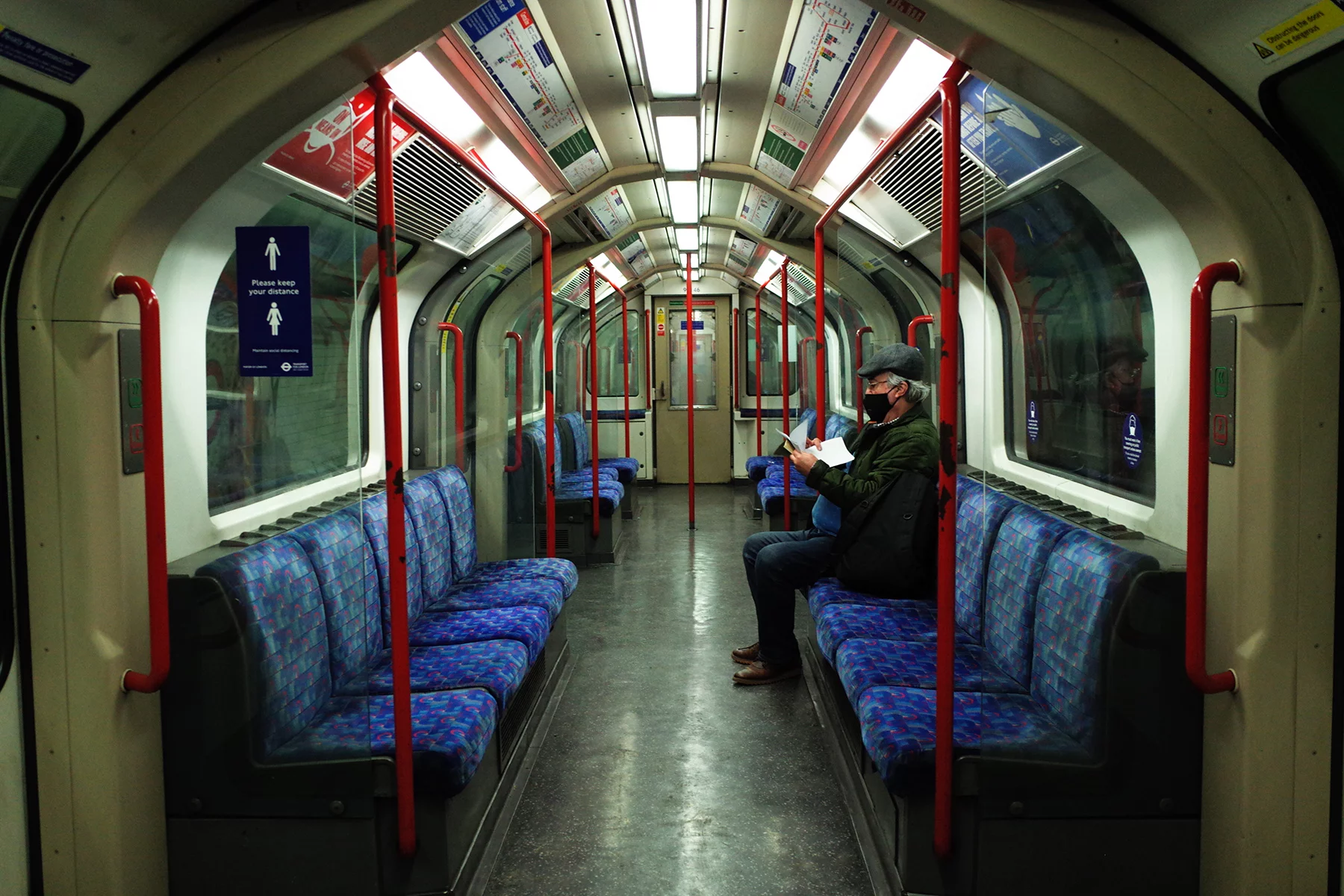
There are several ways to pay for your travel in London. These include:
- Buying tickets at the station from a machine or ticket office
- Using an Oyster card
- Tapping in and out at the ticket barrier with a contactless debit or credit card
An Oyster card can be useful if you regularly use public transport in London, although contactless bank cards and devices are also widely accepted across the TfL network. From March 2026, the fee for a new standard retail or Visitor Oyster card is £10.50 and is non-refundable. You then add pay-as-you-go credit or a suitable season ticket to the card.
Although most people travel on the metro with their Oyster card or contactless debit or credit card, you can also buy single tickets and group tickets (minimum of 10 people).
Metro tickets and costs in the UK
Prices for the tube vary depending on who is traveling, which zone you are traveling to, and what time of day you make your journey.
Adults generally pay standard TfL fares, while a range of concessions and discounts are available to eligible passengers. These include 18+ Student Oyster photocards, 16+ Zip Oyster photocards, 60+ London Oyster photocards, Freedom Passes, and discounts linked to some National Railcards.
Children aged 5–10 can travel free on TfL services subject to the applicable rules. Children aged 11–15 can travel free on buses and trams and receive child-rate travel on other TfL services with an 11–15 Zip Oyster photocard. Check TfL’s free and discounted travel page for current eligibility and application requirements.
Metro timetables and maps in the UK
In London, TfL peak fares generally apply on weekday journeys that start during the morning and evening peak periods, while off-peak rules apply at other times. Other UK metro systems use their own fare structures, so check the local operator before traveling.
Operating hours vary by city, line, and day of the week. London’s Night Tube runs overnight on selected lines on Friday and Saturday nights, while other metro systems have different late-night schedules. Check the relevant operator’s live timetable before setting out.
When traveling around London, you’ll often find it’s quicker and easier to simply walk between some Underground stations rather than take the tube. TfL has published a series of tube maps that highlight walking distances between tube stations.
Train transport in the UK
The UK has a rich and proud history when it comes to train travel. This can be seen at the country’s impressive train stations, including London St Pancras International, Bristol Temple Meads, and Huddersfield. Generally, trains in the UK are clean, easy to understand, and relatively efficient.
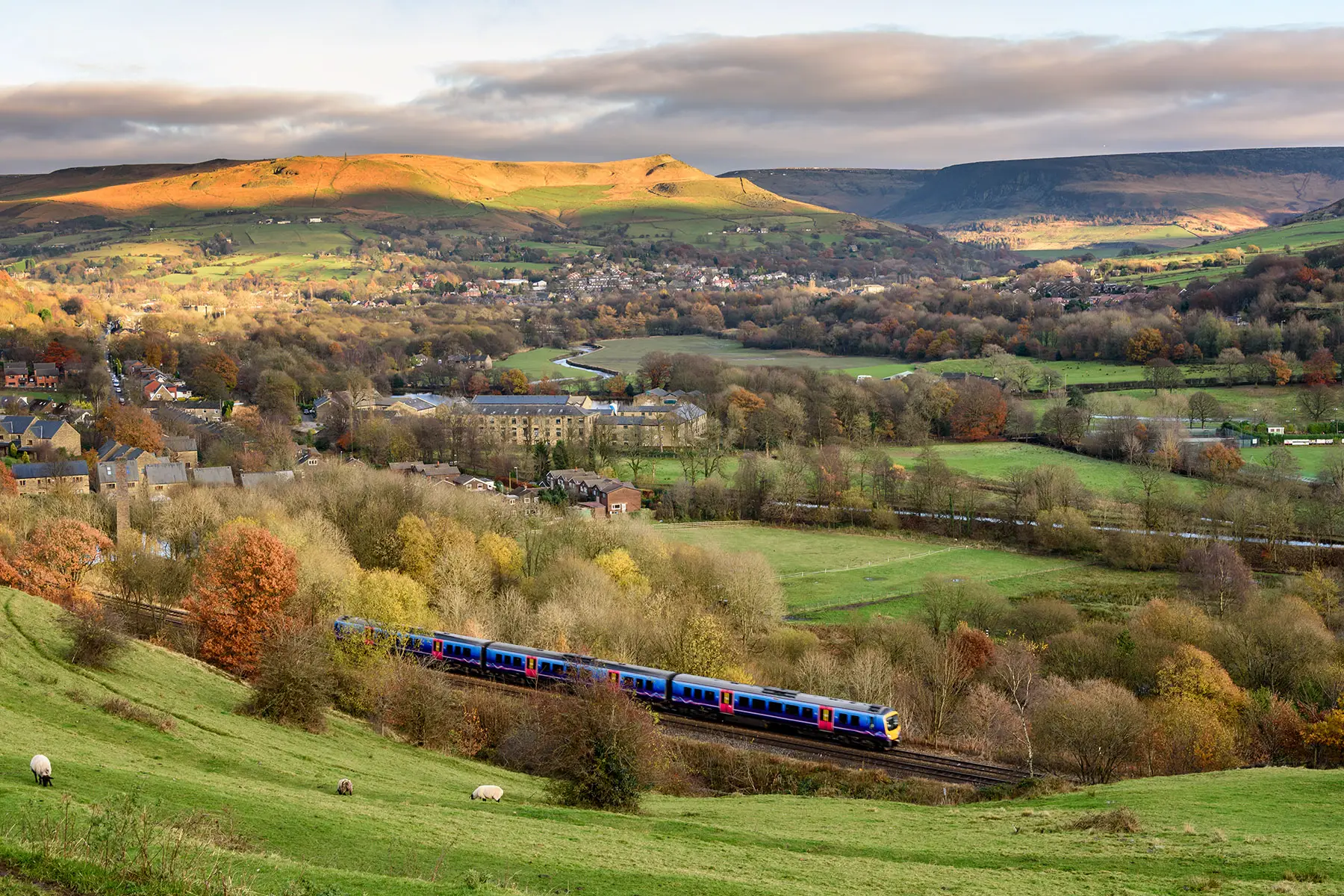
Britain’s railway is currently undergoing major reform. Passenger services covered by Department for Transport contracts are being progressively transferred into public ownership under DfT Operator Limited. South Western Railway, c2c, Greater Anglia, West Midlands Trains, and Govia Thameslink Railway services have already transferred under the current programme. Chiltern Railways is due to transfer on 20 September 2026 and Great Western Railway on 13 December 2026, with the remaining DfT-contracted services expected to follow by the end of 2027.
The Railways Bill, which is progressing through Parliament in 2026, will establish Great British Railways (GBR) as a publicly owned body bringing together rail infrastructure and the majority of passenger services. Until GBR becomes operational, passengers will continue to see a mix of publicly owned operators and other rail companies across Britain.
Train travel in the UK is fairly expensive as a method of transport in comparison with the rest of Europe, especially when you buy tickets on the day of travel. You can limit the expense by buying tickets ahead of time. Another way to save money is by splitting your journey with services such as SplitTicketing.com, Split My Fare, or searching for split rail tickets online.
Despite the ticket prices, traveling by train is extremely popular in Great Britain. According to the Office of Rail and Road, passengers made a record 1.83 billion journeys between April 2025 and March 2026, the highest annual total in more than a century.
Many long-distance and regional trains have toilets and Wi-Fi, but facilities vary by operator and service. National Rail generally allows passengers to bring up to two pets free of charge, subject to its conditions of carriage and any operator-specific restrictions.
Train tickets and costs in the UK
Train tickets vary depending on the destination, the time, and the type of person who undertakes the journey.
If you travel frequently by train, a Railcard can reduce eligible fares. Most Railcards offer around one-third off qualifying tickets, although the exact discount and restrictions depend on the card. For example, the 16–17 Saver offers 50% off many fares. You can compare and purchase Railcards online.
Railcards are available for groups including younger travelers, seniors, disabled passengers, couples, and families. Validity periods, minimum fares, peak-time restrictions, and whether a physical or digital version is available vary by Railcard, so check the National Rail conditions before buying.
If you are not in possession of a railcard, you can always buy a single or return ticket. Prices vary depending on your journey. You can buy your tickets online through National Rail’s journey planner, at a ticket office at your train station, or at a self-service machine located in the station.
On some more rural routes, you may be able to buy tickets from a conductor on board. You will likely be required to show your ticket during your journey, and you will usually need it to exit the station.
Payment is accepted either by debit card, credit card, cash, or with a National Rail voucher.
If your train is canceled or significantly disrupted and you decide not to travel, you may be entitled to a refund from the retailer that sold you the ticket. If you complete the journey but arrive late, you may instead be eligible for compensation through the train operator’s Delay Repay scheme. Check the operator’s rules and keep your ticket or booking details when making a claim.
Train timetables and maps in the UK
With its rich network of trains and operators, coming across a timetable with all the train times in the UK is impossible. Despite this, you can still view train itineraries and live train times on the Trainline app.
Trains in the UK do not run 24 hours per day, as they usually stop between 01:00 and 05:00. If you are unsure when your train will start or stop, check the National Rail or the Trainline websites to view the first and last trains of the day.
For more visually-minded people, you can find a map of Great Britain’s railway network on Trainline’s website.
International trains in the UK
Eurostar’s UK passenger services currently depart from London St Pancras International, with direct trains to European destinations including Paris, Brussels, and Amsterdam.
Eurostar services at Ashford International and Ebbsfleet International have been suspended since March 2020 and have not resumed as of 2026. Stratford International in East London is not served by international passenger trains.
On the island of Ireland, trains cross the border between Newry (in the North) and Dundalk (in the Republic). The route, which stretches from Belfast to Dublin, is served both by NI Railways and Iarnród Éireann.
Prices are cheaper mid-week and rise over the weekend. Check the Eurostar website to calculate how much your journey will cost.
Transport by tram in the UK
If the local train or bus isn’t enough for you, you can always hop on the tram instead. Several cities across the UK have tram systems, which see light trams run along tracks on both public roads and segregated routes.

The following areas in the UK have their own tram network:
- Blackpool
- Edinburgh
- London
- Manchester
- Nottingham
- Sheffield
- West Midlands
Generally speaking, UK cities either have a metro system or a tram system – only London has both.

On the whole, UK trams are clean, modern, and affordable. They also often provide excellent views of the city and some have free Wi-Fi onboard.
Tram tickets and costs in the UK
Ticket fares vary depending on the city. For example, Manchester sets prices depending on what zones you travel through, whereas London’s pricing system is much more straightforward. However, tram prices are roughly in the same range as bus prices.
You can use your Oyster card or contactless credit/debit card when boarding a tram in London. If you are outside London, however, the go-to payment method is by a contactless card. In some cities, like Edinburgh, you will need to buy a ticket from a ticket machine prior to boarding.
Tram timetables in the UK
Tram operating hours vary by network, day, and route, and may change during engineering works or special events. Services in major cities typically run from early morning until late evening, with reduced frequencies at quieter times.
You can calculate your tram journey in London or Manchester online or, if you are outside of these cities, you can also check with your local tram operator online.
Airports in the UK
Arriving in the UK by air is fairly straightforward. There are over 40 airports located across the country. These include domestic airports, which provide essential routes for local residents, particularly those serving the UK’s many island communities.
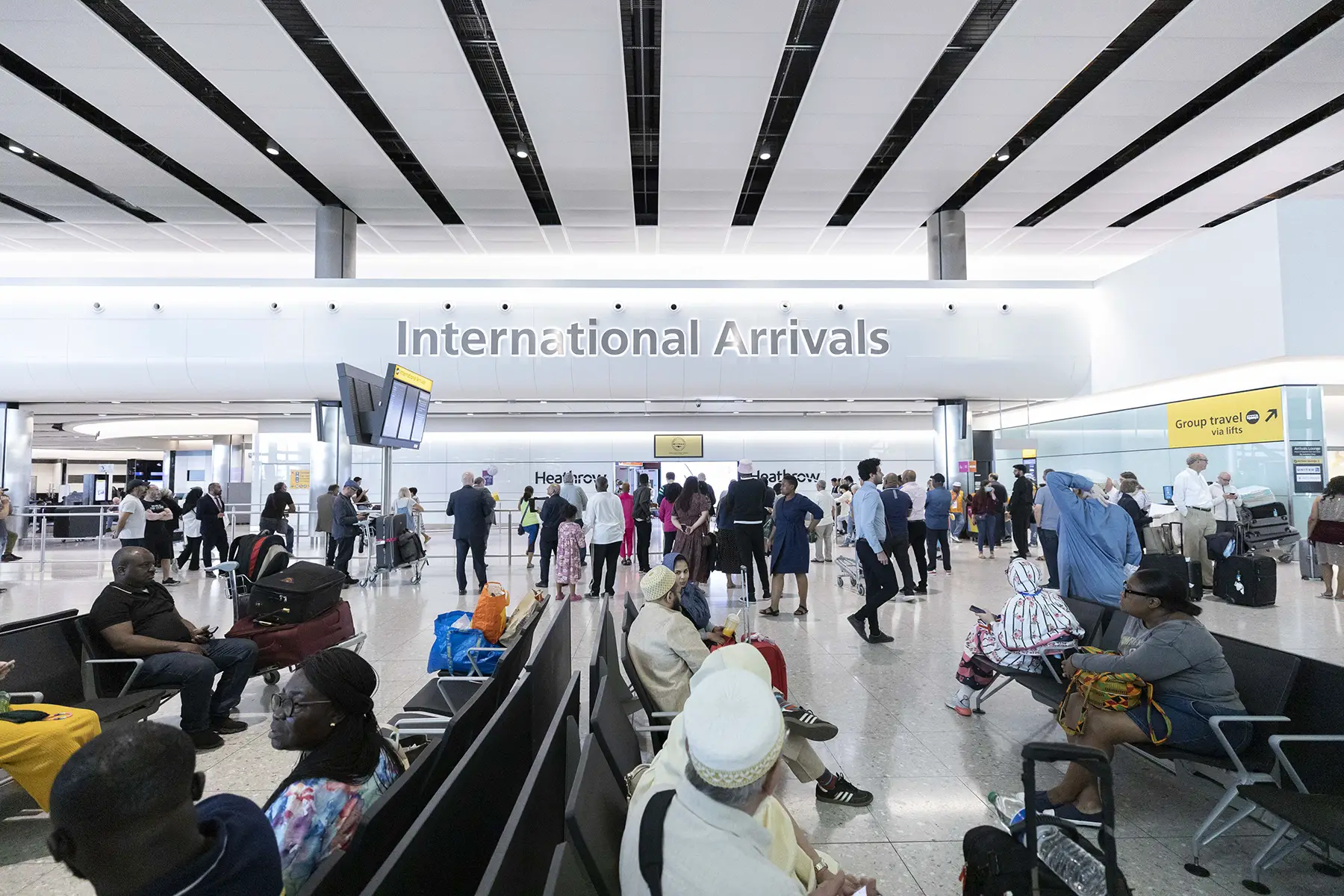
Airports in the UK are generally well-connected to nearby cities by public transport, whether by rail, tram, coach, or local bus. London is served by six main airports. Heathrow is connected to central London by the Piccadilly line and Elizabeth line, while London City Airport is served by the Docklands Light Railway (DLR). Gatwick, Stansted, Luton, and Southend have rail and/or coach connections.
Busiest airports in the UK
London Heathrow is the UK’s busiest airport, followed by London Gatwick and Manchester Airport. Major airlines serving UK airports include British Airways, easyJet, Jet2, Ryanair, and Virgin Atlantic, although routes and carriers vary by airport and season.
You’ll need the correct travel document to travel abroad, even to other European countries. If you are passing through a UK airport, whether you need a transit visa or an Electronic Travel Authorisation (ETA) depends on your nationality and whether you pass through UK border control. Travelers transiting landside may need an ETA or visa, while different rules apply to eligible airside transit passengers.
Immigration requirements can change, so check the official UK government transit guidance before you travel.
Heathrow, Gatwick, and Manchester all offer lounges that offer refreshments and changing facilities. Get in touch with your chosen airport to inquire about lounge options.
Taking a taxi in the UK
For many expats, the sight of black cabs on London’s streets will be a timely reminder that they’ve arrived in their new home. Black cabs are commonplace in central London, and taxi drivers are famously knowledgeable about the capital’s routes and neighborhoods. Outside central London, all towns and cities in the UK have their own taxi services should you need one.
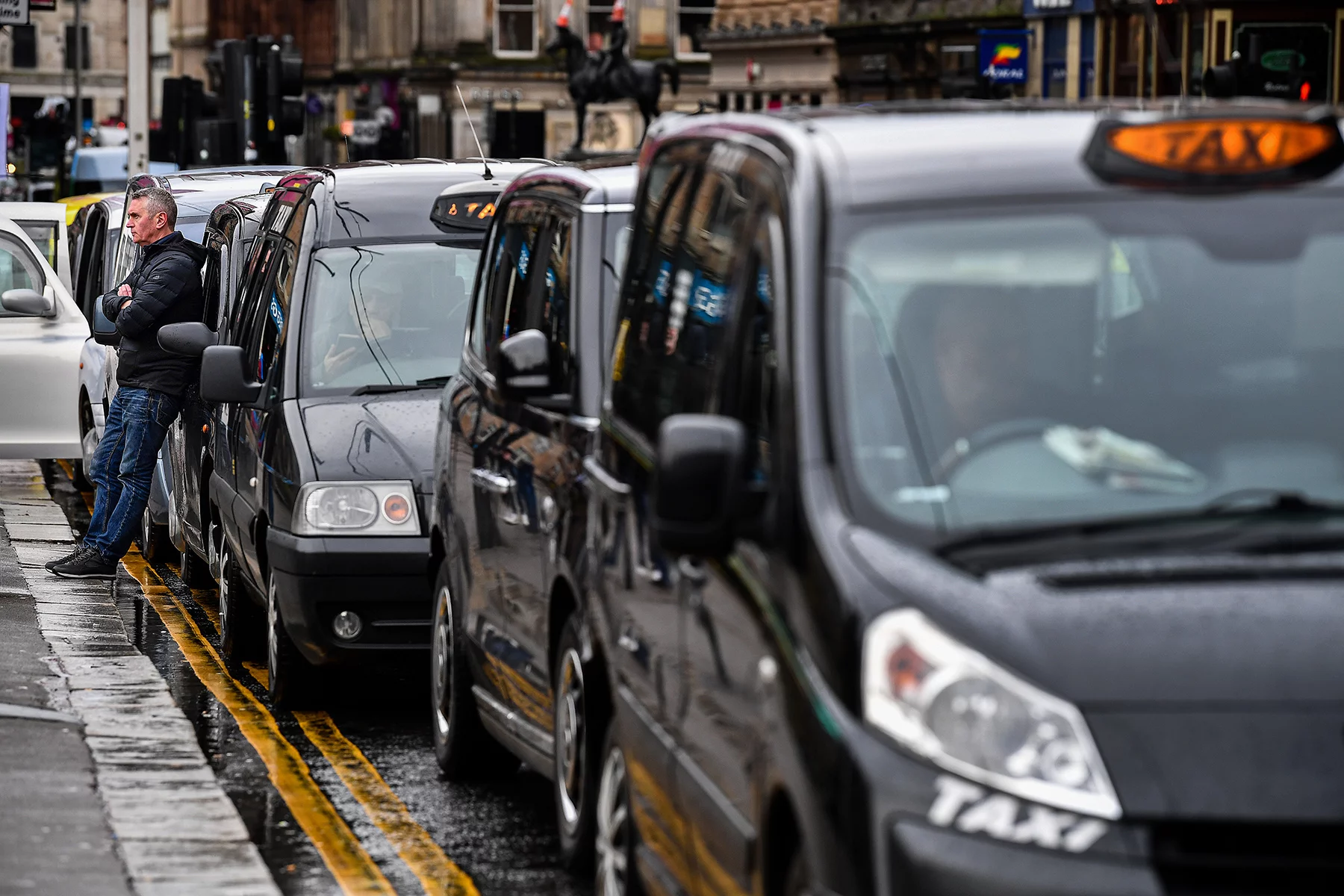
Most large towns and cities have taxi ranks near stations and central areas. In England and Wales, licensed taxis (also known as hackney carriages, cabs, or black cabs in some places) can be hired at a rank or hailed in the street within the area where they are licensed. Private hire vehicles (PHVs), including minicabs and app-booked services, must be pre-booked through a licensed operator. Scotland and Northern Ireland have separate licensing systems.

Black cabs run on a meter so you’ll be able to see the total cost throughout the duration of your journey. Costs vary depending on the time of day and distance traveled.
Taxi apps
Apps such as Uber and Bolt are widely used to book private hire vehicles in many UK towns and cities. Availability varies by location. These apps usually show an estimated or upfront fare before you confirm the journey, with prices depending on demand, distance, and vehicle type.
Taxis and private hire vehicles must be appropriately licensed under the rules that apply where they operate. Never accept an unbooked ride from a private hire vehicle or get into a vehicle that you cannot verify as licensed.
Feel free to tip your taxi driver should you wish, but most locals simply round up the fare to the nearest pound.
How disability-accessible is public transport in the UK?
The UK is gradually making changes to ensure that the public transport sector is more readily accessible for people with disabilities.
Accessibility varies considerably between stations, routes, and operators. Some rail and metro stations offer step-free access from street to platform or train, while others may require ramps, lifts, or staff assistance. National Rail provides station accessibility information, and assistance dogs are accepted on public transport.
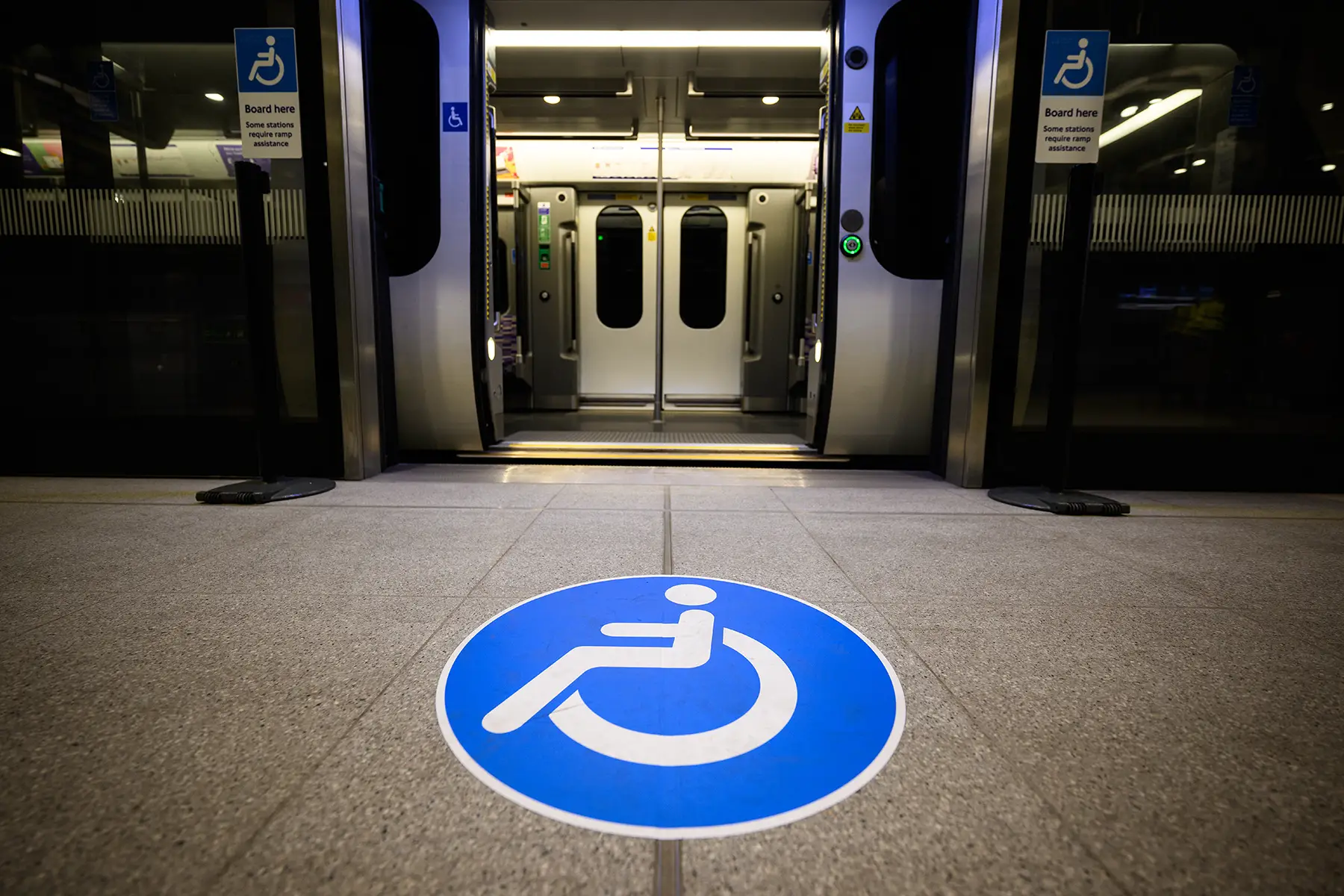
Discounts and, in some cases, free travel, are readily available if you have a disability. People with disability can register for:
- Disabled Persons Railcard for discounts on eligible rail fares
- Disabled person’s bus pass for eligible concessionary local bus travel in England; Scotland, Wales, and Northern Ireland operate their own schemes
- Disabled person’s Freedom Pass for eligible London residents, offering free travel on much of London’s public transport network and concessionary bus travel under the applicable national scheme
If you need help with a rail journey, you can request assistance through Passenger Assist. You can book through a train operator, by phone, online, or through the Passenger Assistance app. Staff can help with boarding, ramps, luggage, and navigating stations, depending on your needs and the facilities available.
The Passenger Assistance app, available on iOS and Android, lets you enter your accessibility needs and send an assistance request for rail journeys, whether your disability is visible or invisible.
How environmentally friendly is public transport in the UK?
Public transport is a central part of UK efforts to reduce transport emissions, and bus fleets are increasingly moving toward battery-electric and other zero-emission technologies.
London has one of the largest zero-emission bus fleets in Europe. As of June 2026, around 3,000 zero-emission buses were operating in the capital, representing about 30% of the fleet. TfL aims to have 6,000 zero-emission buses by 2030 and convert the remaining fleet as soon as possible after that.
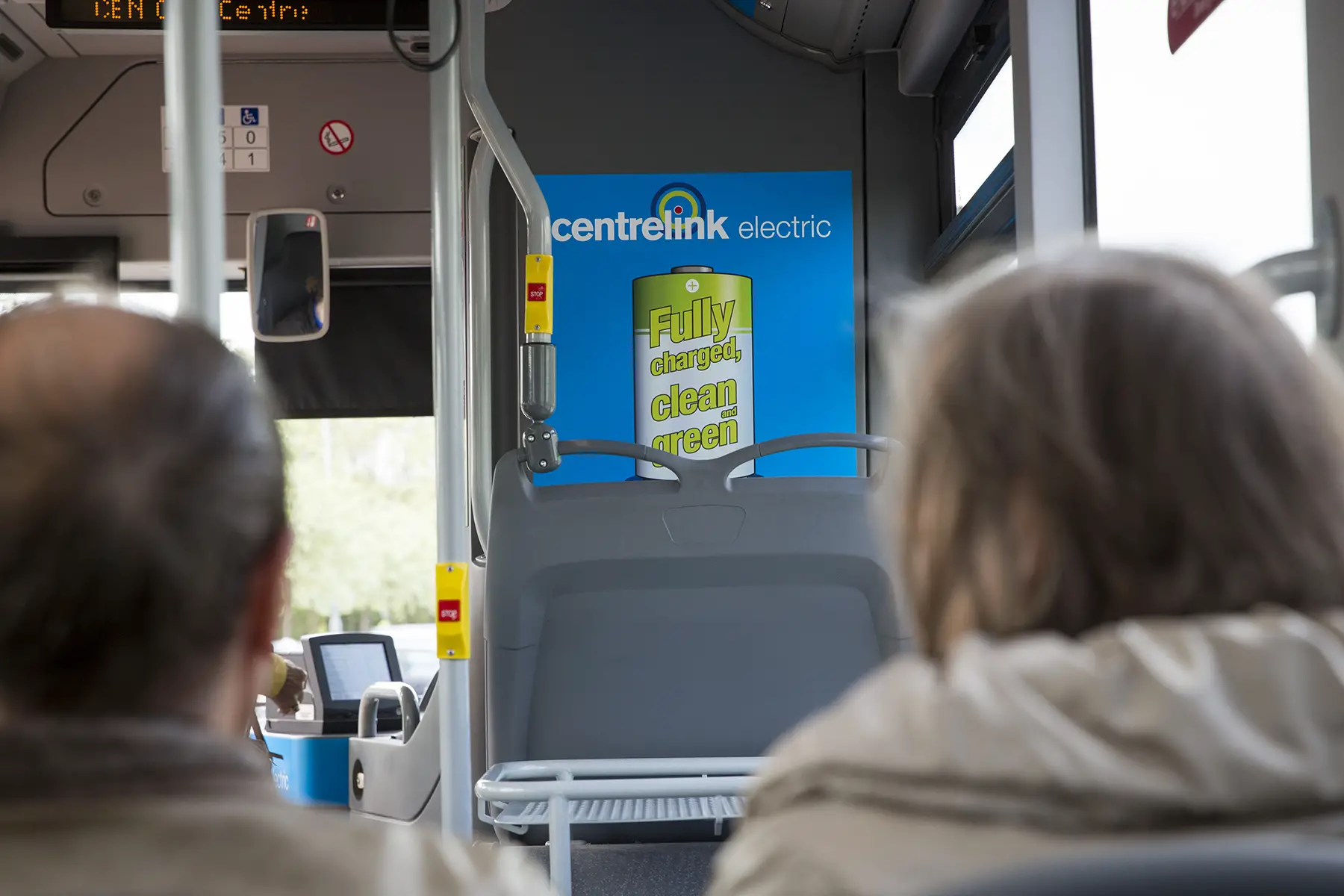
Elsewhere in Great Britain, local authorities and operators are also expanding zero-emission fleets. The Department for Transport’s 2026–2035 zero-emission bus order pipeline is intended to give manufacturers and transport authorities greater visibility over future demand and support the wider transition away from fossil-fuel buses.
Making a public transportation complaint in the UK
If you have a complaint about public transport in the UK, start by contacting the company or authority responsible for the service. Keep details such as the route, date, time, ticket, booking reference, and any correspondence.
For rail journeys, complain first to the train company or station operator. If the complaint remains unresolved, you may be able to escalate it to the independent Rail Ombudsman. For bus or coach journeys outside London and Northern Ireland, Bus Users UK can help after you have complained to the operator. In London, unresolved complaints about TfL services can be taken to London TravelWatch, while the Consumer Council handles relevant complaints in Northern Ireland.
Useful resources
- Transport for London (TfL) – transport information for London
- Transport for Wales/Trafnidiaeth Cymru – tickets and information for Wales
- National Rail Enquiries – train information, tickets, accessibility, and live service updates
- GOV.UK – national bus fare cap – participating bus services and current fare-cap rules in England
- Great British Railways and public ownership programme – official updates on rail reform
- Passenger Assist – assistance for rail passengers with accessibility needs
- National Rail complaints guidance – complaints and Rail Ombudsman information


Did you find this guide helpful?