
'%20id='ico-down'%20stroke='%23000000'%20stroke-width='1.5'%3e%3cg%20transform='translate(1092.250000,%20254.750000)'%3e%3cpolyline%20id='Path-2-Copy-4'%20transform='translate(5.500000,%202.750000)%20scale(1,%20-1)%20rotate(-180.000000)%20translate(-5.500000,%20-2.750000)%20'%20points='0%200%205.5%205.5%2011%200'%3e%3c/polyline%3e%3c/g%3e%3c/g%3e%3c/g%3e%3c/svg%3e)


Moving
Visas & Immigration
Getting a Dutch passport
Find out all you need to know about Dutch passports for expats, including benefits, eligibility, and how to apply for one.


If you’ve moved to the Netherlands and have obtained Dutch citizenship, you will be eligible for a Dutch passport and will be able to travel around the world as an EU citizen.
Read on to learn all about getting a passport in the Netherlands, including information on:
The Relocator
Wherever you're heading in the Netherlands, take the stress out of your move by letting The Relocator find the right international shipping options for you. Compare a number of trusted international movers and get a free quote in minutes. Wherever Dutch life takes you, get there with The Relocator.

Passports in the Netherlands
The Ministry of Foreign Affairs (Ministerie van Buitenlandse Zaken – BZ), part of the Government of the Netherlands, issues passports. All Dutch passports are biometric passports containing a chip with the holder’s biographic data, including fingerprints.
The standard biometric passport is a small, burgundy booklet with 34 pages. The main page of the passport features the passport holder’s photograph, key personal information, and unique passport number. Since 2014, passports have also contained the Dutch Citizen Service Number (BSN).
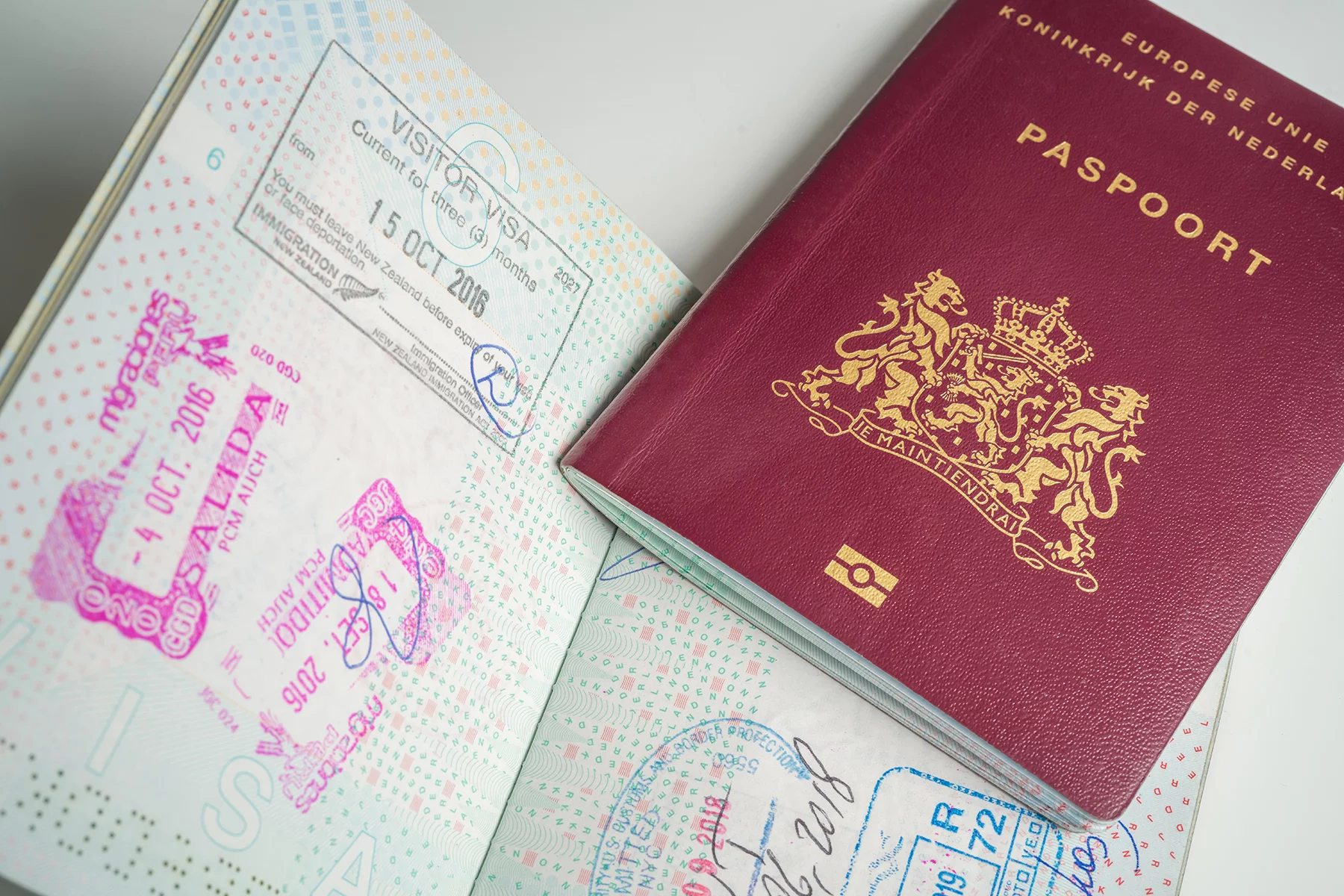
Other types of passports available are:
- Business passport – a special passport for business use, containing 66 pages.
- Diplomatic passport – a passport for government representatives traveling on official business. The passport provides diplomatic immunity and contains 66 pages.
- Service passport – for government representatives on official business but without diplomatic immunity.
- Emergency passport – a special temporary passport with a pink cover issued in emergency situations.
- Alien’s passport – a special Dutch passport for foreigners with a green cover for residents of the Netherlands without citizenship who are unable to obtain a passport from their home country.
If you regularly travel abroad for business or other reasons, you can apply for a second Dutch passport which is valid for two years.
Benefits of getting a Dutch passport
If you get a Dutch passport, you will be able to enjoy certain additional benefits as part of your Dutch citizenship. These include:
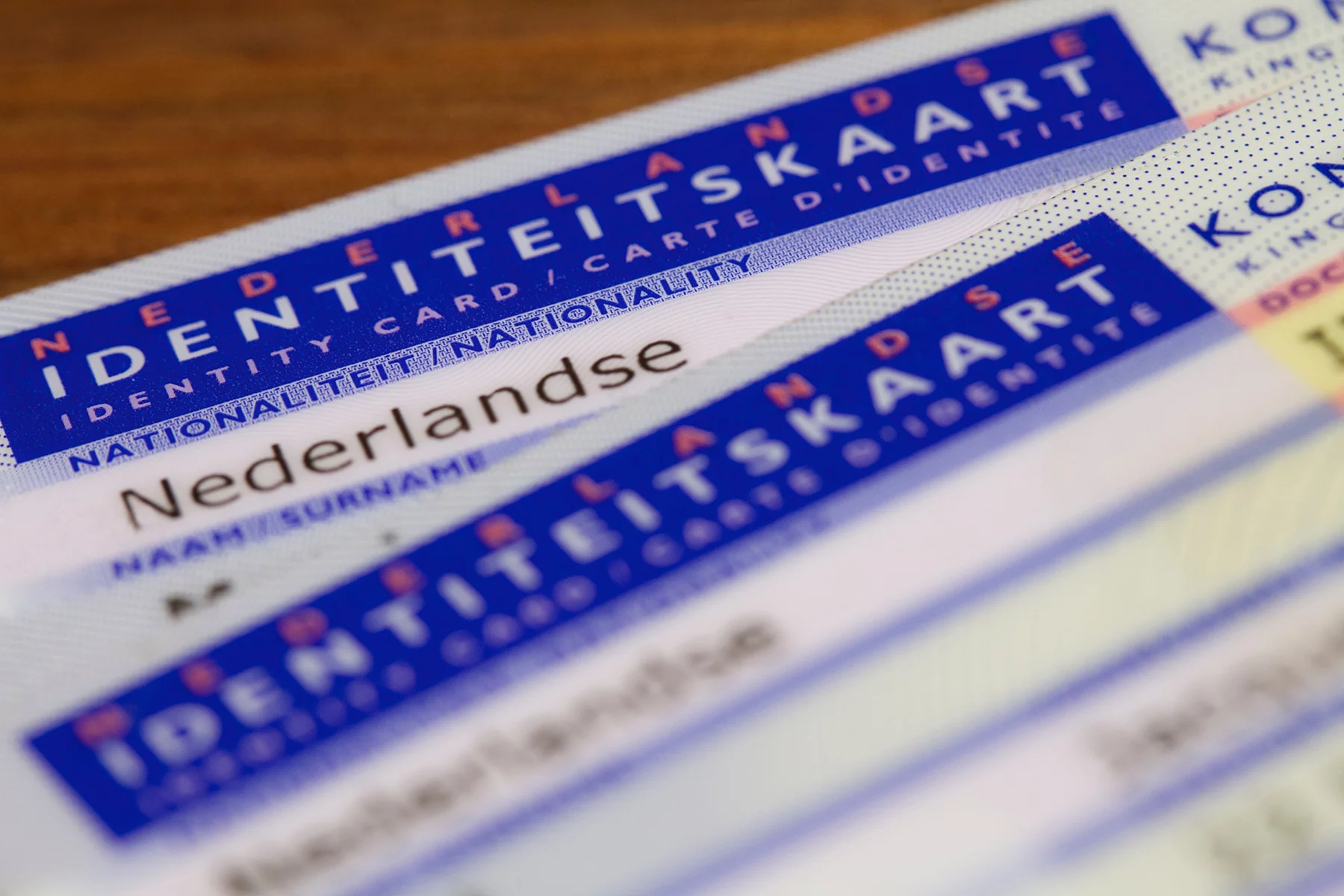
- Being able to travel across the world as a Dutch citizen. Passports are valid worldwide, whereas you can only use the Dutch national ID card (the other main form of travel ID in the Netherlands) in Europe.
- Leaving and re-entering The Netherlands as many times as you wish as long as your passport is valid.
- The ability to travel to 188 visa-free destinations. The Netherlands is currently ranked 4th globally on the Henley Passport Index.
- The option of dual nationality and two passports in certain circumstances, as long as your home country permits this.
Find out more about: The World’s Most Powerful Passports 2026
Who can get a Dutch passport?
Eligibility for a passport in the Netherlands is based on Dutch citizenship. Once you have obtained citizenship of the Netherlands, you can apply for a passport. The general requirement for Dutch citizenship as a foreigner is five years’ continuous residency. This is reduced to three years if you are married to or are a long-term partner of a Dutch national.
In addition to this, you will need to show that you are sufficiently integrated into Dutch culture and society by passing the civic integration exam, have no serious recent criminal record, and have sufficient knowledge of the Dutch language.
Applying for a passport in the Netherlands
You can apply for a Dutch passport at your local municipal office (gemeente). You will need to make an appointment. Bring along the following:
- Proof of your Dutch nationality, for example, a national ID card or your citizenship papers
- Passport photo that meets the necessary criteria
You will also need to complete a passport application form, which you can do in advance. Bear in mind that you need to submit the Dutch version of the form.
You’ll need to attend the appointment in person to provide your biometric information. Children applying for a Dutch passport must be accompanied by a parent or legal guardian.

Passports usually take around five days to arrive in the Netherlands. You can pick your passport up from the municipal office. If you can’t collect it yourself, you can usually pay to have it delivered. There is also a more expensive fast-track procedure (spoedprocedure), where your passport will be ready the next working day if you file your application and make the payment before 14:00. Check your gemeente‘s website to find out about the costs and process.
Applying for a Dutch passport abroad
You can also apply for your Dutch passport if you live abroad. This is possible at:
- Any Dutch embassy or consulate overseas
- One of the 11 border municipalities in the Netherlands
- Amsterdam Schiphol Airport
The process is largely the same wherever you apply. However, the costs can vary. It is generally more expensive to order your passport at an embassy or consulate, where the passport usually takes several weeks to process. You normally have to collect the passport in person unless you are unable to do so, for example, if you have mobility issues.
Dual nationality and second passports in the Netherlands
The Dutch government is trying to limit dual nationality as much as possible. This means, in most cases, that you will need to give up other nationalities when you acquire Dutch citizenship. However, there are some exceptions. These are:
- If you are a national of a country such as Greece, Iran, or Morocco where giving up your nationality is not legally permitted.
- In the case of marriage to a Dutch national. Spouses and registered partners of Dutch citizens can have dual nationality.
- When you acquire refugee status in the Netherlands. Refugees can keep their original nationality as long as their home country allows dual nationality.
If you become a Dutch national and subsequently take citizenship in another country, you will normally automatically lose your Dutch citizenship.
Renewing or replacing a Dutch passport
Dutch passports are valid for 10 years, or five years for children under 18. It is not possible to renew your passport once it expires. Instead, you must apply for a new passport using the same procedure as for getting a first passport. You can use your existing passport as proof of your Dutch nationality.
You can renew a Dutch passport before or after the expiry date. If you hold dual nationality, it is important that you apply for a new passport before your current one expires. Otherwise, you risk losing your Dutch nationality.
You may have to replace your passport if it becomes badly damaged, for example, if the photo becomes unrecognizable or if the biometric data gets damaged. However, you will need to pay the standard price for your replacement.
Lost or stolen passports in the Netherlands
If your passport is lost or stolen in the Netherlands or abroad, you should report it to the local police as soon as possible. You should also contact either your local gemeente or Dutch embassy/consulate abroad about getting a replacement. In certain urgent situations, you may receive an emergency passport or temporary laissez-passer document to allow you to travel. As a rule, emergency travel documents are only valid for single journeys.
To get a replacement passport, you must follow the same procedure as applying for a standard passport.
Cost of Dutch passports
The current Dutch passport costs (2022) are:
- Adult passport: €75.80
- Child passport: €57.30
- Fast-track passport: €127.40 (€108.90 for children)
- Adult passport issued abroad: €136.16 (or €107.60 at a Dutch border municipality)
- Child passport issued abroad: €118.76 (or €90.18 at a Dutch border municipality)
- Emergency passport/laissez-passer: €48.55
The Dutch passport fee is for processing your application. It is non-refundable, even if your application is rejected.
Useful resources
- Government of the Netherlands – official website with information on passports and identity cards
- Netherlands Worldwide – government website with information for citizens worldwide
Related Articles



Editor's picks
 Where to live in the Netherlands: the best cities for expatsAlthough Amsterdam is typically the number one hub for expats, there are plenty of other cities in the Netherlands worth your while.
 Primary schools in the NetherlandsConfused by the primary school system in the Netherlands? We explain how it works, from educational approaches to international options.
 Higher education in the Netherlands: a guide to Dutch universitiesThe Netherlands is home to some of the world's top universities. Learn all about the different subjects available at Dutch institutions.
Did you find this guide helpful?