
'%20id='ico-down'%20stroke='%23000000'%20stroke-width='1.5'%3e%3cg%20transform='translate(1092.250000,%20254.750000)'%3e%3cpolyline%20id='Path-2-Copy-4'%20transform='translate(5.500000,%202.750000)%20scale(1,%20-1)%20rotate(-180.000000)%20translate(-5.500000,%20-2.750000)%20'%20points='0%200%205.5%205.5%2011%200'%3e%3c/polyline%3e%3c/g%3e%3c/g%3e%3c/g%3e%3c/svg%3e)


Finance
Taxes
How to file your 2026 taxes in the Netherlands when you live abroad
If you’re a Dutch citizen or resident who moves abroad, it’s important to understand which obligations you may still have in the Netherlands, as well as how the tax system works in your new country.


Cross-border tax matters can be complicated. Every country has its own rules on tax residency, who must file a return, which types of income must be reported, and which taxes apply.
This guide is designed to help Dutch nationals living abroad by explaining the main tax reporting requirements, how to file or pay taxes from overseas, how to avoid double taxation through tax treaties, and what exemptions or deductions may be available. It also outlines how services like Wise can help expats manage currency conversion when paying taxes internationally:
Do I have to file/pay Dutch taxes as a Dutch citizen living abroad?
In most cases, you do not have to file a Dutch tax return or pay Dutch taxes if you move abroad and no longer live, work, or have major financial ties in the Netherlands. Dutch taxation is based on residency rather than citizenship. Residents of the Netherlands pay tax on their worldwide income, while non-residents are taxed only on certain types of Dutch-source income.
You may still have tax obligations in the Netherlands after moving abroad if you:
- Continue to earn Dutch-source income, such as salary from a Dutch employer, business income, Dutch rental income, or investment income from Dutch assets.
- Still qualify as a Dutch tax resident because your main home or center of life is considered to be in the Netherlands.
Because every country uses its own rules on tax residency, filing requirements can get confusing. This sometimes leads to late declarations or missed payments. If you have moved abroad and are unsure of your Dutch tax status, it’s best to consult a qualified tax adviser or the Dutch Tax Administration (Belastingdienst) to clarify your situation.

Who is considered a Dutch resident for tax purposes?
Dutch tax residency is based on multiple factors that show whether you have lasting personal and financial ties to the Netherlands. No single factor decided your status, but the tax authorities look at:
- A permanent address in the Netherlands, whether owned or rented.
- How much time you spend in the Netherlands – if you spend most of the year there, this supports residency.
- Financial/employment ties – working for a Dutch employer, having a business in the Netherlands, or holding significant assets in the Netherlands.
- Personal ties – for example, if your dependent family lives in the Netherlands, you are registered with a Dutch municipality or doctor, or your children go to school in the Netherlands.
- Official registration – being registered in the Municipal Personal Records Database (BRP) or being covered by a Dutch social security scheme can be one of the indicators.
Since 1 January 2025, the option of partial non-resident taxpayer status for skilled foreign employees using the 30% scheme in the Netherlands is being phased out. Transitional rules are in place until the end of 2026 for those that used the scheme before 2024. Under this scheme, foreign workers in the Netherlands who qualify as tax residents can exclude overseas Box 2 and Box 3 income from their tax return.
If you’re unsure whether you are a Dutch tax resident, contact the Belastingdienst or speak to a qualified Dutch tax professional.
Who is exempt from filing their taxes in the Netherlands?
You generally don’t have to file a tax return in the Netherlands if your income is fully taxed at source through wage deductions, and you have no other taxable income or assets that cross tax-free thresholds.
Situations where you must file a Dutch tax return include:
- If you receive a notification from the Belastingdienst asking you to complete a return.
- If you receive self-employment or freelance income in the Netherlands.
- When you have income from sources other than standard employment that generate a tax bill of €57 or more.
- When you have significant savings or investments (Box 3 income) above the tax-free allowance.
- If you wish to claim specific tax deductions or credits that mean you are entitled to a tax refund of €19 or more.
What taxes do I have to pay if I’m a Dutch citizen/resident living abroad?
If you are a Dutch citizen living abroad, you may have to pay the following taxes:
- Income tax – on specific Dutch-source income if you are no longer a tax resident, or worldwide income if you retain Dutch tax residency.
- Municipal property tax – paid to municipalities if you own property, with rates varying.
- Property transfer tax – if you bought real estate during the tax year (2% of property value if it’s your main home, 10.4% if it’s a second home).
Income tax rates in the Netherlands depend on the type of income:
- Box 1 income (work, benefits, pensions, home ownership) – progressive rates up to 49.5%
- Box 2 income (substantial interest in a company, e.g. 5% or more shareholding ownership) – 24.5% for the first €68,843, and 31% above this (2026).
- Box 3 income (savings and investments) – flat rate of 36% above €59,357 (in 2026). Applies to all savings and investments for residents, and on real estate income and business profit shares only for non-residents. Box 3 income value is calculated by the Dutch tax office.
Will I be double-taxed on my income? (Double taxation and exemptions for Dutch expats)

The Netherlands has tax treaties with over 90 countries – including the US, the UK, Canada, Australia, and all EU/EEA member states – to prevent double taxation (people paying tax on the same income twice).
If your home country does not have a tax agreement with the Netherlands, the 2001 Double Taxation Decree applies. This law sets out which country has the right to tax different types of income.
If you believe you have been taxed twice on the same income, you can request a mutual agreement procedure (onderlinge overlegprocedure). This is a formal process in which the tax authorities of the involved countries work together to resolve the issue.
Dutch tax exemptions, deductions, and credits for expats
If you are a Dutch citizen living abroad and still considered a Dutch tax resident, you can usually claim the same tax benefits as those living in the Netherlands. This includes the general tax credit (algemene heffingskorting) and labor credit (arbedskorting).
You may also be eligible for these benefits if you are a qualifying non-resident taxpayer. This applies when you live in an EU or European Free Trade Association (EFTA) country and at least 90% of your worldwide income is taxed in the Netherlands.
If you are treated as a non-resident taxpayer, you can still claim the Box 3 tax-free allowance (€59,357 in 2026). Additionally, most savings and investment (Box 3) income is not taxed. Other deductions and credits depend on where you live:
- Belgium – includes alimony expenses, entrepreneur’s allowance, general tax credit, employed persons tax credit, income-related combination tax credit.
- Other EU/EFTA countries – includes entrepreneur’s allowance, employed persons tax credit, income-related combination tax credit.
- Non-EU/EFTA countries (excluding the UK, Surinam, and Aruba) – entrepreneur’s allowance.
The UK, Surinam, and Aruba have separate agreements in place.
When you file your non-resident tax return online, the system will automatically show which deductions and credits you can claim. You can also use the Belastingdienst‘s tax credit checker (in Dutch).
If you receive a Dutch state pension abroad, it is usually subject to Dutch withholding tax. However, if you live in Belgium, France, Germany, Poland, or Spain, the pension is generally taxed in your country of residence instead.
Because rules around credits and deductions can be complex, it’s a good idea to speak with a qualified tax adviser to ensure that you fully claim your entitlements.
Reducing your tax liabilities when filing Dutch taxes abroad
If you move overseas from the Netherlands, there are a few key tax-planning points to consider:
- Are you better off being taxed as a resident or a non-resident? You can qualify for tax resident status if you maintain ties to the Netherlands when moving abroad, meaning you’ll still be eligible for full tax credits and deductions.
- Can you use the qualified non-resident status? This applies if you move to an EU/EFTA country and 90% of your income is taxed in the Netherlands. If so, you are usually eligible for the same tax benefits as residents.
- Can you qualify for the 30% ruling? This means your Dutch employer can pay up to 30% of your salary as a tax-free allowance. It generally applies to skilled foreign workers recruited from abroad and has been scaled down since 2024, but Dutch expats moving overseas can sometimes qualify if they work for a Dutch employer.
- What income tax has already been withheld? If this is the case, such as with Dutch employment or pension income, you may not need to include it on your tax return.
- Can using Wise help reduce your tax liability? While not a direct tax credit, using a payment service like Wise for international transfers can save you money on exchange rate markups and high bank fees, thereby reducing your overall financial liability when dealing with cross-border income, pensions, or investments.
- How is your Dutch pension affected if you move abroad? You still need to pay tax on Dutch state pension payments if you leave the Netherlands, although rules depend on your new home country. If you transfer a workplace or private pension abroad, you may qualify for an exemption if you get approval and live/work outside the Netherlands for at least five years.
- How are your savings affected? Non-residents usually benefit from more favourable treatment of Dutch savings and investment income (Box 3) compared to residents.
Because these rules are complex and depend on your individual situation, it’s wise to consult a tax professional to cover your specific case.
How and when to file your Dutch taxes from abroad

The tax year in the Netherlands is the same as the calendar year, running from 1 January to 31 December. Deadlines for filing tax returns are usually:
- 1 May the following year for tax residents
- 1 July the following year for non-residents
If you file before 1 April, you will receive your assessment by 1 July. Extensions are typically available on request, usually until 1 September. It’s also normally possible to file at a later date if you do so through a qualified tax professional.
You will need to file your Dutch tax return with the Dutch Tax Administration (Belastingdienst).
Filing methods and required forms
If you live abroad, you can file your Dutch tax return in one of two ways:
- Online, using your DigiD or an approved EU login key
- By paper, using forms you can request from the Dutch tax information line
Before you start, make sure you have:
- Your Burgerservicenummer (BSN)
- Bank account details
- Your current address
- Your income statement (jaaropgaaf) for the tax year
- The value of your current home and, if applicable, your mortgage statement
- Details of any second homes in the Netherlands
- Information about any deductions you want to claim
- Details of your worldwide income If you are filing as a tax resident)
If you file online, the system guides you through the correct sections automatically.
For paper filing, you must choose the form that matches your situation:
- Form P for tax residents
- Form C for non-residents
- Form M for partial residents (used in the year you move to or from the Netherlands)
You can find a step-by-step guide to filing an online return on the Dutch Tax Administration website.

What foreign income should I declare on my Dutch tax return?
If you are a tax resident of the Netherlands, you must report your worldwide income.
If you are a non-resident, you only declare Dutch-source income.
The Dutch tax system divides taxable income into three categories (or boxes), each with its own rules and rates. These are:
- Box 1 (work and home) – salaries, benefits, pensions, business or freelance income, income from your main home (such as the deemed rental value)
- Box 2 (substantial interest) – income from a “substantial interest” (at least 5% ownership) in a company (e.g., dividends, capital gains, shares, or stock options)
- Box 3 (savings and investments for tax residents) – worldwide savings and investments not linked to your main home or a “substantial interest” (e.g., bank savings accounts, investment portfolios, second homes)
- Box 3 (savings and investments for non-residents) – real estate investments in the Netherlands (second homes) or Dutch business investments (rights to share in the profit of a Dutch business)
If you need to convert currencies when reporting foreign income on your tax return, you can use Wise currency conversion tools to get the latest up-to-date conversion rates.
How to pay your Dutch taxes from abroad
You should receive an assessment notice from the Dutch Tax Administration within three months of filing your tax return. This will tell you how much tax you owe for the year – or if you’re due a refund.
Your notice will also show the payment deadline, usually six weeks from the date of the notice. Payment options if you live abroad are:
- Online using iDEAL, if you have a Dutch bank account or use a provider that supports iDEAL.
- International bank transfer, using the BIC/IBAN provided by the Tax Administration
You can apply to submit a provisional assessment (voorlopige aanslag) if you have a large bill and want to pay in instalments, or if you are entitled to a refund and want to receive it within the current tax year.

If you need to convert from another currency to make your tax payment, services like Wise can be a good low-cost option. Wise is an iDEAL partner in the Netherlands, making transfers quick and convenient. Fees are typically lower than international bank transfers, as Wise uses the mid-market exchange rate with no hidden conversion fees, so you always know what you are paying for up front.
However you decide to pay your tax bill, make sure that you pay on time. You can be fined and also charged interest on late payments. The rates for the 2025 tax year are:
- Late payment fine of 5% of the tax amount due, between a minimum of €50 and maximum of €6,709.
- 4.3% interest on late payment.
If paying close to the deadline, you’ll need to find a provider that can guarantee fast payment.
Late tax returns and penalties in the Netherlands
The Dutch tax authorities can charge fines and interest if you file your tax return late, ignore a request to file, pay late, or give incorrect information. The main penalties are:
- Failure to file on time – default penalty of €469, up to a maximum of €6,709 if you repeatedly miss deadlines.
- Ignoring a direct request to file – default penalty of €3,354.
- Late payment of tax bill – 5% of tax amount due, and 4.3% interest added.
- Giving incorrect information – if you provide incorrect information intentionally or due to gross negligence, you can be fined 25-50% of the tax you underpaid, increasing to 75-150% for underpaid Box 3 tax. These amounts can be higher if you have previously been fined for tax fraud.
For large-scale tax fraud or tax evasion, you can receive hefty fines (up to around €800,000) and prison sentences of up to six years.
If you cannot pay your Dutch taxes on time, contact Belastingdienst as soon as possible to see if you can arrange a payment plan or deferral. If you’re concerned about filling in a tax return correctly, consult a Dutch tax adviser.
Managing currency exchange: Don’t lose money to hidden fees
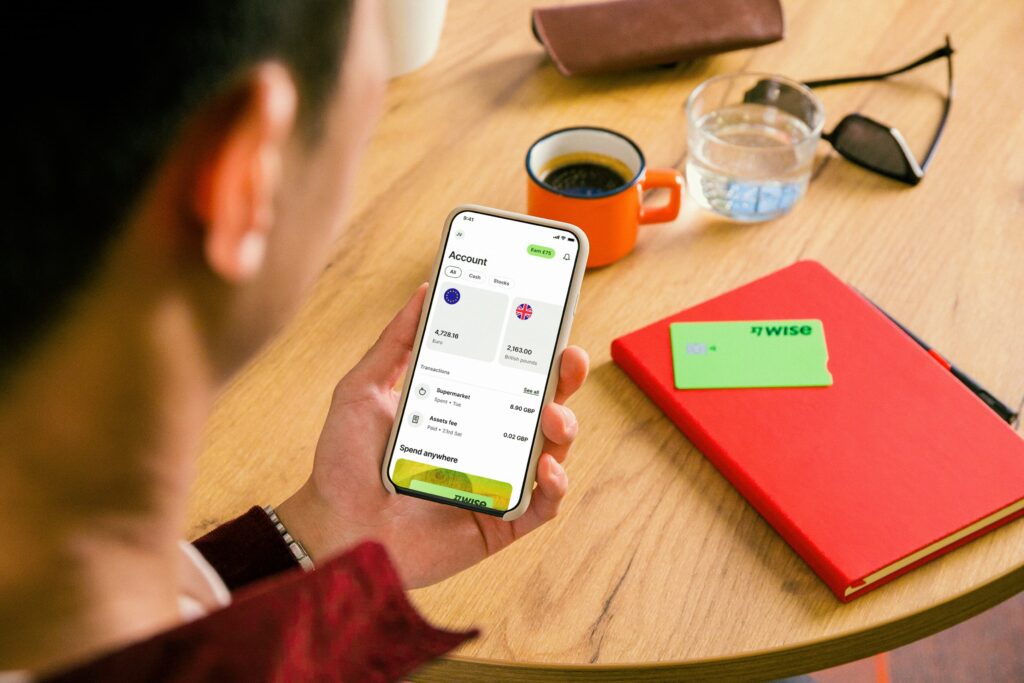
If your tax affairs involve more than one currency, it’s important to consider how exchange rate changes can affect your finances. For example, if you live outside the Netherlands and earn income in a currency other than the euro, you may need to convert your money to euros in order to pay your Dutch tax bill. This is where you can lose a significant amount of money without even realising it.
Exchange rates do not change the amount of Dutch tax you owe, but they can affect how much your euro payment costs in your local currency. A better exchange rate can reduce your conversion costs when you transfer money.
On a typical tax bill of €2,000 a bank’s markup of 3% means you’re paying up to €100 extra in hidden conversion fees. Exchange rates don’t change the amount of Dutch tax you owe, but these fees can make your euro payment substantially more expensive in your local currency. You are needlessly losing money just to pay your taxes.
For those managing money across different currencies, Wise offers a multi currency account solution. With a Wise account, you can hold and send money in 40+ currencies, and receive payments in 20+ currencies. You can also transfer money to 140+ countries, including the Netherlands. Payments use the mid-market rate that avoids expensive conversion fees. This can make it easier and cheaper to convert your local currency into euros when paying your Dutch tax bill from abroad, ensuring you keep more of your own money.
What to do when leaving the Netherlands
If you’re moving abroad, you will need to deregister from your municipality if you will be outside the Netherlands for eight months or more within a 12-month period. You will need to file an M form (partial resident) for the year of your emigration.
Other things you may want to consider before leaving are:
- Your tax residency: You generally stop being a tax resident once you deregister your address. However, you can remain a resident for tax purposes if you keep significant ties to the Netherlands, such as a permanent address. Whether this is beneficial depends on where you are moving and any tax treaty between the Netherlands and your new country.
- Managing your savings and assets: Non-residents are not taxed on assets outside the Netherlands and have fewer liabilities on Dutch-based assets. However, they lose out on certain tax allowances. Consider your tax residency before deciding where to locate your movable assets.
- Dutch pension entitlements: You can usually still receive a Dutch state or workplace pension when you move abroad, depending on the rules in your new home country. You can also look at options to boost your pension value by making voluntary insurance contributions.
For more information on what to consider, see this checklist for moving abroad from the Netherlands.
If you expect to manage finances in more than one currency, a multi-currency account can make things easier. You can set up a Wise account before you move in minutes using your existing ID and address. This will enable you to receive, hold, exchange, and send money in multiple currencies, which can be helpful when transferring money out of the Netherlands before you leave, paying any final bills once you’ve moved, or receiving an income tax refund.

Returning to the Netherlands
If you return to the Netherlands after living overseas, you’ll need to register your new address with your local municipal authority. You will automatically become a Dutch tax resident again if you live permanently in the Netherlands or re-establish significant ties in the country.
This means you’ll have to declare your worldwide income on future Dutch tax returns, and will have access to all of the standard tax allowances and credits.
You will need to file a tax return (M form) for the year in which you return. Before leaving your previous country of residence, make sure you understand any tax filing requirements that still apply for the period you lived there. Some countries require a final tax return or continued reporting.
Because the Dutch tax year aligns with the calendar year, returning early in the year can make your tax paperwork simpler. For personalised guidance, it’s a good idea to speak with a qualified Dutch tax adviser.
Useful resources
- Belastingdienst – Dutch Tax Administration, which is the central tax authority in the Netherlands
- Government of the Netherlands – Dutch central government portal with information on a range of issues, including income tax
- Netherlands Worldwide – government information for English-speaking Dutch expats worldwide
- List of Dutch tax treaties and agreements with other countries
- Dutch Association of Tax Advisers (De Nederlandse Orde van Belastingadviseurs – NOB) – search for an accredited tax adviser in the directory
- Wise – for low-cost international payments around the world


Did you find this guide helpful?