
'%20id='ico-down'%20stroke='%23000000'%20stroke-width='1.5'%3e%3cg%20transform='translate(1092.250000,%20254.750000)'%3e%3cpolyline%20id='Path-2-Copy-4'%20transform='translate(5.500000,%202.750000)%20scale(1,%20-1)%20rotate(-180.000000)%20translate(-5.500000,%20-2.750000)%20'%20points='0%200%205.5%205.5%2011%200'%3e%3c/polyline%3e%3c/g%3e%3c/g%3e%3c/g%3e%3c/svg%3e)


Education
Language Learning
Learn French, German, and Italian in Switzerland
Whether you want to learn French, German, or Italian in Switzerland, you will find a method that suits your needs with this helpful guide.

As an expat, learning the language of your new home country can go a long way in helping you to settle into local life, not to mention improve your job prospects when living abroad. But if you happen to be moving to Switzerland, you will be faced with the unique challenge of choosing which language to learn. After all, Switzerland has not one, but four official languages, which are French, German, Italian, and Romansh.
Naturally, you might want to learn the local language of the canton you live in as a priority, and luckily, there are plenty of methods to help you do this. To get you started, this helpful guide outlines your options and includes the following information:
Lingoda
Lingoda is an innovative online language school that brings native speaking teachers into your living room. Their learning platform will ensure you’re speaking like a local before you know it. Whether you’re learning for business or pleasure, simply choose the right time and ability level for you and join one of Lingoda’s classes from the comfort of your home.

The four official languages of Switzerland
Switzerland has four official languages: French, German, Italian, and Romansh. As a result, most residents in the country are multilingual. Although most expats resort to using English as the lingua franca, it is not one of these official languages. Therefore, it may not be as useful to you in your everyday life. As such, expats who choose to learn one of the four official local languages of Switzerland are likely to find their integration into Swiss culture far easier.

This is because understanding them will help you immensely in your work and personal life. For instance, it can vastly improve your job prospects and, if you are studying in the country, it will make your school classes and university courses much easier. Of course, speaking the local language will also aid your social integration, allowing you to make friends with locals and feel grounded in Swiss culture.
With all of these benefits, finding a language school and making an effort to learn French, German, Italian, or Romansh in Switzerland is a good move. And you will certainly have no trouble finding one in the country. Furthermore, you can find in-person or online courses, as well as more casual learning options such as apps and language groups. You will also find a range of courses that cater to different abilities and budgets. So whether you are a beginner or an advanced learner, want free classes or expensive personal courses, you will find exactly what you need.
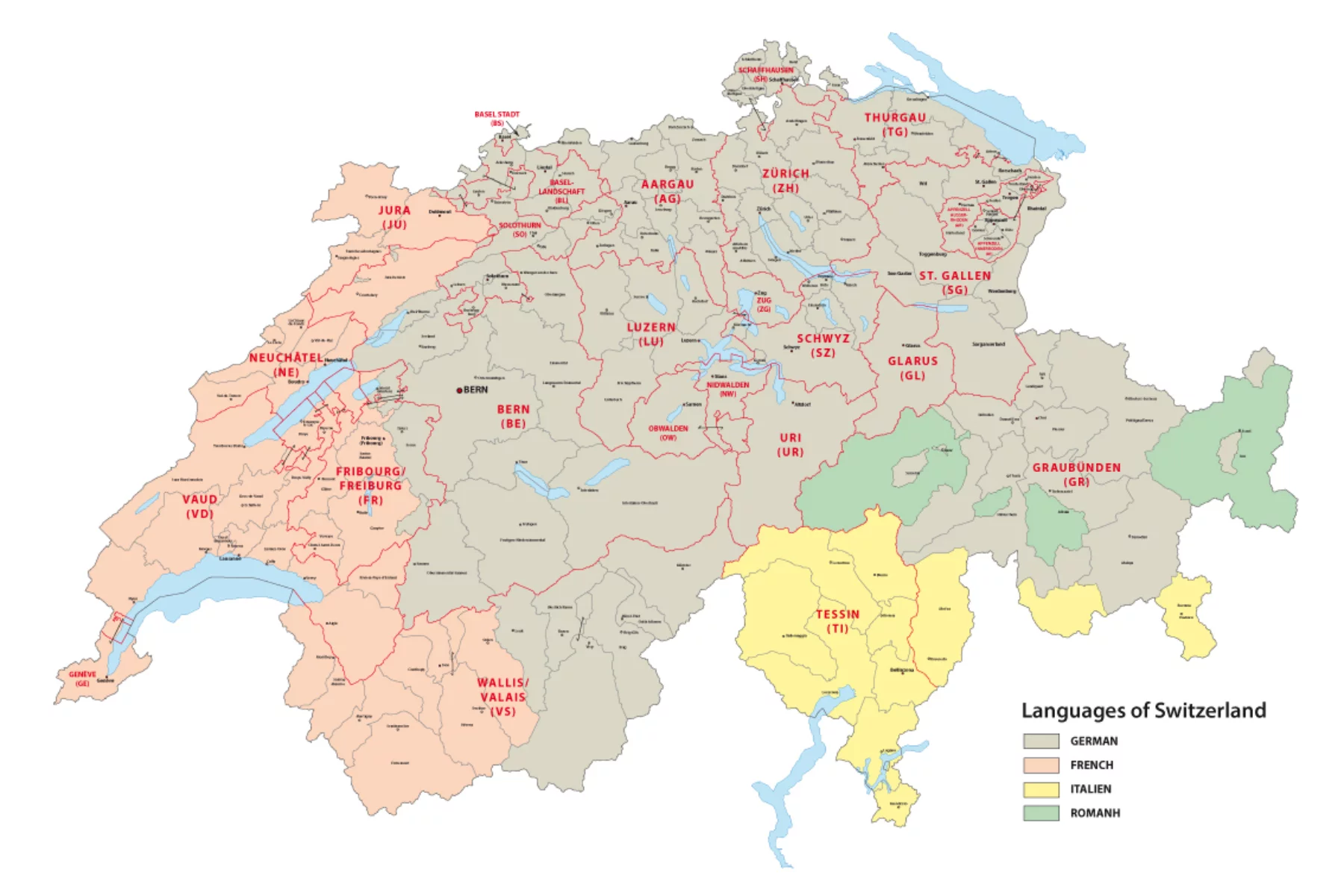
The language you choose to learn, however, will depend on the Swiss canton you live in. Therefore, this will be your first step in trying to learn French in Switzerland or any of the other official languages. To help you out, let’s take a look at where these languages are spoken in Switzerland.
Why learn German in Switzerland?
Around 63.5% of the population in Switzerland speak German, making it the predominant language in the country. This is demonstrated in the map below which shows the distribution of languages in Switzerland. A whopping 19 of the 26 Swiss cantons are predominantly Swiss-German speaking, including Zurich, Obwalden, Lucerne, and Solothurn.
Although Swiss schools teach High German, the locals actually speak Swiss-German, which is something altogether quite different. In fact, Swiss-German is often so different that even Germans and Austrians sometimes can’t understand it. The written language can also cause problems due to the contrasts in grammatical structures and the use of words. In fact, even students struggle with the differences between Swiss-German and High German. Indeed, they are often so familiar with their own local dialects that they find it difficult to learn High German. And because Swiss-French and Swiss-Italian speakers learn High German in school, they often can’t understand local dialects, either. So as you can see, learning German in Switzerland can be rather complicated.
Reasons to learn French in Switzerland
Around 22.5% of the total Swiss population speak French, making it the second most common language in the country. It is spoken in the west of the country where Switzerland borders France. The four French-speaking cantons are Geneva, Jura, Neuchâtel, and Vaud. That said, French is also spoken in the three bilingual cantons of Bern, Fribourg, and Valais, along with German. Therefore, if you are planning on living in one of these areas, then learning French in Switzerland is an obvious choice.
One important thing to know, however, is that while Swiss-French bears a strong resemblance to standard French, some regional words and expressions do still exist in the French-speaking cantons. That said, the gaps in understanding are far smaller than they are in the German language.
Why learn Italian in Switzerland?
As the third most common language in Switzerland, Italian is spoken by around 8.1% of the population. They mostly live in the canton of Ticino as well as the southern region of Graubünden. So if you are looking to enjoy a slice of the Mediterranean lifestyle and move to the sunny southern parts of the country, then you might want to consider learning Italian in Switzerland.
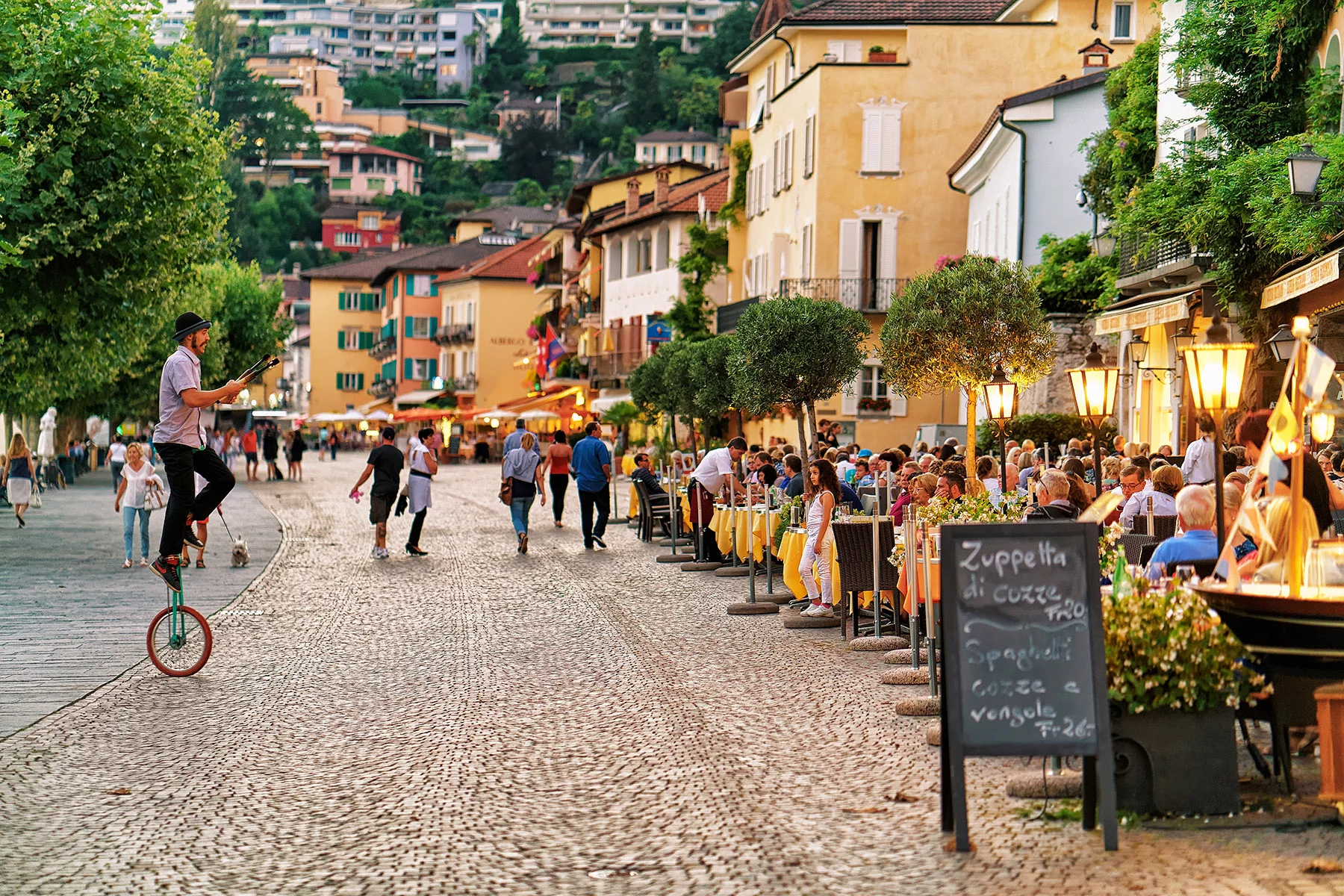
The traditional dialect of Ticino – Ticinese – is a western Lombard dialect that is influenced by French and German and, therefore, different from standard Italian. As a result, there are phrases that wouldn’t be understood outside of Italian-speaking Switzerland.
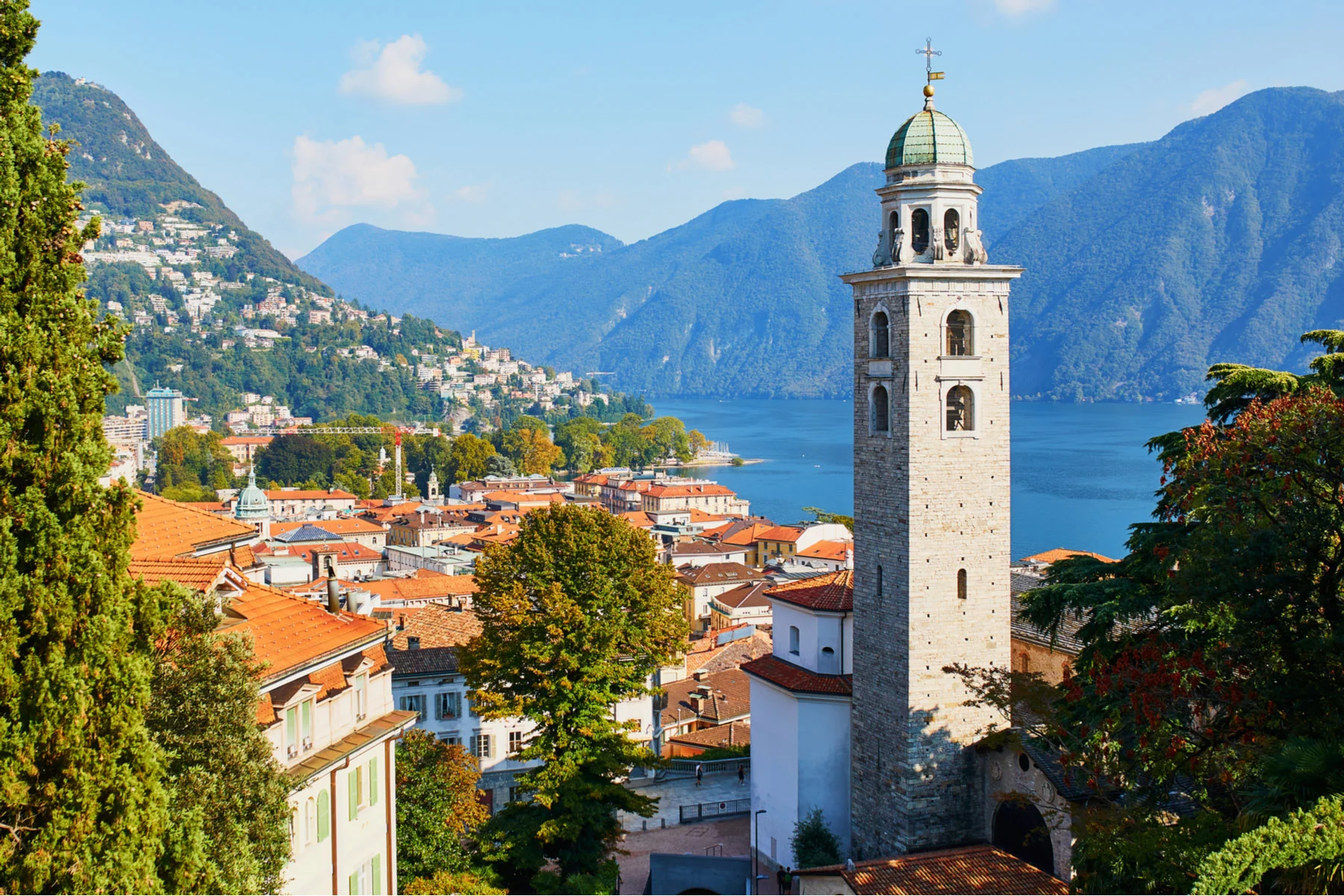
Despite this, the dialect can be used across the border in northern Italian in cities such as Milan, Monza, Como, Lecco, and Novara. While schools teach Lombard in the Italian-speaking parts of Switzerland, it is less common as a second language in other parts of the country.
Reasons to learn Romansh in Switzerland
The fourth official language in Switzerland, Romansh is the least common. In fact, only around 60,000 people speak it, and this is mostly in the Swiss canton of Graubünden. As such, it is not at all widely used around the world and is not a common second language for many locals. That said, if you are planning on living in Graubünden, then it is the obvious choice of language to learn.
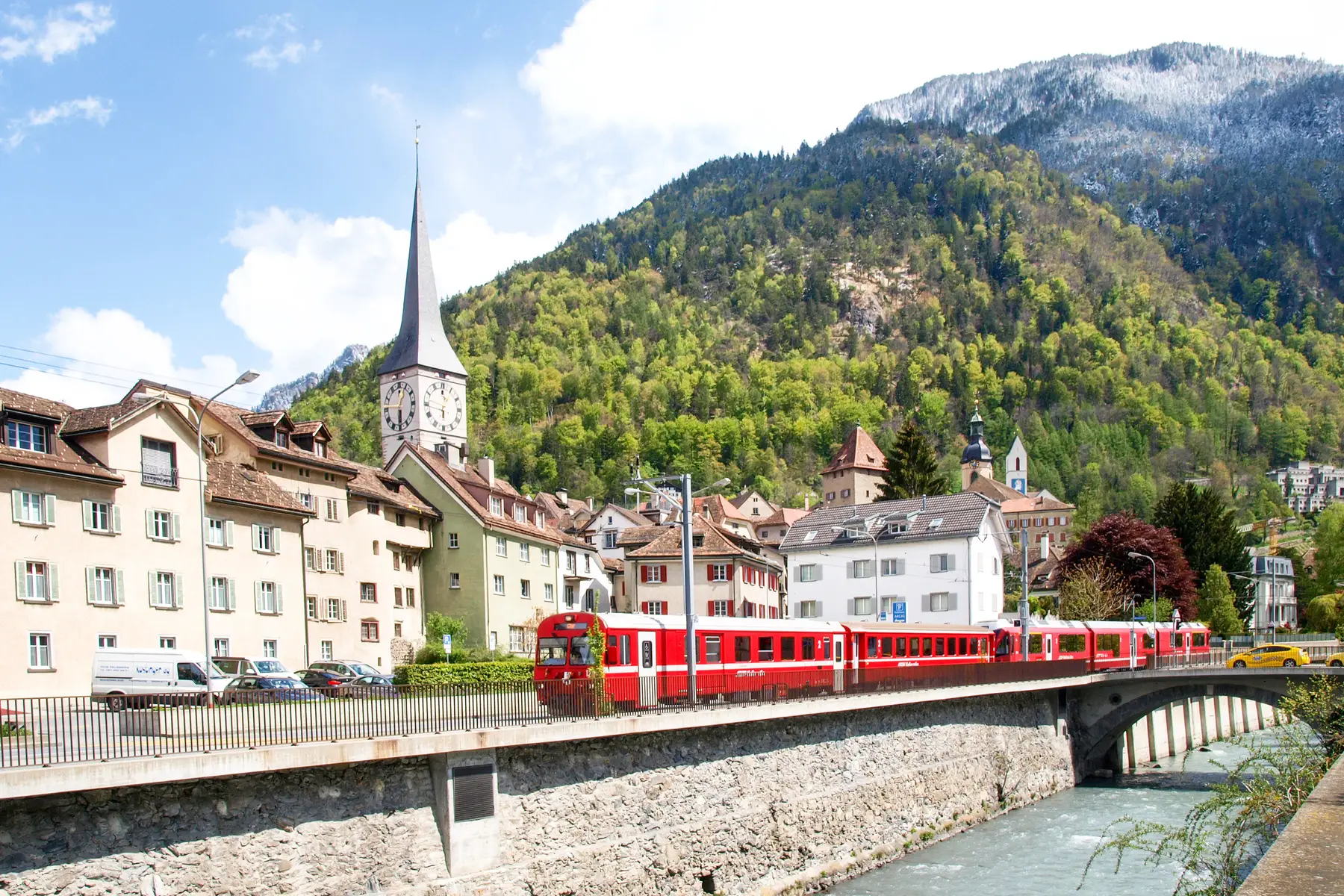
Romansh is made up of five dialects, each of which has its own written style. To make it an official language, Switzerland brought these dialects under the official umbrella language of Romansch Grischun in 1982. In their day-to-day use of the language, however, many Romansh speakers resort to their own dialect.
Learning French, German, or Italian before moving to Switzerland
While you could just wait to learn the official languages of Switzerland before you move to the country, getting a headstart on your studies beforehand can be really helpful. This is because having a basic understanding of them will help you in the early days of setting up your new life in the country. Whether you want to find a place to live, open a bank account, or set up utilities, it will make the process a lot smoother.
International language schools in Switzerland
If you want to learn French, German, or Italian in Switzerland, you may wish to get a headstart in the classroom before you move. If this sounds like you, then look for a language school that has locations in both Switzerland and your home country. Alternatively, you could search for online classes that you can begin before you move.
Here are a few international language schools that may be useful:
- Alliance Française – this institution promotes French culture across the globe; as such, its many international locations offer French classes
- Berlitz – this famous language school offers French, German, Italian, and English classes and has locations across the globe
- Goethe Institute – a promoter of German culture and language, this famous institution offers German classes at locations around the world
- inlingua – this language school in Switzerland has 12 locations in the country and 300 sites across the world
Learning French, German, or Italian when living in Switzerland
You might find it easier to wait until you move to Switzerland before you begin to learn French, German, or Italian. This is because you will probably have access to far more courses in these languages than you would at home.
Not only that, but you will also be hearing the languages around you all the time, allowing you to learn them more quickly. Of course, you will also have more opportunities to practice speaking with the locals.
Language schools in Switzerland
If you want to study a language in Switzerland, then you should have plenty of options to choose from. However, although finding a language school is not hard, you will still need to decide what type of class and price point best suits you. Here are some of the most popular options:
- Academia – with locations across Switzerland, this school specializes in custom language training to meet your individual needs. It offers courses for children and adults, as well as beginners and advanced learners.
- Alemania – this school specializes in German and has locations in Zurich, Bern, and Lucerne. Because flexible learning is important here, students can combine courses to create their own bespoke courses. They can also choose to take intensive, part-time, or more casual classes. A maximum of 14 students per class also ensures a good teacher-student ratio.
- Bénédict-Schule – because this school covers many languages, you can learn French, German, or Italian, as well as English and Spanish. Students begin with a free consultation and trial lesson, and then have bespoke lessons that suit their needs. They also receive a course certificate at the end as proof of qualification.
- Boa Lingua – this independent organization represents 300 of the world’s best language schools located across 30 countries. Because of this, they offer language travel programs that teach all of Switzerland’s official languages to short and long-term travelers.
- Flying Teachers – this school is a popular choice because of its flexible courses. In fact, clients can determine the location, time, content, and frequency of their lessons.
- Migros Klubschule – with over 600 courses on offer at 50 locations, this is the largest language school in Switzerland. As such, you can learn all the Swiss languages here, as well as Albanian, Chinese, Danish, and English.
- Swiss French School – because of its unique teaching method, students at this school learn French very quickly. In fact, classes prioritize oral and aural abilities, and learning grammar comes later. They also have opportunities to practice the language in real life.
Basel language schools
Bern language schools
Geneva language schools
Lausanne language schools
Language schools in Zurich
Government language lessons in Switzerland
Although it doesn’t provide language lessons directly, the Swiss government has some initiatives in place to promote language skills for immigrants. However, the cantons – rather than the federal government – usually deal with this. Foreigners in Basel, for instance, can get vouchers to learn German and enroll in courses at language schools in Switzerland, such as inlingua and ECAP. Remarkably, these vouchers cover up to 80 free German classes during their first year.

Similarly, the canton of Zurich offers the Caritas Culture Pass to new arrivals with little income. Through this, they can enjoy discounts on German language courses. The canton also provides language classes that focus on integration.
Learning languages for free in Switzerland
While some Swiss cantons offer free language classes, they vary greatly by region, so you will have to check with your local department. For students, however, Swiss public schools often offer extra language classes to help them pick up the language and integrate quickly. Meanwhile, adults might find that local Facebook and Meetup groups are a better fit.
Online language learning
Fortunately for expats, there are numerous online courses that can help you master the languages of Switzerland in no time. In addition to the traditional online courses, many language schools now offer 1-to-1 tuition with trained and peer-reviewed tutors. These platforms are often more popular with expats as the classes can be scheduled to fit busy lifestyles.
Here are a few useful online language schools that you might want to look into:
Other handy online language-learning resources
In addition to online language courses, there are several useful online resources to help you build your vocabulary and skills in the language of your choice. Here are a few ones to keep handy:
Learning languages with a computer or smartphone app
Many companies claim to have the best program to learn languages quickly and retain everything. However, since everyone learns differently, you should explore the teaching style used by the program before you buy it. Price may also play a factor when it comes to which option you choose too, as some can be quite expensive, ranging from €32 up to €150 or more.
Here are some of the most popular options to choose from:
A growing number of schools offer online-only courses that you can complete in the comfort of your own home. Platforms such as Skype Language School offer one-to-one tuition in a range of languages, including French and German.
Just keep in mind that a lot of resources can also be found on the internet for free, so don’t be afraid to look around. For instance, Coffee Break Languages is a great resource that offers short audio language tutorials that you can download as podcasts. Meanwhile, Open Culture offers 48 online language courses for free.
Learning languages outside the classroom
Although you have the option of attending a language school in Switzerland, learning the lingo outside the classroom will help you gain real fluency. Depending on where you live, you may hear locals speaking French, German, Italian, or a combination of the three, and this immersion can really help you.
There are many casual ways to engage in the local language, including the following:
- Finding a local Facebook or Meetup language group
- Joining a conversation club with other expats
- Watching TV shows and movies in the local language (with subtitles) to help you expand your vocabulary
- Exploring Swiss literature
- Listening to music in the local language so you get used to hearing it
- Finding ways to interact with locals, whether they are your neighbors, shop owners, and so on
- If you have children, host playdates with local kids and converse with their parents
- Join a local sports club or society
Language learning for children in Switzerland
Because most Swiss schools teach classes in the canton’s local language, expat children may have some trouble adjusting to begin with. That said, many schools offer help such as immersive classes or extra language lessons. Similarly, international schools in Switzerland usually offer bilingual programs or require students to take second (or third) languages. As such, many expat kids develop some skills in their local Swiss language.
Official language examinations and qualifications in Switzerland
The Swiss government now requires certain foreign-born residents to prove their fluency in a local official language. Because of this, they now use the FIDE Language Passport. This document proves your ability to write and speak French, German, and Italian, or a combination of the three. As such, it can help you register for certain courses and apply for certain jobs. You will also need the FIDE Language Passport to gain Swiss citizenship.
In order to test your skills, the exam for the passport includes a 20-minute speaking test, a 20-minute comprehension test, and a 60-minute writing and reading section. After you pass these, the State Secretariat for Migration (SEM) will issue your passport.
Useful resources
- The Federal Council – discover facts and figures about languages in Switzerland
- swissinfo.ch – provides more information about where the different languages in Switzerland are spoken


Did you find this guide helpful?