
'%20id='ico-down'%20stroke='%23000000'%20stroke-width='1.5'%3e%3cg%20transform='translate(1092.250000,%20254.750000)'%3e%3cpolyline%20id='Path-2-Copy-4'%20transform='translate(5.500000,%202.750000)%20scale(1,%20-1)%20rotate(-180.000000)%20translate(-5.500000,%20-2.750000)%20'%20points='0%200%205.5%205.5%2011%200'%3e%3c/polyline%3e%3c/g%3e%3c/g%3e%3c/g%3e%3c/svg%3e)


House + Home
Utilities + Telecom
Setting up internet, TV, and home phone in Singapore
Settling into a new house or apartment? Get connected by learning all there is to know about setting up TV, phone, and internet in Singapore.


Whether you’ve got a stylish studio apartment or a spacious home, you’re going to need a few essential services after moving in. Setting up your television, landline phone, and high-speed internet is a crucial step in making your new place truly feel like home.
Given the amount of options for communication and entertainment, making the best choice for your household can seem overwhelming. To help you through the process, keep reading for more on TV, home phone, and internet services in Singapore, including:
Internet, television, and landlines in Singapore
Singapore has an advanced telecommunications network across the city-state, so setting up services when you move to the country is fairly straightforward. Only a few internet, landline, mobile phone, and TV providers dominate most of the market. Customers can purchase a package or bundle plan from one company or take out separate contracts for each.

The Infocomm Media Development Authority (IMDA) regulates the telecommunications sectors in Singapore. High-speed internet and 5G coverage are widely available in Singapore, and 93.4% of the population uses the internet, according to 2021 statistics.
However, some organizations criticize the Singaporean government for excessively controlling online services and freely accessing users’ information for criminal investigations. Freedom House classifies Singapore as ‘Partly Free’ in its 2022 Freedom on the Net report assessing internet users’ rights.
Singaporean television
Since TV is entirely digital in Singapore, you can watch by connecting a digital DBV-T2 television to an indoor antenna and USB cable. Antennas cost S$20–70, or you can buy them in a package with a converter for S$70–100. There is no TV license fee in Singapore.
There are three primary television providers in Singapore:
- Mediacorp – state-owned conglomerate that provides terrestrial television, runs six channels, and offers a meWatch digital platform
- Singtel – offers private cable TV by subscription
- StarHub – offers private cable TV by subscription
If you want to watch foreign TV channels, for example, from your home country, you must use an international streaming service or a virtual private network (VPN). Popular internet streaming platforms like Netflix, Amazon Prime, and Disney+ are available in Singapore.
Landline phones in Singapore
78.8% of households in Singapore still have a fixed landline subscription as of 2023. You can use landlines for telephone calls and a wired broadband internet connection, although most people are moving to wireless and mobile services.
There are three landline providers in Singapore:
- Singtel – only offers standalone landline subscriptions
- StarHub – offers home phone within a broadband package
- M1 – offers home phone within a broadband package

To install a landline connection at your property, contact the company of your choice and be prepared to provide:
- Valid ID such as a passport
- Proof of address, for example, a utility bill or rental contract
- Residence permit if you are in Singapore on a temporary visa
You must be 21 or older to sign a landline contract if you have a temporary visa. On the other hand, permanent residents and citizens can sign up from the age of 17. Deals vary, but you can expect to pay around S$10 monthly. You may also have to pay a deposit.
Singaporean mobile phones
Mobile phones, including smartphones, are very popular in Singapore. The country has a strong 4G and 5G network; many residents also use Wi-Fi-enabled smart devices. Singapore’s top three landline providers – Singtel, StarHub, and M1 – are also the biggest mobile operators.

If you’re new to Singapore and need a mobile phone, you have three options:
- Use a phone from your home country if it provides roaming services in Singapore, though you may need to ensure your phone is unlocked to work there. Also, bear in mind that using a foreign phone overseas can be quite expensive.
- Purchase a pay-as-you-go SIM card to use in a Singaporean phone (or a foreign phone if it is compatible)
- Sign up for a contract with a Singaporean provider
What are Singapore’s phone numbers and dialing codes?
Fixed line phone numbers
With no area codes due to its small geographic size, Singapore has one of the simplest phone number formats of any country in the world.
All phone numbers in Singapore are eight digits long. Landline numbers begin with a 6, followed by seven random numbers. If you call from outside the country, you don’t need to omit any digits in the standard Singaporean number.
Mobile phone numbers
Mobile phone numbers in Singapore also consist of eight digits. The difference with Singaporean mobile numbers is that they begin with either 8 or 9 rather than 6 for landlines.
Calling internationally
The international dialing code for Singapore is +65. To call a Singaporean number from abroad, you must use this code followed by the eight-digit phone number.
If you want to make an international call from inside Singapore, use the international dialing code for the country you wish to reach, followed by the phone number. You may need to omit the first digit of the internal phone number (often a 0), depending on the dialing format of the country in question.
Emergency numbers
The main Singaporean emergency numbers are:
- 995 – the number for the Singapore Civil Defence Force (SCDF) which deals with fire and ambulance emergency response
- 999 – the number for the Singapore police
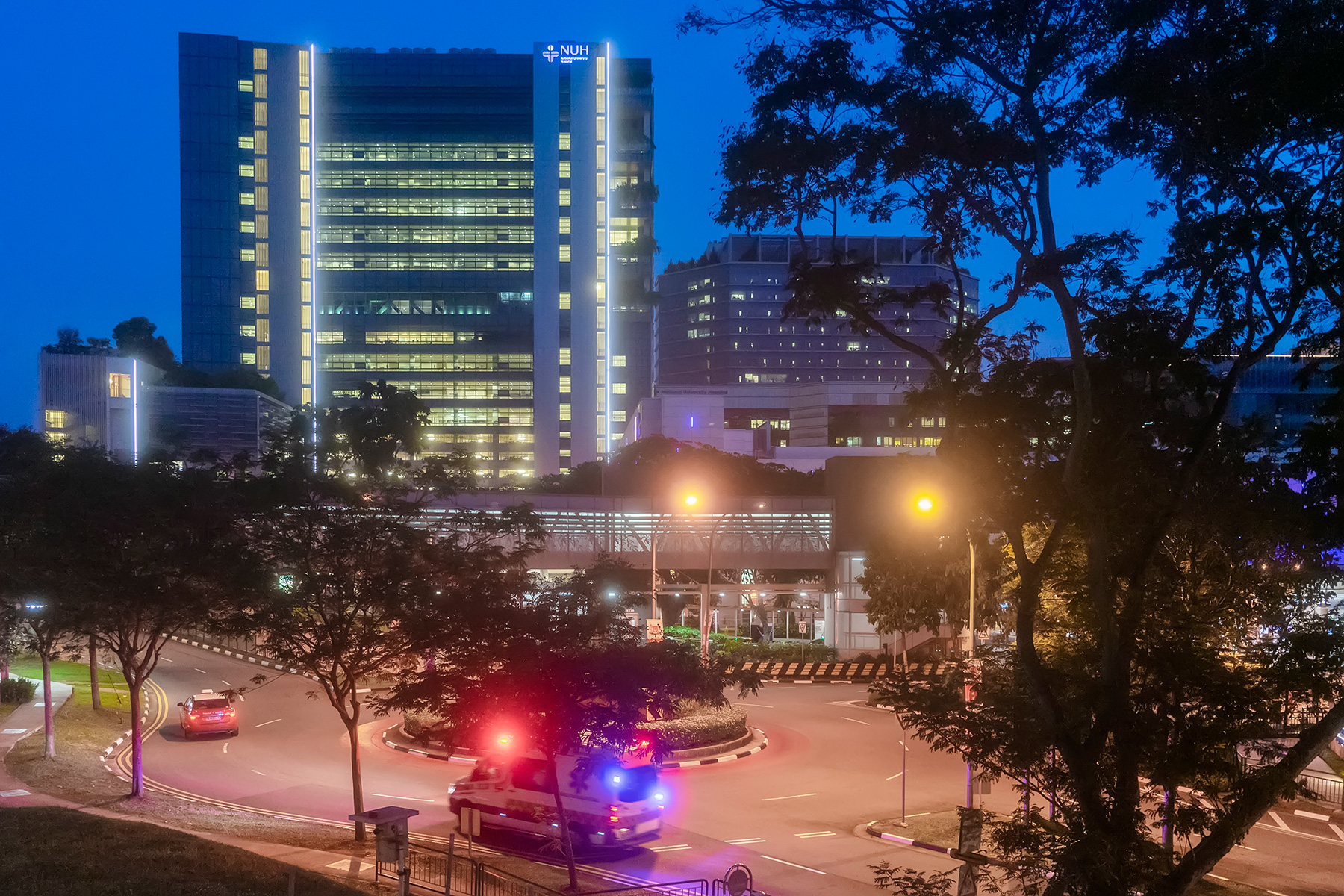
There are also a variety of other emergency numbers and 24-hour non-emergency numbers for various services in Singapore.
Singapore’s internet access
Singapore is one of the most advanced nations in the world regarding internet connectivity. 93.4% of households have a broadband connection. The country has excellent 5G capability and began moving to high-speed fiber broadband in 2013. Cable broadband was phased out in 2019.

Singapore had the fastest average internet speed in the world in 2021. In 2022, it averaged the third-highest globally at 214.23Mbps. Companies now offer up to 10Gbps speed capability. What’s more, Singapore is reported to have the second-most affordable internet in the world.
You can access the internet in a variety of ways in Singapore, including:
- Fixed-fiber broadband
- Smartphone or smart device using 4G/5G, public Wi-Fi, or a pocket Wi-Fi device
- Laptop using public Wi-Fi
- Internet cafes
The main internet providers in Singapore are:
Plans vary depending on what you purchase, for example internet speed capability and whether you opt for a combined package or internet only. It’s possible to get plans including 1Gbps internet for less than S$40 a month. You can compare home internet deals on sites such as SingSaver.
Connecting to the internet in Singapore
To install internet in your home, you only need to contact your preferred provider and arrange the connection. You can do this online or, if you prefer, call or visit a nearby store.
To set up a contract, you typically need to provide:
- Valid ID such as a passport
- Residence permit, if applicable
- Proof of address, for example utility bill
- Bank account details so that you can make regular bill payments
Internet contracts in Singapore typically last 24 months, although some firms may offer 12-month contracts. Check the terms if you want to terminate early, as you may be liable for a charge.
Your provider can usually set everything up remotely, depending on the situation in your property. Otherwise, a technician will need to arrange a visit to your property to get everything ready, for example, if you don’t have a working termination point (TP). Following this, all you will need to do is follow the instructions for activation, and you’re up and running.
VPNs
A virtual private network (VPN) is an extremely useful think if you are staying in another country, whether for a long or short period. It keeps all of your personal information safe and secure, plus it also enables access to overseas internet content that you may struggle to reach from Singapore, for example foreign TV channels.
Popular VPNs in Singapore include:
How do you pay your telecommunications bills in Singapore?
Most telecoms companies in Singapore charge bills monthly, although you might be able to set up a quarterly payment if it’s more suitable for you. You can pay bills in a number of different ways:
- Set up a direct debit or standing order with your bank or credit card provider
- Pay through the company’s app (companies such as Singtel now offer this)
- Visit a store and pay the cashier directly
- Pay at a local post office
If you haven’t set up a local bank account yet, you can use a multi-currency service like Wise. Wise provides you with local Singaporean account details and allows you to pay your telecommunications bills via PayNow or bank transfer at a much better exchange rate than using a foreign credit card, which often incurs high transaction fees.
Whichever payment method you choose, make sure that you don’t fall behind with your bills. Companies have the right to charge penalty fees or even withdraw their services if you don’t pay.

If you have problems keeping on top of your telecommunications bills, you should contact your bank or service provider to discuss alternative ways forward. This may be spreading your bills out over a longer period or switching to a cheaper tariff.
Telecommunications repairs in Singapore
Suppose you experience a problem connecting to the internet, TV, or landline in Singapore. In that case, you should contact your provider, who can resolve the issue by talking you through it or sending an engineer to fix it. For broader electrical problems, contact your electricity provider or the electric emergency number for Singapore.
You can search directories such as Yellow Pages Singapore if you need to look for a telecom engineer.
How do you complain about a Singaporean telecommunications company?
If you want to complain about a telecommunications company in Singapore, you should try to resolve things by contacting the company. They may be able to offer a suitable solution through their complaints team or department.
If this fails, you have a few different options:
- Use the IMDA Alternative Dispute Resolution (ADR) scheme: this is a two-step process for disputes up to a value of S$10,000, involving mediation (cost S$10) and full case determination if still unsettled (cost S$225 if following mediation, or S$375 without)
- Contact the Consumer Association of Singapore (CASE): they provide advice, mediation, and assistance with taking the matter to court for a fee (dependent on the level of service), although they cannot make an enforceable decision
- File a claim through the Small Claims Tribunal: fees range from S$10 to up to 1% of the amount claimed (claims limit is S$30,000)
Does Singapore have alternative communication platforms?
VoIP and instant messaging
There are several instant messaging platforms available in Singapore that can help you stay connected without relying on calls or texts.
Many of these are free and as simple as just downloading the mobile app. Popular providers in Singapore include:
Internet cafes in Singapore
With public Wi-Fi readily available across Singapore, once-ubiquitous internet cafes are becoming a thing of the past. However, you can still find a few in busy districts such as Little India. Most places charge by the hour at around S$1–2 each.
Public phones
Operators such as SingTel and StarHub provide pay phones in public places such as housing estates and tourist attractions. Local calls cost around 10 cents for 2–3 minutes, although Singtel has recently started offering free internal calls across the country, capped at three minutes.
Useful resources
- Infocomm Media Development Authority (IMDA) – telecommunications regulator in Singapore
- SingSaver – comparison tool where you can compare broadband deals in Singapore
- Yellow Pages Singapore – find repair services for TV, internet, and phone
- Setup guide – learn how to set up your home internet, from MyRepublic
- Digital TV guide – government page on how to switch to digital TV, the only available form in Singapore
- SgFave – find internet cafes in Singapore
Related Articles


Editor's picks

Did you find this guide helpful?