
'%20id='ico-down'%20stroke='%23000000'%20stroke-width='1.5'%3e%3cg%20transform='translate(1092.250000,%20254.750000)'%3e%3cpolyline%20id='Path-2-Copy-4'%20transform='translate(5.500000,%202.750000)%20scale(1,%20-1)%20rotate(-180.000000)%20translate(-5.500000,%20-2.750000)%20'%20points='0%200%205.5%205.5%2011%200'%3e%3c/polyline%3e%3c/g%3e%3c/g%3e%3c/g%3e%3c/svg%3e)


Finance
Taxes
How to file income tax in the Netherlands in 2026
Discover key information on income tax in the Netherlands, including due dates, tax rates, and ways to lower your bill.

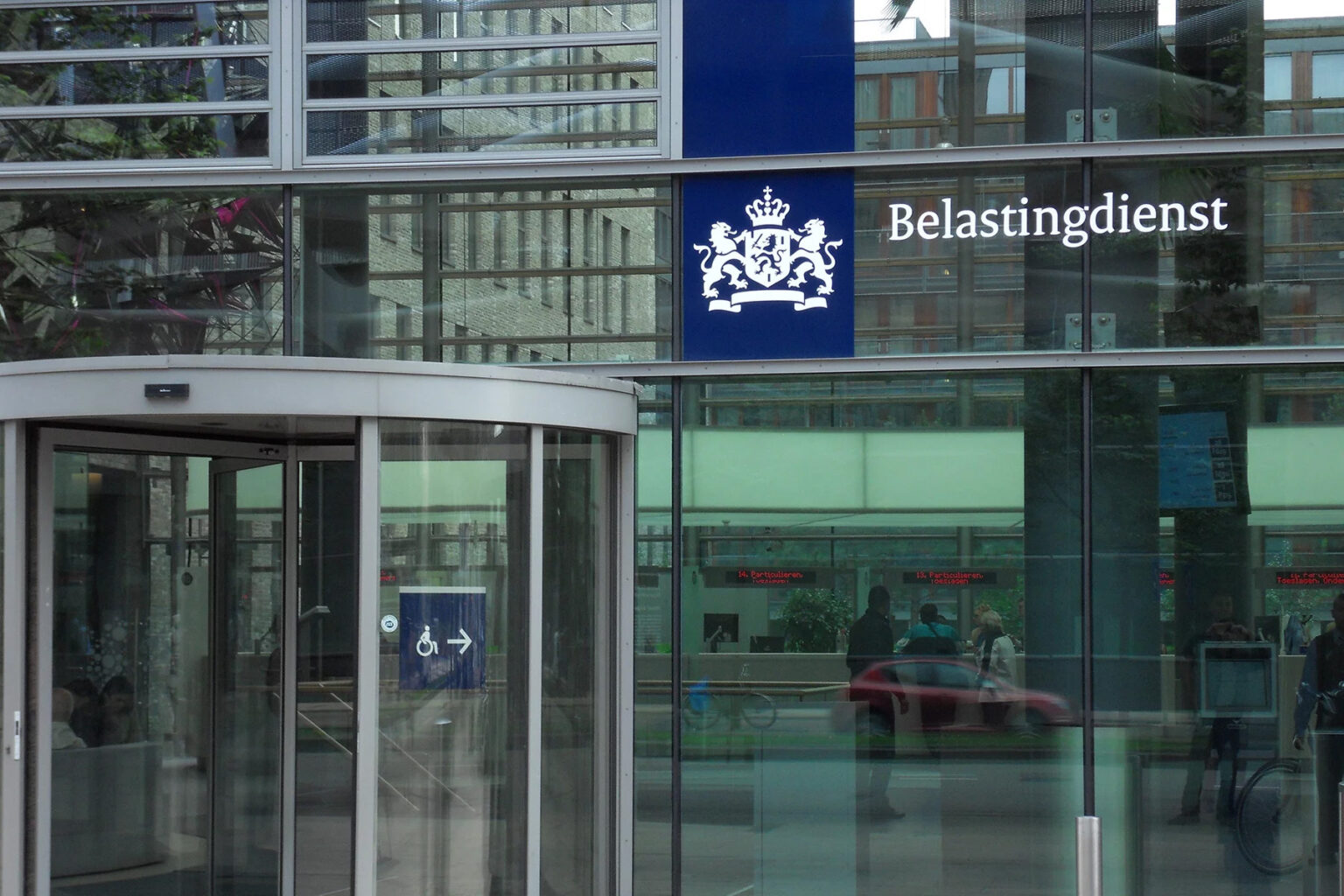
That famous saying about death and taxes applies to the Netherlands as well.
All Dutch residents and corporations must pay income tax on their worldwide earnings of the previous year (1 January to 31 December). The Dutch government also levies a tax on the income of non-resident foreigners.
Find out what you need to know about the topic by reading the following sections:
J.C. Suurmond & zn. Tax Consultants
J.C. Suurmond & zn. Tax consultants provide tailor-made advice and personal guidance on tax matters. With over 30 years experience, the organization is a fully-developed tax advisory office, for both private individuals and companies.

Dutch income tax: overview and the latest developments
Income tax (inkomstenbelasting) is a mandatory levy that people and businesses have to pay to the government in the Netherlands. The tax revenue pays for government activities and essential services, such as public education, hospitals, the police, and the military.

How much income tax you pay depends on your worldwide earnings from the previous year (i.e., your annual income). Taxable income can include:
- Your salary and other income from employment (e.g., holiday bonuses)
- State benefits and pensions
- Business profits
- Interest on savings or investments
- Dividends from investments
- Wealth and property
- Received rent (if you rent out a home)
Employees (and pensioners to a lesser extent) also pay national social security contributions to fund welfare benefits and state pensions.
Almost everyone in the Netherlands pays (part of) their income tax in the form of wage tax (loonbelasting). Employers and pension providers withhold a percentage of your gross monthly salary or pension, meaning you’ll likely not see a hefty tax bill at any point.
The Dutch Tax Office (Belastingdienst) oversees income tax in the Netherlands.

Latest news about income taxes in the Netherlands in 2026
For 2026, the government made a series of changes to personal taxation.
- The general tax credit has risen from €3,068 to €3,115. The full credit is available to people earning up to €29,736, increased from €28,406 in 2025.
- Maximum labor tax credit has risen from €5,599 to €5,685. The amount you can claim reduces if you earn more than €45,592.
- The tax-free allowance on box 3 income (savings and investments) has increased to €59,357 for individuals.
- Deductions for self-employed workers have been reduced from €2,470 to €1,200 in 2026.

Tax rates: how much income tax will I pay in 2026?
The Netherlands divides taxable income into three categories – or boxes – each with its own bracket and tax rate. You will pay proportionately more tax as your income increases:
- Box 1 – salary, benefits, and home ownership
- Box 2 – financial interest in a company or cooperative
- Box 3 – assets (such as savings, investments, and second homes) minus debts
There are several websites (for example, Blue Umbrella) that can help determine how much income tax you can expect to pay. The Dutch Chamber of Commerce (Kamer van Koophandel – KvK) also offers an online calculator to assist freelancers and entrepreneurs in budgeting for their tax returns.
Box 1 rates
2026
| Income | Tax rate |
| Up to €38,883 | 35.75% |
| €38,884-78,426 | 37.456% |
| €78,426+ | 49.5% |
State pension recipients pay a rate of 19.07% on income up to €38,441.
2025
| Income | Tax rate |
| Up to €38,441 | 35.82% |
| €38,442-76,817 | 37.48% |
| €76,187+ | 49.5% |
State pension recipients pay a rate of 17.85% on income up to €38,883, or €41,123 if they were born before 1946.
Box 2 rates
| Income | Tax rate |
| Up to €68,843 | 24.5% |
| €68,843+ | 31% |
Box 3 rates
Income for box 3 is taxed at a flat rate of 36%. There is an annual exemption of €59,357 in 2026.
Who pays income tax in the Netherlands?
All Dutch residents and companies must pay income tax, including children who earn a full-time salary or have their own businesses. Non-residents who earn income in the Netherlands, such as salary or dividends, must also pay Dutch income tax.

Under Dutch law, a tax resident is someone whose address or whereabouts is in the Netherlands. The main facts and circumstances that determine tax residence are:
- You spend most of your time at a Dutch address
- Your partner and/or family lives in the Netherlands
- You work in the Netherlands
- You have Dutch insurance
- Your (family) doctor is a resident of the Netherlands
- Your kids go to school in the Netherlands
Who needs to file a Dutch tax return?
Technically, everyone in the Netherlands must submit a tax return (belastingaangifte), including residents (particulieren), entrepreneurs (ondernemers), self-employed persons (zzp’ers), and corporations (bedrijven).
During tax season, most people will receive a letter or email (aangiftebrief), inviting them to check and sign their tax forms. However, if the Dutch Tax Office has determined your taxable income is too low, you might be exempt and not receive an invite.
Other instances in which you don’t have to file a Dutch tax return include:
- If you haven’t received an invite to do so
- If you get less than €19 back from the government
- If you owe the government less than €57 in taxes
That said, it’s recommended that you always double-check your tax form, even if you haven’t received an invite. You may be able to declare extra deductibles (e.g., medical expenses) and thus lower your tax bill.
Dutch income tax for foreigners
International residents of the Netherlands are taxed the same as their Dutch counterparts, meaning they are taxed on their worldwide income. However, the Netherlands has tax agreements with roughly 90 countries to prevent double taxation. That means you won’t be taxed twice for the same source of income or asset.
If you have income or assets in several countries, using an app like Flamingo Compliance can help you stay organized by monitoring residency thresholds, sending alerts, and generating audit-ready reports you can share with your adviser when needed.

When there isn’t a tax treaty in place, the rules for your income tax default to the Double Taxation Decree 2001. This law determines which country may levy tax on which income.
If you pay double tax to a country with a tax agreement, you can start a mutual consultation procedure. The Netherlands will then consult with the other country to find a solution. In some cases, you may also claim a double tax credit (aftrek voorkoming dubbele belasting), which entitles you to a reduction of your Dutch income tax.
Managing finances across borders with Wise
For expats handling income and expenses in multiple countries, currency conversion fees can become a significant concern.
You can use Wise to simplify your international finances while navigating the Dutch tax system. With a Wise multi-currency account, you can hold, exchange, and manage money in 40+ currencies, which is particularly useful when receiving money from abroad or paying taxes in different countries.
This can help you avoid the high conversion fees and exchange rate markups other providers might charge.

Filing US taxes from the Netherlands
Every US citizen and Green Card holder must file a tax return with the IRS, even those living abroad. Many US expats are unaware of this obligation, assuming that, as expats, they don’t need to file or pay taxes in the US. The good news is that as long as you’re paying taxes in another country, you usually don’t owe anything to the IRS, but it’s essential to make sure, and the law says you still have to file.
Learn how to file your US tax returns from the Netherlands by reading our article on taxes for American expats. Alternatively, you can seek advice from a company that offers a specialized tax filing service for expats, such as H&R Block.
H&R Block
Filing U.S. taxes from the Netherlands? H&R Block’s expat tax experts simplify the process with easy online registration and remote filing. Whether it’s answering tricky tax questions or managing paperwork, they’ve got you covered. Stay compliant, stress-free, and up-to-date – contact H&R Block today.
30% ruling for highly skilled migrants
Highly skilled expats working in the Netherlands may be eligible for the 30% ruling. This tax advantage exempts them from paying tax on parts of their salary for up to 60 months (or five years):
- 30% of their wage is tax-exempt for the first 20 months
- 20% of their income is tax-free for the next 20 months
- 10% of their earnings is tax-exempt for the last 20 months
Previously, expats could opt for partial non-resident taxpayer status. This allowed them to avoid paying taxes on assets in Boxes 2 and 3 (except for real estate investments in the Netherlands).
The partial non-resident taxpayer status is being phased out from 1 January 2025. A transitional rule applies, allowing expats to use this status until the end of 2026, subject to certain conditions.

Who is exempt from Dutch income tax?
If you live abroad but earn an income in the Netherlands, you’ll be considered a non-resident taxpayer. Non-residents are only taxed on income derived from specific sources in the Netherlands, such as salary, business earnings, and income from Dutch immovable property. Your worldwide income will not be taxed, unlike regular resident taxpayers.
Deadlines to file a tax return in the Netherlands
In the Netherlands, resident tax returns are due from 1 March to 30 April. If you file your taxes before 1 April, you’ll get the definitive assessment (definitieve aanslag) before 1 July. Submitting tax forms between 1 April and 1 May means you can expect the final evaluation within three months.

The tax returns of non-residents are due:
- Taxable year 2025: up to and including 31 December 2029
- Taxable year 2024: up to and including 31 December 2028
- Taxable year 2023: up to and including 31 December 2027
- Taxable year 2022: up to and including 31 December 2026
- Taxable year 2021: up to and including 31 December 2025
How to file income tax in the Netherlands
The most convenient way for residents to file tax forms is online through the Dutch Tax Office website or the tax returns app.
Because your income is linked to your Dutch social security number (Burgerservicenumber – BSN), the Dutch Tax Office can automatically complete your online tax return each year. You just need to check the form, add deductibles, and sign digitally.
However, you’ll need to log in with a DigiD, a digital ID number. If you haven’t got that yet, applying for it can take several weeks. It’s therefore recommended you apply for your DigiD well ahead of time.

If your level of the Dutch language is proficient, you can also submit your tax return on paper. Which form you’ll need depends on your situation:
| You are | Tax form |
| Resident taxpayer | Form P |
| Non-resident taxpayer | Form C |
| Partial non-resident taxpayer* | Form M |
| Non-resident entrepreneur | Form C |
| Resident taxpayer filing for a deceased person | Form F |
| Fiscal partner of and filing for a deceased person | Form P for fiscal partners |
You can request these tax forms by calling the Dutch Tax Office Information Line (BelastingTelefoon).
Dutch companies and self-employed people can only file their tax returns online. If you are an entrepreneur in the Netherlands and live abroad, you can also submit your tax forms on paper.

Married couples and registered partners qualify as fiscal partners and may file a joint tax return. The benefit of this is that you can allocate deductions (such as mortgage interest) to the person with the highest income and thus lower your tax bill.
Deductibles and tax credits
There are plenty of ways to save on your income tax bill. Depending on your situation, you may be able to deduct some expenses from your income, so-called aftrekposten. You may also be entitled to one or more tax credits (heffingskortingen). In other cases, come of your income can be tax-exempt.
Tax deductibles in the Netherlands
Dutch income tax deductibles include:
| Name | Which box | What’s included |
| Mortgage interest deduction (hypotheekrenteaftrek) | Box 1 | – (Mortgage) interest on the home acquisition debt – One-off financing costs – Periodic payments for leasehold, the building, or encumbrance |
| Personal deduction (persoonsgebonden aftrek) | Box 1, 3 | – Paid spousal support – Certain healthcare costs – Costs of a temporary stay at a home for people with severe disabilities – Volunteer work and charity donations |
| Public transport travel costs (reiskosten openbaar vervoer) | Box 1 | – Certain travel costs made for work, subject to conditions |
| Annuities (lijfrenteaftrek) | Box 1 | – Annuity premiums if you have a pension deficit |
Tax credit in the Netherlands
Depending on your situation, you may be able to get a discount (i.e., tax credit) on your income tax and national insurance contributions. If you are employed or receive benefits, your employer or benefits agency will already have taken a number of tax credits into account (e.g., the general tax credit and labor credit).

Available tax credits for residents include:
- General tax credit (algemene heffingskorting) – every resident taxpayer is entitled to some tax-free income. The amount depends on your age and whether you’ve lived in the Netherlands for the entire tax year.
- Labor credit (arbeidskorting) for employed persons – some of your salary is considered tax-free income. This will already be offset by your employer each month. The amount of your earnings that is tax-exempt depends on your earnings and age. If you earn less than €45,592 in 2026, you may be able to get a larger tax refund.
- Income-dependent combination credit (inkomensafhankelijke combinatiekorting – IACK) – eligible parents may get a discount on their tax bill if their child is below the age of 12 (subject to conditions)
- Tax credits for pensioners (heffingskortingen voor AOW-gerechtigden) – residents above the age of 67 receive a discount if their total taxable income is below a certain threshold
- Young disabled tax credit (jonggehandicaptenkorting) – recipients of the Wajong benefit (Wajong-uitkering) get a €923 tax credit
- Tax credit for green investments (heffingskorting voor groene beleggingen) – taxpayers with green investments or green savings may be eligible for an additional tax credit of 0.1% of their tax exemptions
Tax deductibles and credits for freelancers
If you work as an entrepreneur, freelancer, or business for at least 1,225 hours a year and more than 50% of your working time is spent at your own company, you may be eligible for additional tax deductions and credits. For example, equipment, travel, marketing, legal, accountancy, and third-party services can be deducted as business expenses.
Available deductibles and credits include:
- Private business ownership allowance (zelfstandigenaftrek) – every entrepreneur is entitled to some tax-free income; this is similar to the general tax credit for residents
- Tax relief for new companies (startersaftrek) – startups can get an additional private business ownership allowance
- Small business scheme (kleineondernemersregeling – KOR) – small businesses pay less VAT (BTW)
- SME profit exemption (MKB-winstvrijstelling) – small- and medium-sized enterprises can claim an extra tax relief
To find out more, visit the Dutch Tax Office website.
How to pay or get a refund of my income tax?
The Dutch Tax Office will send the definitive assessment within three months of you filing your tax return. This document shows the amount of income tax you owe or are owed.
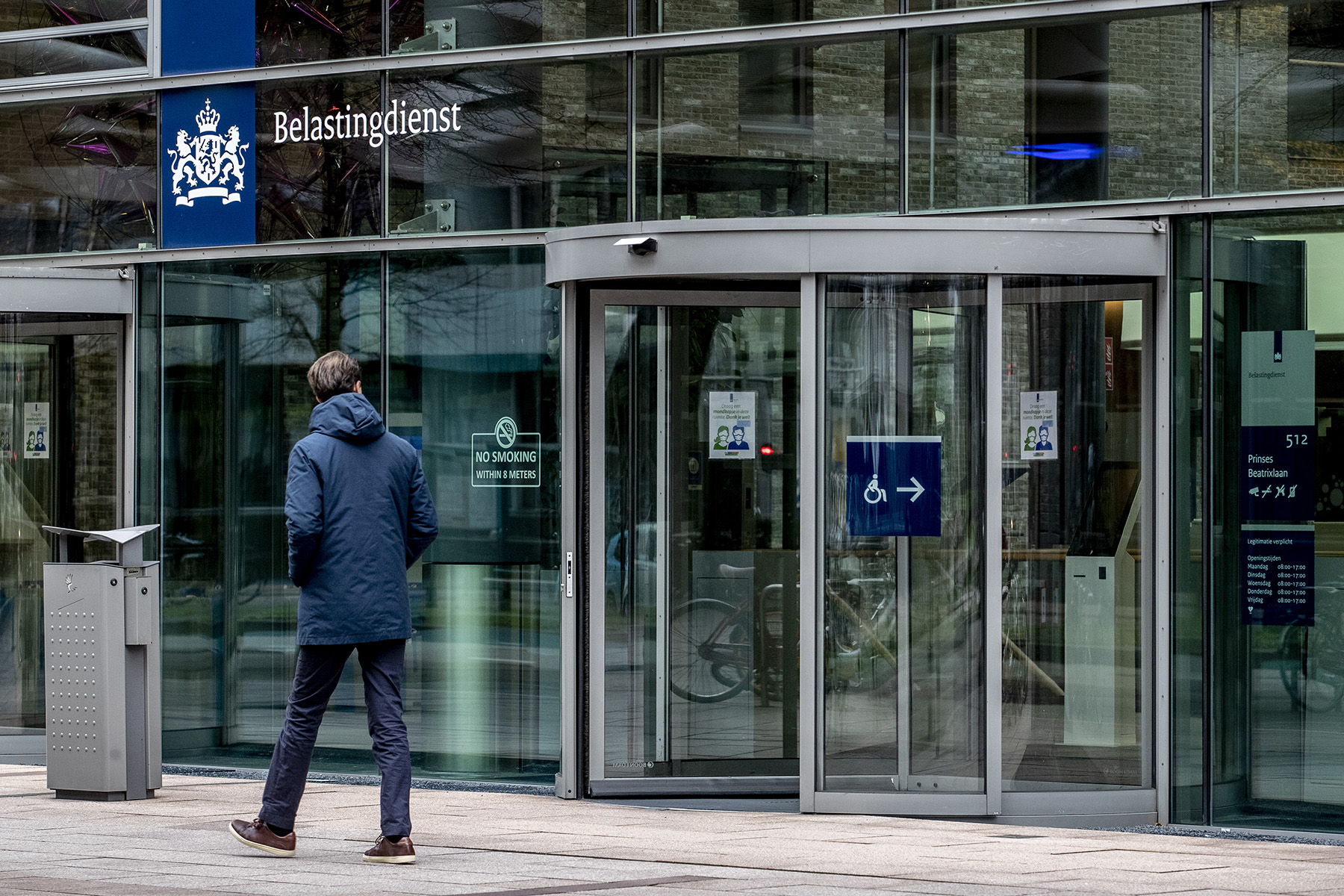
If you owe them money, you can pay your income tax:
- Online using iDEAL
- Online via a bank transfer (also if you have a foreign bank account)
- By sending in a bank transfer card (girobiljet)
If the Dutch government owes you money, the amount will be refunded to your bank account. In the event that they don’t have your account on file, they will send you a form with which you can give them your bank details.
Note: if you disagree with the definitive assessment, you can file an appeal within six weeks of the date stamp.
Making payments from foreign accounts
You can pay your Dutch income tax directly from a foreign bank account via international bank transfer. The Dutch Tax Office provides international bank details on their website. Make sure to include your tax reference number in the payment description.
For expats making tax payments from non-Dutch bank accounts, exchange rates and transfer fees can significantly impact the final amount.
Wise offers a cost-effective alternative for international tax payments, allowing you to transfer money to the Dutch Tax Office at the mid-market exchange rate with a small, transparent fee.
What if I don’t do my income tax on time or at all?
When you know you will not be able to pay your tax on time, get in touch with the Dutch Tax Office as soon as possible. In many situations, you can organize a payment plan to cover what you owe.
If you fail to file your income tax on time, you’ll be sent a reminder and a new deadline. If you miss this second cutoff date, you will usually get a second reminder. After failing to submit your tax returns a third time, you’ll receive a fine of €469. This fee can increase to up to €6,709 if you’re a repeat offender.
Penalties and fees
Depending on your (in)action, the Dutch Tax Office may impose a default penalty (betaalverzuimboete) and a misdemeanor fine (vergrijpboete). Tax fines and penalties include:
| (In)action | Fine |
| Failing to request a declaration form on time | €3,354 |
| Failing to submit your tax return on time | €469 (up to €6,709 for repeat offenders) |
| Failing to pay your taxes on time | Up to €6,709 |
| Submitting an incorrect tax return due to gross negligence | 25% of the tax you incorrectly concealed |
| Submitting a tax return where income from wealth and investments (Box 3) was inaccurate due to gross negligence | 75% of the tax you incorrectly concealed |
| Intentionally hiding assets, income, property, and the like | 50% of the tax you deliberately concealed |
| Intentionally hiding income from wealth and investments (Box 3) | 150% of the tax you deliberately concealed |
| In case of fraud or a repeat offender | 100% of the tax you evaded |
| In case of fraud involving Box 3 or a repeat offender | 300% of the tax you evaded |
If you disagree with the fine or penalty, you can file an objection within six weeks of receiving the fine. The Dutch Tax Office usually processes the appeal within 12 weeks, though it may take up to 18 weeks
How to income from multiple countries while staying tax compliant in the Netherlands
If you receive income from multiple countries while being a tax resident in the Netherlands, you must report your worldwide income on your Dutch tax return.
Keep organized records of all income sources, applicable tax treaties, and taxes already paid in other countries to claim relief from double taxation.
Wise multi-currency account can help you manage income streams in different currencies efficiently, giving you visibility across all your international finances in one place.
Learn more about Wise Account here. 🚀
Advice on income tax in the Netherlands
Tax returns are notoriously tricky, especially if you lack confidence in understanding the forms or what deductibles or credits you’re entitled to.
As such, it’s strongly recommended that you enlist the help of a reliable tax adviser (belastingadviseur). Not only can they answer specific questions, but they can also file your taxes on your behalf and find more ways to lower your tax bills.
English-speaking tax advisers that cater to expats include:
- Expat Service
- J.C. Suurmond
- Klår Finance
- Belastingdienst – official website of the Dutch Tax Office
- Business.gov – government resource for businesses in the Netherlands
Useful resources
Related Articles



Editor's picks
 Human and civil rights in the NetherlandsFrom the right to protest to protection from discrimination, here's what you need to know about human rights in the Netherlands.
 Higher education in the Netherlands: a guide to Dutch universitiesThe Netherlands is home to some of the world's top universities. Learn all about the different subjects available at Dutch institutions.
 Child benefits in the NetherlandsYou can claim different types of child benefits in the Netherlands, to help with the costs of child-rearing, schooling, and childcare.
Did you find this guide helpful?