
'%20id='ico-down'%20stroke='%23000000'%20stroke-width='1.5'%3e%3cg%20transform='translate(1092.250000,%20254.750000)'%3e%3cpolyline%20id='Path-2-Copy-4'%20transform='translate(5.500000,%202.750000)%20scale(1,%20-1)%20rotate(-180.000000)%20translate(-5.500000,%20-2.750000)%20'%20points='0%200%205.5%205.5%2011%200'%3e%3c/polyline%3e%3c/g%3e%3c/g%3e%3c/g%3e%3c/svg%3e)


Healthcare
Healthcare Services
Dentists in Italy
Read up on the topic of dentists in Italy, including how to make appointments, arrange insurance, and pay for treatments.

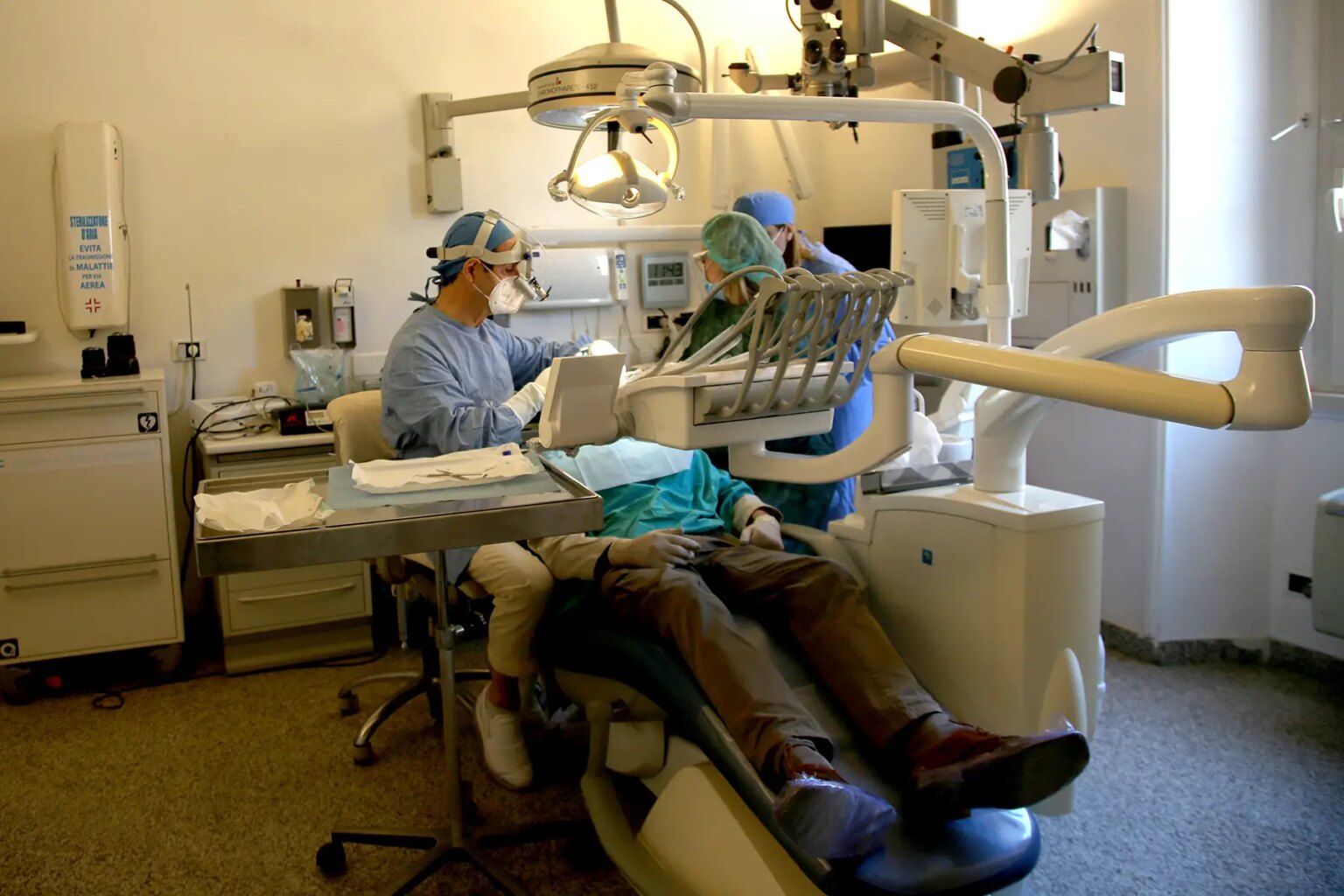
Although legal residents receive free or affordable universal healthcare, only a small portion of the public health system includes dental services. As such, if you want to see a dentist in Italy, you typically need to take out private health insurance or prepare to pay the costs out of pocket.
Learn more about Italian dental care, including the following:
Cigna Global
Enjoy peace of mind while living in Italy with Cigna Global’s long-term international health insurance plans (12+ months). Get tailored coverage, direct billing with many providers, complex case management, and global care on demand, with access to a network of 1.5+ million doctors, specialists, and therapists.

The Italian healthcare system
Italy has an excellent public healthcare system, which all Italian residents can access, known as the Servizio Sanitario Nazionale (SSN – in Italian), with their health card (Tessera Sanitaria – TS). This service provides free or economically accessible medical care across Italy’s 20 regions.
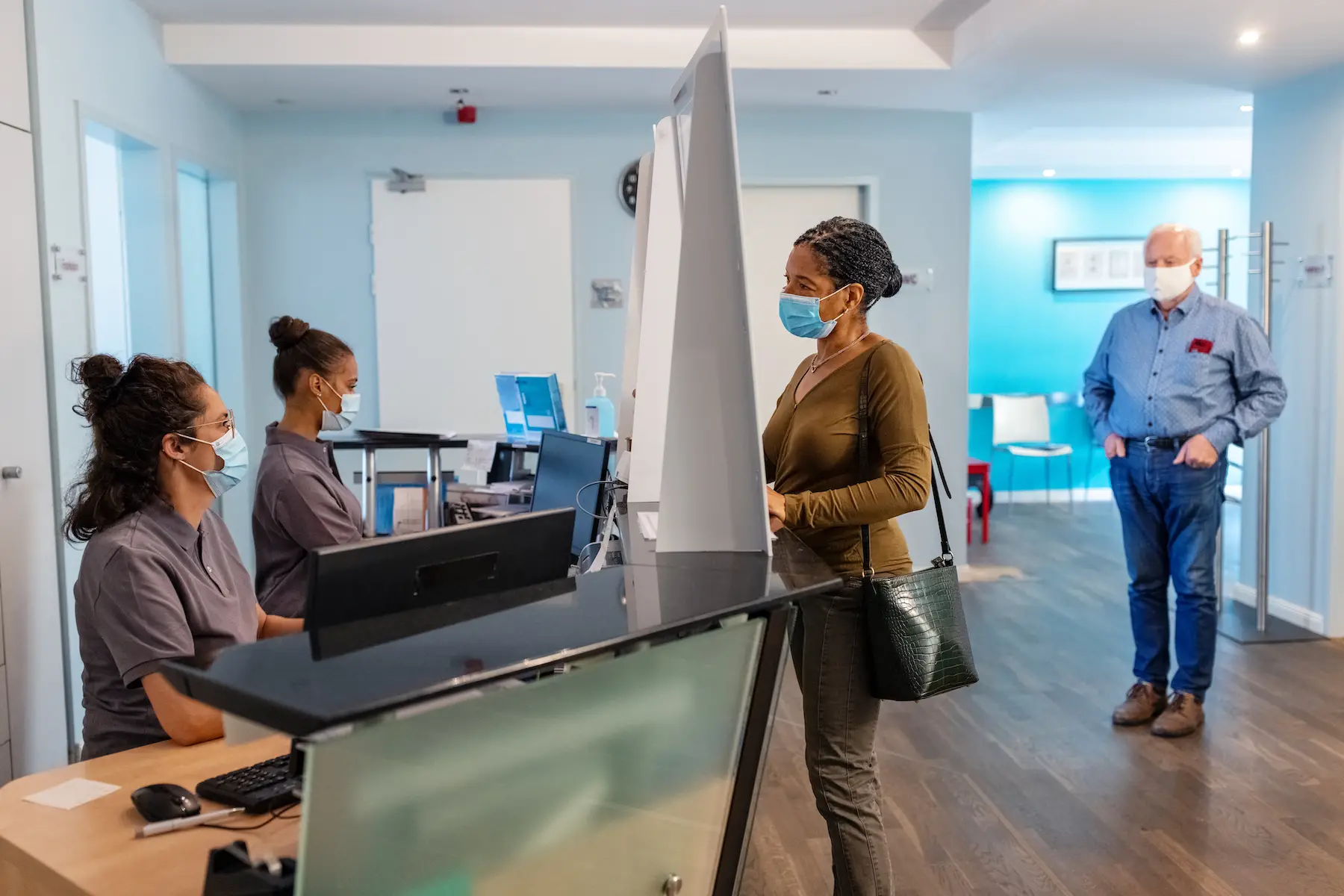
Italy also has a private healthcare system, which offers more comfort, a wider choice of providers, and shorter wait times at a cost. Dentists in Italy operate in the public system at a reduced fee or for free, but most Italians must seek private dental care.
Overview of Italian dental care
According to Qunomedical, Italy ranks first for healthiest teeth in Europe, thanks to its many dental facilities and providers.
However, statistics for yearly dental care vary widely in Italy depending on income, level of education, and age. For example, 70% of 25 to 59-year-olds have visited the dentist in the past year, compared to only 39% of over-70s.
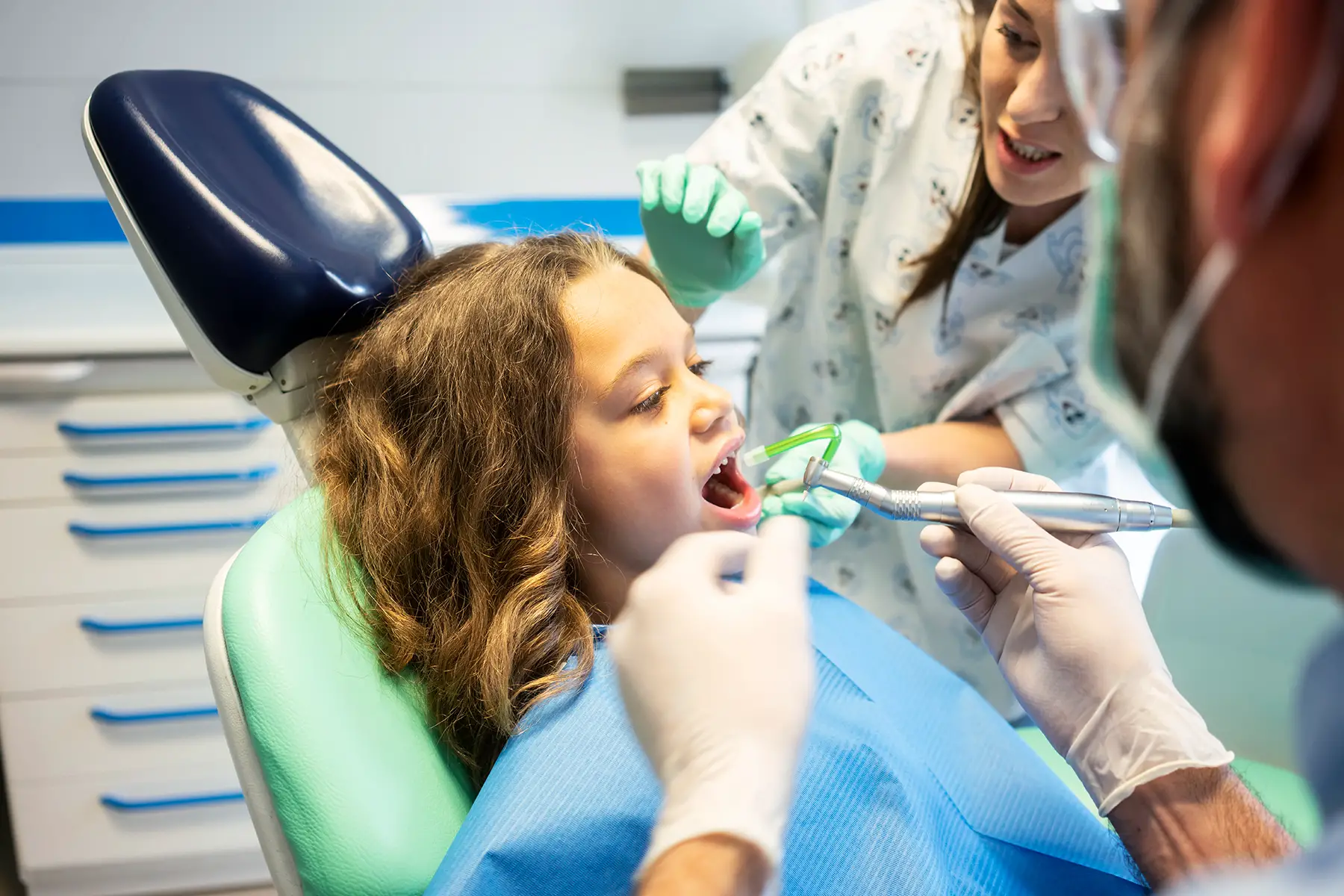
Some dental care in Italy is accessible through the public system, but the SNN only covers around 5% of all dental care in Italy. Some low-income families and people with certain can access public dentists in Italy for free or affordable prices. Most Italian residents use a private dentist, with a cost for a generic visit ranging from €30 to 60.
Public dental care in Italy
Italian residents have access to dental care through the public healthcare system. Certain individuals may receive free dental care depending on age, health conditions, and economic status. In an emergency, dental care is also covered by the SNN.
The Italian government runs the LEA program, which grants free or affordable access to dentists in Italy for under-15s, people with certain health conditions, and those on a low income. This program mostly focuses on prevention. Specifically, the Italian healthcare system offers free or affordable dental care to patients with the following health issues:
- transplant patients
- patients with immunodeficiency
- patients with certain forms of heart disease
- cancer patients and others receiving radiation and chemotherapy
- patients with a severe bleeding disorder
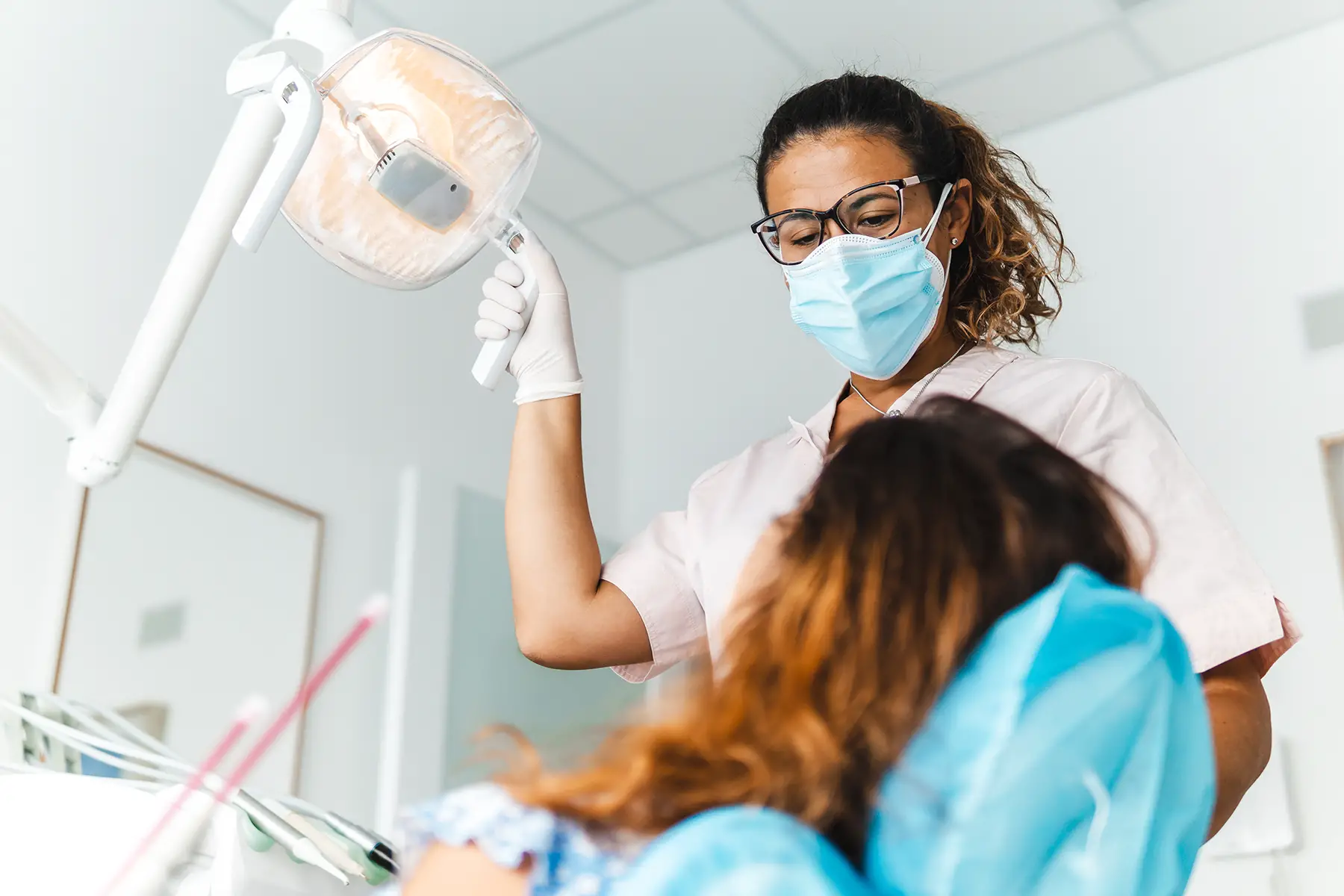
Those who cannot afford a dentist in Italy also receive care covered by the SNN if they are on a low income. Some examples of treatments available publicly include preventative visits, extractions, fillings, root canals, and dental cleanings. Some appointments are free, while other patients may need to pay a small co-payment (known as a ticket) of around €30. Dentists in Italy recommend having checkups and teeth cleanings once or twice a year.
All citizens, including those who do not fall into the above categories, are guaranteed dental visits with a small co-payment or for free for early diagnosis, prevention, and emergency treatment (such as acute infections). Children under 14 also have free access to public dentists in Italy.
Costs of public dentists in Italy
Some dental visits in Italy are free, or patients need to pay around €30 for a ticket. Low-income patients and those with certain health conditions receive free dental care. The payment usually occurs directly at the appointment.
Private Italian dental care
Around 85% of Italians are registered with a dentist in Italy. Of those dentists:
- 74.8% operate in private freelance clinics
- 5.8% work at larger private offices
- Only 4.8% are affiliated with public facilities
The SSN carries out all necessary dental care, including cleanings, extractions, and root canals. Private dentists, on the other hand, guarantee all essential services and dental care that are not covered publicly. This includes aesthetic dentistry, such as braces and false teeth.
Another major difference is the wait time. Private dentists in Italy often have more appointment availability compared to the public system. Dental checkups in the private system occur once or twice a year, but these are usually for patients with certain health conditions.
Costs of private dentists in Italy
Dental costs vary depending on the treatment, but an initial visit and dental cleaning with a private dentist in Italy costs more than one in a state facility. More complex dental care, such as a crown or implant, may cost hundreds of euros. You usually make payments at the same time as your appointment, but some dentists may even offer payment plans for expensive procedures.
What are low-cost dental care options in Italy?
The private healthcare system can be expensive, but there are options in the public system for free or affordable care. There are also some low-cost dental clinics throughout Italy that offer dental care at a lower price than the private system. Some Italians also go abroad for dental care to Croatia or Hungary, where costs are lower than in Italy.
Children’s dental care in Italy
Dentistry forms an integral part of children’s healthcare. Children under 14 receive free dental care through the public healthcare system for dental checkups, tooth extractions, surgery, tartar removal, and more.

The Italian government regulates dental hygiene programs and services for children. To have regular checkups with a public dentist in Italy, children must register with the SNN and have a valid health card.
Although the public system covers dental visits for children, many still choose to go privately as there are shorter wait times and private dentists offer more services (such as braces).
How to access emergency dental care in Italy
If you have an emergency and need to find a dentist in Italy quickly, there are many options. Usually, big cities have a hospital for dental emergencies, known as pronto soccorso dentistico. These public facilities treat patients for free or with a ticket fee of around €30.
Private dentists in Italy are also usually available within a few days. Websites such as MioDottore (in Italian) can help you find healthcare specialists urgently, including dentists all over Italy. Costs for private dental care in an emergency vary and can reach hundreds of euros. If you have dental insurance, part or all of your dental fees may be covered.
Is there some form of Italian dental insurance?
The Italian healthcare system covers basic dental care for low-income families, people with certain health conditions, and children under 14. Italian residents may also receive dental care in the public system for a small fee. Private insurance can help you if you plan on using the private dental system.

Depending on what plan you choose and which family members you want to cover, you can expect to pay a few hundred euros to over a thousand for a policy. Private dental insurance is a great way to make sure you don’t have any unexpected costs if you end up needing a dentist while in Italy.
Furthermore, you can use international health insurance if you’re new to Italy or staying short term. Companies providing international health insurance include:
How to access dental care in Italy
Italian residents may access affordable dental care through public clinics or hospitals, and certain individuals receive free basic dental care. Anyone in Italy registered with the SNN gains access to the healthcare system, including dental care.
Tourists may access public hospitals for emergencies or see private dentists at a cost. For an appointment with a dentist, you will need your health card and some form of ID. If you don’t have a health card, you should bring your ID and your wallet.
How to find a dentist in Italy
If you are an Italian resident and need a dentist, there are many ways to find one, specifically:
- Through your family doctor
- Contacting your local health authorities
- Contacting the National Association of Italian Dentists (Associazione Nazionale Dentisti Italiani – ANDI)
- Finding a private dentist through websites such as MioDottore.it where you can also see ratings and patient experiences
On the private system, you can choose your own dentist, but if you find a dentist through your GP, they will refer you to a local public practitioner.
English-speaking dentists in Italy
It is possible to find an English-speaking dentist in Italy – you can always ask your GP for a recommendation if you are going through the public system. If you book a private dentist in Italy through a website, the clinic will usually mention if the dentist speaks English. Some websites, such as doctorsinitaly.com, allow you to book English-speaking medical professionals immediately.
Visiting an Italian dentist
You can usually make an appointment to visit a dentist in Italy over the phone, but private clinics often also offer online booking. Wait times in the public system vary throughout Italy, so you might wait a week or a few months, depending on availability. In the private system, you can often find an appointment much sooner, sometimes even within 24 hours.

When you go to your appointment with a dentist in Italy, make sure you bring your health card and ID. Usually, dental clinics have someone who will ask for your information, answer any questions, and handle the payment if necessary.
Useful resources
- Italian Ministry of Health – the official Health Ministry website with the latest news and information
- Miodottore.it – book appointments in English and Italian
- Doctorsinitaly.com – find English-speaking practitioners and make an appointment


Did you find this guide helpful?