
'%20id='ico-down'%20stroke='%23000000'%20stroke-width='1.5'%3e%3cg%20transform='translate(1092.250000,%20254.750000)'%3e%3cpolyline%20id='Path-2-Copy-4'%20transform='translate(5.500000,%202.750000)%20scale(1,%20-1)%20rotate(-180.000000)%20translate(-5.500000,%20-2.750000)%20'%20points='0%200%205.5%205.5%2011%200'%3e%3c/polyline%3e%3c/g%3e%3c/g%3e%3c/g%3e%3c/svg%3e)


Education
Higher Education
Higher education in France: a guide to French universities
If you’re considering studying in the land of Descartes and Sartre, this article should help you choose among the many universities in France.


Universities are an integral part of the French education system. Those wanting to study in France might find elements of the university system slightly confusing, such as understanding the difference between universities and grandes écoles. But help is at hand.
Whether you’re interested in law, architecture, business, or design, this article presents you with an overview of universities in France:
ESSCA
Become a ‘next gen leader’ with an MBA Business & Technology from ESSCA School of Management’s Online Campus. ESSCA is a triple-accredited international business school based in Paris. If you’re looking to further your career and academic learning while preserving the balance of your personal life, this is the hybrid part-time MBA program for you.

Studying in France
Higher education (enseignement supérieur) in France attracts many international students, so if you’re planning to study there, you’ll be in good company.
The country is home to high-quality universities, grandes écoles (similar to Ivy League universities), and specialized schools offering a wide range of courses for reasonable fees. It’s no surprise then that 370,000 international students (PDF in French) study abroad in France. In fact, 14% of students in France are not French nationals.

According to the same report by Campus France, the number of international students in France grew by 32% between 2008 and 2018. Around one-fifth of international students come from Morocco and Algeria, former colonies of France. Otherwise, students come from far and wide: Europe (25%), Subsaharah Africa (23%), Asia (15%), and the Americas (9%).

Campus France (in French) also has a handy website that lets you browse a catalog of courses based on keywords, geographic location, or field of study. There, you can find a list of more than 1,600 programs taught in English and remote learning courses. Other universities offering online study include IU International University of Applied Sciences.
French universities
France has over 3,500 public and private higher education establishments:
- Around 100 large universities
- 271 doctoral schools
- 200 engineering schools
- 333 business and management schools
- 46 art schools
- 22 architecture schools
- More than 3,000 private schools and institutes. Over 20% of students in France attend private higher education institutions, although these are not necessarily the most prestigious.
The most renowned universities in France are the grandes ecoles (in French), which can be public or private and include some of the best higher education institutions in France. They produce many politicians, top civil servants, and scientists. While they usually specialize in a single area, often business or engineering, some cover a wider range of subjects.
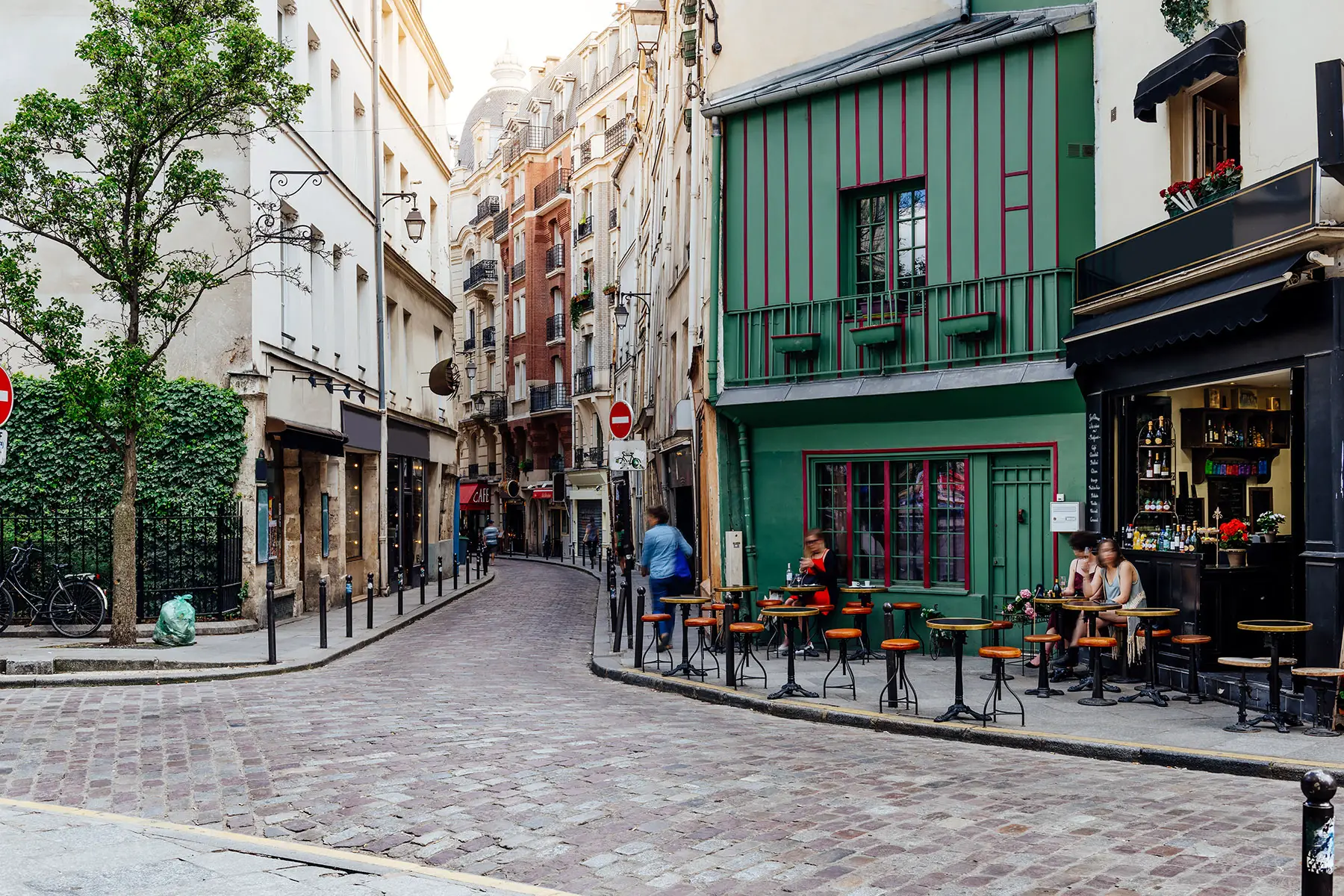
For most undergraduate university courses in France, anyone with a high-school diploma (baccalauréat or equivalent) can enroll. However, when it comes to the grandes écoles, admission usually takes place through highly competitive entrance exams.
Degree programs in France
Earning professional qualifications in France looks similar to everywhere in the world.
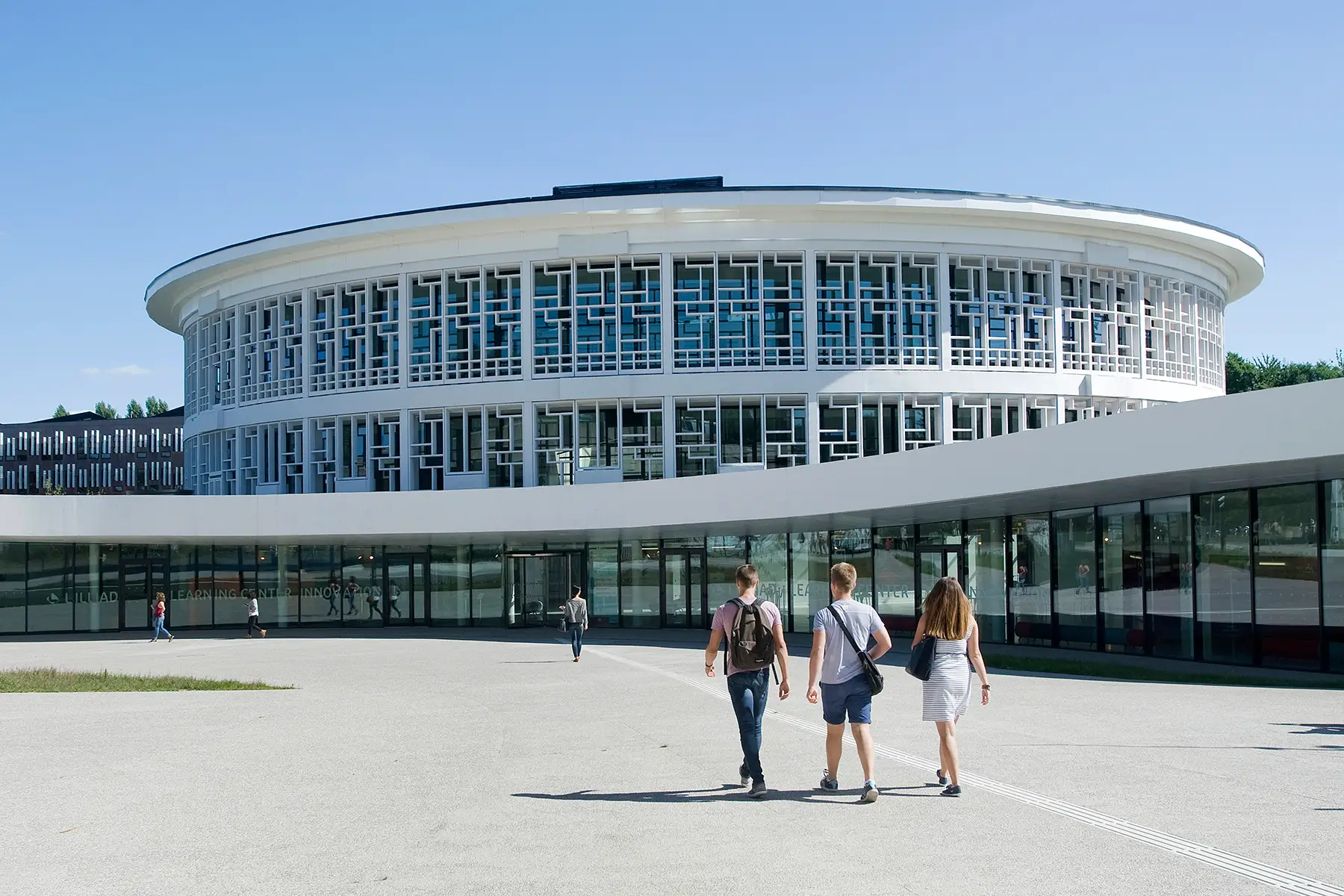
The main degree programs include:
- Licence (undergraduate degree, also known as Bac+3): divided into three years (L1, L2, L3) or six semesters, during which you must obtain 180 credits.
- Master (postgraduate degree accessed after the Licence): takes place over two years (M1 and M2), with 120 credits required to graduate. You can apply to either a research master’s (that requires you to write a dissertation) or a professional master’s (involving an obligatory internship).
- Doctorat (Ph.D.): Takes place over three years following the completion of a research master’s. It is validated by a Ph.D. dissertation and viva that provides you with the title of Doctor of your field.
- A variety of 1-3 year professional diplomas and qualifications that prepare students to enter the workforce.
Best universities in France
Four French universities make it into the top 100 Times Higher Education world rankings 2023 (THE 2023): Paris Sciences et Lettres (PSL Research University Paris – 47th), Sorbonne University (90th), Université Paris-Saclay (93rd), and Institut Polytechnique de Paris (95th)
The PSL Research University Paris
Located in the heart of the capital, Paris Sciences et Lettres (PSL) is in fact a grouping of 9 schools, two associate members, and three research entities. In total, it hosts 17,000 students (20% of whom are international) and 2,900 researchers.
Two-thirds of its students are enrolled in postgraduate programs. It boasts access to 140 laboratories, 3,000 industrial partnerships, and over 70 libraries and museums. Moreover, 28 Nobel Prize winners are associated with its schools.
PSL is home to the following teaching institutions, all renowned for excellence in their respective fields:
- Conservatoire National Supérieur d’Art dramatique – drama
- Dauphine – management, economics, law, social sciences, journalism, mathematics, and IT
- École nationale des chartes – archiving and historical research
- École nationale supérieure de Chimie de Paris – chemistry for research and industry
- École normale supérieure – teaching and research in a wide variety of academic fields
- École Pratique des Hautes Études – postgraduate studies in earth sciences, religious studies, history, or philology
- ESPCI Paris – research and experiment-based study of physics, chemistry, and biology
- MINES Paris – engineering and management school
- Observatoire de Paris – research in astronomy, astrophysics, and meteorology
The PSL also offers a wide range of degrees:
- 10 bachelor’s degrees
- 49 master’s degrees in all disciplines, of which about 20 are taught in English
- Ph.D. programs in 17 different disciplines
Sorbonne University
This historical university was founded in the 13th century and is still located in the student hub of the Latin quarter in Paris. The current structure resulted from a 2018 merger between the Paris-Sorbonne and Pierre and Marie Curie Universities. It also includes the science campus at Jussieu and the Maison de la Recherche campus, housing the history and geography departments and the impressive Serpente Library.
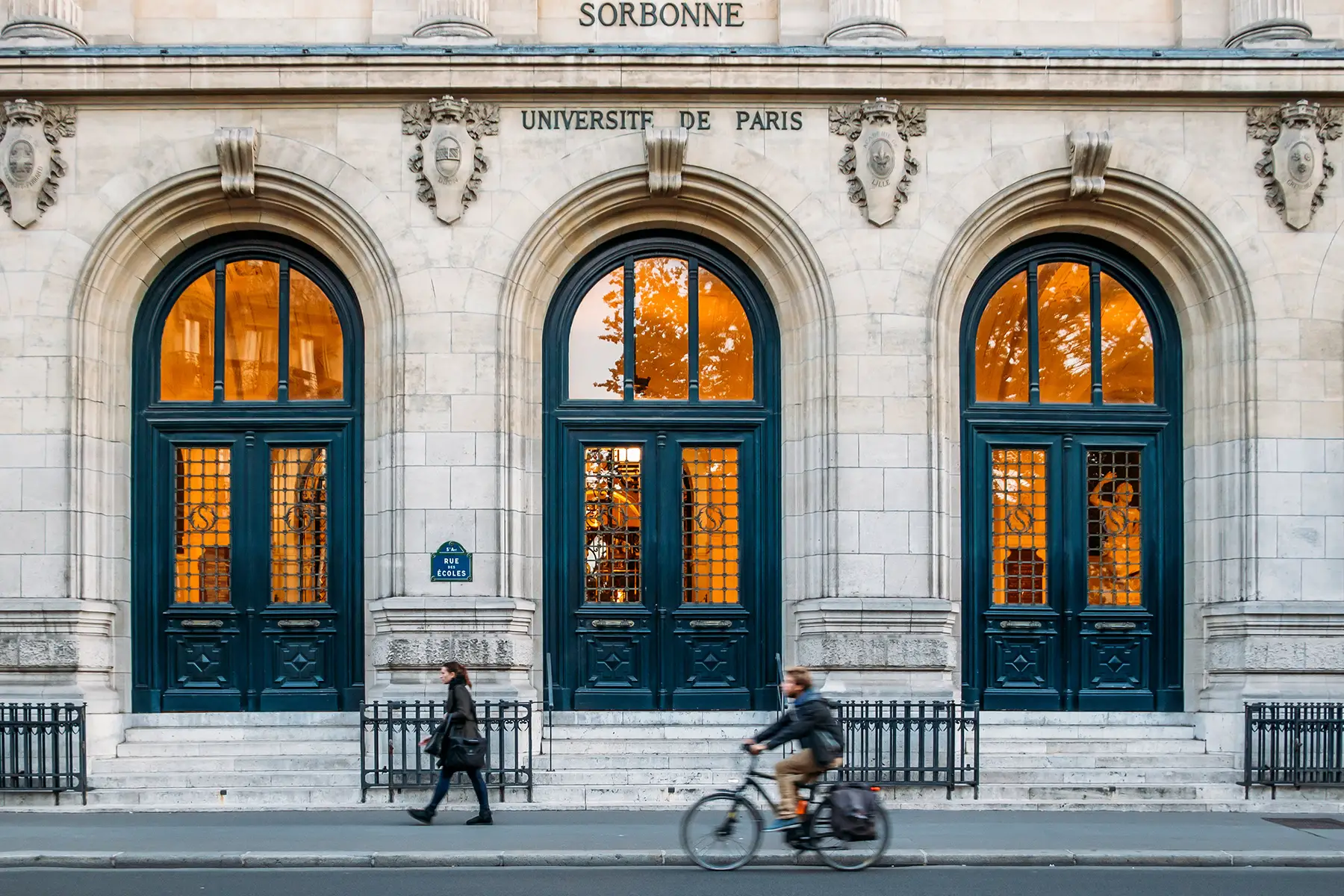
Sorbonne University is comprised of three large faculties: Arts and Humanities, Science and Engineering, and Medicine. In terms of ranking, the QS World University Ranking places it 14th for natural science and 23rd for arts and humanities. Across all faculties, 21% of students at Sorbonne University are international. It also has a high ratio of female to male students – 59:41.
Institut Polytechnique de Paris
The Institut Polytechnique de Paris (IP Paris) is a public higher education and research institution located on the outskirts of Paris at the Plateau de Saclay. This is considered a science and business hub, sometimes referred to as the “French Silicon Valley.”
IP Paris brings together five engineering graduate schools, part of the elite grandes écoles:
- École Polytechnique – also known simply as X, this historical institution was set up in 1794, with strong links to the military. These days, it trains high-level business leaders and entrepreneurs through a focus on scientific excellence, innovation, and a humanist tradition that includes sustainable development.
- ENSTA Paris – a school set up in 1741 to train multidisciplinary engineers.
- ENSAE Paris – a school dating back 80 years that teaches applied mathematics, statistics, and economics.
- Télécom Paris – attached to the Ministry of Industry, this school specializes in digital services and electronic communications.
- Télécom SudParis – an engineering school specializing in digital sciences and technologies. Its approach relies heavily on group projects, innovation, and entrepreneurship. It has two campuses, both south of Paris.
Around 8,500 students join IP Paris each year, and 41% are international. There is, however, a very low ratio of female to male students (24:76) and a highly selective admissions process.

Alongside Master’s and Ph.D. programs, the IP schools also offer Cycle Ingénieur programs. These are three or four-year engineering diploma programs, the equivalent of a specialized Bachelor’s degree. They include a grounding in management, law, economics, and social sciences, as well as interactions with laboratories and corporate settings. International students with at least two years of undergraduate studies can access it through a highly selective exam.
French specialist universities
Below is a brief and non-exhaustive list of some of the best-regarded faculties and schools for specialist studies.
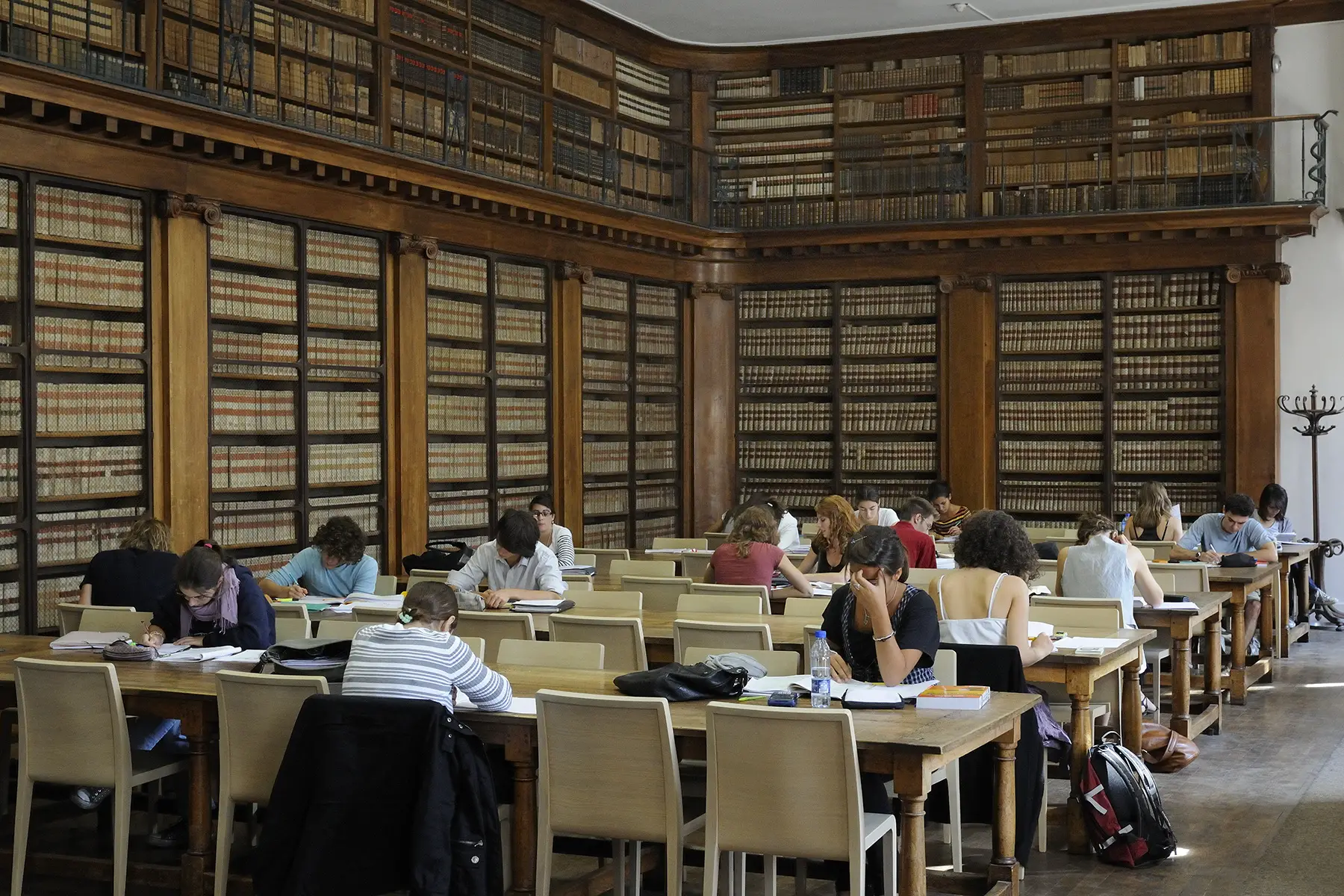
While business schools and art schools are often dedicated institutions, subject areas such as law, political sciences, and medicine are mostly taught in a faculty within multidisciplinary universities.
Medical schools in France
- Montpellier-Nîmes University Medical Faculty
- Aix-Marseille University Medical Faculty
- Lyon 1 University Medical Faculty
- Paris Sorbonne University Medical Faculty
- Paris Cité University Medical Faculty
- Nantes University Medical Faculty
French business schools
- HEC Paris: south of Paris in Jouy-en-Josas
- ESSEC: northwest of Paris in Cergy-Pontoise
- ESCP: central Paris
- EDHEC: Nice, Lille, and central Paris
- EM-LYON: northwest of Lyon in Écully
- SKEMA: Lille, Sophia Antipolis (French Riviera) and Paris
If you’re up for traveling, there are also great business universities across the border in Switzerland. The University of St. Gallen, for example, offers bachelor’s, master’s, and doctoral degrees in law, business, and more.
Law and political sciences schools in France
- Paris: Université Paris 1 Panthéon-Sorbonne, Sciences Po Law School, Université Paris 2 Panthéon-Assas, Université Paris PSL
- Southern France: Aix-Marseille University, Montpellier University
- Eastern France: Strasbourg University
- Western France: Angers University, Bordeaux University
- Northern France: Université d’Artois
- Central France: Université d’Orléans, Univeristé de Limoges
French architecture schools
- Paris: ENSA Paris-Belleville, ENSA Paris-Malaquais, ENSA Versailles
- Southern France: ENSA Montpellier, ENSA Toulouse
- Eastern France: ENSA Lyon, ENSAS Strasbourg
- Western France: ENSAP Bordeaux, ENSA Nantes
- Northern France: ENSAP Lille
Art and design schools in France
- ENSCI: a school in central Paris focused on industrial design.
- ENSAD: located in Paris’ 5th arrondissement, this design school was previously known as Arts-Déco and offers 10 design specializations.
- ENSBA: also known as Beaux-Arts Paris, this is a Fine Arts school a hop away from the Seine in central Paris.
- EAS: Panthéon-Sorbonne University has its own art school, notably covering fine arts, audiovisual arts, design, and cultural management.
- ETPA: the Toulouse Art School is also well-regarded, especially for disciplines that include photography, graphic arts, and sculpture.
Useful resources
- Campus France – a government-run site with comprehensive information about university courses and funding options
- Ministry of Higher Education and Research – includes information and helpful guides for students
- Etudiant.gouv – dedicated government website for all aspects of student life
- Service-Public – general information on work and residence permits



Did you find this guide helpful?