
'%20id='ico-down'%20stroke='%23000000'%20stroke-width='1.5'%3e%3cg%20transform='translate(1092.250000,%20254.750000)'%3e%3cpolyline%20id='Path-2-Copy-4'%20transform='translate(5.500000,%202.750000)%20scale(1,%20-1)%20rotate(-180.000000)%20translate(-5.500000,%20-2.750000)%20'%20points='0%200%205.5%205.5%2011%200'%3e%3c/polyline%3e%3c/g%3e%3c/g%3e%3c/g%3e%3c/svg%3e)


Working
Labor Law
Annual leave in Belgium: vacation days & holiday pay
If your Belgian annual leave balance doesn’t match what you expected, you aren’t alone. Belgium ties your paid time off to the work pattern you completed in the prior calendar year, a setup that often catches new expats off guard.


Here is how statutory vacation days are calculated, how holiday pay works on your payslip, and how public holidays fit in.
Key takeaways
- The statutory baseline for employees is four weeks of paid annual leave under their working pattern, usually 20 days on a five-day week or 24 on a six-day week.
- First-year workers and newcomers may not start with a full ordinary entitlement because Belgium looks at work done in the previous holiday year.
- Supplementary or European holidays may help some workers reach four weeks, but conditions and later pay effects apply.
- Public holidays are separate from annual leave. Belgium has 10 statutory public holidays, and substitute-day rules can matter.
- Holiday pay in Belgium can look different depending on your worker category, sector, and employer setup, so check your payslip, contract, and HR policy before assuming an error.
How annual leave works in Belgium
Annual leave is your paid vacation time as an employee. It sits within broader worker-rights rules, but it is not the same as public holidays, sick leave, maternity or parental leave, or other special leave.
Belgium’s system can feel technical because the legal baseline, your work pattern, and sector or employer extras can all shape the final result. So two colleagues at the same company can have different balances on day one.
- The national starting point is a four-week annual leave principle.
- Your entitlement is linked to your work pattern when you take the leave.
- Part-time workers also have paid leave, which is calculated based on their schedule.
- Collective agreements and employer policy can add more generous terms.
To get oriented, look first at your contract, leave policy, latest payslip, and any joint committee reference. After that, ask HR or payroll how your balance was calculated.

How many vacation days you may get
In Belgium, the statutory baseline is often shown as 20 days on a five-day schedule or 24 days on a six-day schedule. Both point to the same four-week principle.
The published number is only the starting point. Actual annual leave entitlement in Belgium can shift with prior work history, equivalent days, part-time status, and any better sector or contract terms.
| Situation | Usual expression | What it means in practice | What can change it |
|---|---|---|---|
| Full-time, five-day week | 20 days | Four weeks of leave across a five-day schedule | Prior work history, sector extras |
| Full-time, six-day week | 24 days | The same four-week principle expressed on a six-day schedule | Prior work history, sector extras |
| Part-time work | Pro-rated balance | Leave follows your actual work pattern | Hour changes, contract percentage |
| Contract or sector extras | More than the baseline | Some employers or agreements add days | Joint committee rules, employer policy |
Example: If you start a Belgian job in July, or move from 60% hours to full-time, your leave may be pro-rated or supplemented rather than showing as a full annual balance straight away.

What changes for new arrivals and first-year workers
For newcomers, the first year is where confusion usually peaks. Ordinary paid holidays are generally linked to work done in the previous year, so a recent arrival or someone returning to work may not begin with a full standard balance.
European holidays, also called supplementary leave in Belgium, can fill part of that gap for some workers. They help some employees reach up to four weeks, but the pay treatment matters because it can affect future double holiday pay.
- Previous-year work in Belgium, abroad, or not at all
- Any ordinary statutory leave already available
- The minimum current-year work period for supplementary leave
- Hour increases after a move from part-time to full-time
- Whether youth or senior holiday schemes apply instead

Editor in Belgium
Tarah Ren
Insider tip
A Belgian contract does not automatically mean a full year of paid leave from day one. If you started mid-year, ask HR to show you the calculation behind your opening balance.
How holiday pay works
Holiday pay in Belgium can confuse newcomers because it does not always appear as one neat vacation payment. Depending on your worker category and employer setup, you may see regular salary during leave, a separate holiday allowance line, or a payment handled through a holiday fund.
If a holiday-related line looks unfamiliar, read the label before the total. The wording on the payslip, the way your leave is administered, and any supplementary leave arrangement usually explain whether it is statutory pay, an employer extra, or a timing difference.
Keep these common payslip terms in mind when reviewing your monthly breakdown:
- Holiday pay or holiday allowance: Pay linked to annual leave, sometimes split across more than one line
- Pécule de vacances: French term for holiday pay or holiday allowance
- Vakantiegeld: Dutch term for holiday pay or holiday allowance
- Double holiday pay: Extra holiday-related pay some employees see, which may be reduced later if European holidays were taken
If the amount still looks off, compare the payslip label with your HR documents and ask who is responsible for paying that element.

What to look for on your contract and payslip
If the paperwork is not in plain English, focus on the labels before the totals. Your work schedule, worker category, and collective agreement reference usually explain more than the raw number on its own.
Key details to verify on your contract and monthly payslips include:
- Leave balance or holiday-year reference
- Pécule de vacances, vakantiegeld, or other holiday-pay labels
- Full-time or part-time status, including recent hour changes
- Joint committee or collective agreement reference
- Whether a holiday fund is mentioned
- Employer leave-policy wording on booking or timing
Manage your money seamlessly with Wise on vacation
Planning a trip home or traveling abroad during your annual leave? With a Wise multi-currency account, you can hold EUR and spend in over 40 currencies at the mid-market exchange rate. Avoid hidden foreign transaction fees and send money internationally with ease.

No commitment required
How public holidays and other leave affect your annual leave
Public holidays, sick leave, and parental leave are easy to blur together when you are new to the system. They are handled under different rules, and they can come with different proof, pay, or notice requirements.
Not every day away from work should be booked as vacation. If you are off because of illness, family care, or a parental leave arrangement, check how the absence was recorded before you judge your annual balance.
| Leave type | What it covers | Uses your annual leave balance? | Usual pay or handling route |
|---|---|---|---|
| Annual leave | Planned vacation time | Yes | Employer and holiday-pay rules |
| Public holidays | Statutory national holidays | No | Paid as a public holiday |
| Sick leave | Absence due to illness or accident | No | Employer first, then health insurance rules may apply |
| Parental or thematic leave | Childcare or family-care arrangements | No | Separate eligibility and benefit rules apply |

What expats should know about public holidays in Belgium
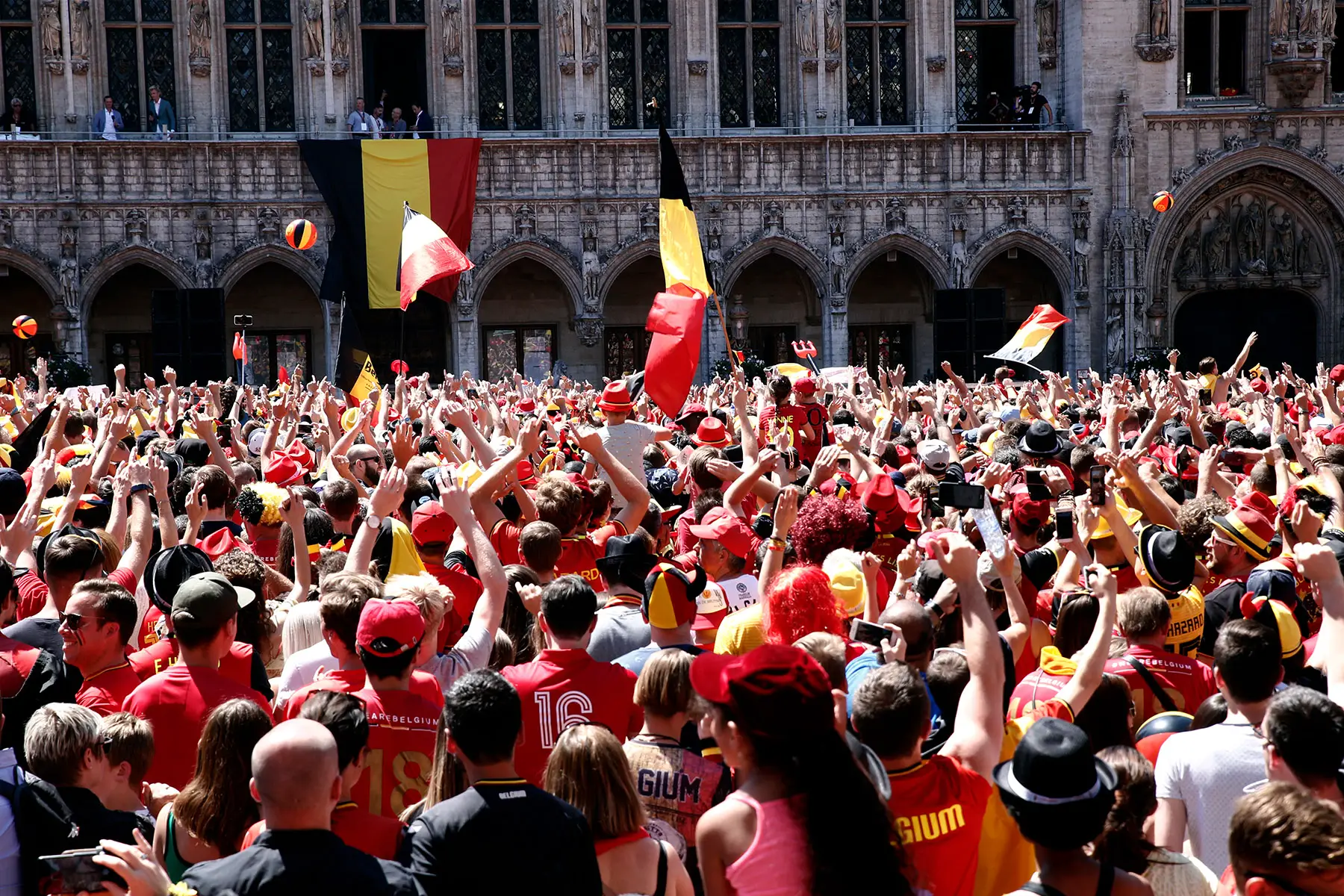
Belgium has 10 statutory public holidays, and they do not come out of your annual leave balance. If one falls on a Sunday or another day your company is normally inactive, a substitute day may need to be set through the company, sector, or relevant joint committee arrangement.
- Public holidays in Belgium should not simply be deducted from your vacation balance
- Company calendars can matter as much as the national list when substitute days are involved
- The full date list sits in the Useful resources section below
If a public holiday lands on a day your workplace is usually closed, check early whether your employer has already assigned a replacement day.
How to check your rights and plan time off as an expat
- Read the paperwork first. Check your contract, leave policy, work pattern, and any joint committee reference before you book time off.
- Ask payroll or HR for the calculation. If the balance looks odd, ask how prior work, part-time status, hour changes, or supplementary leave were treated.
- Check the official explanation. Use FPS Employment and other official or quasi-official Belgian guidance to confirm whether the rule is national or affected by your status.
- Escalate carefully if something looks wrong. Ask for the legal or policy basis, then speak to a trade union representative or the relevant Belgian authority if the explanation still does not make sense.
If you receive salary or holiday pay in EUR and spend part of your leave abroad, a Wise multi-currency account can be useful for holding EUR and paying in another currency. Wise transfers can also help if you move money between Belgian and home-country accounts during trips home.

Key Belgian terms to explain in plain English
- Pécule de vacances: Holiday pay or holiday allowance in French
- Vakantiegeld: Holiday pay or holiday allowance in Dutch
- Mutuelle or ziekenfonds: Your health insurance fund
- Joint committee: The sector bargaining body that can affect rules such as extra leave or substitute-day arrangements
FAQ
Frequently asked questions about annual leave in Belgium
How many vacation days do employees get in Belgium? 
For many employees, vacation days in Belgium work out to four weeks a year, often expressed as 20 days on a five-day schedule or 24 on a six-day schedule. Your actual balance can differ if you are part-time, new to Belgium, or did not build a full entitlement in the previous work year.
Do public holidays count as annual leave in Belgium?
No. Public holidays and annual leave are separate categories, so they should not simply come off your vacation balance. If a public holiday falls on a day your company is normally closed, check whether a substitute day has been set under company or sector rules.
What are European or supplementary holidays in Belgium?
Supplementary leave in Belgium can help some workers reach up to four weeks of time off when they do not yet have a full ordinary entitlement. This often matters for newcomers, returners to work, or people who increased their hours, but you should check the current eligibility rules before relying on it.
What is holiday pay in Belgium?
Holiday pay in Belgium usually means the pay linked to your annual leave, sometimes plus a separate holiday allowance. On Belgian paperwork, you may see pécule de vacances or vakantiegeld, and the timing or payment route can differ by worker category.
Can you carry over annual leave in Belgium?
Do not assume you can. Belgian annual leave is generally meant to be taken within the holiday year, although protected situations and specific rules can affect what happens if leave could not be taken. Ask HR or check the official guidance before planning around carryover.
Do part-time workers get paid annual leave in Belgium?
Generally, yes. Part-time workers can still receive paid annual leave in Belgium, but the number of days and pay are tied to their work pattern and qualifying history rather than a full-time schedule. That is why a part-time balance often looks smaller even when the right itself remains intact.
Useful resources
Information checked 15th September 2026
- Federal Public Service Employment, Labour and Social Dialogue: Minimum paid annual holidays: Best starting point for the statutory baseline.
- Federal Public Service Employment, Labour and Social Dialogue: Public holidays: Use this for the official holiday list and substitute-day rules.
- Settling in Belgium: Leave: Helpful expat-facing overview of leave categories and first-year issues.
- Commissioner Brussels: Paid Leave: Clear English-language explainer on holiday allowance and European holidays.
- ONEM/RVA: Primary source for parental and thematic leave questions.
- Expatica: Belgian employment law and labor rights: Broader internal context on worker protections.
- Expatica: Public holidays in Belgium: Full internal calendar without crowding this guide.


Did you find this guide helpful?