
'%20id='ico-down'%20stroke='%23000000'%20stroke-width='1.5'%3e%3cg%20transform='translate(1092.250000,%20254.750000)'%3e%3cpolyline%20id='Path-2-Copy-4'%20transform='translate(5.500000,%202.750000)%20scale(1,%20-1)%20rotate(-180.000000)%20translate(-5.500000,%20-2.750000)%20'%20points='0%200%205.5%205.5%2011%200'%3e%3c/polyline%3e%3c/g%3e%3c/g%3e%3c/g%3e%3c/svg%3e)


Living
Transportation
Public transportation in Belgium
Leaving the car at home? Learn everything you need to know about public transportation in Belgium, including trains, buses, trams, and more.

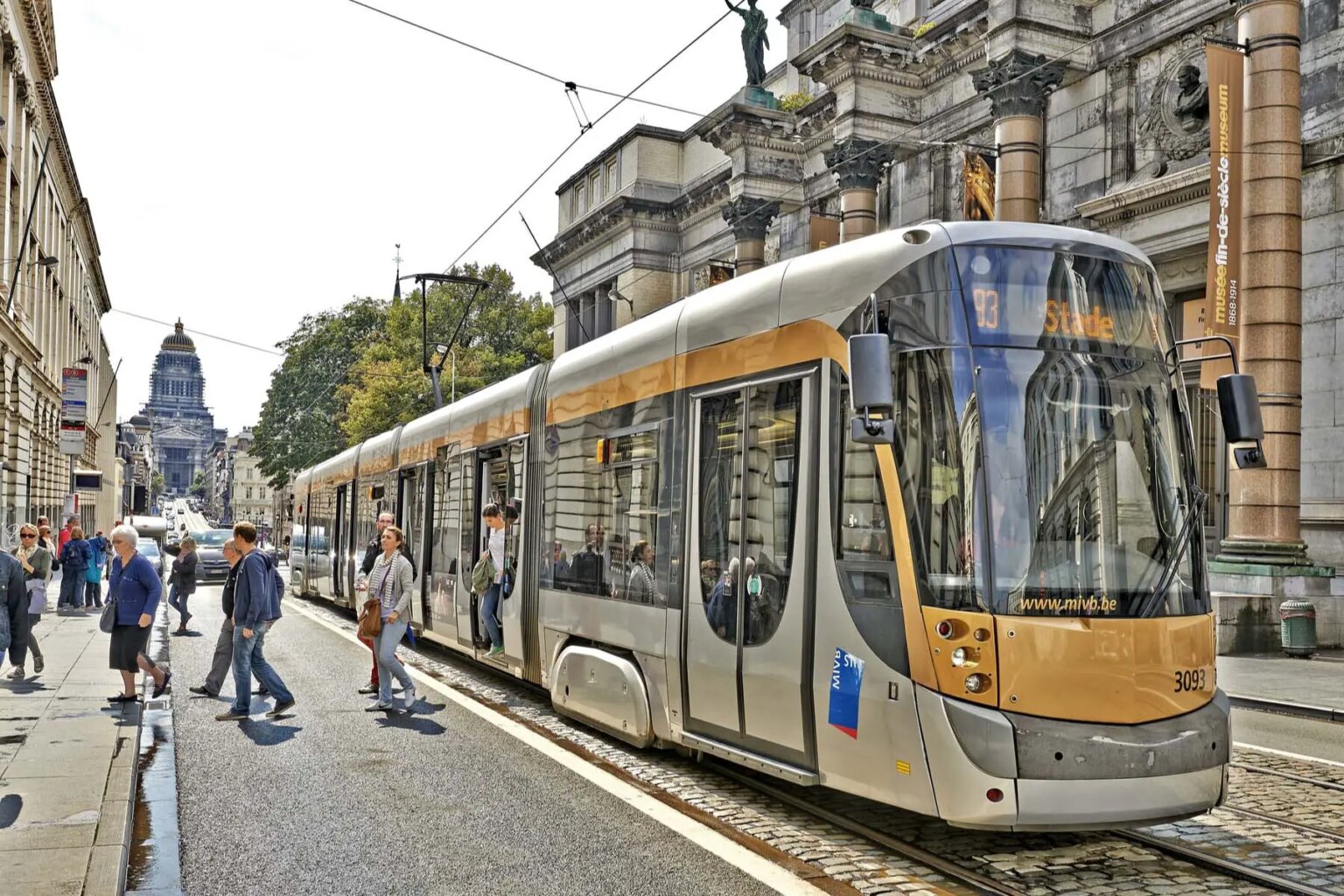
Expats arriving in Belgium will be pleasantly surprised by the quality of the local public transit. As well as a growing cycling network and easy access to some of Europe’s biggest cities, Belgium has a quietly impressive public transport system.
When it comes to getting from A (Antwerp) to B (Brussels), Belgium has you covered. To help you on your way, our guide to public transport in Belgium includes the following information:
Omio
Want to fly away from it all? Or maybe you're looking for a family adventure by train? Wherever you're going, Omio can help you find the best deals for your journey. This one-stop shop lets you compare a range of transport modes, explore new destinations, and buy tickets at the touch of a button. Wherever adventure takes you, get there with Omio.

Introduction to public transportation in Belgium
Belgium has an excellent public transport network, offering accessible and efficient travel across the country. This makes moving around Belgium without a car relatively straightforward, whether you’re commuting, vacationing, or seeing friends and loved ones in other regions.
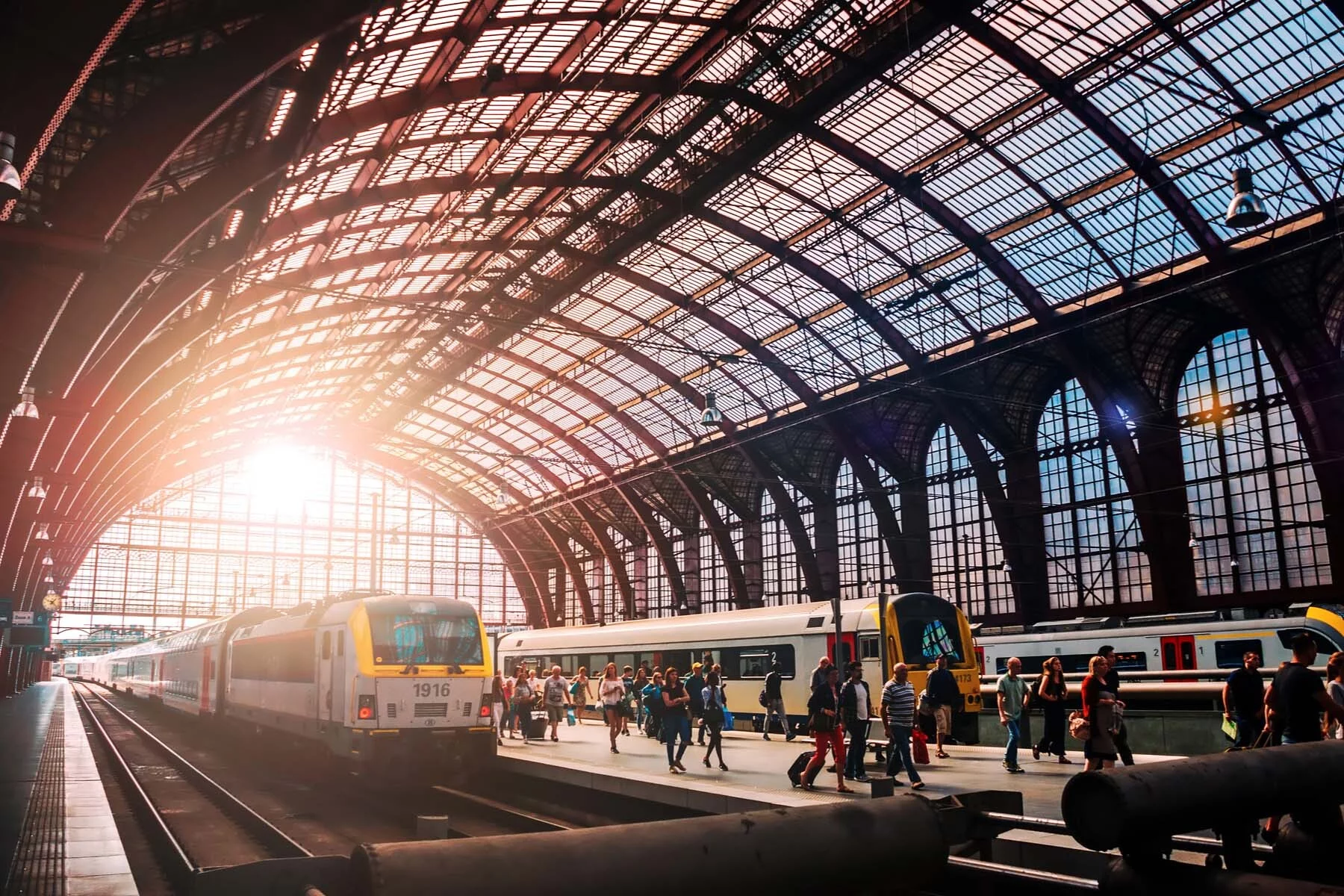
There are four public transport operators in Belgium. All public trains in the country are operated by SNCB/NMBS (Dutch: Nationale Maatschappij der Belgische Spoorwegen, French: Société nationale des chemins de fer Belges). For buses, trams, and metro trains, operations are split regionally:
However, regardless of where you are or how you travel, you will always be able to use your MoBIB card for payment. Should you buy individual tickets at a station or from a bus driver, you may need to buy another ticket if you want to change to a service run by a different operator.
MoBIB card
One of the most important things to have when taking public transport in Belgium is a MoBIB card, standing for Mobility in Belgium. Introduced in 2018, the MoBIB card is a payment system that has revolutionized public transport in Belgium. The card operates across the country for all transport options, making it much easier to switch between modes and companies.
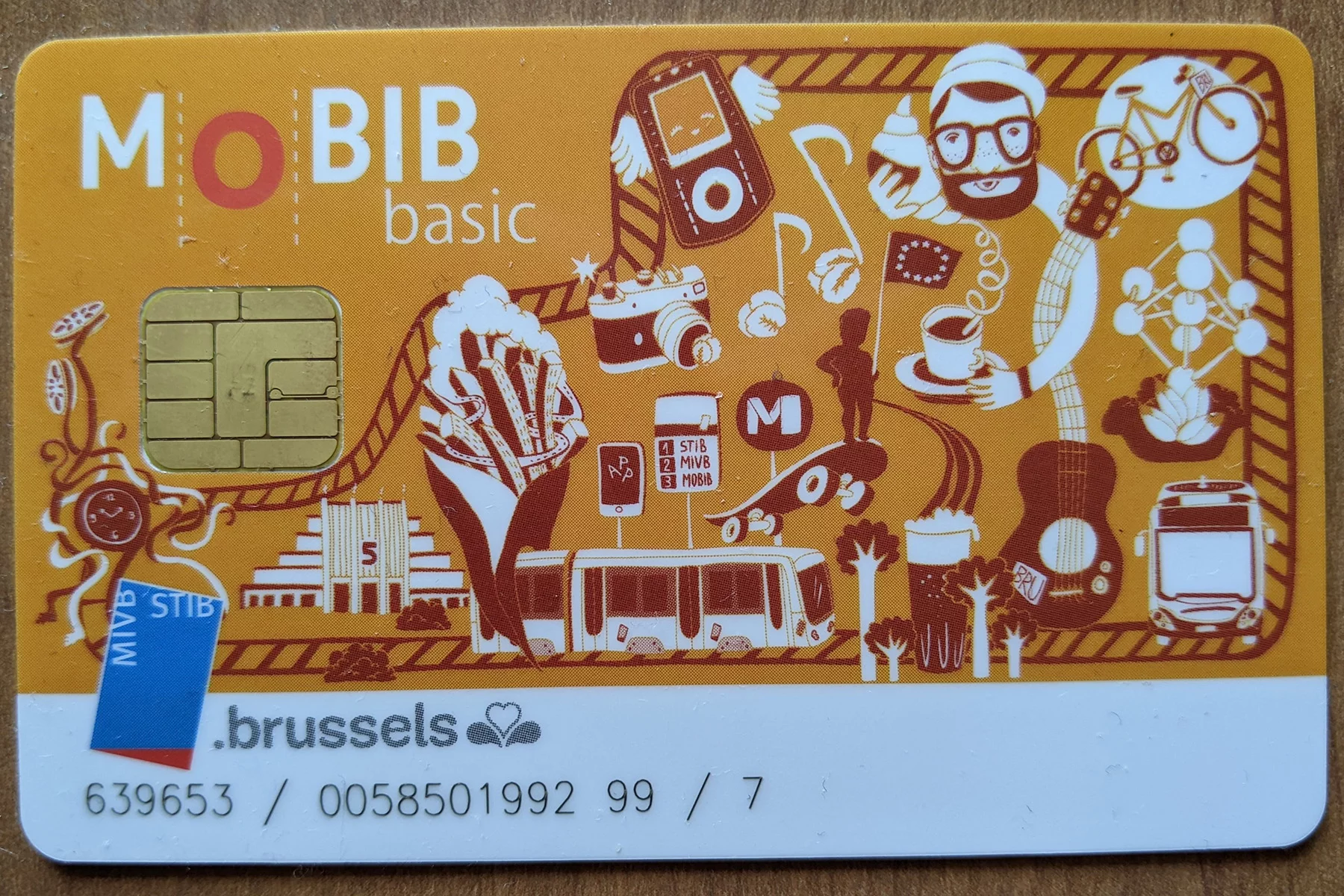
There are two types of MoBIB card: anonymous (basic) and personal. You can buy cards online, at stations, and at certain shops.
From there, you can load several products onto your card, including monthly/annual subscriptions, multi-trip tickets, and more. However, certain products do require a personal MoBIB card.

In addition to trains, trams, and buses, MoBIB cards can be used as payment for car parking, and car- and bike-sharing platforms. This gives you plenty of transportation options across Belgium.
Travel tips for international visitors using public transport
When traveling around Belgium using public transport, managing payments efficiently can save both time and money:
- Consider using a Wise card for your public transport payments
- Link your card to your phone’s mobile wallet for convenience where supported
- Keep some cash on hand for smaller cities or rural areas where card payment might not be available
Public transportation apps in Belgium
There is a wide range of Belgian apps to help you organize your journey. Among them are:
- BeTrains helps you plan your train journeys all across Belgium. It offers real-time train information and even a chat option to communicate with anyone else on your train who has the app installed. It is available on Android.
- Whim helps you navigate public transportation in Belgium, from buses, trains, taxis, the metro, and shared bikes. You can also enter your payment information and buy tickets through the app. Whim is available for download on Android and iOS.
- Uber is one of the most downloaded taxi apps in Belgium and operates in Brussels and the surrounding areas. It has the benefit of providing the exact price of your ride before you step foot in the cab. It is available for download on Android and iOS.
- Booking platform Omio allows you to compare different journeys by road, rail, and air. You can buy tickets and sign up for alerts for the best deals.
If you prefer direct sources, you can also download the apps for Belgium’s official public transportation operators. These are the following:
These are available for download on Android or iOS.
Taking the bus in Belgium
Like a lot of other countries, the most common form of public transportation in Belgium is the humble bus. Whether you find yourself disconnected from the train network or simply traveling into the suburban fringes of the larger cities, chances are a bus will be your best bet. Thankfully, buses in Belgium are relatively cheap, accessible, and efficient.
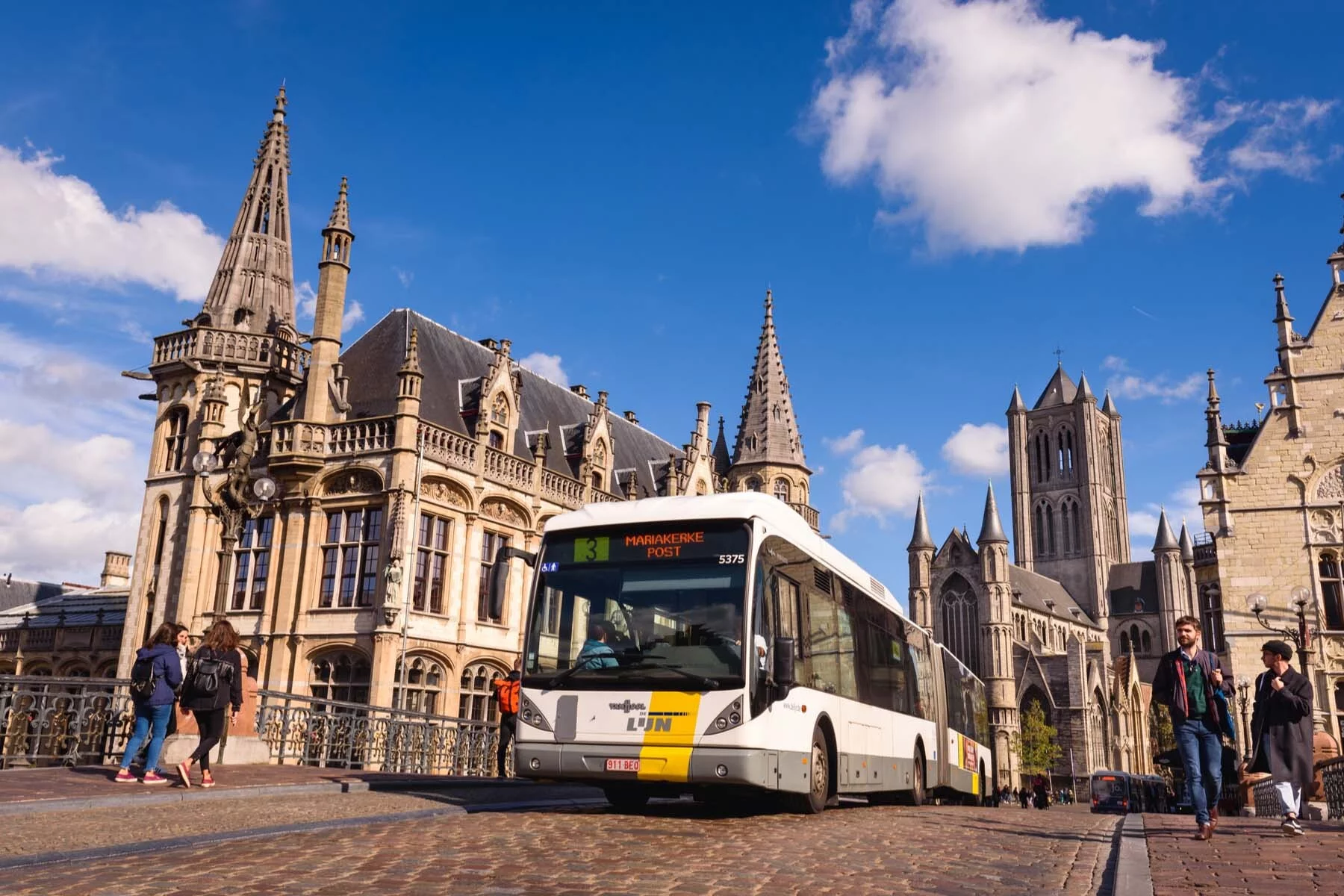
Bus operators vary depending on your region, but you’ll be able to use your MoBIB card throughout the country. If you don’t have a MoBIB card, you can buy a ticket at stations, kiosks, and even on the bus itself, although this is more expensive.
Some buses let you take your bike on board; however, this is not always possible so check ahead before you travel.
An increasing number of buses across the country have free Wi-Fi onboard, allowing you to catch up with any life admin on the go.
Bus tickets and costs in Belgium
Tickets in Belgium come in various forms, each costing a different fare:
- Single ticket: for one journey, this is valid for one hour. In that time, you have access to all bus, tram, and metro modes. You can change these as often as you like.
- Return ticket: available with De Lijn, this ticket grants you two journeys, and thus two hours of valid travel. You can use both journeys on the same day, or over the course of two different days.
- One-day ticket: valid for one day of travel, including travel on Noctis (the night bus).
- 10 journey ticket: grants you 10 journeys, amounting to 10 hours of valid travel.
- 50 journey ticket: available with De Lijn, this ticket grants you 50 trips within three months of your purchase.
With your MoBIB card, you can get a seasonal ticket, lasting between one month to a full year, depending on your region. This card is valid on all buses in Belgium.
Seasonal tickets vary in price, depending on what age the passenger is. Adults 25 years and older pay a standard fare, whereas students and pensioners (65 and over) are eligible for concessionary rates. Children under six years of age, people with visual impairments, and people with disabilities are eligible for a free annual pass.
To find out how much your seasonal ticket will cost, check online on the websites of STIV/MIVB, De Lijn, or TEC.
Bus timetables and maps in Belgium
On weekdays, buses run from as early as 04:30 and usually stop around 00:00. On weekends and public holidays, buses pass at a lower frequency. In rural areas, buses also often stop running early. You can calculate your journey with STIV/MIVB’s timetables and route maps, as well as De Lijn’s journey planner and TEC’s timetable schedule.
Going for a night out in one of Belgium’s larger cities? You can depend on Belgium’s night bus connections, operating on Friday and Saturday nights, to help you get home safely. STIV/MIVB’s Noctis runs from 00:00 to 03:00, passing every 30 minutes. De Lijn’s night buses vary on the weekend, with some lines stopping at 01:00 and others stopping at 03:00. Check their website to see when your last bus will run.
Coach travel in Belgium
Belgium is a compact country, which means everywhere is relatively close to everywhere else. In fact, it’s so compact that you might not consider taking a coach at all to get you between Belgian cities. However, coach travel can offer a cheap alternative to train travel so it might be worth your while to check your options on sites such as Flixbus before you head out on a Belgian weekend getaway.
Coaches will take comfort breaks at rest stops during longer journeys. Here, you can buy refreshments and use the restrooms.

Coach ticket prices vary depending on the distance you are traveling across. To calculate how much your ticket will cost, check with Flixbus.
Coach travel is also a popular choice for those heading out of the country. Regular coach services to the United Kingdom, France, Germany, and beyond operate from Belgium. These are often cheaper than train tickets and offer a more environmentally-friendly option for air travel.
Wise card
Are you visiting or thinking of moving to Belgium? Managing your money across borders shouldn’t be complicated. With the Wise debit card, you can spend in Belgium and in 150 other countries, while holding over 40 currencies. Whether you need to spend, receive or send money abroad, Wise can help make international money management simpler.
Traveling by metro in Belgium
In Belgium, traveling by metro can only mean one thing: you’re in Brussels. The country’s solitary metro network has four standard metro lines and a further three premetro lines, which are similar to tram lines. In total, the integrated network has 59 stations across seven lines, stretching from the city center out to the suburbs. Charleroi also has a “metro” system, although this consists only of premetro and tram lines.
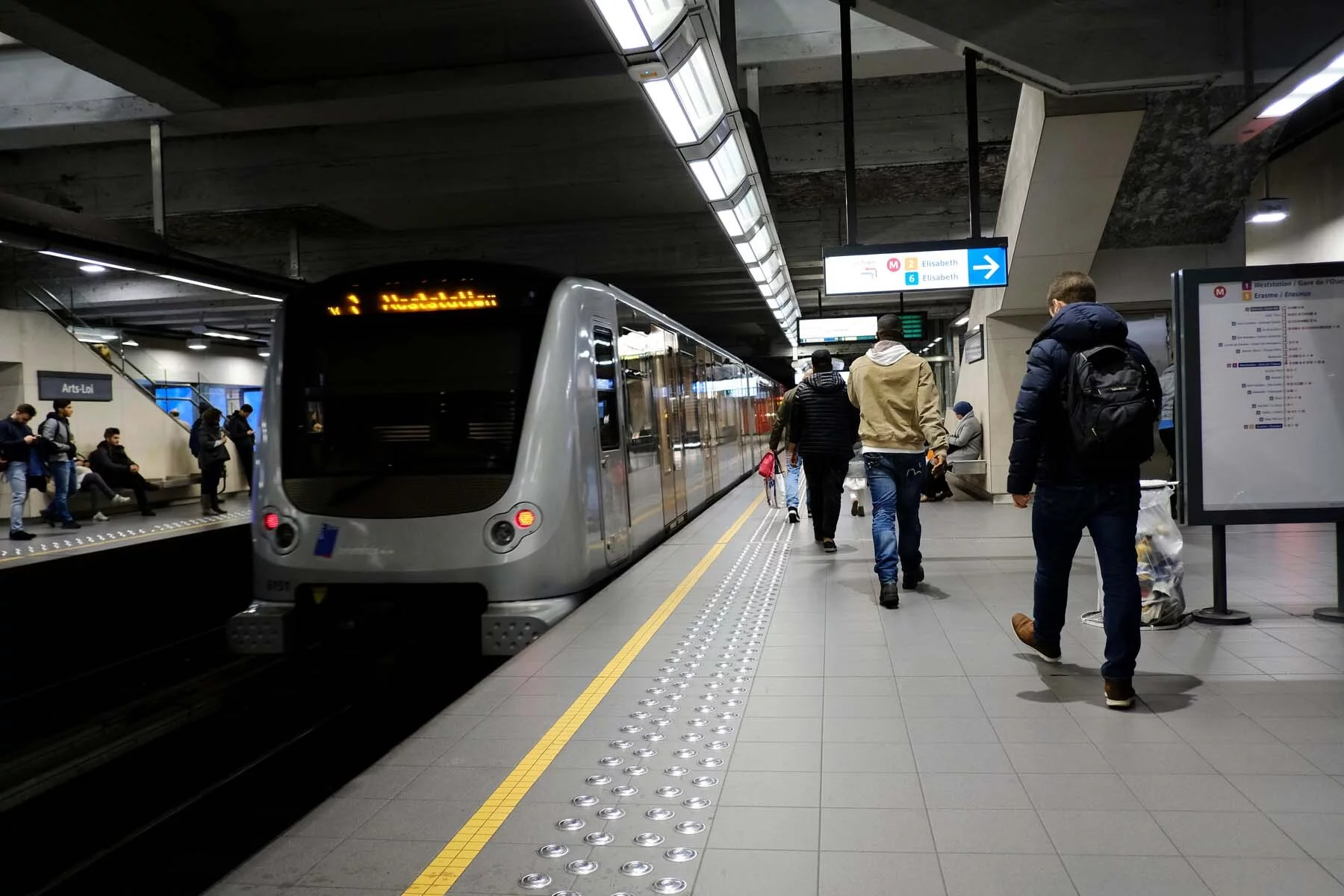
The Brussels Metro is operated by STIB/MIVB, and you can use your MoBIB card throughout the network. As is the case with the bus, a valid metro ticket will grant you 60 minutes of travel. You can use this ticket on other transport modes within the city.
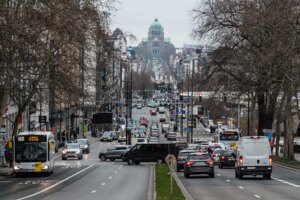
Brussels can get very congested with road traffic, so the metro is a great alternative for getting across the city center quickly.
Metro tickets and costs in Belgium
Metro tickets cost the same as bus tickets from STIB/MIVB. You can either use your MoBIB card to validate your entry to the metro, or else you can buy a paper ticket. You can choose from a single or a multi-trip paper ticket. These are slightly more expensive than tickets on your MoBIB card.
You can pay for metro tickets with a contactless card on the metro, at a GO vending machine for a paper ticket, from one of STIB/MIVB’s partner selling points, or a STIB/MIVB KIOSK or BOOTIK.
Metro timetables and maps in Belgium
The metro runs from around 05:00 to around 00:30 on weekdays. On weekends and school holidays, it runs from around 06:00 to 00:00.
If you are unsure when the metro departs, check out the STIB/MIVB journey planner.
For more visually-minded travelers, STIV/MIVB also offers a network map of the Brussels Metro system.
Train travel in Belgium
Belgium has a dense railway network, making trains the quickest and most efficient way to travel between towns and cities. As well as helping you explore Belgium, the stations themselves are well worth checking out. The impressive Liège-Guillemins is a sweeping statement of modern architecture, while the eclectic Antwerpen Centraal is one of the world’s finest railway stations.
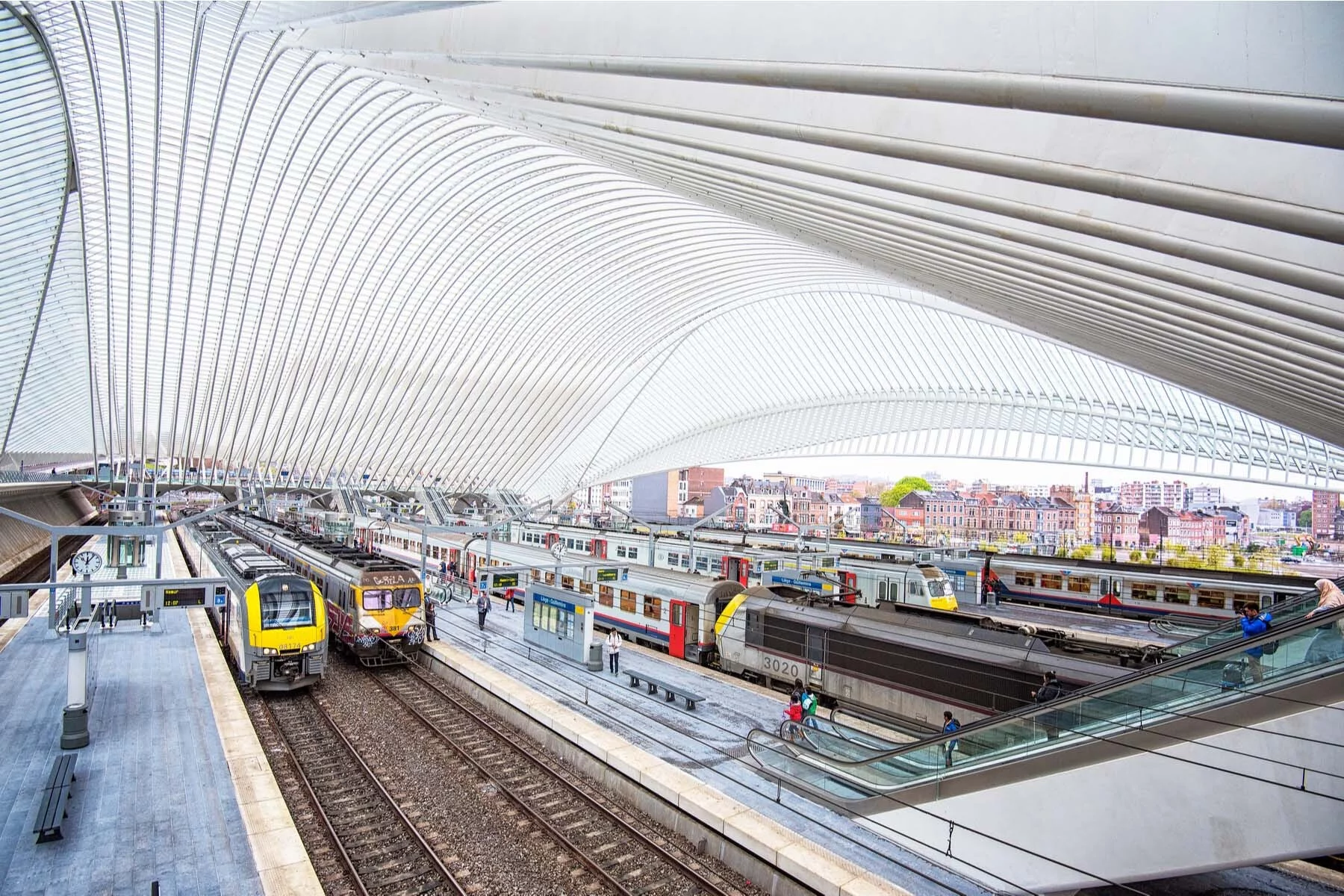
All public trains across the country are run by the state-owned operator, SNCB/NMBS.
You can also use your MoBIB card to travel, which you can load with season tickets should you use the train for commuting.
Pets and bikes are allowed on most routes; however, you may need to buy a surcharge ticket to get them on board.
Train tickets and costs in Belgium
You can buy your train tickets either by buying a seasonal ticket for your MoBIB card (personal or basic), or else buy a stand-alone ticket from the station.
Season tickets for your MoBIB card vary, depending on the type of ticket you wish to buy and the distance traveled. For working adults, it is possible to buy a standard season ticket if you go into the office regularly, or else a half-time season ticket if you work part-time or have a hybrid work situation.
Students are also eligible for a discount of 80% with season tickets tailored just for them. Tickets are available to students under the age of 26 who are either traveling to school every day, or two or three times a week.
Alternatively, if you do not wish to buy a season ticket, you can also purchase a single journey ticket or a Multi (multi-journey) ticket.
Concessions are available for the following groups:
- Seniors: elderly over the age of 65.
- Low-income passengers: you can only benefit from this discount if have a Preferential Reimbursement Discount Card, which you can apply for at the ticket office of your station. Those with higher-rate health benefits are also entitled to this discount.
- Large families: for families with up to three children under the age of 15. Children under 12 can travel free of charge.
- Military members: members of the military, as well as chaplains, reserve officers, and reserve NCOs.
- Journalists: for trainee and professional journalists.
- Jobseekers: for commutes to job interviews.
- Mothers-to-be: pregnant women in their third trimester can sit in first-class for no additional fee.
- Children under 12: can travel for free on Belgian trains with no ticket required.
Train timetables and maps in Belgium
Trains in Belgium start running from as early as 04:00 and generally stop running at around 00:00. During the weekend, trains usually pass at a lower frequency. Check SNCB’s journey planner to see when your train will pass.
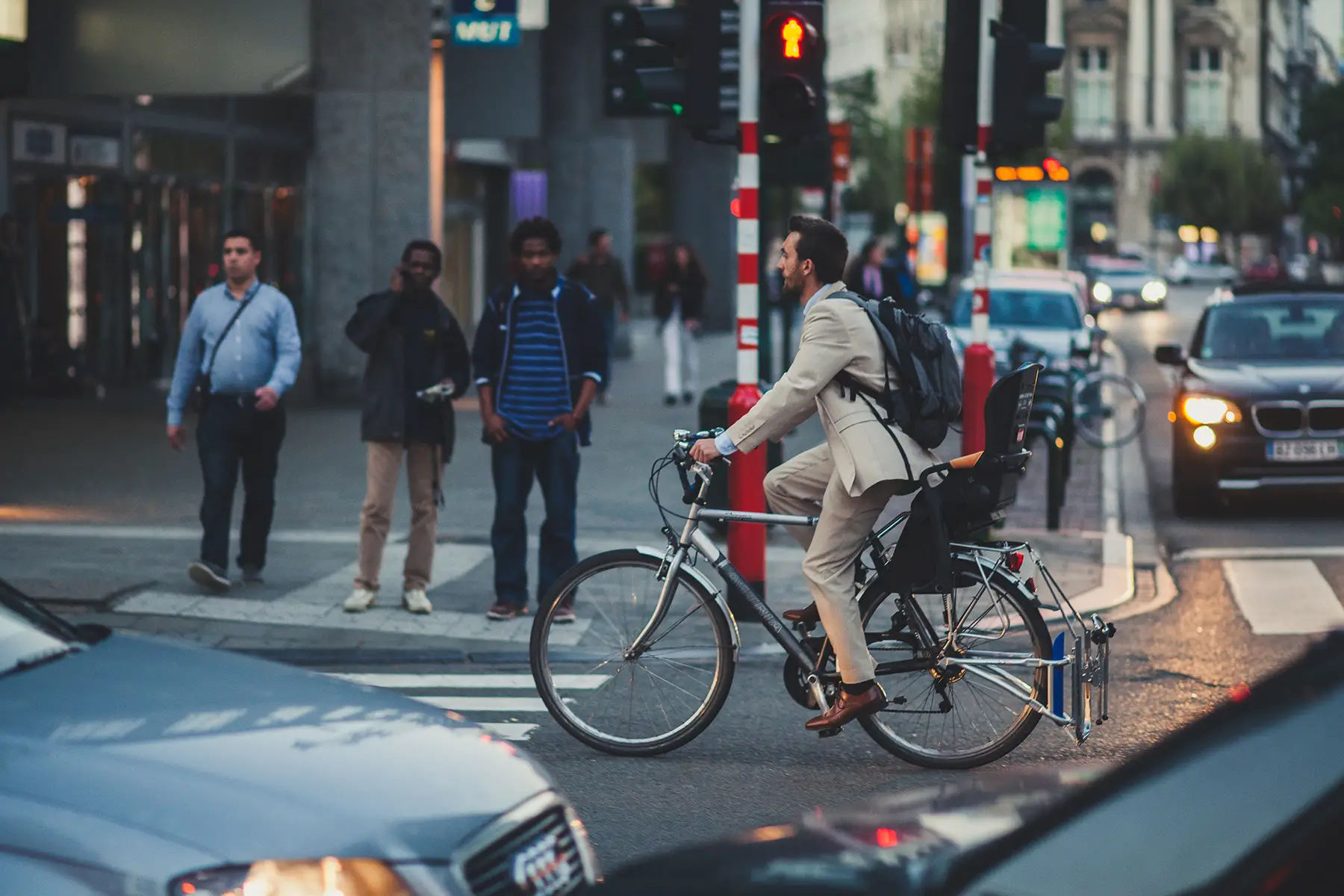
Timetables are available on SNCB’s website or the SNCB/NMBS app. You can also use their handy tool to create your own personalized timetable, with routes and times that suit you best.
You can also download a network map of all of SNCB’s train lines.
International trains in Belgium
Looking for a break away from Belgium? SNCB International has a wide variety of trains traveling to great destinations across Europe, including Paris, London, Amsterdam, Luxembourg City, and Rome.
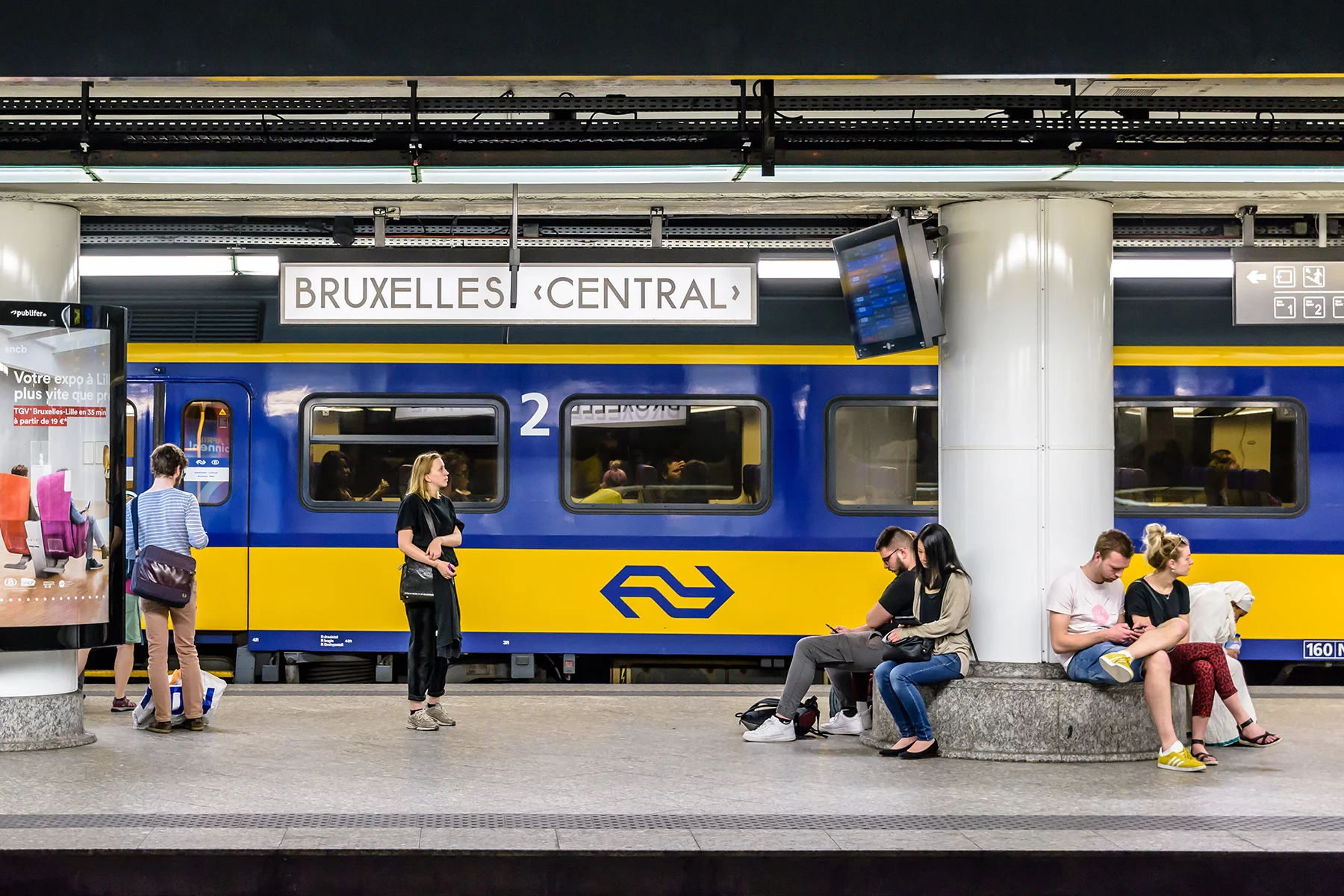
Ticket prices range depending on your destination and when you catch your train, with weekend journeys costing more than mid-week journeys. You can calculate the price of your ticket online.
The most popular stations that international trains pass through in Belgium are Brussels Midi/Zuid, Brussels Centraal, and Antwerpen Centraal.
Traveling by tram in Belgium
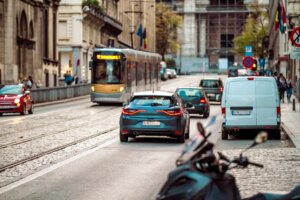
Trams are a great means of public transportation in Belgium, offering quick and efficient travel with an ever-changing view of the city.
Belgium has five tram systems in operation today:
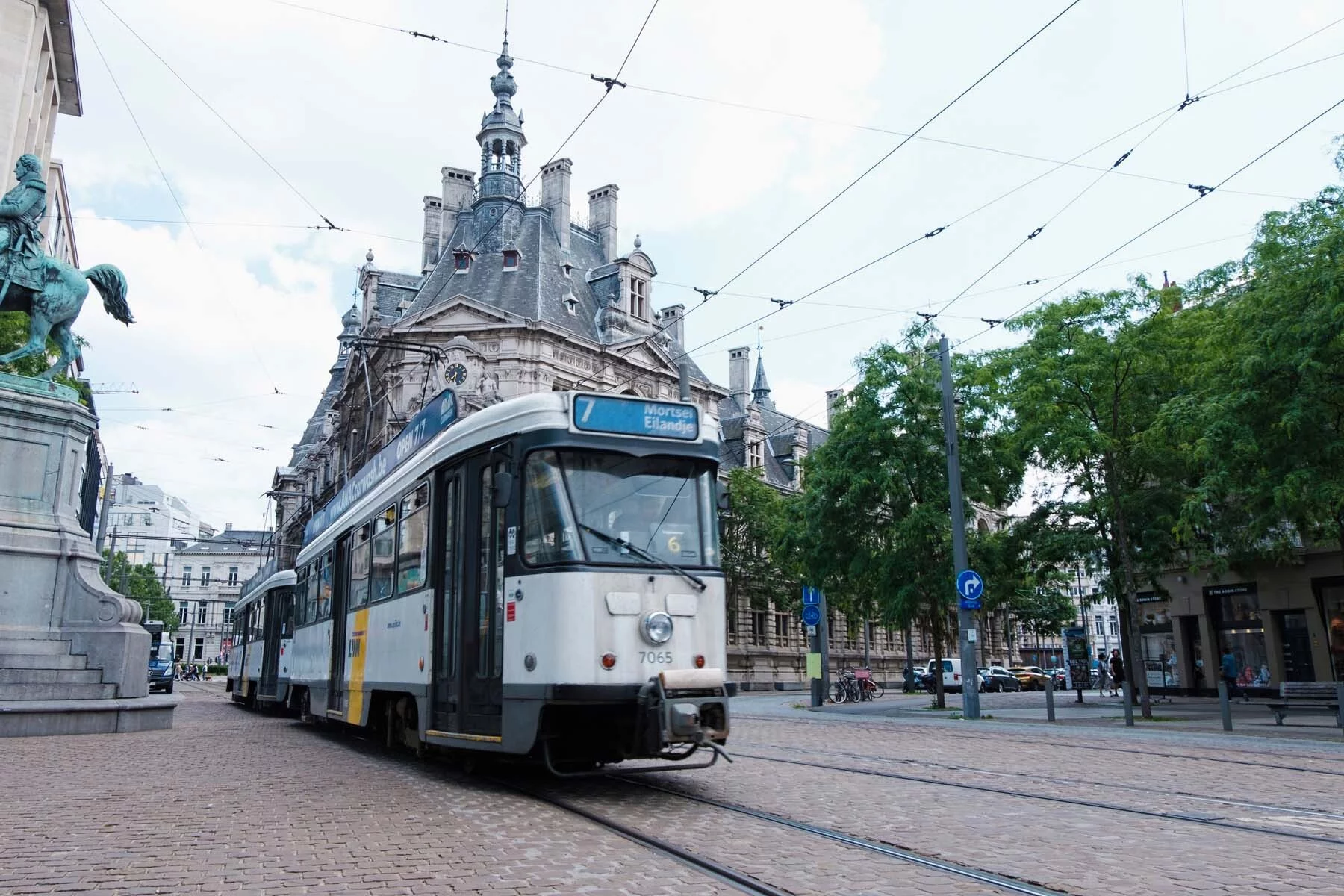
An additional sixth tram system exists in Han-sur-Lesse, operating on a popular tourist route.
Trams in Belgium are run by the respective regional transport operators: De Lijn (Flanders), STIB/MIVB (Brussels), and TEC (Wallonia).
Tram tickets and costs in Belgium
Tram tickets cost the same amount as bus tickets in Belgium. Your tram ticket can be paid for with your MoBIB card, which can be used across the country’s tram networks.
If you do not hold a MoBIB card, you can always buy single or multi-trip tickets for the tram. Check with De Lijn, STIB/MIVB, and TEC for tram ticket prices. Tickets can be bought on the tram with your contactless card, or else from ticket vending machines at your tram station. A single ticket is valid for 60 minutes and can be used in conjunction with other transport modes.
De Lijn operates the Kusttram and single tickets are equivalent to the price of a single journey ticket in the city. Day passes are also available for those wishing to explore the coast at greater length.
Taking a taxi in Belgium
In towns and cities, you’ll find taxi ranks near prominent attractions, as well as stations and ports. Taxis are generally black with a yellow and black checkered pattern on the side. You can approach or hail these on the street.
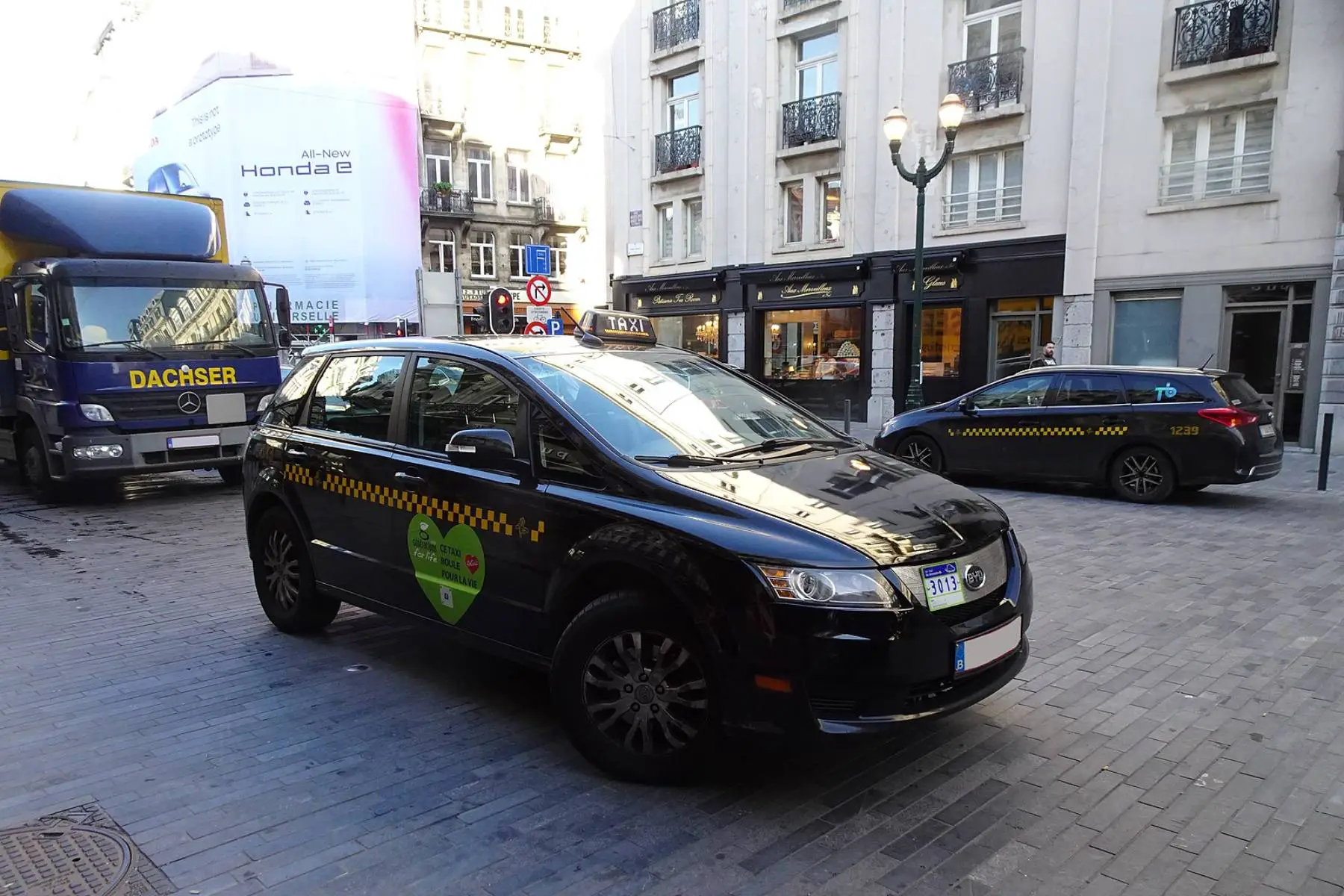
Uber – a popular ride-sharing app – operates in Brussels, although its radius of operation also includes the southern cities of Mons and Charleroi.
Taxis typically charge a set fare plus a certain amount per kilometer traveled. This cost per kilometer varies between urban and rural areas and there is a supplement for night-time travel. Tipping is not expected, although travelers often round up to the nearest euro.
With Uber, you can see how much your ride costs on your smartphone before you step foot in the taxi. Prices vary depending on what sort of car you choose, as well as the distance of your journey.
Taxi drivers are legally required to provide you with a receipt. On this receipt, you should find the driver’s ID number, which you can use should you need to complain or inquire about lost property.
Airports in Belgium
Flying into your new life in Belgium? The country has five airports:
- Antwerp International Airport
- Brussels Airport
- Brussels South Charleroi Airport
- Liège Airport
- Oostend-Bruges International Airport
These airports in Belgium serve a wide range of destinations and all have public transportation and taxi connections.
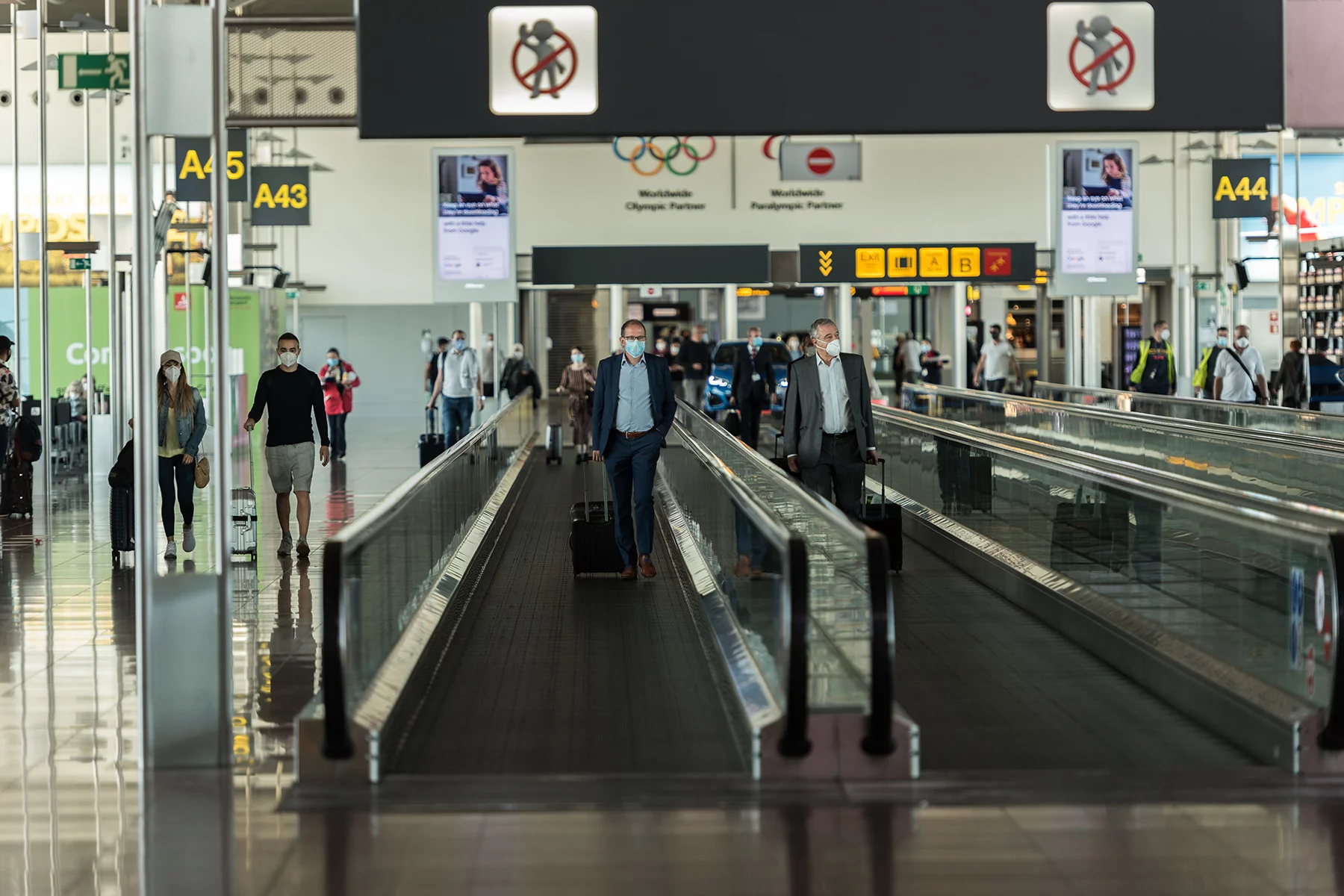
The largest of Belgium’s airports is Brussels (also known as Brussels-Zaventem and Brussels-National). Some notable airlines that travel through Brussels are Lufthansa, Brussels Airlines, United Airlines, and KLM. Brussels Airport is also a hub for flights to major African destinations, including Abidjan, Accra, Cotonou, Dakar, Douala, and Kinshasa.
Don’t confuse Brussels Airport with Charleroi’s, which is also known as Brussels South and welcomes many budget airlines.
You’ll need your passport to travel abroad, even to other European cities. Citizens of many countries in Asia and Africa may need an airport transit visa to travel through Belgium, including for a layover.
How disability-accessible is public transportation in Belgium?
Public transportation across Belgium is moderately accessible to those with disabilities.
For people with restricted mobility, Belgium’s buses have wheelchair ramps that enable boarding and disembarkation from both the front and the rear doors. One wheelchair space is available on each bus.
Unfortunately, only around half of Brussels’ 59 metro stations are equipped with wheelchair-accessible elevators. Although step-free access is available in most stations, it may not be possible to simply roll on board your train.
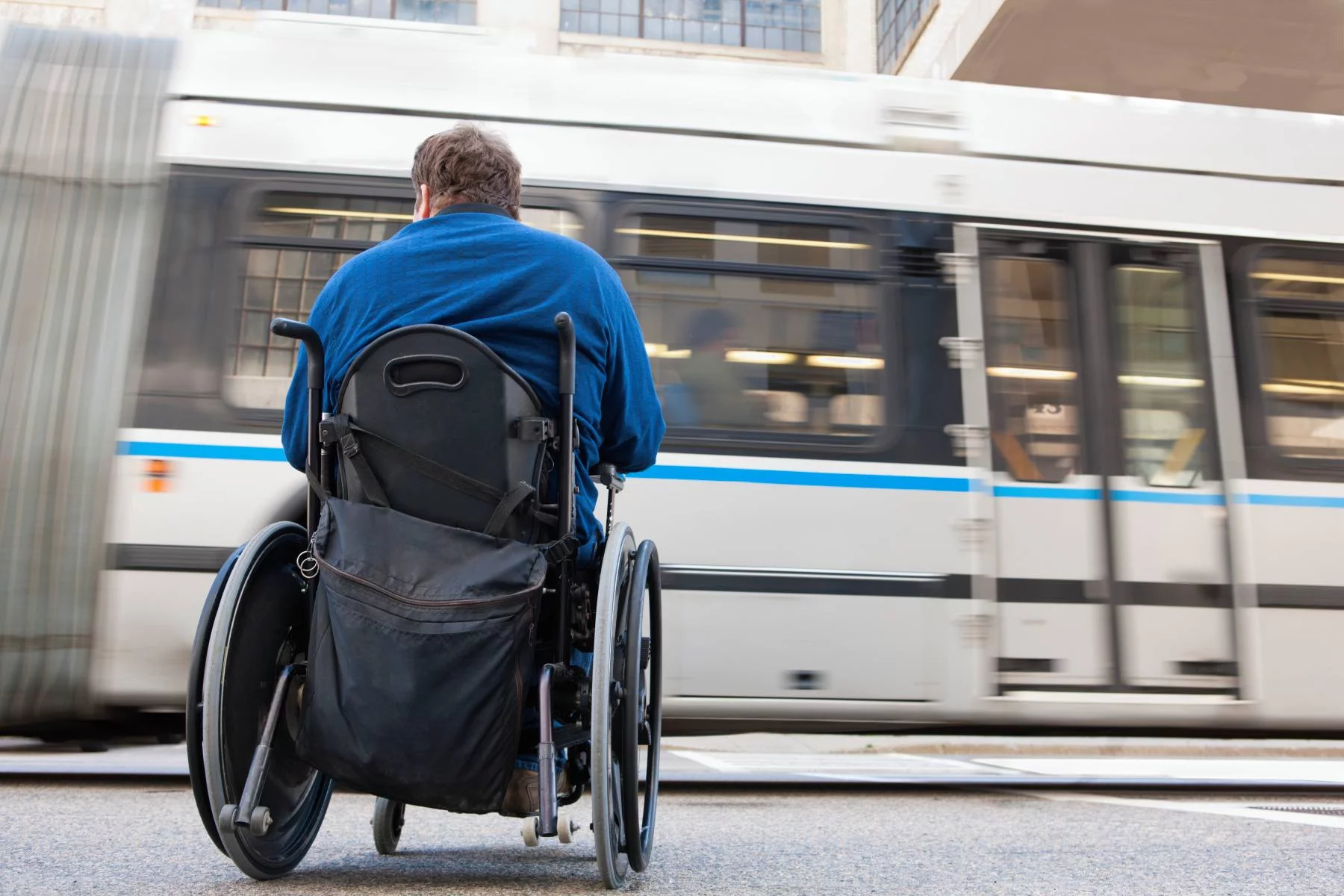
To be on the safe side, it is best to contact your station beforehand to ensure you can board your train, or request assistance. You can contact STIV/MIVB for help at +32 2 515 23 65, or else fill in an assistance request form. You can also request assistance if you have an invisible disability and want to ensure a smooth journey to your destination.
If traveling in Flanders, you can learn more about their disability-friendly transport services on the Visit Flanders website.
If in Wallonia, you can contact TEC to request transport assistance.
Disability provisions for public transportation in Belgium
Persons with disabilities are eligible for a national discount card for public transport, which provides free travel on public transportation with De Lijn, MIVB, TEC, and NMBS. The same discount is also available for the blind and visually impaired.
If traveling by train, your carer can board with you for free with the use of a Free Carer card. You can also use the card to take a guide dog on the train free of charge.
How environmentally friendly is public transportation in Belgium?
Belgium ranks just below the European Union average for eco-innovation. Nevertheless, the country is taking great measures to make its public transportation cleaner for the environment.
In recent initiatives, many buses are switching to hybrid models and e-hybrid vehicles to produce significantly fewer emissions.

The government is also encouraging Belgians to move toward public transport and away from privately owned diesel or petrol vehicles. Among their initiatives, the Bruxell’Air bonus will grant locals a mobility budget of up to €900 if they return their gas-powered cars.
Making a public transportation complaint in Belgium
If you are dissatisfied with your experience with public transportation in Belgium, you can submit your complaint directly to your transport operator.
You can submit your complaint – depending on your region – in the following ways:
- STIB/MIVB: You can discuss your complaint with a customer care representative by calling +32 070 23 2000, filling in a form with your complaint, or by writing to their official address.
- De Lijn: Complaints can be discussed by calling customer care on +32 070 220 200, or filling out a complaint form.
- TEC: You can call customer care to discuss your complaint – with different phone lines depending on your region – or by submitting a complaint form.
Complaints generally receive a response within 10 days.
If you have had an unpleasant experience traveling by train, you can fill out an NMBC/ SNCB complaint form, or send a letter to SNCB’s official address. A response to your complaint will take about 20 days.
If you are still dissatisfied with the handling of your complaint, you can raise your concern with the Ombudsman for rail passengers.

Did you find this guide helpful?