
'%20id='ico-down'%20stroke='%23000000'%20stroke-width='1.5'%3e%3cg%20transform='translate(1092.250000,%20254.750000)'%3e%3cpolyline%20id='Path-2-Copy-4'%20transform='translate(5.500000,%202.750000)%20scale(1,%20-1)%20rotate(-180.000000)%20translate(-5.500000,%20-2.750000)%20'%20points='0%200%205.5%205.5%2011%200'%3e%3c/polyline%3e%3c/g%3e%3c/g%3e%3c/g%3e%3c/svg%3e)


Living
Transportation
Taxi in Belgium: prices, airport tips and how to find official cabs
Navigate taxis in Belgium with confidence, from Brussels city rides to airport pickups.


Your arrival in a Belgian city often leaves you choosing between a quick taxi ride and the public transport network. Licensed cabs provide fantastic convenience after a long flight, though understanding how local meters work helps you avoid unexpected surprises on your final bill.
Regional authorities in Brussels, Flanders, and Wallonia regulate their own taxi fleets, so vehicle signs and pricing structures change across regional borders. Below, we break down how to identify legitimate drivers, what typical airport trips cost, and when taking the train makes more sense for your wallet.
How taxis work in Belgium
Taxis in Belgium can usually be taken from an official rank, booked in advance, or arranged through an app or dispatcher. Brussels is usually the easiest place to use as a reference point, because the city has clear regional rules and markings.
Avoid hopping into unvetted vehicles parked outside major transit hubs. Choosing an official taxi stand or pre-booking through a reputable app usually provides transparent pricing and trip receipts.
How to recognise an official taxi
Taxi signs, colours, and markings
If you are taking a rank taxi in Brussels, look for a black vehicle with a black and mango yellow chequered stripe on all four doors and a roof light, called a sputnik, in the same colours. Brussels taxis also use number plates with TX, although some older TL plates may still be seen.

One thing worth knowing is that airport markings can look different from city taxi markings. At Brussels Airport, official taxis wait outside the arrivals hall and are identified by a licence plate with a T and a blue and yellow logo, so follow the signed taxi stand rather than anyone offering a lift inside the terminal.
Receipts and licensing details
Printed receipts provide essential paper trails whenever you leave an item behind or need to resolve a fare dispute. Drivers in Brussels are obligated to print a formal ticket at the end of every journey. Because this slip contains the taxi identification number and itemised charges, holding onto it ensures you can trace your driver or file a clear report if any issues arise.
If a driver refuses to issue a proper receipt, or the vehicle has no clear identifier, it is sensible to choose another taxi. That small check gives you a way to follow up later if something goes wrong.
How much do taxis cost in Belgium?
Travelers often expect uniform taxi pricing across Belgium, but rates actually vary by region. Looking at Brussels tariffs gives you the clearest picture of standard metered prices, though you should always confirm local rates before boarding a car in other towns.
What affects the price of a taxi ride
For an unbooked station taxi in Brussels, the official rates include a:
- €2.60 pick up fee
- A €2 night surcharge between 10pm and 6am
- €0.60 per minute
- €2.30 per kilometre
- A minimum fare of €8.00
If you book in advance, the starting rates can be lower, but the final fare still depends on distance, time, traffic, and the provider’s pricing within the allowed cap.
As you can see, short direct trips may feel reasonable, especially if two or more people are sharing, while longer journeys in traffic become expensive quickly. But, airport pickups, late night travel, and waiting time can all push the final total higher.
Tips for avoiding surprises on the meter
Use an official rank, a known taxi app, or a pre-booked car, and check at the start whether the trip will run on the meter or on a quoted app price. If you are unsure, ask for the likely route and whether there are any local supplements.
You should also ask for the printed receipt every time. If you are comparing options for a longer trip, it is often worth checking the train first, because that is where the biggest price gap usually appears.
Can you pay by card in Belgian taxis?
Payment methods vary, which is why it is better to prepare than assume. Many taxis linked to apps or larger operators make card payment easy, but cash can still be useful, especially outside central areas or if a card terminal is unavailable.

Cash vs card
If you don’t have any cash on you or you would prefer to pay by card, check before the ride starts. Early confirmation eliminates end-of-trip confusion and guarantees your driver can issue an official receipt for work or personal records.
Paying in euros as a visitor or new arrival
Having an easy way to pay in euros makes your initial taxi ride from the airport or train station hassle-free. Travelers with foreign accounts can use a multi-currency card like Wise to dodge high currency conversion markups. You can spend globally with total peace of mind, as the Wise Card’s smart conversion automatically pulls from the balance with the lowest fee to ensure you always get the best deal without lifting a finger. Most drivers accept physical cards, digital wallets, or cash, giving you full flexibility from day one.
Taxi Belgium airport transfers

Brussels Airport taxi advice
At Brussels Airport, official taxis wait right outside the arrivals hall, so you can take one without booking in advance. The airport says official taxis have a licence plate with a T and a blue and yellow logo, and the safest move is to follow the signs to the taxi stand.
One thing worth knowing is that this is different from accepting a ride from someone who approaches you inside the terminal. If you want an airport taxi option in Belgium with the least friction, stick to the marked rank or book through an official channel.
When to pre book an airport taxi
Pre-booking makes most sense if you arrive very late, travel with children, carry a lot of luggage, need an accessible vehicle, or are heading to a place with weaker public transport links. It can also reduce stress if you are landing after a long flight and want a driver waiting for you.
If you are travelling light into central Brussels during the day, the train is often the better opton because it is direct, predictable, and usually cheaper than a taxi.
When is a taxi the best option in Belgium?
Journeys where taxis can save time
Taxis are ideal for eliminating travel hassle when speed and comfort matter most. They work best for late-night transit, direct hotel drop-offs with heavy bags, or journeys across parts of the city with limited public transport options.
A Brussels taxi can also make sense when several people are splitting the fare and the alternative would involve multiple tickets and a long walk at either end.
When public transport is the smarter choice
For most daytime trips in central Brussels, public transport is the better choice when it comes to value. If you want the broader picture on routes, passes, and operators, see Expatica’s guide to public transportation in Belgium.
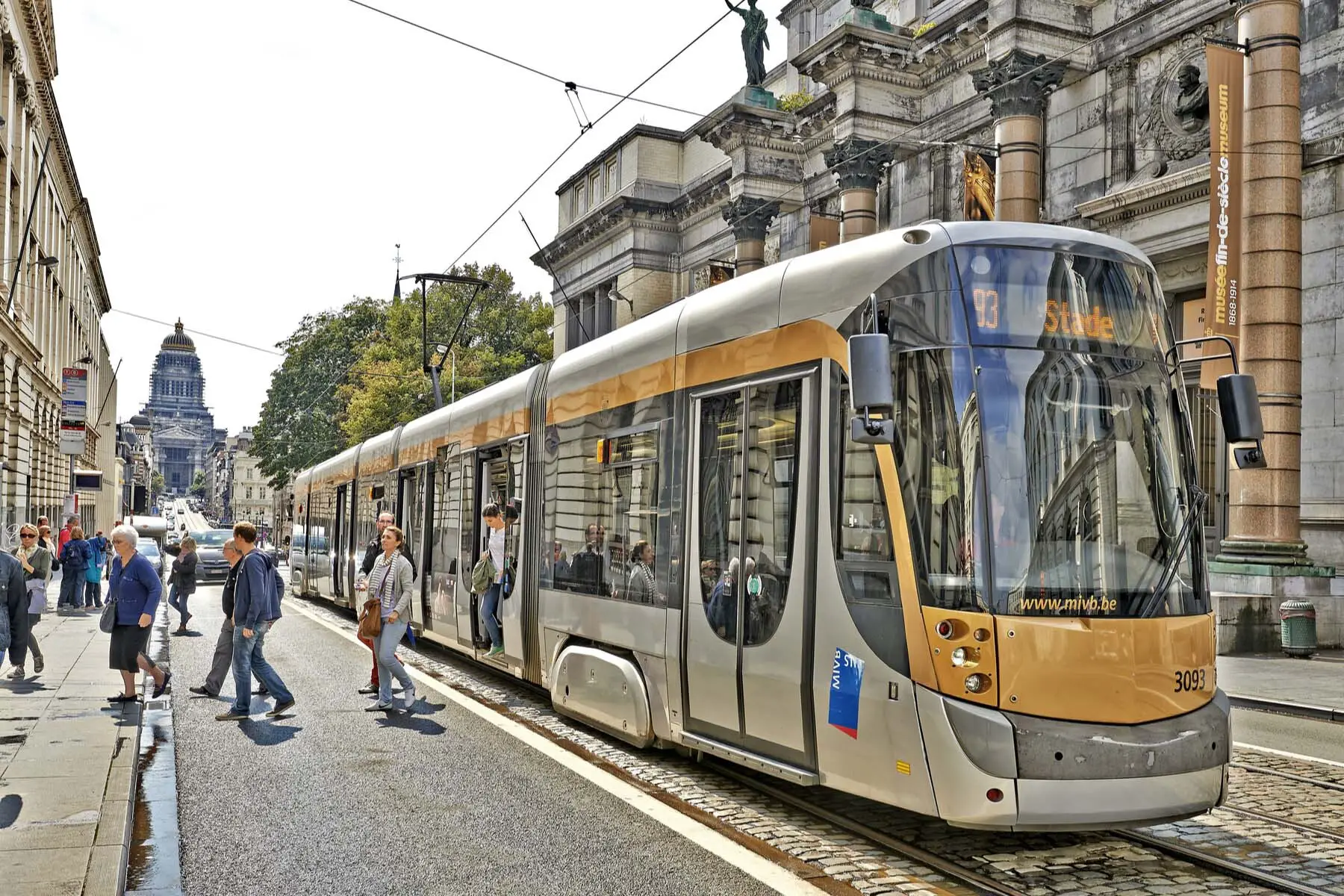
The same goes for airport to city routes and everyday commuting. If cost matters more than door to door convenience, buses, trams, metros, and trains usually win.
Taxis vs public transport in Belgium
Brussels metro, tram, bus, and train comparison
In Brussels, STIB or MIVB runs the metro, tram, and bus network, while SNCB or NMBS, De Lijn, and TEC handle wider rail and regional connections. STIB also supports contactless payments, making quick city trips easy if you don’t want to pay for a taxi.
| Option | Best for | Usually better than |
|---|---|---|
| Taxi | Late arrivals, luggage, door to door trips | Direct convenience |
| Metro, tram, bus | Central Brussels routes, regular commuting | Cost |
| Train | Airport runs and intercity travel | Traffic and parking |
Which option is best for expats?
Taxis offer essential peace of mind when you first arrive in Belgium, especially after long flights, during heavy weather, or while navigating a new city layout. As you become familiar with local routes, public transit naturally becomes the most economical choice for day-to-day travel.
Balancing convenience against your budget helps determine how often you use each option. If you are still planning everyday spending, Expatica’s guide to the cost of living in Belgium can help put transport costs into context.

Final tips for using taxis in Belgium
If you remember only three things, make them these: use official ranks or booked services, check how you will pay before the ride, and ask for the printed receipt at the end. That covers most of the problems expats and visitors worry about.
If you are still settling in, Expatica’s guides to where to live in Brussels and living in Belgium as an expat can help you plan everyday travel with more confidence.

FAQ
FAQs about taxis in Belgium
Do taxis in Belgium charge extra at night? 
They can. In Brussels, unreserved station taxis add a €2 night surcharge between 10pm and 6am, and other cities or providers may apply their own local rules, so it is worth checking before the ride starts.
Is it safe to take a taxi in Belgium?
Using a licensed taxi or a booked service is generally the safest approach. Stick to official ranks, clearly marked vehicles, or recognised apps, and avoid cars that offer rides informally near stations or airports.
Do you need to book taxis in advance?
Not always. You can usually take the next official taxi at a major rank or at Brussels Airport, but booking ahead is sensible for very early departures, late arrivals, child seats, accessible vehicles, or group travel.
Useful resources
- Brussels-Capital Region taxi guide – official taxi markings, Brussels fares, and complaints
- Brussels Airport taxi services page – official pickup points and airport taxi identification
- STIB/MIVB – Brussels metro, tram, and bus routes, tickets, and contactless payment
- Brussels Mobility public transport overview – links between STIB, SNCB, De Lijn, and TEC
Did you find this guide helpful?