'%20id='ico-down'%20stroke='%23000000'%20stroke-width='1.5'%3e%3cg%20transform='translate(1092.250000,%20254.750000)'%3e%3cpolyline%20id='Path-2-Copy-4'%20transform='translate(5.500000,%202.750000)%20scale(1,%20-1)%20rotate(-180.000000)%20translate(-5.500000,%20-2.750000)%20'%20points='0%200%205.5%205.5%2011%200'%3e%3c/polyline%3e%3c/g%3e%3c/g%3e%3c/g%3e%3c/svg%3e)




'%20fill='%23000000'%3e%3cg%20id='icons'%20transform='translate(56.000000,%20160.000000)'%3e%3cpath%20d='M144,7339%20L140,7339%20L140,7332.001%20C140,7330.081%20139.153,7329.01%20137.634,7329.01%20C135.981,7329.01%20135,7330.126%20135,7332.001%20L135,7339%20L131,7339%20L131,7326%20L135,7326%20L135,7327.462%20C135,7327.462%20136.255,7325.26%20139.083,7325.26%20C141.912,7325.26%20144,7326.986%20144,7330.558%20L144,7339%20L144,7339%20Z%20M126.442,7323.921%20C125.093,7323.921%20124,7322.819%20124,7321.46%20C124,7320.102%20125.093,7319%20126.442,7319%20C127.79,7319%20128.883,7320.102%20128.883,7321.46%20C128.884,7322.819%20127.79,7323.921%20126.442,7323.921%20L126.442,7323.921%20Z%20M124,7339%20L129,7339%20L129,7326%20L124,7326%20L124,7339%20Z'%20id='linkedin-[%23161]'%3e%3c/path%3e%3c/g%3e%3c/g%3e%3c/g%3e%3c/svg%3e)
'%20fill='%23000000'%3e%3cg%20id='icons'%20transform='translate(56.000000,%20160.000000)'%3e%3cpath%20d='M335.821282,7259%20L335.821282,7250%20L338.553693,7250%20L339,7246%20L335.821282,7246%20L335.821282,7244.052%20C335.821282,7243.022%20335.847593,7242%20337.286884,7242%20L338.744689,7242%20L338.744689,7239.14%20C338.744689,7239.097%20337.492497,7239%20336.225687,7239%20C333.580004,7239%20331.923407,7240.657%20331.923407,7243.7%20L331.923407,7246%20L329,7246%20L329,7250%20L331.923407,7250%20L331.923407,7259%20L335.821282,7259%20Z'%20id='facebook-[%23176]'%3e%3c/path%3e%3c/g%3e%3c/g%3e%3c/g%3e%3c/svg%3e)

South Africa is an exciting and culturally diverse place to live, from its three bustling capital cities to its beautiful natural parks. Inflation has hit South Africa hard in recent years, although it has recently come back down to levels from 2020/21. .
Though expats from some countries may find the cost of living in South Africa comparatively affordable, income inequality is prevalent across many communities and parts of the country.
Continue reading for the following information:
Is South Africa’s economy good?
In 2026, South Africa’s economy is a mix of potential and challenges. The country is rich in natural resources, particularly gold, platinum, and other minerals, which play a key role in its exports. Its financial sector is also well-developed, and serves as a gateway for businesses investing in Africa.
However, South Africa faces major economic hurdles. High unemployment, widespread inequality, and a struggling energy sector, marked by frequent power outages (“load-shedding”), weigh heavily on growth. Political instability and corruption scandals have also eroded investor confidence in recent years.

According to the World Bank, South Africa is one of the most unequal countries in the world in terms of wealth. Poverty rates vary sharply by race, gender, and level of education. The highest poverty rates are among black South Africans and people without formal education.
Manage your finances internationally with Wise
For expats moving to South Africa, managing multiple currencies across borders is often a key consideration. Services like Wise can make this easier for you as you settle into your new home. From receiving payments and paying bills to transferring savings to South Africa, currency exchange can add significant costs to your monthly expenses. Wise uses the mid-market exchange rate with transparent fees, meaning no bad surprises when you’re managing your finances.

Inflation and disposable income in South Africa
South Africa’s economy has been characterised in recent years by high inflation and wage disparity. However, inflation has reduced over the past couple of years, coming down from 7.8% in July 2022 to 3.6% in December 2025.
Inequality is heavily reflected in South Africa’s salaries. High-income earners, typically in executive or specialized roles, earn significantly more than the majority of the workforce. This is also apparent in the difference between public and private sector wages. For example, teachers and police officers make much less money than those in corporate jobs.
According to government statistics, 37.9% of South Africans live below the national poverty line. This includes 17.6% living in extreme poverty (2023).
According to the 2023 Income and Expenditure Survey, the average gross household income in South Africa was around R17,030 (about $1,065) per month.
South Africa compared to its neighboring countries
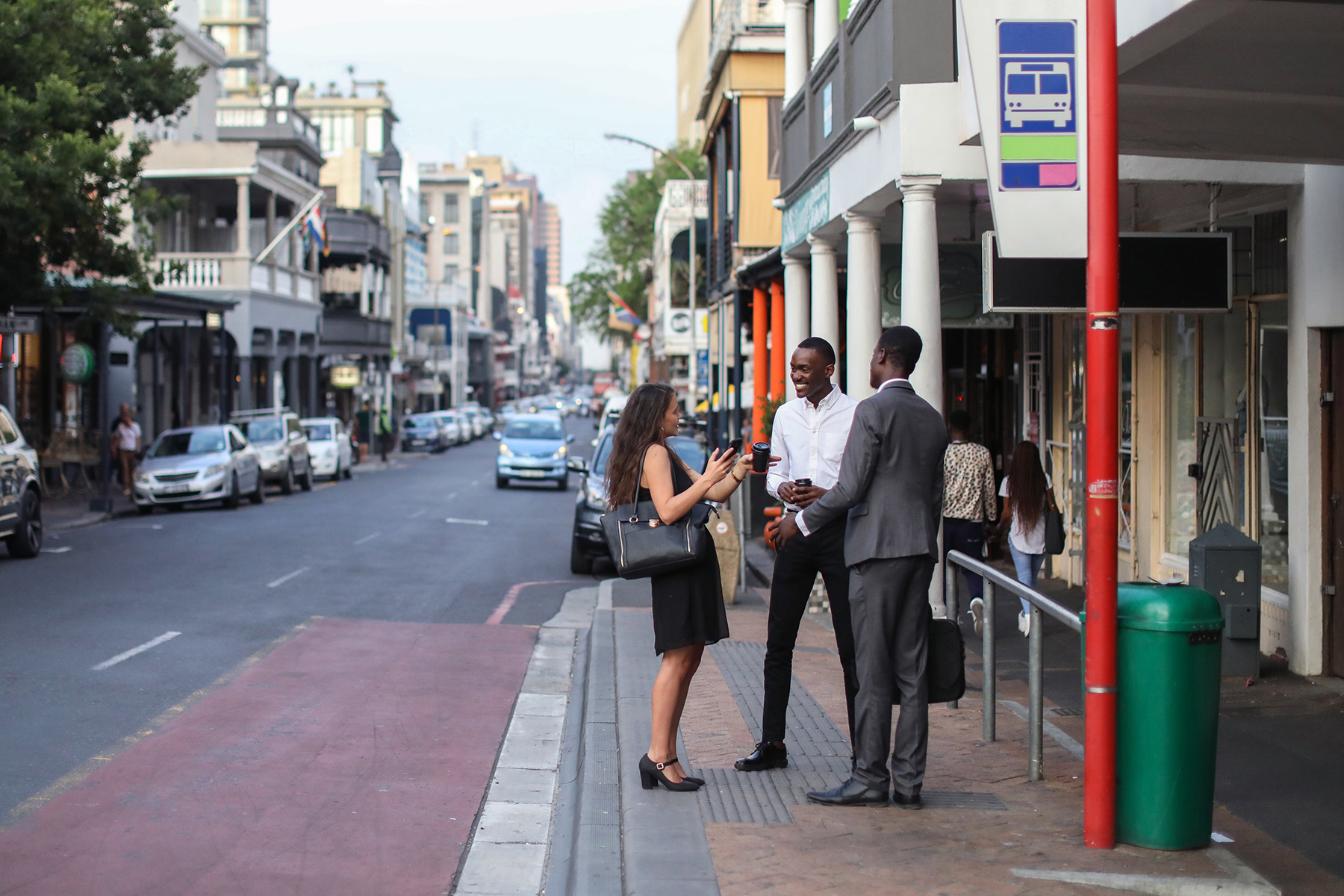
The cost of living in South Africa is generally higher than in many of its neighboring countries, but it offers better infrastructure and services. Major cities like Johannesburg and Cape Town are more expensive due to higher housing, transportation, and utility costs, whereas smaller towns and rural areas are more affordable.
Compared to neighbors like Zimbabwe, Mozambique, and Lesotho, South Africa’s grocery prices and consumer goods can be pricier, reflecting its more developed economy. However, wages in South Africa also tend to be higher, balancing the affordability for locals and expats.
The cost of living in South Africa in 2026
Using the 2022/23 Income and Expenditure Survey and updating for inflation, the monthly household budget in South Africa is expected to be R13,327 in 2026.
The price of groceries in South Africa
For 2026, average consumer spending per person on food and non-alcoholic drinks in South Africa is estimated at about R2,174. The general cost of groceries in South Africa varies dramatically across different income groups.
Here are some average prices of typical items:
| Product | Price | Product | Price |
| Apples (1 kilo) | R15–40 | Potatoes (1 kilo) | R10–40 |
| Bread (1 loaf) | R12–24 | Regular milk (1 liter) | R15–30 |
| Cheese (1 kilo) | R90–208 | Rice (1 kilo) | R20–46 |
| Eggs (12) | R24–63 | Tomatoes (1 kilo) | R15–40 |
| Oranges (1 kilo) | R13–60 | Water (1.5 liters) | R12–25 |
Beer, wine, and liquor
If you want to drink with a restaurant meal, you can expect to pay around R40 for a half liter of domestic beer and R45 for a 33cl bottle of imported beer. Wine can cost up to three times as much from a restaurant than from a supermarket. It also costs more in Western Cape, home to South Africa’s wine industry.
Supermarket prices are lower across the board for alcohol. A bottle of wine costs, on average, R80, while beer fetches R15–50.
Coffee
A cappuccino in most South African cities costs about R37. This is nearly a third of the price you’d pay in London or Paris, and also cheaper than neighboring Botswana and Zimbabwe. It’s about the same as the cost in Windhoek in Namibia.
Housing costs in South Africa in 2026
Rent and property prices
The cost to renting a house or apartment in South Africa varies greatly depending on where you live. Of course major cities will be more expensive than rural areas or suburbs. In general, rental costs are between R4,500 and R16,000 per month for a one-bedroom, and up to R30,000 for a three-bedroom.
Here’s a breakdown of rental and property prices by major South African city:
| Average monthly rent (1 bedroom central) | Average monthly rent (3 bedrooms central) | Average property price per square meter | |
| Cape Town | R16,297 | R27,894 | R34,663 |
| Durban | R7,131 | R14,121 | R15,383 |
| Gqeberha (formerly Port Elizabeth) | R10,020 | R14,360 | R12,621 |
| Johannesburg | R7,859 | R19,315 | R16,738 |
| Pretoria | R7,593 | R16,318 | R14,667 |
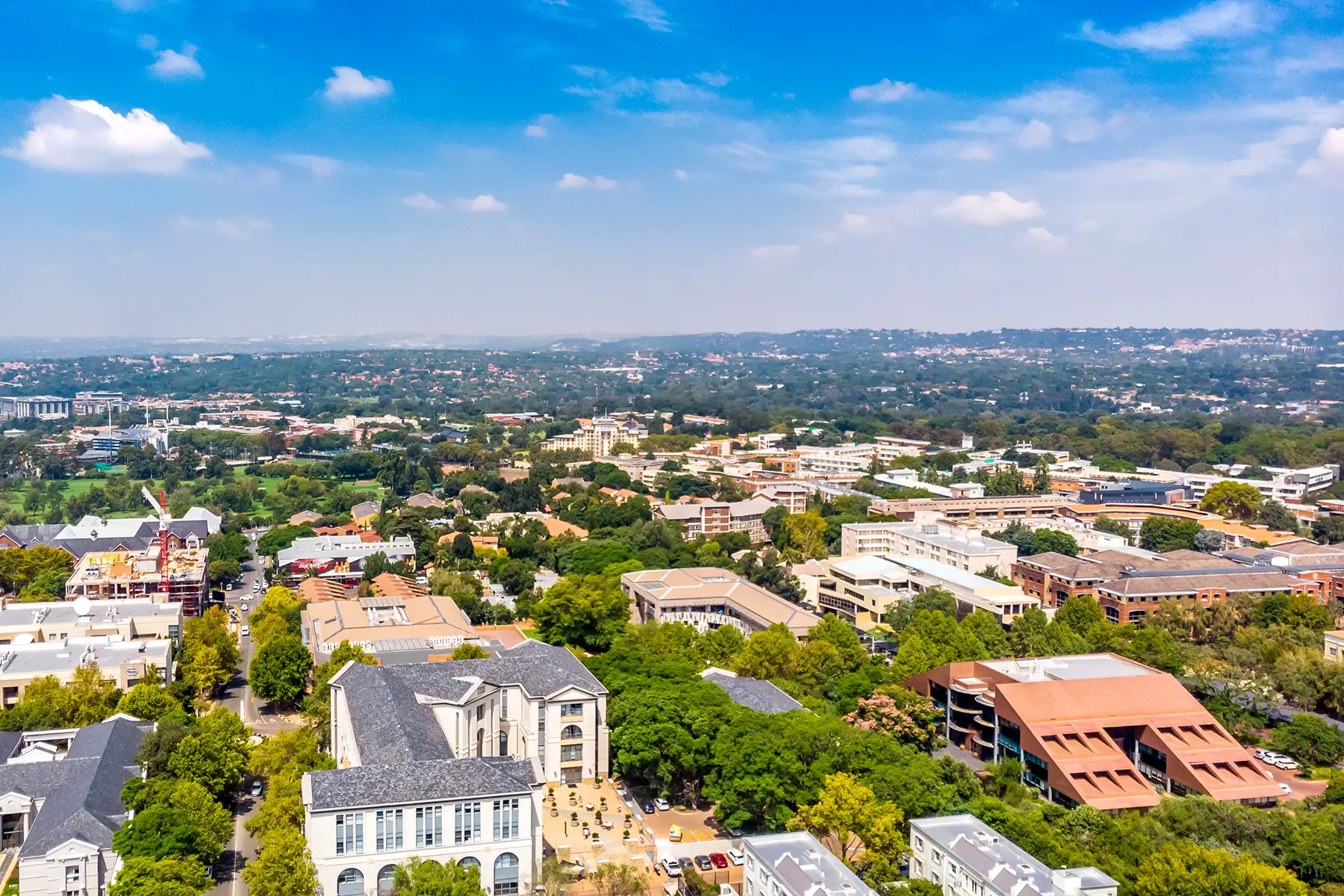
Property prices in South Africa are significantly lower than most European countries, North America, Australia, and much of Asia. Furthermore, foreigners are free to purchase property in South Africa with limited restrictions. The only condition is that property must be endorsed as non-resident even if you are living in the country full-time, as non-residents have to pay capital gains tax when selling the property.
Using a specialized service like Wise can save you significant amounts by offering the mid-market exchange rate with transparent, low fees.
Wise also offers automatic fee discounts on larger transfers, and has a dedicated support team for large transfers. This can be especially valuable when transferring the down payment for a property, or your deposit and monthly rent.
Utility costs: water, gas, and electricity
Country-wide, average utility costs for a month are around R2,122.
As of December 2025, residential electricity prices in South Africa were R3.710 per kW. Most electricity in the country comes from Eskom, which has several tariffs.
Water tariffs vary by city, but in general water costs per household are billed at around R45 per kiloliter monthly on average. The average household uses around 200–250 litres per day.
Healthcare costs in South Africa
South African healthcare is divided into two sectors: public and private. Public healthcare in South Africa is subsidized up to 40% of total costs; charges are based on your income and number of children. Visits to the doctor can cost around R55. However, waiting lists can be long, especially when it comes to seeing a specialist. Hospital stays can cost up to R1,000 a night if you are in the top income bracket.

The quality of private healthcare in South Africa tends to be higher due to less strain on the system, so it’s usually advisable for expats to take out private health insurance.
Internet and telecom costs in South Africa
Basic broadband packages in South Africa start at around R485 per month but can be as much as R1,000. Television licenses in South Africa are R265 for the first year and must be paid in full. After the first year, you can pay monthly at a rate of R28.
Monthly mobile phone plans vary in cost according to how much data and phone call minutes you need, but generally they start at R300 and go up to R1,000.
Clothing and shoes
You can expect to find clothing prices slightly cheaper in South Africa than in Europe, Asia, and North America. A pair of branded jeans will set you back about R875, while a summer dress in a chain store costs about R550.
Transport costs in South Africa
Public transportation in South Africa
Tickets and passes for public transport in South Africa vary depending on where you live. However, there are plenty of budget options if you live in a larger city, and South Africa has the largest rail network on the continent.
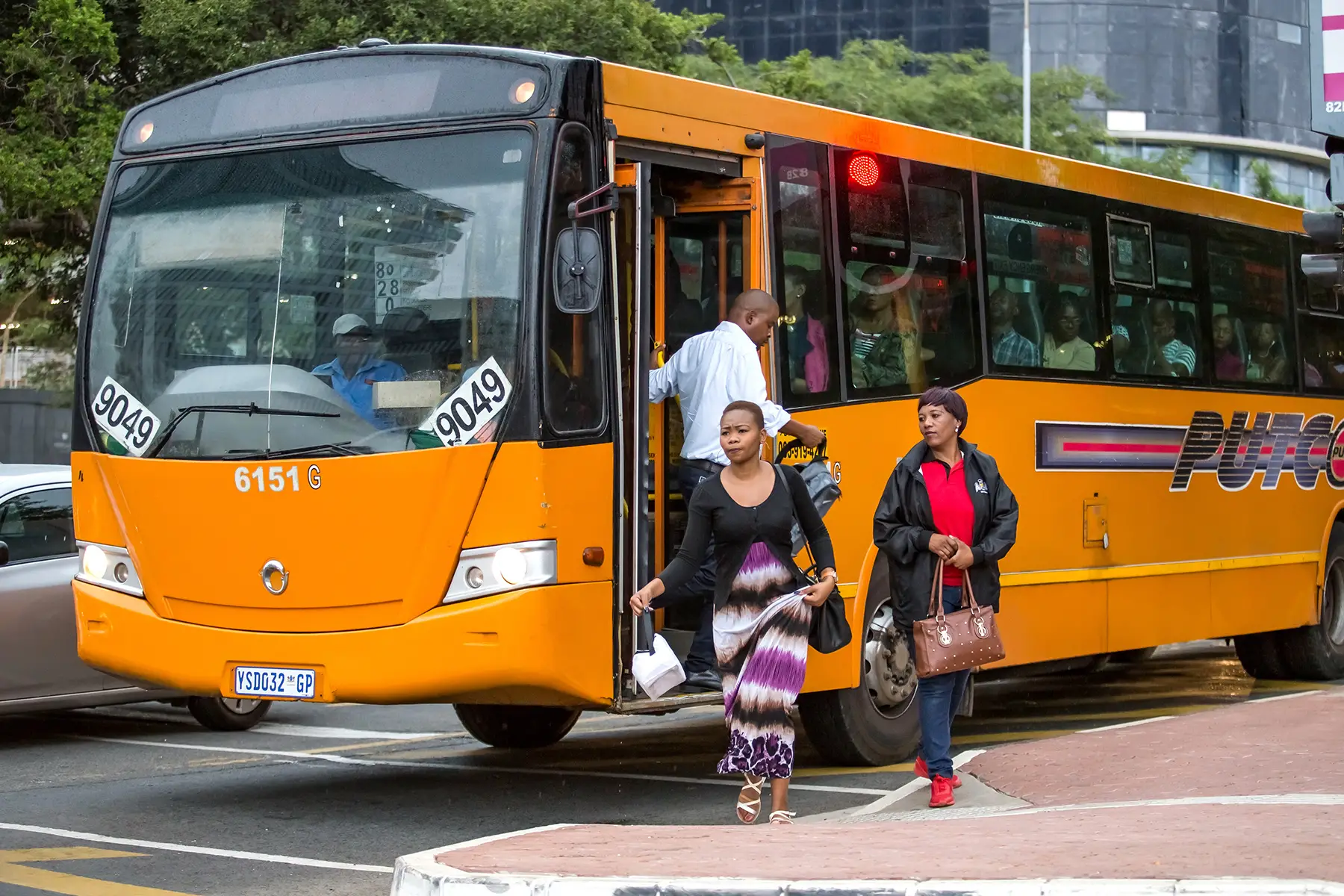
Metro rail prices are determined by region and vary according to how far you travel. A single metro ticket for a short journey costs around R30 in South Africa, while a monthly pass is about R1,000.
Long-distance and commuter trains cost considerably more. For example, if using the Gautrain, the Gauteng commuter rail network, you can calculate your fare online.
South African cities have two types of public road transport: minibus taxis and buses. Minibus taxis are often the cheapest way to travel, but not as popular with expats.

Bus costs are variable – some are run by the local municipality, while others are organized by private companies. Fares can cost around R10.50–39.50 depending on when you travel and how far.
Driving costs and gas prices
If you decide to travel by taxi, you can expect to pay, on average, R20 to start the taxi and R15 for each kilometer after that. Usually, you’ll need to head to a taxi stand or book in advance.
Thinking of buying your own car to drive in South Africa? A Volkswagen Golf will set you back about R580,000, while a Toyota Corolla Sedan costs around R550,000. Gasoline prices are around R20.34 per liter.
Education and childcare
Childcare
Parents who work full-time have plenty of childcare options in South Africa. Preschool in South Africa is not mandatory, but there are plenty available. Most of these preschools are privately run but are subsidized by the government. Prices vary – check your region’s education department to find out more information including fees.

Hiring a private childcare provider is another option. Prices for a nanny depend on your children’s age, the nanny’s experience, and where you live. An example of a price could be around R325 for a day or night nanny for a single shift, or R3,750 as a monthly rate.
It is also possible to hire an au pair to look after your children. Depending on the agency you use, the price might differ. You can expect to pay R60–140 per hour according to your au pair’s experience. In addition, if your au pair can drive and has their own car, you can expect to pay more. If your au pair lives with you, their salary might be lower, but you’ll need to factor in household costs for them.
Children’s education
For many expats, the cost of educating your child at a private school in South Africa might be considerably less expensive than in your own country.
School fees vary widely: more affordable private schools may charge around R30,000–R80,000 per year, while many established private schools charge well over R100,000 annually, and top independent schools can exceed R400,000 per year.
University costs
South Africa only has 26 public universities and the cost of an education in the country is considerably higher than many European countries. However, students should also factor in general living costs, which are considerably lower in South Africa than in Europe or North America.

As an example, for 2026 the University of Cape Town’s tuition varies by programme but commonly falls roughly between R40,000 and R80,000 per year for South African students, with international fees typically higher; students should also factor in additional costs for applications, accommodation, books and supplies.
Leisure activities and going out
Entertainment: movie, concert, and sports tickets
If you’re a movie buff, you can catch an international film in a South African movie theater for about R120 per ticket. This is often cheaper for children or at matinee times.
Concerts and music gigs vary depending on the size of the venue and how popular the artist is. On a night out, you can see a DJ at a club in Johannesburg or Cape Town for around R100–200. However, a bigger name music artist at a large venue or stadium may cost R1,000–1,500 per ticket.
Some of South Africa’s most popular sports are soccer (football), cricket, and rugby. For sports fans, tickets to a match will cost you R10–200, depending on the team’s popularity and where they’re playing.
Restaurants in South Africa
The cost of dining out is relatively inexpensive compared to many other countries around the world. Of course, the cost of a meal depends where you choose to eat, as high-end restaurants in big cities still charge high prices. A three-course meal for two in South Africa will run you about R650, but can be over R1,200.

If you’re on a budget or feeding a family, you can easily find a meal for R180 a person at an inexpensive restaurant. Meanwhile, an average fast food combo meal costs around R90.
Fitness
Gym costs in South Africa are generally cheaper than abroad, but this varies according to your gym’s facilities and type of membership. Usually, you can expect to pay about R560 per month. Meanwhile, if you want to save on gym costs, you can buy a pair of running shoes for about R1,600.
How does South Africa compare with the rest of the world?
When it comes to the cost of living, South Africa offers a unique balance of affordability and modern amenities, particularly when compared to major global cities. While cities like Johannesburg and Cape Town are more expensive than many African counterparts, they remain significantly cheaper than global hubs like New York, London, or Sydney.
As of February 2026, the cost of living in various South African cities compared to other international cities is as follows.
The cost of living in Johannesburg
The largest city in South Africa, with over 5.5 million inhabitants, Johannesburg is:
- 71% cheaper than New York (USA)
- 64% cheaper than London (UK)
- 59% cheaper than Amsterdam (Netherlands)
- 81% more expensive than Delhi (India)
- 12% cheaper than Harare (Zimbabwe)
- 12% cheaper than Maputo (Mozambique)
The cost of living in Cape Town
The second-largest city in South Africa, with nearly 5 million inhabitants, Cape Town is:
- 67% cheaper than New York (USA)
- 60% cheaper than London (UK)
- 54% cheaper than Amsterdam (Netherlands)
- 103% more expensive than Delhi (India)
- 26% more expensive than Harare (Zimbabwe)
- 25% cheaper than Maputo (Mozambique)
The cost of living in Durban
The third-largest city in South Africa, with over 4 million inhabitants, Durban is:
- 75% cheaper than New York (USA)
- 70% cheaper than London (UK)
- 65% cheaper than Amsterdam (Netherlands)
- 55% more expensive than Delhi (India)
- 4% cheaper than Harare (Zimbabwe)
- 4% cheaper than Maputo (Mozambique)
The cost of living in Pretoria
The fourth-largest city in South Africa, with almost 3 million inhabitants, Pretoria is:
- 71% cheaper than New York (USA)
- 64% cheaper than London (UK)
- 59% cheaper than Amsterdam (Netherlands)
- 81% more expensive than Delhi (India)
- 12% more expensive than Harare (Zimbabwe)
- 12% more expensive than Maputo (Mozambique)
Assistance with living costs in South Africa
There is financial help and other support available for those struggling to afford living costs in South Africa. However, these payments are not always generous. They include:
- Old age pensions – For citizens, permanent residents, and refugees living in South Africa. Up to R2,320 or R2,340 a month depending on your age.
- Child support grant – Citizens and permanent residents on under R52,800 per year (R105,600 combined for couples) can receive R560 per month per child.
- Social relief or distress – Emergency food parcels, vouchers, or cash following disasters or crises.
- Care dependency grant – R2,320 per month for citizens and permanent residents earning below R223,200 (R446,400 combined for a couple) who are caring for a child with a severe disability.
- Disability grant – Citizens, permanent residents, and refugees with a disability that causes them to be unable to work for longer than six months can claim R2,320 per month.
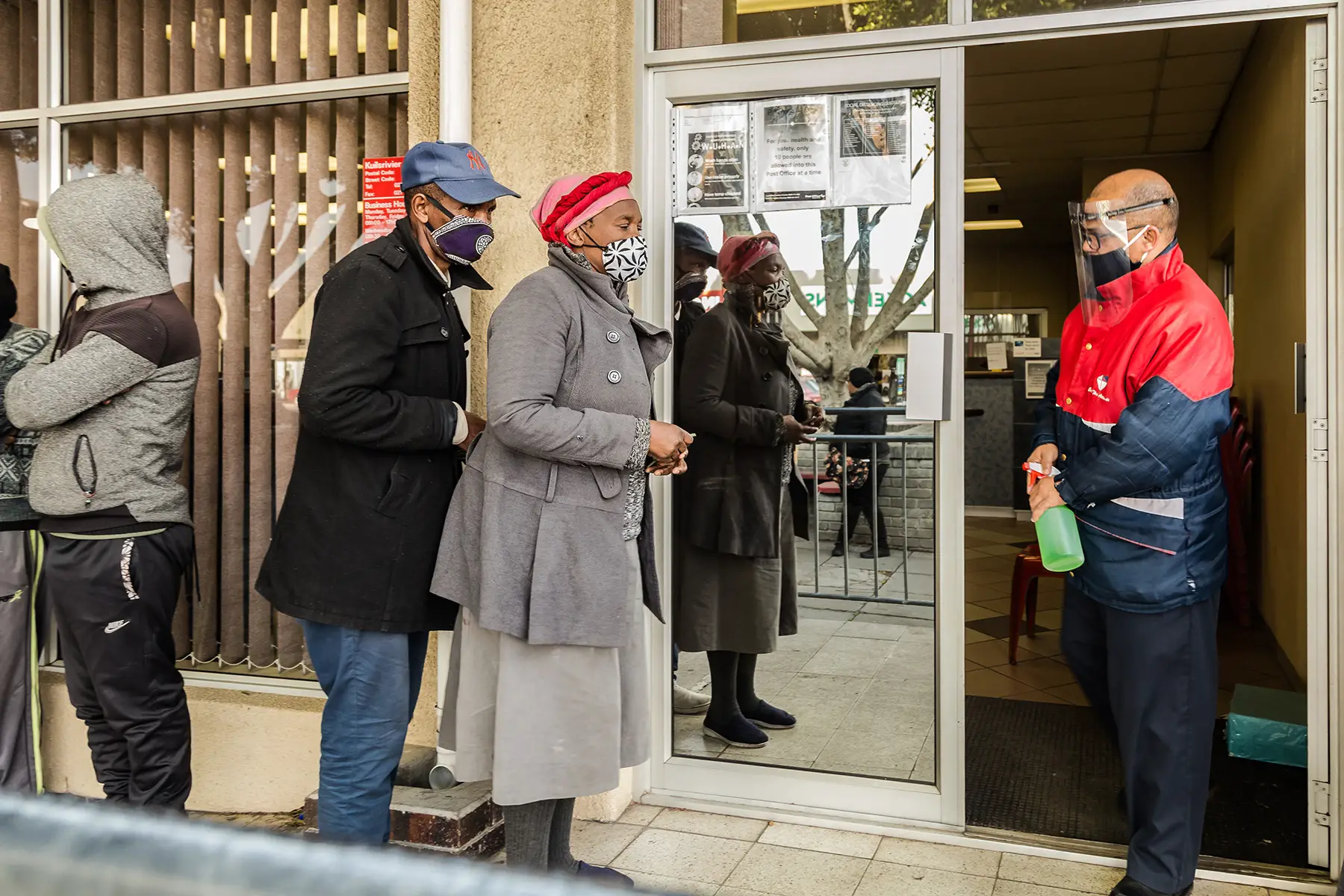
There are further grants and support available for war veterans and those needing care – check the South African government’s social benefits website for more information.
Tips on how to save money while living in South Africa
- Buy groceries at wholesalers – Supermarkets like Makro, Food Lover’s Market, and Boxer offer bulk-buy discounts, making it cheaper to stock up on essentials compared to smaller convenience stores.
- Take advantage of meal specials – Many restaurants and fast-food chains have weekly specials, such as half-price sushi days, burger deals, or Spur’s Monday steak discounts, which can save you a lot on dining out.
- Use minibus taxis or MyCiTi buses – Public transport options like minibus taxis (if you’re comfortable using them) and Cape Town’s MyCiTi bus service are significantly cheaper than ride-hailing apps like Uber or Bolt.
- Switch to prepaid electricity – Many homes in South Africa use prepaid electricity meters. To save, buy electricity in bulk early in the month when tariffs are lower, as costs increase the more you use.
- Shop at factory outlets – Brands like Adidas, Nike, and Levi’s have factory stores in places like Woodmead (Johannesburg) and Access Park (Cape Town), where you can find discounts of up to 70% on clothing and shoes.
- Visit free parks and nature spots – While big reserves like Kruger Park have entrance fees, many local nature reserves, beaches, and hiking trails are free or charge minimal fees, making outdoor activities affordable.
Useful resources
- Statistics South Africa – For more information on economic indicators such as consumer inflation and taxation news
- South African Government – For access to services including benefits
- South African Revenue Service – For details of taxes