
'%20id='ico-down'%20stroke='%23000000'%20stroke-width='1.5'%3e%3cg%20transform='translate(1092.250000,%20254.750000)'%3e%3cpolyline%20id='Path-2-Copy-4'%20transform='translate(5.500000,%202.750000)%20scale(1,%20-1)%20rotate(-180.000000)%20translate(-5.500000,%20-2.750000)%20'%20points='0%200%205.5%205.5%2011%200'%3e%3c/polyline%3e%3c/g%3e%3c/g%3e%3c/g%3e%3c/svg%3e)


Living
Government & Law
Social security in South Africa and SASSA grants
A guide to the South African Social Security Agency (SASSA): who must arrange SASSA payments, who can claim a SASSA grant, and how much are SASSA grant amounts.

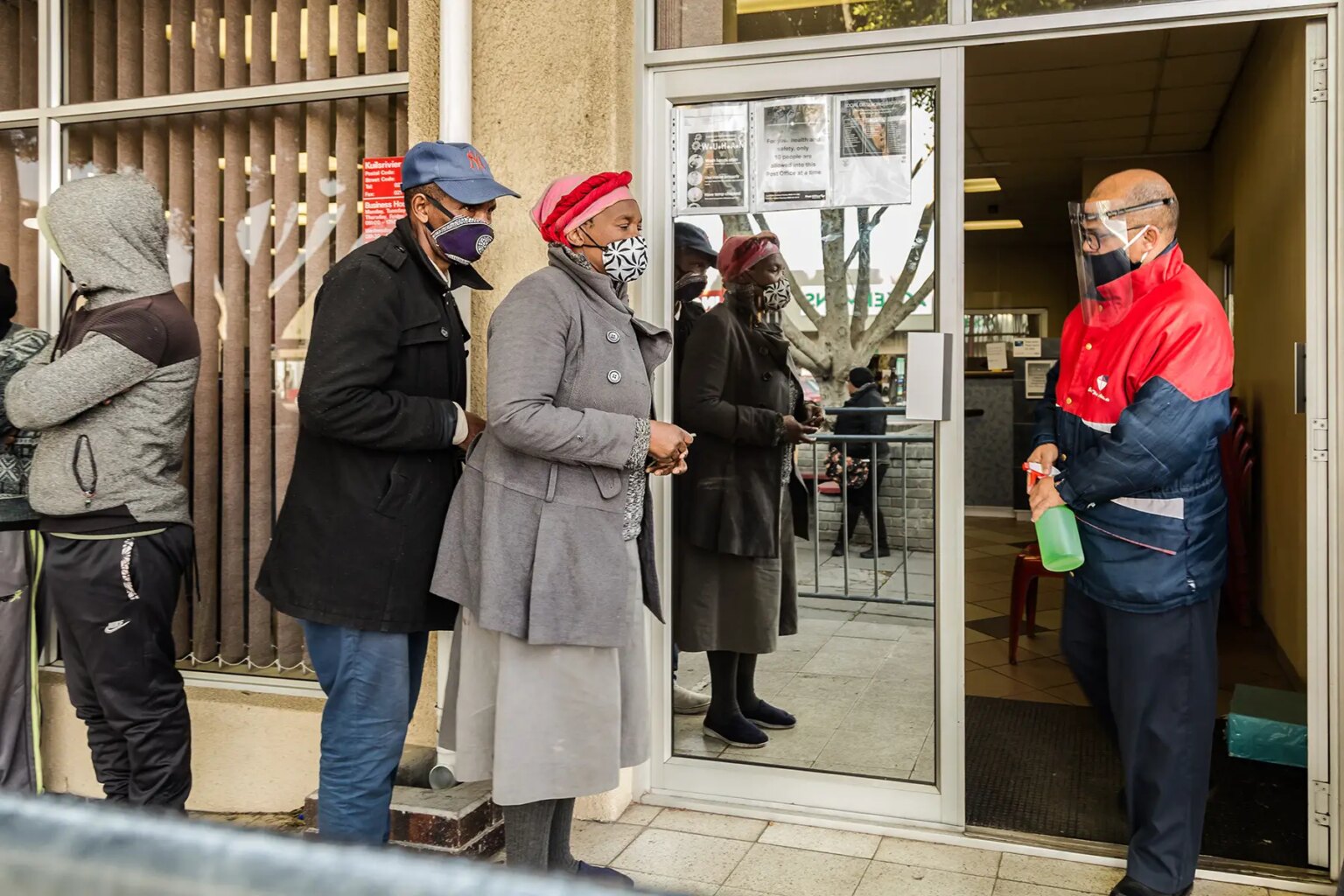
Foreigners who live and legally work in South Africa will typically be subject to pay contributions to social security in South Africa. This guide explains what you need to know about social security in South Africa, including how the system works, and how much contributions are.
An overview of the South African Social Security Agency
The South African Social Security Agency (SASSA) handles social security payments in South Africa.
SASSA grants are administered alongside insurance-based schemes that cover areas such as unemployment and child benefits. SASSA began in 2005, transitioning from local to national administration of social security in South Africa. This enabled South Africa to increase its coverage of social grants from around two million beneficiaries to almost 14 million in just over a decade by 2010.
This guide explains what you need to know about social security in South Africa. This includes how the South African social security system works, who pays SASSA contributions, the amount of SASSA payments, what receives coverage, who can claim SASSA grants, and how to apply.
SASSA grants cover the following areas:
- Older persons
- War Veteran’s Grant
- Grants In Aid
- Disability Grant
- Child Support Grant
- Care Dependency Grant
- Foster Child Grant
- Social Relief in Distress
The social security system in South Africa
In South Africa, social security comprises of funding from national income tax and payments into insurance-based funds, and overseen by the Ministry of Social Development.
The social grants in South Africa administered by SASSA are funded by national taxes but are means-tested; it only pays out if you receive below a certain income threshold and does not rely on the amount of your SASSA payments.
Work-related social security benefits such as unemployment, sickness or maternity pay, however, are insurance-based and linked to your SASSA payments. The Department of Labor administers these.
Healthcare benefits are the responsibility of the Department of Health, which runs provincial hospitals in South Africa. South African citizens and permanent residents can access free primary healthcare whereas temporary residents typically have to take out private health insurance or international health insurance.
Who must contribute SASSA payments?
SASSA payments
SASSA payments receive funds through national taxes. South Africa has a progressive rate of income tax that ranges from 18–41 percent depending on your income bracket. These SASSA grants are means-tested and paid to South African citizens and permanent residents with income or earnings below certain thresholds . Find more information in our guide to income taxes in South Africa.
Healthcare
Citizens and permanent residents in South Africa have access to free primary healthcare. This is means-tested and mostly available to those on lower incomes. Those who earn above the threshold will have to pay for either part or all of any treatment they receive through the public health service. Read more about the South African healthcare system.
Unemployment insurance
Unemployment benefits pay through the Unemployment Insurance Fund (UIF). The base of these benefits is monthly contributions of 2% of salaries (1% from the employer and 1% from the worker). This is also available to foreign permanent residents who work legally in the country.
Temporary residents and students
Temporary foreign residents and students cannot receive SASSA grants or unemployment insurance. They are also responsible for taking out their own health insurance in South Africa.
Citizens and permanent residents
Foreigners are only able to access social security benefits in South Africa if they become South African citizens or take up permanent residence (by applying for a Section 25 permit) in South Africa.
Self-employed
Those who are freelancers do not receive coverage from the Unemployment Insurance Fund, so have to make their own arrangements. Self-employed workers are also responsible for sorting out their own pension and medical insurance arrangements.
SASSA grants and benefits
All SASSA grants are fundamentally social assistance services with coverage from the social security fund in South Africa. There are means-tested SASSA grants available to citizens and permanent residents living in South Africa who are not residing in a state-funded institution (e.g., prison or state old age home). Those residing in a state-funded care institution will have their grant amount reduced to 25 percent of the maximum amount for the duration of their stay. Recipients are only able to claim for one SASSA grant at any given time.
SASSA grants for older persons
This is a SASSA pension available to any South African citizen, permanent resident or refugee living in South Africa aged 60 or above. Like all SASSA grants, it is means-tested. It is available to anyone earning less than ZAR 69,000 a year or with assets worth less than ZAR 990,000. If you live with a spouse, the total income cannot be more than ZAR 138,000 and total assets cannot be more than ZAR 1,980,000.
The maximum pension SASSA grant amounts are around ZAR 1,500 per month, rising to ZAR 1,520 per month for those aged over 75. Read more on gov.za.
Some requirements include:
- Being a South African citizen or permanent resident
- A resident of South Africa
- 60 years or older
- Applicant and spouse must comply with the means test
- Must not be receiving care from a state institution
- Must not be in receipt of another social grant for him or herself
SASSA child grant
A SASSA child grant pays out to the primary caregivers of children under 18, as long as the caregiver is a South African citizen or permanent resident and both the applicant and child live in South Africa. The caregiver must be over 16.
To meet the means-test requirements, the applicant must not earn more than ZAR 42,000 per year, or have a combined income of more than ZAR 84,000 if living with a spouse. The SASSA grant amounts to around ZAR 350 per month per child. This grant pays for up to six children who are the biological or legally adopted children of the applicant.
Some SASSA requirements include:
- the primary caregiver must be a South African citizen or permanent resident;
- both the applicant and the child must reside in South Africa;
- applicant must be the primary caregiver of the child/ children concerned;
- the child/children must be 15 years or younger;
- the applicant and spouse must meet the requirements of the means test;
- cannot apply for more than six non-biological children;
- child cannot receive care from a state institution.
Insurance-based pensions
Social security in South Africa doesn’t include a contributions-based state pension. Those that do not meet the requirements of the means test for the Grants for Older Persons will have to opt for a contributory occupational-based or private retirement fund. The insurance industry also offers cover for those that can afford it.
Full-time employees should have access to their employer’s private pension or provident fund which is jointly contributed by employers and employees. Part-time and casual employees often don’t have access to this and freelance workers are responsible for setting up their own arrangements.
More information is available in our guide to pensions in South Africa.
War veteran’s SASSA grant
This is a SASSA grant available to those over 60 that are registered disabled and have fought in the Second World War or the Korean War. The means test thresholds and amounts paid are the same as for the Grants for Older Persons.
The applicant must:
- be a South African citizen / permanent resident
- live in South Africa;
- 60 years and over or must be disabled;
- have fought in the Second World War or the Korean War;
- their spouse must meet the requirements of the means test;
- not be receiving care from a State Institution; and
- not be in receipt of another Social grant in respect of himself or herself.
Disability SASSA grant
This is a SASSA grant paid to those aged between 18 and 59 who have been assessed as medically disabled within the three months preceding their grant application. As with other SASSA grants, applicants and their spouse must meet the requirements of the income-means test. The threshold amounts for the means-test are the same as for the old age SASSA grants.
You can apply for a disability SASSA grant if you have a physical or mental disability that makes you unfit for work for a period of longer than six months. You can get a permanent disability grant if your condition lasts longer than 12 months or a temporary disability grant if your disability will last for between six to 12 months.
The maximum payment of this SASSA grant amount is ZAR R1,510.
Some SASSA requirements include that you:
- are a South African citizen / permanent resident or refugee;
- live in South Africa;
- be 18 to 59 years of age if a female and 18 to 62 years of age if a male;
- submit a medical / assessment report confirming disability;
- medical assessment must not be older than 3 months at date of application;
- applicant and spouse must meet the requirements of the means test;
- must not receive care from a state institution;
- must not be in receipt of another social grant in respect of him or herself.
Aid SASSA grants
This is an additional grant for recipients of a Grant for Older Persons, War Veteran’s Grant, or Disability Grant if they require full-time attendance owing to physical or mental disabilities. This is a payment of R350 a month to go towards the costs of a carer. The Grant In Aid must be in conjunction with another grant.
Some requirements include:
- The applicant must be in receipt of a grant for Older Persons;
- Disability grant or a War Veteran’s grant, and require full- time attendance by another person;
- Owing to his/her physical or mental disabilities;
- Must not receive care from an institution that receives subsidies from the government.
Care dependency SASSA grant
This is a SASSA grant for children under 18 with severe disabilities requiring full-time care. It pays out to parents, primary caregivers, or foster parents earning less than ZAR 180,000 if single or ZAR 360,000 if living with a spouse. As with the SASSA child grant, both carer and child must live in South Africa.
The current SASSA grant amount is ZAR 1,500 a month per child.
Care dependency grant requirements include:
- The applicant must be a South African citizen or permanent resident;
- The applicant and child live in South Africa;
- Age of child must be under 18 years;
- Must submit a medical / assessment report confirming permanent, severe disability;
- Applicant and spouse must meet the requirements of the means test (exceptions may exist for foster parents);
- The child/children must not receive care from a state institution.
Foster child SASSA grant
This SASSA grant is for foster parents of children under 18 with an official court order indicating foster care status. Both the applicant and child must reside in South Africa and the child must remain in the care of the foster parent while the social security benefit is being paid.
The SASSA grant amounts to ZAR 890 per month per child.
Social relief in distress
This is a temporary assistance SASSA grant for those in desperate need who are unable to meet the basic needs of themselves or their family. It pays out for a maximum of three months, with an extension of three months in exceptional cases.
This SASSA grant is for those with no access to any other funds. It usually pays in the form of food parcels or vouchers but in some instances may be cash.
How to apply for SASSA grants
Go to your local SASSA office to make your application.
Bring your 13 digit bar-coded identity document (ID). If you don’t have an ID, you will need to provide a sworn statement signed by a reputable person (e.g., a councillor, religious minister, school principle) who can verify your name and age.
You also need to provide the following:
- Proof of residence
- Evidence of marital status (if applicable)
- Proof of income/savings
- Proof of assets and pension (if any)
- Bank statements for the last three months
- If you were employed, your Unemployment Insurance Fund book or discharge certificate from your last employer
- If your spouse died within the last five years, a copy of the will and accounts where applicable.
The application may take up to three months to process, but you will be paid retrospectively from the application date if it is successful.
Employment-based social grants
Social security in South Africa also covers benefits that pay out based on the South African social security contributions you have made. You can receive the following additional benefits via the Unemployment Insurance Fund (UIF), paid at a rate from 38–58% of your SASSA payments total.
Unemployment Insurance Fund (UIF)
This is a contributions-based social grant in South Africa available to unemployed South African citizens or permanent residents who have been working for 24 hours or more per week, provided they contributed to South African social security during employment.
You can apply for UIF as long as you haven’t resigned voluntarily, been suspended or absconded from work. You also need to register as a work seeker and be available for work. Unemployment benefits then pay after 14 days of unemployment.
The amount of UIF you receive is based on your SASSA payments – how long you have contributed and the level of your working salary. It pays between about 40–60% of your average earnings and lasts for up to 34 weeks.
Maternity benefits
If you are due to have a baby, you can claim 17 weeks of maternity benefits. If you have a miscarriage, you can claim for six weeks. The amount you receive is around 40–60% of your normal salary, depending on your SASSA payments. More information on maternity benefits is available in our guide to having a baby in South Africa.
Illness benefits
You can claim illness benefits if you are unable to work for more than 14 days due to illness and are not receiving a full salary from your employer. You must be willing to undergo medical treatment. Payments are between 40–60 percent of your normal salary, depending on your SASSA payments, up to a maximum of 34 weeks.
Adoption benefits
You can apply for adoption benefits if you adopt a child aged under two years and take unpaid (or part-paid) leave from your job. Only one parent may claim and the benefit will only cover the period spent caring for the child. You receive between 40–60% of your normal salary, depending on your contributions, up to a maximum of 34 weeks.
Dependants benefits
This social security benefit pays in the event of the death of a person who contributed to UIF and was financially supporting the household. The spouse can claim even if he or she is in employment themselves. Dependant children can make an application if the spouse does not or cannot make a claim. Claimants must apply within six months of the date of death. Dependents receive between 40–60% of the deceased’s normal salary, depending on contributions, up to a maximum of 34 weeks.
How to claim UIF benefits
You need to apply at your nearest labor center and take along the following documents:
- 13-digit bar-coded ID or passport
- Banking details
- Last six payslips
- Proof of eligibility for benefit you are claiming (e.g., unemployment, medical certificate).
The amount in social security benefits you can claim is linked to your contributory credits. You earn one credit for every six days that you work.
Employment-based insurance: Work Injury and Disability
There is an employer-liability system of South African social security where your employer pays compulsory insurance with a public carrier. It is designed to cover a range of work-based injuries, disabilities and fatalities.
In the case of permanent incapacity or disability, a disability pension of 75% of earnings pays out. If the disability is temporary, the pension pays 75% of the worker’s salary for 12 months.
In the case of a fatal injury, the dependants receive a survivor’s pension, which is 40% of the permanent disability pension amount for the widow/widower and 20% of the permanent disability pension amount for each unmarried orphan aged under 18. A funeral grant is also provided.
South African healthcare and health insurance
Healthcare in South Africa is a mixture of public and private systems. Approximately the wealthiest 20% of the population rely on private insurance-based system. The rest of the population is reliant on the underfunded public health service.
The public system provides free primary healthcare to those most vulnerable who cannot afford to pay any fees (children, elderly, disabled, young parents). There is a Uniform Patient Fee Schedule (UPFS) for deciding the billing rates for those using the public service.
- Using the UPFS, patients are categorized as either:
- full-paying – for patients treated by a private practitioner those externally funded, or non-citizens who are not permanent residents.
- fully subsidised – for those who can’t pay.
- partially subsidised – for those in a position to make a part-payment.
South Africa is looking to create a National Health Insurance Fund based on taxes and insurance contributions in order to make healthcare more accessible to the majority of its citizens and improve the quality of public healthcare.
Non-nationals visiting or moving to South Africa are recommended to take out private health insurance before travelling to the country. Find more information on South African healthcare and health insurance in South Africa.
Tips for applying for a social grant in South Africa
- Apply at SASSA Offices nearest to where you live.
- If you are too old or sick to travel to SASSA offices to apply for a grant, then a family member or friend can apply on your behalf.
- Your application form will be completed in the presence of an officer from SASSA.
- When your application is completed you will be given a receipt.
- Keep this receipt – it is your proof of application.
- You do not have to pay any money to apply.
- If your application is not approved, you must be informed in writing as to why your application was unsuccessful.
- You have the right to appeal to the Minister for Social Development in writing, explaining why you disagree with the decision. This appeal must be lodged within 90 days of notification of the outcome of your application.
- For proof of identity, applicants who do not have 13 digit bar-coded Identity Book, or birth certificate for children involved in the application, may still be able to apply for a grant. Ask your nearest SASSA office on the alternative documents which are accepted for SASSA grant applications.
Useful resources
- South African Social Security Agency
- South African Department of Employment and Labor – information about all the Unemployment Insurance Fund benefits
- South African Department of Health
- gov.za – Central South African government website with information on a range of social services
- Mywage.co.za – information on employment and social security
- Road Accident Fund – a scheme that insures against accidents sustained through road accidents


Did you find this guide helpful?