


Buying land in the UK can suit expats who want to build, keep animals, or create a longer-term base. The catch is that a plot can be poor value, even at a low price, if you can’t build on it, reach it legally, or connect basic services.
This guide is for international buyers who want to understand the process before they view a plot, make an offer, or move money into British pounds (GBP). If you already know the basics from the Real estate guide: buying a house in the UK, land is valued on what you can do with it, not on what is already built.
It covers land types, planning, legal checks, taxes, finance, and source-of-funds preparation.
Rules can vary by UK nation and local planning authority. This guide is for general information only and doesn’t constitute legal, tax, mortgage, planning, surveying, or investment advice.
Key takeaways
- Foreign buyers can generally buy land in the UK, but identity, anti-money laundering (AML), and source-of-funds checks still apply.
- Buying land isn’t the same as buying a house. Value often turns on planning status, access, boundaries, and utility connections.
- “Planning potential” isn’t the same as outline or full planning permission.
- Before you offer, check title, rights of way, easements, restrictive covenants, flood risk, contamination, utilities, and nearby development.
- Taxes differ across the UK. England and Northern Ireland use Stamp Duty Land Tax (SDLT), Wales uses Land Transaction Tax (LTT), and Scotland uses Land and Buildings Transaction Tax (LBTT).
- Expats should prepare a clear funds trail early, especially if the deposit comes from overseas savings, a gift, inheritance, or a property sale.
What buying land in the UK means for expats
Land sits at the specialist end of the Housing in the UK buying process. A plot can look simple on a listing, yet the real questions are whether you can use it as planned and what extra work is needed before exchange.
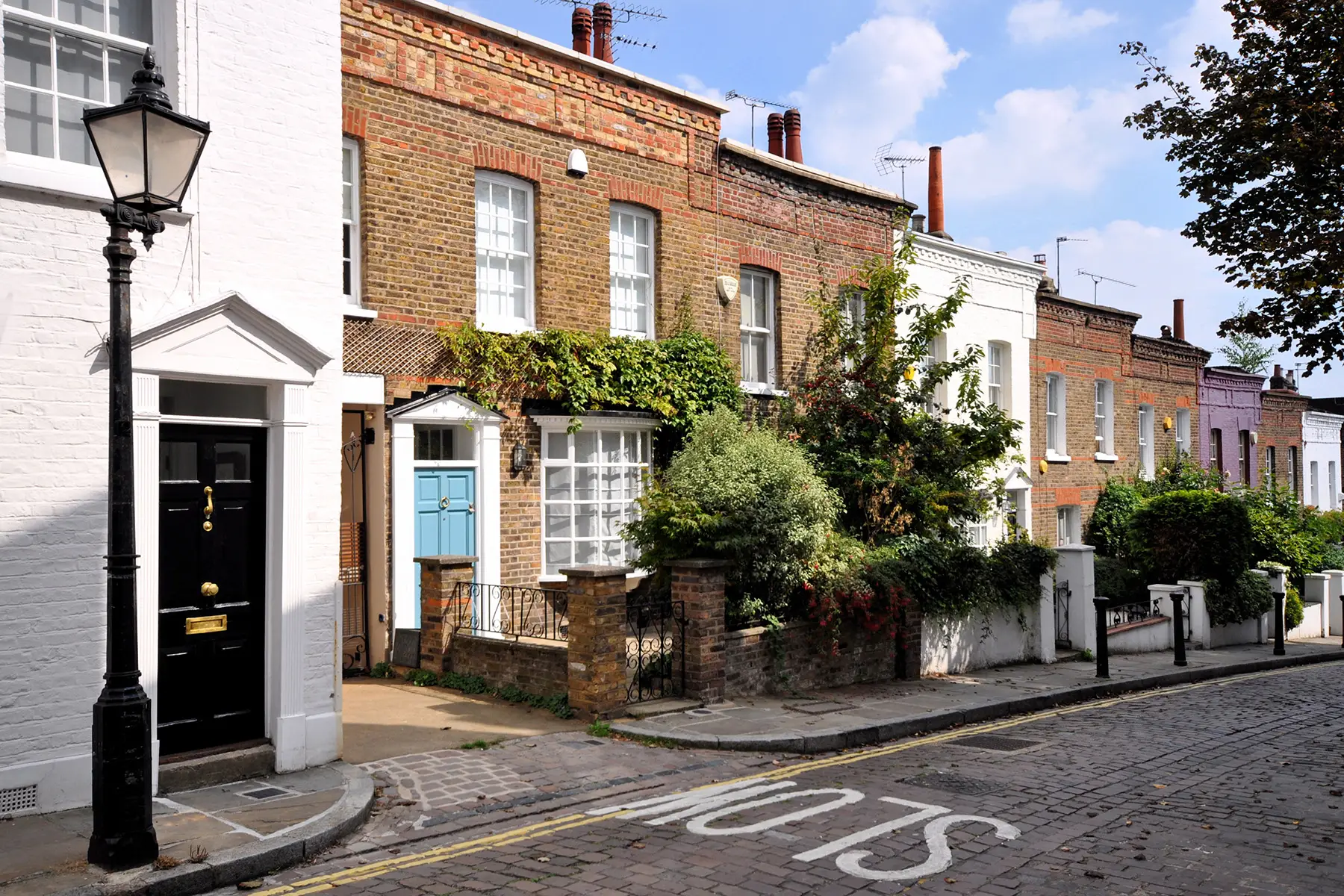
A self-build plot with permission in principle is different from agricultural land, amenity land, or woodland. While most plots are freehold, some are leasehold, so check term length, ground rent, and use limits as carefully as you would with a flat or commercial unit.
For expats, the extra challenge is usually practical rather than legal. Documents, viewings, and deposit money may sit in different countries, and a cheap plot can stop looking cheap once access, utilities, or planning work are priced in.
Wise for moving your land purchase funds to GBP
- Convert to GBP: Switch supported currencies to pounds before completion
- Keep a transfer trail: Records help your solicitor with source-of-funds checks
- See the cost first: Check the rate and fees before you send money

How to choose the right plot and land type
Start with intended use. A self-build buyer usually needs a credible planning route and service access, while a lifestyle buyer may only need space for grazing, gardening, parking, or recreation.
The table below compares common UK land types by intended use, planning difficulty, hidden costs, and the buyers they may suit.
| Land type | Typical use | Planning difficulty | Hidden cost risk | Best suited buyer |
|---|---|---|---|---|
| Self-build plot | One home, sometimes serviced | Lower if permission exists | Medium | Buyer wanting a clearer route to build |
| Brownfield land | Redevelopment or infill | Medium | High | Buyer prepared for surveys and remediation |
| Greenfield land | New build or change of use | Medium to high | Medium to high | Buyer ready for stricter policy checks |
| Agricultural land | Farming or grazing | High for residential change | Medium | Buyer wanting land use first |
| Amenity land | Leisure, parking, paddock, garden extension | High for building | Low to medium | Buyer not relying on residential planning |
| Woodland plot | Conservation, recreation, forestry | High for building | Medium to high | Buyer focused on non-residential use |
A higher asking price can sometimes buy certainty. For example, a serviced self-build plot may be safer than a cheaper field at the edge of a village if the first site already has a planning path and nearby services.
If the title includes an overage or clawback clause, your costs may rise later if planning permission is granted and the land gains development value.
Brownfield, greenfield, and agricultural land
Brownfield land has been previously developed. Greenfield land hasn’t been built on, and agricultural land is used for farming or forms part of a working farm. Brownfield plots can sometimes fit development policy more easily, but they may bring clearance or contamination costs, while greenfield or agricultural land may face stricter limits on residential use.

Due diligence checklist before you make an offer
Before you make an offer, work through these checks with your solicitor.
- Title and tenure: Confirm ownership, freehold or leasehold status, mortgages, and obvious restrictions.
- Title plan and boundaries: Match the legal plot to what you saw on site, then ask a surveyor about unclear edges or fences.
- Legal access: Check that the land can be reached lawfully from a public road.
- Rights over the land: Review easements, rights of way, and restrictive covenants that may affect building, parking, fencing, or use.
- Overage or clawback: Check whether you owe extra money later if the land gains planning permission or development value.
- Planning history: Look for previous refusals, enforcement action, or lapsed permissions.
- Neighboring development: A local authority search can reveal nearby applications, road schemes, and other plans that affect the plot.
- Utilities and drainage: Check whether services are connected, merely nearby, or still unconfirmed.
- Flood and contamination risk: These can affect lending, insurance, design, and future use.
- Total budget: Include taxes, surveys, searches, legal fees, finance costs, and the documents needed to prove where your money came from.
Title, access, and boundaries
In England and Wales, HM Land Registry lets buyers obtain a property summary, title register, and title plan. These can show ownership, tenure, mortgages, restrictive covenants, easements, and the plot’s general boundaries.
Legal access matters as much as ownership. If the land can’t be reached lawfully from a public road, or only has a narrow pedestrian right of way, its value and use can change sharply. In rural UK listings, “access available” doesn’t always mean permanent legal vehicular access, so ask your solicitor to confirm the exact right recorded on title.
Surveys, flood risk, and utilities
Before exchange, many buyers need more than a walk-around visit. A topographical or land survey can show levels, boundaries, drainage issues, and other features that affect buildability, while a chartered surveyor can help you choose the right checks for the plot and your intended use.
If the land has an industrial or filled-site history, ask whether contamination screening is sensible. In England, the Environment Agency’s long-term flood risk service can help you check flood information for an area, and other UK nations run separate official tools. For utilities, verify with providers whether water, drainage, electricity, and telecoms are connected or only nearby.
Planning permission and local rules
Planning permission is approval from the local planning authority to build, change use, or carry out certain works on land. In England, GOV.UK’s planning permission guidance explains when permission is usually required. Wales has its own planning guidance, including rules for applying for planning permission. Check with the relevant local planning authority before committing to a plot.
- Outline permission: Tests whether the principle of development may be acceptable.
- Full permission: Covers the proposal in enough detail for the authority to decide the full scheme.
- Planning potential: Sales language, not an approval.
- Local policy: Settlement boundaries, density rules, and infrastructure limits can change the answer.
- Protected land: Green Belt, conservation areas, listed settings, or habitats can restrict what is possible.
With land, planning status can be the biggest value driver, so read nearby decisions on the council portal and, for complex sites, speak to a planning consultant before paying a deposit. Search the council planning portal for similar nearby applications and read why any were refused, because refusal reasons often tell you more than sales listings.
England, Scotland, Wales, and Northern Ireland: what changes
The UK nations use different land registration systems, property purchase taxes, and planning processes. The table below summarizes the main distinctions.
| Nation | Registry or search route | Purchase tax | High-level difference |
|---|---|---|---|
| England | HM Land Registry | SDLT | Local planning authority handles permissions |
| Wales | HM Land Registry in Wales | LTT | Check Welsh Revenue Authority and local authority guidance |
| Scotland | Registers of Scotland | LBTT | Own registers and distinct conveyancing system |
| Northern Ireland | Land & Property Services Land Registry | SDLT | Separate registry searches and some different process steps |
Legal steps, timeline, and the professionals you need
The usual process involves shortlisting the plot, viewing it, checking planning context, appointing a solicitor or conveyancer, arranging searches and surveys, lining up finance, agreeing contractual terms, and completing the purchase. The legal steps vary across the UK. In Scotland, for example, the process includes concluding missives. If planning risk is central to the deal, bring in a planning consultant before you commit, not after.
Your solicitor or conveyancer handles title review, searches, contracts, funds, and registration. A surveyor helps with boundaries, topography, condition, or valuation questions, while a lender checks affordability and property risk if you need borrowing.
MoneyHelper says a home purchase in England, Wales, and Northern Ireland often takes around 2 to 3 months, but land can take longer when title issues, planning questions, or missing documents arise. Treat any target completion date as provisional until searches, finance, and source-of-funds checks are in place.

Financing, taxes, and moving money
Financing land is often harder than financing a standard home because the security is less predictable. Major local banks such as HSBC, Barclays, and NatWest are part of the wider mortgage market, but land or self-build lending may come from specialist providers rather than a mainstream route.
Lenders look at your income, but also the land type, planning status, deposit size, and how the project will be funded. Cash buyers still need to budget like lenders, because the same site risks can affect resale, insurance, and future borrowing. For wider context on standard borrowing, see Mortgages in the UK: home loans and interest rates in 2026 and International Mortgage Lenders in the UK for Expats.
Taxes also need care. England and Northern Ireland use Stamp Duty Land Tax, Wales uses Land Transaction Tax, and Scotland uses Land and Buildings Transaction Tax. Treatment can differ between residential, non-residential, and mixed-use land.
As checked on 16 October 2026, HM Revenue & Customs (HMRC) says non-residential or mixed-use SDLT in England and Northern Ireland is calculated on slices of the price and usually starts at £150,000, but use the official calculator or a solicitor’s advice for your exact case.

Proving source of funds and moving money to the UK
Source-of-funds checks can slow a deal even when the money is ready. Solicitors and lenders usually want a clear trail showing where the deposit and purchase funds came from, such as savings, salary, a property sale, inheritance, or a gift, and how the money moved into the account used for completion.
If your deposit sits in another currency, a Wise Account can help you convert supported currencies to GBP at the mid-market exchange rate and keep records of your transfers. Depending on the payment route and recipient requirements, you may be able to send funds to a solicitor’s client account. Check with your solicitor how they want the funds sent, and retain both your source-of-funds documents and transfer records. Wise doesn’t provide mortgages or legal, tax, or planning advice.
Before exchange, gather:
- Recent bank statements from the original holding account
- Proof of savings, salary, bonus income, or sale proceeds
- Inheritance papers or gift letters, if relevant
- ID, address evidence, and any certified translations your solicitor requests
Common mistakes and red flags
- Relying on “planning potential” without reading decision notices or policy
- Leaving access rights to the last minute
- Budgeting as if nearby utilities are simple to connect
- Treating flood or contamination as a post-offer problem
- Pricing only the plot and forgetting tax, surveys, and legal fees
- Leaving AML paperwork until after a price is agreed
If 2 plots still look viable after these checks, ask a solicitor to review title and access before you spend more on surveys or transfer fees.
Next steps before buying land in the UK
Before committing to a plot, make sure its legal status, permitted uses, access rights, utilities, and total costs fit your plans. Arrange professional checks early, particularly when planning permission or land access could affect the purchase. Prepare the documents your solicitor needs to verify your funds, especially if they come from overseas. If currency conversion is part of the process, Wise Account may provide an option for managing supported currencies and documenting international transfers.
FAQ
Buying land in the UK
Can foreigners buy land in the UK? 
Yes. Foreign buyers can generally buy land in the UK, subject to identity, anti-money-laundering, and source-of-funds checks. Ownership doesn’t remove planning, tax, or financing limits.
Do you need planning permission to buy land in the UK?
No. You can buy land without planning permission, but you may need it to build, change use, or carry out certain works. Ownership doesn’t automatically give you development rights.
Can you get a mortgage to buy land in the UK?
Sometimes. Land finance is usually more specialist than a standard home mortgage, and options depend on deposit size, planning status, land type, and lender criteria.
How much tax do you pay when buying land in the UK?
It depends on the UK nation and the land’s classification. Use the relevant SDLT, LTT, or LBTT guidance and calculators, and ask your solicitor to confirm whether the purchase is residential, non-residential, or mixed-use.
What checks should you make before buying a plot of land?
Check title, legal access, boundaries, planning history, utilities, flood risk, contamination, neighboring development, and total costs before exchange.
Sources
Expatica’s experts are all about providing the most up to date and accurate information. All guides are fact checked, and whenever we use external sources (like government websites or research papers) we’ll make a note of them here so you can check them out too.
- When planning permission is required in England, GOV.UK – Planning permission
- Planning rules, applications, and permission guidance, Planning Portal – Do you need permission?
- Property summaries, title registers, and title plans for England and Wales, HM Land Registry – Search for land and property information
- Stamp Duty Land Tax rules and tax calculation guidance, HMRC – Stamp Duty Land Tax overview
- Tax rates for non-residential and mixed-use property transactions, HMRC – Non-residential and mixed-use SDLT rates
- Steps and typical timelines for buying property, MoneyHelper – Buying a house or flat in England, Wales and Northern Ireland
- Long-term flood risk information for land in England, Environment Agency – Check the long term flood risk
- Search for solicitors and conveyancing professionals, The Law Society – Find a solicitor
- Search for chartered surveyors and surveying firms, RICS – Find a surveyor
- Scottish land ownership records and registration information, Registers of Scotland – Land Register of Scotland
- Scottish property purchase tax rules and guidance, Revenue Scotland – Land and Buildings Transaction Tax
- Welsh property transaction tax rules and payment guidance, Welsh Revenue Authority – Land Transaction Tax: overview
- Northern Ireland land registry searches and property information, nidirect – Searching the Land Registry
- Scottish planning permission requirements and local authority guidance, mygov.scot – Getting planning permission
- Underground utility network searches before development work, LSBUD – Utility search service
- Welsh planning permission rules and applications, Welsh Government – Apply for planning permission
- Legal process for buying property in Scotland, including missives and conveyancing, mygov.scot – Buying a home: Conveyancing
- Wise Account features, supported currencies, and conversion, Wise Help Centre – What is a Wise Account?
- Documents that may be required to verify the origin of funds for a large transfer, Wise Help Centre – What documents might I need for a large transfer?


