
'%20id='ico-down'%20stroke='%23000000'%20stroke-width='1.5'%3e%3cg%20transform='translate(1092.250000,%20254.750000)'%3e%3cpolyline%20id='Path-2-Copy-4'%20transform='translate(5.500000,%202.750000)%20scale(1,%20-1)%20rotate(-180.000000)%20translate(-5.500000,%20-2.750000)%20'%20points='0%200%205.5%205.5%2011%200'%3e%3c/polyline%3e%3c/g%3e%3c/g%3e%3c/g%3e%3c/svg%3e)


Finance
Money Management
Best bank accounts for non-residents in the UK
Moving to the UK or need a GBP account as a non-resident for travel or business? This guide explains who can open a UK account without a local address, what documents you’ll need, and which providers are most accessible. It also compares bank vs digital options for managing GBP and transfers.


Key takeaways
- Most UK high-street banks require a UK address for a standard current account, so non-residents usually need an international/expat division or a digital provider.
- International/expat bank accounts can be harder to qualify for and may require high minimum deposits or income (often aimed at higher net-worth customers).
- Digital accounts may be easier to open remotely, using your home-country ID and proof of address, and can help you manage GBP spending and transfers before arrival.
- Documents commonly requested include a passport/ID, proof of address, and tax-residency details (plus proof of funds if minimum balance rules apply).
- Compare the full cost: monthly fees, card fees, transfer charges, and exchange-rate markups can matter more than the headline “free” offer.
- Many movers use a two-step setup: a flexible account for the transition, then a standard UK bank account once they have UK proof of address.
Can I open a British bank account as a non-resident?
Yes. A foreigner can open a bank account in the UK as a non-resident, but typically only with the dedicated international or expat banking divisions of large British or global banks. Basic UK bank accounts are normally only offered to people with a local UK address.
Offshore and expat banking services tend to offer services targeting affluent individuals, and may have high minimum deposit or income requirements. You’ll also need to live in an approved country – the supported countries do vary, but starting with large global banks like HSBC, or British providers like NatWest can help you pick an account that suits you.
If you’re looking for a more flexible solution you could choose specialist providers like Wise and Revolut instead.

Can I open a British bank account online before moving?
Yes. If you’re moving to the UK you can open a British bank account online before moving through the expat or international division of a bank. However, the account you get isn’t the same as the account you may open as a full UK resident. Costs and minimum balance requirements may be higher – which can mean these services aren’t a great match to people planning relocation.
Instead of using a bank you could choose a fully digital provider like Wise or Revolut. These services operate entirely online and through apps, which means you can complete your application and verification digitally and before you move to the UK. If you then need a UK bank account once you arrive, you can choose to open a standard UK bank account more easily once you have proof of your local residency.
Can I open a bank account in the UK without an address?
No. You can not normally open a standard bank account in the UK without a local residential address.
You can open an account with a service like HSBC or NatWest International without a UK address, but you’ll still be asked to prove your overseas address with documents such as utility bills in your name.

What is the best British account for expats?
You’ll be able to choose from a British or international bank, or a global digital service when selecting a GBP account for your day to day finances. However, banks usually only offer accounts to people in select countries, and can also have high minimum income and balance requirements. This might make them less suited to non-residents who want an account for travel or payment purposes, or to people moving to the UK who need a day to day transaction account.
Ultimately, there’s no single best British account for expats. Choosing the best account for your needs will mean doing a bit of research, to find the best fit based on your own specific needs. Here’s a summary of the accounts we’ll cover in this guide:
- Wise GBP Account: Hold 40+ currencies, including GBP, and get local account information to receive payments in GBP and 8+ other currencies all to the same account. Debit cards available, and all currency conversion uses the mid-market rate.
- Revolut GBP Account: Choose from several different accounts depending on your needs and location, all of which support GBP for holding and come with a linked debit card. Get some weekday currency exchange at the Revolut rate with no extra fee, and extra travel and lifestyle perks if you upgrade to a higher tier account.
- NatWest International Select Account: For 8 GBP a month you can get a GBP account with linked card, mobile and online banking services and no fee for international transfers from the UK – 25,000 GBP balance needed.
- HSBC Expat Account: No fee for a GBP, EUR and USD account, as long as you’re in an eligible country and meet income or asset requirements (125,000 GBP annual income or 75,000 GBP in sayings and investment).
Wise GBP Account
You can open a Wise account as a non-resident with no restrictions as long as you live in a supported country already. You’ll simply need to use your local ID and proof of address from wherever you call home to apply and complete verification. On approval you get an account that supports 40+ currencies, with ways to receive local GBP payments, send money to 140+ countries and get a debit card for spending and withdrawals. Currency exchange uses the mid-market rate with low fees.
Availability: Available in many countries globally
Account features: No monthly fees, linked debit cards, ways to send and receive global payments conveniently and cheaply
Supported currencies: 40+ for holding and exchange, spend with your card in 150+ countries
Exchange rate: Mid-market rate
Revolut GBP Account
Revolut offers services in many countries globally, with slightly varied product features and fees depending on where in the world you are. All accounts offer ways to hold GBP as well as linked debit cards. In most countries you can pick several different account tiers including Standard plans with no monthly fees, and more comprehensive plans which offer higher no-fee transaction limits and lifestyle perks.
Availability: Available in many countries globally
Account features: Choose from different account plans depending on feature needs, with linked debit cards and payment features as standard
Supported currencies: 30+ for holding and exchange, spend with your card globally
Exchange rate: Weekday currency exchanges use the Revolut rate within plan limits, with fair usage fees of up to 1%. Weekend exchanges may incur an additional fee of up to 1%.
NatWest International Select Account
You can open a NatWest International Select Account if you live in a supported country such as the US. There’s a tool on NatWest International’s website which lets you enter your country of residence and check the accounts you’re eligible to apply for. To get a Select Account you must also hold a deposit of 25,000 GBP or more. Accounts offer a linked GBP debit card and no fee transfers overseas.
Availability: Open if you’re a resident of an eligible country, with 25,000 GBP or more to deposit
Account features: Linked debit card, optional cash management account, no fee for international transfers
Supported currencies: GBP for holding and receiving, spend with your card globally
Exchange rate: Bank or network rate depending on transaction type, which may include a markup
HSBC Expat Account
The HSBC Expat Account supports GBP, EUR and USD for holding and receiving and is aimed at high net worth individuals who want to deposit a salary of 125,000 GBP or more, or who will be saving or investing 75,000 GBP plus. The account offers personal relationship management and options to save with time deposits, as well as a debit card for day to day transactions and withdrawals.
Availability: Open if you’re a resident of an eligible country, meeting asset or income requirements (for example, 120,000 GBP annual salary or 75,000 GBP in HSBC savings and investments)
Account features: Offshore account with personal baking support, linked debit card and fixed term deposit options
Supported currencies: GBP, EUR and USD for holding and receiving, spend with your card globally
Exchange rate: Bank or network rate depending on transaction type, which may include a markup
How to open a British bank account as a non-resident?
To open an account with the expat or international division of a British or global bank you’ll usually be able to complete your application online by entering your details and then uploading your documents.
To give an example, here’s how to open an British bank account as a non-resident with HSBC:
Head to the HSBC Expat website
Click Open online now
Complete the eligibility screening by entering your residential country and the asset or income requirement you meet
Continue entering your personal and contact information following the onscreen prompts
Upload images of the required documents when instructed
Wait for your account to be checked and verified
Your account details will be confirmed once verification is complete – if you need to pay in a minimum deposit you will be required to do so before you transact
The specialist providers we’ve selected in this guide – Wise and Revolut – allow you to open an account remotely with no need to visit a branch or location in person. You’ll complete the application through the app or desktop site, and upload images of your ID documents from your home country, without you needing to be in the UK. As there’s no minimum balance requirement you can then start to use your account right after verification is complete.
Required information and documents
Each bank and provider will need to get some information and documents from you to open your account. Here’s what is normally needed by a bank when applying through the expat or international service:
- Your current and valid passport or other government issued ID
- Proof of your address – such as utility bills
- Your Tax Identification Number (TIN) if you have one
If you’re applying for an account which has a minimum salary or deposit requirement you may also be asked for proof of this – such as a salary slip or proof of the funds you intend to deposit to meet that minimum holding balance. With services like HSBC you can upload these documents online.
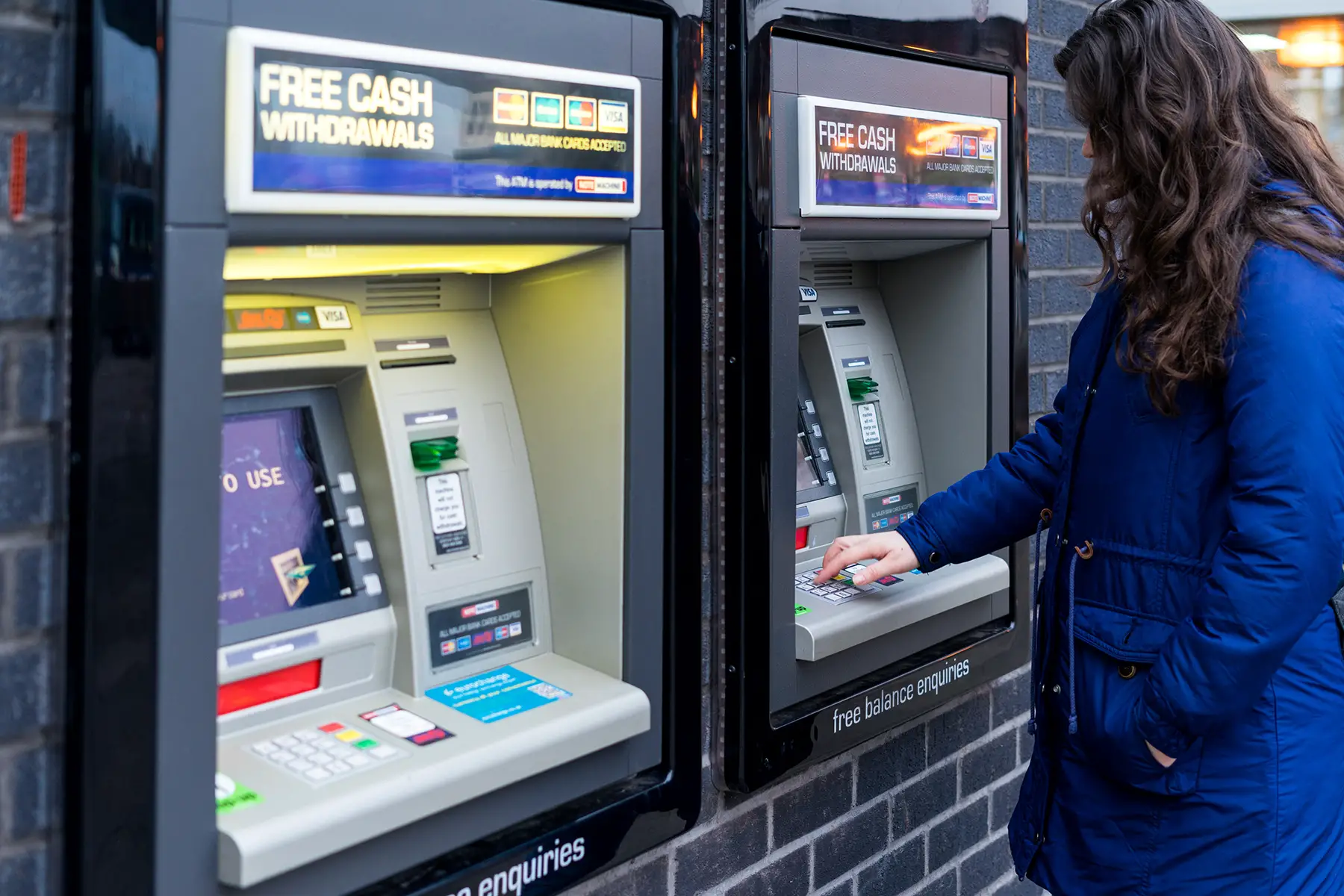
Do you need a local bank account in the UK?
Whether or not you need a local bank account in the UK will depend on your situation. Generally you’ll need a transaction account which can handle GBP to manage practical payments such as your rent and utilities bills. You may need a local bank to sign up for the internet or a mobile provider for example.
Check if you’ll need an account with a bank – or if a digital service will be sufficient for the types of transactions you need to make. Using an expat or international account is likely to require a large deposit amount which isn’t always practical – so choosing a digital service may offer more flexibility with lower overall costs.
How to move your money to the UK
If you’re relocating to the UK you’ll probably need to move your money from your home country to the UK for day to day spending. There are several ways you can do this – most commonly:
- Make a bank transfer from your home bank to your British bank or digital account
- Send a money transfer with a specialist provider to be received in your British bank or digital account
- Use a multi-currency account to hold your funds in whichever currency you prefer, and convert to GBP or other currencies for spending when needed
Each option has its own pros and cons.
Using a bank in your home country is very familiar and reliable – but may take several days, and can come with pretty high costs once you include the exchange fees included in the rate used for conversion.
Using a specialist provider will mean taking time signing up for a new account with a service like Wise or Revolut – but you could then find you’re able to send your payment quickly or instantly, and with low fee and a good exchange rate.
Finally, you might prefer to sign up for a multi-currency account you can use to hold and convert funds and to manage your day to day finances all in the same place. Choose an account from a provider like Wise or Revolut and add your funds in your home currency. You can then convert to GBP in the account – or leave your balance in your home currency until you need it if you prefer. This gives you flexibility and allows you to wait until the exchange rates look good to switch over your funds – potentially snagging a good deal along the way.
Conclusion
Opening a UK bank account as a non-resident is possible, but it’s rarely the same as opening a standard current account once you have a UK address. In practice, many non-residents either use an international/expat division of a major bank (often with higher minimum balance or income requirements) or choose a digital provider that can be opened and verified remotely, then switch to a traditional UK bank after arrival if they need local services.
Before you apply, clarify what you actually need the account for (everyday spending, receiving GBP payments, travel, or business), and compare eligibility rules, monthly fees, minimum deposit requirements, and foreign exchange costs. If you’re moving to the UK, it’s also worth planning how you’ll transfer your money in and manage currency conversion during the first weeks, so you can pay essentials like rent and bills without unnecessary delays or fees.
Useful resources
- Wise – landing page for Wise personal and business accounts with links – choose the country you reside in to get details of accounts available for you
- Revolut – landing page for Revolut personal and business accounts with links – choose the country you reside in to get details of accounts available for you
- NatWest International – accounts for people in select countries moving to the UK or looking for a non-resident GBP account
- HSBC Expat– accounts for people in select countries who meet eligibility criteria, looking for a non-resident GBP account



Did you find this guide helpful?