'%20id='ico-down'%20stroke='%23000000'%20stroke-width='1.5'%3e%3cg%20transform='translate(1092.250000,%20254.750000)'%3e%3cpolyline%20id='Path-2-Copy-4'%20transform='translate(5.500000,%202.750000)%20scale(1,%20-1)%20rotate(-180.000000)%20translate(-5.500000,%20-2.750000)%20'%20points='0%200%205.5%205.5%2011%200'%3e%3c/polyline%3e%3c/g%3e%3c/g%3e%3c/g%3e%3c/svg%3e)




'%20fill='%23000000'%3e%3cg%20id='icons'%20transform='translate(56.000000,%20160.000000)'%3e%3cpath%20d='M144,7339%20L140,7339%20L140,7332.001%20C140,7330.081%20139.153,7329.01%20137.634,7329.01%20C135.981,7329.01%20135,7330.126%20135,7332.001%20L135,7339%20L131,7339%20L131,7326%20L135,7326%20L135,7327.462%20C135,7327.462%20136.255,7325.26%20139.083,7325.26%20C141.912,7325.26%20144,7326.986%20144,7330.558%20L144,7339%20L144,7339%20Z%20M126.442,7323.921%20C125.093,7323.921%20124,7322.819%20124,7321.46%20C124,7320.102%20125.093,7319%20126.442,7319%20C127.79,7319%20128.883,7320.102%20128.883,7321.46%20C128.884,7322.819%20127.79,7323.921%20126.442,7323.921%20L126.442,7323.921%20Z%20M124,7339%20L129,7339%20L129,7326%20L124,7326%20L124,7339%20Z'%20id='linkedin-[%23161]'%3e%3c/path%3e%3c/g%3e%3c/g%3e%3c/g%3e%3c/svg%3e)
'%20fill='%23000000'%3e%3cg%20id='icons'%20transform='translate(56.000000,%20160.000000)'%3e%3cpath%20d='M335.821282,7259%20L335.821282,7250%20L338.553693,7250%20L339,7246%20L335.821282,7246%20L335.821282,7244.052%20C335.821282,7243.022%20335.847593,7242%20337.286884,7242%20L338.744689,7242%20L338.744689,7239.14%20C338.744689,7239.097%20337.492497,7239%20336.225687,7239%20C333.580004,7239%20331.923407,7240.657%20331.923407,7243.7%20L331.923407,7246%20L329,7246%20L329,7250%20L331.923407,7250%20L331.923407,7259%20L335.821282,7259%20Z'%20id='facebook-[%23176]'%3e%3c/path%3e%3c/g%3e%3c/g%3e%3c/g%3e%3c/svg%3e)

Table of contents
- Key takeaways
- International money transfers in the UK
- Online international money transfer services in the UK
- International money transfers in the UK by traditional bank
- International money transfers via online and mobile banking in the UK
- Specialist remittance services in the UK
- Foreign exchange brokers in the UK
Key takeaways
- Compare the total cost, not just the upfront fee: providers can add cost through exchange-rate markups as well as transfer charges.
- Pick the right route for the job: banks are secure but can be expensive; apps and specialist transfer services can be cheaper; specialist remittance services work when cash pickup is needed; FX brokers may suit larger amounts.
- Know which system you’re using: Faster Payments and CHAPS are mainly UK systems; cross-border bank payments may use SWIFT messaging, SEPA for eligible euro payments, and correspondent or local systems.
- Have the right details ready: recipients may need IBAN, BIC/SWIFT, name and address exactly as held by their bank.
- Security matters: use regulated providers, double-check recipient details, and treat “urgent payment” requests as potential scams.
International money transfers in the UK

Payment services in the UK are regulated by the Financial Conduct Authority (FCA) under UK rules including the Payment Services Regulations 2017. Money remitters and other non-bank payment providers generally need to be authorised or registered with the FCA, so it is worth checking a firm on the FCA Firm Checker before you send money.
Protection depends on the type of provider. Money held with payment and e-money firms is not directly covered by Financial Services Compensation Scheme (FSCS) deposit protection. Where safeguarding rules apply, firms must protect relevant customer funds; the FCA’s supplementary safeguarding regime took effect on 7 May 2026.

The World Bank publishes annual data on personal remittances paid and received by the UK. These figures are updated and revised over time, so use the latest World Bank series for a current snapshot rather than relying on older 2021–2022 survey shares.
Online international money transfer services in the UK
Transferring money online has become the norm globally. This should be no problem to do from the UK, as long as you stick with a reputable service. Keep an eye on current exchange rates and compare the total amount the recipient will receive, not just the advertised transfer fee.
If you are tricked into making a qualifying authorised push payment (APP) scam payment through Faster Payments or CHAPS, mandatory reimbursement rules have applied since 7 October 2024. The maximum mandatory reimbursement is £85,000 per claim, subject to the rules’ scope and exceptions. This does not cover every scam or every international transfer, so double-check recipient details and contact your payment provider immediately if you think you have been scammed.
PayPal is another option for personal payments. As of 27 August 2026, PayPal charges no fee for a domestic personal transaction when no currency conversion is involved. For an international personal transaction, its UK consumer fee is 5% of the transaction amount, with a minimum fee of £0.99 and a maximum of £2.99. Currency conversion charges may also apply, so check the full quote before sending.
The Post Office international money transfer service is provided by Western Union and is available online and at around 4,000 selected Post Office locations. Fees, exchange rates and delivery times vary by destination, amount, payment method and payout method, and the final charges and rate are shown before you confirm. Cash pickup can sometimes be available within minutes, while transfers to bank accounts can take longer. Compare the total amount the recipient will receive with other live quotes, including from Wise, rather than relying on an old fixed-fee or exchange-rate example.
Money transfer options
Several money transfer services could prove cheap and convenient for you, such as:
International money transfers in the UK by traditional bank
Most people who want to send money abroad first think of doing so through their bank. Bank transfers are an easy option for many people, but not always the most cost-effective or convenient method. However, bank-to-bank transfers are highly secure, and banks also offer a full range of financial services.
Banks can have less competitive exchange rates or higher transfer fees than specialist providers, but the total cost varies by bank, currency, amount and route. Costs can include a transfer fee, an exchange-rate margin and charges from intermediary or receiving banks. Rather than relying on a fixed margin estimate, compare the full amount the recipient will receive; see our guide to international money transfer costs for more detail.
International bank transfers can be initiated online, in a branch, or by phone. Delivery times vary by destination, currency, payment route, cut-off times and compliance checks.
The UK remains within the geographical scope of the Single Euro Payments Area (SEPA) schemes after Brexit, even though the UK is now outside the European Economic Area (EEA). SEPA covers euro payments between participating payment service providers. Fees and availability depend on your bank and the payment type, so do not assume that every UK SEPA transfer costs the same as a domestic payment.
Cost of international bank transfers in the UK
There is no reliable UK-wide average fee for an international bank transfer. As of 27 August 2026, published charges vary widely: Barclays says it does not charge a Barclays fee for international payments made in its app or Online Banking; HSBC lists a £5 fee for many payments to non-HSBC accounts; Lloyds Bank charges no fee for euro payments and £9.50 for most other international payments from an account; and Santander lists a £25 fee for a standard international payment, with some account exceptions. Exchange-rate margins and intermediary-bank charges can still apply. You can also check current procedures and charges with The Royal Bank of Scotland and NatWest.
How long do international bank transfers take?
The Faster Payment System is mainly used for near-real-time transfers between UK accounts. International bank payments may instead use SWIFT messaging, SEPA for eligible euro payments, and correspondent or local payment systems, depending on the currency and destination.
SWIFT is a secure financial messaging network; it does not hold funds or manage customer accounts. This means there is no single “SWIFT transfer time”. Banks set route-specific delivery estimates, and cut-off times, intermediary banks, destination-country requirements and compliance checks can all affect how long a payment takes.
SEPA is used for euro payments across participating countries and territories, including the UK. Delivery times depend on the bank and payment type. For example, some UK banks quote the next working day for non-urgent SEPA transfers, while other international payment routes may take one or more working days. Check the delivery estimate shown by your bank before you confirm the payment.
How to make an international money transfer by bank
Start with the recipient’s full name exactly as it appears on their bank account. The details you need vary by destination. Depending on the country, your bank may ask for an account number or International Bank Account Number (IBAN), the recipient bank’s Business Identifier Code (BIC/SWIFT), a bank or recipient address, or a local routing or clearing code. Check your bank’s destination-specific requirements before sending.
Authentication depends on your bank and the channel you use. You may be asked to approve a payment with a one-time passcode, app or biometric check, or a card reader, especially when adding a new payee. Follow your bank’s on-screen security checks and never share authentication codes with anyone.
How to receive an international money transfer in the UK by bank
Before you receive an international payment into a UK bank account, check the instructions your bank gives for the sender’s currency and country. For many cross-border bank payments, you may need to provide your IBAN and your bank’s BIC/SWIFT code.
Depending on the route, you may also need to provide:
- Your sort code – unless you’ve provided your IBAN
- Account number – unless you’ve provided your IBAN
- Your full name
- Your address
- The amount and the currency you’d like to receive the payment in
Charges on incoming international payments depend on the currency, route and banks involved. Because the UK is outside the EEA, banks in the EEA may deduct charges from some payments sent from the UK, and intermediary or receiving-bank charges can also apply elsewhere. Check the charging option and likely deductions with the sending and receiving banks before the transfer.
If you want to receive a SEPA credit transfer, you’ll need to provide the sender with an IBAN.
International money transfers via online and mobile banking in the UK
You can initiate an international payment through your UK bank’s online or mobile banking service, but Faster Payments and CHAPS are primarily UK payment systems. The international leg may use SWIFT messaging, SEPA or other correspondent and local payment systems depending on the destination and currency.

At scheme level, Faster Payments supports near-real-time UK payments of up to £1 million per transaction. Individual banks and payment providers can set lower per-payment or daily limits. Funds are usually available almost immediately, although some payments can take up to two hours.
CHAPS is designed for high-value, same-day UK payments. The scheme has no minimum or maximum payment limit, but banks can set their own customer limits, cut-off times and fees. Customer payments must be submitted to CHAPS by 17:40 on a working day, and your bank may impose an earlier deadline. CHAPS is therefore not simply a fallback for a bank that does not accept Faster Payments.
Security checks for online payments vary by bank and channel. Nationwide and Royal Bank of Scotland, for example, can still ask customers to use a card reader for certain online-banking actions, such as setting up a new payee or making a first payment. App or biometric approval is also available in many cases, so a card reader is not required for every online transfer.
Specialist remittance services in the UK
Specialist remittance services can be useful when the recipient needs cash pickup or when you want alternatives to a bank deposit. Major providers available in the UK include Western Union, MoneyGram, and Ria. Depending on the provider and destination, delivery may also be available to a bank account, card or mobile wallet.
If you use a shop, newsagent or other agent location, find the agent through the provider’s official website or app and check the branding before handing over cash. Availability, payment methods and payout options vary by provider and location.
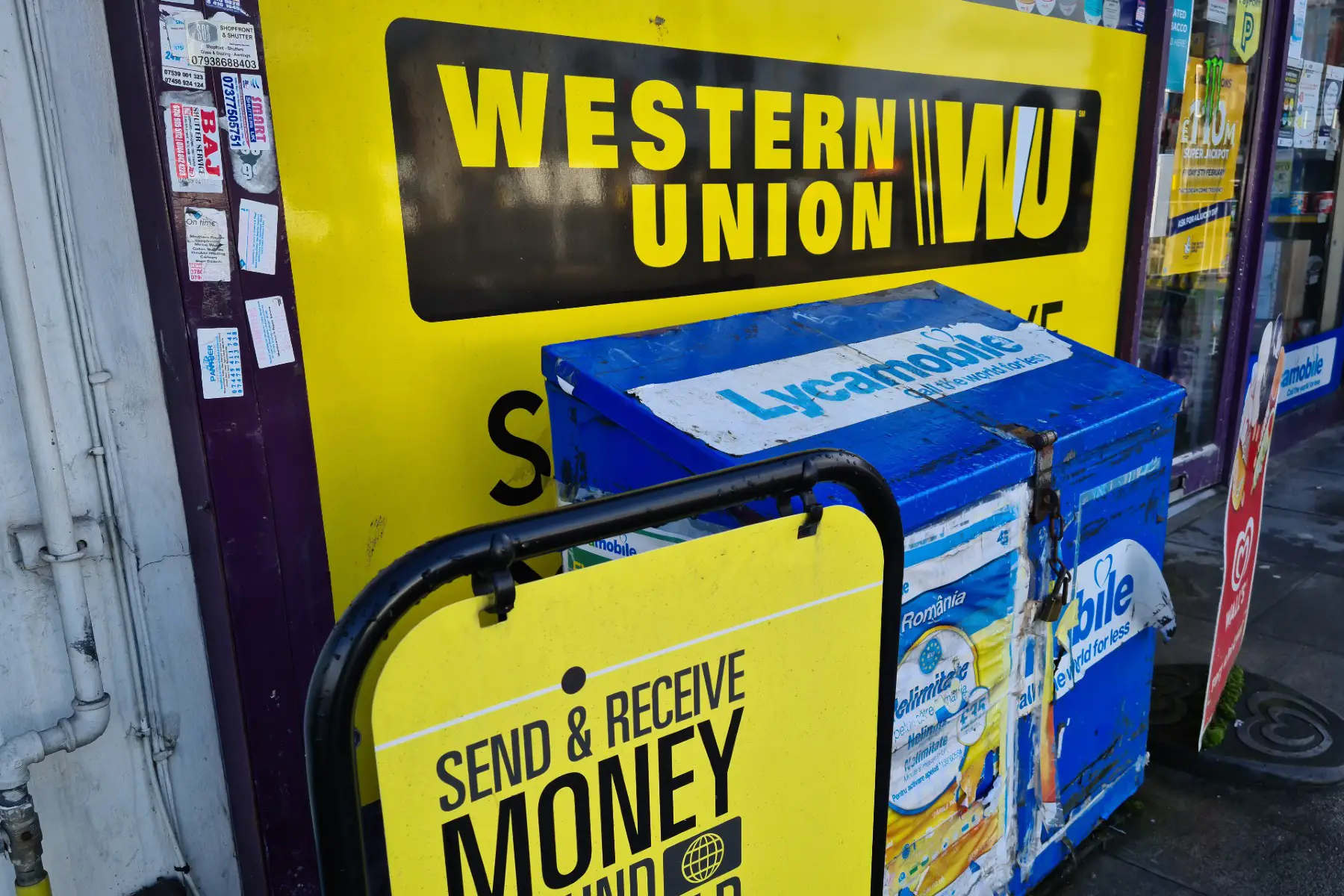
Identification requirements vary by provider, channel, amount and destination. For example, if you send money through a participating Post Office branch using Western Union, you need to bring an accepted form of ID, such as a passport, eligible driving licence or eligible national identity card. Additional verification can apply for larger transfers.
For Western Union cash pickup at a participating Post Office branch, the recipient needs the transfer reference number (MTCN) and accepted ID. Other payout methods, such as a bank deposit or mobile wallet, have different requirements, so check the provider’s instructions for the specific route.
Mind the reference code
For cash pickup, keep the transfer reference number accurate. Western Union, for example, issues a Money Transfer Control Number (MTCN), which the recipient may need to collect the money and which can also be used to track the transfer.
Share the reference only with the intended recipient and double-check it before they travel to a pickup point. An incorrect reference can delay collection.

Receiving a reference code does not mean the money is automatically ready for collection. Availability can depend on the service selected, amount, destination, currency, regulatory and ID checks, and the operating hours or systems of the payout partner.
Fees, exchange rates and delivery times vary by route and can change. Check a live quote before you pay: Western Union shows the applicable quote during setup, Ria explains how to check its fee and exchange rate, and MoneyGram UK shows the fee, exchange rate, delivery timing and recipient amount before confirmation. Do not assume that a transfer is immediately available just because you have received a receipt.
Foreign exchange brokers in the UK
If you wander the streets of New York, Hong Kong, Delhi… and, to be honest, most big cities, it can feel like every other store offers currency exchange. That’s not really the case in the UK. Even in the capitals. Outside of the airports and main train stations, you will have to seek out an old-school foreign exchange broker.
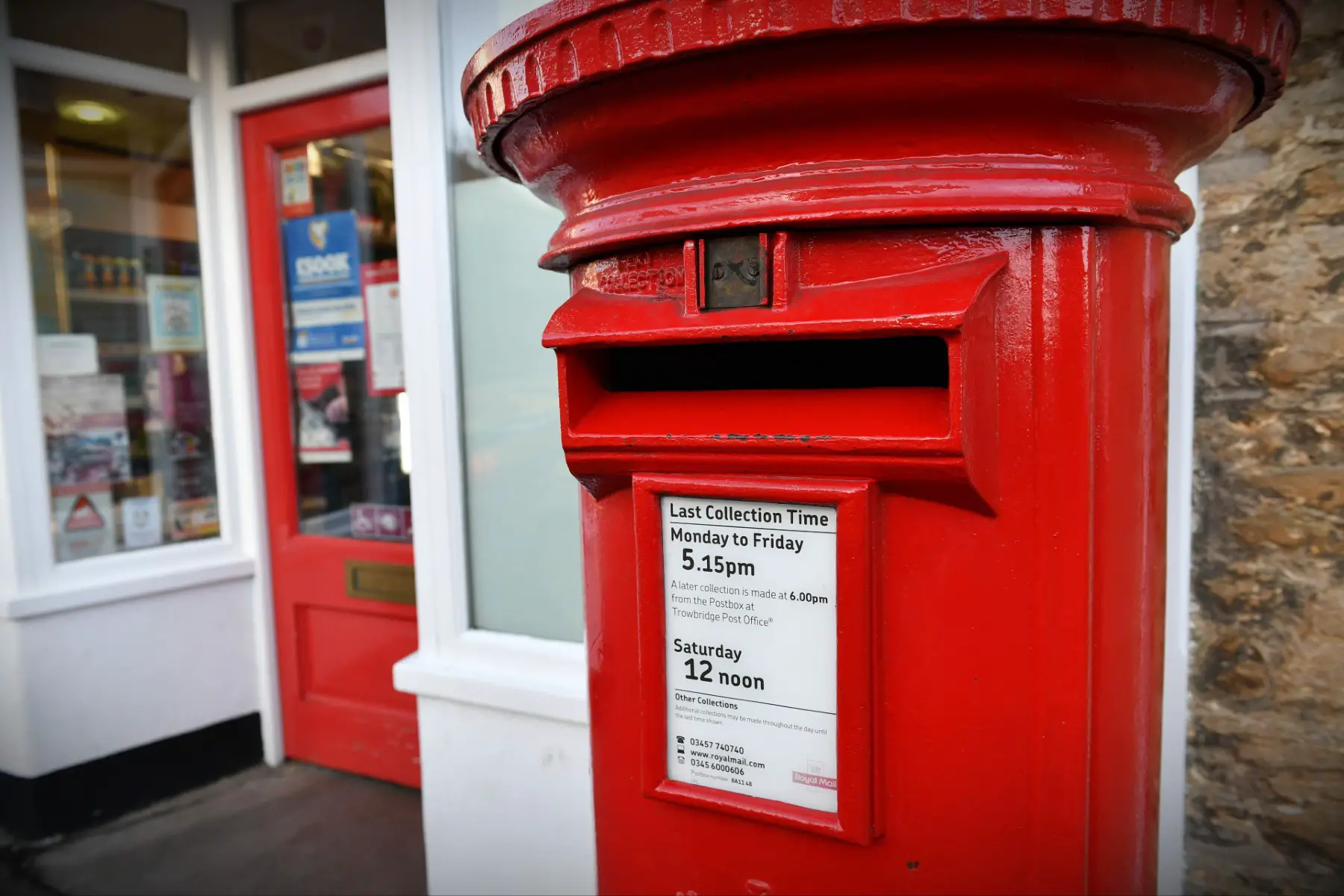
The Post Office offers travel money separately from its international money transfer service. Its international money transfer service is provided by Western Union online and at selected participating Post Office branches, rather than at every Post Office location.
High-street foreign-exchange businesses such as Eurochange mainly offer travel-money services, although some also provide international payment services. When comparing a broker or transfer provider, use a mid-market benchmark from sources such as Google Finance, Reuters, or XE, then compare the total amount the recipient will receive after fees and any exchange-rate margin. Before sending, check the provider on the FCA Financial Services Register.
Conclusion
The UK gives you many ways to move money internationally, but the best option depends on the currency, destination, urgency, and whether your recipient needs a bank deposit or cash collection. For EUR transfers to Europe, SEPA routes can be straightforward, while other cross-border bank payments may use SWIFT messaging and correspondent banks and can cost more or take longer. Whatever method you choose, reduce surprises by checking the exchange rate being offered, the full fee breakdown, expected delivery time, and the provider’s security and regulatory status before you send.
Useful resources
- FCA – using payment service providers: https://www.fca.org.uk/consumers/using-payment-service-providers
- FCA Firm Checker: https://www.fca.org.uk/consumers/fca-firm-checker
- FCA – safeguarding payment and e-money customer funds: https://www.fca.org.uk/firms/emi-payment-institutions-safeguarding-requirements
- FSCS – check how your money is protected: https://www.fscs.org.uk/check/check-your-money-is-protected/
- Payment Systems Regulator – APP scam reimbursement requirement: https://www.psr.org.uk/publications/policy-statements/ps247-faster-payments-app-scams-reimbursement-requirement-confirming-the-maximum-level-of-reimbursement/
- Bank of England – CHAPS overview: https://www.bankofengland.co.uk/payment-and-settlement/chaps
- Pay.UK – Faster Payment System: https://www.wearepay.uk/what-we-do/payment-systems/faster-payment-system/
- SWIFT (international bank messaging network): https://www.swift.com/
- European Payments Council – SEPA: https://www.europeanpaymentscouncil.eu/about-sepa
- Exchange-rate reference (mid-market checks):
- Google Finance: https://www.google.com/finance/
- Reuters currencies: https://www.reuters.com/markets/currencies/
- XE: https://www.xe.com/