
'%20id='ico-down'%20stroke='%23000000'%20stroke-width='1.5'%3e%3cg%20transform='translate(1092.250000,%20254.750000)'%3e%3cpolyline%20id='Path-2-Copy-4'%20transform='translate(5.500000,%202.750000)%20scale(1,%20-1)%20rotate(-180.000000)%20translate(-5.500000,%20-2.750000)%20'%20points='0%200%205.5%205.5%2011%200'%3e%3c/polyline%3e%3c/g%3e%3c/g%3e%3c/g%3e%3c/svg%3e)


Working
Labor Law
Termination agreements and redundancy in the Netherlands
From termination agreements to redundancy pay, here’s what you need to know when you’re getting laid off in the Netherlands.


It’s not easy to dismiss someone at random in the Netherlands. Dutch labor law is very protective of employees, and terminating an employment contract usually involves going to court.
But if you do happen to find yourself in that situation, you might want to learn more about your rights and what will happen next.
Here’s what you need to know about layoff procedures, redundancy packages, and termination agreements in the Netherlands:
Legal-Expat
Legal-Expat provides affordable legal help for internationals living in the Netherlands. They have a great track record in negotiating better exit packages for expats who receive a termination agreement from their company. Get in touch with Legal-Expat for tailored legal support in your situation.

Redundancy in Dutch employment law
Dutch labor law prioritizes fairness and protection for employees, regulating labor standards for various aspects of working life. This includes types of contracts, working hours, minimum wage, notice periods, holiday entitlement, and dismissal procedures.
The Netherlands also has a rich history of trade unions, and it’s common for industries to have a collective labor agreement (Collectieve Arbeidsovereenkomst – CAO) to protect workers’ rights.

The Dutch Ministry of Social Affairs and Employment (Ministerie van Sociale Zaken en Werkgelegenheid) is responsible for policies on labor, employment, and social security. The Netherlands Labour Authority (Nederlandse Arbeidsinspectie) ensures that working conditions are safe, healthy, and fair.

How to end different types of employment contract
There are several kinds of employment agreements in the Netherlands, and all can be terminated by the employer or employee. However, conditions apply, as follows:
| Type of contract | Indefinite/fixed | How it ends | Conditions for early termination |
| Permanent (onbepaalde tijd) | Indefinite | Through mutual agreement or with approval from the UWV | If not ended with the agreement of both parties, the employer must give a valid reason and have UWV or court approval |
| Fixed-term (bepaalde tijd) | Fixed | Automatically on a specific date unless renewed | Through mutual agreement or via a termination clause in the contract |
| Temporary (uitzendcontract) | Depends on contract | Completion of assignment or phase | Depends on the contract phase, but during the initial stage, the contract can be ended with minimal notice |
| Zero-hour (nul uren) | Indefinite/fixed | On an agreed end date or by mutual consent | The notice period in the contract must be observed |
| On-call (oproepcontract) | Indefinite/fixed | On an agreed end date or by mutual consent | Like the zero-hour contract, both parties must adhere to the notice period |
| Payroll (payrollovereenkomst) | Indefinite/fixed | Similar conditions to the permanent contract for indefinite agreements, otherwise it ends automatically. | Ending indefinite contracts requires UWV or court approval, but fixed-term contracts can finish early by following the specified termination clause |
If you’re not sure of your contract type or what conditions apply, it’s worth contacting a trade union (vakbond) or legal professional – more on this later.
Getting laid off: legal reasons to terminate a contract
Whether you have a temporary or a permanent contract, employers in the Netherlands cannot fire (ontslaan) someone at random. Instead, they must have valid reasons for the dismissal. For example, a work contract may terminated for business economic reasons (bedrijfseconomische redenen), such as a company restructuring, relocation, bankruptcy, or closure.

Other legitimate grounds for redundancy involve:
- Conscientious objections (gewetensbezwaren)
- Disrupted working relationships (verstoorde arbeidsverhoudingen)
- Long-term illness/incapacity for work (langdurig arbeidsongeschikt)
- Poor work performance (onvoldoende functioneren)
- Regularly absent due to illness (regelmatig ziek)
- Unwanted behavior (onbehoorlijk gedrag)
- Other circumstances (andere omstandigheden)
Getting fired: immediate dismissals
In certain situations, employers can fire you, or you can quit, on the spot (op staande voet). However, these so-called summary dismissals and summary resignations are only legal if there is an urgent and compelling reason, such as theft, fraud, threatening behavior, abuse, or non-payment.
Immediate terminations and resignations may be communicated verbally. However, for it to be valid, the one who does the leaving must inform the other of their reasoning in writing. If and when the matter is taken to court, they must also be able to demonstrate objective evidence (e.g., video recordings, emails, or complaints from colleagues).
Who gets extra protection against redundancy?
Certain workers enjoy extra levels of protection against redundancy in the Netherlands. A termination ban (ontslagverbod) applies to the following employees:
- Pregnant people, including during and up to six weeks after maternity leave
- Those who are long-term ill (during the first two years of absence)
- Members of a works council (ondernemingsraad), employee representative body (personeelsvertegenwoordiging), or occupational health and safety committee (arbocommissie)
- Occupational health and safety experts (arbodeskundigen)
- Those performing (foreign) military service or replacement service
Likewise, employees may not be fired in retaliation for something, such as participating in a trade union activity or taking statutory leave.
Redundancy and collective dismissals
If an employer wants to carry out collective redundancies (collectief ontslag) for business economic reasons, they must first inform and consult the relevant trade unions (and possibly the works council). They’ll also need to contact the UWV.

Who gets fired during a collective redundancy is typically determined according to the ‘last in, first out’ rule (afspiegelingsbeginsel), job function, and age group. Exceptions do apply, however. For example, employers can ignore these criteria if:
- The company or business location is closing
- The position that is eliminated is filled by just one employee
- A category of interchangeable functions is abolished in its entirety
- The employee is deemed indispensable (e.g., they have knowledge and skills that are so important to the functioning of the organization that another worker must be dismissed in their place)
- The employee has a (work) disability (unless the wage cost subsidy (loonkostensubsidie) has expired)
- A termination ban protects the employee
- The company operates in healthcare or the welfare and social services industry
In the Netherlands, most employees will receive redundancy compensation as part of their termination agreement.
What are the rules on notice periods?
When ending an employment contract, you or your employer must inform the other within a set time frame (except in the case of summary dismissals and resignations). The duration of this notice period (aanzegtermijn) must be stated in the work contract. Notice must be given before the end of the calendar month, unless otherwise agreed in writing.
Technically, terminating a temporary contract does not require employers to give notice. However, if the work agreement states it could be renewed and it will not, your employer must inform you of that decision at least one month before the contract is set to expire.

Employees who don’t receive notice (on time) are entitled to compensation. The amount thereof is proportional to the amount of time that has passed. For example, you must receive a week’s pay if your employer is one week late. If your employer fails to give notice altogether, you must receive one monthly gross salary. You can claim this compensation up to two months after your contract has ended.
It’s worth noting that employers are not liable for payment in cases of bankruptcy, suspension of payment, or debt restructuring.
If you have a permanent contract, your employer does have a statutory notice period of termination (opzegtermijn). The duration of that, or how long, generally depends on your years of service:
| Employee’s years of service | < 5 years | 5–10 years | 10–14 years | > 15 years |
| Notice period | One month | Two months | Three months | Four months |
That said, you and your employer can agree on a longer or shorter time frame. Legally, your employer must double the notice period required of employees. So, for example, if your term of notice is three months, your employer’s notice period must be six months.
First steps when you’re made redundant in the Netherlands
Get legal advice
One of the first steps you should take when presented with redundancy is to ensure that your employer has legal grounds for dismissal and that they are following Dutch labor laws. You should also check that the conditions of your redundancy are fair. If you’re a member of a union, they will usually be able to advise you on the situation.
Fortunately for internationals living in the Netherlands, many law firms specialize in helping foreign citizens navigate employment law, including contract terminations. These firms include:
If both parties agree with the termination
When you’ve been notified of your pending redundancy, you could decide to give your employer your consent. This will prevent the involvement of the UWV or the subdistrict court (kantonrechter).
Under Dutch labor law, there are two options for terminating an employment contract with the employee’s consent:
- Dismissal by mutual consent (ontslag met wederzijds goedvinden)
- Termination with consent (opzegging met instemming)
With the first option, both parties mutually agree to end the employment relationship. They can then discuss the final settlement. Your employer must record the terms of your leaving in a written settlement agreement or termination agreement (vaststellingsovereenkomst beëindigingsovereenkomst). While consenting removes the right to transition pay, the employer may offer you a lucrative severance package. More on transition pay and severance packages is explained below.

Depending on the situation, you may also agree to unilateral dismissal your the employer (i.e., the latter option). Termination with consent does entitle you to statutory transition compensation. Same as before, this termination agreement must also be recorded in writing.
Consenting to your dismissal does not affect your right to unemployment benefits. Employees have 14 days to change their minds and resend their consent without giving a reason.
If you don’t agree with the redundancy
When the employee does not give their consent for their termination, the employer must get approval from the UWV or the subdistrict court. Without a dismissal permit (ontslagvergunning), the termination will almost always be invalid.
Which organization must approve the permit depends on the reason for firing:
- The UWV regulates contract terminations due to business economic reasons or the employee’s long-term illness
- The subdistrict court handles all other termination agreements
After a decision has been made, the affected party may file an appeal with the subdistrict court or Court of Appeal (Gerechtshof).
As hinted at before, there are circumstances in which a dismissal permit is not required. For example, if the employer has filed for bankruptcy, they can fire their employees without involving the courts. Likewise, a dismissal permit is not necessary when the employee:
- Has reached the state pension age
- Is still in the probation period
- Is fired on the spot
Dutch transition payment vs severance pay
When you are dismissed, or your contract is not renewed, you may be entitled to compensation. In the Netherlands, this is called a transition payment (transitievergoeding). Interestingly, your family members may also be entitled to this compensation in the event of your death.
The amount of transition pay depends on the number of years (or months) you’ve worked for your employer and is set to one-third of the monthly income per year of service. As a practical example, if you have been working for 10 years at a monthly salary of €3,000, you are entitled to ((1/3 of €3,000 = €1,000) x 10 years =) €10,000 in transition pay.
In 2024, the maximum amount for transition payment can be €94,000. If the employee earns more than €94,000 a year, the maximum payment equals one annual salary.

Eligibility rules
It’s worth noting that not all dismissed employees are entitled to compensation. For example, terminations due to reaching the statutory pension age are legally exempt. Other situations in which you’re not owed transition pay include:
- The contract is terminated by mutual consent (more on that below)
- The dismissal is caused by seriously culpable behavior (ernstig verwijdbaar gedrag)
- The employee was not yet 18 at the time of dismissal, and their average workweek did not exceed 12 hours
- The employee was older than the state pension age at the time of their firing
- The employee has received a new temporary contract, starting within six months after the end of the previous one
- The employer has filed for bankruptcy, suspension of payments, or debt restructuring
- The CAO prescribes a different provision
You can use the government’s transition pay calculator to see if or how much you should be paid.
If you are not entitled to transition pay, your employer may voluntarily offer you severance pay (ontslagvergoeding). This type of compensation is not regulated by labor law in the Netherlands.
How to negotiate a better severance package?
It’s always recommended to pause and take a step back before signing any termination agreement your soon-to-be former employer is presenting to you. Depending on your negotiation skills, you may be able to get more out of your severance package than the first offer.
Here are some tips to make sure you’re not losing out:
- Read the termination agreement carefully (including clauses on garden leave (werkvrijstelling))
- Consult a trade union representative or an employment law expert
- Assess your priorities; perhaps severance pay is worth less to you than a positive reference letter and a formal introduction to others within your industry
- Research your options (e.g., ask other former colleagues) and determine what’s a reasonable severance package
- Know when to escalate or de-escalate the situation and walk away
Wrongful termination: what to do if you were unfairly dismissed
There might be several reasons why a termination could be considered wrongful or invalid. For example, your employer must first offer you another suitable position within the company or business group (if possible). Failing to do so could sway the subdistrict court in your favor.

If you feel you were wrongfully dismissed (onterecht ontslagen), you can formally refuse to accept your termination. You must inform your employer of your refusal as soon as possible and in writing. The employer may then contact the UWV or the subdistrict court, and you can start negotiating the terms of your leaving.
In the event that you cannot reach an agreement on your redundancy, you can escalate the situation to the UWV or the subdistrict court and, eventually, the Court of Appeal.
It’s recommended you enlist the help of a trade union representative or an employment law expert to help you contest a wrongful dismissal and achieve an optimal settlement arrangement. Expat-friendly experts on labor law in the Netherlands include:
Support after unemployment
Finding a new job after getting dismissed can be challenging. Fortunately, while you’re in between jobs, you may be entitled to unemployment benefits (werkloosheidsuitkering or WW-uitkering) in the Netherlands.
To qualify, you must have worked at least 26 weeks of the 36 weeks prior to getting fired. You must also have lost your job through no fault of your own.
You can read more about this and other welfare benefits in our article on Social Security in the Netherlands.
Useful resources
- Business.gov – official government resource for companies, including redundancy procedures and employment rights
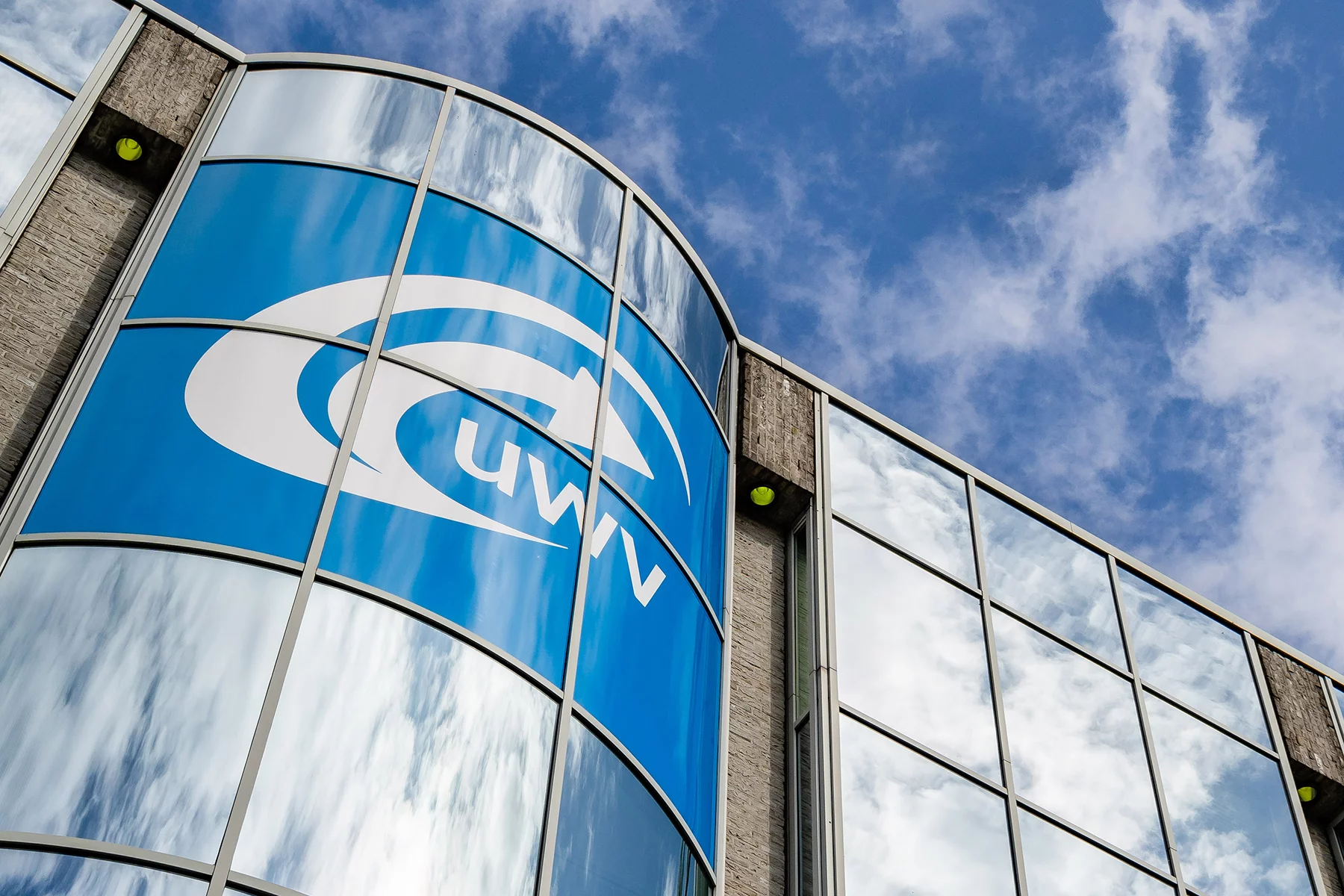
- UWV – official website of the employee insurance agency responsible for unemployment benefits, which includes extensive information on termination agreements and procedures
- Werk.nl – website of the UWV with information on finding work in the Netherlands, provided in several languages
Related Articles


Editor's picks
 Child benefits in the NetherlandsYou can claim different types of child benefits in the Netherlands, to help with the costs of child-rearing, schooling, and childcare.
 Human and civil rights in the NetherlandsFrom the right to protest to protection from discrimination, here's what you need to know about human rights in the Netherlands.
 Primary schools in the NetherlandsConfused by the primary school system in the Netherlands? We explain how it works, from educational approaches to international options.
Did you find this guide helpful?